Agent

Search documents
Manus被卖:AI应用“黄金时代”开启 还是窗口关闭?
Bei Jing Shang Bao· 2025-12-30 15:36
Core Insights - Meta has acquired the startup Butterfly Effect for several billion dollars, marking one of its largest acquisitions after WhatsApp and Scale AI, reflecting a significant shift in the AI industry towards practical applications of AI technology [1][4] - The acquisition highlights the emergence of a "golden age" for AI applications that solve real-world problems, while also indicating that this opportunity may only be available to a select few agile companies [1][10] Company Overview - Butterfly Effect, founded less than four years ago, launched its product Manus, which is an agent-based application that utilizes large models to solve complex problems without user intervention [2][3] - Manus achieved an annual recurring revenue (ARR) of over $100 million by December 2025, demonstrating its rapid growth and acceptance in the market [3] Acquisition Details - The acquisition will allow Manus to continue operating independently while integrating with Meta's core consumer products [4] - Prior to the acquisition, Manus was valued at $2 billion during its latest funding round, indicating significant investor confidence [4][5] Market Trends - The AI industry is witnessing a shift where application-focused startups are gaining traction, contrasting with the previous focus on model development [6][10] - The entrepreneurial cycle in the AI sector is shortening, with companies like Butterfly Effect achieving rapid growth and acquisition within a few years, compared to longer timelines in the past [7][10] Investment Implications - The acquisition is expected to boost valuations for other AI startups, particularly those preparing for IPOs, as it sets a precedent for high valuations in the sector [8]
20亿美金落袋?这位90后华人把公司卖给Meta,成了汪滔的同事
Xin Lang Cai Jing· 2025-12-30 12:33
炒股就看金麒麟分析师研报,权威,专业,及时,全面,助您挖掘潜力主题机会! 来源:新智元 新智元报道 编辑:KingHZ 好困 【新智元导读】Meta大手笔收购Manus,智能体技术直击AI痛点:从给出答案到直接交付结果,未来人 机交互将被彻底颠覆,扎克伯格的AI帝国再添利器! Meta继续买买买! 继挖走OpenAI一批明星研究员后,扎克伯格这一次,直接把一整条AI产品线一锅端了。 被买走的,是AI智能体初创公司Manus。 据多方消息,Meta这次交易价格,被普遍认为在20亿—30亿美元之间。 其中,一条最主流的说法是:超过20亿美元。 交易完成后,Manus联合创始人兼CEO肖弘,将出任Meta副总裁,直接向Meta首席运营官Javier Olivan 汇报。 今年,小扎已用重金吸引了多名华人AI研究员加入,但这次有些不一样。 这次,Meta买的不是模型。 它买的是一条已经跑通的AI Agent产品路线。 如果说过去几年,Meta的AI战略是'造一个更聪明的大脑',那么这一次,它押注的是:给AI装上手和 脚。 杀死那个浏览器 在硅谷科技圈,Manus早已是一个无法忽视的名字。 自成立以来,这是Meta价值 ...



AI泡沫后只剩这两类公司杀出重围!昆仑万维CEO方汉:明年唯一技术赛点在Agent
Xin Lang Cai Jing· 2025-12-30 11:04
Group 1 - The core keywords for the technology sector in 2025 are AI bubble, verifiable product value, and process-oriented ecology, indicating a shift from mere technological advancement to practical application and monetization [2][10] - The AI bubble is seen as a necessary phase that concentrates capital, computing power, and engineering talent to filter out viable products, with a focus on real-world high-frequency scenarios that can generate sustainable revenue [2][10] - Companies that have emerged successfully this year are those that address high-frequency demand scenarios, such as AI social media and music, which are conducive to scalable model applications and user retention [3][11] Group 2 - AI has significantly restructured content production and research analysis, reducing the marginal cost of content or services by 1-2 orders of magnitude, thus altering industry pricing logic [3][11] - Companies lagging behind include general-purpose AI assistants lacking vertical data and result closure, and those that focus solely on models without product development, leading to long-term commercialization stagnation [4][13] - The industry is transitioning from an "algorithm-driven" approach to a balanced focus on both algorithms and products, with product leaders gaining influence comparable to algorithm leaders [12][14] Group 3 - The unique technological battleground for 2026 is whether Agents can automate verifiable processes on a large scale, emphasizing the industrialization of structured decision-making [6][15] - The Chinese AI sector has made significant strides in application layers, particularly in AIGC and AI social media, leveraging data density and scene complexity for rapid iteration, although gaps remain in top-tier closed model capabilities compared to Silicon Valley [6][15] - Future innovations are expected to emerge as AI mobile devices and edge computing become prevalent, with a focus on transforming processes into assets rather than merely enhancing model intelligence [6][15][16]

从大厂设计师到超级一人公司:6000字回顾我和AI的2025
歸藏的AI工具箱· 2025-12-30 10:34
Core Insights - The article reflects on significant changes and developments in the AI industry and personal career transitions over the past year, highlighting the importance of adapting to new technologies and platforms [2][3]. Group 1: Personal Career Changes - The author transitioned from a designer at a large company to a freelancer, focusing on leveraging AI to create a sustainable one-person business that benefits industry peers [4]. - The shift in focus from self-judgment based on data to long-term interests and skills has led to a more relaxed yet productive work rhythm [4]. Group 2: Social Media and Content Creation - The author does not identify as a traditional content creator, which has helped avoid data anxiety and internal conflict, although it has also led to slower adaptation to platform changes [5][6]. - Twitter and Jike have been primary platforms for engagement, with the author achieving a significant following of nearly 25,000 on Jike and 110,000 on Twitter, emphasizing the importance of interaction with international users [12][10]. - The author has started producing videos, which have performed well on platforms like Douyin and Xiaohongshu, indicating a shift towards video content as a necessary adaptation in the AI landscape [17][19]. Group 3: AI Community and Networking - The author has developed a paid community to support the AIGC Weekly, which has proven effective in fostering collaboration and sharing among members [21][30]. - A recent promotional event for the community attracted around 2,000 paid members, showcasing the potential for community-driven marketing strategies [28]. Group 4: AI Product Development - The article discusses the rise of Vibe Coding and Agent tools, highlighting their significance in the AI programming landscape and the author's contributions to tutorials and community knowledge sharing [38][34]. - The author has engaged with various AI product teams, gaining insights that enhance understanding of industry trends and product development [43]. Group 5: Future Trends in AI - The article anticipates key technological breakthroughs in AI, particularly in reinforcement learning and multi-modal capabilities, which are expected to drive significant advancements in the coming years [52][55]. - The emergence of products like Chatwise and Manus is noted for their potential to redefine user interaction with AI, indicating a shift towards more integrated and user-friendly AI solutions [58][60].

盘点2025:模型服务,成为基础设施
第一财经· 2025-12-30 10:15
Core Insights - The article emphasizes the rapid growth of the Model as a Service (MaaS) market, with major players like OpenAI, Google Cloud, and Volcano Engine capturing significant market shares by 2025 [1][3] - Volcano Engine has achieved a remarkable daily token call volume of 63 trillion, positioning itself as a leading Chinese player in the AI cloud market [3][6] - The introduction of the Doubao model has led to exponential growth in token usage, highlighting the increasing importance of MaaS as a foundational infrastructure in AI [4][11] Market Dynamics - By October 2025, OpenAI, Google Cloud, and Volcano Engine are projected to hold 65% of the global MaaS market, with respective shares of 31%, 19%, and 15% [1] - Volcano Engine's daily token call volume of 30 trillion places it third globally, following OpenAI and Google Cloud [3] - The MaaS market is still perceived as "thin" and "narrow," indicating potential for further growth and competition [3] Company Performance - Volcano Engine has reported a 100% year-on-year revenue growth, exceeding 20 billion, and has revised its revenue target for 2030 upwards by several percentage points [6] - The company has prioritized MaaS as its strategic focus, leading to significant investments in resources and technology [6][16] - The introduction of the Doubao model API service has drastically reduced pricing, marking a shift from "per count" to "per milligram" pricing, with a reduction of up to 99.3% [6] Technological Advancements - The launch of the DeepSeek-R1 model has further enhanced Volcano Engine's capabilities, allowing it to capitalize on the growing demand for model inference services [7][10] - Continuous iterations of the Doubao model have led to increased token call volumes, with new models being released every three months [10][11] - The company is focusing on optimizing AI application accessibility and cost-effectiveness through advanced tools like Prompt Pilot and Model Router [27][28] Future Outlook - Volcano Engine aims to maintain its leadership in the MaaS market while expanding into deeper industry applications, particularly in sectors like smart manufacturing and consumer electronics [27] - The company is developing a new architecture centered around agents, which will enhance the integration of models into existing workflows [28][30] - The potential market for agents is vast, with estimates suggesting it could significantly expand beyond traditional IT budgets into areas like global customer service and programming [30]

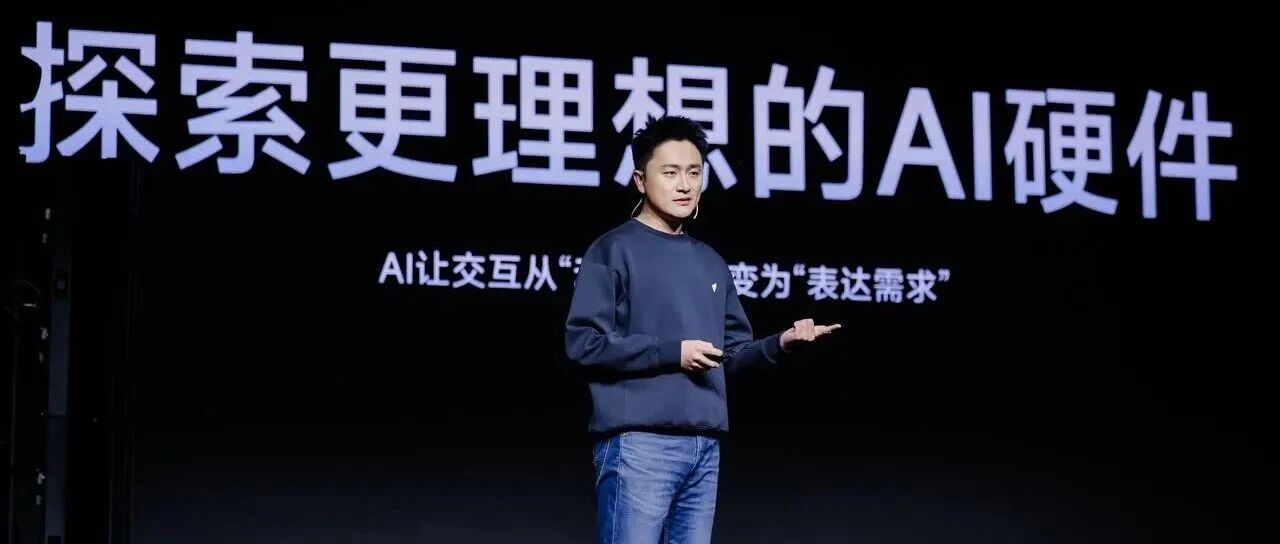
对话光帆科技董红光:Manus 让 Agent 走红,但真正的 AI 载体不只有手机
雷峰网· 2025-12-30 10:10
Core Viewpoint - The article discusses the potential of AI hardware, particularly focusing on the innovative AI headphones developed by Guangfan Technology, which aims to redefine user interaction in the AI era [2][4][28]. Group 1: Company Overview - Guangfan Technology, founded by Dong Hongguang, has achieved a valuation of over 1 billion yuan and recently launched the world's first AI headphones with visual perception capabilities [4][28]. - The company aims to create a complete system with the headphones, a dedicated smartwatch, and a charging case that includes 4G connectivity and a large battery [4][10]. Group 2: Market Opportunity - The AI hardware market is currently in a "window period," where early-stage companies can establish themselves before larger players dominate the market [11][28]. - Dong believes that the AI headphone market is not just about competing with existing TWS headphones but creating a new category of "AI wearable devices" [23][28]. Group 3: Product Design and Features - The headphones are designed to be user-friendly, integrating AI capabilities into a device that people already use daily, thus enhancing the user experience [10][11]. - The charging case serves as a "physical extension" of the headphones, housing essential components like a 4G eSIM and a 2020mAh battery to support continuous AI functionality [13][15]. Group 4: Software and Operating System - Guangfan Technology is developing its own operating system tailored for AI interactions, which differs significantly from Android by focusing on voice and multimodal interactions rather than graphical interfaces [17][19]. - The company emphasizes the importance of a lightweight system on the device side and a complex cloud system for managing multiple AI models [17][19]. Group 5: Competitive Landscape - The AI hardware market is divided into two camps: those focusing on specialized hardware and those pursuing general-purpose devices. Dong argues that general-purpose devices have greater long-term potential [22][23]. - The company welcomes competition from larger firms, believing that the hardware market is not easily monopolized and that their unique operating system and AI capabilities provide a competitive edge [27][28]. Group 6: Future Plans and Challenges - The company plans to refine its product and expand its ecosystem, focusing on user engagement and developer participation to foster a robust application environment [34][41]. - Dong acknowledges the challenges of transitioning from a resource-rich environment in large companies to the resource constraints of a startup, emphasizing the need for rapid decision-making and adaptability [37][39].
百亿砸向Scale AI,数十亿买Manus,Meta慌不择路
3 6 Ke· 2025-12-30 03:24
Group 1 - The core point of the article is the acquisition of the startup Manus by Meta for several billion dollars, marking Meta's third-largest acquisition since its inception, following WhatsApp and Scale AI [1][8] - Manus, founded only three years ago, gained significant attention in the AI sector, particularly after the launch of its AI agent, which drew comparisons to DeepSeek [3][5] - Following a rapid rise in valuation from $85 million to $500 million after a new funding round, Manus faced challenges, including a significant reduction in its team and relocation of its headquarters out of China [5][8] Group 2 - Meta's acquisition of Manus was completed in a remarkably short time frame of about ten days, surprising many in the venture capital community [8] - The acquisition reflects Meta's strategy to bolster its AI capabilities amid intense competition from other tech giants like Microsoft, Amazon, and Google, who are heavily investing in AI [5][8] - Meta's AI strategy has shifted significantly, moving from open-source models to a focus on proprietary models, with plans for a new closed-source model expected to launch in 2026 [23][42] Group 3 - The article highlights the competitive landscape in the AI sector, with Meta's early investments in AI not yielding the expected leadership position, particularly after the rise of ChatGPT [9][18] - Meta's restructuring of its AI teams and the significant layoffs indicate a strategic pivot in response to competitive pressures and internal challenges [19][22] - The ongoing talent war in Silicon Valley has intensified, with Meta's aggressive hiring practices impacting the broader tech ecosystem [24][22] Group 4 - Meta's traditional business model is under threat from competitors like TikTok, which has surpassed Facebook and Instagram in user engagement [25][29] - The company's heavy investment in the metaverse has not yet proven to be commercially viable, leading to substantial financial losses in its Reality Labs division [34][32] - Despite challenges, Meta is attempting to integrate AI into its metaverse strategy, including updates to its smart glasses, but faces delays and technical hurdles [37][40]

方正富邦基金李朝昱:部分高景气科技板块仍具结构性机会
Zheng Quan Ri Bao Wang· 2025-12-27 03:16
Core Viewpoint - The investment strategy for 2026 emphasizes that technology-related investments are expected to continue being a major driver of global economic growth, influencing supply and demand dynamics across the industry chain and creating new demand [1] Group 1: Technology Investment Outlook - The rapid development of the global AI industry presents structural opportunities in high-growth technology sectors [1] - Despite several years of high capital expenditure in computing infrastructure, demand for computing power remains strong due to the increasing penetration of large models, driving advancements in storage and optical communication technologies [1] - The demand for electricity and upstream raw materials is also being stimulated by these technological advancements [1] Group 2: AI and Robotics Development - The integration of virtual AI with the physical world is becoming feasible through embodied intelligence, accelerating the commercialization of humanoid robots [1] - Innovations in world models, end-to-end algorithms, and dexterous hand sensors are significantly speeding up the development of humanoid robots [1] - The evolution of agents is leading to the emergence of new application scenarios, indicating a potential shift of AI from investment to application output [1] Group 3: Focus Areas for Future Investment - Future investment focus will be on humanoid robots and their related industry chain, AI applications, computing power, energy storage, and upstream raw materials [1]
方正富邦基金李朝昱:高景气科技板块投资机会仍值得把握
Xin Lang Cai Jing· 2025-12-26 09:15
2026年即将到来,如何前瞻布局明年行情?12月26日,方正富邦基金2026年投资策略会在北京举行,本 次策略会以"变局创新"为主题,多位投资大咖及嘉宾发表主旨演讲,共同探讨"十五五"开局之年的投资 机遇和挑战。>>视频直播 方正富邦权益投资部基金经理李朝昱认为,展望2026,中美AI加速发展的时代背景之下,科技相关的 投资有望继续成为全球经济最为主要的增长引擎,拉动产业链上下游供需的变化,并创造新的需求。因 此新老动能进一步转换仍然是宏观层面最值得关注的核心变化。 在全球AI科技产业持续快速发展的背景之下,部分高景气细分领域带来的结构性机会仍然值得把握。 我们看到算力基础设施经历了数年高强度的资本开支,但大模型渗透率提升以及推理测的持续推进依然 带来了对算力源源不断的需求,推动AI芯片,存储,光通信等技术不断迭代创新,同时也拉动了电 力,上游原材料等的需求;另一方面,模型泛化智能的不断提升也为AI应用创造了条件,虚拟AI与物 理世界链接交互的纽带正通过具身智能成为可能,世界模型,端到端算法,以及灵巧手传感器等技术的 推陈出新使得人形机器人商业化的进程大大加快,而Agent的发展则催生新的应用场景逐步涌现,A ...
清华唐杰:领域大模型,伪命题
量子位· 2025-12-26 08:52
Group 1 - The core idea is that scaling foundational models through pre-training is essential for AI to acquire world knowledge and basic reasoning capabilities [4][5] - More data, larger parameters, and saturated computation remain the most efficient methods for scaling foundational models [5] - The concept of domain-specific large models is considered a false proposition, as true AGI (Artificial General Intelligence) has not yet been achieved [28][30] Group 2 - Enhancing reasoning capabilities and aligning long-tail abilities are crucial for improving real-world AI performance [6][7] - The introduction of agents marks a significant milestone in AI, allowing models to interact with real environments and generate productivity [10][11] - Implementing memory mechanisms in models is essential for their application in real-world scenarios, with different memory stages mirroring human memory [12][13] Group 3 - Online learning and self-evaluation are key components for models to improve autonomously, with self-assessment being a critical aspect of this process [14][15] - The integration of model development and application is becoming increasingly important, with the goal of replacing human jobs through AI [16][17] - The future of AI applications should focus on enhancing human capabilities rather than merely creating new applications [32][34] Group 4 - Multimodal capabilities are seen as promising, but their contribution to AGI's upper intelligence limit remains uncertain [21][22] - The development of embodied AI faces challenges, including data acquisition and the stability of robotic systems [25][26] - The existence of domain models is driven by enterprises' reluctance to fully embrace AI, aiming to maintain a competitive edge [29][31]