
跨境电商

Search documents
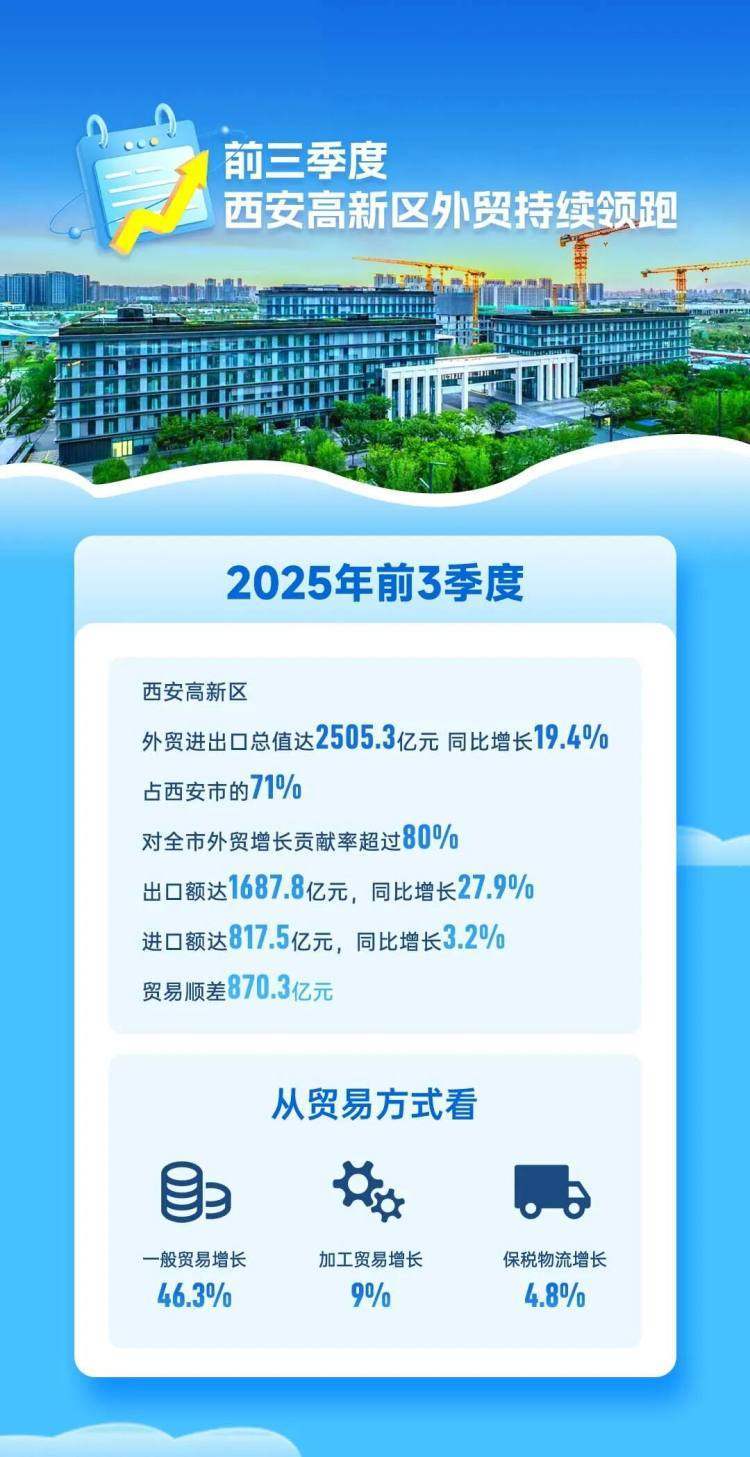
2505.3亿元,同比增长19.4%! 前三季度西安高新区外贸持续领跑
Sou Hu Cai Jing· 2025-10-28 04:14
Core Insights - Xi'an High-tech Zone plays a crucial role in China's Belt and Road Initiative and the new western land-sea corridor, contributing significantly to the high-quality development of the open economy in the region [1] Trade Performance - In the first three quarters, the total import and export value of Xi'an High-tech Zone reached 250.53 billion yuan, a year-on-year increase of 19.4%, accounting for 71% of Xi'an's total foreign trade and contributing over 80% to the city's trade growth [1] - Exports amounted to 168.78 billion yuan, up 27.9% year-on-year, while imports reached 81.75 billion yuan, a growth of 3.2%, resulting in a trade surplus of 87.03 billion yuan [1] Trade Composition - General trade surged by 46.3%, becoming the main driver of foreign trade growth, indicating a continuous improvement in the region's industrial competitiveness [4] - Processing trade grew by 9%, and bonded logistics increased by 4.8%, showcasing a collaborative development of diverse trade methods [4] Key Enterprises - The top 30 enterprises in the high-tech zone achieved a total import and export value of 234.83 billion yuan, a year-on-year increase of 28.04%, representing over 93% of the region's total trade [4] Export Dynamics - Mechanical and electrical products exports grew by 29.2%, while automotive exports (including chassis) skyrocketed by 73.7%, marking a new growth point in foreign trade [4] - High-tech product exports increased by 22.1%, reflecting the enhanced competitiveness of technology-intensive products [4] International Engagement - The high-tech zone actively participates in the Belt and Road Initiative, organizing over 140 overseas exhibitions, including 74 in Belt and Road countries, with imports and exports to these regions reaching 120.71 billion yuan, a year-on-year increase of 3.2% [4] E-commerce Growth - Cross-border e-commerce exports reached 220 million yuan, growing by 49.2%, significantly outpacing the overall trade growth rate [5] - The establishment of a city-level growth-oriented cross-border e-commerce industrial park aims to support specialized development and address business challenges [5] Future Strategies - The high-tech zone plans to enhance foreign trade quality by implementing targeted policies, expanding market outreach, and optimizing enterprise services to boost the competitiveness of private enterprises [5]

三羊马跌2.06%,成交额1.35亿元,主力资金净流出1944.06万元
Xin Lang Cai Jing· 2025-10-28 03:37
Core Viewpoint - The stock of Sanyangma has experienced fluctuations, with a year-to-date increase of 68.12%, but recent declines in the short term raise concerns about its performance [1][2]. Financial Performance - For the period from January to September 2025, Sanyangma achieved a revenue of 1.172 billion yuan, representing a year-on-year growth of 44.60% [2]. - The net profit attributable to the parent company was -11.79 million yuan, a decrease of 201.58% compared to the previous year [2]. Stock Market Activity - As of October 28, Sanyangma's stock price was 46.52 yuan per share, with a market capitalization of 3.981 billion yuan [1]. - The stock has seen a trading volume of 135 million yuan and a turnover rate of 8.19% [1]. - The stock has been on the "Dragon and Tiger List" twice this year, with the most recent instance on September 4, where it recorded a net buy of -70.03 million yuan [1]. Shareholder Information - As of September 30, the number of shareholders for Sanyangma was 19,200, a decrease of 4.61% from the previous period [2]. - The average circulating shares per person increased by 11.60% to 1,627 shares [2]. Business Overview - Sanyangma specializes in comprehensive transportation services, with its main business revenue composition being 60.54% from automotive logistics, 36.66% from non-automotive logistics, and 1.60% from warehousing services [2]. - The company is categorized under the transportation industry, specifically in railway and highway transportation, and is involved in various concept sectors including cross-border e-commerce and smart logistics [2]. Dividend Information - Since its A-share listing, Sanyangma has distributed a total of 57.6294 million yuan in dividends, with 25.6134 million yuan distributed over the past three years [3].
天虹股份涨2.01%,成交额6338.28万元,主力资金净流出36.94万元
Xin Lang Zheng Quan· 2025-10-28 03:36
Core Viewpoint - Tianhong Co., Ltd. has experienced fluctuations in stock price and revenue, with a slight increase in stock price recently but a decrease in year-to-date performance [1][2]. Financial Performance - As of October 20, 2023, Tianhong Co., Ltd. reported a revenue of 6.009 billion yuan for the first half of 2025, a year-on-year decrease of 1.79%, and a net profit attributable to shareholders of 154 million yuan, a decrease of 0.05% [2]. - The company has cumulatively distributed 4.149 billion yuan in dividends since its A-share listing, with 316 million yuan distributed in the last three years [3]. Stock Market Activity - On October 28, 2023, Tianhong's stock price rose by 2.01% to 5.58 yuan per share, with a trading volume of 63.38 million yuan and a turnover rate of 0.98%, resulting in a total market capitalization of 6.522 billion yuan [1]. - The stock has decreased by 3.79% year-to-date, with a slight increase of 0.36% over the last five trading days and a 2.57% increase over the last 20 days [1]. Shareholder Information - As of October 20, 2023, the number of shareholders increased to 35,500, with an average of 32,951 circulating shares per shareholder, a decrease of 0.48% [2]. - The third-largest circulating shareholder is Hong Kong Central Clearing Limited, holding 52.2037 million shares, an increase of 2.4693 million shares compared to the previous period [3].

格力博涨2.02%,成交额3753.79万元,主力资金净流出200.85万元
Xin Lang Cai Jing· 2025-10-28 02:21
Company Overview - Greebo Co., Ltd. is located in Changzhou, Jiangsu Province, and was established on July 2, 2002. The company was listed on February 8, 2023. Its main business involves the research, design, production, and sales of new energy garden machinery [1][2]. Financial Performance - For the first half of 2025, Greebo achieved operating revenue of 2.977 billion yuan, a year-on-year decrease of 0.49%. The net profit attributable to the parent company was 133 million yuan, reflecting a year-on-year increase of 9.50% [2]. - Since its A-share listing, Greebo has distributed a total of 29.9962 million yuan in dividends [2]. Stock Performance - As of October 28, Greebo's stock price increased by 2.02%, reaching 20.20 yuan per share, with a total market capitalization of 9.746 billion yuan. The stock has risen by 52.45% year-to-date [1]. - In the last five trading days, the stock price increased by 4.28%, while it decreased by 7.85% over the last 20 days and by 4.94% over the last 60 days [1]. Shareholder Information - As of June 30, the number of Greebo shareholders was 28,500, an increase of 16.95% from the previous period. The average number of circulating shares per person was 7,160, a decrease of 17.65% [2]. - Among the top ten circulating shareholders, Hong Kong Central Clearing Limited ranked as the third-largest shareholder, holding 1.4482 million shares, an increase of 41,600 shares from the previous period [2]. Market Activity - Greebo has appeared on the "Dragon and Tiger List" three times this year, with the most recent appearance on May 27, where it recorded a net purchase of 90.5844 million yuan [1].
2025亚马逊全球开店跨境峰会 将于12月4日在杭州举行
Mei Ri Shang Bao· 2025-10-27 22:16
Core Insights - The 2025 Amazon Global Store Cross-Border Summit will take place from December 4 to 7 in Hangzhou, marking the 10th anniversary of China's cross-border e-commerce comprehensive pilot zone and Amazon's operations in China [1] - The summit will focus on the theme "Towards Excellence, Innovation, and Globalization," exploring future directions and strategies for cross-border e-commerce empowered by innovative technologies like AI [1][3] - The event is expected to attract tens of thousands of participants, including overseas enterprises, service providers, experts, scholars, and representatives from associations [1][2] Event Structure - The summit will feature four main components: strategic release sessions, six parallel forums, an exhibition area of over 20,000 square meters, and official training camps [2] - Topics of interest will include supply chain management, AI applications, product selection, brand and traffic management, global site expansion, and compliance [2] - The event aims to provide tailored content for various participants, from newcomers to experienced professionals, ensuring practical value through enhanced experiences and extensive networking opportunities [2] Highlights - Key highlights of the summit include the release of dozens of innovative measures, focusing on the application of cutting-edge technologies like AI in operations, product selection, advertising, and supply chain management [3] - Experts and successful sellers will share practical solutions addressing core needs and operational challenges such as cost control, traffic acquisition, product selection strategies, and brand building [3] - A "Super Cross-Border Exhibition Area" will be established to create a comprehensive empowerment experience, facilitating connections among managers, peers, resources, and practical operations [3]

稳健医疗三季报:全棉时代40亿元营收筑基石,医疗板块营收增长44.4%
Zheng Quan Shi Bao Wang· 2025-10-27 13:03
Core Viewpoint - The company, Weigao Medical (300888.SZ), reported strong financial performance for the first three quarters of 2025, with significant growth in both revenue and net profit driven by its medical and consumer business segments [1] Financial Performance - The company achieved a revenue of 7.897 billion yuan, representing a year-on-year increase of 30.10% [1] - The net profit attributable to shareholders reached 732 million yuan, up 32.36% year-on-year [1] - The net profit excluding non-recurring items was 679 million yuan, showing a substantial increase of 43.93% year-on-year [1] Business Segment Analysis - In the medical segment, revenue totaled 3.83 billion yuan, reflecting a year-on-year growth of 44.4% [1] - Key product categories in the medical segment showed remarkable growth: surgical consumables generated 1.15 billion yuan (up 185.3%), high-end dressings reached 720 million yuan (up 26.2%), and health personal care products amounted to 360 million yuan (up 24.6%) [1] - The proportion of overseas sales in the medical segment increased to 57%, with major sub-brands in cross-border e-commerce on platforms like Amazon growing over 45% year-on-year [1] Consumer Segment Performance - The consumer segment, represented by the brand "All Cotton Era," reported a revenue of 4.01 billion yuan, marking a year-on-year increase of 19.1% [1] - Core products such as Princess Nais sanitary napkins led the growth, with significant expansion in both online and offline channels [1] - Interest e-commerce platforms like Douyin saw nearly 80% growth year-on-year, while supermarket channels increased by 53.4%, indicating effective channel expansion and optimization of product categories [1]

家联科技跌0.47%,成交额3519.97万元,后市是否有机会?
Xin Lang Cai Jing· 2025-10-27 11:25
Core Viewpoint - Ningbo Jialian Technology Co., Ltd. is a leading player in the biodegradable plastic and 3D printing sectors, benefiting from the depreciation of the RMB and expanding its overseas market presence through cross-border e-commerce and the Belt and Road Initiative [2][3]. Company Overview - Ningbo Jialian Technology Co., Ltd. specializes in the research, production, and sales of plastic products, biodegradable products, and plant fiber products, with a revenue composition of 84.41% from plastic products, 14.25% from biodegradable products, and 1.34% from other sources [7]. - The company was established on August 7, 2009, and went public on December 9, 2021 [7]. Financial Performance - For the first half of 2025, the company achieved a revenue of 1.123 billion yuan, representing a year-on-year growth of 5.26%, while the net profit attributable to the parent company was -64.67 million yuan, a decrease of 204.81% compared to the previous year [8]. - As of June 30, the number of shareholders increased by 3.72% to 5,906, with an average of 22,811 circulating shares per person, up by 34.95% [8]. Market Position and Strategy - The company has a significant overseas revenue share of 55.43%, primarily benefiting from the depreciation of the RMB [3]. - In 2021, the company's export sales accounted for 70.47% of total sales, with major markets in North America, Europe, and Oceania [3]. - The company is focusing on the development and application of PLA materials and has established production lines for 3D printing filaments, plastic dining utensils, and home products in its Thai factory [3]. Stock Performance - On October 27, the stock price of Jialian Technology decreased by 0.47%, with a trading volume of 35.2 million yuan and a market capitalization of 3.71 billion yuan [1]. - The average trading cost of the stock is 20.45 yuan, with the current price approaching a resistance level of 19.16 yuan, indicating potential for upward movement if the resistance is broken [6].
普莱得涨2.11%,成交额6983.58万元,近3日主力净流入-119.21万
Xin Lang Cai Jing· 2025-10-27 11:12
Core Viewpoint - The company, Zhejiang Plade Electric Co., Ltd., has shown significant growth in overseas revenue and is benefiting from the depreciation of the RMB, with a focus on specialized and innovative products in the electric tool sector [2][6]. Company Overview - Zhejiang Plade Electric Co., Ltd. was established on November 1, 2005, and went public on May 30, 2023. The company specializes in the research, design, production, and sales of electric tools, with 94.85% of its revenue coming from electric tool assemblies [6]. - As of June 30, 2025, the company reported a revenue of 461 million yuan, representing a year-on-year growth of 11.98%, and a net profit of 45.65 million yuan, up 14.23% year-on-year [7][8]. Market Position and Strategy - The company has established its own brand flagship stores on platforms like Amazon, eBay, Taobao, and Tmall, covering overseas markets in North America and Europe [2]. - The overseas revenue accounted for 67.86% of total revenue, benefiting from the depreciation of the RMB [2]. - The company has been recognized as a "specialized and innovative" small giant enterprise, which is a prestigious title for small and medium enterprises in China, indicating strong innovation capabilities and market share [2]. Product Development - The company has developed its own components for high-pressure airless spray guns, cleaning brushes, glue guns, and cylinder nail guns, showcasing its commitment to self-research and production [2]. - The company is also focusing on lithium battery pack products to enhance the value of electric tools and is exploring smart manufacturing directions [2]. Financial Analysis - The stock has a current market capitalization of 2.857 billion yuan, with a trading volume of 69.84 million yuan and a turnover rate of 7.52% [1]. - The average trading cost of the stock is 27.80 yuan, with a current price near a resistance level of 29.30 yuan, indicating potential for upward movement if the resistance is broken [5]. Institutional Holdings - As of June 30, 2025, the top ten circulating shareholders include notable funds, with significant increases in holdings for some, indicating growing institutional interest [8].
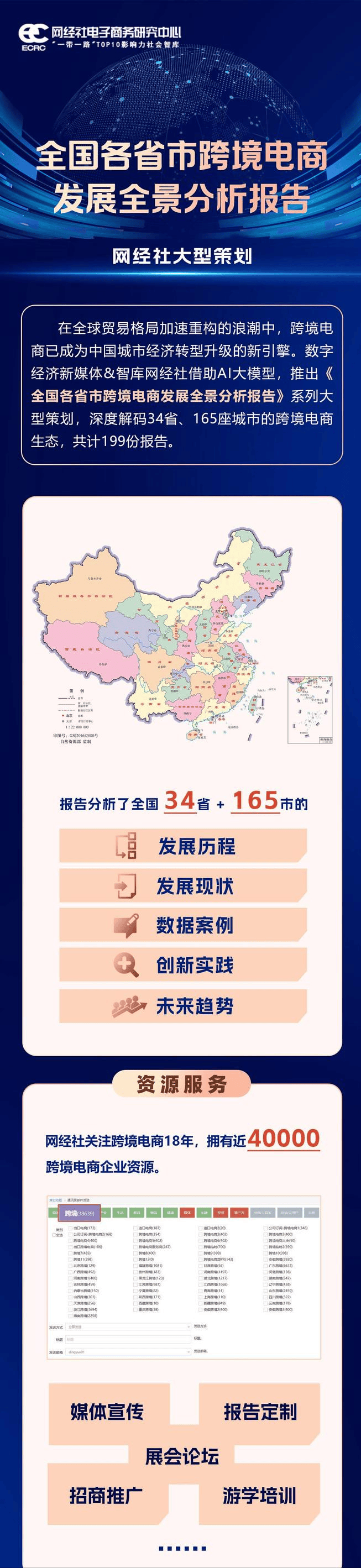
《辽宁省跨境电商发展全景分析报告(2025)》
Sou Hu Cai Jing· 2025-10-27 10:21
Core Insights - The report highlights the rapid growth of cross-border e-commerce in Liaoning Province, with a projected import and export value of 5.99 billion in 2024, representing a year-on-year increase of 23.4%, significantly higher than the national average [5][10][17]. Group 1: Development Background and Strategic Significance - Liaoning Province is positioned as a crucial economic center in Northeast China and a key land-sea gateway to Northeast Asia, making cross-border e-commerce vital for its foreign trade transformation and economic revitalization [10][13]. - The province's unique geographical advantages and strong manufacturing base support the growth of cross-border e-commerce, particularly in high-tech and mechanical products [10][16]. Group 2: Current Development Status - Liaoning's cross-border e-commerce has maintained a rapid growth trend, with an average annual growth rate exceeding 20% from 2009 to 2024 [17]. - The province has established seven cross-border e-commerce comprehensive pilot zones, with cities like Dalian and Shenyang leading in import and export volumes [20][22]. Group 3: Policy Environment and Institutional Innovation - The provincial government has implemented a multi-layered policy support system since 2015, including the establishment of a cross-border e-commerce development fund and various tax incentives [29][30]. - Innovations in customs supervision and clearance facilitation have significantly improved the efficiency of cross-border e-commerce operations, with average clearance times for imports and exports being faster than the national average [31][33]. Group 4: Challenges and Opportunities - Key challenges include insufficient infrastructure, a lack of professional talent, and high international logistics costs, which hinder the growth of cross-border e-commerce [35][36]. - Opportunities arise from the continuous development of the digital economy, the Belt and Road Initiative, and the ongoing industrial transformation in Liaoning, which can enhance the province's cross-border e-commerce capabilities [37][38]. Group 5: Recommendations and Future Outlook - Recommendations for high-quality development include strengthening digital infrastructure, enhancing service capabilities of cross-border e-commerce parks, and building a multi-level talent training system [40][41]. - The future of cross-border e-commerce in Liaoning is expected to trend towards scale, standardization, digitalization, and sustainability, with a projected export value exceeding 10 billion by 2025 [43][44].
苏豪弘业涨0.37%,成交额5778.63万元,近5日主力净流入-645.84万
Xin Lang Cai Jing· 2025-10-27 10:08
Core Viewpoint - Suhao Hongye Co., Ltd. is engaged in trade, culture, and investment, with a focus on export and import businesses, particularly in toys, pet products, medical devices, and fertilizers [2][7]. Company Overview - Suhao Hongye was established on June 30, 1994, and listed on September 1, 1997. The company is headquartered in Nanjing, Jiangsu Province [7]. - The main revenue sources are from product sales (98.45%), project engineering, consulting services (1.05%), and other income (0.51%) [7]. - As of June 30, the number of shareholders is 27,700, a decrease of 39.99% from the previous period, with an average of 8,898 circulating shares per person, an increase of 66.64% [7]. Financial Performance - For the first half of 2025, the company achieved a revenue of 3.919 billion yuan, a year-on-year increase of 10.73%, and a net profit attributable to shareholders of 26.2955 million yuan, up 34.72% year-on-year [7]. - The company has distributed a total of 503 million yuan in dividends since its A-share listing, with 74.03 million yuan distributed over the past three years [8]. Business Segments - The company relies on platforms like Amazon for export retail, utilizing its own brands "HollyHOME" and "DOEWORKS" to connect directly with end consumers, generating profits from the difference between product costs and sales [2]. - Suhao Hongye's subsidiary, Jiangsu Fertilizer Industry Co., Ltd., produces "Suhua" brand fertilizers, which are well-received by farmers in Northern Jiangsu [2][3]. Investment and Shareholding - The company holds a 16.31% stake in Hongye Futures, which is listed on the Hong Kong Stock Exchange [3]. - Suhao Hongye has invested 12 million yuan for a 24% stake in Jiangsu Hongrui Technology Investment Company, the first venture capital firm in Jiangsu focused on the biopharmaceutical sector [3]. Market Activity - On October 27, the stock price of Suhao Hongye increased by 0.37%, with a trading volume of 57.7863 million yuan and a turnover rate of 2.15%, bringing the total market capitalization to 2.685 billion yuan [1]. - The stock has seen a net outflow of 830,600 yuan from major investors today, with a total net outflow of 4.51156 million yuan over the past 20 days [4][5]. Technical Analysis - The average trading cost of the stock is 10.81 yuan, with recent accumulation activity noted, although the strength of this accumulation is weak. The current stock price is near a support level of 10.85 yuan, which is critical for potential rebound or decline [6].
