智能化

Search documents
北交所策略专题报告:广州车展开幕聚焦智能电动化产业链机遇,润农节水拟定增8451万元
KAIYUAN SECURITIES· 2025-11-23 05:41
Group 1 - The Guangzhou International Auto Show is taking place from November 21 to 30, 2025, featuring 93 new car launches and a total of 1,085 vehicles on display, including 629 new energy vehicles [2][13][16] - The number of companies in the automotive industry chain on the North Exchange has reached 30, with a total market capitalization of 776.82 billion yuan as of November 21, 2025 [17][19] - Notable companies in the automotive sector include Dapeng Industrial, which achieved a revenue increase of 28.43% and a net profit increase of 60.77% in Q1-Q3 2025, and Lintai New Materials, which saw a revenue growth of 68.92% and a net profit growth of 131.19% in the same period [12][26][28] Group 2 - The average weekly decline for five major industries, including high-end equipment, information technology, chemical new materials, consumer services, and pharmaceutical biology, was recorded at -9.59%, -7.48%, -10.19%, -9.74%, and -11.73% respectively [3][32][44] - The median price-to-earnings (P/E) ratios for these industries have decreased, with high-end equipment at 36.3X, information technology at 66.7X, chemical new materials at 40.6X, consumer services at 51.9X, and pharmaceutical biology at 29.0X [3][32][44] Group 3 - In the technology sector, the median P/E ratio for 155 companies has dropped from 45.5X to 41.1X, with an overall market capitalization decline from 4,923.95 billion yuan to 4,487.67 billion yuan [4][49][50] - The automotive industry P/E ratio has decreased to 32.2X, while the electronic industry P/E ratio is now at 48.8X, and the information technology industry P/E ratio stands at 78.0X [4][65][69] Group 4 - Runong Water Saving plans to raise no more than 84.51 million yuan through a private placement to its controlling shareholder, Hubei Xiangtou Group, at an issue price of 6.26 yuan per share [5][71] - Hai Xi Communications has signed a procurement contract worth 401.88 million yuan for a 400MW/800MWh energy storage project [5][71]
东风本田曹东杰:前期新能源转型不是很成功,但会持续攻坚
Jing Ji Guan Cha Wang· 2025-11-23 05:05
Core Viewpoint - Dongfeng Honda is facing dual pressures of declining sales and slow transformation, with hopes pinned on its parent company Dongfeng Motor for support in its transition to new energy vehicles [2][3]. Group 1: Company Strategy and Leadership - Cao Dongjie has recently returned to Dongfeng Honda as the executive vice president, tasked with leading the company through a critical period of transformation [5]. - The company aims to leverage the strengths of both Dongfeng and Honda to innovate and adapt to local market demands, particularly in electric and intelligent vehicle technologies [3][4]. - Dongfeng Honda is focusing on localizing its innovation by integrating the advantages of both partners, moving away from solely relying on foreign technology [3][4]. Group 2: Market Position and Competition - Dongfeng Honda is under pressure to find a breakthrough in a competitive market, emphasizing the need to listen to Chinese consumers and adapt to local standards and supply chains [4][6]. - The company is looking to learn from the successful model of Dongfeng Nissan, which has effectively utilized platform resources to launch a series of products [6][7]. - Despite challenges, Dongfeng Honda is committed to continuing its efforts in new energy development and is currently exploring new plans and considerations internally [6].

10000公里航程+智能化!“翼龙-X”无人机震撼亮相
Xin Lang Cai Jing· 2025-11-23 04:28
Group 1 - The article presents a personal viewpoint of the author, indicating that it does not represent the opinions or positions of Sina.com [1]
为中国式现代化提供坚强物质支撑——建设现代化产业体系,巩固壮大实体经济根基
Ren Min Ri Bao· 2025-11-23 02:45
Core Viewpoint - The article emphasizes the importance of building a modern industrial system as the material and technological foundation for Chinese-style modernization, highlighting the need for innovation and the strengthening of the real economy [1][5]. Group 1: Importance of the Real Economy - The real economy is identified as the cornerstone of national strength, with a focus on its role in supporting economic growth and employment [3][4]. - In 2024, China's industrial added value reached 40.5 trillion yuan, accounting for about 30% of GDP, with a year-on-year growth of 6.1% in the first three quarters [4]. - The real economy employs over 400 million people, representing more than half of the national employment population [4]. Group 2: Modern Industrial System Construction - The construction of a modern industrial system is crucial for connecting production and consumption, serving as a key pivot in the national economy for achieving high-quality development [5][6]. - The manufacturing sector's added value accounts for nearly 30% of the global total, maintaining the world's largest scale for 15 consecutive years [7]. - The shift towards intelligent, green, and integrated transformations in the real economy is essential for building a modern industrial system [7][10]. Group 3: Emerging Pillar Industries - The article introduces the concept of emerging pillar industries, which combine characteristics of both emerging and pillar industries, playing a significant role in economic growth [12][16]. - By 2025, the added value of strategic emerging industries is expected to exceed 17% of GDP, an increase of approximately 5.3 percentage points from the end of the 13th Five-Year Plan [16]. - The development of new industries such as low-altitude economy is highlighted, with a projected market size of 1.5 trillion yuan in 2023, potentially reaching 3.5 trillion yuan by 2035 [18]. Group 4: Future Outlook - The article stresses the need to optimize traditional industries while proactively planning for future industries, which are seen as potential strategic emerging industries [19]. - The traditional industries currently account for about 80% of the added value in manufacturing, with an estimated market space of 10 trillion yuan to be added in the next five years [19]. - Strengthening the foundation of the real economy and accelerating the construction of a modern industrial system will lay a solid material foundation for Chinese-style modernization [19].
宝马新世代技术集群广州车展亮相
Liao Ning Ri Bao· 2025-11-22 23:49
Core Insights - The new generation BMW iX3 will begin mass production at the Shenyang plant next year, with comprehensive vehicle testing currently underway globally [1] - The first model of the new generation, the long-wheelbase BMW iX3, is set to launch in the second half of 2026 [1] - The new generation represents not just a vehicle but the future of the BMW brand and its next-generation products [1] Technology and Innovation - The new generation BMW iX3 will feature the BMW Driving Control Super Brain, new generation electric drive, panoramic iDrive, and advanced intelligent driving assistance solutions [1] - The new generation electric drive system debuts at the Guangzhou Auto Show, utilizing BMW's unique 4695 large cylindrical battery cells, which increase energy density by 20% compared to previous models [1] - The electric drive system combines a unique excitation synchronous motor with an asynchronous motor, reducing energy loss by 40% and improving overall vehicle efficiency by 20% [1] Performance Metrics - The CLTC comprehensive range of the new generation BMW iX3 exceeds 900 kilometers [1] - The 800V high-voltage platform enhances charging efficiency, allowing for a 400-kilometer charge in just 10 minutes [1]

为中国式现代化提供坚强物质支撑——建设现代化产业体系 巩固壮大实体经济根基
Ren Min Ri Bao· 2025-11-22 22:04
Core Viewpoint - The construction of a modern industrial system is essential for China's economic development, emphasizing the importance of the real economy and technological innovation as foundational elements for future growth [1][5]. Group 1: Importance of the Real Economy - The real economy is highlighted as the cornerstone of national strength, with a focus on its role in supporting economic stability and growth [1][3]. - In Shandong's Bingzhou, the local kitchenware industry, which includes over 2,800 enterprises, has transformed through innovation and investment, now accounting for 40% of the national market [2][4]. Group 2: Current Economic Data - In 2024, China's industrial added value is projected to reach 40.5 trillion yuan, constituting about 30% of the GDP, with a year-on-year growth of 6.1% in the first three quarters of the current year [4]. - The real economy employs over 400 million people, representing more than half of the national employment population [4]. Group 3: Future Directions and Strategies - The modern industrial system is crucial for achieving high-quality development, with a focus on localizing and regionalizing industrial and supply chains [5][6]. - The "14th Five-Year Plan" has laid a solid foundation for building a modern industrial system, with China's manufacturing value added accounting for nearly 30% of the global total [6][7]. Group 4: Technological Advancements - The shift towards intelligent, green, and integrated transformations in the real economy is essential for enhancing competitiveness [7][10]. - The "smart revolution" in manufacturing has led to a 12% to 15% increase in productivity, exemplified by Shanghai's turbine manufacturing plant [8]. Group 5: Emerging Pillar Industries - The concept of "emerging pillar industries" combines characteristics of both emerging and traditional industries, playing a significant role in economic growth and technological advancement [12][17]. - By 2025, the added value of strategic emerging industries is expected to exceed 17% of GDP, indicating a substantial increase from previous years [18]. Group 6: Market Opportunities - The low-altitude economy is projected to reach a market size of 1.5 trillion yuan this year, with expectations of growing to 3.5 trillion yuan by 2035 [20]. - The traditional industries, which currently account for about 80% of manufacturing value added, are also expected to see significant market expansion, potentially adding around 10 trillion yuan in the next five years [21].
为中国式现代化提供坚强物质支撑
Ren Min Ri Bao· 2025-11-22 22:00
Core Viewpoint - The construction of a modern industrial system is essential for China's economic development, emphasizing the importance of the real economy and technological innovation as foundational elements for future growth [1][5][21]. Group 1: Importance of the Real Economy - The real economy is highlighted as the cornerstone of national strength, with a focus on its role in supporting economic stability and growth [1][3]. - In Shandong's Bingzhou, the local kitchenware industry, which includes over 2,800 enterprises, has successfully transformed through innovation and investment, now accounting for 40% of the national market [2][4]. - The industrial added value in China is projected to reach 40.5 trillion yuan in 2024, contributing approximately 30% to the GDP, with a year-on-year growth of 6.1% in the first three quarters of the current year [4]. Group 2: Modern Industrial System Construction - The modern industrial system is described as a key link between production and consumption, crucial for achieving high-quality development [5][21]. - The "14th Five-Year Plan" has laid a solid foundation for building this system, with China's manufacturing value added accounting for nearly 30% of the global total [6][7]. - The shift towards intelligent, green, and integrated transformations in the real economy is emphasized as vital for enhancing competitiveness [7][10]. Group 3: Emerging Pillar Industries - The concept of "emerging pillar industries" is introduced, which combines characteristics of both emerging and pillar industries, playing a significant role in economic growth and technological advancement [11][12][17]. - Predictions indicate that by 2025, the added value of strategic emerging industries will exceed 17% of GDP, marking a significant increase from previous years [18]. - The low-altitude economy is cited as a promising sector, with a market size expected to reach 1.5 trillion yuan this year and potentially 3.5 trillion yuan by 2035 [20]. Group 4: Future Outlook - The need to optimize traditional industries while strategically developing future industries is stressed, with traditional sectors currently accounting for about 80% of manufacturing value added [21]. - The potential for new industries to emerge as significant contributors to the economy over the next decade is highlighted, suggesting a transformative impact on China's high-tech sector [21].
快速响应高效协同 庄睦德:中国研发团队是梅赛德斯-奔驰全球研发网络核心支柱
Zhong Guo Jing Ying Bao· 2025-11-22 11:24
Core Insights - Mercedes-Benz showcased the AMG GT XX concept car at the "2025 Mercedes-Benz XX Technology Innovation Day," highlighting its advancements in electrification and intelligence, marking a significant step towards future mobility [1][2] - The GT XX concept car features innovative technologies such as an axial flux motor and direct cooling battery technology, breaking 25 performance records on real racetracks, demonstrating Mercedes-AMG's leadership in high-performance electrification [1][3] Group 1: Technological Advancements - The AMG GT XX concept car is the first pure electric model utilizing F1-derived driving technology, showcasing a commitment to high performance and durability in electric vehicles [1][3] - The vehicle is equipped with a super-fast charging system, achieving an average charging power of over 850 kW, allowing for a range increase of 400 kilometers in approximately 5 minutes [4] - The battery design incorporates advanced materials, achieving an energy density of 300 Wh/kg, and features a lightweight aluminum alloy casing for improved safety and heat dissipation [4] Group 2: R&D and Collaboration - The Chinese R&D teams are identified as a core pillar of Mercedes-Benz's global R&D network, leading various projects such as new hybrid batteries and intelligent parking systems [2][3] - Mercedes-Benz emphasizes a collaborative approach, partnering with companies like ByteDance and Momenta to enhance AI capabilities and autonomous driving technologies [5][6] - The company is celebrating 20 years of R&D in China, focusing on integrating local partnerships to bring innovative technologies into everyday use for Chinese consumers [6]
BMW新世代四大技术上车:电动化能否守住“宝马味”?
Tai Mei Ti A P P· 2025-11-22 10:11
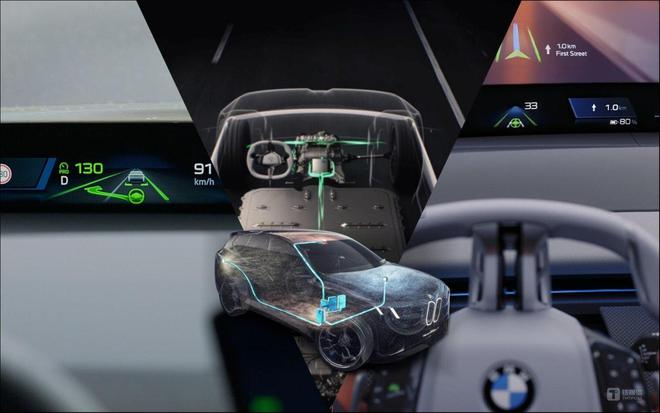
Core Insights - BMW showcases its new generation technology cluster at the 2025 Guangzhou Auto Show, emphasizing its advancements in electric and intelligent driving technologies [2] - The new generation BMW iX3 will be the first model to feature these technologies, set to be produced in 2026 at BMW's Shenyang plant, representing a significant step in BMW's future direction [2] Electric Drive System - The sixth-generation eDrive system is highlighted as a "performance champion," featuring a 46mm standard diameter cylindrical battery that achieves a 20% increase in energy density [3] - The system supports an 800V high-voltage platform, allowing for a 400km range increase with just 10 minutes of charging, and a CLTC range exceeding 900km [3] Driving Control Technology - The BMW Driving Control Super Brain integrates AI algorithms and hardware to replicate the driving feel of traditional fuel vehicles, addressing common issues in electric vehicle handling [3][4] - It processes data from 23 sensing units to perform 1000 dynamic calculations per second, enabling real-time adjustments to torque distribution, suspension damping, and steering force [3] Intelligent Cockpit and User Experience - The new panoramic iDrive system focuses on user-centered, scenario-based simplification, utilizing AR technology to enhance information accessibility while maintaining driving safety [5] - BMW collaborates with Huawei to integrate HarmonyOS NEXT for features like the BMW digital key and HUAWEI HiCar, tailored for local user habits [5] AI and Smart Driving Solutions - BMW partners with Alibaba to develop an intelligent cockpit system based on AI technology, aiming to create a new BMW personal assistant with advanced communication capabilities [6] - The collaboration with Momenta focuses on developing a new generation of intelligent driving assistance solutions, designed specifically for the Chinese market [6][7] Integration and Synergy of Technologies - The four key technologies form a synergistic effect, enhancing the overall driving experience by integrating electric drive, driving control, and intelligent assistance [8] - The system's ability to adjust based on real-time conditions, such as wet road surfaces, exemplifies the interconnectedness of these technologies [8] Market Position and Future Outlook - BMW's new generation technology cluster indicates its commitment to maintaining driving pleasure while addressing the challenges of electric and intelligent vehicle markets [9] - The success of these innovations will depend on their real-world performance and the company's ability to adapt to the rapidly evolving competitive landscape in China [9]
跨界融合+技术落地 年末车展“剧透”未来出行
Zhong Guo Jing Ying Bao· 2025-11-22 02:30
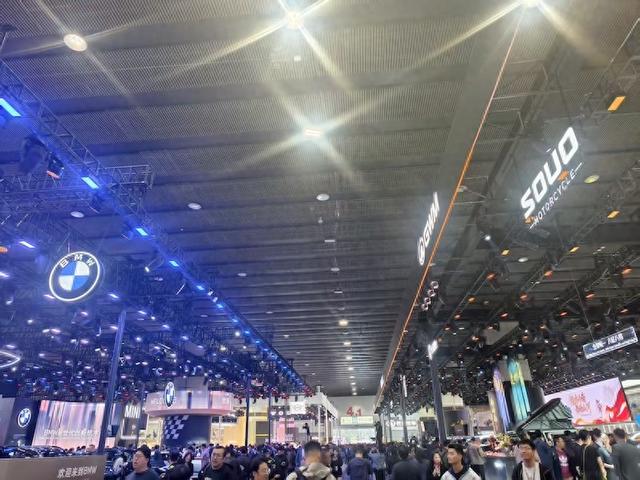
Core Insights - The 2025 Guangzhou International Auto Show, themed "New Technology, New Life," showcases the latest advancements in the automotive industry, emphasizing the transformation towards electric and intelligent vehicles [2][12] - The exhibition covers an area of 220,000 square meters, featuring 1,085 vehicles, including 93 new launches and 629 new energy vehicles, highlighting a significant shift in the Chinese automotive market [2][12] - The event serves as a critical platform for assessing the high-quality development of China's automotive industry, reflecting a transition from scale expansion to quality and efficiency improvement [3][12] Industry Trends - Cross-industry collaboration is emerging as a new trend, with automotive companies partnering with tech firms in AI and smart hardware, accelerating the shift from vehicles as mere transportation to intelligent mobile terminals [3][12] - The rise of domestic brands is evident, with significant improvements in product strength, technology, and brand power showcased at the event [3][12] Company Highlights - New models like the Huawei-powered Xiangjie S9 feature advanced driving assistance systems and impressive range capabilities, with the pure electric version achieving a CLTC range of 816 km [4] - Beijing Off-road showcased its BJ40 series, achieving a sales volume of 113,000 units from January to October, with a 110% year-on-year increase in "boxy" vehicle sales [5] - Great Wall Motors reported a record sales month in October, with 143,078 vehicles sold, a 22.5% year-on-year increase, and a notable 44.06% increase in new energy vehicle sales [6][7] - BAIC's new energy division also performed well, with a 112% year-on-year increase in October sales, contributing to a total of 142,043 units sold from January to October [7] - Major international brands like BMW, Mercedes-Benz, and Audi are showcasing their electric transformation, with BMW reporting over 40% growth in new energy vehicle sales in the first ten months of 2025 [8][9][10][11][12] Future Outlook - The auto show indicates that the electric vehicle sector is entering a high-quality development phase, with smart technology becoming a core competitive differentiator [12] - The industry is expected to continue evolving with a focus on cross-industry integration and innovation, as companies adapt to changing consumer demands and technological advancements [12]