
双碳目标

Search documents
天大开发“有机双氯”电解液 推动铝电池向大规模实际应用迈进
Zhong Guo Hua Gong Bao· 2025-12-15 03:14
Core Viewpoint - The development of renewable energy and efficient utilization is essential for achieving "dual carbon" goals, with safe and green large-scale energy storage technology being a key support [1][2] Group 1: Research Breakthrough - A new low-corrosive "organic dichloride" electrolyte has been developed by a team led by Professor Yang Quanhong from Tianjin University, addressing a significant barrier for the large-scale application of aluminum metal batteries [1] - Aluminum metal batteries exhibit great potential due to their high theoretical specific capacity, abundant crustal reserves, and low cost, but their practical application has been limited by the electrolyte system [1][2] Group 2: Technical Innovations - The team proposed an innovative design strategy for the "organic dichloride" solvated electrolyte, replacing traditional ionic liquids with aluminum chloride or propylene oxide organic systems, significantly reducing the overall corrosiveness of the electrolyte [1][2] - This unique structure confines all corrosive chloride ions (Cl-) around aluminum ions (Al3+), ensuring stable and efficient charging and discharging cycles for aluminum batteries [1] Group 3: Industry Implications - This breakthrough not only resolves the strong corrosiveness issue faced by aluminum metal batteries but also opens a new electrochemical reaction pathway based on cationic active species, providing a fresh solution to common technical bottlenecks in aluminum and other multivalent metal batteries [2] - The research was a collaboration between the Tianjin University team and the Shenzhen Institutes of Advanced Technology, indicating a strong partnership in advancing energy storage technologies [2]
“三个转向”破“内卷” | 大家谈 如何破除“内卷”竞争
Zhong Guo Hua Gong Bao· 2025-12-15 02:40
Core Viewpoint - The coal chemical industry is undergoing a profound transformation from scale expansion to quality improvement, with the need to break free from unhealthy competition and resource consumption in a homogeneous, low-value "red ocean" market. The path to overcoming this dilemma lies in achieving three fundamental shifts [1]. Group 1: Shift in Development Logic - The industry must transition from focusing on "efficiency within the walls" to "value along the supply chain," requiring a restructured development logic that emphasizes value creation and distribution across the entire industry chain rather than just optimizing production efficiency [1]. Group 2: Innovation in Competition - The competition should shift from "scale and cost" to "differentiation and specialty" innovation, moving away from a singular focus on large-scale production and low consumption to developing unique products that can dominate niche markets, thereby establishing core competitiveness based on technological barriers [2]. Group 3: Emphasis on Human Capital - The focus should change from "heavy hardware investment" to "activating human capital," recognizing frontline employees as the most important asset and source of innovation. This involves transforming tacit knowledge into transferable standards and encouraging micro-innovations through greater autonomy for employees [2].
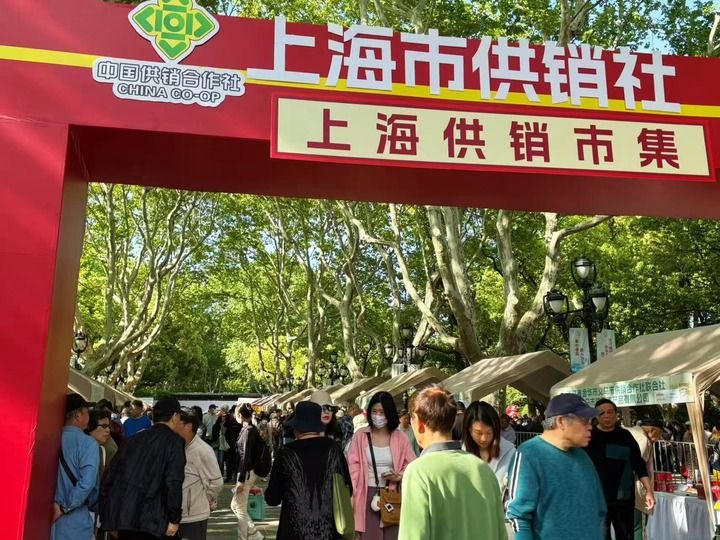
上海供销:搭建产销链上的“农商会客厅”
Xin Hua Wang· 2025-12-15 02:28
Core Insights - The Shanghai supply and marketing system is exploring a new path that aligns with the characteristics of a mega city, focusing on the responsibilities of "three rural issues and one recycling" [1] - The "Supply and Marketing Market" in Shanghai is emerging as a distinctive highlight, promoting seasonal consumption and serving as a platform for high-quality agricultural products [2][4] Group 1: Supply and Marketing Market Development - The Shanghai "Supply and Marketing Market" has hosted over 24 themed market events this year, reaching various community locations and focusing on the integration of the Yangtze River Delta [4] - The market has successfully introduced over 5,000 unique agricultural products from various regions, enhancing the connection between urban consumers and rural producers [4][5] - The market emphasizes seasonal and cultural consumption, creating immersive experiences that promote traditional culture and improve urban living quality [5] Group 2: Regional Cooperation and Integration - The establishment of the Yangtze River Delta Supply and Marketing Cooperative Strategic Alliance aims to enhance agricultural modernization and urban-rural integration through collaborative efforts [6] - The alliance focuses on breaking down administrative barriers and integrating resources to facilitate a smooth flow of high-quality agricultural products across regions [6][7] Group 3: Modern Agricultural Support - The Shanghai supply and marketing system is committed to building a robust agricultural supply chain, particularly in the potassium fertilizer sector, to ensure timely delivery to farmers [9] - This innovative supply chain model mitigates risks associated with international market fluctuations, supporting the stable development of urban agriculture [9] Group 4: Brand and Community Engagement - The Shanghai supply and marketing system leverages its historical brands to enhance market vitality and consumer recognition, exemplified by the success of the "Hao Weijia" brand [10] - Initiatives like "Supply Enjoyment Home" and "Supply Harmony Home" are designed to address housing needs for young professionals, showcasing the system's adaptability to urban demands [10] Group 5: Recycling and Sustainability Efforts - The Shanghai supply and marketing system is actively contributing to the circular economy by establishing a comprehensive recycling network and promoting green initiatives [11] - The system's revenue for 2024 is projected to reach 21.142 billion, with a profit of 1.991 billion, reflecting its commitment to rural revitalization and modernization [11]

威海:绿色发展激活产业新动能
Da Zhong Ri Bao· 2025-12-15 01:53
传统的轮胎制造属于高耗能产业。但君乐轮胎是持续"领跑"全省轮胎行业能效赛道的企业之一,企 业的单位产品能耗较5年前下降了15.3%,连续5年入选"全国石油和化工行业能效领跑者标杆企业(轮 胎)",位列山东第一。个中秘诀,是通过智能制造实现绿色发展。 近年来,君乐轮胎积极探索工厂数字化、智能化管理模式,引进全球先进自动化智能生产、物流装 备,广泛利用工业互联网和大数据技术,使关键工序数控化率达100%,日产量由1200套提升至3500 套,生产效率提升近200%,产品合格率将提升至99.7%,生产效率、产品质量和能源利用效率均达行业 领先水平。 207家绿色制造单位多点开花 威海:绿色发展激活产业新动能 在威海君乐轮胎的高性能全钢载重子午胎智能化生产车间,全自动化的轮胎生产线满负荷运转。与 传统的轮胎生产车间不同,这里的用电并非完全依赖外部电网,而是由企业自主"生产"供给。"我们建 设了5.9兆瓦分布式光伏电站,覆盖了生产车间屋顶及厂区闲置空间,今年1-10月份已稳定发电504万千 瓦时,公司绿电使用比例达到17%。"公司副总经理王尧文介绍。 君乐轮胎的绿色发展,是威海市绿色工厂建设的一个生动缩影。威海市立足产 ...
北京电力交易中心解读集中式新能源市场报价新规
Zhong Guo Dian Li Bao· 2025-12-15 01:05
宽约束、严监管 更好规范新能源发电全量入市 ——《关于优化集中式新能源发电企业市场报价的通知(试行)》解读 一是明确集中报价的定义与适应范围。新能源发电集中报价特指同一集团内、同一省(区、市)的集中 式新能源发电企业在同一固定场所参与电能量市场交易的行为,禁止跨集团、跨省集中报价。适用范围 包括电力现货市场正式运行和连续结算试运行地区的中长期电能量集中交易和现货电能量交易。 三、政策落地有关思考 规范市场交易行为,是有效防范市场运营风险、有力维护公平竞争秩序的重要举措。近期,国家发展改 革委、国家能源局印发《关于优化集中式新能源发电企业市场报价的通知》(以下简称"通知"),首次 明确了集中式新能源发电企业集中报价的定义边界与行为准则,对推动形成规则清晰、竞争有序、监管 有力的新能源全面入市新格局具有重要意义。 一、政策出台的背景与意义 《通知》深入贯彻落实党中央、国务院关于电力市场化改革与绿色低碳转型的决策部署,更好落实新能 源全面入市要求,针对新能源发电企业资源分布离散、场站位置偏远、交易能力较弱的客观特点,允许 同一集团内、同省域的新能源发电企业在固定场所集中进行报价。《通知》兼顾行业健康发展与电力市 场 ...
全国统一电力市场建设取得重要阶段性成效
Zhong Guo Dian Li Bao· 2025-12-15 01:04
Core Insights - 2025 is a pivotal year for achieving the "14th Five-Year Plan" goals and transitioning to the "15th Five-Year Plan," marking significant progress in the national unified electricity market system [1] Group 1: Market Development - China's electricity market transaction scale has reached the largest globally, with market transaction electricity accounting for 63.4% of total electricity consumption, and renewable energy market transactions making up 57% [1] - The establishment of a normalized trading mechanism across grid operating areas has been largely achieved, enhancing the optimization of electricity resource allocation [1] - The electricity traded under this mechanism has exceeded 22 billion kilowatt-hours, demonstrating improved inter-grid electricity support [1] Group 2: Spot Market Operations - The spot market has been fully operational, achieving comprehensive coverage of all electricity market categories, with 28 provinces conducting continuous spot trading [2] - Inter-provincial spot market transactions reached 331.4 billion kilowatt-hours from January to October, accounting for 14.8% of total spot electricity [2] - The Southern regional electricity market has transitioned to continuous operation, marking a significant breakthrough in regional economic collaboration [2] Group 3: Regulatory Framework - A basic national unified rules system has been established, facilitating the integration and resource allocation across the electricity market [3] - The foundational rule system, including mid-term, spot, and ancillary service rules, has been developed to support the standardized operation of the national unified electricity market [3] - The construction of a unified electricity market is crucial for deepening electricity system reforms and supporting high-quality economic development [3] Group 4: Energy Security and Green Transition - During peak summer demand, cross-regional transmission capacity reached a maximum of 151 million kilowatts, significantly improving energy supply stability [4] - Green electricity trading has seen an annual growth rate of nearly 180%, with over 13.5 billion green certificates traded, supporting the development of renewable energy [4] - The market has contributed to lowering energy costs, with industrial and commercial electricity prices remaining competitive internationally [5] Group 5: Resource Allocation Efficiency - From January to October 2025, cross-provincial and cross-regional trading volume reached 1.3 trillion kilowatt-hours, growing by 12.5% year-on-year [5] - The Southern regional electricity market has become the largest unified clearing electricity spot market globally, effectively addressing the mismatch between resource-rich areas and load centers [5] - The ongoing development of the electricity market system is expected to enhance the resilience of the electricity system and accelerate the green transition [5]
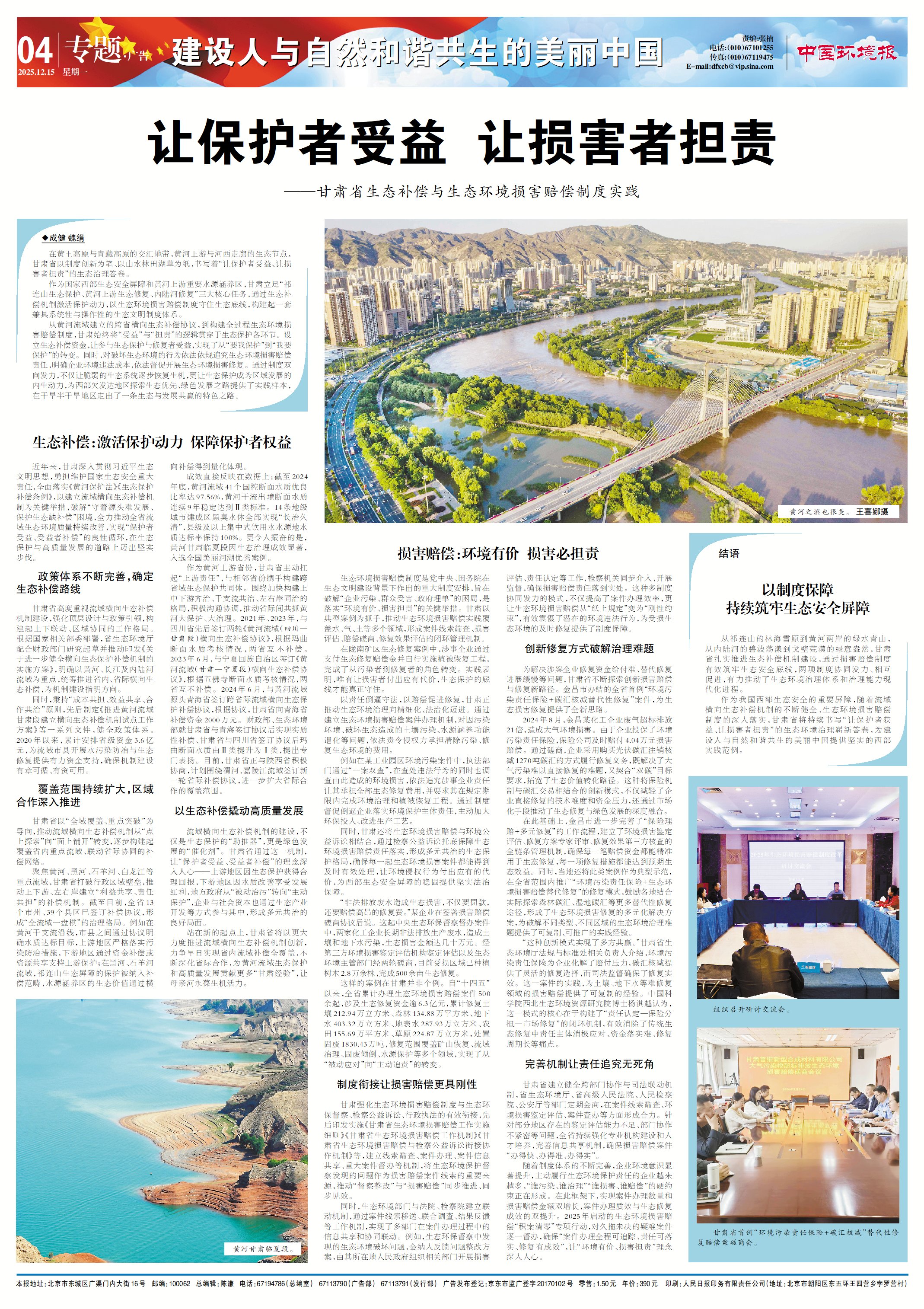
让保护者受益 让损害者担责——甘肃省生态补偿与生态环境损害赔偿制度实践
Zhong Guo Huan Jing Bao· 2025-12-15 00:41
Core Viewpoint - Gansu Province is implementing an innovative ecological compensation mechanism to promote ecological protection and restoration, ensuring that protectors benefit while those who cause damage are held accountable [3][4][16]. Group 1: Ecological Compensation Mechanism - Gansu is focusing on three core tasks: ecological protection of Qilian Mountains, ecological restoration of the upper Yellow River, and restoration of inland rivers, using an ecological compensation mechanism to activate protection efforts [3][16]. - The province has established a horizontal ecological compensation agreement across provinces, integrating the logic of "benefit" and "responsibility" throughout ecological protection processes [17]. - As of 2024, the water quality in 41 national control sections of the Yellow River basin has a good rate of 97.56%, with the main stream's water quality meeting Class II standards for nine consecutive years [20]. Group 2: Policy Framework and Implementation - Gansu has developed a comprehensive policy framework for horizontal ecological compensation, emphasizing top-level design and regional collaboration [20]. - Since 2020, Gansu has allocated 360 million yuan to support water pollution prevention and ecological restoration in various regions [20]. - The province has signed multiple horizontal ecological compensation agreements with neighboring provinces, including Sichuan and Ningxia, to enhance cross-province ecological protection [24]. Group 3: Environmental Damage Compensation - The ecological damage compensation system aims to address the issue of "polluters pay" and ensure that environmental damages are compensated [27][28]. - Gansu has handled over 500 ecological damage compensation cases since the 14th Five-Year Plan, involving over 630 million yuan in ecological restoration funds [29]. - The province is enhancing the rigidity of the damage compensation system by integrating it with environmental supervision and public interest litigation [30]. Group 4: Innovative Repair Methods - Gansu is exploring innovative paths for damage compensation and restoration, including the first case of "environmental pollution liability insurance + carbon credit reduction" [31]. - This innovative model combines insurance mechanisms with carbon trading to facilitate ecological restoration while alleviating financial burdens on companies [32]. Group 5: Strengthening Accountability - Gansu is establishing a robust inter-departmental collaboration and judicial linkage mechanism to ensure effective handling of ecological damage cases [33]. - The province is promoting a culture of accountability where enterprises are increasingly aware of their environmental responsibilities, leading to a rise in proactive compliance [35].
协鑫能科总裁费智: AI攻坚能源预测 双轮驱动加速转型
Zhong Guo Zheng Quan Bao· 2025-12-14 22:09
Core Viewpoint - The integration of AI technology in the energy sector is crucial for overcoming challenges in energy prediction and optimizing virtual power plant operations, as highlighted by the strategic initiatives of GCL-Poly Energy Technology [1][2][6][7] Group 1: AI Technology and Energy Prediction - AI technology faces significant bottlenecks in energy applications, particularly in high-precision forecasting of power generation and consumption [2] - The industry struggles with the lack of scenario-specific energy AI prediction models, which complicates the training of large models using historical load and weather data [2] - GCL-Poly aims to develop energy time-series models and AI agents to enhance predictive accuracy and operational strategies, focusing on long-term memory and adaptability to external factors [2][3] Group 2: Achievements in Virtual Power Plant Operations - GCL-Poly has managed over 20 GW of user load, with approximately 835 MW of controllable load verified in the market, demonstrating its comprehensive advantages in the virtual power plant sector [3] - The company's AI model has improved the accuracy of energy system assessments by over 10% and reduced operational costs of distributed energy systems by about 3% [3] - The implementation of AI technology has increased user engagement with green energy, promoting sustainable consumption [3] Group 3: Strategic Developments and Global Expansion - GCL-Poly is transitioning from a domestic green energy operator to a global energy technology service provider, focusing on a dual strategy of "energy assets + energy services" [6] - The company plans to enhance its asset structure by increasing the share of renewable energy and expanding projects related to zero-carbon parks and microgrids [6] - GCL-Poly aims to innovate in carbon neutrality services and expand its international presence, particularly in Southeast Asia, Central Europe, and Africa, to address market challenges [6][7]

AI攻坚能源预测 双轮驱动加速转型
Zhong Guo Zheng Quan Bao· 2025-12-14 20:19
Core Insights - The integration of AI technology in the energy sector faces significant challenges, particularly in accurate energy forecasting, which is crucial for the development of virtual power plants and energy trading [1][2] - The company is focusing on developing AI models and expanding application scenarios to enhance predictive accuracy and operational efficiency, aiming to transition from a passive aggregator to an active value-adding energy service platform [2][4] AI Technology Challenges - The energy AI prediction models in the industry often lack scenario adaptability, making it difficult to utilize vast historical load and weather data for accurate long-term forecasting [2] - The company aims to overcome these challenges by developing energy time-series models and AI agents that can handle complex variable interactions and improve sensitivity to external factors [2] Achievements in Virtual Power Plant Sector - The company has managed user load exceeding 20 GW, with approximately 835 MW of controllable load verified in the market, showcasing its comprehensive data and model advantages [3][4] - The application of AI models has improved predictive accuracy by over 10% and reduced operational costs of distributed energy systems by about 3% [4] Strategic Developments - The company has launched the "Juxing" virtual power plant platform to create a smart energy management hub, enhancing the efficiency of aggregating distributed resources [5] - The platform supports a multi-dimensional AI model that automates processes from demand forecasting to trading strategy recommendations [5] Global Expansion Plans - The company is transitioning from a domestic green energy operator to a global energy technology service provider, focusing on a dual strategy of "energy assets + energy services" [6] - Future plans include expanding renewable energy assets and developing AI-driven platforms for energy management, trading, and carbon neutrality services [6][7] Market Opportunities - The ongoing integration of power market reforms and carbon neutrality goals presents significant market opportunities for virtual power plants and related services [7] - The company aims to leverage technological advancements and international market expansion to drive growth and contribute to global energy transformation [7]
银行绿色金融债呈现“三升”:规模翻倍、主体多元、成本优化
Zhong Guo Zheng Quan Bao· 2025-12-14 20:19
Core Insights - The issuance of green financial bonds in the banking sector has significantly increased in 2023, with a total issuance exceeding 530 billion yuan, marking a year-on-year increase of over 186% [1][5][6] Group 1: Issuance Scale and Growth - As of December 14, 2023, the banking industry has issued 68 green financial bonds, with a total scale surpassing 530 billion yuan, which is an increase of 333.6 billion yuan compared to the previous year [1] - The issuance from state-owned banks has been substantial, with the six major state-owned banks collectively issuing 206 billion yuan in green financial bonds, approximately three times the total issuance of the previous year [3][4] Group 2: Participation of Different Banking Institutions - Regional small and medium-sized banks have accelerated their participation, with the number of green financial bonds issued increasing from 22 to 30 compared to the same period last year [1][2] - Notably, since November, eight regional banks have issued a total of 172 billion yuan in green financial bonds, indicating a rapid increase in issuance activity [2] Group 3: Policy and Market Drivers - The rapid development of green financial bonds is closely linked to the deepening of ESG practices in the banking sector, supported by policy guidance and market demand [5][6] - Recent policies have emphasized the importance of increasing green credit and developing green financial products, which has facilitated the growth of green bond issuance [5][6] Group 4: Cost and Efficiency Improvements - The average issuance interest rate for green financial bonds has decreased from 1.96% in 2024 to 1.75% in 2023, enhancing the cost-effectiveness of financing for green projects [4] - The introduction of floating rate green bonds has allowed banks to better adapt to market interest rate fluctuations, improving the resilience of the bond market [4]


