
数字孪生

Search documents
凡拓数创(301313) - 广州凡拓数字创意科技股份有限公司投资者关系活动记录表
2025-05-20 12:05
Group 1: Company Overview and Strategy - The company is actively promoting AI 3D digital twin product development and integrated services across various industries, including industrial, water resources, energy, and environmental sectors [2][3]. - The company aims to enhance its "AI + 3D" development strategy, focusing on technology innovation and industrial upgrades through a four-dimensional strategic layout: technology foundation, product innovation, model transformation, and capital empowerment [3][4]. Group 2: Financial Performance and Challenges - In 2024, the company faced significant challenges due to market environment changes and intensified industry competition, leading to a substantial decline in operating revenue [3]. - The company's R&D investment in 2024 was 33.37 million CNY, accounting for 9.14% of operating revenue, reflecting a commitment to maintaining technological leadership [4]. Group 3: Product and Service Matrix - The company's product and service offerings include 3D digital creative products, integrated digital solutions, and AI 3D digital twin products, which are currently prioritized for development [5]. - The company is focusing on building a digital twin engine, low-code platforms, AI software tools, and industry-specific digital twin management platforms to enhance modularity and standardization of its products [5]. Group 4: Industry Collaboration and Future Directions - The digital twin technology is recognized as a crucial component for the construction of new intelligent factories, with the company's digital twin platform meeting high-performance requirements for both web and client applications [6]. - The company is actively collaborating with clients in the intelligent manufacturing sector to advance its services and solutions [6].
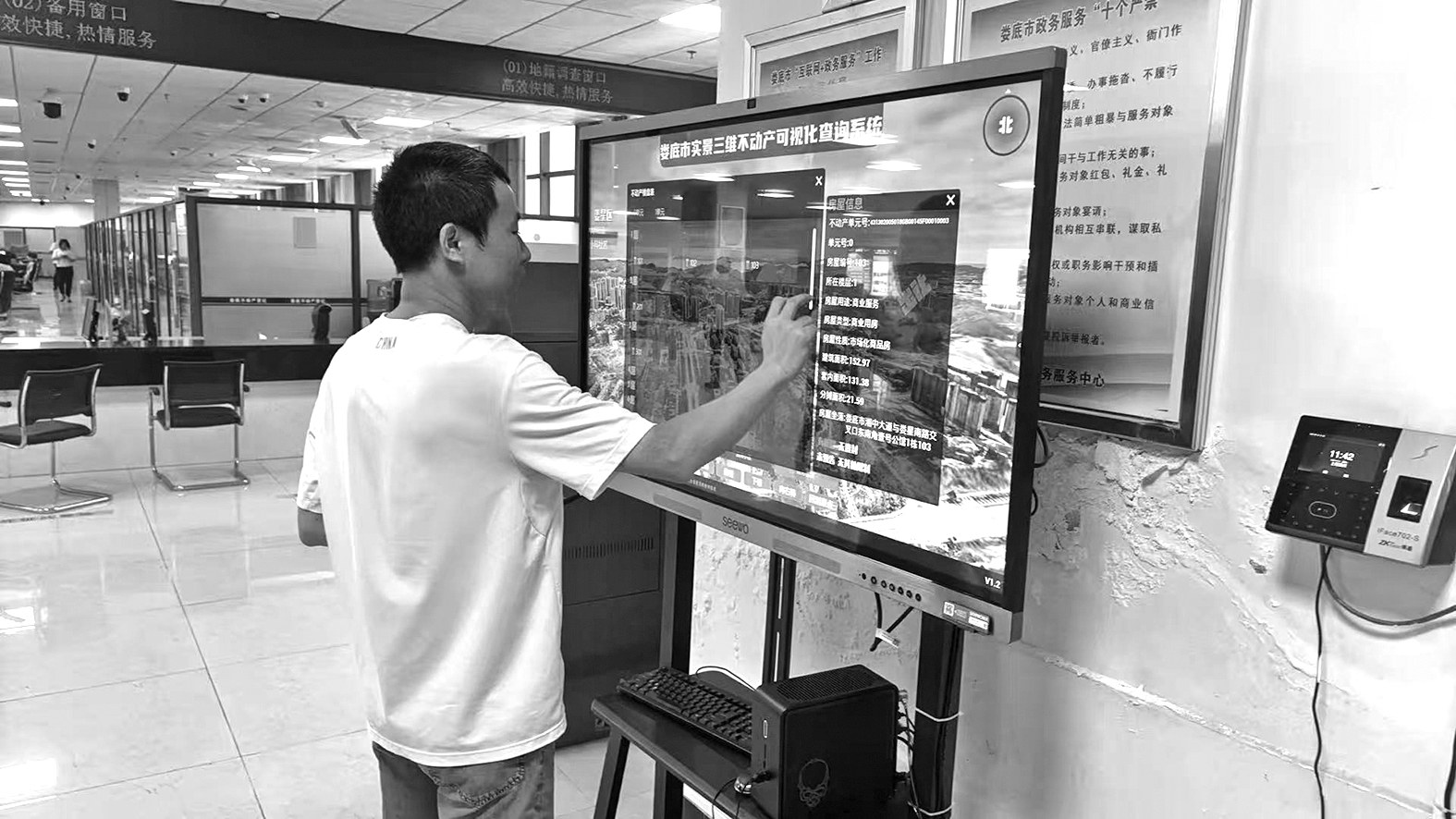
湖南娄底构建统一城市数字时空底座,赋能自然资源事业数智化转型——实景三维“智”进之路
Zhong Guo Zi Ran Zi Yuan Bao· 2025-05-20 04:32
Core Insights - The article highlights the integration of digital technology in urban management and governance in Loudi City, Hunan Province, through the establishment of a unified urban digital spatial foundation, enhancing the application of real-world 3D data [1][3] Group 1: Digital Infrastructure Development - Loudi City has built a real-world 3D database covering 8,109 square kilometers with a DEM of better than 1 meter and a DOM of 0.5 meters, along with 800 square kilometers of urban-level 3D data with a precision of better than 5 centimeters [1] - The city has developed eight application platforms based on the real-world 3D database, including a smart spatial big data platform and a land supermarket big data platform, to accurately map every piece of land and building into a digital twin world [3][5] Group 2: Empowering Natural Resource Management - The Natural Resources and Planning Bureau of Loudi has signed cooperation agreements with 12 units to provide spatial data support for various systems, enhancing urban governance and resource management [5] - The average approval time for urban planning projects has been reduced from over 80 days to around 20 days due to the implementation of real-world 3D technology, streamlining the project approval process [5] Group 3: Enhancing Public Services - Citizens can use a real estate visualization query system to access information about property conditions and rights restrictions, with over 80,000 queries made since its launch [7] - The integration of real-world 3D technology is also being extended to rural areas, supporting environmental monitoring and public safety initiatives [7]

深度|一颗螺丝钉的数字化之旅:长虹AI如何守护“零缺陷”制造
Zhong Jin Zai Xian· 2025-05-20 01:22
长虹技佳精工冲压生产线 在工业制造的微观世界里,一枚价值不足一分钱的螺丝钉,正悄然演示着中国制造业的数字化转型浪 潮。踏入长虹控股集团的智能制造基地,这一基础工业元件正在经历前所未有的变革。从原材料开采, 到产品全生命周期管理,数字化技术赋予了这颗小小螺丝钉无限可能。 凭借数字孪生技术的精妙运 用,螺丝钉在参与生产过程中的每一个参数、每一道工序都被实时监控和深度分析,恰似一双无形却有 力的大手,始终将产品质量稳稳托举在顶尖水平。这种精细化管理模式,正是长虹实现"零缺陷"制造的 核心秘诀。 01 「 数字编码 」 工业毛细血管的数字革命 当晨曦穿透绵阳科技城的薄雾,长虹技佳精工有限公司的冲压生产线,已经奏响了智能制造的激昂乐 章。在这条繁忙而有序的生产线上,毫不起眼的螺丝钉,正演绎着一场颠覆传统认知的数字化传奇。曾 经静默无声、毫无生气的"哑巴零件",在长虹智慧供应链信息系统(ISRM)的赋能下,摇身一变成为可追 溯、能感知、会"说话"的智能终端,开启了属于自己的数字之旅。 长虹质量管理人员使用ISRM系统 "一物一码,一码到底",这一简单而有力的理念,早已突破了生产线的狭窄范畴,如涟漪般扩散至企业 运营的全链 ...

数智赋能,湖南娄底经开区钢铁产业“炼”出新未来
Zhong Guo Xin Wen Wang· 2025-05-20 00:38
作为湖南最大中外合资企业,VAMA的智能化实践同样瞩目。车间内,工业摄像头与传感器通过5G网 络将设备数据实时传输至控制中枢,技术人员可远程调控0.01毫米级参数。高度智能化生产使能耗显著 降低,镀锌板、汽车板年产能稳定在百万吨以上。 生态培育厚植转型沃土 传统产业的转型密码,藏在系统化的生态培育中。政策层面,娄底经开区出台《促进产业数字化发展奖 励暂行办法》等文件,近两年兑现奖补资金4380万元,撬动规上企业数智化改造率达70%以上。基建方 面,建成5G基站258座,打造省级工业互联网平台2个,9个项目入选湖南省"数字新基建"标志性项目, 2个企业跻身全国5G工厂名录。 在涟钢高炉风口平台,搭载激光雷达的机器狗正通过红外热成像技术巡检设备;生产指挥中心大屏上, 虚拟工厂对钢卷清洗、镀锌等工序进行数字化预演;VAMA车间内,5G网络将设备运行状态实时转化 为"数字语言"……这些充满科技感的场景,是湖南娄底经开区钢铁产业数智化转型的缩影。 该园区所在的娄底市素有"钢城"之称,是中国重要的钢铁生产基地。当地正以数字技术重塑传统产业, 为钢铁工业注入新动能。 数字孪生重构生产逻辑 "钢卷还未进入产线,虚拟工厂已提前 ...
智能制造进入高级阶段 工业软件成最薄弱环节
Zhong Guo Chan Ye Jing Ji Xin Xi Wang· 2025-05-19 22:26
Core Viewpoint - The global manufacturing landscape is undergoing profound changes due to complex international dynamics and the rapid evolution of technologies like artificial intelligence, which are reshaping production methods and business models in the manufacturing sector [1][2]. Group 1: Manufacturing Development Trends - The Chinese government emphasizes the importance of manufacturing in its work report, focusing on developing new productive forces and advancing industrialization [1]. - The 2025 Intelligent Manufacturing Forum highlighted that intelligent manufacturing is a key variable in reshaping global industrial competition, with technologies like AI models and digital twins significantly impacting production methods and value chains [1][2]. - Current trends in intelligent manufacturing include multi-technology integration, industrial collaboration upgrades, and a focus on green and sustainable development [2][8]. Group 2: Core Elements of Intelligent Manufacturing - The three core elements of intelligent manufacturing are intelligent manufacturing equipment, intelligent industrial software, and cyber-physical systems (CPS) [3][4]. - Intelligent manufacturing equipment enhances traditional manufacturing capabilities through the integration of AI, IoT, and big data, enabling features like state perception and autonomous control [4][5]. - Intelligent industrial software, which is currently a weak point in China's manufacturing sector, needs to catch up with international standards, as foreign companies dominate the high-end industrial software market [5][6]. Group 3: Challenges and Opportunities - The manufacturing sector faces challenges in transitioning from scale dividends to innovation dividends, requiring a shift in focus towards high-quality development driven by AI and other technologies [2][8]. - There is a need to break through technical bottlenecks, solidify ecological collaboration, and innovate value creation to enhance the manufacturing ecosystem [7][8]. - The integration of AI into manufacturing processes is seen as a pathway to achieving significant improvements in quality, efficiency, and sustainability [8][9]. Group 4: Industry Applications and Innovations - Companies like China Railway and China Steel Research are exploring AI applications in manufacturing, with a focus on personalized and customized production to meet market demands [10][11]. - The development of AI tools tailored for specific industry needs is crucial for enhancing productivity and reducing costs in sectors like steel and telecommunications [11][12]. - The push for digital transformation in traditional manufacturing is being driven by the need to adapt to new market challenges and technological advancements [10][12].
数字教育让知识更加“触手可及”(记者手记)
Ren Min Ri Bao Hai Wai Ban· 2025-05-19 21:22
Core Insights - The 2025 World Digital Education Conference held in Wuhan showcased significant advancements in digital education, highlighting innovative technologies and their applications in various educational contexts [1][3]. Group 1: Innovations in Digital Education - An intelligent bionic fish developed by Wuhan University students is capable of autonomous navigation and has been utilized for ecological data collection in the Yangtze River protection project, demonstrating the integration of AI in educational practices [2][3]. - Beijing University of Aeronautics and Astronautics introduced the "Lunar-X" teaching platform, which combines digital twin technology, augmented reality, and intelligent interaction to create a mixed reality learning environment focused on lunar research [3][4]. Group 2: Transformative Educational Technologies - AI-driven tools are transforming traditional classrooms into interactive learning environments, such as virtual characters engaging with students and realistic simulations for underwater robotics training [4]. - The integration of advanced technologies like AI and digital resources is making quality education more accessible, bridging the gap between urban and rural schools through synchronized teaching on a national platform [4][5]. Group 3: Future of Education - The ongoing development of digital education resources is expected to empower future generations, enhancing their learning experiences and expanding their potential [5].
诺比侃再战港股:应收账款压顶 “AI+”黑马能否跑出加速度
2 1 Shi Ji Jing Ji Bao Dao· 2025-05-19 12:52
Core Viewpoint - The company Nobikang is pursuing an IPO on the Hong Kong Stock Exchange to expand its global business and access international capital, moving away from its previous A-share listing plans [2]. Company Overview - Nobikang, established in 2015, focuses on the industrial application of advanced technologies such as artificial intelligence and digital twins, with three core business lines: AI+Transportation, AI+Energy, and AI+Urban Governance [2]. - The company's self-developed NBK-INTARI AI platform enables intelligent monitoring, detection, and operation and maintenance for clients in transportation, energy, and urban governance sectors [2]. Financial Performance - Nobikang's revenue and profit have shown steady growth from 2022 to 2024, with revenues of 253 million yuan in 2022, 364 million yuan in 2023, and projected revenues of 403 million yuan in 2024. Profits increased from 63.16 million yuan in 2022 to approximately 115 million yuan in 2024 [3]. - The company has updated its financial data and detailed its product offerings and application scenarios in its latest prospectus, emphasizing cross-industry applications through AI industry models [3]. Market Position - As of 2023, Nobikang ranks as the seventh largest provider of AI+railway transportation detection solutions in China, and it is actively expanding into AI+urban transportation and AI+airport sectors [4]. - In the AI+Energy sector, Nobikang is the second largest provider of AI+power system detection solutions, focusing on smart operation and maintenance of power grids [5]. Customer Dependency and Accounts Receivable - The company heavily relies on its top five customers for revenue, with sales to these clients accounting for 61.1% to 85.9% of total revenue over the past three years [7]. - Nobikang's accounts receivable have increased significantly, with trade receivables rising from 176 million yuan in 2022 to 474 million yuan in 2024, leading to longer average turnover days [8]. Industry Competition - The AI+infrastructure sector in which Nobikang operates is characterized by strong policy support and increasing competition, with China becoming the second largest AI market globally [9]. - Nobikang holds a market share of 6.9% in the AI+railway transportation detection market, facing competition from various players, with the leading competitor holding only 11% market share [10]. - The company has increased its R&D investment from 44.5 million yuan in 2022 to 59.6 million yuan in 2024, although the proportion of R&D spending relative to total revenue has decreased [10].
天润科技(430564) - 投资者关系活动记录表
2025-05-19 12:05
Group 1: Financial Performance - The company achieved operating revenue of 178.51 million yuan, a year-on-year increase of 14.95% [4] - Net profit attributable to shareholders was 5.83 million yuan, up 1.43% year-on-year [4] - Net profit excluding non-recurring gains and losses reached 1.53 million yuan, a significant increase of 121.18% year-on-year [4] Group 2: Dividend Distribution - The proposed dividend for 2024 is 0.50 yuan (including tax) per 10 shares, along with a stock bonus of 2 shares for every 10 shares held [4] Group 3: Awards and Recognition - The company received multiple awards in 2024, including the Shaanxi Province Science and Technology Progress Award and the National Natural Resources Science and Technology Award [5][6] Group 4: Cash Flow Improvement - The net cash flow from operating activities increased by 104.38% compared to the previous period, attributed to enhanced project payment recovery efforts [6] Group 5: Core Competencies - Key competitive advantages include a strong talent pool, technological innovation, and extensive market presence [6][7] - The company holds various qualifications, including top-level surveying and mapping qualifications and has achieved CMMI Level 5 certification [7] Group 6: Business Development and Innovations - The company is actively involved in digital twin technology and has developed a three-dimensional modeling platform, enhancing its capabilities in urban planning and disaster warning [10][20] - It has established a cloud service platform integrating various technologies, including BIM and big data [10] Group 7: Industry Trends and Policies - The space information industry is experiencing growth due to policy support and technological advancements, with increasing demand in smart cities and intelligent driving sectors [14][15] - Recent policies, such as the "Data Element" action plan, aim to enhance data resource circulation and utilization [15] Group 8: Future Strategies - The company plans to focus on high-quality development, market expansion, and technological innovation in 2025 [22][23] - It aims to enhance operational efficiency and explore mergers and acquisitions to strengthen its market position [22][24]
行业研究、行业周报:关税博弈落地,煤炭重回供需逻辑
Shanxi Securities· 2025-05-19 11:45
Investment Rating - The coal industry maintains a rating of "Synchronize with the Market-A" [1] Core Viewpoints - The coal market is returning to supply-demand logic following the resolution of tariff disputes, with expectations of improved demand as summer approaches [1][8] - The report highlights that while coal prices are under pressure due to seasonal factors and inventory adjustments, the potential for recovery in non-electric coal demand exists as the international trade environment improves [8][81] Summary by Sections 1. Coal Industry Dynamic Data Tracking - **Thermal Coal**: Inventory levels are decreasing, and summer stocking demand is anticipated. As of May 16, the spot reference price for thermal coal in the Bohai Rim is 629 CNY/ton, with a weekly change of -2.18% [3][23] - **Metallurgical Coal**: The external trade environment is improving, and metallurgical coal continues to deplete inventories. The price for main coking coal at Jingtang Port is 1320 CNY/ton, unchanged from the previous week [4][35] - **Coking Steel Chain**: Increased operational rates have led to a slight decline in coking coal prices. The average price for first-grade metallurgical coke is 1480 CNY/ton, down 3.27% [5][54] - **Coal Transportation**: Increased stocking demand has stabilized coastal transportation prices, with the coastal coal transportation index at 661.75 points, up 3.34% [6][64] - **Coal-related Futures**: Downstream operational rates have decreased, leading to a decline in double焦期价 [66] 2. Coal Sector Market Review - The coal sector has rebounded alongside the broader market, outperforming major indices. The CITIC coal index closed at 3244.52 points, with a weekly change of +1.65% [7][71] 3. Industry News Summary - Recent government initiatives emphasize strengthening domestic circulation and enhancing the coal industry's clean and efficient utilization [79][80] - The construction of a new cross-border railway between China and Mongolia is expected to significantly boost coal exports from Mongolia, reshaping trade dynamics [80] 4. Important Announcements from Listed Companies - Major companies in the coal sector are actively managing operational challenges and pursuing strategic initiatives, including asset restructuring and safety measures following incidents [81][83] 5. Next Week's Outlook and Investment Recommendations - The report suggests that while coal prices may face downward pressure, the upcoming summer stocking demand and improved tariff conditions could support price stability. Investors are advised to focus on undervalued companies with solid performance support [8][81]




一周港股IPO:东方妍美、诺比侃递表;Mirxes、手回集团、元光科技通过聆讯
Cai Jing Wang· 2025-05-19 10:58
Core Insights - The article discusses recent activities on the Hong Kong Stock Exchange, including companies filing for IPOs, passing hearings, and listing. Group 1: Companies Filing for IPOs - Two companies filed for IPOs: Dongfang Yanmei and NobiKan Technology [2][3] - Dongfang Yanmei focuses on regenerative medical devices and special medical foods, with projected revenues of RMB 128.82 billion and RMB 145.20 billion for 2023 and 2024, respectively, and net losses of RMB 63.51 million and RMB 69.38 million [2] - NobiKan Technology specializes in AI technologies and digital twin applications, with expected revenues of approximately RMB 253 million, RMB 364 million, and RMB 403 million from 2022 to 2024, and net profits of RMB 63.16 million, RMB 88.57 million, and RMB 115 million during the same period [3] Group 2: Companies Passing Hearings - Three companies passed the hearing: Mirxes, Shouhui Group, and MetaLight Inc. [4][6] - Mirxes, a miRNA technology company, aims to provide disease screening solutions in Asia, with revenues of approximately USD 17.76 million, USD 24.19 million, and USD 20.28 million from 2022 to 2024 [5] - Shouhui Group is a leading online insurance intermediary in China, with revenues of RMB 806 million, RMB 1.634 billion, and RMB 1.387 billion from 2022 to 2024 [7] - MetaLight Inc. operates a real-time bus information platform, achieving revenues of RMB 135 million, RMB 175 million, and RMB 206 million from 2022 to 2024 [8] Group 3: Companies Launching IPOs - Four companies are currently in the process of launching IPOs: Green Tea Group, CATL, Heng Rui Medicine, and Mirxes [9][10][11][12] - Green Tea Group's IPO was priced at HKD 7.19 per share, with a market capitalization of approximately HKD 4.236 billion upon listing [14] - CATL's IPO was priced at HKD 263.00 per share, with a subscription rate of nearly 120 times [10] - Heng Rui Medicine plans to offer shares at a price not exceeding HKD 44.05, with expectations to list on May 23, 2025 [11]