新型工业化

Search documents
国常会:要加快绿色科技创新和先进绿色技术推广应用 强化新型工业化绿色底色
news flash· 2025-05-23 11:14
Core Viewpoint - The State Council emphasizes the necessity of accelerating green technology innovation and the promotion of advanced green technologies to strengthen the green foundation of new industrialization [1] Group 1: Green Development in Manufacturing - The transition to low-carbon development in the manufacturing sector is a prevailing trend [1] - There is a call to promote deep green transformation in traditional industries through policies like large-scale equipment updates and the application of advanced equipment and processes [1] Group 2: Emerging Industries and Resource Utilization - The initiative aims to lead emerging industries towards high-level green development, increasing the promotion of clean energy and green products [1] - Enhancing resource recycling levels is a key focus area [1] Group 3: Technological and Policy Support - Strengthening common technology research and improving standards in key areas are essential steps [1] - The optimization of related policies and the establishment of a comprehensive green manufacturing and service system are necessary to better support enterprise transformation and upgrading [1]
看“工业规模第一区”如何把握“未来”
Hang Zhou Ri Bao· 2025-05-23 02:41
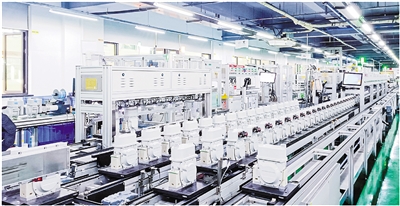
Group 1 - The World Gas Conference held in Beijing showcased over 300 companies and representatives from more than 70 countries, highlighting the global energy sector's advancements [2] - Jinka Intelligent, a key player from Qiantang New District, presented its innovations in smart kitchens and hydrogen metering solutions, emphasizing the strength of "Qiantang Manufacturing" [2] - Qiantang District aims to achieve an industrial output value exceeding 500 billion yuan by 2027, positioning itself as a global advanced manufacturing base [2] Group 2 - Jinka Intelligent has implemented a 5G smart production line, achieving a product first-pass yield rate of over 95% and reducing inventory turnover time by 20% [3] - Qiantang District has 266 companies at digitalization level 2.0, with 47 recognized as "future factories," leading the city for five consecutive years [3] - The district is actively promoting three initiatives: expanding production for 100 companies, digital transformation for 100 companies, and innovation for 100 companies [3] Group 3 - Qiantang District has two pilot areas for future industries, including synthetic biology and embodied intelligence, making it one of the regions with the most pilot areas in the province [4] - The focus on future industries represents a strategic direction for leading technological revolutions and industrial transformations [5] Group 4 - The district has attracted over 70 potential companies in the embodied intelligence sector, with a significant increase in industrial output value in the first quarter [6] - Qiantang is home to the first nucleic acid drug industrial cluster in the province, aiming to capture global innovation in this field [6] - The district is also fostering low-altitude economy enterprises and has established a demonstration zone for low-altitude economy [6]


联播+|总书记感慨“这条路走对了”
Yang Shi Wang· 2025-05-22 02:13
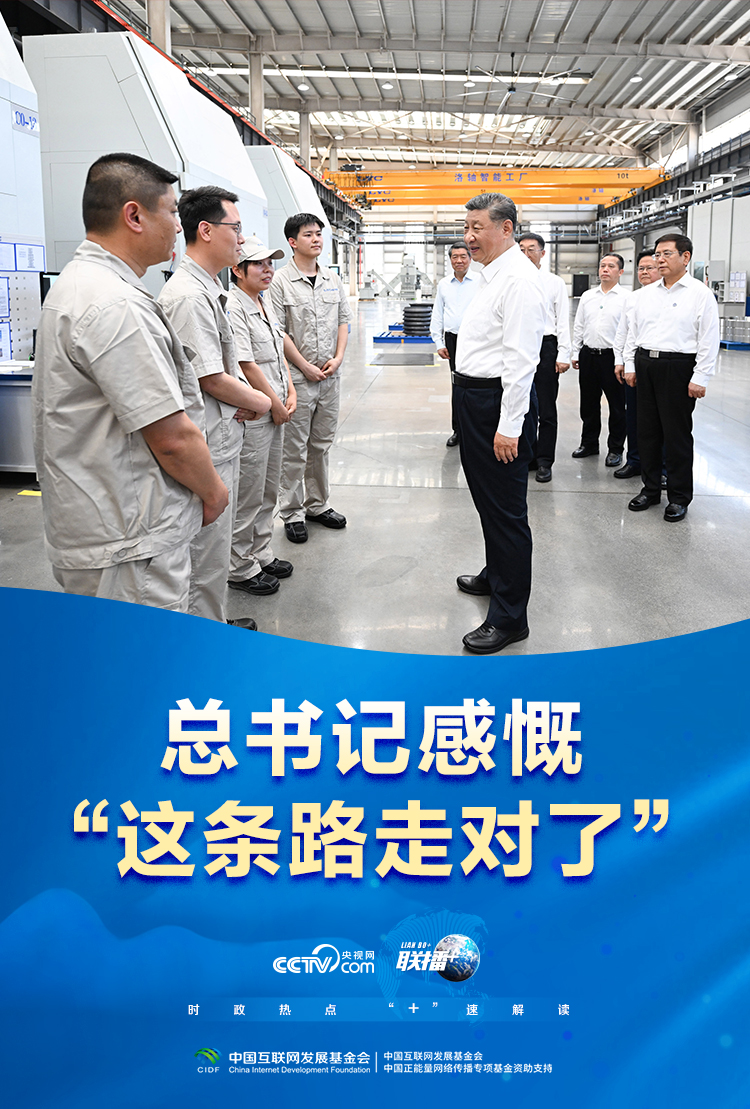
Core Viewpoint - The article emphasizes the importance of manufacturing as a cornerstone of national strength and economic development, highlighting China's advancements in the manufacturing sector and the need for continuous innovation and self-reliance in technology [5][6][7]. Group 1: Manufacturing Development - The article discusses the rapid development of Luoyang Bearing Group Co., Ltd. (洛轴), which has evolved from relying on imports to becoming a leader in high-end bearing technology, with 13 technological achievements reaching international standards during the 14th Five-Year Plan [5]. - Luoyang Bearing's products are widely used in various fields, including aerospace, engineering machinery, and wind power generation, contributing to the high-quality development of major national projects [5][6]. - The article notes that manufacturing is the mainstay of the national economy and a critical factor for a country's core competitiveness, as seen in the historical context of developed nations [6][7]. Group 2: Strategic Importance of Manufacturing - The article highlights that developing a competitive manufacturing sector is essential for enhancing national strength, ensuring security, and building a powerful nation [7]. - It points out that manufacturing has been prioritized in China's economic development strategy, with a focus on high-tech products such as steel, chips, and advanced materials [8]. - The article reflects on China's transformation from being unable to produce basic goods to becoming the world's largest manufacturing nation, achieving significant industrialization in a relatively short time [8][9]. Group 3: Future Directions - The article stresses the need for China to focus on technological innovation as a key driver for manufacturing growth, as outlined in the recent policy decisions aimed at promoting new industrialization and advanced manufacturing clusters [9][10]. - It mentions that traditional industries are undergoing transformation through high-end, intelligent, and green upgrades, with a projected 8% increase in manufacturing technology investment in 2024 [11]. - The article concludes with a call for continued efforts to strengthen manufacturing capabilities, emphasizing the importance of mastering core technologies and fostering high-quality talent to achieve modernization [12].
苏州力推“车路云一体化”
Su Zhou Ri Bao· 2025-05-21 22:37
Group 1 - The core policy document titled "Several Measures to Promote the Development of Intelligent Vehicle Networking and New Energy Vehicle Industry in Suzhou" was officially released, aiming to accelerate new industrialization and enhance the autonomous innovation capability of the industry [1][3] - The policy will be effective from July 1, 2023, until December 31, 2027, and includes 20 measures across four main areas [1][3] - The measures focus on promoting industrial agglomeration, enhancing innovation capabilities, strengthening industrial element guarantees, and improving the industrial development ecosystem [1][2][3] Group 2 - In promoting industrial agglomeration, the measures include establishing pilot demonstration zones, encouraging enterprises to increase effective investment, and providing financial rewards for recognized industrial clusters and unicorn enterprises [1][2] - For recognized leading enterprises, subsidies of up to 50 million yuan will be provided based on R&D investment, with additional support for national-level innovation centers and technology centers [2] - The measures also emphasize the construction of high-level laboratories, core technology breakthroughs, and the encouragement of large model innovation applications [2] Group 3 - The policy aims to enhance the consumption of new energy vehicles and expand their application scenarios, including public sectors such as government vehicles, taxis, and urban logistics [3] - The intelligent vehicle networking and new energy vehicle industry is a crucial part of the city's "1030" industrial system, with Suzhou being selected as a national pilot city for intelligent vehicle networking applications [3] - The measures provide substantial policy support for the high-quality development of the intelligent vehicle networking and new energy vehicle industry in Suzhou [3]
为制造业高质量发展注入“上海动能”
Zhong Guo Hua Gong Bao· 2025-05-21 06:35
近日,上海市经济和信息化委员会推出中国化学(601117)工程科技公司、上海蓝亚石化设备检测所等 一批典型成功实践案例,以全面推动AI赋能新型工业化落地。 作为国家新型工业化战略的先行者,上 海市各领军企业聚焦设备运维、能源安全、工业互联等重点领域,通过人工智能与制造行业等实体经济 深度融合,率先构建起覆盖研发、生产、服务全链条的智能化解决方案,为制造行业高质量发展注 入"上海动能"。 在我国能源及相关产业领域,能源装备的安全诊断与检验检测工作意义重大,不仅是保障生产安全、稳 定运行的关键环节,也有着广阔的市场发展空间。随着大语言模型等前沿技术强势崛起,能源装备安全 诊断和检验检测领域迎来了发展契机。 近期,中国浦发机械下属上海蓝亚石化设备检测所有限公司(以下简称"上海蓝亚")将人工智能大语言 模型与数字化软件有机融合,搭建了一套面向超期服役、"带病"运行以及失效设备的智能诊断评价体 系。 这套智能诊断评价体系可借助数据驱动的智能分析手段,对能源装备"健康"状态进行准确预测与评估, 为能源装备安全诊断提供了新思路。特别是在设备故障预警、剩余寿命预测、故障模式识别等关键环 节,以及当设备结构复杂导致难以实施有效 ...
香港创新科技及工业局:新型工业化助力创科企业落户香港 为创科生态圈注入新动力
Zhi Tong Cai Jing· 2025-05-20 09:37
Group 1 - The Hong Kong government is intensifying support for smart manufacturing through various funding programs to promote innovation and industrialization [1][2] - In 2023, the value added by Hong Kong's manufacturing and new industrial sectors reached HKD 76.8 billion, a 7.6% increase from the previous year, accounting for 2.6% of Hong Kong's GDP [1] - A pilot program for manufacturing and production line upgrades will be launched with a budget of HKD 100 million, providing up to HKD 250,000 in funding for approximately 400 companies to develop smart production strategies [1] Group 2 - Hong Kong aims to attract both local and international tech companies to foster collaboration and synergy, having engaged with over 200 potential tech firms for business expansion in Hong Kong by April 2025 [2] - The establishment of the Hong Kong New Industrial Development Alliance in March 2025 aims to create a collaborative platform among government, industry, academia, research, and investment [2] - A HKD 10 billion innovation and technology industry guiding fund is being prepared to attract more social capital into strategic emerging and future industries [2]

苏州工学院战略发展研讨会圆满举行
Jiang Nan Shi Bao· 2025-05-20 07:15
扎根地方 融合发展 高质量建设新型工业大学 苏州工学院战略发展研讨会圆满举行 初夏的苏州,万物勃发。5月18日上午,苏州工学院以"扎根地方,融合发展,高质量建设新型工业大 学"为主题举办的战略发展研讨会隆重开幕。会议由苏州工学院党委书记王培君主持。 今年3月,江苏省人民政府发布通知,根据教育部复函,同意常熟理工学院更名为苏州工学院。据了 解,苏州工学院是江苏省第一所省市共建高校,从苏州师范专科学校,到常熟理工学院;从1958年学校 初创时的1370多名毕业生,到如今全日制20000多名在校生;从专注专科教育,到独立开展研究生培 养,学校以67年的砥砺奋进,走出了一条具有自身特色的发展道路。 苏州工学院校长姜建明在致辞中表示:"学校的成功更名,不仅标志着一段辉煌过往已完美载入史册, 更意味着苏州工学院的崭新征程正式开启。"一幅美好的发展蓝图正缓缓铺陈。 苏州工学院自建校以来,始终与地方和合共生。双方携手成立校地合作领导小组,共同制定并推进多轮 校地互动发展规划:在纺织服装、智能网联汽车、声学、电商等领域开展密切合作,共建国家级大学科 技园、中国清史南方研究院等一批重大平台,近两年签订科技成果转化合同752项,合 ...
智能制造进入高级阶段 工业软件成最薄弱环节
Zhong Guo Chan Ye Jing Ji Xin Xi Wang· 2025-05-19 22:26
Core Viewpoint - The global manufacturing landscape is undergoing profound changes due to complex international dynamics and the rapid evolution of technologies like artificial intelligence, which are reshaping production methods and business models in the manufacturing sector [1][2]. Group 1: Manufacturing Development Trends - The Chinese government emphasizes the importance of manufacturing in its work report, focusing on developing new productive forces and advancing industrialization [1]. - The 2025 Intelligent Manufacturing Forum highlighted that intelligent manufacturing is a key variable in reshaping global industrial competition, with technologies like AI models and digital twins significantly impacting production methods and value chains [1][2]. - Current trends in intelligent manufacturing include multi-technology integration, industrial collaboration upgrades, and a focus on green and sustainable development [2][8]. Group 2: Core Elements of Intelligent Manufacturing - The three core elements of intelligent manufacturing are intelligent manufacturing equipment, intelligent industrial software, and cyber-physical systems (CPS) [3][4]. - Intelligent manufacturing equipment enhances traditional manufacturing capabilities through the integration of AI, IoT, and big data, enabling features like state perception and autonomous control [4][5]. - Intelligent industrial software, which is currently a weak point in China's manufacturing sector, needs to catch up with international standards, as foreign companies dominate the high-end industrial software market [5][6]. Group 3: Challenges and Opportunities - The manufacturing sector faces challenges in transitioning from scale dividends to innovation dividends, requiring a shift in focus towards high-quality development driven by AI and other technologies [2][8]. - There is a need to break through technical bottlenecks, solidify ecological collaboration, and innovate value creation to enhance the manufacturing ecosystem [7][8]. - The integration of AI into manufacturing processes is seen as a pathway to achieving significant improvements in quality, efficiency, and sustainability [8][9]. Group 4: Industry Applications and Innovations - Companies like China Railway and China Steel Research are exploring AI applications in manufacturing, with a focus on personalized and customized production to meet market demands [10][11]. - The development of AI tools tailored for specific industry needs is crucial for enhancing productivity and reducing costs in sectors like steel and telecommunications [11][12]. - The push for digital transformation in traditional manufacturing is being driven by the need to adapt to new market challenges and technological advancements [10][12].
加速先进科技成果向现实生产力和新质战斗力转化
Ren Min Ri Bao· 2025-05-19 21:58
Core Viewpoint - Accelerating the transformation of advanced scientific and technological achievements is crucial for promoting high-quality development and achieving strategic autonomy in technology, as well as enhancing the competitiveness of the manufacturing sector and national defense technology industry [2][5]. Group 1: Importance of Transformation - Strengthening the output and efficient transformation of high-quality scientific and technological achievements is essential for advancing new industrialization and achieving modernization in China [2]. - The transformation of advanced scientific and technological achievements into tangible industrial activities is vital for driving economic growth and industrial development [2][4]. - The defense technology industry is a key component of advanced manufacturing and plays a significant role in the modernization of national defense and military capabilities [3]. Group 2: Policy and Mechanisms - Recent efforts by the Ministry of Industry and Information Technology and the National Defense Technology Industry Bureau have focused on promoting the transformation of advanced scientific and technological achievements, contributing to the establishment of a modern industrial system [4]. - Policies have been implemented to encourage the conversion of defense industrial technology for civilian use, stimulating innovation and investment in the defense sector [4]. - The establishment of various platforms, such as national manufacturing innovation centers and key laboratories, aims to facilitate the transformation of scientific achievements into industrial applications [4][9]. Group 3: Challenges and Solutions - Addressing the issues of "unable to transform," "unwilling to transform," and "unskilled to transform" is critical for enhancing the transformation process [7][8][9]. - The government is encouraged to play a proactive role in creating a conducive environment for technology transfer and transformation through effective policies and support for the technology service industry [9]. - Collaboration between enterprises, research institutions, and universities is essential for fostering innovation and ensuring the successful application of scientific achievements [8][9].
苏州银行2024年净利润突破50亿 深融区域经济助力高质量发展
Quan Jing Wang· 2025-05-19 12:12
Core Viewpoint - Suzhou Bank reported a steady growth in revenue and net profit for the year 2024, demonstrating strong operational efficiency and commitment to shareholder returns through consistent cash dividends [1][2] Financial Performance - In 2024, Suzhou Bank achieved an operating income of 12.224 billion yuan, a year-on-year increase of 3.01% - The net profit attributable to shareholders reached 5.068 billion yuan, reflecting a growth of 10.16% - Basic earnings per share stood at 1.31 yuan, indicating robust operational quality [1] Dividend Policy - The bank has maintained a cash dividend payout ratio exceeding 30% for five consecutive years, with an increase in the payout ratio for four consecutive years - The chairman emphasized that the increase in cash dividends is a way to reward long-term shareholders despite the overall profit growth pressure in the banking industry [1] Asset Quality and Risk Management - Suzhou Bank has seen a continuous decline in non-performing loan ratio for six years, maintaining a strong position compared to peers - The bank focuses on value creation while managing risks, enhancing its risk management capabilities across all dimensions [2] Strategic Initiatives - The bank is committed to deep integration with the regional economy, employing a dual-driven strategy of "Technology + Cross-border" and "Livelihood + Wealth" - This strategy aims to support the industrial development of Jiangsu Province and Suzhou City [2] Future Outlook - 2025 marks the 15th anniversary of Suzhou Bank and is a pivotal year for its three-year strategic plan - The bank plans to deepen integrated operations, focusing on core business development, risk control, and digital transformation to promote high-quality growth [2] Market Position - Suzhou Bank, as the only listed city commercial bank headquartered in Suzhou, has established a network of 185 branches across Jiangsu Province and a representative office in Singapore - It ranks 253rd in the global banking rankings by The Banker magazine, showcasing its strong comprehensive strength [2]