Workflow
AI泡沫
icon
Search documents
美股愁了
Hu Xiu· 2025-08-21 06:15
Core Viewpoint - The U.S. stock market is experiencing a correction, primarily driven by concerns over AI bubbles, regulatory policies, and interest rate outlooks, leading to a shift in investor behavior towards undervalued and defensive assets [1] Group 1: Market Reaction - On August 20, major U.S. stock indices continued their downward trend, with the Nasdaq falling by 0.67%, while the S&P 500 also declined, and the Dow Jones showed relative resilience [1] - Investors are moving towards undervalued sectors and defensive assets, indicating a rapid decline in market risk appetite, which has also contributed to a 1% increase in gold prices on COMEX [1] Group 2: Federal Reserve's Stance - The Federal Reserve's July meeting minutes, released on August 20, revealed that most members are more concerned about inflation risks than employment risks, maintaining the benchmark interest rate in the 4.25%-4.50% range [2] - The market interpreted the minutes as hawkish, leading to a significant reduction in expectations for a large rate cut in September, with the probability of a 25 basis point cut remaining high at 81.9% according to CME's FedWatch tool [2] Group 3: Political Pressure on the Federal Reserve - President Trump publicly called for the resignation of Federal Reserve Governor Lisa Cook, citing allegations of mortgage fraud, which is seen as a serious political intervention that could undermine market confidence in U.S. monetary policy [3] - This political noise has increased investor uncertainty regarding policy direction, prompting a shift of funds towards safe-haven assets like gold, while also creating a dual sentiment in the futures market regarding potential policy easing and political uncertainty [3] Group 4: Implications for Gold and Tech Stocks - The current environment suggests that while rate cuts are typically seen as beneficial for stocks, if perceived as a response to increased recession risks, it could negatively impact future earnings and thus be detrimental to tech stocks [4] - Gold prices are currently supported by uncertainties surrounding the Russia-Ukraine negotiations and the Federal Reserve's policy direction, with potential for a pullback if these uncertainties ease [4][5] - For investors, gold serves as a necessary but costly insurance, and while some defensive positioning is reasonable, expectations for excessive returns should be tempered, especially in a market driven by domestic policies and liquidity [5]
奥尔特曼承认:GPT-5的发布“彻底搞砸了”
财富FORTUNE· 2025-08-20 13:03
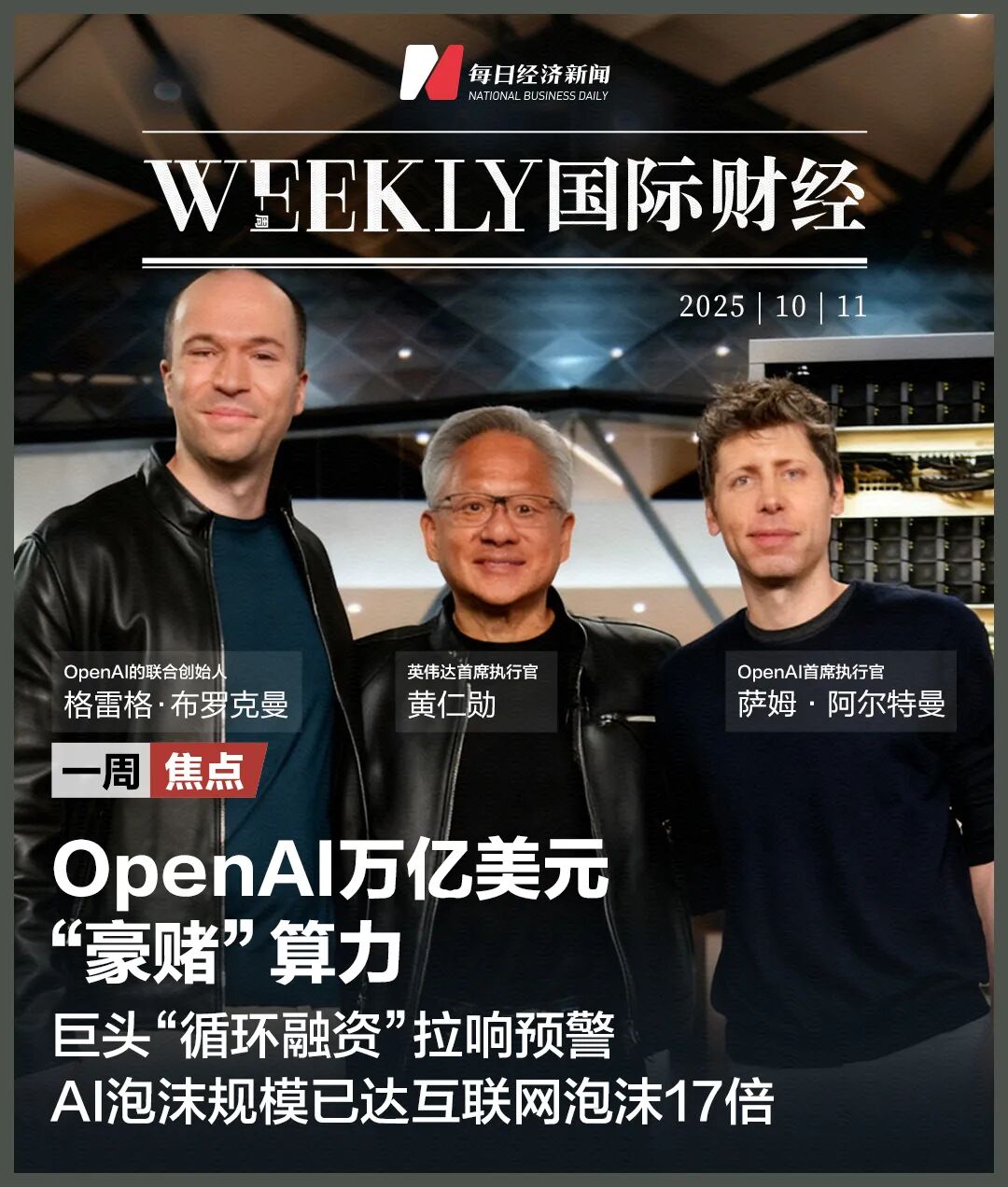
Core Insights - Sam Altman envisions a transformative future for the internet, requiring trillions of dollars in infrastructure investment to support OpenAI's ambitions [2][10] - The release of GPT-5 faced significant backlash due to perceived personality changes, prompting Altman to revert to the previous model, GPT-4o, as a user option [3][4][6] - OpenAI's trajectory is shifting from a software startup to a utility-scale infrastructure player, aiming to serve billions of users daily with ChatGPT [7][8] Infrastructure and Investment - Altman indicated that OpenAI will need to invest trillions in building data centers to support its operations [7] - ChatGPT is currently the fifth largest website globally, with ambitions to surpass Instagram and Facebook, although competing with Google remains challenging [8] - Hardware limitations, particularly GPU shortages, are hindering the deployment of more advanced models [8][9] AI Competition and Future Plans - The AI race is increasingly driven by capital-intensive infrastructure rather than just algorithms [9] - OpenAI is funding a brain-computer interface project to compete with Neuralink and is considering acquiring Google's Chrome browser if regulatory changes occur [10] - Altman acknowledges the existence of an AI "bubble," suggesting that while AI is a significant development, there may be excessive investor enthusiasm [11]
大反转背后,AI泡沫之辩。| 谈股论金
水皮More· 2025-08-20 09:31
Market Overview - A-shares major indices collectively rose today, with the Shanghai Composite Index reaching a ten-year high, closing up 1.04% at 3766.21 points [2][3] - The Shenzhen Component Index increased by 0.89%, closing at 11926.74 points, while the ChiNext Index rose by 0.23% to 2607.65 points [2][3] - The STAR 50 Index surged by 3.23%, closing at 1148.15 points, with total trading volume in the Shanghai and Shenzhen markets reaching 240.82 billion, a decrease of 18.01 billion from the previous day [2][3] Market Dynamics - The three major indices opened lower but rebounded throughout the day, with the Shanghai Composite Index showing the largest increase [3] - The market was initially affected by the performance of the US stock market, where the Dow Jones rose while the Nasdaq fell by 1.46% [3][4] - Concerns over an "AI bubble" were heightened by a report from MIT stating that 95% of companies have zero returns on deep AI investments, leading to market panic [3][4] Sector Performance - The semiconductor sector rebounded in the afternoon, with stocks like Cambrian Technology rising by 8.46% and SMIC increasing by 3.28% [5] - The banking sector acted as a stabilizing force, with Agricultural Bank of China reaching a new high and all 42 banks remaining stable [5] - The liquor sector saw significant gains, with stocks like Guizhou Moutai and Wuliangye rising, although concerns about sustainability remain due to a reported 90% decline in earnings for some companies [5] Individual Stock Movements - Notable individual stock movements included a significant rise in Oriental Fortune and CATL, both showing a V-shaped recovery despite earlier declines [6] - The automotive sector experienced a boost following news of FAW acquiring a 10% stake in Leap Motor, with the sector rising by 2.34% overall [5] - The article also highlighted the volatility of certain stocks, with some experiencing sharp declines, such as Changcheng Securities dropping by 7.11% [6] Future Outlook - The performance of the Nasdaq in the upcoming trading session is crucial, as it will likely influence the trajectory of Chinese tech stocks and the Shenzhen market [6]
美股大跌的导火索,这篇MIT的报告有什么特别?
Hua Er Jie Jian Wen· 2025-08-20 00:49
Core Insights - A report from MIT reveals that up to 95% of companies are not seeing any returns from their generative AI investments, challenging the optimistic sentiment on Wall Street and leading to a significant sell-off in tech stocks [1][2] - The Nasdaq Composite Index fell by 1.4%, marking its largest single-day drop since August 1, while the S&P 500 Index decreased by 0.7% [1] - Key beneficiaries of the AI boom, such as Nvidia, Palantir, and Arm, experienced notable declines in their stock prices, indicating a shift of funds from high-risk tech stocks to defensive sectors [1][2] AI Investment Gap - The MIT report titled "The Generative AI Gap: The State of Business AI in 2025" highlights that most AI projects fail to deliver financial impact, despite high expectations from enterprises [2] - Based on interviews with 150 business leaders and analysis of 300 AI deployment cases, only about 5% of AI pilot projects achieved rapid revenue growth [2][3] - The report attributes the failures not to the quality of AI models but to internal organizational issues and integration strategies [2][3] Success vs. Failure in AI Deployment - Successful AI implementations often involve targeting specific pain points and forming strategic partnerships, with some startups reportedly increasing their revenue from zero to $20 million within a year [3] - Over half of generative AI budgets are allocated to sales and marketing tools, while the highest ROI comes from backend automation [3] - Purchasing AI tools from specialized vendors has a success rate of about 67%, compared to only one-third for internally built systems, challenging the trend of companies developing proprietary AI solutions [3] Market Sentiment and Valuation Pressure - The report coincides with growing concerns over the high valuations of tech stocks, with the Nasdaq 100 Index's expected P/E ratio at 27, significantly above its long-term average [4] - Sam Altman's warning about potential investor losses and the possibility of irrational exuberance has further fueled market anxiety [4] - The market's sensitivity to negative news regarding AI commercialization capabilities has been demonstrated, as evidenced by previous market reactions to adverse developments [4]
奥特曼:我承认GPT-5发布搞砸了
3 6 Ke· 2025-08-19 09:07
Core Insights - OpenAI's recent launch of GPT-5 has been met with significant criticism, leading CEO Sam Altman to publicly acknowledge the missteps in the rollout [1][3][10] - The company plans to invest trillions of dollars in building data centers to support the anticipated user demand for ChatGPT, aiming to make it one of the top three websites globally [2][12] - OpenAI is also funding a new venture, Merge Labs, to develop brain-machine interface technology, positioning itself in direct competition with Elon Musk's Neuralink [2][11] Group 1: GPT-5 Launch and Reception - The launch of GPT-5 was intended to be a significant step towards AGI, but user feedback indicates it falls short of expectations, with many users expressing disappointment [3][4] - Criticism of GPT-5 includes its perceived lack of warmth and personality, leading to a backlash against the removal of the more user-friendly GPT-4o [10][11] - Altman admitted that the company learned valuable lessons from the experience, particularly regarding the challenges of upgrading products for millions of users simultaneously [10][14] Group 2: Future Plans and Investments - OpenAI is planning to invest trillions of dollars in data centers to handle the expected traffic from billions of daily users [2][12] - The company is also backing Merge Labs, which aims to develop brain-machine interfaces, signaling a competitive stance against Neuralink [2][11] - Altman has expressed concerns about the current AI investment climate, acknowledging the existence of an AI bubble while still affirming the long-term significance of AI technology [14]
奥特曼:我承认GPT-5发布搞砸了
量子位· 2025-08-19 07:21
Core Viewpoint - OpenAI's recent launch of GPT-5 has been publicly acknowledged as a failure by CEO Sam Altman, who admitted that the promotion and rollout were mishandled [2][17]. Group 1: GPT-5 Launch Issues - The launch of GPT-5 faced significant backlash from users, who felt that the model did not meet expectations for achieving Artificial General Intelligence (AGI) [7][8]. - Users criticized GPT-5 for its cold personality, with some comparing interactions to conversing with an exhausted individual, leading to dissatisfaction after the removal of the more user-friendly GPT-4o [13][15][16]. - Altman recognized the mistake in upgrading millions of users simultaneously and emphasized the importance of avoiding unhealthy relationships between AI and users [19][18]. Group 2: Future Plans and Investments - OpenAI plans to invest tens of trillions of dollars in building data centers to support the anticipated daily usage of ChatGPT by billions of users [4][21]. - The company aims to position ChatGPT as the third-largest website globally, following Google and YouTube, by enhancing its infrastructure [22]. - OpenAI is also funding a new venture, Merge Labs, focused on brain-computer interface technology, which directly competes with Elon Musk's Neuralink [25][26]. Group 3: Industry Insights - Altman expressed concerns about a potential AI bubble, agreeing that there is excessive excitement among investors regarding AI technologies [29][30]. - Despite acknowledging the bubble, he affirmed the long-term significance of AI as a transformative technology [31].
腾讯研究院AI速递 20250818
腾讯研究院· 2025-08-17 16:01
Group 1 - Google has released the lightweight model Gemma 3 270M, which has 270 million parameters and a download size of only 241MB, designed specifically for terminal use [1] - The model is energy-efficient, consuming only 0.75% of battery power after 25 conversations on the Pixel 9 Pro, and can run efficiently on resource-constrained devices after INT4 quantization [1] - Gemma 3 270M outperforms the Qwen 2.5 model in the IFEval benchmark test and has surpassed 200 million downloads, tailored for specific task fine-tuning [1] Group 2 - Meta has open-sourced the DINOv3 visual foundation model, which surpasses weakly supervised models in multiple dense prediction tasks using self-supervised learning [2] - The model features innovative Gram Anchoring strategy and RoPE, with a parameter scale of 7 billion and training data expanded to 1.7 billion images [2] - DINOv3 is commercially licensed and offers various model sizes, including ViT-B and ViT-L, with specialized training for satellite image backbone networks, already applied in environmental monitoring [2] Group 3 - Tencent has launched the Lite version of its 3D world model, reducing memory requirements to below 17GB, allowing efficient operation on consumer-grade graphics cards with a 35% reduction in memory usage [3] - Technical breakthroughs include dynamic FP8 quantization, SageAttention quantization technology, and cache algorithms that enhance inference speed by over 3 times with less than 1% accuracy loss [3] - Users can generate a complete navigable 3D world by inputting a sentence or uploading an image, supporting 360-degree panoramic generation and Mesh file export for seamless integration with games and physics engines [3] Group 4 - Kunlun Wanwei has released six models from August 11 to 15, covering popular fields such as video generation, world models, unified multimodal, agents, and AI music creation [4] - The latest music model Mureka V7.5 significantly enhances the tonal quality and articulation of Chinese songs, improving voice authenticity and emotional depth through optimized ASR technology, surpassing top foreign music models [4] - A MoE-based character description voice synthesis framework, MoE-TTS, was also released, allowing users to precisely control voice features and styles through natural language, outperforming closed-source commercial products under open data conditions [4] Group 5 - OpenAI has released a programming prompt guide for GPT-5, emphasizing the importance of clear and non-conflicting instructions to avoid confusion [5][6] - It suggests using appropriate reasoning intensity and structured rules similar to XML for complex tasks, while planning self-reflection before execution for zero-to-one tasks [6] Group 6 - The first humanoid robot sports event showcased various competitions, including running, soccer, boxing, dance, and martial arts, with the Yushu robot winning the 1500m race [7] - The soccer 5V5 group matches demonstrated real-time computation and collaboration capabilities of robot players, with standout performances from specific players [7] - The event featured commentary focusing on AI knowledge, with humorous moments such as robots colliding and falling over during gameplay [7] Group 7 - DeepMind's Genie 3 model can generate 24 frames of 720p HD visuals per second and create interactive worlds with a single sentence, showcasing advanced memory capabilities [8] - The model's physical law representation improves as training data scale and depth increase, marking a significant step towards AGI [8] - Future developments will focus on realism and interactivity, potentially providing unlimited training scenarios for robots to overcome data limitations [8] Group 8 - OpenAI's CEO hinted at plans to invest trillions in building data centers and suggested that an AI might become the CEO in three years [9] - He confirmed the development of AI devices in collaboration with Jony Ive and acknowledged the increasing value of human-created content [9] - The CEO believes the current "AI bubble" is similar to the internet bubble but emphasizes that AI is a crucial long-term technological revolution [9] Group 9 - OpenAI's chief scientist discussed the evolution of AGI definitions from abstract concepts to multidimensional capabilities, highlighting the need for practical application value assessments [10] - The researchers noted that AI developments have exceeded expectations, with models excelling in competitions, demonstrating strong reasoning and creative thinking [10] - Experts recommend not abandoning programming education but rather viewing AI as a supportive tool, emphasizing the importance of structured and critical thinking [11] Group 10 - Sierra AI's founder predicts the AI market will split into three main tracks: frontier foundational models, AI toolchains, and application-type agents, with the latter presenting the greatest opportunities [12] - Agents can significantly enhance productivity, shifting from "software enhancing human efficiency" to "software completing tasks independently," akin to early computer impacts [12] - The future will see many long-tail agent companies emerging, similar to the evolution of the software market, with pricing based on business outcomes rather than technical details [12]
多家企业盯上谷歌 Chrome 奥特曼表态 OpenAI 或考虑收购
Huan Qiu Wang Zi Xun· 2025-08-17 02:55
Group 1 - OpenAI's CEO Sam Altman expressed interest in acquiring Google's Chrome browser, which has attracted significant attention in the industry [1][3] - ChatGPT's user growth is rapid, with over 700 million users reached weekly, a fourfold increase from a year ago, and API traffic doubling within 48 hours [1][3] - OpenAI plans to invest in a brain-computer interface startup to compete with Neuralink and anticipates spending trillions on data center construction to meet computational demands [3] Group 2 - Altman acknowledged the existence of an "AI bubble," indicating that investors are overly excited about the AI sector, but he emphasized that AI remains one of the most significant technological transformations in recent years [3] - The U.S. Department of Justice is pursuing antitrust litigation against Google, which includes demands related to the potential divestiture of the Chrome browser, influencing other tech companies' interest in Chrome [3] - Altman suggested that he may not be suitable to lead a publicly traded company and hinted that AI could potentially take over leadership of OpenAI in three years [3]
AI周报 | OpenAI CEO承认存在 AI 泡沫;消息人士称DeepSeek R2在8月无发布计划
Di Yi Cai Jing· 2025-08-17 00:32
Group 1 - OpenAI CEO Sam Altman acknowledges the existence of an AI bubble, comparing it to the internet bubble of the 1990s, predicting significant losses for some and substantial gains for others [1] - The AI market has seen a surge in funding for startups, with some companies receiving high valuations despite minimal resources [1] - OpenAI plans to invest tens of billions in data center construction in the near future [1] Group 2 - DeepSeek R2 is not scheduled for release in August, despite market rumors, leading to a temporary surge in AI-related stocks [2][3] - The anticipation for DeepSeek R2 has been building, especially after the release of GPT-5, with expectations of strong competition in the domestic large model market [3] Group 3 - Mihayou co-founder Cai Haoyu's AI game "Whispers from the Star" is priced at 27.19 yuan, indicating a focus on innovation rather than profit [4] - The game introduces a new genre called FPT (First-person Talker), emphasizing real-time dialogue driven by AI [4] Group 4 - Igor Babuschkin, co-founder of xAI, is leaving to start his own venture capital firm after contributing to the development of significant AI technologies [5][6] - xAI's original team has decreased from 12 to 9 members following Babuschkin's departure [6] Group 5 - Tencent's stock reached 600 HKD per share, the highest in four years, following a strong earnings report driven by AI-related business growth [7] - Tencent's revenue for Q2 2025 was 184.5 billion yuan, a 15% year-on-year increase, with AI contributing to improvements in marketing and enterprise services [7] Group 6 - Google highlights the role of Chinese developers as key players in global innovation, with numerous awards for their applications and games [8] - The focus of the Google Developer Conference has shifted towards AI, reflecting the growing enthusiasm among developers [8] Group 7 - Apple plans to re-enter the AI space with new devices, including a desktop robot, expected to launch by 2027 [9] - The company is working on enhancing Siri's capabilities to support these new products [9] Group 8 - OpenAI is preparing to invest in Merge Labs, a brain-computer interface company, with a valuation of 850 million USD and a funding round of 250 million USD [10][11] - Merge Labs aims to compete with Neuralink in the brain-computer interface sector [11] Group 9 - Baichuan Intelligence has released the open-source medical model Baichuan-M2, outperforming other models in health benchmarks [12] - The medical field is a significant application area for large models, with various companies exploring AI's role in healthcare [12] Group 10 - xAI has made its Grok 4 model available for free to users, introducing new usage modes and limited daily queries [13] - The competition between OpenAI and xAI has intensified following the release of GPT-5 [13]
AI泡沫真相?OpenAI奥尔特曼:确有其事,有人将损失惨重
Sou Hu Cai Jing· 2025-08-16 03:11
Group 1 - The core viewpoint is that the current market for AI technology may be experiencing an over-optimistic phase, reminiscent of the internet bubble in the late 1990s [1][3] - OpenAI's CEO, Sam Altman, describes the financing situation for AI startups as "crazy," indicating that some companies are receiving high valuations based on minimal resources [1][3] - Altman expresses confidence in OpenAI's future, stating that the company plans to invest trillions of dollars in data center construction, which he believes will not hinder its stable development [3] Group 2 - Several AI startups have successfully raised significant funds over the past year, including Safe Superintelligence and Thinking Machines, which are led by notable figures in the AI field [3] - Altman warns that while some individuals may profit during a bubble, others may suffer substantial losses, but he suggests that the overall economic impact could be beneficial [3]