
产业数字化转型

Search documents
中大李善民:广东兼具机电和数智双优势,能助力传统产业升级
2 1 Shi Ji Jing Ji Bao Dao· 2025-07-31 07:27
Core Insights - Guangdong Province is accelerating the construction of a modern industrial system, focusing on the integration of traditional industries with digitalization and intelligence [1] - The province leads the nation in the number of national-level green factories, green supply chain enterprises, and national green industrial parks, but faces challenges in the digital transformation of small and medium-sized enterprises (SMEs) [1] - There is a need for increased policy support to foster service providers that assist SMEs in their digital transformation [2] Industry Overview - The digital and intelligent transformation of industries is an inevitable trend for future development, with Guangdong possessing advantages in electromechanical and digital technologies [1] - The province has a complete industrial chain for artificial intelligence and robotics, which can enhance production capacity and efficiency in traditional industries [1] - As of April 2025, the core industry scale of artificial intelligence in Guangdong exceeded 77 billion yuan, with cumulative production of industrial robots reaching 96,200 units and service robots at 2.67 million units, marking growth rates of 31.1% and 10.8% respectively [1] Challenges and Recommendations - SMEs are hesitant to invest in digital transformation due to high costs, long cycles, and significant risks, with a lack of service providers like Guangzhou Zhijing Technology's "Find Fabric Artifact" [2] - Recommendations include increasing policy support for service providers that assist SMEs, such as "Find Fabric Network," to address transformation challenges in traditional textile and apparel industries [2] - There is a call to optimize the business environment to support the ongoing high-end, intelligent, and green transformation of traditional industries, including enhancing policy precision and facilitating collaboration among government, enterprises, and academic institutions [2]
工信部:加快推进算力基础设施高质量发展
news flash· 2025-07-30 23:39
Core Viewpoint - The Ministry of Industry and Information Technology emphasizes accelerating the high-quality development of computing power infrastructure, implementing the "Action Plan for High-Quality Development of Computing Power Infrastructure" to optimize layout and enhance efficiency [1] Group 1: Development Plans - The Ministry plans to enhance the construction of high-speed broadband networks around computing power hubs to improve network interconnectivity [1] - A special initiative for multi-dimensional heterogeneous cross-domain computing power collaborative development will be organized to elevate technological innovation and industry application levels [1] - The establishment of a computing power industry development alliance and the creation of a China Computing Power Platform are key initiatives [1] Group 2: Current Status and Future Goals - As of March 31, 2025, the number of operational computing standard racks in China is expected to reach 10.43 million, with intelligent computing power scaling up to 748 EFLOPS, supporting AI development and various fields' intelligent transformation [1] - The Ministry will continue to advance the construction of new information infrastructure, expanding the coverage and penetration of "dual-gigabit" networks [1] - The focus will also be on promoting 5G-A network coverage in key cities and hotspots, guiding the deployment of 10-gigabit optical networks from pilot testing to application [1]
新地标崛起,顺德家具业向全球枢纽跃迁的时代“答卷”
Sou Hu Cai Jing· 2025-07-29 20:45
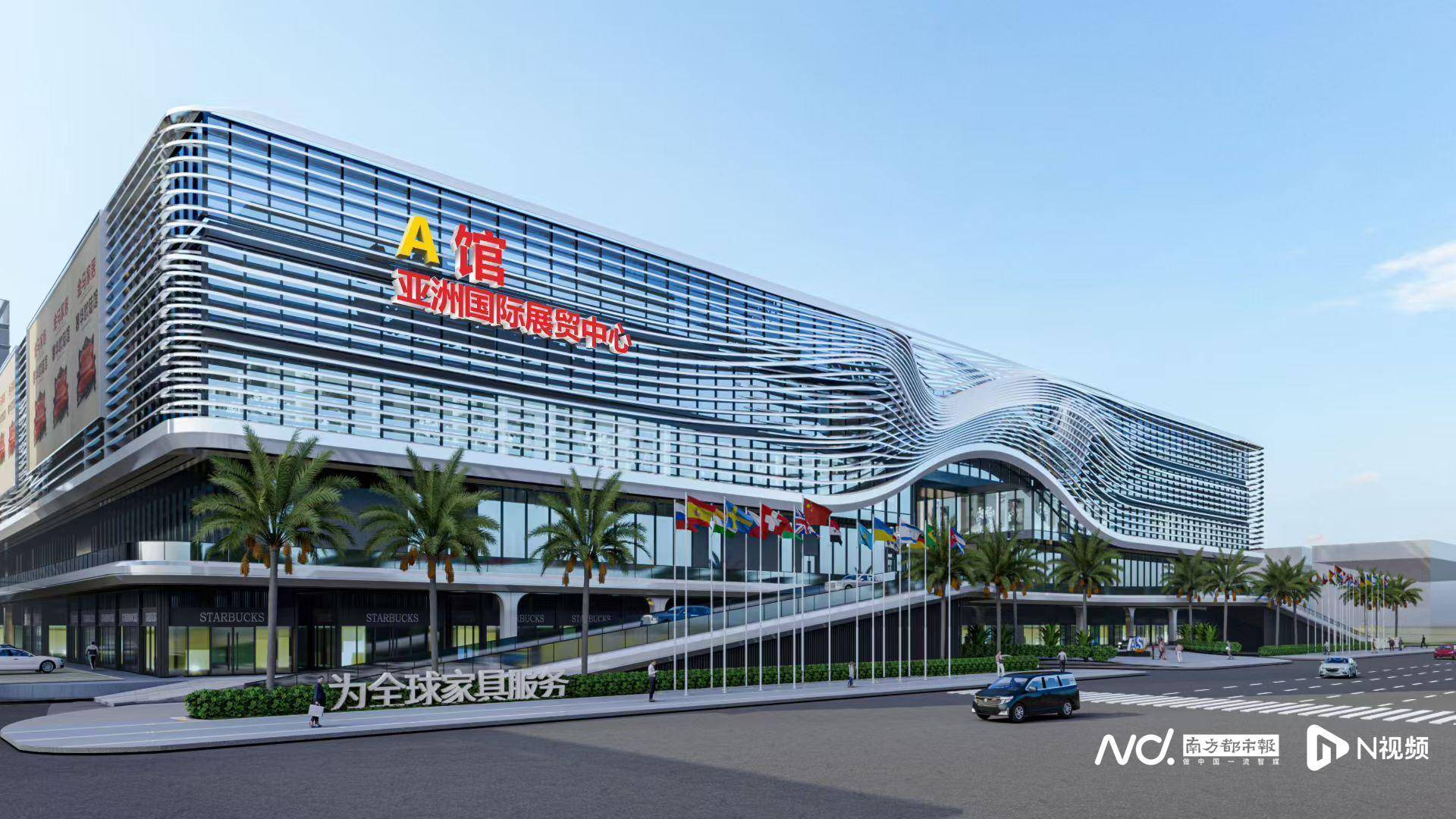
Core Insights - The establishment of the Asia International Exhibition and Trade Center marks a significant transformation for the Shunde furniture industry, transitioning from a "manufacturing giant" to a "global hub" with a total investment of 2.5 billion yuan and an area exceeding 400,000 square meters [1][11] - The Shunde furniture industry has evolved from producing China's first self-manufactured sofa to creating a trillion-level industrial cluster, highlighting its dominance in the furniture sector [2] - The Asia International Exhibition and Trade Center aims to address challenges such as design homogenization and inefficient supply chain collaboration, providing a platform for resource integration and global connectivity [2][3] Industry Development - The center will leverage a 1.2 million square meter industrial space and a cluster of 3,000 enterprises, reducing raw material procurement costs by 15%-20% and shortening design and development cycles by nearly 30% [3] - The center represents a shift from isolated operations to a collaborative approach, enabling the furniture industry to embrace a "go global" strategy [3][7] Strategic Importance - The Asia International Exhibition and Trade Center is positioned as a key component of Shunde's strategic layout for high-quality development, integrating the entire industrial chain from design to marketing [7] - The center will facilitate a one-stop procurement experience, allowing businesses to access global markets without leaving the town [7] Brand and Cultural Integration - The center is expected to enhance brand visibility and facilitate international exposure for local companies, with notable achievements in design and technology recognized at prestigious events [8] - The integration of cultural aesthetics with industrial manufacturing aims to create a distinctive identity for Shunde furniture, promoting a blend of green and artistic design in industrial space planning [9] Future Prospects - The upcoming 39th Asia International Home Furnishing Expo will serve as a platform for showcasing "Shunde Design," emphasizing cultural dialogue and product innovation [8] - The Asia International Exhibition and Trade Center is seen as an invitation for global engagement, marking a new beginning for the furniture industry in Foshan [11]

工信部部署下半年重点任务 力推“人工智能+制造”走向纵深
Zheng Quan Ri Bao Wang· 2025-07-29 11:28
Core Viewpoint - The meeting emphasized the importance of deepening the integration of digital technology and industrialization, focusing on eight key areas, including the promotion of "Artificial Intelligence + Manufacturing" initiatives to enhance efficiency and competitiveness in the manufacturing sector [1][2]. Group 1: Digital Transformation and Policy Support - The digital transformation rate of small and medium-sized enterprises (SMEs) is approximately 40%, highlighting the need for further policy support such as subsidies and tax incentives to bridge the "digital divide" [1]. - The meeting called for the establishment of a product data standard service platform to facilitate data interconnectivity across supply chains, thereby improving the digitalization level of the industry and reducing collaboration costs [1]. Group 2: Artificial Intelligence Integration - The integration of artificial intelligence (AI) with manufacturing is seen as a crucial step for industrial upgrading and reshaping global competitiveness, especially in light of rising labor costs and international supply chain risks [2]. - The "Artificial Intelligence +" initiative aims to explore AI application scenarios and develop high-quality data sets, focusing on smart connected vehicles, AI smartphones and computers, and intelligent manufacturing equipment [2]. Group 3: Technological Foundations - The deep integration of AI and manufacturing relies on breakthroughs in three technological foundations: computing infrastructure, data governance, and algorithm innovation [2]. - Key technologies to be tackled include industrial large models, multi-modal perception, and digital twins, alongside the establishment of a national-level AI open-source community to build a self-controlled technology system [2][3]. Group 4: Industry Transformation - The "Artificial Intelligence + Manufacturing" initiative is expected to trigger chain transformations across multiple industries, with 5G fully connected factories offering new production and operational models [3]. - Custom production thresholds are anticipated to lower significantly, enhancing production flexibility for both traditional manufacturing and tech companies involved in 5G and cloud computing [3].

A股,三大利好来袭!
天天基金网· 2025-07-29 03:33
Group 1 - Goldman Sachs raised the 12-month target for the MSCI China Index from 85 to 90, indicating a potential upside of 10% to 11% from the latest closing price [2] - The MSCI China Index has increased over 25% year-to-date, with recent market conditions allowing it to break out of a trading range, reaching four-year highs [2][3] - The investment strategy has shifted towards focusing on individual stocks, with upgrades to "overweight" for the insurance and materials sectors, while maintaining caution on banks and real estate [2][3] Group 2 - The Shanghai Municipal Economic and Information Commission announced measures to support the artificial intelligence industry, including the issuance of 600 million yuan in computing power vouchers [4] - The initiative aims to reduce the cost of using intelligent computing power and support the development of large models and related applications [4][5] - A total of 300 million yuan will be allocated for model vouchers to promote the application of third-party large model APIs [4][5] Group 3 - The Ministry of Industry and Information Technology emphasized the need to enhance policies for emerging industries, including humanoid robots and the Internet of Things [7] - A new round of actions to stabilize growth in ten key industries will be implemented, focusing on the integration of culture and industry [7] - The government aims to promote the digital transformation of industries and improve the quality of industrial software and open-source systems [7] Group 4 - The solar energy sector is undergoing a "de-involution" process, with recent efforts to address below-cost sales leading to initial price stabilization in the supply chain [8] - Analysts suggest that policy support and technological advancements may accelerate supply clearing in the solar industry, providing significant valuation recovery potential [8]

工信部:推动制定金融支持新型工业化指导意见
Zhong Guo Zheng Quan Bao· 2025-07-28 21:05
Group 1 - The Ministry of Industry and Information Technology emphasizes the need to formulate guidelines for financial support for new industrialization and expand the implementation of "integrated technology and industry finance" initiatives [1] - The meeting highlights the importance of enhancing the industrial economy's foundation, implementing a new round of ten key industries for growth, and accelerating the development and application of technologies such as artificial intelligence and drones [1][2] - There is a focus on improving the adaptability of supply and demand in consumer goods to boost consumption, as well as addressing overdue payments to enterprises and establishing a long-term regulatory mechanism for enterprise-related fees [1] Group 2 - The meeting calls for greater efforts to promote the integration of technological innovation and industrial innovation to enhance core competitiveness [2] - Initiatives include the implementation of major national science and technology projects, strengthening the construction of innovation platforms, and fostering technology-based enterprise incubators [2] - The development of new industrial policies for emerging industries such as humanoid robots and the Internet of Things is also prioritized, along with enhancing service-oriented manufacturing and industrial design [2] Group 3 - A system for cultivating high-quality enterprises is to be established, with policies aimed at promoting the growth of specialized and innovative small and medium-sized enterprises [3] - The meeting stresses the need for comprehensive reforms to enhance the modernization of industry governance and to consolidate the achievements in regulating competition within the new energy vehicle sector [3] - There is an emphasis on strengthening the national standard system in the industrial and information sectors and improving the talent development framework [3]
工信部最新发声!事关“反内卷”和扩内需等
证券时报· 2025-07-28 12:55
Core Viewpoint - The article emphasizes the resilience and vitality of China's industrial economy in 2023, highlighting the continuous optimization of industrial structure and the achievement of high-quality development. Group 1: Industrial Economic Performance - In the first half of the year, the industrial added value of large-scale enterprises increased by 6.4% year-on-year, with manufacturing added value growing by 7% [1] - The added value of equipment manufacturing and high-tech manufacturing increased by 10.2% and 9.5% respectively [1] - The total volume of telecommunications business grew by 9.3%, while revenue from software and information technology services rose by 11.9% [1] - By the end of June, there were 4.55 million 5G base stations and 10.43 million computing standard racks in use [1] Group 2: Key Focus Areas for the Second Half - The government will focus on eight key areas, including expanding domestic demand, promoting high-quality development of key industrial chains, and enhancing technological innovation [1] - There will be a push for deeper integration of digital technology and industrialization, as well as a commitment to green development and improving industrial energy efficiency [1] - The government aims to strengthen the cultivation system for quality enterprises and deepen reforms to enhance industry governance [1] Group 3: Specific Actions and Policies - The Ministry of Industry and Information Technology plans to implement a new round of ten key industry growth actions to enhance consumption and adapt supply and demand [2] - There will be a focus on promoting structural adjustments and eliminating backward production capacity in key industries such as steel, non-ferrous metals, petrochemicals, and building materials [3] - Policies will be developed to support the growth of emerging industries and enhance the integration of culture and industry [3] Group 4: "Anti-Competition" Policies - The Ministry of Industry and Information Technology has stated its commitment to consolidating the results of "anti-competition" measures in the new energy vehicle sector and improving governance in key industries like photovoltaics [4] - Analysts suggest that the "anti-competition" policy has evolved into a comprehensive policy system that will benefit industries such as photovoltaics, automobiles, agriculture, and cyclical products [4][5]
工信部:将制定数据要素赋能新型工业化、加快推进产业数字化转型的实施意见
news flash· 2025-07-28 10:29
Group 1 - The Ministry of Industry and Information Technology (MIIT) plans to formulate implementation opinions on empowering new industrialization with data elements and accelerating the digital transformation of industries [1] - The focus will be on deepening the integration of digital technology applications and promoting the high-quality development of basic and industrial software [1] - The initiative includes improving China's open-source system and establishing a national-level artificial intelligence open-source community [1] Group 2 - The MIIT aims to implement pilot projects for new technology transformation in manufacturing cities and digital transformation for small and medium-sized enterprises in a hundred cities [1] - The "Artificial Intelligence + Manufacturing" initiative will be promoted to strengthen foundational research and key application scenarios [1] - The plan includes a graded and classified approach to deepen the application of industrial internet and cultivate a batch of industrial intelligences [1]
工信部:深化数字技术赋能应用,推动信息化和工业化深度融合
news flash· 2025-07-28 10:27
Core Viewpoint - The meeting emphasized the importance of implementing the decisions of the Central Committee and the State Council, focusing on strengthening the industrial foundation, value creation, safety assurance, and industry governance [1] Group 1: Digital Transformation and Industrial Integration - The meeting highlighted the need to deepen the integration of digital technology and industrialization, promoting the application of data elements to empower new industrialization [1] - It called for the development of implementation opinions to accelerate the digital transformation of industries [1] Group 2: Software Development and Open Source - The meeting stressed the importance of improving policies for the high-quality development of basic and industrial software [1] - It also mentioned the need to enhance China's open-source system and establish a national-level artificial intelligence open-source community [1] Group 3: Pilot Programs and AI in Manufacturing - The meeting outlined plans to implement pilot programs for new technology transformation in manufacturing cities and digital transformation for small and medium-sized enterprises [1] - It emphasized the need to advance the "Artificial Intelligence + Manufacturing" initiative, focusing on key application scenarios and foundational technology breakthroughs [1] Group 4: Industrial Internet and Smart Manufacturing - The meeting called for a tiered and categorized approach to deepen the application of the industrial internet, aiming to cultivate a number of industrial intelligent entities [1]
【光明论坛】持续提升创新能力,赋能高质量发展
Ren Min Wang· 2025-07-22 01:01
Group 1 - China's R&D investment reached a new high, with a projected increase of nearly 50% compared to the end of the 13th Five-Year Plan, amounting to an additional 1.2 trillion yuan, and R&D intensity rising to 2.68%, approaching the OECD average [1][2] - The share of corporate R&D investment in total social R&D expenditure exceeded 77% during the 14th Five-Year Plan, highlighting the significant role of enterprises in technological innovation [2][4] - The total number of R&D personnel in China reached approximately 7.24 million in 2023, maintaining the world's largest R&D workforce for 11 consecutive years [2][5] Group 2 - There is a strong emphasis on enhancing original innovation capabilities through strategic basic research, with a focus on increasing the proportion of basic research funding within total R&D expenditure [3][4] - The establishment of a corporate-led technological innovation ecosystem is encouraged, with support for leading enterprises to undertake major national technology projects and form innovation alliances [4][5] - The integration of talent, capital, data, and legislation is crucial for supporting innovation-driven economic development, with differentiated talent policies and optimized risk-sharing mechanisms being implemented [5][6]