创新驱动

Search documents
城记|经济总量位居全球城市第五 从年度经济答卷拆解上海增长密码
Xin Hua Cai Jing· 2026-01-21 14:44
Core Insights - Shanghai's GDP reached 56,708.71 billion yuan in 2025, with a year-on-year growth of 5.4%, surpassing the national average and ranking fifth globally among cities [1] - The city has shown resilience in economic growth despite external challenges, with a focus on structural transformation and new driving forces [2][3] Economic Structure and Growth - Shanghai's economic structure is undergoing significant changes, with emerging industries like integrated circuits, biomedicine, and artificial intelligence leading the way, achieving a combined output exceeding 2 trillion yuan and a growth rate of 9.6% [2] - The manufacturing output of integrated circuits and AI grew by 15.1% and 13.6%, respectively, indicating a shift towards innovation-driven growth [2] Industrial Performance - Strategic emerging industries in Shanghai saw a 6.5% increase in total output, accounting for 45% of the total industrial output, with notable growth in new energy and high-end equipment sectors [3] - Traditional growth models are transitioning to innovation and efficiency-driven approaches, enhancing overall economic quality and structure [3] Consumer Market Dynamics - Shanghai's retail sales of consumer goods grew by 4.6% in 2025, with various innovative consumption events boosting market activity [4] - The city's policy to promote the replacement of old consumer goods led to over 120 billion yuan in sales, benefiting more than 21.95 million people [4] Employment and Income Growth - The per capita disposable income in Shanghai reached 91,987 yuan, reflecting a 4.1% increase, which supports consumer spending [4] - The city's inbound tourism saw a historic high of 9.36 million visitors, a 40% increase from the previous year, contributing to the local economy [5] Business Environment and Financial Sector - Shanghai implemented measures to reduce business burdens, expected to save over 100 billion yuan for enterprises in 2025 [5] - The number of licensed financial institutions in Shanghai reached 1,813, with significant growth in financial market transactions, totaling 40,589.5 billion yuan, a 11.2% increase [6] International Trade and Shipping - Shanghai's foreign trade volume reached 4.51 trillion yuan, marking a 5.6% increase, with exports growing by 10.8% [6] - The port's container throughput reached 55.06 million TEUs, a 6.9% increase, maintaining its position as the world's busiest port [6] Innovation and Technology - The total value of technology contracts in Shanghai reached 649.68 billion yuan, a 24.9% increase, indicating a strong innovation ecosystem [7] - The city aims to leverage its "five centers" strategy to enhance its global competitiveness and drive technological advancements [7]
增长目标顺利实现 创新生发新鲜动能——海外人士热议全年经济数据背后的中国信心
Xin Hua She· 2026-01-21 13:58
新华社北京1月21日电 特稿丨增长目标顺利实现 创新生发新鲜动能——海外人士热议全年经济数据背后的中国信心 新华社记者闫洁 "国内生产总值(GDP)首次跃上140万亿元新台阶,比上年增长5%""货物贸易进出口总值首破45万亿元""制造业增加值连续16年稳居世界首位, 服务业增加值占GDP比重提高到57.7%"……2025年,中国经济有效应对各种风险挑战,顶压前行、向新向优发展,交出一份来之不易的成绩单, 既展现行稳致远的韧性和活力,更彰显破浪前行的信心和底气。 海外人士认为,透过这份含金量更高、韧性更强的发展答卷,可以洞察中国经济运行的态势之稳、以创新驱动高质量发展的活力之劲、以开放助 力全球共同发展的步履之坚。展望"十五五",中国经济长期向好的支撑条件和基本趋势不会变,优势将更加彰显,继续成为世界经济增长的"稳定 锚"和共享发展机遇的"引力场"。 底盘稳——经济稳定运行展现强大韧性 2025年的中国经济,"稳"是突出特点。 面对外部环境急剧变化,国内困难挑战增多的复杂严峻形势,中国实施更加积极有为的宏观政策,不仅有效化解外部环境变化的不利影响,更在 风浪中稳住了发展的底盘、巩固了发展的根基。 2025年5月 ...

温江区工商联:打出“组合拳”,绘就新画卷
Xin Lang Cai Jing· 2026-01-21 13:24
Group 1 - The core theme of the article focuses on the "two healths" work theme and the "four degrees of urban construction" concept, aiming to support member enterprises in innovation and stable development [1] - The district's industrial and commercial association implements the "Faith Casting Soul" plan, conducting quarterly educational activities to instill confidence and drive development among members [1] - A comprehensive service system is established, including tailored support for each enterprise and initiatives like "face-to-face dialogues" and "heart-to-heart bridges" to enhance communication between government and businesses [1] Group 2 - The district's industrial and commercial association creates diverse learning platforms, such as the "Wenjiang Private Enterprise Lecture Hall," to provide training in innovative research and development for member enterprises [2] - New party organizations have been established, including seven comprehensive party committees and branches, to strengthen party building and promote cultural activities within enterprises [2] - The association fosters international cooperation by building platforms for global outreach, facilitating member participation in international trade fairs, and promoting cross-border technological collaborations [2]
问道2026——第一财经首席经济学家调研年度经济展望
Di Yi Cai Jing· 2026-01-21 12:50
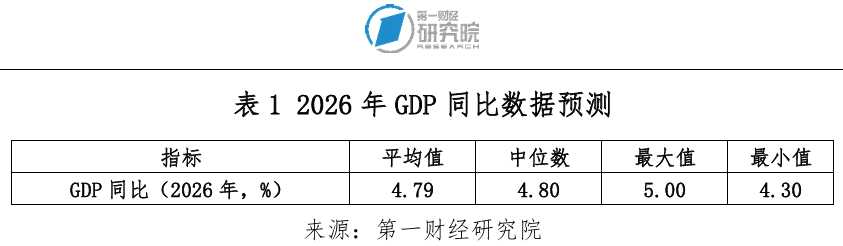
Economic Outlook - In 2025, China's GDP reached 140.19 trillion yuan, growing by 5.0% year-on-year, achieving the set target for the year [3] - Economists predict a GDP growth of approximately 4.79% for 2026, with a median forecast of 4.80% [2][3][4] - The focus for 2026 will be on enhancing internal demand and implementing new measures to stimulate growth [3][4] Inflation Trends - In 2025, the Consumer Price Index (CPI) showed no year-on-year change, while the Producer Price Index (PPI) decreased by 2.6% [6] - For 2026, CPI is expected to rise by 0.4%, while PPI is projected to decline by 1.1% [7][6] Industrial and Consumption Growth - The industrial added value is forecasted to grow by 5.14% in 2026, while retail sales of consumer goods are expected to increase by 4.05% [9][10] - Service consumption is anticipated to outpace goods consumption, reflecting a shift in consumer preferences [10][11] Investment Trends - Fixed asset investment is expected to recover slightly in 2026, with a projected growth rate of 2.17% [14] - The real estate market is predicted to remain in a downtrend, with a forecasted decline of 8.03% in real estate development investment [14][16] Foreign Trade - China's foreign trade is expected to maintain stable growth, with exports projected to increase by 3% to 4% in 2026 [20][21] - The trade surplus for 2026 is estimated at approximately $1.25 trillion [18] Key Economic Highlights - The economic highlights for 2025 include resilience in external demand and accelerated domestic industrial upgrades [21][22] - Future focus areas include expanding domestic demand and fostering innovation [21][22]
2026年市与宝武马钢融合发展工作对接会召开
Xin Lang Cai Jing· 2026-01-21 10:25
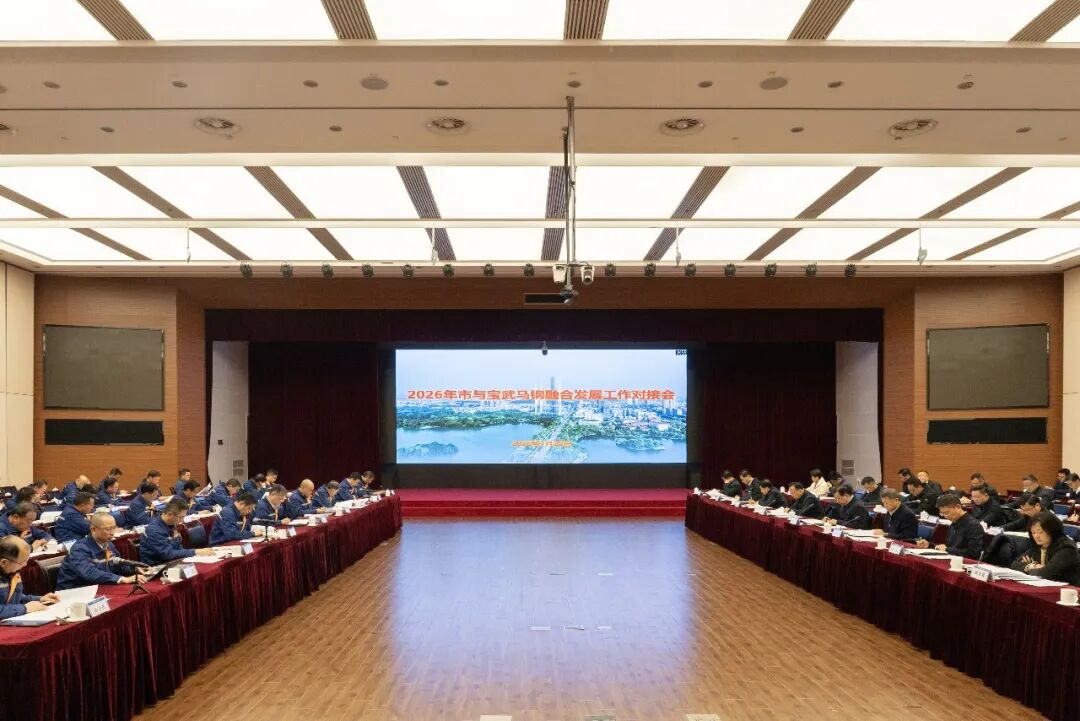
(来源:马钢家园) 1月20日下午,2026年市与宝武马钢融合发展工作对接会在马钢办公楼413会议室召开。市委书记袁方出席会议并讲话,市委副书记、市长葛斌主持会议, 马钢集团、马钢股份党委书记、董事长蒋育翔在会上讲话。市领导钱沙泉、任生、阙方俊、阚青鹤、左年文、张春、钱俊、刘煜、叶南东、郭俊峰,马钢 领导祁卫东、唐琪明、伏明、罗武龙、徐佶、黄杰、程鼎及杨兴亮、胡中杰、邓勇出席。 袁方在讲话中首先代表市委、市政府,对马钢为全市经济发展作出的贡献表示感谢,并向马钢全体干部职工致以新年问候。他指出,回顾"十四五"奋斗历 程,市与马钢勠力同心、拼搏实干,坚持战略引领、提升了发展能级,坚持数智赋能、赢得了发展先机,坚持改革攻坚、激发了发展活力,坚持统筹兼 顾、优化了发展环境,坚持团结如钢、凝聚了发展合力,共同交出了一份令人振奋的答卷。 袁方指出,面对"十五五"时期的新形势、新任务、新挑战,市企双方要坚定发展信心,为共同的使命携手打拼,充分发挥区位、产业、创新、生态等多重 优势,共同建设后劲十足大而强的新马钢,携手打造安徽的"杭嘉湖"、长三角的"白菜心"。 袁方强调,今年是"十五五"规划的开局之年,也恰逢马鞍山建市70周 ...

重大成果竞相涌现!这就是大国实力!
Ke Ji Ri Bao· 2026-01-21 09:45
Group 1 - China's "artificial sun" achieved a world record of "one billion degrees for a thousand seconds," marking a significant leap from basic science to engineering practice in fusion energy research [1] - The drilling depth of China's Shendi Chuan Ke No. 1 well has surpassed 10,000 meters, indicating a robust advancement in deep earth exploration [1] - The global first 5G-A humanoid robot "Kua Fu" successfully completed the torch relay for the 15th National Games, showcasing advancements in robotics [1] Group 2 - China ranks first globally in the number of approved innovative drugs, reflecting a successful completion of clinical trials [2] - Technological achievements are increasingly transitioning from laboratories to production lines, resulting in tangible changes in daily life [2] - The Ministry of Science and Technology emphasizes that 2026 will be a critical year for advancing the construction of a strong technological nation [4] Group 3 - The Ministry of Science and Technology will focus on innovation-driven strategies, enhancing strategic planning, policy measures, and resource platforms to improve the overall effectiveness of the national innovation system [4] - There is a commitment to increase high-quality technological supply and cultivate new driving forces to lead the development of new productive forces [4] - China's technology sector is poised for another "harvest year," reinforcing its path towards high-quality development [4]
增长目标顺利实现 创新生发新鲜动能——海外人士热议全年经济数据背后的中国信心
Xin Hua Wang· 2026-01-21 08:34
Core Insights - China's GDP has surpassed 140 trillion yuan for the first time, growing by 5% compared to the previous year, indicating resilience and confidence in the economy [1] - The total value of goods trade has exceeded 45 trillion yuan, with manufacturing value added remaining the highest in the world for 16 consecutive years [1] - The contribution of final consumption expenditure to economic growth has surpassed 50%, showcasing a robust internal driving force [2] Economic Stability - The Chinese economy in 2025 is characterized by stability, effectively responding to external challenges through proactive macroeconomic policies [2] - The proportion of high-tech manufacturing value added in total industrial value added has risen to 17.1%, reflecting structural optimization [2] - China's economic growth is expected to contribute approximately 30% to global economic growth, positioning it as a reliable source of stability [3] Innovation and High-Quality Development - R&D expenditure intensity reached 2.8%, surpassing the OECD average for the first time, indicating a strong focus on innovation [4] - The manufacturing value added of digital products grew by 9.3%, with significant increases in the production of servers and industrial robots [5] - China is becoming a key player in global innovation, particularly in fields like artificial intelligence and quantum technology, enhancing its long-term competitiveness [5] Global Cooperation and Openness - China is expected to maintain a significant contribution to global economic growth, with an average contribution rate of around 30% during the 14th Five-Year Plan period [6] - The import scale is projected to reach 18.5 trillion yuan, providing vast market opportunities for other countries [6] - Trade with Belt and Road Initiative countries has increased by 6.3%, highlighting China's commitment to expanding international cooperation [6][7]
特稿丨增长目标顺利实现 创新生发新鲜动能——海外人士热议全年经济数据背后的中国信心
Xin Hua Wang· 2026-01-21 08:05
新华社北京1月21日电 特稿丨增长目标顺利实现 创新生发新鲜动能——海外人士热议全年经济数 据背后的中国信心 放眼全球,2025年中国经济增速在主要经济体中名列前茅,是全球经济增长最稳定、最可靠的动力 源,对世界经济增长的贡献率预计达到30%左右。2025年,中国稳外贸多样化格局加速形成,目前已成 为150多个国家和地区的主要贸易伙伴,高技术、高附加值产品成为出口增长主力,外贸展现强大韧 性。 新华社记者闫洁 "国内生产总值(GDP)首次跃上140万亿元新台阶,比上年增长5%""货物贸易进出口总值首破45 万亿元""制造业增加值连续16年稳居世界首位,服务业增加值占GDP比重提高到57.7%"……2025年,中 国经济有效应对各种风险挑战,顶压前行、向新向优发展,交出一份来之不易的成绩单,既展现行稳致 远的韧性和活力,更彰显破浪前行的信心和底气。 海外人士认为,透过这份含金量更高、韧性更强的发展答卷,可以洞察中国经济运行的态势之稳、 以创新驱动高质量发展的活力之劲、以开放助力全球共同发展的步履之坚。展望"十五五",中国经济长 期向好的支撑条件和基本趋势不会变,优势将更加彰显,继续成为世界经济增长的"稳定锚"和 ...
广发证券:细分行业角度看,生物产业、新能源汽车、新一代信息技术景气领先
Xin Lang Cai Jing· 2026-01-20 23:37
Core Viewpoint - The report from GF Securities highlights that the biotechnology, new energy vehicles, and next-generation information technology sectors are currently leading in terms of industry prosperity, with these three sectors consistently ranking in the top three since October 2025 [1] Industry Summaries Biotechnology - The biotechnology sector is experiencing a turning point driven by innovation, with the past five years seeing major Chinese biotechnology companies filing 52.2% of total patent applications and 63.8% of total patent grants in history [1] New Energy Vehicles - The new energy vehicle sector is benefiting from both domestic sales and exports, with the China Passenger Car Association noting that the export performance of Chinese new energy vehicles has exceeded expectations. The growth in exports is primarily driven by plug-in hybrid and hybrid vehicles replacing pure electric vehicles as new growth points [1] Next-Generation Information Technology - The high prosperity in the next-generation information technology sector is attributed to the accelerated construction of AI computing power and extensive exploration of AI applications across various industries [1] High-End Equipment Manufacturing, New Materials, and Energy Conservation - The high-end equipment manufacturing, new materials, and energy conservation sectors are experiencing weaker prosperity, remaining in the contraction zone for three consecutive months [1]

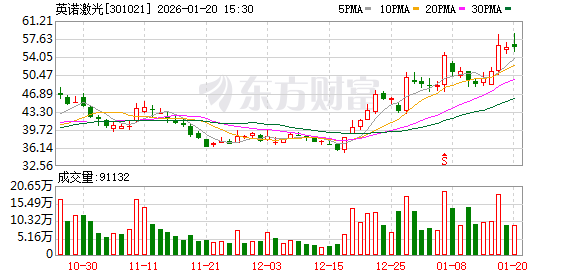
英诺激光:公司坚持创新驱动持续健康发展
Zheng Quan Ri Bao· 2026-01-20 13:37
Group 1 - The company emphasizes the implementation of "solid foundation and strong base" requirements to ensure sustainable and healthy development driven by innovation [2] - The company aims to effectively communicate its fundamental narrative and actively convey its value to shareholders, sharing the achievements of the ultra-fast laser industry and the company itself [2]