
智能化转型

Search documents
海内外市场协同发力 以创新筑牢增长根基
Xin Lang Cai Jing· 2025-12-25 23:05
Core Viewpoint - The automotive industry is rapidly transitioning towards electrification and intelligence, presenting both opportunities and challenges for component manufacturers like Shanghai Kaizhong Materials Technology Co., Ltd. (Kaizhong) [1] Group 1: Strategic Initiatives - Kaizhong is implementing a "domestic optimization + overseas expansion" dual-drive strategy to enhance market collaboration and overall capabilities [2] - The company is investing 308 million yuan in an expansion project at its Nantong base, which will increase annual production capacity for polyurethane damping components by 27 million units and lightweight pedal assemblies by 3.5 million units [2] - Kaizhong's international operations are progressing, with a factory in Mexico set to begin production in 2024, serving major North American clients and covering local automotive production capacity of 4.5 million units per year [2] Group 2: Growth and Innovation - Kaizhong is pursuing the acquisition of 60% of Anhui Tuosheng Automotive Parts Co., Ltd., which specializes in rubber-based damping and sealing components, aligning closely with Kaizhong's core business [3] - The acquisition is expected to create synergies in technology and customer bases, enhancing profitability and market reach [3] - Kaizhong is also developing a new line-controlled braking (EMB) business, projected to begin production in 2026, which is anticipated to be a new growth driver [3] Group 3: Technological Advancements - The company focuses on product improvement and new material applications, significantly enhancing the load capacity of damping components from 10-20 kN to 100 kN [4] - Kaizhong has integrated AI technology into its core processes, improving research efficiency and cost control, while also implementing manufacturing execution systems (MES) and warehouse management systems (WMS) to optimize operations [5] Group 4: Long-term Vision - Kaizhong emphasizes a long-term approach to market management and profitability, aiming for steady growth and consistent dividends for investors [5] - The company believes there is significant room for improvement in the safety, comfort, energy efficiency, and environmental aspects of new energy vehicles, focusing on core technological advancements rather than superficial innovations [5]

从防爆制造到系统级智能 华荣股份详解价值重塑逻辑
Zhong Guo Zheng Quan Bao· 2025-12-25 21:59
Core Viewpoint - The transformation of Huaron Co., Ltd. from a traditional manufacturing company to an industrial technology service provider is emphasized, focusing on providing safety and efficiency rather than just selling hardware [1]. Strategic Positioning - The company's strategy is characterized by three pillars: "stability," "progress," and "establishment." Stability involves maintaining a solid domestic order base and a strong foreign trade business. Progress focuses on adapting to the trends of information and intelligence in the face of slowing demand in traditional downstream industries. Establishment relies on capital markets for systematic investments and acquisitions to accelerate the transition to intelligent operations and emerging businesses [1]. - The goal for the next five years is to become a core participant in defining safety operation standards for high-risk and complex industrial environments globally [1]. International Business Growth - By the third quarter of 2025, Huaron's foreign trade business has shown good growth, evolving into a significant revenue contributor. The company is accelerating its international strategy, with subsidiaries established in the Middle East and plans for new operational centers in Europe, Central Asia, and Southeast Asia [2]. - The company aims to establish operational centers in Kazakhstan, Africa, and South America to further expand its global market presence [2]. Competitive Advantage - The growth in foreign trade is driven by a comprehensive competitive advantage that includes technology, service, and response speed, rather than just cost advantages. The company has successfully responded to customer needs through rapid customization and service excellence [3]. - The domestic business focuses on strategic cooperation with core users to stabilize market share in traditional sectors, while also pursuing new projects in coal chemical, fine chemical, new energy, and hydrogen energy sectors [3]. System Evolution - The "An Gong Intelligent Control System" has evolved beyond a single product to become the core engine driving the company's transition from a manufacturer to a system service provider and ecosystem enabler [4]. - This system has developed into 15 intelligent control subsystems, covering a full range of technical solutions for smart factories, allowing the company to transform one-time project revenues into ongoing service and upgrade opportunities [5]. Future Business Model - The company envisions a shift from being a manufacturer to a service provider, potentially allowing other compliant hardware to connect to its system, thus creating a high-margin service model [6]. - This new model aims to enhance profitability and valuation by moving away from hardware manufacturing costs and price competition [6]. Talent Development - The company recognizes the need for practical and application-oriented technical talent as a key challenge in its transformation. A "Special Recruitment Plan" has been initiated to cultivate a high-quality talent pool with international vision and innovative capabilities [7]. - The plan aims to develop a team capable of delivering results within six months and stepping into management roles within nine months [7]. Resource Development - The company plans to focus on mergers and acquisitions as a core strategy for enhancing its technological and asset capabilities, with a dedicated investment committee to be established by 2026 [8].

从防爆制造到系统级智能华荣股份详解价值重塑逻辑
Zhong Guo Zheng Quan Bao· 2025-12-25 21:11
Core Insights - The core idea of the article emphasizes the transformation of Huaron Co., from a traditional manufacturer of explosion-proof hardware to a provider of industrial technology services focused on safety and efficiency [1] Group 1: Strategic Transformation - The company aims to evolve its business model by focusing on a clear strategic positioning that includes stability, progress, and establishment [1] - "Stability" refers to maintaining a solid domestic order base and a significant share of foreign trade to withstand market fluctuations [1] - "Progress" involves adapting to the trends of information and intelligence in the face of slowing demand in traditional downstream industries, with the "Safety and Intelligent Control System" expanding to 15 subsystems [1] - "Establishment" focuses on leveraging capital markets for systematic investments and acquisitions to accelerate the transition to intelligent operations and emerging businesses [1] Group 2: International Expansion - By the third quarter of 2025, the company's foreign trade business has shown good growth, evolving into a significant revenue contributor [2] - The company is accelerating its international strategy, establishing subsidiaries in the Middle East, including a joint venture in the UAE and a subsidiary in Saudi Arabia, with plans for order realization by 2026 [2] - New operational centers are being set up in Europe, Central Asia, and Southeast Asia, with ongoing plans for centers in Kazakhstan, Africa, and South America [2] Group 3: Competitive Advantage - The company's competitive edge in foreign trade is driven by a comprehensive system of technology, service, and rapid response rather than just cost advantages [3] - Strategic partnerships with core users in the domestic market are being pursued to stabilize market share in traditional sectors like oil and gas [3] - The company is actively tracking new projects in coal chemical, fine chemical, new energy, and hydrogen energy sectors, with initial orders expected to generate revenue by 2026 [3] Group 4: Intelligent Control System - The "Safety and Intelligent Control System" has evolved beyond a single product to become the core engine driving the company's transition from a manufacturer to a system service provider [4] - This system now includes 15 subsystems, covering a full range of technical solutions for smart factories, and is designed to meet the specific needs of end users [4] - Each new subsystem opens up new industry applications, transforming one-time project revenues into ongoing service and upgrade opportunities [4] Group 5: Future Vision - The company envisions a shift from being a manufacturer to a service provider, focusing on platform ecosystem operations and potentially allowing third-party hardware integration [5] - This new model aims to reduce reliance on hardware manufacturing costs and price competition, transitioning to a light-asset, high-margin service model [5] - The company is addressing the challenge of a shortage of practical, application-oriented technical talent through a "Special Recruitment Plan" aimed at building a high-quality talent pool [6] Group 6: Talent Development and Resource Building - The "Special Recruitment Plan" has successfully identified nearly 30 professionals in various fields, establishing dynamic growth profiles for personalized development [6] - The company aims to cultivate a capable and innovative young workforce, with expectations for rapid performance and management advancement [6] - Plans for mergers and acquisitions are a core focus for the board, with a dedicated investment committee set to be established by 2026 to enhance technical and asset capabilities [6]
凯众股份总经理侯振坤:海内外市场协同发力 以创新筑牢增长根基
Zheng Quan Ri Bao· 2025-12-25 16:39
Core Insights - The automotive industry is rapidly transitioning towards electrification and intelligence, presenting both opportunities and challenges for component manufacturers [2] Group 1: Company Strategy - The company has adopted a "domestic optimization + overseas expansion" dual-drive strategy to enhance market collaboration and overall capabilities [3] - A 308 million yuan convertible bond is being invested in the Nantong base expansion project, which will add an annual production capacity of 27 million polyurethane damping components and 3.5 million lightweight pedal assemblies [3] - The company is implementing a "main production base + satellite factory" model, with plans to establish 2 to 3 additional factories based on business expansion [3] Group 2: International Expansion - The company's factory in Mexico is set to begin mass production in 2024, directly serving major international clients, including well-known new energy vehicle manufacturers and core customers like General Motors and Ford [3] - A factory in Morocco is scheduled to begin construction in Q1 2024, with production expected to start by the end of 2026, leveraging its geographical advantage to serve the European market [3] Group 3: Growth and Innovation - The company is pursuing the acquisition of a 60% stake in Anhui Tuosheng Automotive Parts Co., which specializes in rubber-based damping and sealing components, aligning closely with the company's core business [4] - The acquisition is expected to create synergies, enhance profitability, and broaden market and technology boundaries [5] - The company plans to launch its EMB (electromechanical brake) business by 2026, which is anticipated to become a new growth driver [5] Group 4: Technological Advancements - The company focuses on product improvement and new material applications, significantly enhancing the load capacity of damping components from 10-20 kN to 100 kN [5] - AI technology is being integrated into core processes, improving R&D efficiency and cost control [5] - The implementation of MES and WMS systems has effectively addressed inventory turnover issues, further reducing operational costs [5] Group 5: Long-term Vision - The company emphasizes a long-term approach to market management and profitability, aiming for steady growth and consistent dividends for investors [6] - The company believes there is significant room for improvement in the safety, comfort, energy efficiency, and environmental aspects of new energy vehicles [6] - The focus remains on technological fundamentals while gradually expanding into new application scenarios [6]

科技帮小微,金融暖民生:小赢科技用创新书写普惠金融新答卷
Nan Fang Du Shi Bao· 2025-12-25 12:44
Core Viewpoint - The article emphasizes the importance of small and micro enterprises as vital components of the real economy, highlighting the proactive measures taken by the government and financial technology companies like Xiaoying Technology to support these businesses through innovative financial services and initiatives [2][3]. Group 1: Government Support and Financial Environment - The Chinese government has introduced various policies, including "Several Measures to Support Financing for Small and Micro Enterprises," to enhance the financing environment for these businesses, resulting in a 12.5% year-on-year increase in the balance of inclusive loans to small and micro enterprises, reaching 35.3 trillion yuan by the end of Q1 2025 [3]. - Xiaoying Technology has launched the "Be Your Own Light" annual support plan in 2025, which includes the "Small Store Shining Plan" and "User Lighting Plan," aimed at providing financial support to small and micro enterprises, having served over 9.5 million small business owners and individual entrepreneurs across 31 provinces and regions from January 2020 to October 2025 [3]. Group 2: Technological Innovation and Service Enhancement - The "Financial Technology Development Plan (2022-2025)" encourages the application of intelligent technology in finance, and Xiaoying Technology has introduced the virtual digital assistant WinDaidai in 2025, marking a new phase in optimizing user services [5]. - WinDaidai integrates advanced technologies such as AI voice synthesis, real-time rendering, and intent recognition, providing a comprehensive intelligent interaction experience for users [7]. - The design of WinDaidai reflects a blend of technology and human touch, featuring a 3D data light ring and a color scheme that symbolizes the combination of humanistic care and technological wisdom [8]. Group 3: Social Responsibility and Consumer Protection - Xiaoying Technology emphasizes the integration of industry, academia, and research to foster sustainable development in financial technology, exemplified by the establishment of a "Digital Finance Laboratory" in collaboration with Renmin University of China [9]. - The company prioritizes consumer rights protection, conducting educational activities that have reached approximately one million people to raise awareness about financial safety and risk prevention [9]. - In the realm of public welfare, Xiaoying Technology has established a rural campus library in Jiangxi, which houses 40,000 books, enhancing educational resources for local children and demonstrating the company's commitment to social responsibility [10]. Group 4: Future Outlook - Xiaoying Technology plans to continue aligning with government policies and focusing on user needs, aiming to enhance its digital partner services and further contribute to the high-quality development of the real economy [10].
2026年中国印刷复制市场现状分析:随着个性化需求,市场规模将达15371.5亿元[图]
Sou Hu Cai Jing· 2025-12-25 07:07
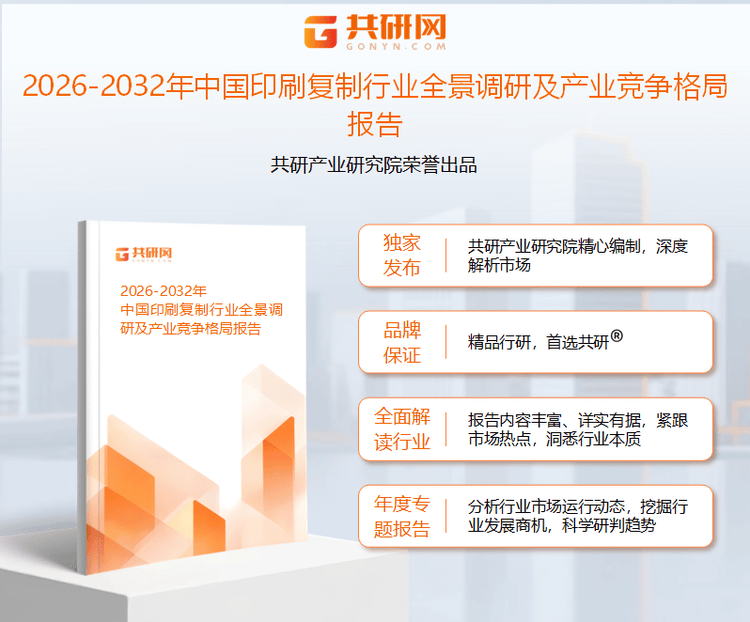
Core Viewpoint - The report titled "2026-2032 China Printing and Reproduction Industry Panorama Research and Competitive Landscape Report" provides essential insights for decision-makers and investors in the printing and reproduction sector, highlighting market trends, competitive dynamics, and future growth opportunities [1][15]. Industry Overview - The printing and reproduction industry involves transferring graphic information from original documents to various substrates, including paper, plastic, and metal, resulting in copies that may be identical or artistically modified [6]. - The industry is characterized by a diverse and concentrated market structure, with leading brands dominating due to advanced production technologies and comprehensive sales channels, while smaller firms leverage flexibility and innovation, particularly in digital printing [12]. Market Trends - The industry is expected to evolve towards digitalization, high-definition, personalization, and intelligence, with emerging technologies like virtual reality (VR) and augmented reality (AR) enhancing content reproduction and dissemination [9]. - Green printing is anticipated to become a significant development direction due to increasing environmental regulations and consumer awareness, with a projected market growth of 4.9% year-on-year by 2026 [9]. Competitive Landscape - The report outlines a competitive landscape where well-known brands hold a dominant position, while smaller enterprises excel in emerging fields like digital printing [12]. - The industry is undergoing a transformation towards "smart factories" through the integration of industrial internet and artificial intelligence, optimizing production processes and enhancing quality control [14]. Data Collection and Analysis - The research methodology includes data collection from various sources such as annual reports of listed companies, manufacturer surveys, dealer discussions, and expert validations, ensuring the accuracy and relevance of the findings [3][15]. - The report employs a proprietary industry analysis model to reflect the current market status, trends, and dynamics, providing a comprehensive understanding of the printing and reproduction industry's development [3][15]. Future Projections - The report forecasts the investment scale and growth rate of the printing and reproduction industry from 2026 to 2032, identifying key driving and constraining factors for industry development [22]. - It includes predictions for production volume, demand, market size, and price trends, offering valuable insights for potential investors [22].
超30个重点项目签约发布,创建院士工作站!佛山南海区要这样打造高水平渔业全国标杆
Nan Fang Nong Cun Bao· 2025-12-24 11:08
Core Viewpoint - Nanhai District in Foshan is advancing its high-level fishery development, aiming to establish itself as a national benchmark in the industry through various projects and initiatives [1][4][6]. Group 1: Industry Development - Nanhai has built a leading freshwater fish farming area, fry breeding center, and processing and distribution center, contributing to a fishery output value exceeding 60 billion yuan in the first three quarters [3][8][11]. - The district's freshwater aquaculture area spans 139,000 acres, with a projected fishery output of 224,800 tons and a value exceeding 6 billion yuan in 2024, and an expected output of over 230,000 tons and a value of approximately 6.6 billion yuan in 2025 [11][12]. - Nanhai is recognized as a hub for high-value fish species, with over 50% of the province's high-value fish transported from the area, and it accounts for 60% of the national distribution of certain fish species [17][18]. Group 2: Technological and Strategic Initiatives - The district is focusing on the standardization, digitalization, and intelligent transformation of its fishery sector, supported by the establishment of a national-level healthy breeding demonstration area and a modern agricultural industrial park [13][15]. - A significant collaboration was formed with a team from the Chinese Academy of Sciences to create an academic workstation for fish breeding, enhancing the selection of new varieties and accelerating the transformation of the fishery sector [28][30][34]. - Nanhai has become the largest freshwater fish fry breeding center in the country, producing 198.5 billion high-quality fry annually, which constitutes one-seventh of the national output [35][36]. Group 3: Economic Impact and Future Plans - The district's agricultural and fishery sectors are interconnected, promoting a diversified food supply system to meet the protein needs of the population [21][23]. - The total aquatic product output for Foshan city reached 633,600 tons, with a fishery output value surpassing 16.9 billion yuan, highlighting the economic significance of the fishery industry in the region [25][26]. - Nanhai is implementing a three-year work plan to enhance the quality of the fishery industry, aiming to introduce at least 10 new freshwater fish brands and achieve a fry output of over 180 billion [38][41]. Group 4: Collaborative Efforts and Community Engagement - Over 30 projects were signed and announced during the high-level fishery promotion meeting, covering various sectors including breeding, cultivation, processing, and financial services [42][46]. - The district is leveraging media resources to enhance the value of the fishery industry, aiming to expand market access and promote the cultural narrative of Nanhai's fishery sector [80][82]. - The establishment of the Nanhai Aquatic Research Center will support research, disease prevention, and financial services, marking a new phase in technological innovation within the fishery sector [76][78].

以“智控”谋双赢|看这家单位如何为传统生产装上“智慧大脑”
Xin Lang Cai Jing· 2025-12-24 10:32
以"智控"谋双赢 在集团公司推进全域数智化转型的战略指引下,沾化汇宏新材料有限公司(下称"汇宏新材料")敢为人先,以创新为引擎,将"智能化"从概念变为生产线 上实实在在的变革。如今,一条覆盖从原料到成品的全流程智能化链条已然成型,在提质增效、安全环保等方面结出硕果,让传统生产模式焕发出新的活 力。 从"人控"到"智控" 全流程自动化实现跨越式转变 氧化铝生产工艺复杂,设备联动性强。过去,生产高度依赖现场操作人员的手动调节与频繁巡检,劳动强度大,且潜藏着因人为失误带来的安全风险。为 此,汇宏新材料瞄准"无人化、少人化"目标,持续投入,对生产全流程进行自动化升级。目前,关键环节自动化覆盖率已达90%。这场变革最直观的体 现,是员工工作方式的根本性转变。 "以前一个参数调整,我们需要跑现场、手动开关阀门,现在在控制室通过电脑就能精准完成。"一位主控室操作人员指着大屏幕介绍,"现在我们能纵览 全局,主动优化系统运行,而不是被动地四处'救火'。"这大幅降低了员工的劳动强度,通过减少人为干预,显著提升了生产过程的稳定性和连续性,为 高效生产打下了坚实基础。 从"自动化"到"智能化" 针对氧化铝生产环境特殊、传统仪表易失效 ...

长沙发布“人工智能+”行动方案,系统布局六大赛道
Chang Sha Wan Bao· 2025-12-24 02:55
Core Insights - Changsha has released the "Artificial Intelligence + Action Plan," outlining a 10-year roadmap for intelligent transformation, with key milestones set for 2027, 2030, and 2035 [1][4] - The city aims to transition from being a "follower" in AI to a "leader" in the integration of AI with the economy, being one of the ten cities in China with both a national AI innovation development pilot zone and an AI application pilot zone [2] Group 1: Strategic Focus Areas - The action plan emphasizes six key areas for AI integration: life sciences and materials science, deep integration with the local "4433" modern industrial system, enhancing consumer experiences, improving welfare for the elderly and children, upgrading governance capabilities, and fostering international cooperation through platforms like free trade zones [5] - To ensure effective implementation, the plan includes six major engineering projects: foundational infrastructure, industrial cluster intelligence, technological innovation, policy support, talent cultivation, and application scenario promotion, creating a comprehensive support system [6] Group 2: Financial Support and Policy Framework - Changsha has introduced policies to accelerate high-quality development in the AI industry, providing financial incentives for innovation, model development, platform construction, and key technology breakthroughs, with rewards up to 2 million yuan for qualifying AI projects [7] - The policy framework aims to break down barriers and foster a vibrant AI industry ecosystem, ensuring that innovative initiatives can thrive in Changsha [8] Group 3: Key Enterprises and Innovation Platforms - The first list of key enterprises includes major players in algorithm research and model development, such as Xidi Zhijia and Huashu Gaoke, which are driving advancements in AI applications [9] - A range of innovation platforms, including national engineering research centers and technology innovation centers, are being established to support the complete ecosystem for AI development in Changsha [9] Group 4: Application Scenarios and Future Planning - Initial key AI models are already yielding results across various sectors, such as enhancing service efficiency and solving complex industrial problems [10] - The action plan outlines future application scenarios, including AI-driven research paradigms, advanced manufacturing, and smart agriculture, showcasing Changsha's strategic ambition to lead in AI technology [10]
宝马新掌门决战新世代
Zhong Guo Qi Che Bao Wang· 2025-12-23 10:28
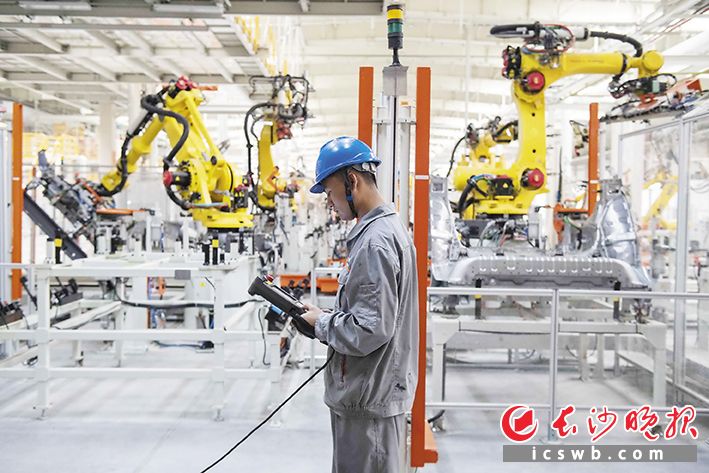
Core Insights - The BMW Group's supervisory board has appointed Milan Nedeljković as the new chairman of the management board, effective May 14, 2026, marking a significant leadership transition as the current chairman, Zipse, concludes his 35-year career at BMW [2] - Nedeljković's tenure will coincide with a critical transformation period in the global automotive industry, focusing on electrification and intelligent technology, as well as the implementation of BMW's largest-ever "New Generation" strategy [2][6] - The "New Generation" strategy represents a pivotal shift for BMW, integrating core innovations in electrification and intelligent systems, which are essential for maintaining competitiveness in the evolving automotive landscape [2] Leadership Background - Milan Nedeljković has over 30 years of experience with BMW, having started as a trainee in 1993 and progressively advancing through various roles in production and quality management [3][4] - His leadership in the digital transformation of the Munich plant and subsequent roles has equipped him with a deep understanding of BMW's production systems and strategic direction [3][4] Production and Strategy - Since joining the board in 2019, Nedeljković has been instrumental in optimizing BMW's production system, leading the implementation of the iFactory flexible production system, which allows for the simultaneous production of combustion, hybrid, and electric vehicles [4] - The "New Generation" vehicle series, which includes the iX3, is set to launch in 2025, with strong pre-order demand reported across major markets [5] Market Challenges - The automotive industry is experiencing significant leadership changes, with many companies facing performance pressures during their transition to electrification, contrasting with BMW's proactive leadership transition [6] - BMW's profitability has been impacted, with a reported 6.9% decrease in net profit year-on-year for the first three quarters, attributed to ongoing investments in electrification and production upgrades [7] - The competitive landscape is shifting, with traditional luxury brands facing challenges from new entrants like Tesla and Chinese manufacturers, necessitating a strategic response from BMW [8] Regional Market Dynamics - In China, BMW faces increasing competition from local brands like BYD and Xpeng, making it crucial for Nedeljković to accelerate the development of intelligent technologies and tailor products to local consumer preferences [9] - The European market presents regulatory challenges, requiring BMW to invest in low-carbon production and sustainability initiatives, which may further strain profitability [9] - In the U.S. market, BMW must navigate supply chain complexities and tariff impacts while balancing local production and procurement strategies [10] Strategic Outlook - The "New Generation" initiative is not just a product line but a strategic declaration for BMW's next decade, with Nedeljković's leadership expected to play a critical role in the company's transformation and legacy [10]
