
注册制改革

Search documents
最重磅科创领袖峰会登场
财联社· 2025-07-16 23:51
Core Viewpoint - The Science and Technology Innovation Board (STAR Market) has reached a significant milestone with 589 listed companies, serving as a "testbed" for capital market reform and a core hub for technological innovation in China [1] Group 1: STAR Market Achievements - Over six years, the STAR Market has continuously led institutional innovation, enhancing the inclusiveness and adaptability of services for new productive forces, fostering a nurturing environment for "hard technology" enterprises [1] - The STAR Market has implemented a registration system reform that breaks traditional listing barriers and has optimized its institutional framework through the "STAR Market Eight Articles" and "1+6" new policies [1] - The STAR Market has remained committed to its mission, aligning with national strategic deployments, and has empowered enterprises to achieve high-quality development through technological innovation [1] Group 2: Upcoming Summit - The "2025 China Science and Technology Innovation Leaders Summit and STAR Market Sixth Anniversary Forum" will be held on July 25, with participation from government officials, regulatory bodies, and leaders from STAR Market enterprises to discuss policies, technological innovation, and industrial development [2] - The summit will feature keynote speeches, high-level dialogues, and roundtable discussions on popular topics such as mergers and acquisitions and international expansion, along with two parallel forums focusing on integrated circuit industry development and the connection between listed companies and primary market science and technology enterprises [2]


元道通信上市第三年因财务造假被立案 创业板监管升级下的中介机构责任危机
Xin Lang Zheng Quan· 2025-07-14 05:49
Core Viewpoint - Yuan Dao Communication is under formal investigation by the China Securities Regulatory Commission (CSRC) for suspected false financial reporting in its annual report, facing significant risks of forced delisting due to major violations [1][2][12] Group 1: Event Overview - On July 11, 2025, Yuan Dao Communication announced it received a notice of investigation from the CSRC for alleged false financial data in its annual report [2] - The investigation highlights issues with the company's internal controls and the adequacy of its bad debt provisions [2][4] - Prior to the investigation, there were unusual shareholder actions, including a significant sell-off by a major shareholder [2][8] Group 2: Financial and Audit Anomalies - The company experienced a dramatic decline in performance post-IPO, with net profit growth rates of 40.79% and 21.7% in 2020 and 2021, respectively, followed by a downturn [4] - The auditing firm, Shinewing Certified Public Accountants, issued a qualified opinion for the first time in 2024, citing an abnormal bad debt rate of 18.16%, significantly higher than the industry average of 5%-8% [5][6] - Internal control deficiencies were evident, with a high reliance on outsourced labor, leading to complex settlement processes [5][6] Group 3: Business Model and Regulatory Concerns - Yuan Dao Communication's business model, heavily reliant on outsourced labor, raises legal risks and questions about compliance with labor laws [6] - The company faced scrutiny during its IPO regarding its classification as a labor-intensive business, which conflicts with the growth-oriented focus of the ChiNext board [6][10] - The company’s R&D investment was notably low, with a research expense ratio of only 1.2% in 2021, far below the ChiNext average [6] Group 4: Warning Signals Before Investigation - Financial data showed multiple risk signals, including an abnormal bad debt rate and negative cash flow from operating activities for two consecutive years [7] - The actions of shareholders, particularly a major shareholder's rapid sell-off, raised suspicions about potential insider knowledge of the impending investigation [8] Group 5: Responsibilities of Intermediaries - The underwriting firm, Huarong Securities, is under scrutiny for its failure to adequately address the company's labor-intensive nature and for insufficient due diligence on related party transactions [9] - The auditing firm’s sudden shift from issuing unqualified opinions to a qualified opinion raises questions about its diligence and the timing of its findings [9] Group 6: Regulatory Implications and Investor Protection - New regulations for forced delisting due to major violations include criteria such as simultaneous insider selling and suspicious client cancellations [10][12] - Investors who purchased shares before July 11, 2025, may seek compensation, with potential liability extending to the underwriting and auditing firms [13] - The case reflects broader challenges in the telecommunications service industry, including pressures from 5G transitions and pricing strategies from major operators [14][15]
12家拟IPO企业被抽中现场检查,释放何种信号?
Di Yi Cai Jing· 2025-07-06 11:17
Core Viewpoint - The strong regulatory environment for IPOs in China's A-share market remains unchanged, despite an increase in the number of IPO applications and approvals [1][5]. Group 1: IPO Regulatory Environment - In June, the A-share IPO market saw a surge with 150 IPO applications accepted, with June 30 being the peak day for approvals this year [1][2]. - On July 3, 12 companies were selected for on-site inspections, a significant increase compared to only 4 companies inspected throughout the previous year [1][3]. - The China Securities Regulatory Commission (CSRC) has increased the coverage of on-site inspections to at least 1/3 of newly applied IPOs, with a minimum inspection ratio of 25% [3][5]. Group 2: Company Details - The 12 companies selected for inspection include various sectors, with 11 having their IPO applications accepted in June and 1 in May [2]. - Among these, 9 companies are in the accepted status, while 3 are in the inquiry stage [2]. - The companies are primarily aiming to list on the Shanghai and Shenzhen stock exchanges, with 8 on the Shanghai Stock Exchange and 4 on the Shenzhen Stock Exchange [2]. Group 3: Market Dynamics - The increase in IPO applications is seen as a sign of market recovery, but the regulatory environment remains stringent, emphasizing the need for companies to meet high standards [5][6]. - The regulatory approach is characterized by a dual focus: maintaining strict financial compliance for traditional industries while offering differentiated standards for high-quality tech companies [5][6]. - Recent reforms in the Sci-Tech Innovation Board aim to enhance inclusivity and adaptability for tech companies, while still ensuring rigorous entry standards [6].
2025上半年A股IPO市场全景:受理量激增,保荐格局重塑,下半年活力可期
Sou Hu Cai Jing· 2025-07-02 10:00
Core Insights - The A-share IPO market experienced a "surge" in acceptance in the first half of 2025, with a total of 177 companies' applications accepted, surpassing the total for the entire year of 2024 [1] - The North Exchange emerged as the "main force," accounting for 65% of the total acceptance with 115 companies, followed by the Shenzhen and Shanghai markets [1] - A significant number of applications were submitted in June, with 150 new acceptances, representing 84.7% of the half-year total, indicating a "last-minute application" trend [1] Group 1: IPO Market Dynamics - The surge in IPO applications is closely linked to policy guidance, particularly the relaxed listing standards for unprofitable companies on the Sci-Tech Innovation Board [1][5] - Notable companies like the domestic GPU "unicorn" Moore Threads and Muxi Co. have chosen to apply under various standards that align with their development stages, supported by prominent investors [1][4] - The first half of 2025 saw 21 companies accepted on the Sci-Tech Innovation Board, with a significant increase in the proportion of unprofitable companies, highlighting their high R&D investment and growth potential [5] Group 2: Underwriting Landscape - The competitive landscape among underwriting institutions has shifted, with 37 institutions participating in the underwriting of 177 companies, led by Guotai Junan with 26 underwritings [2] - CITIC Securities followed with 22 underwritings, while other notable firms included CITIC Jianzhong and CICC, indicating a significant concentration of underwriting activity among the top firms [2] Group 3: Market Performance and Future Outlook - In the first half of 2025, the total number of A-share IPO projects reached 48, with a financing scale of 38 billion yuan, reflecting a year-on-year growth of 25.53% [4] - The market is expected to maintain an active trend in the second half of 2025, driven by ongoing reforms and an increase in acceptance reviews [8] - Analysts predict a focus on supporting hard technology and strategic emerging industries, as well as enhancing merger and acquisition services to promote industrial upgrades [8]

A股市场“新陈代谢”加速:年内50家公司首发上市,近150家被实施风险警示
Hua Xia Shi Bao· 2025-06-24 23:33
Group 1: Market Overview - The A-share market has shown an "orderly progress" this year, with an increase in IPO activity and a normalization of the delisting mechanism [2][6] - As of June 24, 50 companies have successfully listed, raising approximately 37 billion yuan, indicating growth compared to the same period last year [2][4] - 13 companies have been delisted this year, a significant decrease from 53 in the previous year, reflecting a stricter enforcement of delisting regulations [5][6] Group 2: IPO Activity - Companies such as Haiyang Technology, Yingshi Innovation, and Huazhi Jie have recently entered the A-share market, contributing to the active IPO landscape [3][4] - Haiyang Technology, which focuses on nylon 6 products, and Yingshi Innovation, specializing in smart imaging devices, are among the notable IPOs, with Yingshi raising 1.938 billion yuan for its projects [3][4] - The revenue projections for Yingshi Innovation from 2022 to 2024 are 2.041 billion yuan, 3.636 billion yuan, and 5.574 billion yuan, respectively [3] Group 3: Delisting Mechanism - The delisting process has become more routine, with 150 companies receiving ST or *ST warnings this year, indicating a focus on corporate governance and compliance [6][7] - Companies like *ST Jiyuan and Zhonghang Chanyin have faced delisting due to poor performance and non-compliance, highlighting the market's shift towards eliminating "zombie companies" [5][6] - The regulatory environment is evolving, with a push for stricter delisting standards and improved investor protection mechanisms [9] Group 4: Long-term Implications - The orderly progress in the market is expected to optimize resource allocation, directing funds to growth-oriented companies and enhancing support for the real economy [6] - The quality of listed companies is anticipated to improve as low-efficiency firms are eliminated, compelling remaining companies to strengthen compliance and core competitiveness [6] - A cleaner market ecosystem will likely enhance investor confidence and market vitality, supported by a more market-oriented and legal framework [6]

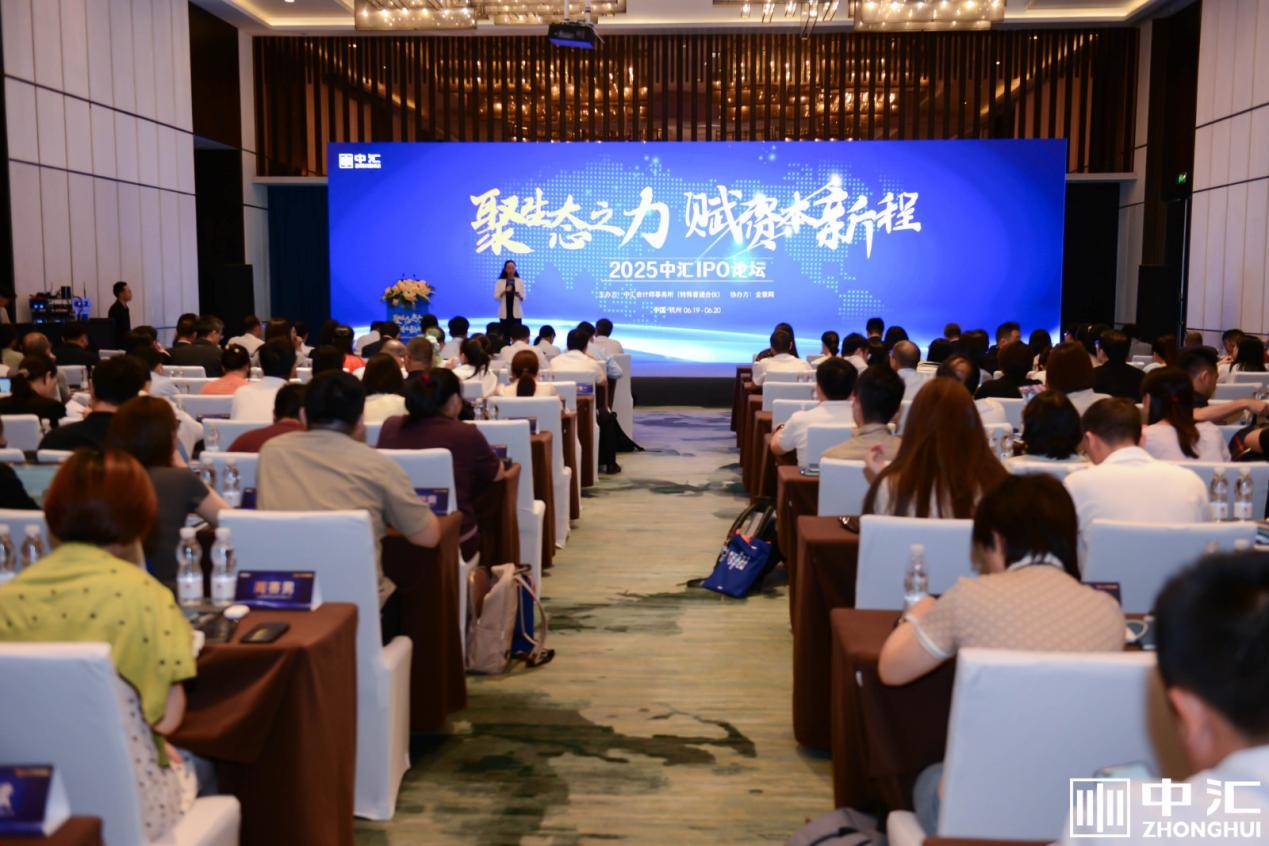
共探改革机遇,同筑发展新程 中汇“聚生态之力、赋资本新程”IPO高端论坛顺利召开
Sou Hu Cai Jing· 2025-06-21 03:33
Group 1 - The forum titled "Gathering Ecological Power, Empowering Capital New Journey" was successfully held in Hangzhou, Zhejiang, focusing on the ongoing reforms in the capital market and IPO-related systems [1][3] - The event aimed to create an efficient dialogue platform for various parties involved in IPOs, facilitating quality enterprises in the Yangtze River Delta and nationwide to connect with the capital market [3][19] - The introduction of the new "National Nine Articles" in 2024 is expected to fundamentally reshape the IPO ecosystem, impacting compliance requirements, listing standards, and industry positioning [5][19] Group 2 - The current audit process emphasizes "strict scrutiny and quality first," with a focus on financial authenticity, legal compliance of issuing entities, and project design for fundraising [7][9] - Tax compliance has become a core prerequisite for IPO reviews, necessitating strategic design for tax burden optimization and risk prevention [11] - The forum gathered experts from various sectors, including exchanges, securities firms, accounting firms, law firms, and evaluation agencies, to discuss multi-level capital market construction and digital transformation [19]
特稿 | 洪灏:破局与重塑:中国资本市场的时代答卷
Di Yi Cai Jing· 2025-06-18 01:35
Group 1: Current Challenges and Opportunities in China's Capital Market - The rise of anti-globalization sentiments and geopolitical risks presents significant challenges for maintaining strategic openness and enhancing the quality of China's capital market [1][5] - The global economic landscape is undergoing profound changes, with trade protectionism and technological revolutions creating both challenges and unprecedented opportunities for China's capital market [1][5] - A healthy and active capital market is crucial for national competitiveness and is directly linked to the high-quality development of the Chinese economy [1][5] Group 2: Registration System Reform - The registration system reform, initiated in 2019 with the Sci-Tech Innovation Board, has revolutionized China's capital market by shifting from government selection to market selection, significantly improving the efficiency of new stock issuance [2] - The average review period for new stock issuance has been reduced from 18 months to less than 6 months, indicating a substantial increase in issuance efficiency [2] - The reform has also led to a record number of 50 companies delisting in 2023, reflecting a market ecosystem of "entry and exit" [2] Group 3: Trading Mechanisms and Investor Protection - Recent innovations in trading mechanisms, such as the introduction of fixed-price trading on the Sci-Tech Innovation Board and relaxed trading limits on the ChiNext, have enhanced market liquidity and pricing efficiency [3] - However, the proportion of margin trading in China's market is only about 2%, significantly lower than the 10% average in mature markets, indicating a structural shortcoming [3] - Progress has been made in investor protection, including collective litigation and compensation mechanisms, but challenges remain in protecting retail investors effectively [3] Group 4: Long-term Capital and Foreign Investment - The cultivation of patient capital is essential for supporting technological innovation, yet the A-share market exhibits a short-term investment tendency, with an average holding period of less than 6 months for public funds [4] - China's capital market has accelerated its opening to foreign investment, with foreign holdings of A-shares reaching 3.5 trillion yuan by the end of 2023, nearly tripling since 2018 [4] - Despite these advancements, the foreign ownership ratio in China's market is still around 5%, significantly lower than that of the US and Japan, indicating room for improvement [5] Group 5: Systematic Progress in Market Openness - To deepen the opening of the capital market, systematic progress is needed, including aligning accounting standards with international norms and enhancing information disclosure for foreign investors [6] - The introduction of more financial derivatives, such as stock index options and government bond futures, is necessary to provide better risk management tools for foreign investors [6] - The multi-tiered market structure in China, encompassing various boards, needs to be optimized for better connectivity and collaboration among different market segments [6] Group 6: Future Directions for Capital Market Reform - The blueprint for the future of China's capital market reform emphasizes enhancing the quality of listed companies, preventing systemic risks, and supporting national strategies for technological innovation and industrial upgrading [7] - The capital market is entering a critical phase of reform, requiring a strategic focus on innovation and resilience to navigate challenges effectively [7] - The belief is that a reformed capital market will emerge more mature and vibrant, contributing significantly to the modernization of the Chinese economy [7]

特稿 | 田轩:深化资本市场改革攻坚,激活高质量发展新动能
Di Yi Cai Jing· 2025-06-18 01:33
监管部门积极推动多层次资本市场体系建设,为各类企业提供多元化融资渠道,资本市场的包容性、适应性得到 提升,有效支持了科技创新型企业融资需求,激发了创新创业活力,推动新质生产力加快发展。 近年来,尽管IPO募集资金额有一定程度下降,但增发和发行债券的规模仍保持一定水平,这表明资本市场在支 持科技型企业融资方面的持续发力。值得关注的是,并购重组活动活跃,2024年并购成功率达到93%,创近10年 新高。半导体、生物医药等战略性新兴产业成为并购重组的主要领域,科技板块并购重组金额显著增加,加速了 企业向新质生产力的转型升级。 同时,制度的完善成为资本市场结构优化的重要支撑。通过对公募基金、国有保险公司、养老金等实施3年以上长 周期考核,上调保险资金权益类资产配置比例上限等举措,中长期资金入市步伐进一步加快。数据显示,2025年 一季度,保险资金运用余额增长近1.7万亿元,其中人身险、财产险股票基金配比分别提升至13.09%和12.22%,大 型国有险企每年新增保费的30%将投资A股。同期,权益类基金规模增长6.94%,其中被动基金增幅达53.73%。外 资流入方面,放宽外资准入限制、简化外资企业设立程序、加速ETF ...
科创板开板六周年:588 家上市公司绘就“硬科技”图鉴,多家企业年度收入突破千亿元大关
Hua Xia Shi Bao· 2025-06-13 14:06
Core Viewpoint - The Shanghai Stock Exchange's Sci-Tech Innovation Board (STAR Market) has successfully supported "hard technology" companies since its launch in June 2019, contributing positively to China's innovation-driven development strategy and the growth of enterprises [1][6]. Group 1: Performance and Growth - The number of listed companies on the STAR Market reached 588 by June 2025, showcasing its role in promoting high-level technological self-reliance and new productivity development [1]. - Revenue for STAR Market companies has shown a steady increase, with total revenues reaching 1,348.99 billion yuan in 2022, 1,420.46 billion yuan in 2023, and 1,426.07 billion yuan in 2024 [2]. - Notable companies like JinkoSolar and Trina Solar have reported significant revenue growth, with JinkoSolar's revenue increasing from 82.68 billion yuan in 2022 to 118.68 billion yuan in 2023, and Trina Solar's revenue rising from 85.05 billion yuan in 2022 to 113.39 billion yuan in 2023 [2][3]. Group 2: Research and Development Investment - STAR Market companies have demonstrated exceptional innovation vitality, with R&D investments of 137.40 billion yuan in 2022, 158.15 billion yuan in 2023, and 167.99 billion yuan in 2024 [4]. - In 2024, 315 companies had R&D expenses exceeding 100 million yuan, with 63 companies exceeding 500 million yuan, and 28 companies surpassing 1 billion yuan [4]. - BeiGene has shown a strong commitment to R&D, with expenditures of 11.15 billion yuan in 2022, 12.81 billion yuan in 2023, and 14.14 billion yuan in 2024 [4]. Group 3: Institutional Innovation and Market Reforms - The STAR Market has focused on institutional innovation, implementing a registration system and market-oriented pricing mechanisms to enhance liquidity and investor protection [3][5]. - The recent "STAR Market Eight Measures" introduced by the China Securities Regulatory Commission aims to strengthen the board's focus on "hard technology" and support high-quality, unprofitable tech companies in going public [6]. - Future reforms are suggested to include policy coordination with relevant ministries, product innovation through new financial instruments, and the establishment of innovation funds to support early-stage projects [7].


深圳:注册制改革实施以来,创业板新增上市公司577家
news flash· 2025-06-13 03:00
深圳市委常委、秘书长郑红波6月13日在深圳市政府新闻办新闻发布会上表示,经过近5年探索,深圳综 合改革试点各项改革任务扎实有序推进,取得了重要进展成效,要素协同配置效率持续提高。资本要素 方面,注册制改革实施以来,创业板新增上市公司577家,9成为高新技术企业,首发募集资金近5500亿 元,深交所股票交易规模居全球第三;技术要素方面,深圳成立科技成果与知识产权交易中心,促进了 资本市场与技术市场进一步联通,技术要素加快向新质生产力转化。(人民财讯) ...
