
碳减排

Search documents
韩国石化业呼吁设定务实减排目标
Zhong Guo Hua Gong Bao· 2025-11-17 02:48
Group 1 - The Korean Chamber of Commerce, along with eight industry associations including the Korea Petroleum Association (KPA) and the Korea Chemical Industry Association (KCIA), expressed concerns that the proposed emission reduction plans by the Ministry of Climate, Energy and Environment may impose a heavy burden on the competitiveness of the petrochemical industry [1] - The government has proposed two emission reduction targets of "50%-60%" and "53%-60%" compared to 2018 levels, which exceed the industry's recognized limit of 48% [1] - The Chamber highlighted that the proposed 2035 reduction plan does not adequately reflect the current economic realities faced by the industry, which is dealing with challenges such as oversupply, increased tariffs from major economies, and prolonged domestic economic stagnation [1] Group 2 - In response, the Ministry of Trade, Industry and Energy (MOTIE) announced a loan support of 297.3 billion KRW for the next three years aimed at 16 carbon reduction-related facility investments and new R&D projects [2] - This initiative is expected to stimulate a total of 963 billion KRW in new private investments [2] - The first round of project selections identified nine projects, with a second round adding 16 more, including companies like S-Oil, HD Hydrogen, SK Plug Hyverse, and Hanwha Ocean Eco-Tech, which can receive loans up to 50 billion KRW (approximately 35.2 million USD) at a low interest rate of 1.3% [2]
宏川智慧:公司始终专注于能源及化工物流主业
Zheng Quan Ri Bao Zhi Sheng· 2025-11-11 10:13
Core Viewpoint - The company focuses on energy and chemical logistics, primarily storing petrochemical products, and aims to become a benchmark enterprise for sustainable development in the industry [1] Group 1: Business Focus - The company specializes in the storage of petrochemical products, including refined oil, alcohols (including methanol), and other liquid chemicals [1] - Key storage facilities include Taicang Yanghong, Nantong Yanghong, Changzhou Hongchuan, and the affiliated company Changjiang Petrochemical, all designated methanol delivery warehouses by Zhengzhou Commodity Exchange [1] Group 2: Strategic Direction - The company has not yet initiated green methanol storage operations but is committed to extending its business into new energy and green chemicals [1] - The long-term strategic development direction is to become a sustainable industry benchmark [1] Group 3: Environmental Initiatives - All storage facilities are constructed and operated in accordance with national environmental standards, employing measures to reduce VOC emissions [1] - The company has implemented a green upgrade with oil and gas recovery systems and is advancing clean energy transformation through distributed photovoltaic projects [1] - Existing hardware facilities meet the storage requirements for green methanol [1]
制冷剂行业观点更新
2025-11-11 01:01
Summary of Refrigerant Industry Conference Call Industry Overview - The refrigerant industry is currently experiencing a supply-demand imbalance, characterized by limited supply and strong demand driven by the air conditioning and automotive markets [2][4][10] - The price of fluorite powder, a key raw material for refrigerants, has recently seen a decline due to ample supply and high downstream inventory, but is expected to rise again towards the end of the year due to production halts in northern regions and year-end stocking demands [1][2] Key Points Supply Dynamics - Fluorite supply is constrained by low extraction ratios and stringent policies, leading to a tight supply situation in the medium to long term, with prices expected to remain at a high level [1][2] - The Chinese government is gradually reducing production quotas for second-generation and third-generation hydrofluorocarbons (HFCs), with a 7.43% reduction in second-generation refrigerant quotas for 2025 [1][4] Demand Drivers - The demand for refrigerants is rigid, primarily driven by the air conditioning and automotive sectors, with policies such as trade-in programs and tax exemptions for vehicle purchases continuing into 2025 [1][2][3] - Despite potential marginal decreases in stimulus effects in 2026, the overall demand for refrigerants is expected to increase due to technological upgrades and the rising share of new energy vehicles [2][8] Market Trends - The third-generation refrigerant market is characterized by high concentration, with large companies possessing significant pricing power, allowing them to adapt flexibly to market changes [1][4] - The price of R22, a second-generation refrigerant, has significantly declined due to its dual use as a raw material, which is not subject to quota restrictions, leading to increased production capacity for R22 [1][5][7] Future Outlook - The refrigerant industry is expected to maintain a tight supply-demand balance, with product prices and margins remaining at high levels [4][10] - The long-term outlook for the refrigerant industry remains optimistic, supported by the rigid demand from maintenance needs and the gradual market share increase of new-generation products [6][10] Investment Recommendations - The fluorochemical and refrigerant sectors are recommended for continued attention due to their strong resource attributes, high production concentration, and annual quota reductions [2][9] - Companies such as Juhua Co., Sanmei Co., and Yonghe Co. are highlighted as potential investment opportunities within the refrigerant industry [2][9]
武强碳解科技有限公司成立 注册资本1176.47万人民币
Sou Hu Cai Jing· 2025-11-10 22:45
Core Insights - Wuqiang Carbon Reduction Technology Co., Ltd. has been established with a registered capital of 11.7647 million RMB [1] - The company is focused on various emerging energy technologies and carbon reduction methods [1] Company Overview - The legal representative of the company is Zhao Chenxu [1] - The business scope includes research and development in emerging energy technologies, carbon capture, and carbon storage [1] Business Activities - The company engages in the processing and recycling of non-metal waste and scrap [1] - It also provides health consulting services (excluding medical treatment) and various technical services including development, consulting, and technology transfer [1] - The company is involved in the research and development of new materials and engineering technology [1]
中煤绿科(西安)生态环保有限公司成立
Zheng Quan Ri Bao Wang· 2025-11-10 13:47
Group 1 - The establishment of Zhongmei Green Science (Xi'an) Ecological Environmental Protection Co., Ltd. has been reported, with a registered capital of 50 million yuan [1] - The company's business scope includes water pollution control, sewage treatment and its recycling, as well as research and development in carbon reduction, carbon conversion, carbon capture, and carbon storage technologies [1] - The company is wholly owned by Zhongmei Xi'an Design Engineering Co., Ltd., which is a wholly-owned subsidiary of China Coal Energy Group Co., Ltd. [1]
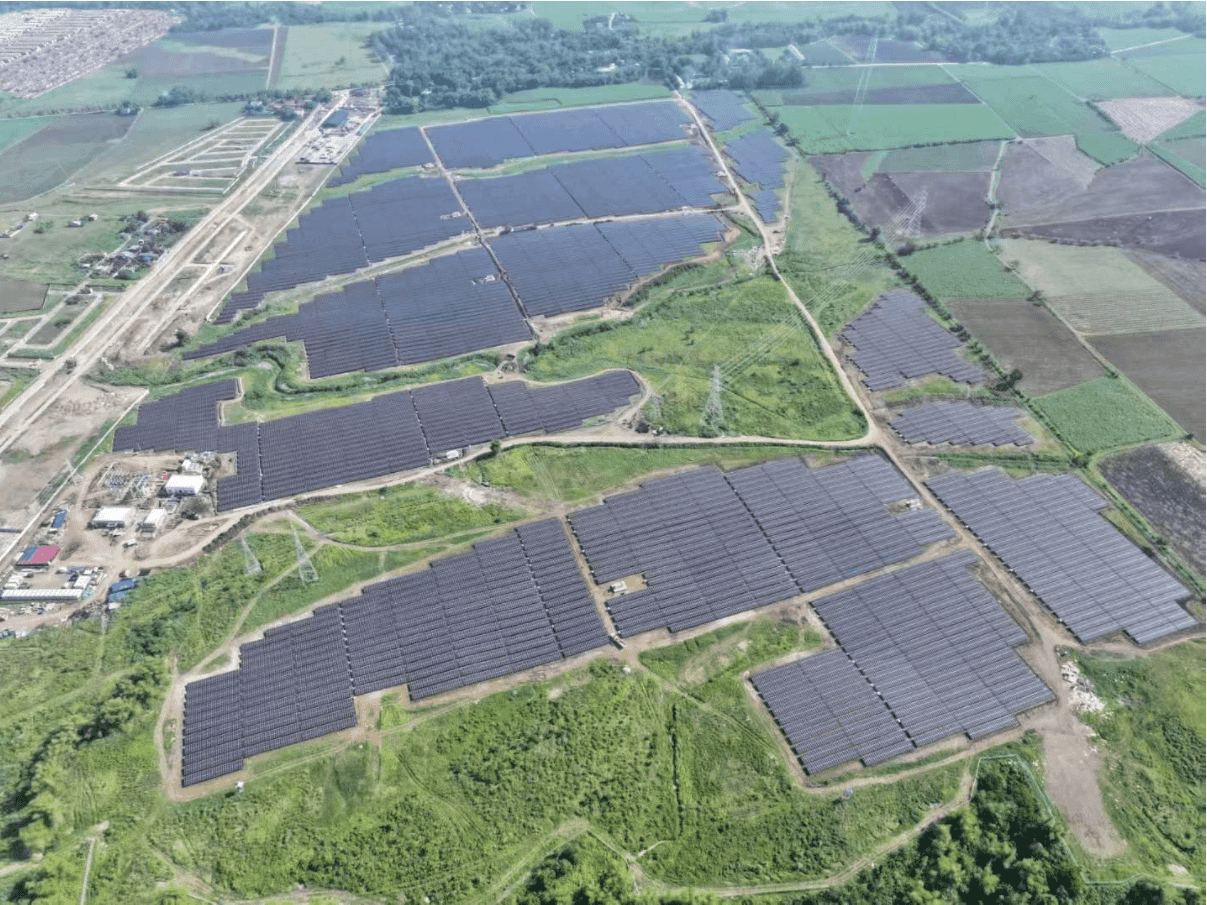
中国能建安徽电建二公司承建的菲律宾巴科洛德50兆瓦光伏项目全容量并网
Xin Hua Cai Jing· 2025-11-10 11:01
Core Insights - The Bacolod 50 MW solar project in the Philippines has successfully completed full-capacity grid connection, marking a significant milestone for the project [1][3] - This project is the first investment and operation by Thailand's BGRIMM company in the Philippines, indicating a growing interest in renewable energy investments in the region [3] Project Details - The Bacolod solar project is located in Bacolod City, Negros Occidental, with a total installed capacity of 50 MW [3] - The project utilizes a centralized solar power generation model, consisting of 8 solar units, 104,858 monocrystalline solar panels, 336 centralized inverters, and 8 box transformers [3] - The generated electricity is transmitted via two 69 kV collection lines to a 69 kV booster station located 2 kilometers away, with all generated power being fed into the grid [3] Expected Impact - Upon completion, the project is expected to generate an annual electricity output of 70 million kWh, significantly alleviating local power shortages [3] - The project contributes to the optimization of the Philippines' energy structure and supports the country's carbon reduction goals [3]


ESG月报:ESG信披指南更新,新政助推非电脱碳-20251109
Tianfeng Securities· 2025-11-09 03:23
Investment Rating - The industry rating is "Outperform Market" (first rating) [5] Core Insights - The report highlights the recent updates in ESG disclosure guidelines and the impact of new policies on the green methanol industry, emphasizing the need for renewable energy consumption requirements and the promotion of green fuels [4][3] - The report tracks the performance of ESG indices and carbon pricing, noting significant changes in the carbon market and the implications for investment strategies [12][20] Summary by Sections Data Tracking - As of October 31, the Shanghai Composite Index increased by 1.9%, while the CSI 300 remained stable at -0.001%. The 300 ESG index rose by 0.014%, and the SEEE Carbon Neutral Index increased by 2% [12] - The latest price for national carbon market emissions allowances (CEA) is 51.96 CNY/ton, a decrease of 10.4% compared to the previous month [20][21] Industry Research Topics ESG Disclosure New Policies - The new ESG disclosure guidelines align more closely with EU standards, introducing additional environmental topics such as pollution, energy, and water resources [3][29] - The guidelines emphasize the importance of financial relevance in ESG disclosures, reflecting a shift towards integrating sustainability into business operations [44][46] Impact on Green Methanol Industry - New policies set forth in 10M25 establish non-electric renewable energy consumption requirements, aiming to enhance renewable energy absorption and create demand for green fuels [4][52] - The green electricity direct connection policy is expected to help green methanol reach cost parity with traditional fuels, benefiting from reduced electricity costs [55][60] Industry News - The EU has released a global climate and energy vision aimed at establishing leadership in clean technology, while domestic policies are increasingly supporting green methanol and sustainable aviation fuel production [5][4]
南京智钠未来科技有限公司成立 注册资本500万人民币
Sou Hu Cai Jing· 2025-11-08 02:32
Core Insights - Nanjing Zhina Future Technology Co., Ltd. has been established with a registered capital of 5 million RMB, focusing on various sectors including food production and technology services [1] Company Overview - The company is legally represented by Liu Chuanfeng and has a registered capital of 5 million RMB [1] - The business scope includes licensed projects such as salt production and wholesale, as well as food production and food additive manufacturing [1] Business Activities - The company engages in a wide range of activities including: - Technical services, development, consulting, and promotion [1] - Internet sales of pre-packaged food [1] - Advertising design, agency, and publication [1] - Manufacturing of specialized equipment for agricultural products [1] - Research and development in various technological fields including IoT, carbon reduction, and artificial intelligence [1] Technological Focus - The company emphasizes on advanced technologies such as: - IoT technology services and research [1] - Carbon capture, storage, and conversion technologies [1] - Development of artificial intelligence applications and platforms [1]
上海盛安锦机械设备有限公司成立 注册资本50万人民币
Sou Hu Cai Jing· 2025-11-07 21:12
Core Viewpoint - Shanghai Sheng'an Jin Machinery Equipment Co., Ltd. has been established with a registered capital of 500,000 RMB, indicating a new player in the machinery and equipment sector [1] Company Overview - The legal representative of the company is Wang Genxing [1] - The company is involved in a wide range of activities including sales of machinery equipment, metal materials, and construction machinery [1] - The company also engages in retail and wholesale of automotive and motorcycle parts, lubricants, and fire-fighting equipment [1] Business Scope - The business scope includes general projects such as machinery equipment sales, metal products sales, and technical services [1] - The company is authorized to conduct various activities including machinery equipment leasing, agricultural machinery services, and carbon emission control technology research and development [1] - The company is also involved in import and export activities, including technology transfer and equipment sales [1] Regulatory Compliance - The company is required to obtain necessary approvals for certain projects and activities as per regulatory requirements [1] - Specific business activities are subject to approval by relevant authorities, ensuring compliance with legal standards [1]
算力尽头在电力! 电网设备ETF(159326)成交超1.9亿位居同类第一
Mei Ri Jing Ji Xin Wen· 2025-11-04 06:00
Core Insights - The A-share market experienced fluctuations with the electric grid equipment ETF (159326) rising by 0.48% and trading volume exceeding 190 million yuan, indicating strong market interest in this sector [1] - Huawei showcased new features of its smart substation solutions at the Asia-Pacific Electric Power Conference, emphasizing the relationship between AI and power [1] - A recent policy document from the Central Committee outlines goals for carbon reduction and the development of a new energy system, which is expected to benefit companies in the energy storage, wind power, and electric grid sectors [1] Industry Summary - The electric grid equipment ETF (159326) is the only ETF tracking the China Securities Electric Grid Equipment Theme Index, covering key sectors such as transmission and transformation equipment, grid automation, and distribution equipment, with a significant focus on ultra-high voltage [1] - The ETF has a high weight of 63% in ultra-high voltage-related stocks, the highest in the market, and includes leading companies such as Guodian NARI, TBEA, and Sifang Electric [1]