空间智能

Search documents
三闯IPO,五一视界还在吃老本
Bei Jing Shang Bao· 2025-12-03 14:15
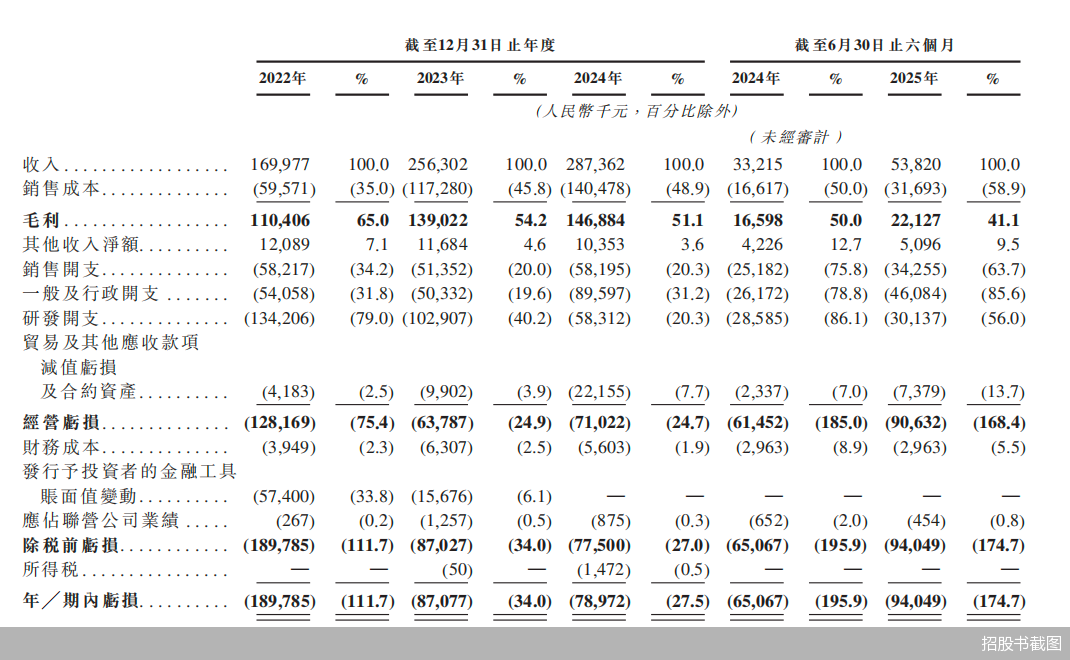
Core Viewpoint - The company, Wuyishijie, has updated its prospectus for the third time, aiming for a public offering after previously attempting to list on the STAR Market and the Beijing Stock Exchange. It has received approval from the China Securities Regulatory Commission [1][3]. Financial Performance - In the first half of 2025, Wuyishijie reported revenue of 53.82 million RMB, a year-on-year increase of 62%. However, the adjusted net loss expanded by 11.4% to 67.18 million RMB [1][4]. - Revenue has shown consistent growth from 169.977 million RMB in 2022 to 256.302 million RMB in 2023, and 287.362 million RMB in 2024. The adjusted net loss decreased from 132 million RMB in 2022 to 68.08 million RMB in 2023, and further to 43.07 million RMB in 2024, before reversing in 2025 [4][5]. - The gross margin has declined from 65% in 2022 to 41.1% in the first half of 2025, a drop of 8.9 percentage points compared to the same period in 2024 [4][5]. Cost Structure - Sales costs increased significantly, with 2025 first-half sales costs rising by 90.7% to 31.69 million RMB compared to the previous year, leading to a sales cost-to-revenue ratio of 58.9% [4][5]. - The cost of purchasing software accounted for 60.5% of sales costs in the first half of 2025, an increase of 41.8 percentage points from the same period in 2024 [5][6]. Research and Development - R&D expenses in the first half of 2025 were 30.14 million RMB, showing a slight increase from 28.59 million RMB in the same period of 2024. However, R&D spending has decreased in proportion compared to sales and administrative expenses [5][6]. - The company plans to hire 50-100 R&D personnel over the next three years, with the current R&D team size decreasing from 130 in January 2024 to 114 in the first half of 2025 [5][6]. Business Segments - The digital twin platform 51Aes remains the primary revenue driver, contributing approximately 81.4% of total revenue. Other platforms, such as 51Sim and 51Earth, contributed 14.8% and 3.9% respectively in the first half of 2025 [1][10]. - The company has emphasized new products in spatial intelligence and embodied intelligence, including the Clonova platform, although this product was not mentioned in the latest prospectus [11][12]. Legal Matters - Wuyishijie settled a legal dispute by paying 7 million RMB to a service provider, which had previously claimed 23 million RMB for contract violations [6][9].

技术、生态与品牌的全面换道,中国造车新势力正迈入“物理 AI”时代
Guan Cha Zhe Wang· 2025-12-03 13:13
Core Insights - The article discusses the emerging trend of "Physical AI" in the Chinese smart electric vehicle industry, highlighting how companies like Xpeng and Li Auto are shifting their focus from hardware and software competition to a more integrated approach that combines AI with physical interactions [1][4][16]. Group 1: Industry Trends - The Chinese smart electric vehicle industry is transitioning from "technical configuration competition" to "cross-terminal intelligent platform competition" [1]. - The rapid development of sectors such as wearable devices, smart electric vehicles, low-altitude economy, and robotics is providing a fertile ground for the implementation of "Physical AI" [4][6]. - In 2024, China's total vehicle production and sales are expected to reach historical highs, with new energy vehicles achieving over 12.88 million units, marking a year-on-year growth of over 30% [4]. Group 2: Company Strategies - Li Auto's "Livis" strategy aims to create a system brand and OS that integrates various physical endpoints, enhancing user experience through a "memory and action" framework [7][9]. - Xpeng is focusing on expanding its AI capabilities to include more physical forms, aiming to make vehicles an integral part of users' lives [11]. - Both companies are leveraging their growing user bases and data pools to commercialize "Physical AI," with Li Auto targeting nearly 500,000 annual deliveries in 2024 [4][11]. Group 3: Market Opportunities - The wearable device market in China is projected to exceed 61 million units in 2024, positioning the country as a global leader [6]. - The low-altitude economy market is expected to reach 1.5 trillion RMB by 2025, while the robotics market is forecasted to surpass 150 billion RMB in the same year [6]. - The integration of "Physical AI" across various sectors is seen as a realistic and promising entry point for automotive companies [6][15]. Group 4: Challenges and Future Outlook - The implementation of "Physical AI" will face challenges such as regulatory issues, user adoption, and the need for high investment [16]. - The competition in the smart electric vehicle sector is evolving towards a higher dimension of "AI-ification" of the physical world, moving beyond traditional automotive performance comparisons [16][17]. - The future winners in this space may not be the companies with the best hardware, but those that can create a unified AI experience in people's lives [17].

从 LLM 到 World Model:为什么我们需要能理解并操作世界的空间智能?
海外独角兽· 2025-12-03 12:05
Core Insights - The article emphasizes the necessity of spatial intelligence and world models as the next key direction in AI development, moving beyond the limitations of language models (LLMs) [2][3] - It highlights the importance of understanding and interacting with the physical world through spatial reasoning, which is essential for achieving artificial general intelligence (AGI) [4][8] Group 1: Importance of Spatial Intelligence - Spatial intelligence is defined as the ability to reason, understand, move, and interact within three-dimensional space, complementing linguistic intelligence [4][5] - The evolution of human intelligence shows that visual and spatial capabilities have been optimized over 540 million years, while language has a much shorter history of about 500,000 years [7][8] - Ignoring the evolutionary significance of visual and spatial processing in favor of language-based models is deemed unreasonable for developing AGI [8][10] Group 2: World Labs and Marble - World Labs, founded by Fei-Fei Li and Justin Johnson in 2024, aims to create large world models that can perceive, generate, and interact with three-dimensional environments [15][16] - Marble is introduced as the first high-fidelity 3D world generation model, designed to push the development of spatial intelligence and provide practical value in industries like gaming and visual effects [17][20] - Marble allows for multimodal input and interactive editing, enabling users to generate and modify 3D scenes based on text or images, thus enhancing user control and experience [20][21] Group 3: Technical Innovations - The technology stack for Marble focuses on achieving a balance between high fidelity, real-time rendering efficiency, and physical realism [23][24] - Gaussian Splats are utilized as the fundamental unit for representing 3D worlds, allowing for rapid and high-quality scene reconstruction without traditional mesh models [24][25] - The challenge of ensuring physical realism in generated 3D scenes is addressed through the integration of traditional physics engines and the potential for assigning physical properties to Gaussian Splats [27][28] Group 4: Applications and Future Potential - Marble is positioned as a horizontal technology with applications across various industries, including creative fields, interior design, and robotics [31][34] - In robotics, Marble serves as a powerful simulator, generating synthetic data to train robots in complex environments, thus addressing the data scarcity issue [34][35] - The potential for Marble to become a foundational infrastructure for embodied intelligence is highlighted, suggesting its significance in the future of robotics [35]

全面战胜ReAct,斯坦福全新智能体推理框架,性能提升112.5%
3 6 Ke· 2025-12-03 02:33
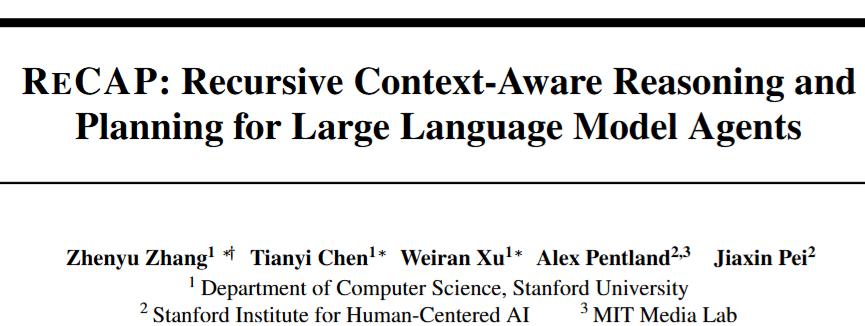
Core Insights - The research teams from Stanford and MIT have introduced a new AI reasoning framework called ReCAP, which significantly outperforms existing mainstream frameworks like ReAct in long-context tasks [1][10] - ReCAP addresses common issues in large language models, such as goal drift, context loss, and prompt explosion, through a unique recursive tree structure and three key mechanisms [1][11] Performance Metrics - ReCAP achieved a performance improvement of 84.2% (synchronous) and 112.5% (asynchronous) on the long-sequence embodied task Robotouille compared to the ReAct baseline [2][14] - In various benchmark tests, ReCAP demonstrated superior performance across multiple tasks, including achieving a 91% success rate in ALFWorld, which is higher than ReAct's 84% [14] Challenges in Long Context Tasks - Current large language models face three main issues: goal drift, where the model gradually ignores the original objective; context loss, where high-level planning information is lost during long sequence execution; and prompt explosion, where the reasoning cost increases exponentially with each recursion [3][4][6] Mechanisms of ReCAP - ReCAP integrates a memory and feedback-based recursive tree structure, employing three mechanisms: Recursive Task Decomposition with Plan-Ahead, Consistent Multi-level Context and Structured Injection, and Sliding Window Memory for efficient memory management [11][13] Cost-Benefit Analysis - The total computational cost of ReCAP is approximately three times that of ReAct, primarily due to its advanced planning mechanisms. However, the significant performance gains in critical tasks justify this increase in cost for applications requiring high accuracy [11] Future Implications - ReCAP represents a crucial step towards general reasoning systems in AI, with potential applications in complex decision-making tasks that require long-term context memory, such as literature review and software engineering [12][15]
潮声丨人工智能有时比人还“蠢”,AI版图缺的这块拼图是什么
Sou Hu Cai Jing· 2025-12-03 00:35
Core Insights - The current era of artificial intelligence, dominated by large language models and image classifiers, has reached its limits, and AI with spatial intelligence is seen as the next frontier to break through this bottleneck [2][11][24] Group 1: AI Limitations - AI is categorized into two types: speaking intelligence and doing intelligence, with the former being strong in text output but often failing in practical tasks [6][11] - Examples of AI failures include generating unrealistic images and videos, highlighting the lack of common sense and physical understanding in current models [7][10] Group 2: Spatial Intelligence - Spatial intelligence, a concept originating from educational psychology, involves the perception, understanding, and manipulation of spatial information, which is crucial for human development and creativity [12][15] - Current AI systems lack deep, common-sense understanding of the physical world, which directly affects the quality of their outputs [11][17] Group 3: World Models - The concept of world models, inspired by human cognitive abilities, is emerging as a key area of focus for AI development, aiming to enable machines to understand and interact with the physical world [19][23] - Recent advancements in world models include new products and technologies from companies like NVIDIA and Google DeepMind, indicating a growing interest and investment in this area [22][23] Group 4: Future Challenges - Building AI that can operate like humans presents significant challenges, including the complexity and uncertainty of the real world, limitations in existing data, and the inherent constraints of physical laws [23][24]

世界模型,是否正在逼近自己的「ChatGPT时刻」?
Xin Lang Cai Jing· 2025-12-02 11:22
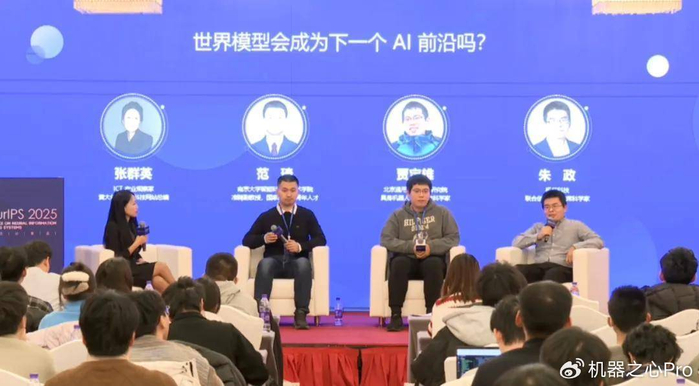
Core Insights - The discussion highlights the emerging focus on world models in AI, with significant contributions from leading scholars like Li Feifei and institutions such as the Chinese Academy of Sciences and Nanjing University [1][3] Group 1: Definition and Applications of World Models - World models are defined as predictive models that forecast the next state given the current state and action sequences, with applications in autonomous driving and embodied intelligence [3] - The ultimate goal of world models is to create a 1:1 representation of the world, although practical modeling will vary based on specific tasks [3] Group 2: Data and Model Training Challenges - A key dilemma in developing world models is whether to prioritize model creation or data collection, with examples from autonomous driving highlighting the limitations of available data [5] - Experts propose a mixed approach of generating synthetic data alongside real data to enhance model training [5] Group 3: Technical Implementation Paths - There are differing opinions on the technical paths for world model development, with some advocating for the integration of physical information while others emphasize the importance of creative generation [6] - The discussion includes the potential of combining diffusion and autoregressive architectures to improve model performance [7] Group 4: Future Outlook and Commercialization - Experts speculate that the "ChatGPT moment" for world models may occur in approximately three years, contingent on the availability of high-quality long video data [8] - The commercialization of world models faces challenges in both B2B and B2C sectors, particularly in defining the value of generated video data [8][9]
大咖热议:文化撞上科技 下一个爆点在哪里?
2 1 Shi Ji Jing Ji Bao Dao· 2025-12-02 07:13
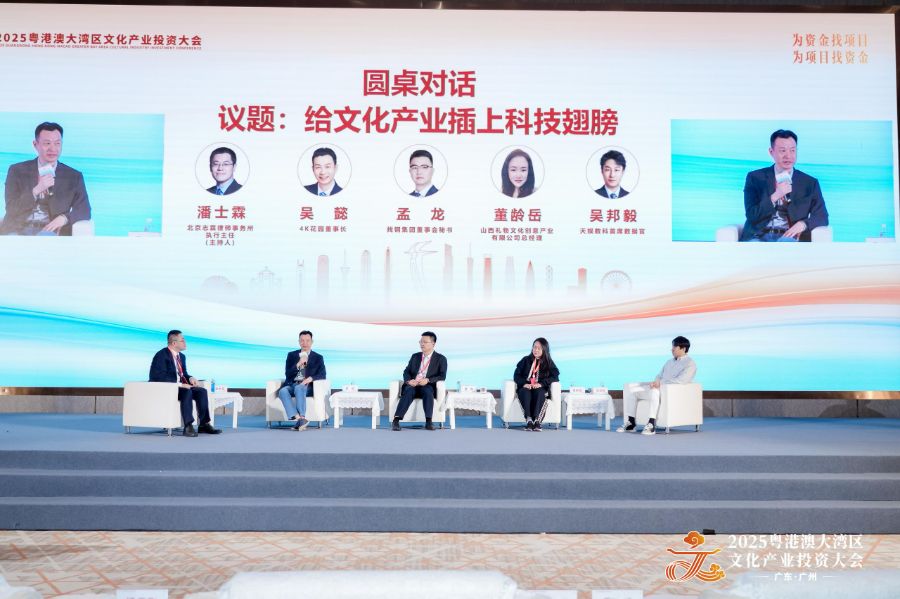
Core Insights - The integration of technology and culture is reshaping the cultural industry, with significant opportunities arising from advancements in AI, AR/VR, and digital content production [1] - The 2025 Guangdong-Hong Kong-Macao Greater Bay Area Cultural Industry Investment Conference highlighted discussions on how technology can empower the cultural sector [1] Group 1: Technology and Cultural Integration - The recent National Games showcased the effective use of AI, robotics, and LED technology, marking a shift from traditional large-scale events to more innovative presentations [3] - 4K Garden, a company focused on ultra-high-definition technology, has leveraged AI to enhance video production, resulting in profitable projects such as AI-driven video ringtones and KTV services [3][4] - AI technology has significantly reduced production costs and improved quality in video creation, with 1080P footage enhanced to near 4K quality through AI [4] Group 2: Business Applications of AI - Find Steel Group has invested heavily in AI, with 50% of its R&D focused on developing intelligent systems that automate pricing and logistics, resulting in a revenue boost of 100 million yuan [5] - The company has also recognized the cultural synergies in its overseas operations, particularly in regions like the Middle East and Southeast Asia, where technology can enhance traditional cultural exchanges [5] Group 3: Cultural Innovation and Digital Assets - Shanxi Gifts has transitioned from traditional artifact preservation to creating digital cultural products, exemplified by its involvement in the globally popular game "Black Myth: Wukong" [6] - The company has successfully implemented digital cultural projects with government support, further stimulating the local tourism market [6] Group 4: Data and AI Development - Tianyu Data Science has developed a space intelligence platform, BehavisionPro, which utilizes extensive 3D and multimodal data to enhance robotic capabilities [7][8] - The importance of data in AI development was emphasized, with legal considerations regarding data sourcing highlighted as critical for model training [8][9] Group 5: Future Breakthroughs in Cultural Technology - The key to future breakthroughs in cultural and technological integration lies in nurturing young entrepreneurs who are passionate about innovation [10] - The dual advancement of software and hardware is essential, with expectations for significant progress in VR and AR technologies within the next three to five years [11] - The need for interdisciplinary talent that combines cultural insight with technological understanding was identified as crucial for driving future innovations [11]
大咖热议:文化撞上科技,下一个爆点在哪里?
2 1 Shi Ji Jing Ji Bao Dao· 2025-12-02 06:28
Core Insights - The integration of technology and culture is reshaping the cultural industry, with significant opportunities arising from advancements in AI, AR/VR, and digital content production [1] Group 1: Cultural Technology Integration - The recent investment conference in the Guangdong-Hong Kong-Macao Greater Bay Area highlighted the theme of empowering the cultural industry with technology [1] - 4K Garden's chairman discussed the successful application of AI and ultra-high-definition technology during the recent National Games, showcasing a shift from traditional large-scale events to more technologically advanced presentations [2] - AI has enabled significant cost reductions and quality improvements in video production, with 4K Garden demonstrating that AI-enhanced 1080P footage can rival 4K quality [3] Group 2: Business Applications of AI - Find Steel Group has invested heavily in AI, with approximately 50% of its R&D focused on developing intelligent systems that enhance efficiency in pricing and logistics, generating significant revenue [4] - The company reported that its AI systems contributed to generating 100 million yuan in revenue in the first half of the year [4] Group 3: Cultural Heritage and Innovation - Shanxi Gifts has transitioned from traditional cultural preservation to creating digital products based on cultural heritage, participating in the globally popular game "Black Myth: Wukong" [6] - The company has successfully implemented various digital cultural projects with government support, enhancing the local tourism market [6] Group 4: Future of Cultural Technology - The key breakthrough in the integration of culture and technology lies in nurturing young entrepreneurs who are passionate about driving innovation [10] - The importance of dual advancements in software and hardware is emphasized, with expectations for significant progress in the next three to five years [11] - The need for interdisciplinary talent that combines cultural imagination with technological understanding is crucial for future breakthroughs [12]
51WORLD更新招股书并获备案通知书:18C板块或再迎AI标的
Sou Hu Cai Jing· 2025-12-02 05:17
Core Viewpoint - 51WORLD is advancing its IPO process on the Hong Kong Stock Exchange, having updated its prospectus and received necessary approvals from the China Securities Regulatory Commission, positioning itself as a leader in the digital twin industry in China [2][3]. Company Overview - Founded in 2015, 51WORLD focuses on cloning Earth's 5.1 million square kilometers through significant investments in 3D graphics, simulation, and artificial intelligence [2]. - The company has developed three core business platforms: 51Aes (digital twin platform), 51Sim (synthetic data and simulation platform), and 51Earth (digital earth platform) [2]. Industry Position - According to Frost & Sullivan, 51WORLD ranks first in revenue within the digital twin industry for 2024 and is the first company in the sector to achieve over 250 million HKD in revenue within a year [2]. - It is recognized as the only company in the digital twin industry capable of providing comprehensive digital twin solutions [2]. Financial Performance - Revenue figures for 51WORLD from 2022 to 2024 are projected to be 170 million CNY, 256 million CNY, and 287 million CNY, respectively [3]. - In the first half of 2024, the company's revenue increased by 63.6% year-on-year, from 33 million CNY to 54 million CNY [3]. Investment and Valuation - 51WORLD has attracted investments from notable firms such as Lightyear Capital, Yunji Capital, and SenseTime, with significant stakes held by these investors prior to the IPO [4]. - Following a Series F funding round in June 2024, the company's valuation reached 4.4 billion CNY [4]. Use of IPO Proceeds - The net proceeds from the IPO are intended primarily for research and development, marketing activities in China and overseas, and general corporate purposes [5].

51WORLD更新招股书:港股18C板块有望再迎「AI标的」,日前已获备案通知书
IPO早知道· 2025-12-02 05:17
Core Viewpoint - 51WORLD is advancing its IPO process on the Hong Kong Stock Exchange, focusing on digital twin technology and its applications in spatial and embodied intelligence [2][3]. Company Overview - Founded in 2015, 51WORLD aims to replicate Earth's 5.1 million square kilometers through significant investments in 3D graphics, simulation, and artificial intelligence [2]. - The company has developed three core business platforms: 51Aes (digital twin platform), 51Sim (synthetic data and simulation platform), and 51Earth (digital earth platform) [2]. Industry Leadership - According to Frost & Sullivan, 51WORLD is the leading player in China's digital twin industry, projected to rank first in revenue in 2024 and has achieved over 250 million HKD in revenue within a year [3]. - It is the only company in the digital twin sector capable of providing comprehensive digital twin solutions [3]. Technological Innovations - In the spatial intelligence domain, 51WORLD has launched the Clonova platform, enabling users to interact in immersive 3D spaces using natural language processing technology [4]. - In the embodied intelligence sector, the company focuses on simulation and synthetic data technologies to provide efficient training and high-quality synthetic data for robots, addressing the challenges of data diversity and quality [4]. Financial Performance - Revenue figures for 51WORLD from 2022 to 2024 are projected at 170 million CNY, 256 million CNY, and 287 million CNY, respectively [4]. - In the first half of 2024, the company's revenue increased by 63.6% year-on-year, from 33 million CNY to 54 million CNY [4]. Investment and Valuation - 51WORLD has attracted investments from notable firms such as Lightyear Venture Capital, Yunji Capital, and SenseTime, as well as local governments [5]. - Following its F-round financing in June 2024, the company's valuation reached 4.4 billion CNY [7]. - The net proceeds from the IPO are intended for research and development, marketing activities in China and abroad, and general corporate purposes [7]. Shareholding Structure - Prior to the IPO, major shareholders include Lightyear Venture Capital (17.3%), Yunji Capital (3.4%), and SenseTime (2.3%) [6].