
绿色产业

Search documents
习近平同韩国总统李在明会谈
Xin Hua She· 2025-11-01 10:08
Core Points - The meeting between Chinese President Xi Jinping and South Korean President Lee Jae-myung emphasizes the importance of the China-South Korea relationship as a significant partnership that has evolved over 33 years, overcoming differences in social systems and ideologies [3][6] - Xi proposed four key suggestions to enhance the bilateral relationship, focusing on strategic communication, deepening mutually beneficial cooperation, promoting cultural exchanges, and strengthening multilateral collaboration for peace and development [4][5] Group 1: Strategic Communication - Strengthening strategic communication is essential to build mutual trust and respect, allowing both countries to develop together while managing differences through friendly consultations [4] - Utilizing dialogue channels and exchange mechanisms will help consolidate the foundation for the development of bilateral relations [4] Group 2: Economic Cooperation - There is a commitment to accelerate the second phase of negotiations for the China-South Korea Free Trade Agreement, with a focus on emerging sectors such as artificial intelligence, biopharmaceuticals, green industries, and the silver economy [4] - Both countries are keen to collaborate on combating online gambling and telecom fraud, enhancing the safety of their citizens [4] Group 3: Cultural Exchange - Promoting cultural exchanges and improving public sentiment between the two nations is vital, with an emphasis on guiding public opinion and facilitating people-to-people interactions [4] - Encouraging exchanges among youth, media, think tanks, and local communities will foster mutual understanding and create a positive atmosphere for bilateral relations [4] Group 4: Multilateral Collaboration - China congratulated South Korea on successfully hosting the APEC Leaders' Informal Meeting and expressed willingness to work together to advance the APEC Free Trade Area and regional economic integration [5] - Both countries aim to uphold true multilateralism and promote a fairer international governance system [5]
【快讯】每日快讯(2025年10月31日)
乘联分会· 2025-10-31 08:39
Domestic News - The Ministry of Industry and Information Technology (MIIT) is promoting the transformation of the entire green industry chain, focusing on the development of new energy vehicles and energy-saving equipment. Key initiatives include green design, building green factories, creating green supply chains, and promoting green industrial parks, with a target for green factory output to reach 40% by 2030 [5]. - The "14th Five-Year" industrial collaboration development initiative for the Beijing-Tianjin-Hebei region has been released, aiming to build a modern industrial system centered on advanced manufacturing and accelerate the development of seven national-level advanced manufacturing clusters [6]. - FAW-Volkswagen plans to achieve Level 3 autonomous driving by 2027-2030, with the introduction of Level 2 driving assistance in 2026 [7]. - FAW Bestune has increased its registered capital to approximately 5.17 billion RMB, marking a 107% increase [8]. - The Guoxuan High-Tech battery factory in Slovakia has officially opened, with plans for trial production in 2026 and a capacity of 20 GWh [10]. - The autonomous driving company "萝卜快跑" has received approval for cross-district testing in Hong Kong, marking its fourth expansion of testing areas this year [11]. - The Deep Blue G318 has been launched in Colombia, indicating the company's expansion into the South American market [12]. - Li Auto has established a new battery company in Zhejiang with a registered capital of 70 million RMB, focusing on battery manufacturing and electric vehicle charging infrastructure [13]. International News - Samsung SDI has partnered with BMW Group and Solid Power to develop a solid-state battery validation project, aiming to enhance battery performance for future vehicles [14]. - Ford is planning to invest approximately 3.7 billion USD in India to produce new engines, with an annual capacity exceeding 200,000 units [15]. - Lucid Motors is set to launch a mid-sized electric vehicle equipped with NVIDIA chips, marking a significant step towards Level 4 autonomous driving technology [16]. - Nissan has confirmed the introduction of the Patrol SUV to the Japanese market in the first half of the 2027 fiscal year, marking its return to this segment [17]. Commercial Vehicles - Suzhou has launched a subsidy program for the scrapping and updating of old commercial vehicles, with an initial fund of 30 million RMB [18]. - SAIC Commercial Vehicle has opened its first nationwide store in Tianjin, marking a strategic integration of its brands [19]. - Hanma Technology has unveiled the first range-extended heavy truck in Southeast Asia, targeting the green logistics market [20]. - The Xiangtan base of Yuan Cheng has received the highest level certification for intelligent manufacturing in the new energy commercial vehicle sector, indicating its advanced capabilities [21][22].



拓展绿色贸易,多部门详解新举措
Zhong Guo Zheng Quan Bao· 2025-10-31 05:43
10月31日,国新办举行国务院政策例行吹风会,介绍拓展绿色贸易相关情况。 商务部国际贸易谈判代表兼副部长李成钢表示,近日,商务部印发了《关于拓展绿色贸易的实施意 见》,作为绿色贸易领域首个专项政策文件,充分体现了创新引领的鲜明特点。 绿色产品标准、认证、标识体系 李成钢表示,将持续提升高标准自贸区网络"绿色含量"。在已经签署的自贸协定中,推动纳入了贸易与 环境的相关内容。商务部将持续推进自贸谈判,大力推动双向市场开放、削减非关税壁垒、提升规则承 诺水平,推动标准与合格评定合作,为企业创造公平、透明、可预期的市场环境。 降低轻资产、绿色服务贸易企业的融资门槛和成本 谈及金融支持绿色服务贸易发展,中国人民银行研究局局长王信表示,金融部门主要通过绿色信贷、绿 色债券、绿色股权基金等工具,赋能绿色服务贸易发展。 王信说,下一步,人民银行将继续在以下方面重点发力,支持绿色服务贸易发展:推动绿色金融、转型 金融标准应用,支持创新信贷、债券、股权等融资方式。鼓励金融机构围绕研发设计、物流运维、碳排 放认证和评价、废旧资源回收等生产性服务环节,加大融资支持,降低轻资产、绿色服务贸易企业的融 资门槛和成本。支持在全球金融市场发 ...
期待中日韩以创新合作引领亚太新增长——访中日韩合作秘书处秘书长李熙燮
Xin Hua She· 2025-10-29 03:37
Core Insights - The Secretary-General of the China-Japan-Korea Cooperation Secretariat, Lee Hee-seop, emphasizes the need for trilateral cooperation among China, Japan, and South Korea within the APEC framework to address global challenges and promote economic recovery [1][3] Group 1: Economic Cooperation - The current global economic environment is characterized by heightened challenges due to rising trade protectionism and high tariff policies, particularly from the United States [1] - The upcoming APEC informal leaders' meeting is expected to focus on trade liberalization, multilateral system innovation, and sustainable trade frameworks, aiming to enhance unity and cooperation among member economies [1][3] Group 2: Future Growth Drivers - Lee highlights that artificial intelligence, digital revolution, and green industries are crucial drivers for future economic growth, necessitating strengthened cooperation among the three countries [3] - The potential for development in technology, capital, and labor among China, Japan, and South Korea is significant, indicating a strong capacity to address challenges collectively [3] Group 3: APEC Leadership and Regional Integration - South Korea and China are set to host the APEC informal leaders' meetings in 2025 and 2026, presenting an important opportunity for promoting global economic recovery and regional economic integration [3] - China is recognized for its proactive role in advancing free trade and regional cooperation based on openness and inclusivity, contributing to regional economic integration [3][4]
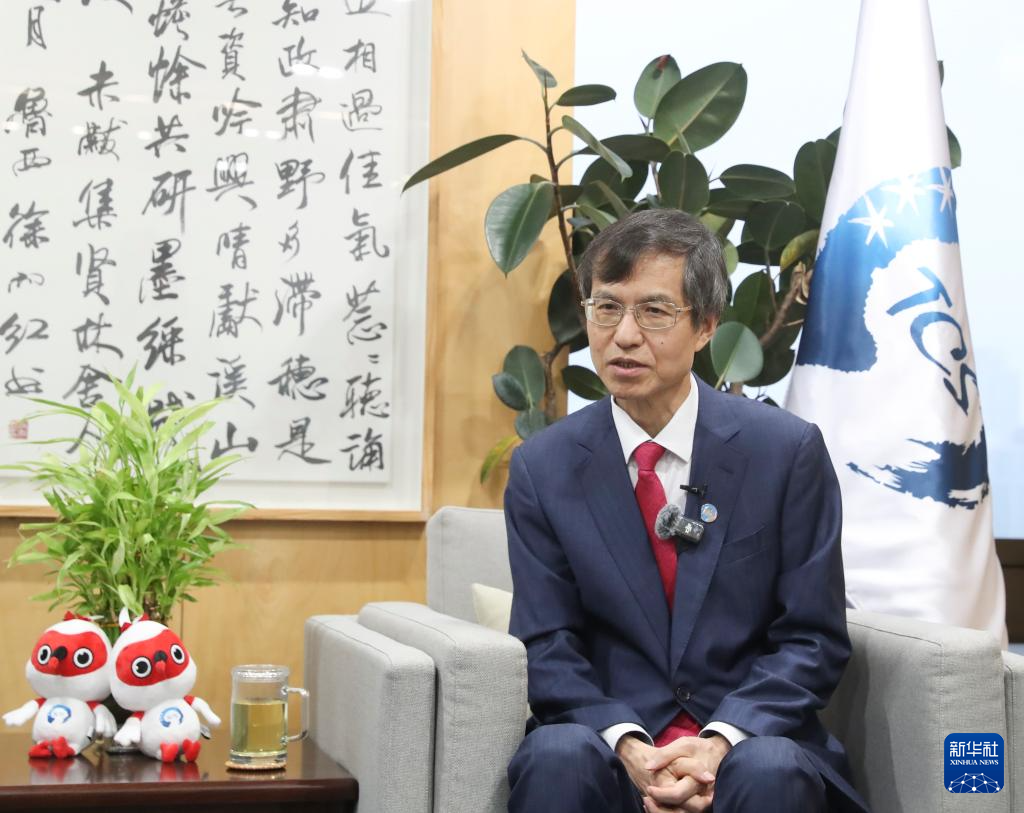
专访|期待中日韩以创新合作引领亚太新增长——访中日韩合作秘书处秘书长李熙燮
Xin Hua She· 2025-10-29 01:44
Core Insights - The Secretary-General of the China-Japan-Korea Cooperation Secretariat, Lee Hee-seop, emphasizes the need for trilateral cooperation among China, Japan, and South Korea to lead new growth in the Asia-Pacific region amidst global challenges [1][2] - The upcoming APEC informal leaders' meeting is expected to generate constructive proposals on trade liberalization, multilateralism, and sustainable trade systems, which will enhance unity and cooperation among member economies [1] - Lee highlights the importance of collaboration in artificial intelligence, digital revolution, and green industries as key drivers for future economic growth [1] Summary by Sections APEC Meeting and Global Economic Recovery - The informal APEC leaders' meetings in 2025 and 2026, hosted by South Korea and China respectively, are seen as crucial opportunities to promote global economic recovery and regional economic integration [2] - The focus will be on free trade and open, inclusive regional cooperation, with China playing a significant role in these efforts [2] China's Development and Future Prospects - Lee expresses high expectations for China's future development, noting its significant efforts in advancing digitalization, artificial intelligence, green industries, and technological innovation [2] - The rapid changes observed in China are indicative of its potential to contribute to sustainable development both regionally and globally [2]
专访丨期待中日韩以创新合作引领亚太新增长——访中日韩合作秘书处秘书长李熙燮
Xin Hua Wang· 2025-10-28 16:38
Core Viewpoint - The Secretary-General of the China-Japan-Korea Cooperation Secretariat, Lee Hee-seop, emphasizes the importance of trilateral cooperation among China, Japan, and South Korea to lead new growth in the Asia-Pacific region and promote global economic recovery amidst multiple global challenges [1][2] Group 1: Economic Cooperation - The upcoming APEC informal leaders' meeting is expected to generate constructive proposals on trade liberalization, multilateralism innovation, and sustainable trade systems, which will enhance unity and cooperation among member economies [1] - Lee highlights the significant role of China, Japan, and South Korea in the multilateral cooperation mechanism under APEC, advocating for joint efforts to promote free trade system construction and global economic recovery [1] Group 2: Future Economic Drivers - The future economic growth is anticipated to be driven by artificial intelligence, digital revolution, and green industries, necessitating strengthened cooperation among the three countries [1] - Lee notes that China is making substantial efforts in advancing digitalization, artificial intelligence technology, green industries, and technological innovation, which contribute to sustainable development both in China and globally [2] Group 3: Regional Integration - The hosting of APEC informal leaders' meetings by South Korea and China in 2025 and 2026 is viewed as a significant opportunity to promote global economic recovery, free trade, and regional economic integration [2] - Lee expresses high expectations for China's future development and its continued important role in Asia-Pacific economic cooperation [2]
李熙燮:期待APEC庆州会议为亚太合作注入新动力
Zhong Guo Xin Wen Wang· 2025-10-28 12:14
Core Insights - The upcoming APEC informal leaders' meeting in Gyeongju, South Korea, is seen as a crucial opportunity to rebuild cooperative trust amid increasing global uncertainties [1] - APEC member economies account for over 60% of global GDP, approximately 50% of global trade, and about 40% of the world's population, making it the largest regional economic cooperation forum [1] - Key discussion topics at the Gyeongju meeting will include regional economic recovery, sustainable development, digital transformation, and inclusive growth, with a focus on maintaining a free trade system and the sustainability of trade and investment liberalization [1] Industry and Cooperation Mechanisms - Mechanisms such as RCEP, CPTPP, ASEAN+3 (China, Japan, South Korea), and the TCS are interlinked and collectively support the institutional framework for Asia-Pacific cooperation [2] - The cooperation and unity among China, Japan, and South Korea are deemed more important than ever, especially in areas like artificial intelligence, digitalization, and green industries [2] - There is a strong expectation for China to continue playing a significant role in promoting global economic cooperation, particularly with its upcoming hosting of the APEC meeting next year [2]

全球四大重点区域生物柴油政策的实施情况介绍
Qi Huo Ri Bao Wang· 2025-10-28 00:58
Core Insights - The global biodiesel market is experiencing significant growth driven by renewable energy policies across various countries, with the largest consumption concentrated in the EU, the US, Indonesia, and Brazil [2][25]. Group A: Biodiesel Characteristics and Production - Biodiesel is a renewable and biodegradable fuel primarily derived from vegetable oils, accounting for 80% of global production [1]. - The production cost of biodiesel is typically 1.5 times that of conventional diesel, making market-driven expansion challenging without policy support [1]. - Key measures to promote biodiesel include mandating minimum usage levels and providing subsidies to lower production costs [1]. Group B: Regional Policies and Consumption - In 2024, the EU is projected to account for 28.3% of global biodiesel consumption, followed by the US at 26.7%, Indonesia at 20.3%, and Brazil at 11.4% [2]. - The EU has established a robust framework for renewable energy, with the Renewable Energy Directive (RED) setting binding targets for renewable energy consumption [6][7]. - The US has implemented the Renewable Fuel Standard (RFS), which mandates minimum blending ratios and provides tax incentives for biodiesel producers [13]. Group C: EU Biodiesel Market - The EU's biodiesel market is characterized by a combination of mandatory and sustainable policies, with a target of 42.5% renewable energy by 2030 [7]. - The use of used cooking oil (UCO) has increased significantly, making up about 25% of biodiesel feedstock in Europe, driven by sustainability policies [10][11]. - The EU's biodiesel consumption is projected to decrease by 12.27% in 2024, indicating potential market challenges [9]. Group D: US Biodiesel Market - The US is the second-largest biodiesel consumer, with a strong agricultural base supporting biodiesel production from soy and corn [12]. - The EPA's aggressive biodiesel blending targets for 2026 and 2027 indicate a commitment to expanding the biodiesel market [13]. - The industrial use of soybean oil in the US is expected to reach 7.03 million tons in 2025, marking a 26.5% increase [15]. Group E: Indonesia's Biodiesel Strategy - Indonesia, as the largest palm oil producer, has shifted its biodiesel strategy from export-oriented to domestic consumption, implementing the B30 and B40 blending standards [16][17]. - The Indonesian government plans to increase the palm oil export tax to support biodiesel production, ensuring market competitiveness [20][21]. - The B40 policy is expected to significantly impact global palm oil supply and demand dynamics [16]. Group F: Brazil's Biodiesel Development - Brazil, the largest soybean producer, has a slower biodiesel market development despite favorable conditions [22][24]. - The Brazilian government has set a gradual increase in biodiesel blending ratios, aiming for 20% by 2030, which supports soybean demand [24][25]. - Brazil's biodiesel production is projected to reach 8.019 million tons in 2025, reflecting a 2.39% increase from the previous year [25].
第三季度创单季单月“双新高” 前三季度增速比全国高1.4个百分点 上海交出一份亮眼外贸“成绩单”
Jie Fang Ri Bao· 2025-10-23 01:30
Core Insights - Shanghai's GDP growth rate of 5.5% outperformed the national average, showcasing resilience in a challenging economic environment [1] - The city's foreign trade performance was notable, with total imports and exports reaching 3.34 trillion yuan, a year-on-year increase of 5.4%, surpassing the national growth rate by 1.4 percentage points [1] Trade Performance - Exports from Shanghai totaled 1.48 trillion yuan, reflecting an 11.3% year-on-year increase, which is 4.2 percentage points higher than the national average [1] - Imports amounted to 1.86 trillion yuan, with a modest growth of 1.1%, also exceeding the national growth rate by 1.3 percentage points [1] - The trade volume showed a "stair-step upward" trend, with the third quarter achieving a record high of 4.059 billion yuan in imports and exports, marking the first time it surpassed 4 trillion yuan in a single month [1] Sector Contributions - The acceleration in exports is closely linked to the growth in industrial manufacturing output, particularly in three leading industries: integrated circuits, artificial intelligence, and biomedicine, which collectively exported 193.67 billion yuan, a 10.3% increase [2] - High-end manufacturing exports also saw significant growth, with industrial robots, aerospace equipment, high-end machine tools, and petrochemical machinery increasing by 41.6%, 39%, 36.5%, and 29.6% respectively [2] - Green products maintained strong export performance, with the "new three samples" exporting over 100 billion yuan, including lithium batteries at 32.15 billion yuan (20.7% growth) and hybrid vehicles at 19.61 billion yuan (a 2.1-fold increase) [2] Import Dynamics - Imports of semiconductor manufacturing equipment, computers and components, and aircraft parts surged, indicating a pressing need for industrial transformation [3] - The import of metal ores also showed a simultaneous increase in both volume and value [3] Market Diversification - Shanghai's foreign trade market is becoming more diversified, with a notable decline in trade with traditional partners like the EU and the US, which saw decreases of 0.4% and 8.1% respectively [3] - Exports to emerging markets, particularly BRICS countries and Africa, grew significantly, with exports to Brazil and India increasing by 27.7% and exports to African nations rising by 79.2% [3] Role of Private Enterprises - Private enterprises in Shanghai demonstrated strong performance, with imports and exports reaching 1.32 trillion yuan, a substantial increase of 27.1%, contributing 164.5% to the city's overall trade growth [3] - The share of private enterprises in Shanghai's foreign trade has risen to nearly 40%, an increase of 6.7 percentage points compared to the previous year, indicating a surge in market vitality [3]
以长期主义为锚 践行高质量发展使命
Zhong Guo Zheng Quan Bao· 2025-10-12 20:53
Core Viewpoint - The public fund industry is transitioning from a scale-oriented approach to a quality-oriented one, with a focus on long-term value creation and sustainable returns for investors [1][3][9] Industry Overview - The public fund industry has seen significant growth, with total managed assets reaching 36.25 trillion yuan by August 2025, up from 8 trillion yuan in 2015, highlighting its importance in the capital market [1] - The release of the "Action Plan for Promoting High-Quality Development of Public Funds" in May 2025 aims to correct the industry's scale orientation and emphasize return-oriented strategies [2][3] Key Initiatives - The action plan includes optimizing assessment mechanisms, enhancing research capabilities, and promoting fee reforms to align fund management with performance [2] - Fund companies are required to establish assessment systems focused on investment returns, with a minimum weight of 50% on investment performance [2] Company Strategy - The company, as a pioneer in public fund operations under an insurance asset management framework, emphasizes "long-termism" as a strategic pillar [1][3] - The company aims to create long-term sustainable returns for investors through a systematic and professional approach [3][4] Research and Investment Framework - The company's investment research system is built on deep research, value investment principles, and risk control, aiming for diversified investment styles and stable returns [4] - A platform-based investment research model is established to ensure efficient execution of long-term strategies while reducing reliance on individual fund managers [4] Technological Innovation - The company has developed a forward-looking quantitative investment system, including a proprietary multi-strategy Alpha model that aligns with long-term value investment [4][5] Professional Team Development - The company has built a specialized investment research team with over 70 members, each averaging more than 8 years of experience in finance, ensuring effective collaboration across various investment departments [5] Product Innovation - The company has diversified its product offerings, including various types of funds such as money market, bond, mixed, and thematic ETFs, aligning with national strategic directions [6] - Specific products have been developed to cater to long-term investment needs in areas like pension finance and technology innovation [6] Investor Engagement - The company prioritizes investor trust and education, conducting various activities to enhance financial literacy and provide investment support [7][8] - Initiatives include community outreach programs aimed at educating elderly investors on financial planning and risk management [8] Performance and Recognition - As of June 2025, the company manages approximately 140 billion yuan, serving over 19 million clients and generating over 20 billion yuan in returns for investors [9] - The company's commitment to long-termism is recognized as essential for both its survival and its role in supporting national strategies and safeguarding residents' wealth [9]