
金融支持实体经济

Search documents
深圳银行业,13.98万亿!
中国基金报· 2025-08-21 14:28
Core Viewpoint - The article discusses the operational performance of Shenzhen's banking and insurance sectors in the first half of 2025, highlighting the achievements in industry reform and future work plans [2]. Banking Sector Summary - As of the end of June 2025, the total assets of the banking sector in Shenzhen reached 13.98 trillion yuan, a year-on-year increase of 3.64% [4] - The total liabilities amounted to 13.61 trillion yuan, growing by 3.7% year-on-year [4] - The balance of various loans was 9.83 trillion yuan, reflecting a year-on-year growth of 3.46% [4] - The balance of various deposits reached 10.22 trillion yuan, with a year-on-year increase of 6.70% [4] Insurance Sector Summary - The insurance sector achieved original insurance premium income of 121.31 billion yuan in the first half of 2025, marking a year-on-year growth of 7.96%, the highest among first-tier cities [4] - Claims paid out amounted to 38.74 billion yuan, which is an increase of 8.84% year-on-year [4] Key Initiatives and Support Measures - The Shenzhen Financial Regulatory Bureau has focused on supporting the stable operation of the local economy, enhancing consumer finance services, and promoting foreign trade development [5] - As of June 2025, the balance of personal consumer loans was 817.70 billion yuan, up by 7.63% year-on-year [5] - The balance of loans for foreign trade enterprises reached 1.12 trillion yuan, with small and micro foreign trade enterprises holding 124.53 billion yuan, a year-on-year increase of 5.43% [5] Financial Support for Key Sectors - The banking and insurance institutions are encouraged to enhance financial services for the manufacturing sector, with the balance of manufacturing loans at 1.61 trillion yuan, a year-on-year increase of 6.47% [6] - High-tech manufacturing loans reached 1.03 trillion yuan, growing by 6.73% year-on-year [6] Support for Small and Micro Enterprises - The financial support for small and micro enterprises has been emphasized, with a total of 667.49 billion yuan in loans issued, the highest among major cities [7] - The balance of inclusive small and micro enterprise loans was 1.96 trillion yuan, reflecting a year-on-year growth of 6.59% [7] Enhancements in Public Welfare and Insurance Services - The introduction of the "Shenzhen Huijia Bao" insurance product aims to improve disaster resilience for citizens, with 34,800 policies issued and premium income of 2.28 million yuan since its launch [8] - The "Shenzhen Huimin Bao" insurance product has expanded its coverage, now including more demographics and increasing the number of insured individuals to 6.15 million [8] - As of June 2025, 22 banks in Shenzhen opened 5.57 million personal pension accounts, with total contributions of 7.11 billion yuan [8]


人民银行北京市分行:研究制定北京市金融支持提振消费措施
Bei Jing Shang Bao· 2025-08-19 06:35
Group 1 - The People's Bank of China (PBOC) in Beijing emphasizes the implementation of a moderately loose monetary policy to ensure reasonable growth in regional monetary credit [1][2] - Financial support will focus on key areas of the real economy, including technological innovation, consumption stimulation, support for small and micro enterprises, and stabilizing foreign trade [1][2] - The meeting highlighted the importance of enhancing liquidity risk monitoring and managing deposit reserve requirements [1] Group 2 - There is a strong emphasis on macro-prudential management and the prevention of financial risks in key areas, including real estate and shadow banking [2] - The PBOC aims to deepen financial reforms and promote high-level openness, including the internationalization of the Renminbi and cross-border financing [2] - Continuous improvement of financial management and service levels is prioritized, including optimizing the financial business environment in Beijing and promoting digital currency applications [2]
乡村特色产业,如何持续发展
Ren Min Ri Bao· 2025-08-17 21:52
Core Viewpoint - The establishment of "Silver Village" in Danzhai County, Guizhou, has successfully integrated over 30 intangible cultural heritage (ICH) projects, enhancing local tourism and cultural industries, and demonstrating the potential of financial support in driving regional development [1][2]. Group 1: Development of "Silver Village" - "Silver Village" was created to gather and develop scattered ICH projects, aiming to transform cultural resources into a distinctive industry [1]. - The project received initial funding of 1 million yuan and an additional 500,000 yuan from personal savings, but faced financial challenges during construction [1]. - Agricultural Bank of China provided a loan of 4 million yuan, which alleviated funding shortages and allowed for the successful opening of "Silver Village" [1]. Group 2: Economic Impact and Financial Support - "Silver Village" now attracts 200,000 visitors annually, generating a comprehensive output value exceeding 10 million yuan [2]. - The Agricultural Bank of China has supported 48 ICH inheritors in Qiandongnan Prefecture, facilitating the creation of various ICH brands and tourism routes [2]. - The bank is focused on optimizing financial resource allocation to support regional characteristic industries and promote new business developments [2]. Group 3: Broader Financial Initiatives - The Agricultural Bank of China is also supporting the green industry, helping companies like Guizhou Gaofeng Shili Xiang Rice Industry Co., Ltd. to expand production and market reach [3]. - By the end of 2024, the bank aims to have a loan balance of 8.3 billion yuan for technology-based enterprises, supporting 429 companies with specialized financial products [3]. - The bank's strategy includes focusing on serving the real economy, rural revitalization, and the integration of culture and tourism [3].

集中力量办好自己的事——2025年二季度货币政策执行报告解读
赵伟宏观探索· 2025-08-17 16:03
Economic Situation Analysis - The external environment is becoming increasingly complex and severe, requiring a focus on strategic determination and addressing domestic issues to achieve significant breakthroughs in modernization [3][8]. - The central bank emphasizes that while there are risks and challenges in the economic operation, the long-term supportive conditions and trends for economic growth remain unchanged [3][8]. - The report highlights the differentiation in economic performance among major economies, moving from a focus on geopolitical conflicts to an analysis based on economic fundamentals [3][8]. Policy Orientation - The report advocates for the implementation of a moderately loose monetary policy, with an emphasis on effective execution and improving the efficiency of fund utilization while preventing fund idling [4][9]. - It reiterates the need for policy continuity and stability while enhancing flexibility and predictability, aiming to create a conducive financial environment [4][9]. - The report stresses the importance of balancing support for the real economy with maintaining the health of the banking system, indicating a focus on optimizing the cost of bank liabilities to facilitate lower loan rates [4][9]. Key Issues - The central bank plans to enhance financial support for small and micro enterprises and technology-driven small and medium-sized enterprises, reflecting improvements in their financing conditions over the past decade [5][10]. - The structure of new credit has shifted from being predominantly focused on real estate and infrastructure to prioritizing areas outlined in the "five major articles" of finance, with the current loan structure showing approximately 70% directed towards these areas [5][10]. - The report emphasizes the need to improve the supply of high-quality services to boost consumption, addressing issues such as insufficient supply, quality concerns, and low profitability of enterprises [5][10].
适度宽松货币政策成效初显 信贷结构不断优化
Jin Rong Shi Bao· 2025-08-15 12:54
Core Viewpoint - The People's Bank of China (PBOC) emphasizes the need for a moderately accommodative monetary policy to support economic recovery amid a complex external environment and domestic challenges [1][2]. Group 1: Monetary Policy Implementation - In the first half of the year, China's GDP grew by 5.3%, with key economic indicators such as production, consumption, investment, and trade performing better than expected, largely due to effective monetary policy support [2]. - The PBOC implemented a series of significant monetary policy measures, including interest rate cuts and adjustments to structural monetary policy tools, totaling ten initiatives aimed at stimulating the economy [2][3]. - The report indicates that the monetary policy's effects are accumulating, with a focus on maintaining liquidity and aligning the growth of social financing and money supply with economic growth and price expectations [3]. Group 2: Structural Optimization - The report highlights four key areas of focus: inclusive finance for small and micro enterprises, financial support for technological innovation, credit structure optimization, and promoting consumption [4]. - Over the years, the PBOC has worked to optimize the credit structure, shifting the focus of new loans from real estate and infrastructure to technology, green initiatives, and inclusive finance, which now account for a significant portion of new loans [5][6]. - The proportion of medium- and long-term loans has increased by nearly 11 percentage points over the past decade, providing stable funding support for high-quality economic development [6]. Group 3: Consumer Spending and Financial Support - The report notes that service consumption currently accounts for less than 50% of per capita consumption expenditure in China, indicating substantial growth potential in this area [7]. - The financial sector is encouraged to enhance the supply of high-quality services to stimulate effective demand and unlock consumption growth potential [7].
聚焦信贷结构优化 央行详解金融如何支持实体经济高质量发展
Xin Jing Bao· 2025-08-15 12:49
Group 1: Monetary Policy and Credit Structure - The central bank's second quarter monetary policy report emphasizes optimizing credit structure and supporting high-quality development of the real economy [1][2] - The report indicates a shift in loan allocation from real estate and infrastructure to sectors like technology, green finance, and inclusive finance, with these areas now accounting for 60-70% of new loans [2][3] - The proportion of medium to long-term loans has increased by nearly 11 percentage points over the past decade, with manufacturing sector loans growing faster than overall loan growth [2][3] Group 2: Financial Support for Innovation and Consumption - The report highlights the importance of inclusive finance and support for technological innovation, indicating that these will be key areas for future financial services [4][5] - There is a noted low percentage of service consumption in residents' expenditure, suggesting significant growth potential in this area [4][5] - The central bank has introduced new financial tools to support technology loans, aiming to enhance the financial ecosystem for technological self-reliance [4][5] Group 3: Supply Chain and Competitive Environment - The report discusses the need to address low-price competition among enterprises, which is crucial for balancing supply and demand and positively impacting prices [7][8] - Recent policies, such as the revision of the "Regulations on Payment of Funds to Small and Medium Enterprises," aim to stabilize supply chains and improve payment timelines [8] - The automotive industry, with over 1.5 million related enterprises, is highlighted as a critical sector where stable supply chain development is essential for economic and financial health [8]
8月14日晚间央视新闻联播要闻集锦
Yang Shi Xin Wen Ke Hu Duan· 2025-08-14 13:58
Group 1 - The core idea emphasizes the importance of ecological civilization construction as a fundamental strategy for sustainable development in China, guided by Xi Jinping's ecological civilization thought, with the "Two Mountains" concept becoming a consensus across society [6] - The "14th Five-Year Plan" period has seen significant achievements in the construction of a digital China, which has effectively supported high-quality economic and social development [8] - Financial support for the real economy has continuously improved, with broad money (M2) balance reaching 329.94 trillion yuan, a year-on-year increase of 8.8%, and social financing stock at 431.26 trillion yuan, up 9.0% year-on-year [9]
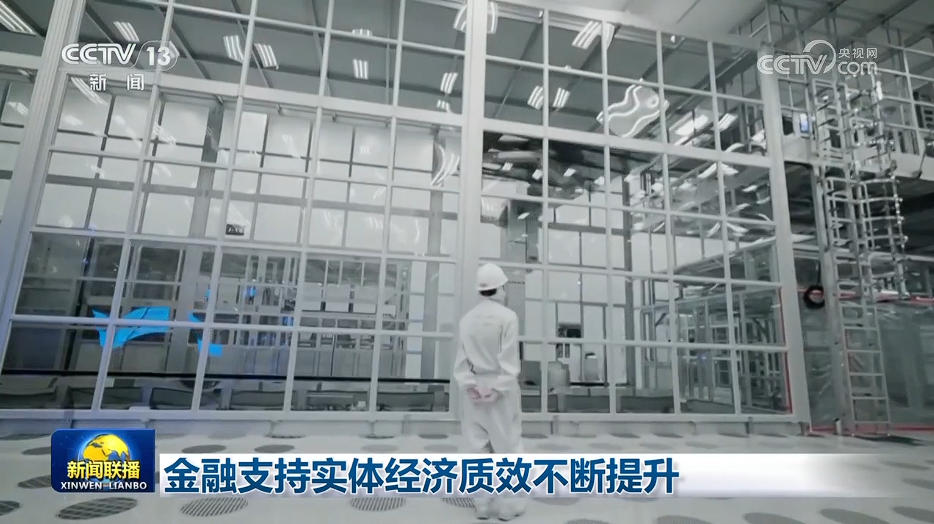
金融支持实体经济质效不断提升
Yang Shi Wang· 2025-08-14 12:08
央视网消息(新闻联播):中国人民银行发布的数据显示,7月末,广义货币(M2)余额329.94万亿元,同比增长8.8%,增速加快; 社会融资规模存量431.26万亿元,同比增长9.0%,增速保持较高水平;前七个月人民币贷款增加12.87万亿元。 7月,贷款利率保持历史低位水平,新发放企业贷款利率约3.2%,新发放个人住房贷款利率约3.1%。 金融总量平稳增长,有力支持实体经济发展。其中,普惠小微贷款、制造业中长期贷款分别同比增长11.8%、8.5%,均高于同期各类 贷款增速,金融对小微、科技、绿色等重点领域和薄弱环节的信贷支持力度不断加大。 ...
金融“活水”如何浇出企业好“钱景”?
Xin Hua Wang· 2025-08-12 06:31
Group 1 - In January 2022, China saw a record high of 3.98 trillion yuan in new RMB loans, indicating strong financial support for the economy amid downward pressure [1][2] - The increase in loans is primarily driven by a significant rise in corporate loans, which accounted for over 80% of the total new loans, amounting to 3.36 trillion yuan [2][3] - The People's Bank of China is focused on stabilizing the economy by implementing policies that promote lending and support for the real economy, particularly in the face of economic challenges [2][3] Group 2 - Various regions are actively implementing financial measures to stimulate market vitality, with specific initiatives such as the "1+5+N" program in Chongqing aimed at supporting small and micro enterprises [4] - In January 2022, Chongqing's banks issued 38.729 billion yuan in new loans to small and micro enterprises, reflecting a year-on-year growth of 32.64% [4] - Financial institutions are responding to the needs of market entities by enhancing coordination and offering tailored financial products to address the challenges faced by small and micro enterprises [6] Group 3 - Despite improvements in corporate financing, challenges remain, particularly for small and micro enterprises that struggle with collateral requirements and high financing costs [6] - The People's Bank of China is transitioning direct tools to market-oriented policies to increase credit support for small and micro enterprises and individual businesses [6] - Financial institutions are committed to leveraging the strong demand for credit at the beginning of the year to proactively engage with businesses and provide necessary support [6]

金融将更有针对性地支持扩大消费和投资
Xin Hua Wang· 2025-08-12 06:30
中国银保监会主席郭树清回应地产泡沫化、影子银行等热点话题 3月2日,在国新办举行的新闻发布会上,中国银保监会主席郭树清介绍了促进经济金融良性循环和 高质量发展有关情况。 郭树清介绍,2021年人民币贷款新增近20万亿元,银行保险机构新增债券投资7.7万亿元。制造业 中长期贷款余额同比增长近30%,科研技术贷款增长28.9%,绿色信贷增长21%。加强受疫情影响较大 领域金融服务,延期还本付息政策延长期限后顺利转换。有力支持煤电行业正常生产。全年保险业赔付 增长14.1%。为河南、山西暴雨灾后重建提供赔付资金约116亿元,新冠疫苗保险为超28亿剂次接种提 供了风险保障。 "当前,由于国际国内疫情还不稳定,加之一些其他方面环境的变化,经济需求表现不是太强,无 论是消费还是投资,增长都比较缓慢。"郭树清表示,需要采取一些有力措施,这不是说简单地采取"大 水漫灌"的办法,从而扩大货币政策的宽松度。财政也应发挥作用,增加结构性调整的具体措施。从银 行业和保险业的角度来说,希望能够更有针对性地支持扩大消费、扩大投资。 中小微企业融资是一个世界性难题。"但是这个难题在中国解决得还是比较好的。"郭树清表示,当 前1.2亿企业中 ...