价值投资

Search documents
把钱花在哪里,才是对的?
3 6 Ke· 2025-09-25 03:25
Group 1 - The article discusses the philosophy of spending wisely, emphasizing that money should be spent on core competencies and value-generating activities [6][19][41] - It highlights the importance of investing in product quality, innovation, customer value, environmental protection, and social responsibility as key areas for expenditure [6][32][41] Group 2 - The article provides examples from Fuyao Group's founder, Cao Dewang, illustrating how he prioritizes quality over cost-cutting, such as destroying defective glass to maintain standards [7][9][10] - It details how Cao invested in R&D and innovation, leading to breakthroughs in high-speed train glass, demonstrating a commitment to long-term value creation [19][21][20] Group 3 - The article emphasizes the need for a pragmatic approach in business, contrasting it with "performative management" that focuses on appearances rather than substance [38][39] - It discusses the importance of long-term thinking in investment decisions, using Fuyao's automation investments as an example of foresight in anticipating industry changes [42][45][46]

社保基金引导价值投资,自由现金流ETF(159201)持续获益,近1月日均成交居可比基金第一
Xin Lang Cai Jing· 2025-09-25 02:33
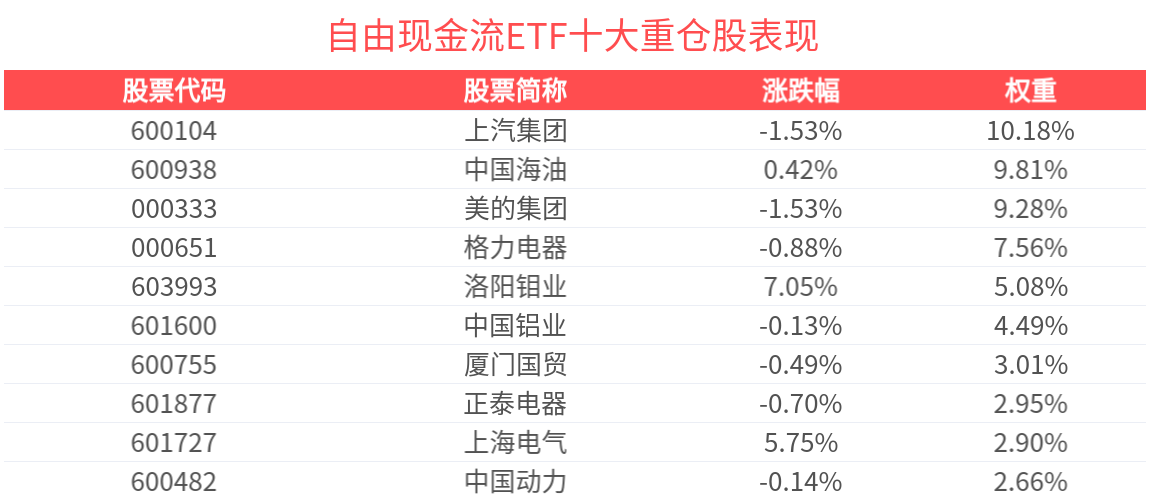
Group 1 - The core viewpoint of the news highlights the performance and liquidity of the National Index Free Cash Flow ETF, which has shown positive growth and significant trading activity in recent weeks [1][2]. - As of September 25, 2025, the National Index Free Cash Flow Index increased by 0.04%, with notable stock performances from companies like Luoyang Molybdenum, which rose over 7% [1]. - The Free Cash Flow ETF (159201) has seen a net inflow of funds on 10 out of the last 18 trading days, totaling 80.45 million yuan, indicating strong investor interest [1]. Group 2 - The management fee for the Free Cash Flow ETF is 0.15%, and the custody fee is 0.05%, making it the lowest among comparable funds [2]. - The top ten weighted stocks in the National Index Free Cash Flow Index account for 57.95% of the index, with significant contributions from companies like SAIC Motor, China National Offshore Oil, and Midea Group [2][4]. - The ETF has demonstrated a historical monthly return of up to 7% since its inception, with a 100% probability of profit over a six-month holding period [1].

中国证券投资基金业协会第三届资产管理业务委员会 2025年工作会议召开
Jin Rong Shi Bao· 2025-09-25 02:05
Core Insights - The meeting focused on the private equity asset management business, discussing its role in supporting the financial "five major articles," industry development outlook, wealth management transformation, application of artificial intelligence technology, and product innovation directions [1][2]. Group 1: Industry Development - The private equity asset management business has been strictly adhering to the new asset management regulations, leading to continuous improvement in operational standards and optimization of business structures [1]. - The industry is encouraged to align its development with the strategic layout of the financial "five major articles," enhancing its ability to serve resident wealth management, the real economy, national strategies, and capital market reforms [2]. Group 2: Innovation and Technology - The industry should embrace a philosophy of innovation while maintaining integrity, strengthening core investment research capabilities, and exploring deep integration of artificial intelligence in various operational and decision-making processes [2]. - There is a focus on cultivating specialized operational capabilities in comprehensive financial services, wealth management, and elderly care services, promoting a path of differentiated development [2]. Group 3: Compliance and Risk Management - Compliance and risk control are viewed as essential not only for safeguarding the bottom line but also as a driving force for development [3]. - Industry institutions are urged to enhance compliance awareness and continuously optimize their compliance and risk control systems, improving institutional and cultural frameworks [3]. Group 4: Association's Role - The association aims to strengthen its role as a service-oriented, technology-driven, and research-oriented body, implementing decisions from the central government and regulatory authorities [3]. - The association will focus on addressing urgent issues raised by the industry, improving self-regulatory rules, and enhancing the quality of filing work [3].
上涨49.82%!重温中国锂电上市企业最具投资价值24强排行榜|独家
24潮· 2025-09-24 23:32
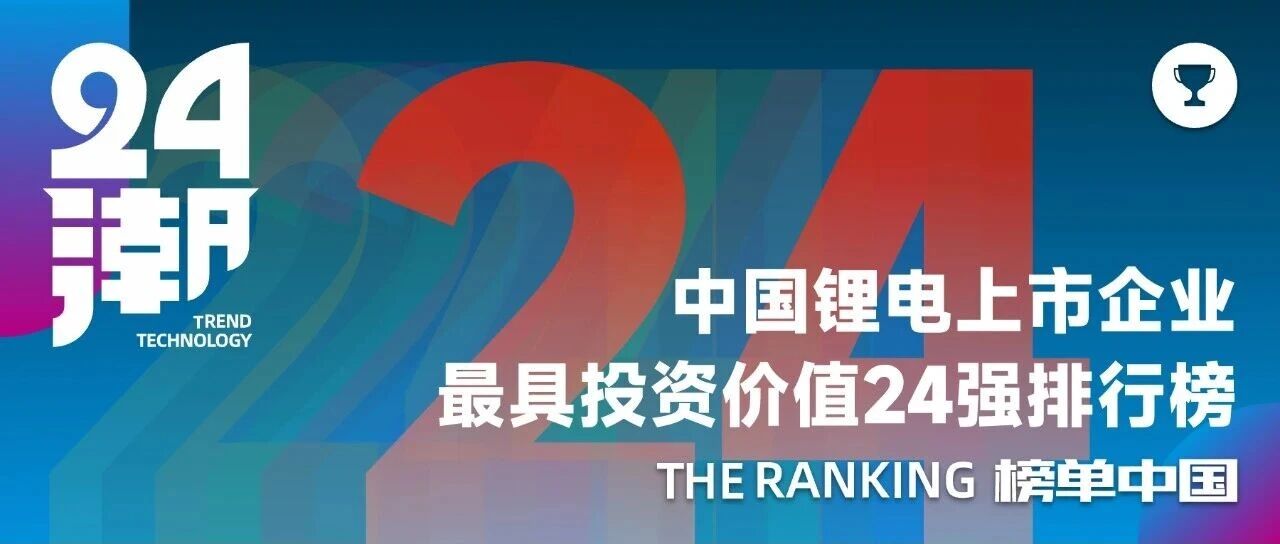
Core Viewpoint - The Chinese lithium battery industry, particularly the power and energy storage battery sectors, is currently facing significant challenges due to ongoing price wars and trade conflicts. However, there is a belief that the capital market is severely undervaluing certain high-quality companies within this sector, presenting potential investment opportunities [3]. Summary by Sections Industry Overview - The Chinese lithium battery industry is experiencing a tough situation influenced by price wars and trade disputes. Despite these challenges, the long-term growth potential remains significant [3]. Investment Value Assessment - A comprehensive evaluation of Chinese lithium battery listed companies was conducted across ten dimensions, including profitability, growth potential, capital structure, debt repayment ability, shareholder returns, and valuation. This led to the creation of the "Top 24 Most Investable Chinese Lithium Battery Companies" ranking [3]. Market Performance - From June 25 to September 24, the total market capitalization of the 24 ranked companies increased by 49.82%, significantly outperforming the broader market's 11.51% increase during the same period [3]. Top Companies Ranking - The top companies in the investment value ranking include: 1. Zhongyi Technology: 94.33% increase 2. Xiamen Tungsten: 80.30% increase 3. Jiayuan Technology: 72.46% increase 4. Ganfeng Lithium: 68.16% increase 5. Xinwanda: 65.32% increase - The ranking continues with other notable companies, showcasing substantial growth percentages [5][6]. Future Outlook - The industry is expected to continue its growth trajectory, with ongoing assessments and rankings of Chinese lithium battery companies planned to provide insights into their investment value and structural advantages within the industry [6].
北京商报侃股:大盘股更受青睐是大势所趋
Bei Jing Shang Bao· 2025-09-24 12:25
Group 1 - The trend of large-cap stocks becoming bull stocks is significantly influencing investors' stock selection strategies, shifting focus from speculative trading to performance and growth metrics [1][2] - The market preference is changing, with a growing emphasis on companies with strong industry barriers, stable cash flows, and robust risk resistance, which resonate with both institutional and retail investors [1][2] - The structure of market participants is evolving, with long-term funds like pensions and insurance capital entering the market, favoring predictable performance and solid value investment targets [1][2] Group 2 - Large-cap stocks are not a necessary condition for becoming bull stocks, but their probability of doing so has increased, indicating a shift in market dynamics [2] - Investors should not adopt a mindset of exclusively buying large-cap stocks; quality companies with strong performance and growth potential should be prioritized regardless of market capitalization [2] - The valuation levels of large-cap stocks are generally higher than those of small-cap stocks, but small-cap stocks can showcase growth potential if they continue to demonstrate performance growth [2]
侃股:大盘股更受青睐是大势所趋
Bei Jing Shang Bao· 2025-09-24 12:11
Group 1 - The trend of large-cap stocks becoming bull stocks is significantly influencing investors' stock selection strategies, shifting focus from speculative trading to performance and growth metrics [1][2] - The market preference is changing, with a growing emphasis on companies with strong industry barriers, stable cash flows, and robust risk resistance, which resonate with both institutional and retail investors [1][2] - The structure of market participants is evolving, with long-term funds like pensions and insurance capital entering the market, favoring predictable performance and solid value investment targets [1][2] Group 2 - Large-cap stocks are not a necessary condition for becoming bull stocks, but their probability of doing so has increased, indicating a shift in market dynamics [2] - Investors should not adopt a mindset of only buying large-cap stocks; quality companies with strong performance and growth potential should be prioritized regardless of market capitalization [2] - The valuation levels of large-cap stocks are generally higher than those of small-cap stocks, but small-cap stocks can still demonstrate significant growth potential if they maintain performance increases [2]

雷军“养儿子”
3 6 Ke· 2025-09-24 11:43
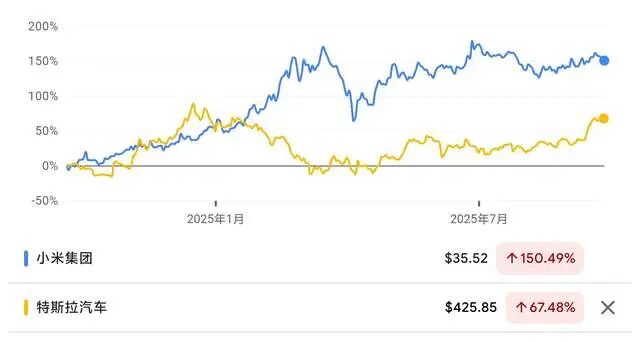
雷军提到的"两个儿子读书说",部分借鉴了20年前,李嘉诚以儿子、猪仔,对比旗下业务的譬喻。但 是,考虑到当前舆论场,以及小米集团港股的股价表现,这一说法确实有助于理解、审视这家科技龙头 的趋向。 两个儿子有明显的区别:新进入的汽车行业地位特殊,自建产线,押上了身家,是读书好坏直接影响到 家族未来表现的嫡子。 芯片行业不同,更像是一个试探,只有读书够好,才配得上雷布斯的威名,才有资格认祖归宗。表现不 好,小米集团完全可以换个新儿子,比如人工智能。财大气粗如OPPO的陈明永,头脑发热,赌上几百 亿,稍微遇挫就收摊关门,就是教训。 小米集团的股价进入新的平台期 和几位同行相比,雷军是唯一让自己品类上发生巨大变化的手机大厂的CEO。小米非常高效地进入了汽 车行业,并且站稳了脚跟。 OPPO、vivo的主战场还是手机,机器人、XR所谓的科技新产品,都是为了让自己显露科技实力,而不 是真的相信这些新产品可以成为未来的新赛道。库克任内推出的vision Pro现在可以断定,不会是下一 个iPhone,也不是iPhone杀手。 相比手机硬件主业,手机广告的主利润,这些新玩意都过于渺小了。 唯一跟雷军有类似,肉眼可见的变化的是 ...
首届“长江养老杯”大学生养老金融模拟投资大赛规则重申
2 1 Shi Ji Jing Ji Bao Dao· 2025-09-24 11:39
Group 1 - The "Yangtze Pension Cup" college student pension finance simulation investment competition is co-initiated by Yangtze Pension and Southern Finance, with guidance from the Shanghai Financial Industry Association and academic support from Fudan University [1] - The competition rules have been refined based on feedback from participants, emphasizing compliance and clarifying the criteria for continuous violations and the final rules for deducting violation profits [1] - Specific conditions leading to disqualification from the finals include investments in prohibited assets, excessive holding periods in certain stocks, and exceeding specified holding percentages [1] Group 2 - The rules for deducting profits from violations state that if no continuous violations occur, the profit rate will be recalculated based on the proportion of violation holding days to total holding days [1] - The competition promotes long-term, value, stable, and responsible investment philosophies, encouraging participants to engage in intelligent investment for a worry-free future [1]
一场17年的价值长跑
Xin Lang Cai Jing· 2025-09-24 10:43
来源:深圳商报 深圳商报首席记者 陈小慧 买入17年后,股神巴菲特"清仓"了比亚迪,一场价值投资长跑迎来了谢幕。 9月21日晚间,据外媒报道,沃伦·巴菲特旗下的伯克希尔·哈撒韦已完全退出其在比亚迪的投资。据统 计,巴菲特持有比亚迪股票的这些年里,比亚迪股价上涨了约3890%。也就是说,伯克希尔·哈撒韦在 比亚迪的17年投资中获得了超过38倍的回报,堪称价值投资史上的经典案例。 近日,比亚迪集团公关总经理李云飞回应,"股票投资,有买就有卖,这是很正常的事情!感谢芒格和 巴菲特对比亚迪的认可!也感谢过去17年的投资、帮助和陪伴!为所有的长期主义点赞!" 芒格的"拍桌子"坚持 2008年9月,全球金融危机的阴霾下,伯克希尔·哈撒韦公司做出了一项决定——投资中国新能源汽车制 造商比亚迪(BYD)。当时,比亚迪股价仅为几港元,伯克希尔·哈撒韦公司以每股8港元的价格,认购 了比亚迪2.25亿H股,总计斥资2.3亿美元,占总股本的9.89%。 事实上,投资比亚迪是查理·芒格的主意。在一次采访中,巴菲特曾说,"投资比亚迪不是我或投资团队 (的主意),有一天查理打电话给我,说我们必须买比亚迪。"在芒格看来,王传福可以像爱迪生那 ...

英华号周播报|3900点久攻不破怎么办?市场波动放大,如何稳中求进?
中国基金报· 2025-09-24 08:57
NO.1 泉果基金 # " 当期热文 【金融教育宣传周】基金披露知多少 NO.2 华夏基金 3900点久攻不破,怎么办? NO.3 国泰基金 大盘要震荡一段时间? (点击文章标题跳转原文,下同) # " 热转好文 NO.1 华夏基金 924行情周年记:一些故事结束,一些故事开始 NO.2 中国外贸信托 NO.1: 泓德基金 【点量投资】中美指增的差异:华尔街vs中国量化新势力 NO.2: 北京基金小镇 李井奎:凯恩斯思想与理论发展脉络——《劝说集》 福小宝课堂|您的投资真的"适配"吗? NO.3 景顺 景顺观点 | 洞悉亚洲短期债券价值:收益率展现韧性 # " 趣投教 NO.3: 创金合信基金 固态电池的投资思路 鸿蒙智行秋季新品发布会 # " 热门直播 NO.1: 万家基金 市场波动放大,如何稳中求进? NO.2: 粤开证券投教基地 2025上交所ETF大讲堂(第三期) NO.3: 华为 | # | 媒体号名称 | | --- | --- | | 1 | 束夏事ぞ | | 2 | 国泰基金 | | 3 | 泉果基金 | | 4 | 泓德基金 | | 5 | 景顺 | | # | 媒体号名称 | | --- ...