商业航天

Search documents
首个星际航行学院成立,航空航天ETF(159227)涨幅1.63%,航发科技涨停
Mei Ri Jing Ji Xin Wen· 2026-01-27 05:44
Group 1 - The A-share market showed mixed performance on January 27, with the aerospace ETF (159227) experiencing a strong rally, rising by 1.63% and achieving a trading volume of 339 million yuan, leading its category [1] - The establishment of China's first Interstellar Navigation College by the University of Chinese Academy of Sciences focuses on advanced fields such as interstellar propulsion, deep space communication and navigation, and space science, aiming to cultivate versatile talents with solid foundations and strategic vision [1] - Dongxing Securities highlighted that during the 14th Five-Year Plan period, commercial aerospace will become a key driver for high-quality development in China's new productive forces and technology [1] Group 2 - The aerospace ETF (159227) closely tracks the National Securities Aerospace Index, covering leading companies across the entire industry chain, including fighter jets, aircraft engines, rockets, missiles, satellites, and radars, aligning perfectly with the "aerospace integration" strategic direction [2] - The ETF has a high commercial aerospace content of 70.19%, with top ten holdings including Aerospace Development, China Satellite, Aerospace Electronics, AVIC Aircraft, and AVIC High-Tech [2]


产业跨界融合有望定义商业航天新阶段 航空航天ETF(563380)通用航空ETF(563320)助力布局空天领域机遇
Xin Lang Cai Jing· 2026-01-27 05:15
Core Viewpoint - The commercial aerospace sector is experiencing active performance, with market recognition of its long-term investment value despite recent short-term fluctuations [1][3]. Group 1: Market Performance - As of the morning close, the trading volumes for the Aerospace ETF (563380) and General Aviation ETF (563320) reached 64% and 34% of the previous day's total, respectively [1][4]. - The Aerospace ETF has seen net inflows in 12 out of 16 trading days this year, accumulating 615 million yuan, with an average daily trading volume increasing to 186 million yuan, significantly higher than the 2025 average of 25 million yuan [1][4]. - The fund sizes for the Aerospace ETF and General Aviation ETF have risen to 786 million yuan and 618 million units, respectively [1][4]. Group 2: Technological Advancements - Recent breakthroughs in the industry include the global first deployment of a general large model in orbit and the completion of a trial for a "embodied intelligent robot directly connected to satellites," enhancing outdoor communication and space information integration [1][4]. Group 3: Fund Management and Composition - The Aerospace ETF is the only ETF tracking the CSI Aerospace Index, focusing on military aerospace sectors, with significant allocations in aerospace equipment (61.4%), space equipment (17.8%), and military electronics (17.4%) [1][4]. - The General Aviation ETF closely follows the CSI General Aviation Theme Index, encompassing key players in the general aviation industry, combining military attributes and low-altitude economy [1][4]. - The fund manager, Huatai-PB Fund, is one of the first ETF managers in China, with a strong presence in broad-based and dividend-themed indices [1][4].
中加基金权益周报|市场面临降温
Xin Lang Cai Jing· 2026-01-27 04:04
Market Overview - A-shares showed mixed performance last week with a decline in trading volume at high levels [14] - The market experienced a cooling down after a period of heightened emotions, with a rapid decrease in market liquidity and financing levels [19] Macro Data Analysis - China's exports in December increased by 6.6% year-on-year in USD terms, exceeding market expectations and showing month-on-month growth [4][16] - For the entire year of 2025, exports are projected to grow by 5.5%, making it the largest contributor to economic growth among the three driving forces [4][16] - The strong export performance in December is attributed to sustained external demand during the global manufacturing cycle and a rush to export due to domestic tax rebate policy reductions [4][16] - The new export orders index for China's manufacturing PMI rose by 1.4 percentage points to 49.0% in December, supporting the evidence of strong external demand [4][16] - Key export items included computers, integrated circuits, and automobiles, with the latter showing the strongest growth, potentially influenced by the EU's proposed minimum import price policy for Chinese cars [4][17] Short-term Market Strategy - The market is expected to benefit from favorable liquidity conditions, a weak dollar cycle, and a gradual appreciation of the RMB, alongside active institutional funds and insurance sector dynamics [19] - The spring market rally is driven by hotspots in commercial aerospace and AI applications, leading to an increase in market risk appetite [19] - However, the rapid momentum of the market may accumulate risks, prompting regulatory measures to cool down the stock market [19] Mid-term Market Outlook - Technology growth remains a favored direction, with expectations of improving economic fundamentals gradually accumulating [20] - The current economic fundamentals and technology narratives have not fundamentally changed, and the technology sector remains a priority for allocation [20] - There are concerns regarding the fundamentals of many defensive dividend sectors and cyclical sectors, which may require strong catalysts for further market development [20] Long-term Market Perspective - The long-term dynamics of the US-China struggle are becoming clearer, with increasing skepticism about the US government's governance and institutional credibility [21] - Despite uncertainties in the US economic outlook and the Fed's interest rate cuts, the RMB has appreciated against the USD, which could support China's equity market if foreign capital continues to flow in [21] - The trend towards long-term capital from public funds and insurance companies is expected to strengthen, with significant stock holdings by major A-share listed insurance companies [21] Industry Insights - Defensive dividend sectors are entering an observation period, with potential for fund allocation if aggressive sectors continue to face pressure [22] - The focus remains on technology sectors, particularly in AI and commercial aerospace, which are expected to provide strong short-term performance [23] - There is a need to monitor the stabilization of AI applications and related sectors for potential investment opportunities [23]

新和成(002001.SZ):公司在商业航天领域的订单处于开拓市场、稳步增长的阶段
Ge Long Hui· 2026-01-27 03:55
Group 1 - The core viewpoint of the article is that the company, Xinhecheng (002001.SZ), is in the process of expanding its market presence in the commercial aerospace sector, with orders steadily increasing [1] Group 2 - The company has indicated that its orders in the commercial aerospace field are currently in a stage of market development and steady growth [1]

新和成:公司在商业航天领域的订单处于开拓市场、稳步增长的阶段
Ge Long Hui· 2026-01-27 03:54
Core Viewpoint - The company is in the process of expanding its market presence in the commercial aerospace sector, with orders showing steady growth [1] Group 1 - The company has indicated that its orders in the commercial aerospace field are currently in a stage of market development [1] - The growth of orders is described as steady, suggesting a positive trend in the company's business activities within this sector [1]
上城资本子基金遴选公告(2026年度第一批)
Sou Hu Cai Jing· 2026-01-27 03:39
Core Viewpoint - Hangzhou Shangcheng Capital, the only state-owned capital operation platform in Shangcheng District, aims to accelerate industrial development and attract high-quality projects through a 10 billion RMB industry fund focused on future industries like artificial intelligence and digital economy [1] Group 1: Fund Management and Structure - The fund company has established over 20 sub-funds in collaboration with industry leaders and investment institutions, with a total cooperation scale nearing 20 billion RMB [1] - The sub-funds are primarily focused on artificial intelligence and advanced manufacturing, with specific investment requirements for each sector [3][4] Group 2: Investment Directions - The artificial intelligence fund must allocate at least 70% of its capital to investments in embodied robots, smart terminals, and AI applications [4] - The advanced manufacturing fund is required to invest at least 70% in areas such as commercial aerospace and high-end equipment that align with the district's industrial cluster strategy [4] Group 3: Funding and Contribution - Shangcheng Capital's contribution to each sub-fund is capped at 200 million RMB, with specific limits on the proportion of investment for venture and industrial funds [5] - Priority will be given to sub-funds that receive contributions from higher-level state-owned capital industry funds [6] Group 4: Application Requirements - Fund management institutions must have a minimum registered capital of 10 million RMB and a track record of managing at least 15 billion RMB in total assets [7][8] - Institutions should demonstrate strong fundraising capabilities and provide evidence of at least 30% commitment from potential investors for the proposed sub-fund [8] Group 5: Application Process - Interested parties must submit written application materials by March 31, 2026, with a dynamic evaluation process in place [9] - The application process includes both electronic and physical submissions, with specific formatting and documentation requirements [9]
商业航天迎政策基建双驱动,产业生态加速构建,航空航天ETF(159227)交投活跃稳居第一
Mei Ri Jing Ji Xin Wen· 2026-01-27 03:12
1月27日,A股三大指数集体下跌,商业航天板块窄幅波动。截至10:29,航空航天ETF(159227)跌幅 0.88%,成交额达2.24亿元,稳居同类第一,持仓股三角防务领涨超6%,航天发展、航亚科技、航发控 制、航发动力等股跟涨。 中银证券表示,国内商业航天正步入政策与基建双重驱动的快车道。"十五五"规划首次将"加快建设航 天强国"列为重点任务,北京火箭大街交付及系列产业大会的举办,标志着我国正从发射能力到产业生 态进行系统性构建。这不仅是技术试验,更是向低成本、高频次商业发射模式的实质性迈进,为下游卫 星互联网等应用铺平道路。SpaceX 的潜在IPO 传闻也揭示了商业航天与人工智能两大前沿科技的深度 耦合趋势。 航空航天ETF(159227):紧密跟踪国证航天指数,成分股覆盖战斗机、航空发动机、火箭、导弹、卫 星、雷达等全产业链龙头,完美契合"空天一体"的战略方向,涵盖大飞机、商业航天、低空经济等新兴 领域,商业航天含量高达70.19%。前十大重仓股中包含了航天发展、中国卫星、航天电子、中航机 载、中航高科等行业龙头。 航空航天ETF最新规模达31.92亿元,稳居同类第一。 1月23日至24日,第三届北 ...
国星宇航披露“星算”计划进展,航空航天ETF(159227)近1周规模增长1.28亿
Xin Lang Cai Jing· 2026-01-27 02:50
Group 1 - The core viewpoint of the news highlights the significant advancements in China's aerospace sector, particularly the "Star Computing" plan aimed at deploying a large-scale satellite network by 2030 [1][2] - The CN5082 aerospace industry index shows mixed performance among its constituent stocks, with Triangular Defense leading the gains at 7.30% [1] - The Aerospace ETF (159227) has seen a notable increase in scale, growing by 128 million yuan over the past week, indicating strong investor interest [1] Group 2 - The maturity of reusable technology has significantly reduced rocket launch costs, leading to a doubling of global rocket launches to 329 by 2025 compared to 2021 [2] - The deployment of low Earth orbit satellite constellations is accelerating globally, with SpaceX's Starlink holding a dominant position, while domestic network deployment is also speeding up [2] - The establishment of space computing centers addresses energy consumption and heat dissipation challenges faced by ground data centers, opening new commercial opportunities in the aerospace sector [2]
今日火热开售!5大投资机遇共叠,千亿指数大厂低位入局光伏
Sou Hu Cai Jing· 2026-01-27 02:31
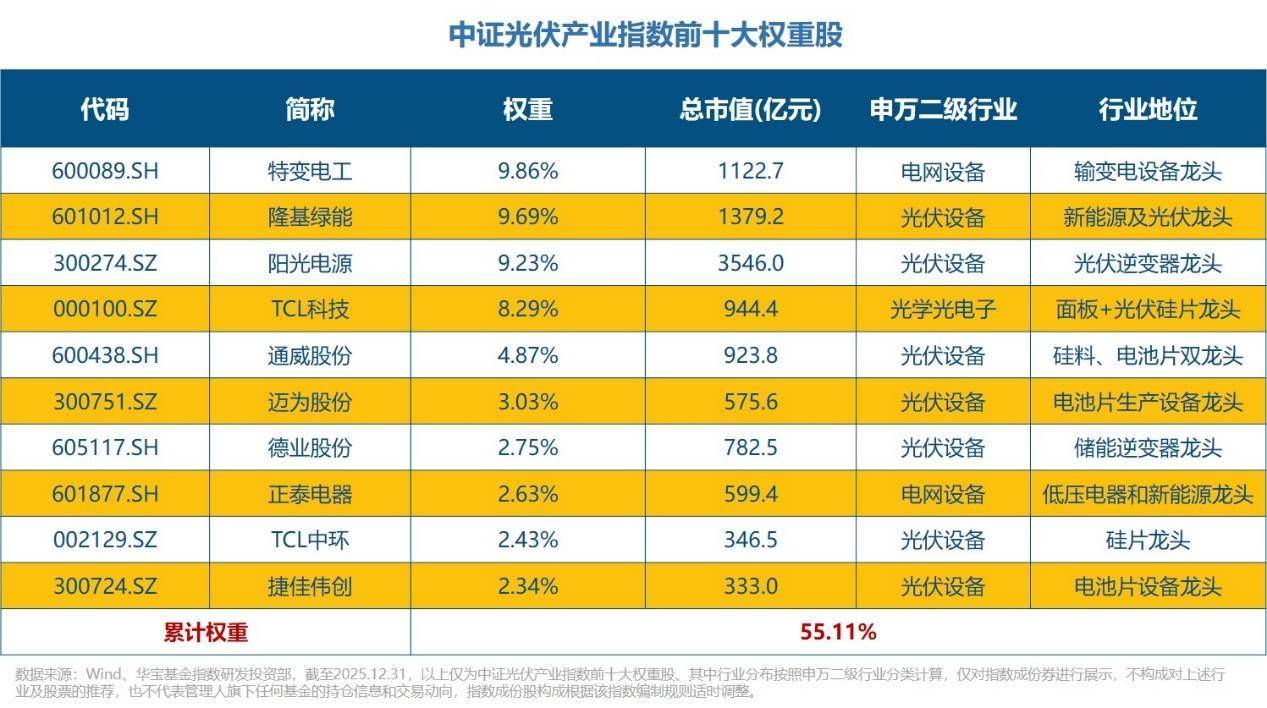
Core Insights - The current wave of investment in the photovoltaic (PV) sector is unexpectedly driven by commercial aerospace, with projections indicating a demand space of around 100 billion for low Earth orbit satellites and a potential market of 1 trillion to 10 trillion for space computing, highlighting vast opportunities [1] - The PV industry is currently facing five major investment opportunities: anti-involution, technological iteration, overseas demand, energy storage needs, and space photovoltaics, making it an attractive sector for investors [1] - After approximately four years of adjustment, the allocation value of the PV sector has become prominent, prompting fund companies to increase their investments in this area [1] Investment Opportunities - The Chinese PV industry chain is the most competitive globally, with numerous investment opportunities across various segments, including PV battery components, inverters, and silicon materials [2] - The newly launched Huabao CSI Photovoltaic Industry Index Fund (code: 026754) tracks the CSI Photovoltaic Industry Theme Index, which encompasses a wide range of segments within the PV industry, providing broad exposure to the entire value chain [2] - The CSI Photovoltaic Industry Index includes 50 constituent stocks, with the top five accounting for 41.9% and the top ten for 55.11%, creating a balanced structure of leading and supporting companies [2][3] Performance Metrics - From the index's inception on April 22, 2019, to December 31, 2025, the CSI Photovoltaic Industry Index has achieved a cumulative return of 47.48% and an annualized return of 6.67%, outperforming the CSI 300 Index and other related indices [5][7] - The index has demonstrated a clear cyclical characteristic, with a current price-to-book (PB) ratio of 2.52, indicating low valuation and high elasticity, thus highlighting its allocation value [8][11] Future Outlook - The fund manager of the Huabao CSI Photovoltaic Industry Index Fund anticipates focusing on anti-involution and new growth opportunities in the first half of 2026, while emphasizing the importance of industry profit recovery in the second half [9] - Key factors for 2026 include the clear direction of anti-involution, rising industry chain prices, and the alignment of storage systems with PV component customer bases, which may lead to significant growth opportunities [9]
早盘直击|今日行情关注
申万宏源证券上海北京西路营业部· 2026-01-27 02:26
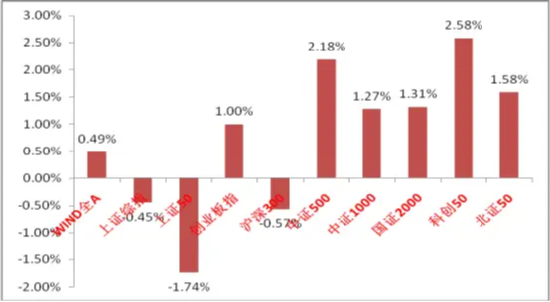
Group 1 - The spring market is entering a transition period with noticeable acceleration in sector rotation, as the market shifts from rapid ascent to a phase of horizontal consolidation, leading to unclear main lines and increased industry rotation [1] - The two main lines of the current spring market, commercial aerospace and AI applications, have shown significant divergence, impacting market sentiment [1] - Investors are focusing on relatively low-position sectors, particularly strong cyclical industries, resulting in a "high-cut-low" market characteristic typical of the transition period [1] Group 2 - On Monday, the two markets experienced differentiated fluctuations with trading volume at relatively high levels, as the Shanghai Composite Index opened high but closed lower, remaining above the 5-day moving average [1] - The Shenzhen Component Index underperformed compared to the Shanghai market, experiencing a larger adjustment but also closing above the 5-day moving average [1] - Market hotspots were mainly concentrated in upstream industries such as petrochemicals and non-ferrous metals, with large-cap blue-chip stocks performing strongly while small-cap and tech stocks saw adjustments [1] Group 3 - The Shanghai Composite Index has entered a horizontal consolidation phase after a continuous rebound, having started an upward trend in mid-December and reaching a new high in mid-January before entering the current fluctuation phase [1] - The current market characteristics include sector differentiation and a decrease in overall market volatility, with a need to monitor the support strength of the 5-day moving averages for various indices in the short term [1]