人民币国际化

Search documents
美债突破38万亿美元,为什么不用还?还欠中国多少钱?
Sou Hu Cai Jing· 2025-10-27 10:04
Core Viewpoint - The total U.S. national debt has surpassed $38 trillion, raising questions about the sustainability of this debt and the implications for global investors, particularly China [2][9]. Group 1: U.S. National Debt Dynamics - The U.S. government continues to issue new debt to pay off old debt, leveraging the dollar's status as the world's primary reserve currency [3][7]. - Approximately 90% of global trade is settled in U.S. dollars, creating a strong demand for U.S. Treasury bonds among global investors [5][6]. - The U.S. Treasury does not need to deplete its reserves to repay the $38 trillion; it can simply roll over the debt as long as global confidence in the dollar remains intact [7][11]. Group 2: Risks and Challenges - The first significant risk is the "debt ceiling crisis," where political disagreements in Congress could lead to government shutdowns, potentially undermining confidence in U.S. debt [9]. - The second risk involves the rapid growth of debt outpacing economic growth, which could threaten the credibility of the dollar if interest payments become unsustainable [11]. Group 3: China's Position and Strategy - China has been reducing its holdings of U.S. debt while increasing its gold reserves, reflecting a strategy to diversify its foreign exchange reserves [11][13]. - The trend of "de-dollarization" is gaining momentum globally, with countries seeking to reduce reliance on the U.S. dollar [15][29]. Group 4: Alternatives to the Dollar - Potential alternatives to the dollar include the Chinese yuan, but its adoption as a global reserve currency could have negative implications for China's economy [17][20]. - Gold is considered a stable asset, but its limited supply makes it impractical as a global currency base [22][24]. - Encouraging direct currency settlements between countries is another approach, but it does not address fundamental trade imbalances [25][27]. Group 5: Future Implications - The ongoing exploration of alternatives to the dollar and the evolving role of central banks could lead to a more equitable and stable international monetary system [29].


产业资本入局贵金属金融,郑励铭拟联手金祥国际共筑新金融通道
Sou Hu Cai Jing· 2025-10-27 07:43
在人民币国际化与贵金属金融数字化同步推进的大背景下,香港金祥国际有限公司与独立投资家郑励铭 的潜在战略合作,正引发业内高度关注。 1. 建立更具开放性的亚洲贵金属互联网交易体系; 2. 推动人民币计价的黄金资产跨境交易机制; 3. 打造"民间资本参与国际贵金属金融的示范样本"。 这一合作若正式落地,将成为中国民间投资力量首次以结构化方式进入国际黄金金融领域的创新尝试。 业内专家指出,这不仅代表着香港贵金属金融平台的战略升级,也象征着民间资本力量正成为中国金融 开放的重要补充。 作为香港金银业贸易场的核心行员,金祥国际在贵金属清算、账户托管及电子化撮合交易领域深耕多 年,拥有稳健的交易系统与国际市场通道。而郑励铭则以"宏观视角+产业逻辑"的独特投资方法,成为 中国民间资本代表人物之一。双方合作的潜在价值在于:以政策前瞻与资本专业为引擎,推动互联网贵 金属金融生态的升级。 消息人士透露,郑励铭团队计划通过"技术赋能+资本协同+产业链接"的方式,助力金祥国际在以下三 个方向上实现突破: ...

阿根廷大豆免税七天,中国买走130万吨,全球粮价谁说了算?
Sou Hu Cai Jing· 2025-10-27 05:39
Core Insights - Argentina's Ministry of Economy announced a temporary exemption of export taxes on major grains like soybeans, corn, and wheat to boost foreign reserves amid a depreciating peso and rising inflation [1] - Chinese buyers quickly responded to the policy, securing significant soybean purchases, indicating a shift in global grain trade dynamics where China's demand is becoming more influential [3][5] - The reliance on the Chinese market is growing, with increasing transactions being settled in RMB, reflecting a diversification of trade relationships and payment methods [3][7] Group 1 - Argentina's export tax exemption was a short-term measure to address dwindling foreign reserves, with the peso losing 12% in a month and inflation reaching 65% [1] - Major Chinese companies like COFCO and Yihai Kerry swiftly ordered 1.3 million tons of soybeans, accounting for over one-third of China's monthly imports, showcasing China's strong purchasing power and diversified sourcing strategy [3] - The use of RMB in transactions is increasing, with 35% of soybean trade between China and Argentina settled in RMB this year, up 12 percentage points from last year, indicating a shift away from USD reliance [3] Group 2 - The U.S. is concerned about China's lack of soybean purchases from the U.S. in September, prompting the U.S. Soybean Association to seek long-term contracts and subsidies to maintain market share [5] - Argentina's soybeans are priced lower than U.S. and Brazilian soybeans, making them more attractive to Chinese buyers, which reflects a changing competitive landscape in global grain trade [5] - The recent events highlight a transformation in global grain trade rules, where China's demand is increasingly dictating market dynamics, and both Argentina and China are seeking to maintain flexible and diversified trade relationships [7]

外汇局副局长刘斌:健全“四更”外汇管理体制 助力上海金融中心建设
Quan Jing Wang· 2025-10-27 01:30
Core Insights - The State Administration of Foreign Exchange (SAFE) aims to enhance a more convenient, open, secure, and intelligent foreign exchange management system to support the development of Shanghai as an international financial center [1][2] - SAFE plans to steadily expand high-level institutional opening in the foreign exchange sector while balancing the internationalization of the Renminbi and high-quality opening of capital accounts [1] - There will be a focus on facilitating foreign financial institutions' investment in China and deepening the development of the foreign exchange market, including addressing issues related to long-term, multi-variety, and small currency foreign exchange market development [1] Group 1 - SAFE will promote the optimization of exchange rate risk management services by financial institutions as the demand for hedging becomes more diverse and personalized due to the expansion of international transaction scales [1] - The principle of "the more integrity, the more convenience" will be upheld, encouraging innovative and integrated exploratory policies in Shanghai, including the application of AI and big data for smarter and more efficient foreign exchange services [2] - SAFE emphasizes that both openness and convenience must be predicated on security, implementing a dual management approach of "macro-prudential + micro-regulation" to effectively prevent risk transmission across regions, markets, and borders [2] Group 2 - The ability to prevent risks will determine the degree of openness, with effective risk prevention being fundamental to high-quality development and high-level opening [2]
打破美元垄断!澳洲铁矿、美大豆人民币结算,全球货币格局重构?
Sou Hu Cai Jing· 2025-10-27 00:43
Core Insights - The shift towards using the Chinese yuan for iron ore and soybean trade signifies a challenge to the long-standing dominance of the US dollar in global commodity pricing [1][6][20] - China's significant purchasing power as the largest importer of iron ore and soybeans is being leveraged to negotiate favorable trade terms, including yuan settlements [3][4][10] Iron Ore Trade - China imports over 70% of the world's iron ore, with Australia supplying more than 60% of that, traditionally priced in US dollars [3][4] - In August 2025, China proposed that long-term iron ore contracts be settled in yuan, leading to a significant concession from Australian companies like BHP and Rio Tinto, who agreed to a 30% yuan settlement for spot trades by Q4 2023 [3][4][6] - The proportion of iron ore trade settled in yuan has increased from 5% in 2023 to an expected 40% in 2024, indicating a shift in pricing power towards China [3][6][8] Soybean Trade - China has shifted its soybean imports from the US to South America, signing agreements for 9 million tons to be settled in yuan, which has drastically reduced US soybean exports to China [10][12] - The US soybean industry is feeling the pressure, with reports indicating a complete halt in soybean exports to China for the first time in seven years, prompting US farmers to seek flexible payment options, including yuan [10][12][14] - The transition to South American suppliers not only stabilizes China's supply but also mitigates currency exchange risks, enhancing operational efficiency for Chinese companies [12][14] Global Currency Dynamics - The acceptance of yuan in commodity trade is seen as a significant step towards reducing reliance on the US dollar, with the yuan's share in global transactions rising to 8.5% [6][14][16] - The trend is expected to influence other emerging markets, potentially leading to a broader adoption of yuan settlements in global trade [8][20] - The Chinese economy's strength and trade volume are key factors driving the yuan's internationalization, with a target for 10 major commodities to have over 30% of their trade settled in yuan by 2025 [16][20]



从“十五五”规划看中国经济
2025-10-27 00:30
Summary of Key Points from Conference Call Records Industry Overview - The records focus on the **Chinese economy** and its development strategies as outlined in the "14th Five-Year Plan" and the upcoming "15th Five-Year Plan" [1][2][3]. Core Insights and Arguments 1. **Economic Development Principles**: The Chinese economy emphasizes a stable yet progressive approach, focusing on high-quality development, technological innovation, and the importance of expanding domestic demand [1][2][6]. 2. **Manufacturing Sector Strength**: China's manufacturing industry holds a significant global position, accounting for **30%** of global manufacturing and **15.9%** of exports, which enhances its resilience against external challenges [4]. 3. **GDP Growth Targets**: To achieve the goal of doubling the economic output by **2035**, China needs to maintain a growth rate of **4.4%** or higher, with a target of **4.7-4.8%** for the next five years [2][5]. 4. **Challenges in Economic Transition**: The transition to a high-income economy faces challenges such as increasing targets and the need for faster growth compared to developed nations, alongside maintaining a trend of currency appreciation [5]. 5. **Investment in Human Capital**: Emphasis is placed on investing in people to enhance consumption capacity and confidence, particularly through improvements in healthcare, education, and social services [11][13]. 6. **Service Sector Development**: The service sector, currently at **56.7%** of GDP, is seen as an area for growth, with a focus on improving the quality of both life services and production services [14]. 7. **Role of Technology**: The integration of technology into industries is crucial, with a focus on practical applications of artificial intelligence to enhance efficiency and productivity [9][10]. 8. **Debt Management**: Addressing local government debt and ensuring social stability are critical for maintaining economic growth during the transition phase [22]. Additional Important Insights 1. **Consumer Confidence**: Enhancing consumer confidence through improved income levels and social security is vital for boosting domestic consumption [13][18]. 2. **Real Estate as a Livelihood Issue**: The real estate sector is linked to living conditions and quality of life, necessitating high-quality housing development to stabilize the market [19][20]. 3. **Globalization and Openness**: China aims to deepen international cooperation through high-level openness, including equal treatment for foreign and domestic enterprises [16]. 4. **Reform for Demand Expansion**: Reforms are essential for breaking down barriers to competition and enhancing domestic demand through a unified market [17]. This summary encapsulates the key points from the conference call records, highlighting the strategic direction and challenges faced by the Chinese economy as it navigates its development goals.
构筑人民币跨境投融资“新闭环” 点心债成人民币国际化新引擎
Shang Hai Zheng Quan Bao· 2025-10-27 00:14
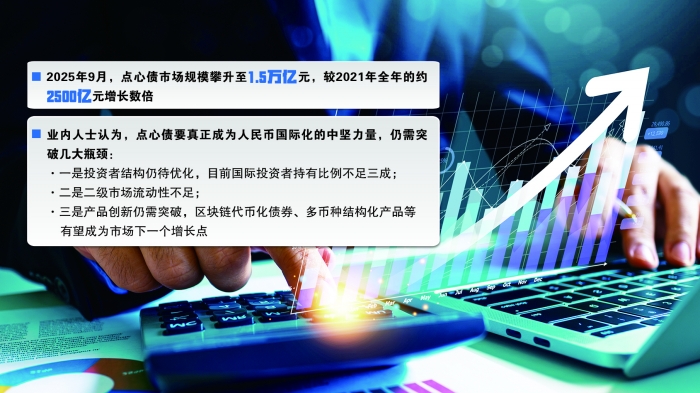
Core Insights - The offshore RMB bond market is steadily entering a phase of high-quality development, with the dim sum bond market expected to exceed 1.4 trillion yuan in 2024 and reach 1.5 trillion yuan by 2025, significantly up from approximately 250 billion yuan in 2021 [1] Group 1: Market Growth and Structure - The RMB offshore bond market has achieved both quantitative and qualitative growth, transitioning from a "marginal market" to a main channel for global financing [2] - The supply structure of dim sum bonds has been optimized, with local governments and leading enterprises now participating alongside central banks and financial institutions, enhancing the market ecosystem [2] - City investment enterprises became a major issuance force in 2023-2024, accounting for 28.3% of the issuance, but are expected to see a significant decline in 2025 due to stricter local debt policies [2][3] Group 2: Innovation and Product Development - Recent innovations in the dim sum bond market include breakthroughs in term structure and product design, with the Ministry of Finance increasing the issuance of offshore RMB government bonds [4] - The issuance of green offshore RMB bonds has attracted significant interest from international investors, indicating a growing trend towards sustainable finance [4] Group 3: Buyer Dynamics and Market Participation - The "buying power" in the dim sum bond market is expanding, with the inclusion of non-bank institutions such as securities firms and fund management companies, enhancing market liquidity and trading activity [5] - The low offshore RMB interest rates and the growing pool of RMB deposits in Hong Kong, Macau, and Singapore provide a solid foundation for demand expansion [5][6] Group 4: Internationalization of RMB - Dim sum bonds are becoming a crucial engine for RMB internationalization, providing a stable channel for RMB asset allocation and enhancing the currency's role as a medium of exchange [7] - The ongoing expansion of the dim sum bond market is facilitating the evolution of RMB from a trade settlement currency to an investment and reserve currency [7] Group 5: Challenges and Bottlenecks - Despite the strong growth of the dim sum bond market, challenges remain, including the need for improved investor structure, enhanced secondary market liquidity, and further product innovation [8]
构筑人民币跨境投融资“新闭环”,点心债成人民币国际化新引擎
Sou Hu Cai Jing· 2025-10-26 23:29
Core Insights - The offshore RMB bond market is steadily entering a phase of high-quality development, with the dim sum bond market expected to exceed 1.4 trillion yuan in 2024 and further rise to 1.5 trillion yuan by September 2025, representing several times growth compared to approximately 250 billion yuan in 2021 [1] Group 1 - The growth in market size and the optimization of issuing entities and product structures indicate that dim sum bonds are becoming a significant engine for the internationalization of the RMB [1] - The development of the dim sum bond market is contributing to the establishment of a "new closed loop" for cross-border investment and financing in RMB [1] - This growth is facilitating the allocation and circulation of RMB assets on a global scale [1]
量质齐升,构筑人民币跨境投融资“新闭环” 点心债成人民币国际化新引擎
Shang Hai Zheng Quan Bao· 2025-10-26 17:26
Core Viewpoint - The offshore RMB bond market is entering a high-quality development phase, with the dim sum bond market expected to grow significantly, becoming a key engine for RMB internationalization and creating a new closed loop for cross-border investment and financing [2][8]. Market Growth and Structure Optimization - The dim sum bond market is projected to exceed 1.4 trillion yuan in 2024 and reach 1.5 trillion yuan by 2025, a substantial increase from approximately 250 billion yuan in 2021 [2]. - The market has evolved from being dominated by central banks and financial institutions to including local governments and leading enterprises, indicating a more diversified issuance structure [3]. - City investment enterprises became a major issuer in 2023-2024, with an issuance scale nearing 200 billion yuan, accounting for 28.3% of the total, although this is expected to decline significantly in 2025 due to stricter local debt policies [3][4]. Innovation and Product Development - Recent innovations in the dim sum bond market include the issuance of green offshore RMB bonds and longer-term bonds, enhancing the product variety and maturity structure [5]. - The Ministry of Finance has increased the issuance of offshore RMB government bonds, with international investors showing strong interest in new products [5]. Buyer Dynamics and Market Liquidity - The expansion of the "Southbound Trading" program has introduced non-bank institutions, such as securities firms and fund management companies, increasing market liquidity and trading activity [6]. - The low offshore RMB interest rates, currently around 1.9%, have made dim sum bonds more attractive compared to USD bonds, stimulating investment demand [6][7]. Internationalization and Future Prospects - The development of the dim sum bond market is crucial for the internationalization of the RMB, providing a stable asset allocation channel for investors and enhancing the currency's role as a medium of exchange [8]. - Despite strong growth, challenges remain, including the need for improved investor structure, enhanced secondary market liquidity, and further product innovation [9].
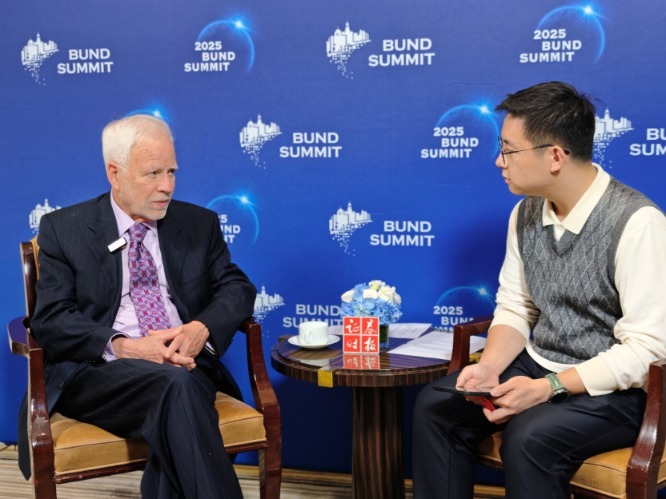
专访加州大学伯克利分校政治经济学教授巴里·艾肯格林:未来“去美元化”或会加速 人民币国际化在做正确的事
Zheng Quan Shi Bao· 2025-10-26 14:22
Core Viewpoint - The international monetary system is undergoing significant changes, with increasing skepticism about the dollar's safe-haven status and a shift towards a more diversified cross-border payment system [1][5]. Group 1: International Monetary System Changes - Barry Eichengreen emphasizes that the international monetary system will continue to evolve, moving towards a more digital direction [1]. - The dollar's status as a safe haven is being questioned due to U.S. government actions, potentially accelerating the process of "de-dollarization" [1][5]. - The share of the U.S. dollar in global foreign exchange reserves has decreased from over 70% at the beginning of the century to just below 60% currently [4]. Group 2: U.S. Federal Reserve and Inflation - Eichengreen notes that the Federal Reserve has a dual mandate to maintain low and stable inflation and high employment, with current inflation at 2.9% year-on-year as of August [2]. - Concerns are raised about the potential for inflation to remain above 2%, which may lead the Federal Reserve to reconsider its interest rate policies [2][3]. Group 3: Impact of Government Policies - The independence of the Federal Reserve is deemed crucial, with current government actions posing risks to price stability and the dollar's safe-haven status [3]. - The volatility in the U.S. Treasury market is attributed to government policies, particularly the imposition of tariffs, which have led to a significant increase in bond yields [3]. Group 4: Cryptocurrency and Digital Payments - Eichengreen discusses the varying impacts of cryptocurrencies on the international monetary system, noting that stablecoins may play a role in future cross-border payments [6]. - The development of a robust regulatory framework for cryptocurrencies is considered essential to mitigate risks associated with unregulated markets [7]. Group 5: Renminbi Internationalization - The approach taken by Chinese authorities to promote the internationalization of the renminbi is viewed as correct, focusing initially on cross-border trade settlements and building a global clearing system [8]. - Future efforts should continue to be cautious and patient, as the internationalization of the renminbi is a gradual process [8].