
价值投资

Search documents
EPHE: One Of The World's Cheapest Markets Looks Attractive
Seeking Alpha· 2025-09-22 22:27
Philipp is a seasoned value investor with nearly 20 years of experience in the field. He takes a global approach to investment opportunities, seeking out undervalued companies that offer a significant margin of safety, leading to attractive dividend yields and returns. While he does not limit his investments to specific sectors or countries, he focuses only on companies he thoroughly understands and can reasonably assess for future growth potential. Philipp is particularly enthusiastic when he identifies a ...


中长期持股是翻倍的基础
Bei Jing Shang Bao· 2025-09-22 16:31
Group 1 - The core viewpoint emphasizes the importance of long-term holding in achieving significant investment returns, as evidenced by over a thousand stocks doubling in value over the past year [1][2] - Many investors struggle with maintaining patience and confidence in their holdings, often succumbing to short-term market fluctuations and failing to realize the potential for long-term gains [1][2] - Value investing is defined not by immediate profit or loss but by the relationship between a company's intrinsic value and its stock price, advocating for holding stocks as long as their intrinsic value exceeds their market price [1][2] Group 2 - The current market environment features rapid sector rotations, which challenge investors' patience and commitment to long-term holdings [2] - Confidence in investment choices is crucial for maintaining long-term positions, as many investors frequently switch stocks due to a lack of confidence, leading to detrimental chasing of market trends [2] - Successful investors who achieved doubling returns over the past year exemplify the principle of patience in a volatile market, adhering to a fundamental investment philosophy [2][3]
如何看四季度权益市场走势?美联储降息后,大类资产布局如何调整?
Sou Hu Cai Jing· 2025-09-22 15:58
Group 1: Market Overview - The market has shown good performance since Q3 2025, with notable sector differentiation [3][4] - Key sectors performing well include technology, pharmaceuticals, new energy, and certain cyclical industries like non-ferrous metals, attributed to their strong fundamentals [4][6] - High dividend sectors like finance and banking have underperformed due to declining dividend yields impacting stock momentum, although they remain good absolute return options [5] Group 2: A-Share Outlook - The outlook for A-shares remains positive for Q4 2025 and 2026, as the Chinese economy is gradually recovering from previous pressures [6][8] - Sectors such as AI-driven technology, innovative pharmaceuticals, and new consumption are showing significant market movements, indicating improving fundamentals [6][8] - Cyclical and consumer sectors, while currently lagging, are expected to recover as the economy improves, making them attractive for future investment [7][8] Group 3: Hong Kong Market Drivers - The Hong Kong market has benefited from three main factors: valuation recovery, confidence restoration, and a shift in global monetary policy [11][12] - Valuation recovery is driven by improved earnings from major internet companies, while confidence has been bolstered by technological advancements and successful innovations [12] - The shift in global monetary policy, particularly the anticipated interest rate cuts by the Federal Reserve, is expected to favor emerging markets, including Hong Kong [12][20] Group 4: Sector Focus in Hong Kong - Future investment opportunities in Hong Kong will focus on technology, internet, pharmaceuticals, and consumer sectors [14] - The internet sector is expected to see improved profitability and attractiveness due to reduced policy uncertainties and increased foreign investment [14] - Emerging consumer trends in areas like trendy products, new tea drinks, and beauty care are projected to maintain high growth rates, making them appealing investment targets [14] Group 5: Economic and Policy Considerations - The U.S. Federal Reserve is likely to lower interest rates further, potentially bringing the federal funds rate down to 3% to 3.5% [20] - Short-term U.S. Treasury yields may have room to decline, while long-term yields face upward pressure due to uncertainties and fiscal deficits [21] - Emerging markets, particularly in Asia, are expected to show strong growth, driven by local demand and improved fiscal conditions, making them attractive for investment [22]

每日钉一下(价值投资,有哪些不同的流派呢?)
银行螺丝钉· 2025-09-22 13:51
Group 1 - The article emphasizes that different regional stock markets do not move in unison, and understanding multiple markets can provide investors with more opportunities [2][3] - Global investment can significantly reduce volatility risk, suggesting that investors should consider diversifying their portfolios internationally [2] - A free course is offered to teach methods for investing in global stock markets through index funds, along with supplementary materials like course notes and mind maps [2][3] Group 2 - The article discusses various schools of thought within value investing, highlighting Graham's classic strategy evolving into value and dividend indices [4][5] - Value investing has yielded good returns in the A-share market over the long term, with multiple different schools emerging over the past century [5] Group 3 - Value investing 1.0, referred to as the "cigarette butt" strategy, involved picking up undervalued stocks during the post-war period when many companies had market values below their liquid assets [6][7] - Value investing 2.0 transitioned to a focus on low valuation investments, particularly in the 1960s during the "Nifty Fifty" bull market, where leading companies reached high price-to-earnings ratios [8][9] - Value investing 3.0, influenced by Charlie Munger, shifted towards buying excellent companies at reasonable prices, exemplified by Buffett's investment in See's Candies [11][12]



侃股:中长期持股是翻倍的基础
Bei Jing Shang Bao· 2025-09-22 11:40
Core Viewpoint - The A-share market is approaching the one-year anniversary of the "924 market," with over a thousand stocks doubling in value within the past year, highlighting the importance of long-term holding for achieving significant returns [1][2]. Group 1: Investment Strategy - Achieving a doubling of investment returns requires patience and confidence in holding stocks for the long term, rather than being swayed by short-term market fluctuations [1][2]. - Value investing is characterized by buying stocks when their price is below their intrinsic value and selling when the price is significantly above it, regardless of short-term profit or loss [1][2]. - Investors should focus on the relationship between a company's intrinsic value and its stock price, continuing to hold as long as the intrinsic value exceeds the stock price [1]. Group 2: Challenges for Investors - Many small and medium investors find it challenging to maintain long-term holdings due to the rapid rotation of market sectors and the temptation of emerging hot stocks [2]. - The lack of confidence in their holdings often leads investors to frequently switch stocks, resulting in losses from chasing trends, even in a bull market [2]. - Confidence in long-term holdings stems from thorough research and understanding of the investment targets, which allows investors to adhere to their value investment models [2]. Group 3: Philosophical Perspective - The essence of value investing is encapsulated in the idea that patience and a long-term perspective can lead to substantial returns, as illustrated by the experiences of successful investors during the "924 market" [2][3].
巨佬全部清仓了!
Xin Lang Cai Jing· 2025-09-22 07:20
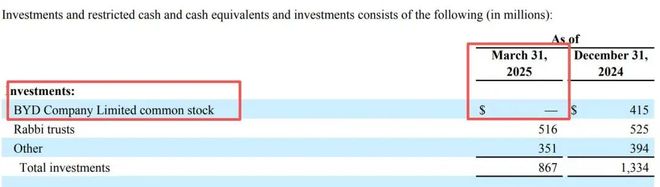
Group 1 - Berkshire Hathaway has completely divested its shares in BYD, marking the end of a 17-year investment that saw significant appreciation in value [1][4] - The investment in BYD began in 2008, with Berkshire purchasing shares at HKD 8 each, which later appreciated to a peak market value of USD 9 billion in 2022, representing a 38-fold increase [2][3] - Despite fluctuations in BYD's stock price, Buffett held onto the investment for 14 years before starting to reduce his stake in August 2022, ultimately selling off the remaining shares [3][4] Group 2 - During the period of investment, BYD's stock price increased approximately 3890%, generating substantial profits for Berkshire Hathaway [4] - Buffett's decision to invest in BYD was heavily influenced by Charlie Munger, who believed in the company's potential and the capabilities of its founder, Wang Chuanfu [6] - The recent divestment is part of a broader strategy by Berkshire to find better allocation for its capital, as Buffett indicated in a 2023 interview [6] Group 3 - Despite the divestment from BYD, the Hong Kong stock market continues to attract significant capital inflows, with net inflows reaching HKD 368.51 billion over the past week [10] - Major Chinese stocks such as Alibaba and Tencent have seen substantial net purchases, indicating strong institutional interest in the market [11][12] - Investment banks like Goldman Sachs and Citigroup have raised target prices for several Chinese stocks, suggesting a positive outlook for the Chinese equity market [13][14]
比亚迪回应巴菲特减持
Zhong Guo Zheng Quan Bao· 2025-09-22 04:39
Core Viewpoint - Berkshire Hathaway has been gradually reducing its stake in BYD since 2022, with the current holding dropping to 1.86% as of July 2024, despite the significant appreciation in BYD's stock price since its initial investment in 2008 [2][3]. Group 1: Berkshire Hathaway's Investment in BYD - Berkshire Hathaway began reducing its stake in BYD in 2022, with its share falling below 5% by June 2022 [2][3]. - As of December 2022, Berkshire held 164 million shares, representing 5.64% of BYD's total share capital [3]. - By October 2023, Berkshire's holdings decreased to approximately 87.6 million shares, or 3.01% of the total [3]. - As of July 2024, Berkshire's stake further declined to 54.2 million shares, equating to 1.86% of BYD's total share capital [3]. - The investment by Warren Buffett in BYD has yielded a remarkable return, with BYD's stock price increasing over 3000% from September 2008 to December 2024 [3]. Group 2: BYD's Financial Performance - In the first half of the year, BYD reported revenue of 371.28 billion yuan, marking a year-on-year increase of 23.30% [3]. - The net profit attributable to shareholders reached 15.51 billion yuan, reflecting a year-on-year growth of 13.79% [3]. - BYD's sales of new energy vehicles totaled 2.146 million units, representing a year-on-year increase of 33% [3]. Group 3: BYD's Strategic Expansion - BYD aims to leverage its leading position in new energy technology and products to expand its product line and enhance its overseas production and sales network [4]. - The company is focusing on building a global supply chain and establishing its own transportation capabilities [4]. - The launch of high-end brands such as Tengshi and Yangwang in various overseas markets is a key component of BYD's globalization strategy [4].

巴菲特清仓比亚迪!投资2.3亿美元变90亿美元,回报率3890%!
Sou Hu Cai Jing· 2025-09-21 21:31
Group 1 - Berkshire Hathaway has completely exited its investment in BYD, marking the end of a 17-year investment journey [1] - The initial investment of $230 million (approximately 1.637 billion RMB) grew to a value of $9 billion, yielding an astonishing return rate of 3890% [3] - The investment began in 2008 when Berkshire purchased 225 million shares of BYD, a decision initially met with skepticism but ultimately became a legendary success story [3] Group 2 - In August 2022, Berkshire started to reduce its stake in BYD, which had already appreciated by 41% to reach a value of $9 billion [3] - By June of the previous year, Berkshire had sold nearly 76% of its BYD shares, reducing its ownership to just below 5% of the total issued shares [3] - Despite not providing detailed reasons for the divestment, Warren Buffett indicated a search for more satisfactory investment opportunities [3] Group 3 - The success of this investment is attributed to the explosive growth of China's electric vehicle industry, with BYD evolving from a battery manufacturer to a global EV leader [4] - In the first half of this year, BYD's electric vehicle sales increased by 30% year-on-year, with a growing market share [4] - The decision to divest raises questions about whether the valuation of the EV industry has peaked or if Buffett has identified better investment opportunities [4] Group 4 - This 17-year investment with a 3890% return will be recorded in investment history, showcasing the allure of value investing and the rise of Chinese manufacturing [6] - Regardless of Buffett's exit, BYD continues to progress on an upward trajectory [6]

在景气与价值中找寻平衡
Zhong Guo Zheng Quan Bao· 2025-09-21 20:17
Group 1 - The core viewpoint emphasizes the ability to achieve stable returns in a volatile A-share market, with the fund managed by Shen Li showing over 66% return year-to-date as of September 18, 2023 [1] - Shen Li's investment strategy focuses on a unique balance between growth and value, avoiding the extremes of short-term speculation and static low valuations [1][2] - The strategy involves a two-layer screening mechanism, focusing on industry stability and key factors such as profitability and risk-reward ratio [1] Group 2 - The market is currently in a recovery phase, with sentiment indicators returning to normal levels and showing optimism without overheating [2] - Key sectors to watch include AI, which is expected to attract significant capital inflows, particularly in hardware, as the industry shows strong internal momentum [3] - The semiconductor industry is entering a new upcycle, characterized by improved quality compared to previous cycles, with surviving companies demonstrating product competitiveness [3][4] Group 3 - High-quality manufacturing companies that have expanded overseas have undergone a value reassessment, establishing new barriers to entry in global capacity [4] - The trend of consumer de-leveraging is expected to create structural opportunities for consumption recovery, with a focus on high-cost-performance products [4] - In the traditional liquor sector, leading companies with channel optimization and market share enhancement capabilities are anticipated to see valuation recovery post-industry consolidation [4]
理性看待单一板块调整
Bei Jing Shang Bao· 2025-09-21 15:57
Group 1 - The recent pullback in the banking sector is seen as a rational correction following a period of significant short-term price increases, indicating a return to intrinsic value [1][2] - The banking sector, while having a high weight in the A-share market, does not significantly influence the long-term trend of the overall market, as its performance is just a small part of the broader market dynamics [1][2] - The fundamental value of banking stocks remains intact despite short-term price declines, as banks play a crucial role in the financial system with stable business models and robust risk management [1][2] Group 2 - Investors should avoid overemphasizing the performance of a single sector, as this can lead to impulsive decisions driven by market emotions, such as panic selling or blind buying [2][3] - A diversified investment approach across multiple promising sectors can mitigate risks associated with the volatility of any single sector, aligning with the ultimate goal of value investing [2][3] - Long-term value of listed companies should be prioritized over short-term market fluctuations, as economic growth and company performance are the primary drivers of stock price increases [3]
