大模型

Search documents
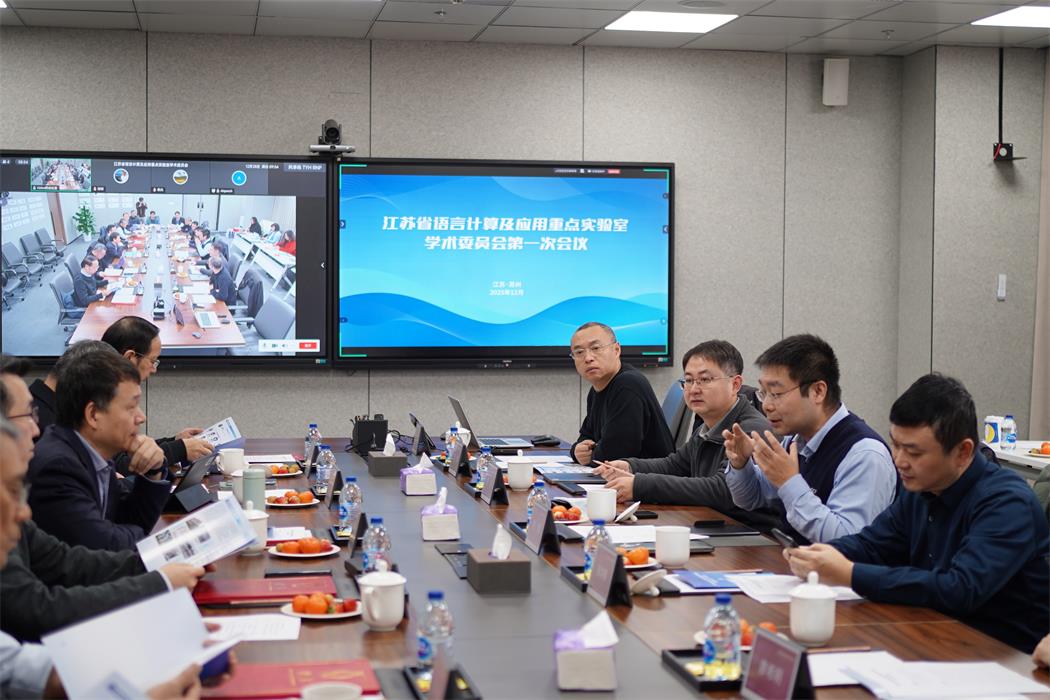
江苏省语言计算及应用重点实验室召开学术委员会第一次会议
Jiang Nan Shi Bao· 2025-12-31 07:28
Core Insights - The Jiangsu Provincial Language Computing and Application Key Laboratory has successfully held its first academic committee meeting, focusing on the transition from generative to executable AI technologies [1][3] - The laboratory aims to become a leading center for original innovation in language computing within three years, contributing to high-quality development in China's AI sector [3][12] Group 1: Laboratory Overview - The laboratory is the first AI key laboratory in Jiangsu led by a company, highlighting the province's emphasis on AI industry development and enterprise-driven technological innovation [7] - It is established in collaboration with Shanghai Jiao Tong University and Suzhou University, leveraging top-tier research resources to focus on core language computing technologies [7] - The laboratory emphasizes a "reliability-first" approach in cross-modal general intelligence, targeting key technologies such as trustworthy speech and multi-modal perception [7] Group 2: Academic Committee Insights - The academic committee, chaired by Zhang Bo, includes experts from various prestigious institutions, providing constructive feedback on the laboratory's mid-to-long-term development plans [5][9] - Experts recommend strengthening foundational research and core technology breakthroughs, particularly in multi-modal perception, agent communication, and reliability enhancement [3][9] Group 3: Industry Applications - The laboratory's AI technologies have been successfully implemented in smart travel, smart office, and smart IoT sectors, demonstrating effective integration of research and application [9][10] - In the smart travel sector, the laboratory's solutions have been adopted by major automotive brands, enhancing in-car language processing and user experience [9][10] - The smart IoT solutions have been deployed in key areas such as smart robotics and consumer electronics, collaborating with leading companies to drive industry transformation [10] Group 4: Future Directions - The laboratory plans to deepen collaboration with local universities and enterprises to accelerate the application of technological achievements in various key scenarios [3][12] - The focus will be on core technology breakthroughs and fostering high-end talent in general AI to enhance Jiangsu's competitiveness in the AI industry [7][12]

2026海外AI前瞻:模型和算力:传媒
Huafu Securities· 2025-12-31 07:24
Investment Rating - The industry rating is "Outperform the Market," indicating that the overall return of the industry is expected to exceed the market benchmark index by more than 5% over the next 6 months [14]. Core Insights - The competition among AI models, particularly between Gemini, OpenAI, and Claude, is expected to enhance user experience and drive advancements in model capabilities [3][7]. - The competition in computing power between Nvidia and Google TPU is intensifying, with Google leveraging its TPU architecture to improve total cost of ownership (TCO) [5][7]. - The semiconductor manufacturing landscape is evolving, with TSMC and Samsung competing in AI chip production, which may accelerate capacity expansion in the AI chip foundry sector [6][7]. Summary by Sections Model Section - Recent releases from Google, including Gemini 3 Pro and others, have heightened market interest and impacted competitors like OpenAI and Claude, leading to a competitive environment that fosters model capability improvements [3]. Computing Power Section - Google is advancing its TPU technology, particularly with the TorchTPU initiative aimed at optimizing the performance of the PyTorch framework on its TPU chips, which could enhance its competitive stance against Nvidia [5]. Capacity Section - AI chip startup Groq has entered a non-exclusive licensing agreement with Nvidia for inference technology, utilizing Samsung's manufacturing capabilities, which may intensify competition in the AI chip foundry market and prompt TSMC to accelerate its production efforts [6].
Meta并购Manus,中国Agent工程化能力走向全球
China Post Securities· 2025-12-31 07:23
Industry Investment Rating - The industry investment rating is "Outperform the Market" and is maintained [2][11] Core Insights - The report highlights the current closing index at 5159.54, with a 52-week high of 5841.52 and a low of 3963.29, indicating a volatile market environment [2] - The relative performance of the computer industry shows a significant decline of 14% compared to the CSI 300 index over the specified period [4] Summary by Relevant Sections Recent Developments - Meta has completed the acquisition of Manus, a general AI agent company, for several billion dollars, marking it as one of the largest acquisitions in Meta's history [5] - Manus has achieved an annual recurring revenue (ARR) of over 100 million USD within just 8 months of launching its AI agent product, showcasing rapid growth in the AI application sector [6] Market Trends - The report notes that both Zhizhu and MiniMax are preparing for IPOs, with expectations of a growth cycle driven by financing, model iteration, and enhanced agent capabilities in 2026 [7][8] - The domestic AI industry is anticipated to shift its focus from large model technology to the practical effectiveness of agents in achieving commercial success [8] Investment Recommendations - The report suggests focusing on various sectors, including Hong Kong internet companies like Alibaba and Tencent, as well as companies involved in agent technology and domestic computing power [9]
年终盘点|大模型洗牌、分化、冲上市,无人再谈AI六小龙
Di Yi Cai Jing Zi Xun· 2025-12-31 06:03
Core Insights - The AI industry is experiencing significant changes as companies like Manus are acquired by Meta, and startups like Zhiyu and MiniMax are preparing for IPOs in Hong Kong, indicating a shift in the competitive landscape [1][3] - The "Little Six Dragons" concept in the domestic market has faded, with a clear differentiation in the foundational model startup arena, as major internet companies ramp up their efforts [1][3] - The exploration of new technological paradigms is underway as the industry faces a slowdown in the Scaling Law, with a focus on monetization and industrialization of AI by 2026 [2][12] Industry Dynamics - The AI startup landscape is undergoing a "survival of the fittest" phase, with companies either pushing for IPOs, focusing on niche applications, or exiting the competition [3][4] - Major players are leveraging their computational power, data, and ecosystem advantages to capture market share, with Tencent and Alibaba making significant strides in the AI app market [7][8] - The competition among large firms is intensifying, with Tencent and Alibaba investing heavily in AI infrastructure and applications, while also focusing on user engagement and product iteration [7][8] Market Trends - The user engagement metrics for AI applications show a competitive landscape, with Doubao and DeepSeek leading in active user numbers, while Kimi is focusing on enhancing its web-based capabilities [4][6] - The funding strategies for companies like Zhiyu and MiniMax indicate a trend towards high R&D investments in foundational AI models, with significant portions of their IPO proceeds allocated for this purpose [6] - The industry is witnessing a shift towards multi-modal integration and deeper model capabilities, as companies aim to redefine user experiences and address the limitations of current AI tools [5][6] Future Outlook - The industry anticipates that 2026 will shift focus from what AI models can do to how they can generate revenue, emphasizing the need for sustainable business models [2][13] - Despite discussions of a potential technological ceiling, experts believe that the AI sector will continue to evolve, with new innovations emerging to address existing challenges [12][13] - The competitive landscape remains dynamic, with both startups and established firms vying for leadership in a rapidly changing environment, suggesting that the race for AI dominance is far from over [9][13]
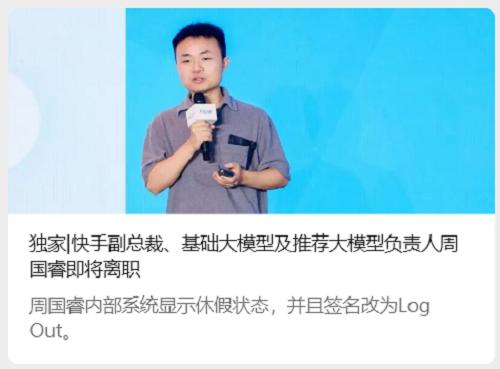
曝快手大模型掌舵人离职,2年间或9人进出,前华为推搜实验室主任已加盟
3 6 Ke· 2025-12-31 04:22
Core Viewpoint - The news highlights the potential departure of Kuaishou's Vice President, Zhou Guorui, who is responsible for foundational models and recommendation systems, with speculation about his future roles at Meta or TikTok [1][2][19]. Group 1: Zhou Guorui's Background and Contributions - Zhou Guorui joined Kuaishou in 2021 after working as a senior algorithm expert at Alibaba Mama, where he contributed to significant algorithm frameworks [2][4]. - At Kuaishou, he led the exploration of generative AI technologies in recommendation systems, resulting in the development of OneRec, an end-to-end large model recommendation system that has been implemented across various platforms [4][22]. - OneRec has reportedly brought significant business improvements to Kuaishou, marking a shift from multi-stage filtering to a comprehensive industrial-grade solution [4][22]. Group 2: Organizational Changes at Kuaishou - The news also mentions other management changes within Kuaishou's Community Science Line and Keling AI, indicating a broader trend of talent movement within the company [9][19]. - Notable departures include Zhang Di, who was responsible for generative AI models and returned to Alibaba after a brief stint at Bilibili, and other high-level executives who have left for various opportunities [19][22]. - The ongoing changes reflect a transitional phase in the AI talent landscape, emphasizing the importance of building a stable and efficient technical system to leverage advanced AI capabilities for long-term business advantages [22].

英伟达拟以最高30亿美元收购AI21 Labs,加速布局大模型与AI代理生态
Huan Qiu Wang Zi Xun· 2025-12-31 04:12
Core Insights - Nvidia is in advanced talks to acquire AI21 Labs, with a potential deal valued between $2 billion and $3 billion, which would be more than double AI21's valuation from its last funding round in 2023 [1][2] - AI21 Labs specializes in large language models (LLMs) and AI agent development tools, with key products including the open-source Jamba model series and the enterprise-focused Maestro platform [1] - The Maestro platform generates approximately $50 million in annual revenue and assists businesses in preprocessing structured and unstructured data for efficient AI analysis [1] Company Strategy - Nvidia aims to integrate Maestro into its NVIDIA AI Enterprise suite to enhance its end-to-end capabilities in AI agent development and deployment, thereby strengthening its leadership in the generative AI infrastructure market [2] - This potential acquisition follows Nvidia's recent $20 billion technology licensing deal with AI chip startup Groq, which focuses on high-performance inference processors that could complement Nvidia's existing GPU architecture [2] - The proposed acquisition indicates Nvidia's shift from being a "financial supporter" to a "strategic integrator," aiming to vertically integrate key AI software capabilities to solidify its ecosystem advantages in the era of large models [2]

最年轻AI团队MiniMax上市获热捧,基石投资者认购超27亿港元,拟1月9日挂牌
Xin Lang Cai Jing· 2025-12-31 03:14
Core Viewpoint - MiniMax is set to launch its IPO on January 9, 2026, potentially becoming the fastest AI company to go public globally, and the first AGI company with global capabilities listed on the Hong Kong Stock Exchange [1][12]. Group 1: Company Overview - MiniMax was founded four years ago and has developed a state-of-the-art (SOTA) capability system covering text, speech, video, and music with less than 1% of the funding used by OpenAI [1][12]. - The company has an average employee age of 29, with 73.8% of its workforce in research and development, indicating a youthful and innovative organizational structure [2][14]. Group 2: IPO Details - The IPO will involve the issuance of 25,389,220 shares, with a price range of HKD 151 to 165 per share, leading to a post-issue valuation between HKD 461.23 billion and 503.99 billion [1][13]. - MiniMax has secured 14 cornerstone investors, including major institutions like Alibaba, with a total subscription amounting to approximately HKD 27.23 billion [1][13]. Group 3: Technological Advancements - MiniMax has launched several significant AI models, including the Speech 01 and Speech 02 models, which have generated over 2.2 billion hours of speech, and video models that have produced over 5.9 billion videos [3][15]. - The company’s text model, MiniMax M2, ranked among the top five globally and first in open-source rankings, showcasing its competitive edge in the AI landscape [3][15]. Group 4: Financial Performance - MiniMax achieved revenue of USD 346,000 in its first year and saw a dramatic increase to USD 3.052 million in 2024, representing a year-on-year growth of 782.2% [6][17]. - By the first nine months of 2025, revenue reached USD 5.344 million, reflecting a year-on-year increase of 174.7%, indicating strong growth momentum [6][19]. Group 5: Capital Efficiency - The company has spent approximately USD 500 million since its inception, significantly lower than competitors like OpenAI, which has invested between USD 40 billion and 55 billion [7][18]. - MiniMax's efficient use of capital has allowed it to achieve high margins in its B2B business, with a gross margin of 69.4% [22]. Group 6: Market Position and Valuation - MiniMax's valuation is currently perceived as undervalued compared to its global peers, with analysts suggesting that its financial turnaround could lead to a significant revaluation in the market [20][21]. - The company aims to penetrate high-value language model markets and integrate its multi-modal capabilities, which could redefine product offerings and enhance its competitive position [11][23].
智谱香港IPO拟发行逾3700万股 发行价116.2港元
Sou Hu Cai Jing· 2025-12-31 02:54
Group 1 - The company, Zhihui Huazhang Technology Co., Ltd., plans to issue 37,419,500 H-shares at a price of HKD 116.2 per share, with trading expected to start on January 8 of the following year [1] - The China Securities Regulatory Commission has approved the listing of up to 43,032,400 overseas ordinary shares on the Hong Kong Stock Exchange, while also promoting the "full circulation" of unlisted domestic shares [1] - Zhihui disclosed its prospectus on December 19, aiming to become the "first global large model stock" [3] Group 2 - The company's revenue projections for 2022, 2023, and 2024 are RMB 57.4 million, RMB 124.5 million, and RMB 312.4 million, respectively, indicating a compound annual growth rate of approximately 130% [3] - In the first half of 2025, the company expects to generate revenue of RMB 190 million, achieving double growth for three consecutive years [3] - As of September 30, the company has empowered 12,000 enterprise clients, over 80 million terminal user devices, and more than 45 million developers, making it the largest independent general large model vendor in China [3] - Founded in 2019, the company originated from Tsinghua University's technology transfer and is recognized as a pioneer in large model research and a leader in domestic large model technology [3]
【国信电子胡剑团队|2026年年度策略】从星星之火到全面燎原的本土硬科技收获之年
剑道电子· 2025-12-31 02:45
Core Viewpoint - The article emphasizes that 2026 is expected to be a year of significant harvest for domestic hard technology in the electronics industry, driven by advancements in AI and a consensus on performance trends within the AI industry chain [3][7]. Group 1: AI Industry Trends - The AI industry is transitioning from divergence to consensus in performance trends, with a notable recovery since the second half of 2023, marked by the return of Huawei's Mate series [3][7]. - The electronics sector has experienced a significant valuation expansion, aided by the rapid growth of passive funds and the resonance of macro policy, inventory cycles, and AI innovation cycles [3][7]. - As of December 16, 2025, the electronics sector has risen by 40.22%, ranking third among all industries [7][16]. Group 2: AI Model Evolution - The evolution of AI models is characterized by innovations in architecture, such as the mixture of experts (MoE) framework, which enhances efficiency by reducing computational load [27]. - The emergence of large models, like OpenAI's GPT-4, showcases the correlation between model size and performance, leading to significant advancements in understanding and reasoning capabilities [27]. - The demand for improved model efficiency has led to innovations in attention mechanisms, which lower computational complexity and memory requirements [27][28]. Group 3: Computing Power and Storage - The domestic chip industry is actively updating and iterating, with companies like Huawei planning to launch new chips in 2026, while the storage sector is expected to face shortages and price increases throughout the year [9]. - The demand for AI-driven storage solutions is projected to increase, with DRAM bit demand expected to rise by 26% year-on-year in 2026, driven by AI applications [9]. Group 4: Power and Connectivity - The optimization of data transfer and communication within servers is becoming a critical breakthrough for enhancing computing power, with the global high-speed interconnect chip market expected to reach $21.2 billion by 2030 [11]. - The increasing power consumption of data center chips necessitates advancements in power supply architectures, with a shift towards high-density power solutions [11]. Group 5: Semiconductor Industry - The semiconductor sector is anticipated to benefit from a recovery in demand, with a focus on domestic manufacturing and the rise of analog chips, which are expected to see increased adoption due to their potential for localization [12]. - The global semiconductor market is projected to achieve double-digit growth for three consecutive years from 2024 to 2026, driven by advancements in AI and domestic chip design [12][14].






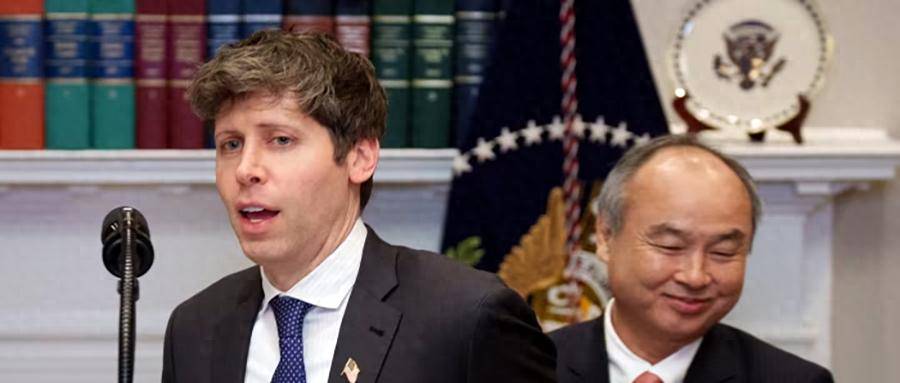
2800亿!OpenAI拿下史上最大额融资
Sou Hu Cai Jing· 2025-12-31 02:36
Core Viewpoint - SoftBank has completed an additional investment of $22.5 billion (approximately 157.4 billion RMB) in OpenAI, raising its stake to about 11% and bringing its total investment in OpenAI to $34.7 billion (approximately 242.8 billion RMB) [2] Group 1: Investment Details - The investment from SoftBank began in February this year, with plans to invest a total of $40 billion (approximately 279.9 billion RMB) over the next 12 to 24 months at a valuation of $260 billion (approximately 1.8 trillion RMB) [2][3] - The completion of the investment was contingent upon OpenAI restructuring and transitioning to a profit-making organization by the end of the year; otherwise, the investment could be reduced to $10 billion (approximately 69.9 billion RMB) [3] - SoftBank's latest investment was partially funded through loans secured against its Arm shares, utilizing its entire unused credit line of $11.5 billion (approximately 80.5 billion RMB) [4] Group 2: Strategic Moves - SoftBank has intensified its focus on the AI sector, recently acquiring DigitalBridge for $4 billion (approximately 27.9 billion RMB) to enhance next-generation AI infrastructure [5] - The company sold all its shares in Nvidia, valued at $5.8 billion (approximately 40.6 billion RMB), to support its investment in OpenAI [5] - SoftBank, in collaboration with OpenAI and Oracle, plans to invest up to $500 billion (approximately 3.64 trillion RMB) over four years in AI-related infrastructure, aiming to create 100,000 jobs [6] Group 3: Future Outlook - SoftBank's CEO Masayoshi Son has expressed confidence that OpenAI will eventually go public and become the world's most valuable company [7] - The aggressive investment strategy aims to concentrate resources in the core segments of the AI value chain, potentially paving the way for future commercialization [7] - The success of this strategy will depend on the timely rollout of the Stargate project's computing power and OpenAI's model iterations and commercialization progress [12]