
脑机接口

Search documents
商务部发布关于中欧电动汽车案磋商进展的通报……盘前重要消息还有这些
证券时报· 2026-01-13 00:08
Group 1 - The Ministry of Commerce reported progress in consultations regarding the EU-China electric vehicle case, emphasizing the need for common guidance on price commitments for Chinese exporters of pure electric vehicles to the EU, which reflects the spirit of dialogue and negotiation between China and the EU [2] - The Chinese government is strengthening export controls on dual-use items to Japan to safeguard national security and fulfill international obligations, while maintaining a stable global supply chain for critical minerals [3] - The National Development and Reform Commission, along with other ministries, released guidelines for government investment funds, focusing on strategic areas and encouraging investment in emerging industries and technological innovation [4] Group 2 - Shanghai Gold Exchange noted significant fluctuations in precious metal prices due to multiple factors, urging members to monitor market changes and maintain risk management plans [4] - Companies like ZhiTe New Materials and Xiangwei New Materials are taking measures to address stock trading volatility, including suspending trading for verification [7][8] - Companies such as ZhiTe New Materials and Galaxy Electronics are facing scrutiny due to significant stock price movements, with potential risks of irrational speculation [13][18] Group 3 - Companies like Chaohongji and Yatai Co. are projecting substantial net profit growth for 2025, with estimates of 125%-175% and 120%-170% year-on-year increases, respectively [22][23] - WuXi AppTec anticipates a net profit growth of approximately 102.65% for 2025, indicating strong performance expectations [24]

商业航天、脑机接口元年,也是头部白酒暴雷元年
阿尔法工场研究院· 2026-01-13 00:05
Core Viewpoint - The article discusses the significant shift in investment logic within the liquor industry, particularly highlighted by the poor performance of Kuozi Jiao, marking a transition from traditional investment in established brands to a focus on emerging sectors like commercial aerospace and brain-computer interfaces [2][33]. Group 1: Kuozi Jiao's Performance - Kuozi Jiao's 2025 annual profit forecast indicates a net profit of 662 million to 828 million CNY, representing a year-on-year decrease of 50% to 60% [6][7]. - The company's revenue for the first three quarters of 2025 was 3.174 billion CNY, down 27.24% year-on-year, with a net profit of 742 million CNY, a decline of 43.39% [9][18]. - The third quarter saw a dramatic revenue drop of 46.23% and a net profit decline of 92.55%, with only 26.97 million CNY recorded [9][10]. Group 2: Industry Context and Challenges - The liquor industry is experiencing a deep adjustment period, with Kuozi Jiao's warning serving as a clear signal of broader challenges facing the sector [14][20]. - The market is witnessing a significant divide between "future" and "present," with investors favoring high-potential narratives over established companies facing declining performance [6][27]. - The competitive landscape in Anhui province has intensified, leading to market share erosion for Kuozi Jiao as it failed to transition effectively from low-end to mid-range products [11][12]. Group 3: Market Sentiment and Valuation - Despite Kuozi Jiao's declining performance, its market valuation remains high, with a dynamic price-to-earnings ratio reaching 24.2 times based on a profit median of 725 million CNY [22]. - The article highlights a growing impatience among investors for traditional industries, as they prefer to chase emerging sectors with perceived growth potential [29][32]. - The anticipated challenges for the liquor industry in 2026 suggest a potential for further declines in both volume and price, indicating a tough road ahead for companies like Kuozi Jiao [30][33].


单日狂卖120亿!德邦稳盈增长引爆2026!行情是不是要见顶了?
Xin Lang Cai Jing· 2026-01-12 23:58
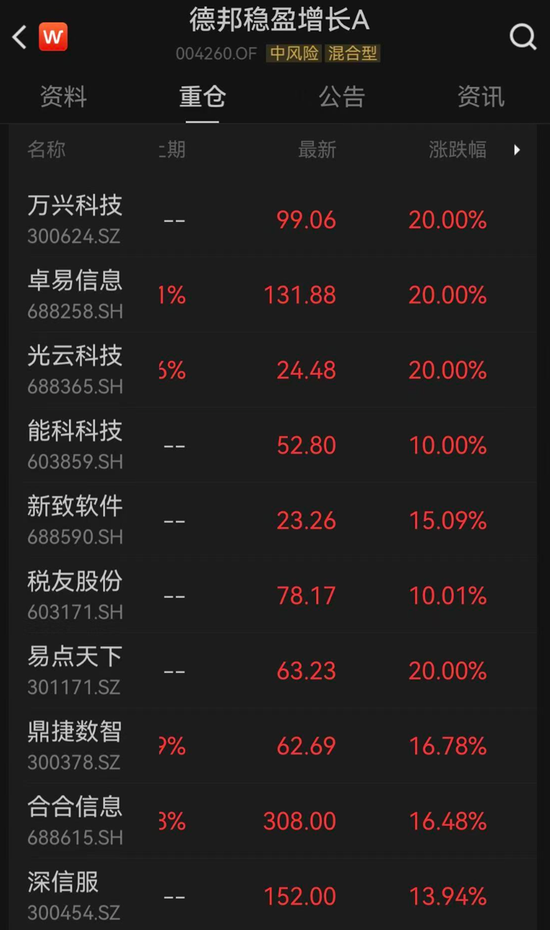
Core Viewpoint - The fund market has seen a significant surge at the beginning of 2026, with the Debon Stable Growth fund achieving a single-day sales volume of 12 billion yuan, igniting retail investor enthusiasm as nearly all of its top ten holdings hit the daily limit up [1][10]. Group 1: Fund Performance and Market Sentiment - The A-share market has experienced a series of hot topics since the New Year, including commercial aerospace, brain-computer interfaces, and AI applications, leading to a strong profit-making effect [2][11]. - The popularity of the Yongying Intelligent Selection series of funds in 2025 has led to a surge in similar funds in 2026, with many funds seeing daily gains exceeding 10%, indicating a more intense retail investor enthusiasm compared to the 2020 market [2][11]. Group 2: Historical Context and Indicators - There is a well-known "contrarian indicator" in the fund industry suggesting that the emergence of blockbuster funds often precedes a market peak within six months, as seen in previous years [4][11]. - Historical examples include the surge of blockbuster funds in July 2020, followed by a market peak in February 2021, and a similar pattern in 2015 [4][11]. Group 3: Changing Dynamics in Fund Sales - Unlike previous surges where bank channels dominated fund sales, the current wave is primarily driven by online channels, indicating a shift in investor behavior [5][12]. - The enthusiasm from bank channels has not yet reached a "national frenzy," suggesting that the market may not be at its peak yet [5][12]. Group 4: Cautionary Signals - The single-day sales volume of 12 billion yuan is viewed as a warning signal, as extreme investor sentiment often indicates approaching risks, regardless of the sales channel [7][14]. - The market's changing dynamics, including the shift to online sales and evolving participant structures, highlight the cyclical nature of market behavior and investor psychology [15].
特朗普称将对伊朗商业伙伴加征25%关税
21世纪经济报道· 2026-01-12 23:58
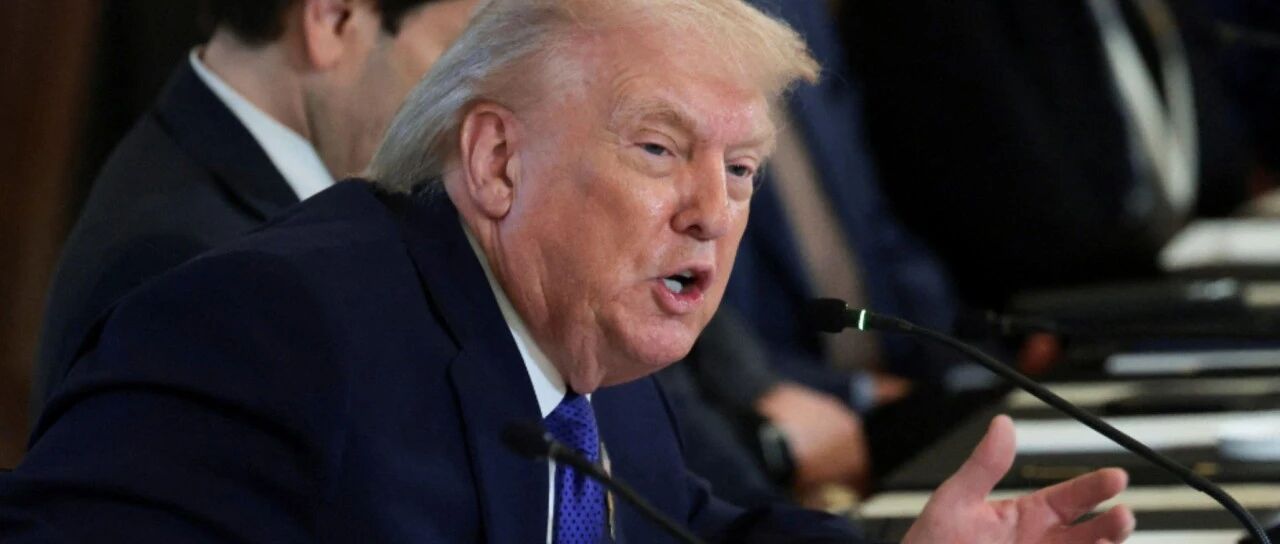
由于美国对伊朗长期实施严厉制裁,双方没有商业往来和正式外交关系,美国无法通过关税手 段直接对伊朗进行有效施压。 白宫新闻秘书莱维特当天早些时候说,面对当前伊朗局势,特朗普认为外交是"首选"方案,但 如果他认为有必要,"会毫不犹豫地动用美国军队"。此前,多家美国媒体报道,特朗普近日已 听取关于军事打击伊朗方案的汇报。 来源丨新华社 编辑丨张嘉钰 美股V型反弹,谷歌市值破4万亿,中国资产大涨,金山云飙升21%,阿里涨超10%,黄金 白银创新高 存储芯片或将涨价50%,手机厂商紧急减产千元机 百亿市值脑机接口龙头被警示 SFC 21君荐读 据新华社报道,美国总统特朗普12日下午在社交媒体发文称,任何与伊朗有商业往来的国家在 与美国进行任何商业往来时将被加征25%的关税。 特朗普称,这是"最终"决定并"立即生效"。 特朗普没有在社交媒体上就此作具体说明。截至记者发稿时,白宫尚未就此发布正式文件。 ...
技术再获突破!脑机接口迈入“太空时代”,还有巨头提交港股IPO
Xuan Gu Bao· 2026-01-12 23:35
Group 1 - The Tianjin University team has developed the fifth-generation space station brain-machine interface system, achieving the first human "space brain-machine interface experiment" and successfully applying it in multiple manned flight missions for precise detection of astronauts' functions and emotional states [1] - Strong Brain Technology, a non-invasive brain-machine interface company based in Hangzhou, has secretly submitted an IPO application to the Hong Kong Stock Exchange, aiming to raise several hundred million dollars, with UBS and CICC as sponsors [1] - The brain-machine interface technology has been applied in various fields including medical rehabilitation, aerospace, and industrial safety, with the medical sector being the primary breakthrough area [1] Group 2 - Huafu Securities noted that the wireless implanted brain-machine interface microsystems developed by Northwestern Polytechnical University have overcome technical challenges in complex space environments, potentially paving the way for long-term missions on the Moon and Mars [2] - According to招商证券, the brain-machine interface is at a critical stage of technological breakthroughs transitioning to application, with China and the US leading global development, and domestic companies achieving large-scale production in the non-invasive sector [2] - Companies like Xingwang Ruijie are collaborating with leading universities on brain-machine healing projects, while Material Zhongda's subsidiary is working with Strong Brain Technology to develop cognitive training rehabilitation systems [3]
上证早知道丨多家商业航天和AI应用热门公司提示风险!重要预告:今日上午10时!
Shang Hai Zheng Quan Bao· 2026-01-12 23:06
Group 1 - The State Council will hold a press conference on January 13 to discuss the "Solid Waste Comprehensive Management Action Plan" [1] - The Long March 8 carrier rocket is scheduled for launch on January 13, having been transported to the launch site on January 8 [1] - Several commercial aerospace companies have issued risk warnings regarding their business operations and stock performance [1] Group 2 - Multiple AI application companies have also issued risk warnings, indicating that AI-related revenue constitutes a small portion of their overall income [2] - The Ministry of Industry and Information Technology emphasized focusing on quantum technology, humanoid robots, brain-computer interfaces, deep-sea polar exploration, and 6G during the 14th Five-Year Plan [4] - The National Development and Reform Commission has introduced policies to guide government investment funds towards strategic sectors and innovation [4] Group 3 - The A-share market saw a total trading volume of 36,445 billion yuan on January 12, with significant gains in commercial aerospace and AI application sectors [6] - Fund managers are increasingly optimistic about emerging growth industries, particularly in artificial intelligence and robotics, with high equity investment ratios reported [6] - The domestic chip manufacturing sector has made significant breakthroughs, with major storage companies expected to go public soon [7] Group 4 - The upcoming nuclear fusion conference on January 16 aims to discuss opportunities in the nuclear fusion industry, with significant interest from various stakeholders [9] - Zhejiang province plans to advance the construction of the fourth-generation Beidou system, enhancing satellite communication and positioning services [10] - WuXi AppTec forecasts a net profit of 19.151 billion yuan for 2025, marking a year-on-year increase of approximately 103% [12] Group 5 - Jinlongyu's subsidiary plans to invest approximately 1.2 billion yuan in a solid-state battery production line project in Shenzhen [13] - Cangge Mining expects a net profit of 3.7 to 3.95 billion yuan for 2025, driven by increased sales and improved pricing in its potassium chloride and lithium carbonate businesses [13] - Institutional investors have shown significant interest in Huayin Technology, with a net purchase of 340 million yuan on January 12 [15]
【医药生物】脑机接口板块表现活跃,建议持续关注主题机会——医药行业跨市场周报(20260111)(黎一江/吴佳青/黄素青/曹聪聪/叶思奥)
光大证券研究· 2026-01-12 23:03
Market Overview - The A-share pharmaceutical and biotechnology index rose by 7.81%, outperforming the CSI 300 index by 5.03 percentage points and the ChiNext index by 2.10 percentage points, ranking 6th among 31 sub-industries [4] - The Hong Kong Hang Seng Healthcare Index increased by 10.26%, surpassing the Hang Seng China Enterprises Index by 11.57 percentage points [4] R&D Progress - Yiming Anke's IMM2510 and Tida Pexip's clinical application have made new progress in undertaking [5] - Drug Jie's Tiengoteini is currently in Phase III clinical trials; Shiyao Group's SYS6017 is in Phase II clinical trials; and Shiyao Group's SYH2085 is in Phase I clinical trials [5] Sector Insights - The brain-computer interface sector has shown active performance, entering an industrialization critical point, with major countries like China and the U.S. launching support plans [6] - China's 14th Five-Year Plan identifies brain-computer interfaces as one of the six future industries, with goals set for technological breakthroughs by 2027 and the formation of an industrial ecosystem by 2030 [6] - The global brain market is projected to reach $7.63 billion by 2029, indicating a rapidly opening blue ocean market [6] - Three categories of investment targets are recommended: 1) Medical scene integrators benefiting from insurance payment integration and existing rehabilitation needs 2) Leaders in invasive/semi-invasive technologies with significant technical advantages and long-term potential 3) Comprehensive support providers focusing on high-certainty areas like supply chain production and clinical development [6] Investment Strategy - Future investments in the pharmaceutical sector should increasingly focus on the clinical value of medicines, addressing clinical needs of patients and doctors [7] - Both domestic medical insurance policies and global expansion strategies are placing higher premiums on clinical value [7] - The strategy emphasizes the innovative drug industry chain and innovative medical devices [7]
北京航天长峰股份有限公司近期股票交易风险提示公告
Zhong Guo Zheng Quan Bao - Zhong Zheng Wang· 2026-01-12 22:58
Group 1 - The company's stock price increased by 65.95% over a consecutive 12 trading days from December 24, 2025, to January 12, 2026, indicating a significant short-term price surge and potential for subsequent decline [1][2] - The company reported a revenue of 646 million yuan for the first three quarters of 2025, a decrease of 1.73% compared to the same period last year, with a net profit attributable to shareholders of -77 million yuan, an improvement of 22 million yuan from the previous year, resulting in a basic earnings per share of -0.1650 yuan [1][2] - The company's main business segments include military electronics, public safety, and high-end medical equipment, with no current involvement in brain-computer interface or commercial aerospace activities [1][2] Group 2 - The company confirmed that there are no undisclosed significant matters that should be disclosed according to the Shanghai Stock Exchange listing rules, ensuring transparency in its operations [3] - Investors are advised to refer to the company's announcements published on the Shanghai Stock Exchange website and designated media for accurate information [3]

影响市场重大事件:浙江支持民营企业依托自有卫星星座参与卫星物联网业务;上海积极引导企业投资布局商业航天等新兴领域
Mei Ri Jing Ji Xin Wen· 2026-01-12 22:41
Group 1 - Zhejiang Province supports private enterprises to participate in satellite IoT business using their own satellite constellations as part of the "14th Five-Year" digital economy and infrastructure planning [1] - Shanghai encourages investment in emerging fields such as commercial aerospace, embodied intelligence, and smart terminals through its three-year action plan for advanced manufacturing [2] - Multiple satellite-related ETFs experienced significant gains, with several reaching the daily limit up on January 12, indicating strong market interest in the commercial aerospace sector [3] Group 2 - The Brain-Machine Interface Laboratory successfully conducted the first human "space brain-machine interface experiment" in a space station, contributing to advancements in aerospace technology [4] - The Ministry of Industry and Information Technology emphasizes the implementation of the "Artificial Intelligence + Manufacturing" initiative to enhance the integration of AI in various industries [5] - New margin trading accounts reached a record high in 2025, indicating increased investor participation in the market [6] Group 3 - Zhejiang Province is seeking public input on its "14th Five-Year" new industrialization plan, which includes the establishment of a multi-dimensional and controllable computing power facility [7] - The province plans to optimize the layout of the Beidou station network and enhance the integration of satellite communication and ground mobile communication systems [8] - The Ministry of Industry and Information Technology will focus on quantum technology, humanoid robots, and brain-machine interfaces during the "14th Five-Year" period [9] Group 4 - Energy Singularity successfully developed a high-temperature superconducting magnet with a pure conduction cooling structure, achieving a magnetic field of 20.8 Tesla [10]
哈梅内伊:伊朗人民粉碎境外敌人实施的阴谋!白宫发声;中国金龙指数大涨4.26%;贵州茅台,下调;金帝巧克力道歉丨每经早参
Mei Ri Jing Ji Xin Wen· 2026-01-12 22:01
Market Overview - US stock indices closed higher, with the Dow Jones up 0.17%, S&P 500 up 0.16% reaching a new closing high, and Nasdaq up 0.26% [3] - Major Chinese stocks saw significant gains, with the Nasdaq China Golden Dragon Index rising 4.26%, Alibaba up over 10%, and other notable increases from Bilibili, Xpeng Motors, and Baidu [3] - International oil prices increased, with WTI crude oil futures for February rising by $0.38 to $59.50 per barrel, and Brent crude for March up $0.53 to $63.87 per barrel [4] Economic Policies and Developments - Canadian Prime Minister Carney is set to visit China from January 14 to 17, following an invitation from Chinese Premier Li Qiang [5] - China's Vice Premier He Lifeng met with former US Treasury Secretary Geithner, emphasizing China's commitment to expanding high-level foreign investment and promoting economic development [6] - The Chinese Ministry of Commerce reported progress in negotiations regarding electric vehicle trade with the EU, aiming to provide guidance for Chinese exporters [7] Industry News - BYD has launched a new brand "Linghui" aimed at the B2B market, featuring four new electric vehicle models, indicating a strategic shift towards high-end offerings [14] - The domestic average price of passenger cars is projected to drop to 170,000 yuan in 2025, marking a decline of 14,000 yuan from the previous year, ending a six-year growth trend [9] - The Chinese tea beverage brand, Guming, acquired a commercial land parcel in Hangzhou for 455 million yuan, reflecting a shift in industry competition towards asset acquisition [22] Technology and Innovation - The "Lihong No. 1" spacecraft successfully completed its first suborbital flight test, marking a significant milestone in China's commercial space sector [13] - The brain-machine interface laboratory at Tianjin University has developed a system for the fifth generation space station, achieving a milestone in space-based brain-machine interaction [23] Corporate Actions - Guizhou Moutai announced significant price reductions for its premium products, with the price of its aged liquor dropping from 5,399 yuan to 3,409 yuan per bottle, indicating a strategic pricing adjustment [18] - The AI robotics company, Zivariable, secured 1 billion yuan in financing, led by ByteDance, highlighting the growing investment interest in the AI sector [16]

