人民币国际化

Search documents
未来五年怎么干?央行、金融监管总局、外汇局发声
Di Yi Cai Jing· 2025-10-25 07:43
Core Viewpoint - The People's Bank of China (PBOC) is enhancing its monetary policy framework and execution to support economic stability and high-quality development, as outlined in the recent meetings following the Fourth Plenary Session of the 20th Central Committee of the Communist Party of China [1][2]. Group 1: Monetary Policy Framework - The PBOC has identified five key areas of focus: constructing a scientific and robust monetary policy system, improving macro-prudential management, deepening financial supply-side structural reforms, and advancing high-level financial openness [2]. - The PBOC emphasizes the need to balance short-term and long-term goals, support for the real economy, and the health of the financial sector while dynamically improving the monetary policy framework [2]. - The PBOC aims to maintain the stability of the RMB exchange rate at a reasonable and balanced level, while enhancing the effectiveness of monetary policy to support economic growth [2]. Group 2: Financial Regulation - The National Financial Regulatory Administration is committed to enhancing the foresight and effectiveness of financial regulation, focusing on preventing systemic financial risks and improving risk management mechanisms [4]. - The administration emphasizes the importance of strong regulatory responsibilities and the continuous reinforcement of the "five major regulations" to ensure financial stability [4]. Group 3: Foreign Exchange Management - The State Administration of Foreign Exchange (SAFE) has outlined key tasks including promoting the internationalization of the RMB, expanding high-level institutional openness in the foreign exchange sector, and maintaining the stability of the foreign exchange market [5][6]. - SAFE aims to enhance the management of cross-border capital flows and strengthen the monitoring and early warning systems for foreign exchange [6]. - The administration also focuses on supporting trade innovation and expanding bilateral investment cooperation while ensuring the safety and value retention of foreign exchange reserves [6].
非洲国家集体去美元化!埃塞俄比亚或将54亿美元中国债务转人民币
Sou Hu Cai Jing· 2025-10-25 04:34
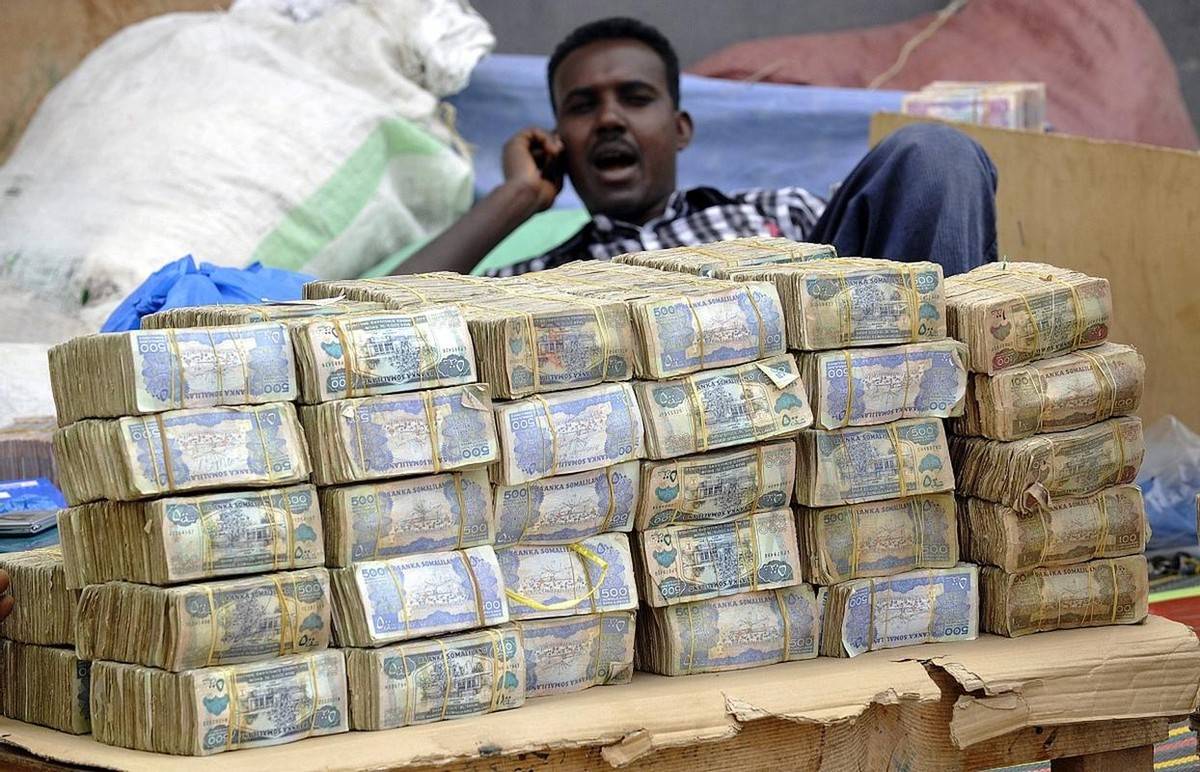
Core Insights - African countries are increasingly seeking to reduce their reliance on the US dollar by using the Chinese yuan for trade and debt settlements, driven by tight foreign exchange reserves and rising dollar volatility [1][8] - The trend appears to be a collective action among African nations, significantly influenced by the BRICS countries, aiming to lessen dependence on the dollar [1][8] Group 1: Debt Conversion and Financial Benefits - Ethiopia is negotiating to convert approximately $5.38 billion of its debt to China into yuan loans, reflecting a broader trend among African nations [1][7] - Kenya has successfully converted its $5 billion railway loan from dollars to yuan, saving $215 million in interest alone, highlighting the financial advantages of such conversions [3][4] - Nigeria signed a 15 billion yuan swap agreement (approximately $2 billion) to support trade settlements, which has helped stabilize its foreign exchange market [4] Group 2: Economic Pressures and Responses - Many African countries have seen their foreign exchange reserves drop by over 20% from 2020 to 2023, exacerbated by the COVID-19 pandemic and rising global interest rates [1][8] - The external debt of African nations has surpassed 60% of their GDP, increasing the financial burden when dollar exchange rates fluctuate [1] Group 3: Regional Initiatives and Collaborations - South Africa has established a yuan clearing center in collaboration with the People's Bank of China, allowing direct currency exchanges for mineral exports [6] - Zimbabwe plans to convert its mining loans to yuan, addressing severe inflation and dollar shortages [6] - Egypt signed a 5 billion yuan swap agreement for trade settlements, aiming to reduce dollar dependency amid declining foreign reserves [6][7] Group 4: Future Outlook - The de-dollarization process in Africa is expected to accelerate, with the proportion of local currency settlements potentially reaching 30% by 2026 [8] - Successful debt conversions, like Ethiopia's, may serve as templates for other nations, aiding in alleviating foreign exchange pressures and promoting economic recovery [8]

金融监管总局、外汇局,最新发声!
Zheng Quan Shi Bao· 2025-10-25 03:28
Group 1 - The core viewpoint emphasizes the importance of risk prevention as the primary responsibility of financial regulation, aiming to maintain systemic financial stability [2][3] - The meeting highlighted the need to align with the goals set at the beginning of the year, ensuring the completion of tasks for the current year and the "14th Five-Year Plan" [2][4] - The meeting underscored the significance of the 20th Central Committee's Fourth Plenary Session in advancing China's modernization and its impact on the development of the Party and the nation [2][3] Group 2 - The financial regulatory system is tasked with enhancing the mechanisms for preventing and resolving key risks, ensuring a robust regulatory framework [3][4] - The meeting called for a strong regulatory approach, focusing on the "Five Major Regulations" to improve the foresight, precision, effectiveness, and coordination of financial supervision [3][4] - The emphasis was placed on the need for comprehensive governance and anti-corruption measures to create a healthy financial political ecosystem [3][4] Group 3 - The State Administration of Foreign Exchange (SAFE) is set to implement supportive policies to bolster the economic recovery and maintain stability in the foreign exchange market [5][6] - SAFE aims to expand high-level institutional openness in the foreign exchange sector while promoting the internationalization of the Renminbi and high-quality capital account openness [6][7] - The focus is on enhancing the foreign exchange management system to be more convenient, open, secure, and intelligent, contributing to the construction of a financial powerhouse [6][7] Group 4 - SAFE is committed to supporting high-quality economic development by improving foreign exchange policies that facilitate trade and investment [7][8] - The agency plans to strengthen macro-prudential and micro-regulatory management of the foreign exchange market to ensure stability and prevent external shocks [8] - There is a commitment to launching multiple foreign exchange supportive policies to reinforce the positive economic momentum and prepare for the "15th Five-Year Plan" [8]
金融监管总局、外汇局,最新发声!
证券时报· 2025-10-25 03:16
Core Viewpoint - The meetings held by financial regulatory authorities emphasize the importance of implementing the spirit of the 20th Central Committee's Fourth Plenary Session, focusing on risk prevention and enhancing regulatory measures to ensure financial stability and support high-quality economic development [3][4][5]. Group 1: Financial Regulatory Measures - The National Financial Supervision Administration stresses the need to fulfill the primary responsibility of risk prevention and to maintain a bottom line against systemic financial risks [3][4]. - The meeting highlighted the importance of strengthening the "five major regulations" to enhance the foresight, precision, effectiveness, and coordination of financial supervision [4][5]. - There is a commitment to improve the system for preventing and resolving risks in key areas, ensuring that the financial sector contributes more to the modernization goals of socialism [4][5]. Group 2: External Economic Policies - The State Administration of Foreign Exchange (SAFE) aims to support the consolidation of economic recovery by introducing supportive policies and expanding high-level institutional openness in the foreign exchange sector [6][7]. - SAFE emphasizes the importance of maintaining a stable foreign exchange market and ensuring the security of national economic and financial systems through comprehensive regulatory measures [8][9]. - The agency plans to enhance the foreign exchange policy framework to better support the real economy and facilitate cross-border trade and investment [8][9]. Group 3: Future Work Plans - The financial regulatory bodies are tasked with ensuring the completion of annual work objectives and planning for the upcoming "15th Five-Year Plan" period to promote stable financial operations [5][9]. - There is a focus on aligning financial services with the real economy and enhancing the efficiency of resource allocation in the foreign exchange market [8][9]. - The meetings call for a unified approach to learning and implementing the spirit of the 20th Central Committee's Fourth Plenary Session across the financial system [5].

人民银行党委:维护股市债市汇市等金融市场平稳运行
Zhong Guo Zheng Quan Bao· 2025-10-25 01:26
Core Viewpoint - The People's Bank of China (PBOC) emphasizes the importance of implementing a scientific and stable monetary policy system to maintain the stability of financial markets, including the stock, bond, and foreign exchange markets, in light of the recent directives from the 20th Central Committee of the Communist Party of China [1][2]. Group 1: Monetary Policy Framework - The PBOC aims to balance short-term and long-term goals, support economic growth while ensuring the health of the financial sector, and manage internal and external relationships effectively [2]. - The central bank will dynamically improve the monetary policy framework and enhance the execution and transmission of monetary policies to create a favorable monetary environment for stable economic growth and high-quality development [2]. Group 2: Financial Risk Management - A comprehensive macro-prudential management system and mechanisms for systemic financial risk prevention and resolution will be established, focusing on monitoring, assessing, and warning against systemic financial risks [2]. - The PBOC will work with relevant departments to support local small financial institutions, local government financing platforms, and address risks in the real estate market while maintaining strict financial discipline and regulatory rules [2]. Group 3: Financial Supply-Side Structural Reform - The PBOC will deepen financial supply-side structural reforms, focusing on technology finance, green finance, inclusive finance, pension finance, and digital finance to enhance financial services for the real economy [3]. - Efforts will be made to improve the financial support for technological innovation and ensure a more reasonable scale, structure, and regional layout of financial institutions [3]. Group 4: Financial Openness and Security - The PBOC will promote high-level financial openness while safeguarding national financial security, advancing the internationalization of the Renminbi, and expanding its use in trade [3]. - Initiatives will include the development of a cross-border payment system for the Renminbi that is self-controlled, multi-channel, and widely accessible [3].
支持国际金融机构实现更大发展 龚正会见渣打集团行政总裁温拓思
Jie Fang Ri Bao· 2025-10-25 00:25
Core Insights - Shanghai's Mayor Gong Zheng emphasized the city's commitment to becoming a world-class socialist modern international metropolis, focusing on the "Five Centers" strategy for economic and social development over the next five years [1] - The city's GDP grew by 5.5% year-on-year in the first three quarters, indicating a stable economic foundation and a trend towards high-quality development, with foreign enterprises increasing their investments in Shanghai [1] - Standard Chartered Group's CEO, Bill Winters, expressed confidence in Shanghai's development and highlighted the bank's commitment to supporting green finance, emerging economies, and the internationalization of the Renminbi [2] Group 1 - Shanghai aims to enhance its global influence through high-level financial openness and the establishment of a premier international financial center, requiring active participation from international financial institutions [1] - The city is committed to creating a first-class business environment to support the growth of international financial institutions [1] - Standard Chartered has established its China headquarters in Shanghai and is one of the first foreign legal banks in the city, indicating a strong commitment to the local market [2] Group 2 - The significant transformation of Shanghai over the past 30 years, particularly in the last five years, has been noted by Standard Chartered, aligning with the bank's business focus [2] - Standard Chartered sees vast opportunities in China and Shanghai, reflecting a positive outlook on the city's economic prospects [2] - The bank aims to leverage its strengths to provide innovative financial services that promote economic prosperity [2]
陆家嘴财经早餐2025年10月25日星期六
Wind万得· 2025-10-24 22:43
Group 1 - President Xi Jinping will attend the APEC informal leaders' meeting in South Korea from October 30 to November 1, with potential discussions on a meeting between the Chinese and U.S. leaders [1] - The Central Committee emphasizes addressing "three rural issues" as a priority, projecting an estimated market space of around 10 trillion yuan over the next five years [1] - The focus on new urbanization is expected to require over 5 trillion yuan in investment for underground infrastructure during the 14th Five-Year Plan [1] Group 2 - The U.S. September CPI rose 3% year-on-year, the highest since January, but below market expectations of 3.1% [2] - The market has fully priced in two 25 basis point rate cuts by the Federal Reserve for the remainder of the year [2] Group 3 - Premier Li Qiang will attend multiple ASEAN meetings in Malaysia from October 27 to 28 [3] - The central bank aims to enhance the effectiveness of monetary policy and maintain stability in financial markets [3] - The State Administration of Foreign Exchange emphasizes the need for high-level opening in the foreign exchange sector and promoting the internationalization of the renminbi [3] Group 4 - The central bank will conduct a 900 billion yuan MLF operation on October 27, marking a net injection of 200 billion yuan for the month [4] - Various provinces have reported GDP data for the first three quarters, with Guangdong's GDP reaching 10.52 trillion yuan, a 4.1% increase [4] Group 5 - The China Securities Regulatory Commission emphasizes risk prevention and high-quality development in capital markets [5] - A-shares saw significant gains, with the Shanghai Composite Index rising 0.71% to 3950.31 points [5] - Hong Kong's Hang Seng Index closed up 0.74%, with notable strength in the semiconductor sector [5] Group 6 - 712 listed companies have disclosed share repurchase or increase loan plans, totaling a maximum loan amount of 152.48 billion yuan [6] - Domestic GPU leader Muxi Co. successfully passed IPO approval on the Sci-Tech Innovation Board, aiming to raise 3.904 billion yuan for R&D [6] Group 7 - The China Logistics and Purchasing Federation initiated an "anti-involution" campaign to combat low-quality competition in the warehousing industry [8] - The China Nonferrous Metals Industry Association stressed the importance of maintaining industry confidence and preventing "involution" [9] Group 8 - The People's Bank of China reported a decline in real estate loans, with a balance of 52.83 trillion yuan, down 0.1% year-on-year [10] - Hangzhou is implementing "home purchase + consumption voucher" subsidy activities to stimulate the housing market [10] Group 9 - JD.com, Meituan, and other companies are under investigation by market regulators for food safety and operational compliance issues [11] - The narrow passenger car retail market is expected to reach around 2.2 million units in October, with a projected 60% penetration rate for new energy vehicles [11] Group 10 - Morgan Stanley plans to allow institutional clients to use actual holdings of Bitcoin and Ethereum as loan collateral [12] - Xiaomi Auto announced a tax subsidy plan for customers who complete orders by November 30 [13] Group 11 - Ford's Q3 adjusted EPS was 45 cents, with sales up 9.3% to a record $50.5 billion, exceeding expectations [21] - Procter & Gamble reported Q1 adjusted EPS of $1.99, with revenue of $22.39 billion, both surpassing market expectations [21]





外汇局党组会议学习贯彻党的二十届四中全会精神 加快推出支持性政策 助力巩固经济向好势头
Zheng Quan Shi Bao· 2025-10-24 21:29
Core Points - The meeting led by Zhu Hexin emphasized the importance of implementing the spirit of the 20th Central Committee's Fourth Plenary Session, focusing on enhancing the foreign exchange management system to support high-level opening-up and the internationalization of the Renminbi [1][2] - The meeting outlined four key areas of focus: strengthening centralized leadership, supporting high-quality economic development, expanding high-level opening-up, and maintaining foreign exchange market stability [2][3] Group 1 - The meeting highlighted the need to adhere to and strengthen the centralized leadership of the Party over foreign exchange management [2] - It emphasized the fundamental purpose of financial services to support the real economy, promoting reforms in bank foreign exchange operations and cross-border trade investment [2] - The meeting called for a steady expansion of high-level institutional opening in the foreign exchange sector, promoting the internationalization of the Renminbi and high-quality opening of capital projects [2] Group 2 - The meeting stressed the importance of maintaining stability in the foreign exchange market and ensuring national economic and financial security through a dual management approach [2][3] - It called for the establishment of a monitoring and early warning system for cross-border capital flows, aiming to keep the Renminbi exchange rate stable at a reasonable level [2] - The meeting urged the foreign exchange management system to effectively complete tasks for the fourth quarter and support the economic recovery trend [3]
Swift人民币排名波动? 三问三答拆解关键逻辑
Shang Hai Zheng Quan Bao· 2025-10-24 19:15
Core Viewpoint - Since April 2023, the ranking of the Renminbi (RMB) in the SWIFT global payment currency has fluctuated, being overtaken by the Japanese Yen and Canadian Dollar, but surpassing the Canadian Dollar again in September 2023. As of September 2025, the RMB ranks fifth in global payment currencies, with a share of 3.17%, reflecting a 15.53% increase in payment amounts compared to August 2025 [1]. Group 1: SWIFT as a Benchmark - SWIFT connects over 11,000 financial institutions across more than 200 countries, creating a vast global cross-border payment messaging network that standardizes financial messages for transmission [1]. - SWIFT data is released monthly, providing a more dynamic view of currency usage compared to the quarterly and triannual reports from the Bank for International Settlements (BIS) and the International Monetary Fund (IMF) [1]. Group 2: Limitations of SWIFT Rankings - The data from SWIFT may contain biases and inaccuracies, potentially underestimating the actual usage of the RMB [2]. - SWIFT's statistics may overlook domestic RMB usage, as payments in China primarily utilize large-value real-time payment systems, unlike other currencies that are included in SWIFT's domestic payment statistics [3]. - The RMB's international usage is also underreported, as SWIFT only captures offshore payment messages and some cross-border transactions, excluding those processed through China's Cross-Border Interbank Payment System (CIPS) [3][4]. Group 3: Alternative Indicators of RMB's International Influence - The Bank for International Settlements (BIS) reported that as of April 2025, the RMB accounted for 8.5% of global foreign exchange market transactions, up from 7% in 2022, ranking fifth after the US Dollar, Euro, Japanese Yen, and British Pound [5]. - According to the IMF's COFER report, as of Q1 2025, the RMB reserve holdings by reporting countries reached $246.3 billion, representing 2.12% of total reserves, an increase of 1.04 percentage points since the RMB's inclusion in the Special Drawing Rights (SDR) in 2016 [5][6]. - As of June 2025, the total value of RMB-denominated financial assets held by foreign entities in China was approximately 10.4 trillion yuan, reflecting a year-on-year growth of 5.2% [6]. - In terms of financing, the RMB accounted for 7.28% of global cross-border trade finance in September 2025, ranking second after the US Dollar [6].
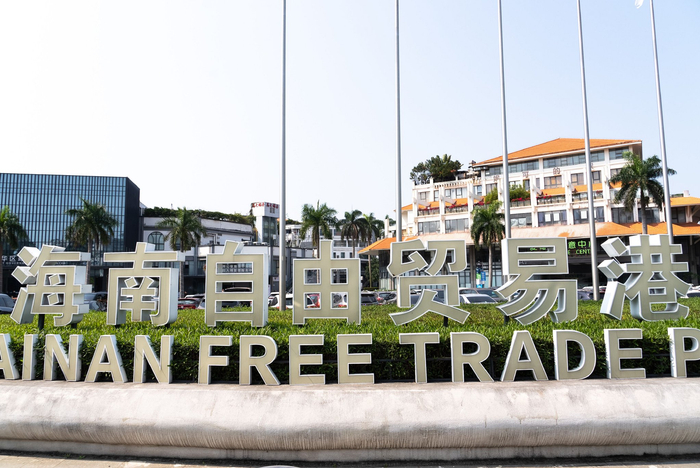
海南自贸港跨境资管试点:六机构抢滩“新蓝海”
Zhong Guo Jing Ying Bao· 2025-10-24 18:54
Core Insights - The establishment of the cross-border asset management pilot program in Hainan Free Trade Port marks a significant transition from institutional design to practical operation, viewed as a key step in China's financial opening towards "institutional opening" [2][3][9] - The pilot program is designed to create a closed-loop channel for "overseas funds - Hainan platform - domestic assets," emphasizing innovation in the operational model rather than scale [2][9] Regulatory Framework - The "Implementation Rules" for the pilot program provide a clear blueprint, allowing foreign investors to invest in various financial products, including wealth management products and private asset management products, with risk levels ranging from R1 to R4 [3][4] - The initial pilot scale is capped at 10 billion yuan, with a dynamic adjustment mechanism in place to manage risks [4][9] Institutional Participation - Six institutions have completed the registration for the pilot program, including two securities firms, two fund management companies, and two banks, indicating a diverse participation from the financial sector [5][6] - The pilot program has already seen rapid business implementation, with initial products launched and operational through local banks [5][6] Market Opportunities - The pilot program opens a new channel for overseas investors to allocate assets in China, enhancing the attractiveness of Hainan as a cross-border financial management center [4][9] - The unique "unilateral proactive opening" model allows global participation without relying on bilateral agreements, broadening the market potential [4][7] Future Development - Experts suggest that Hainan must transition from merely attracting capital flows to establishing regulatory frameworks that enhance its appeal as a global financial hub [10] - Recommendations include upgrading the financial account system, tax incentives for foreign asset management firms, and establishing a cross-border fund flow monitoring platform to ensure compliance and risk management [10]