
循环经济

Search documents
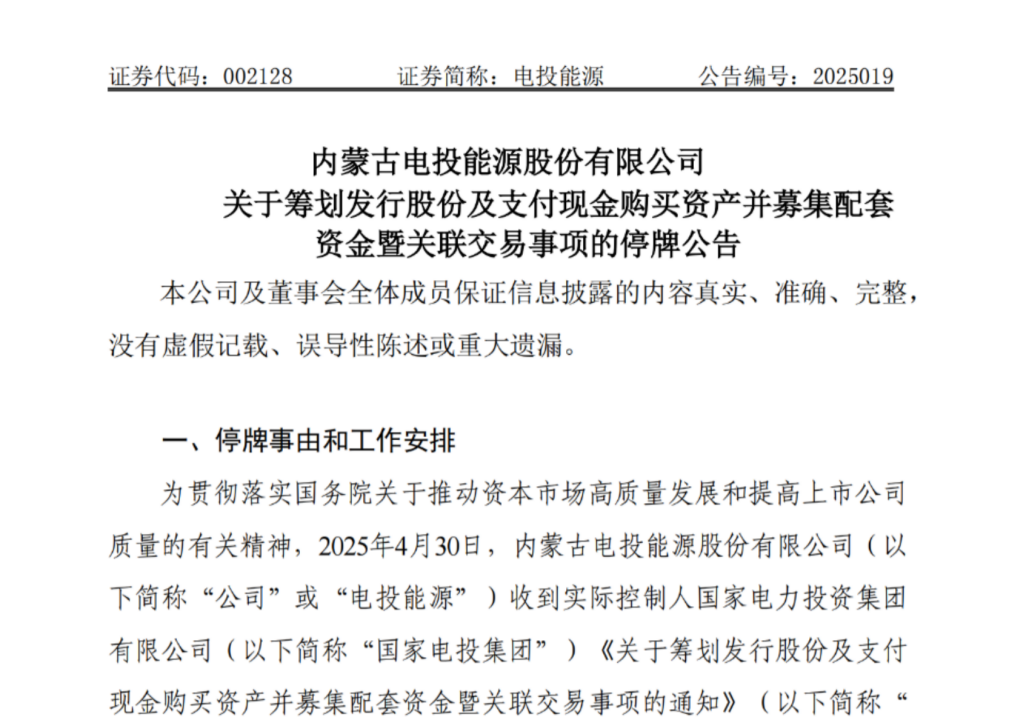
400亿煤电央企重组,电投能源开启能源新征程
Guo Ji Jin Rong Bao· 2025-05-08 07:59
Core Viewpoint - The recent announcement by Inner Mongolia Power Investment Energy Co., Ltd. regarding a significant asset restructuring process with its controlling shareholder, State Power Investment Corporation, highlights the company's strategic move to enhance its operational efficiency and market competitiveness through the acquisition of Baiyin Hwa Coal Power Co., Ltd. [1][3][10] Company Overview - Inner Mongolia Power Investment Energy Co., Ltd. was established in 2001 and listed on the Shenzhen Stock Exchange in April 2007. The company operates in coal, aluminum, thermal power, and new energy sectors, creating a "coal-new energy-electricity-aluminum" circular economy model [5]. - As of April 30, the company's stock price was 17.85 yuan, with a market capitalization of approximately 40 billion yuan [6]. Financial Performance - The company has experienced continuous growth in revenue and net profit for four consecutive years from 2021 to 2024. In 2024, the company achieved a net profit attributable to shareholders of 5.34 billion yuan, a 17.15% increase year-on-year, driven by higher sales prices and volumes of coal and aluminum products, as well as significant growth in solar and wind energy sales [8][9]. - Key financial metrics for 2024 include: - Revenue: 29.86 billion yuan, up 11.23% from 2023 - Net profit: 5.34 billion yuan, up 17.15% from 2023 - Basic earnings per share: 2.38 yuan, up 12.80% from 2023 [9]. Strategic Asset Restructuring - The proposed acquisition of 100% equity in Baiyin Hwa Coal Power is currently in the planning stage, with discussions ongoing and no formal agreements signed yet. The transaction is expected to enhance the company's operational capabilities and align with its strategic goals [3][10]. - Baiyin Hwa Coal Power, established in 2003, has a registered capital of 3.86 billion yuan and operates in coal production, coal chemical processing, and comprehensive utilization of coal ash, which complements the existing business of Inner Mongolia Power Investment Energy [10]. Industry Context - The energy sector is undergoing significant transformation, with increasing demand for clean energy and pressure on traditional thermal power companies to transition to greener, low-carbon operations. The asset restructuring is seen as a critical step for Inner Mongolia Power Investment Energy to adapt to these industry changes [10]. - The integration of Baiyin Hwa Coal Power is expected to create a full supply chain from coal mining to thermal power and green aluminum production, enhancing the company's cost competitiveness and operational efficiency [10]. Future Outlook - The completion of the restructuring is anticipated to optimize the company's industrial structure, improve profitability, and strengthen market competitiveness. The company aims to leverage this opportunity to achieve sustainable growth amid industry changes [11].


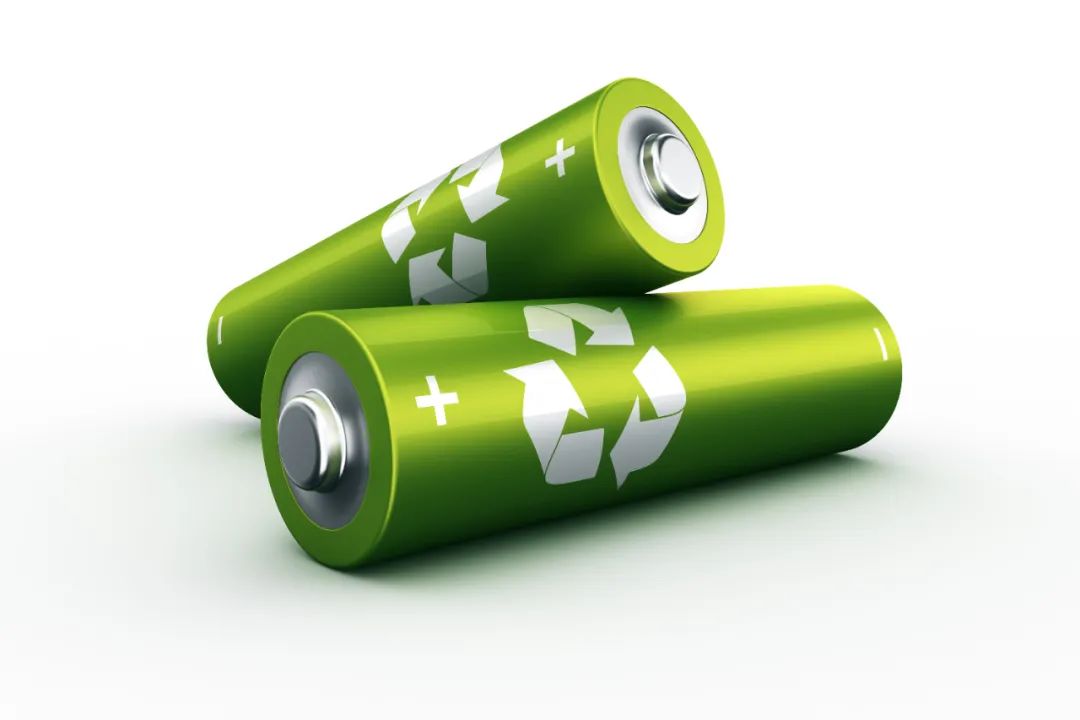
海外动力电池回收是新蓝海吗
Zhong Guo Qi Che Bao Wang· 2025-05-08 01:56
Core Viewpoint - Chinese automotive and battery companies are actively expanding into overseas battery recycling markets, forming strategic partnerships to establish a global recycling and after-sales service network [2][3][8]. Group 1: Strategic Partnerships - Guoxuan High-Tech and JinJing New Energy have formed a strategic partnership to build a battery recycling and after-sales service system, aiming to establish 100 service points globally [2][3]. - Huayou Recycling has signed a memorandum of understanding with France's Suez to explore battery recycling cooperation in Europe, indicating a trend of international collaboration in this sector [4][8]. Group 2: Market Expansion - Companies like BYD and Guoxuan High-Tech are entering the overseas battery recycling market, with BYD signing a three-year exclusive recycling agreement in Australia [6][8]. - The global market for battery recycling is expected to grow significantly, with projections indicating that by 2030, the European battery market could reach hundreds of billions of euros [11]. Group 3: Technological and Regulatory Challenges - The EU's new battery regulations impose strict requirements on battery manufacturers, including extended producer responsibility and high recovery rates for key metals [16][17]. - Chinese companies face challenges in logistics efficiency and high transportation costs when operating overseas, which can impact recovery efficiency and overall costs [12][16]. Group 4: Future Outlook - The increasing demand for battery recycling is driven by the growing number of electric vehicles, with predictions of significant volumes of retired batteries in the coming years [11][12]. - The establishment of a robust recycling network and compliance with international regulations will be crucial for Chinese companies to succeed in the global battery recycling market [20][21].
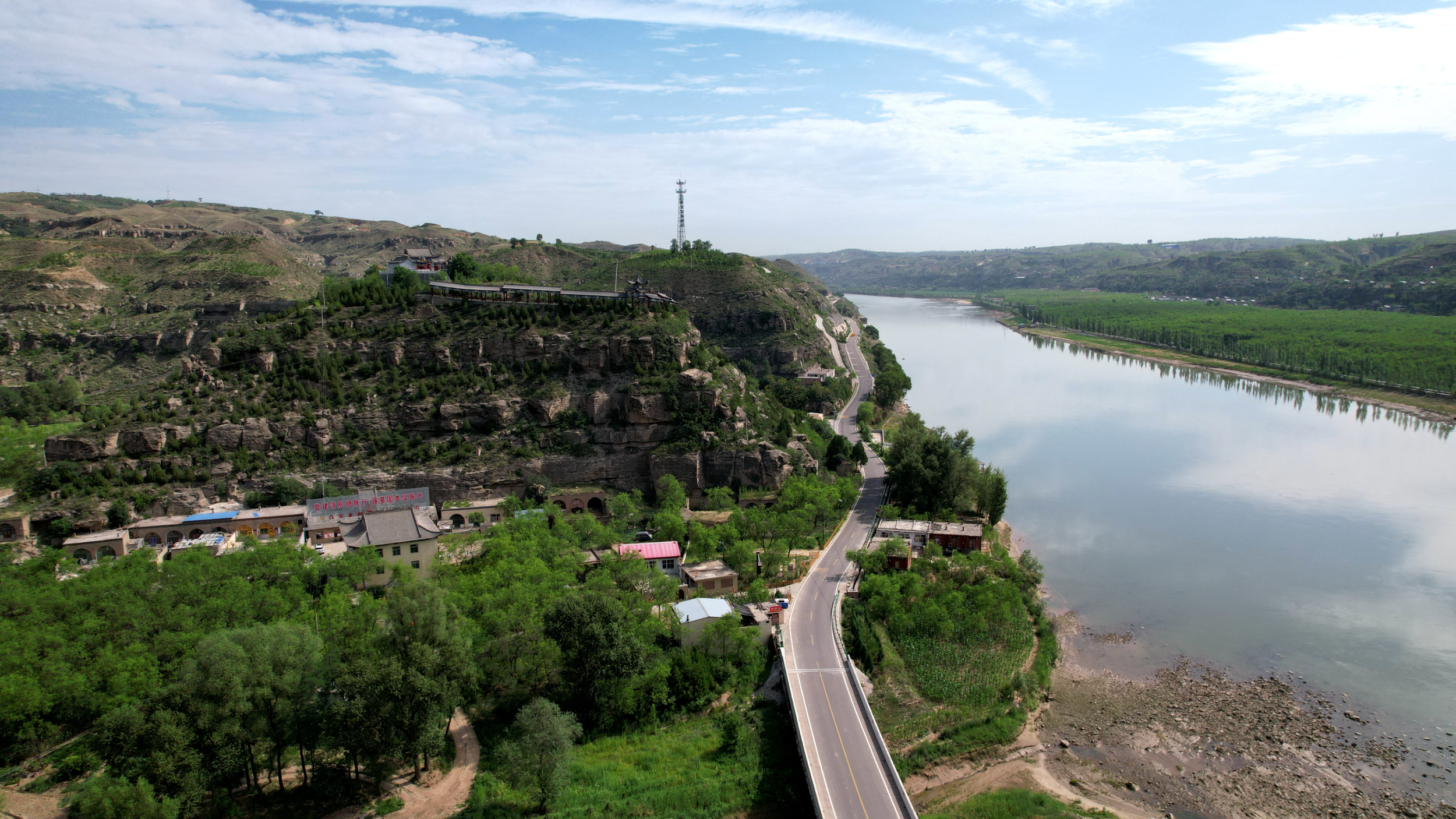
陕西府谷:全域绿化转型 勾勒生态宜居新图景
Zhong Guo Fa Zhan Wang· 2025-05-07 11:27
Core Viewpoint - Fugu County is transforming from a resource-dependent economy to a green, sustainable model, exemplifying the concept that "lucid waters and lush mountains are invaluable assets" through ecological restoration and industrial restructuring [2][11]. Group 1: Ecological Restoration - Fugu County has initiated a comprehensive air quality improvement campaign, significantly reducing PM2.5 levels, with a 34.6% decrease compared to the previous year, achieving the best air quality in its history [6]. - The county has implemented a "full-area greening" project, planting 297,000 acres of trees and grass over three years, contributing to ecological protection and restoration [6]. - A multi-faceted pollution control system has been established, focusing on industrial, mobile, and dust sources, resulting in the environmental remediation of 76 enterprises and 9 coal transport routes [5][6]. Group 2: Urban Renewal - Urban renewal efforts have benefited 7,939 households through the renovation of old neighborhoods, with the addition of over 6,500 parking spaces and the implementation of a comprehensive green space strategy [7]. - The county has integrated green concepts into urban planning, achieving a significant increase in green coverage and improving the quality of life for residents [7][10]. - Initiatives promoting waste sorting and recycling have been introduced, fostering a culture of sustainability among residents [10]. Group 3: Industrial Transformation - Fugu County is focusing on enhancing the "green content" of its industries, particularly in the magnesium sector, by upgrading technology and implementing environmental standards [11][14]. - The establishment of a circular economy in the magnesium industry has been prioritized, creating a comprehensive industrial chain that promotes sustainable development [14]. - The county aims to demonstrate that resource-based cities can achieve economic growth while maintaining environmental protection through innovative practices [14][16].
国家电投再度整合,400亿煤电央企筹划资产重组
3 6 Ke· 2025-05-07 09:24
Core Viewpoint - The State Power Investment Corporation (SPIC) is consolidating its coal power assets by acquiring 100% equity of Inner Mongolia Baiyinhu Coal Power Co., Ltd. through its listed subsidiary, Power Investment Energy [1][2]. Group 1: Company Overview - Power Investment Energy, formerly known as Open-pit Coal Industry, is the largest coal enterprise in Eastern Mongolia and Northeast China, with a market capitalization of 40 billion yuan as of April 30 [1]. - The company has a coal production capacity of 48 million tons and operates a 600MW power generation unit that is a key peak-shaving unit in the Northeast power grid [1][2]. Group 2: Acquisition Details - Baiyinhu Coal Power, established in 2003, has a registered capital of 3.862 billion yuan and is fully owned by SPIC [2]. - Baiyinhu Coal Power's core asset is the Baiyinhu No. 2 mine, with an annual coal production capacity of 15 million tons, primarily supplying coal to Northeast China [2]. Group 3: Strategic Implications - The acquisition is expected to expand Power Investment Energy's business scale and align with its strategy of balanced growth, focusing on clean energy transition and intelligent coal mining [3][4]. - The company aims to develop a circular economy model integrating coal, electricity, and aluminum production, similar to its existing operations at the Hohhot River site [4]. Group 4: Industry Context - SPIC's coal production capacity is concentrated in Eastern Mongolia, totaling 86.3 million tons as of the end of 2023, with significant assets in the Hohhot River and Baiyinhu coalfields [5]. - The restructuring efforts are part of SPIC's broader strategy to optimize resource allocation and enhance its position in the energy sector, potentially leading to a more integrated energy group with diverse power generation capabilities [7].
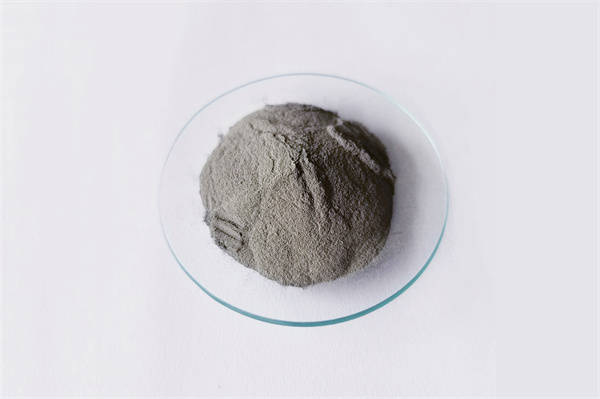
钌年产量仅约12吨:不足黄金产量的0.03%
Sou Hu Cai Jing· 2025-05-07 05:40
Core Insights - Ruthenium, a rare platinum group metal, has a unique industrial value and is significantly rarer than gold and platinum, with an abundance of only 5×10⁻⁹ in the earth's crust, leading to a current international recovery price exceeding $800 per ounce, reflecting a growth of over 300% in the last decade [1][5] Physical and Chemical Properties - Ruthenium exhibits three notable advantages: a super high melting point of 2334℃, which is 566℃ higher than platinum and 2.2 times that of gold, making it ideal for extreme applications like aerospace components and nuclear reactor control rods [3] - It shows superior stability against strong corrosive media at room temperature compared to platinum, making it irreplaceable in organic synthesis catalysts [3] Market Vulnerability - The global annual production of ruthenium is only about 12 tons, which is 0.03% of gold production, and it heavily relies on a few countries like South Africa and Russia for mining [5] - The recovery rate of ruthenium is less than 30%, leading to a high price volatility with an annualized volatility of 28% over the past five years, highlighted by a 65% price surge within three months due to supply chain disruptions from the Russia-Ukraine conflict in 2022 [5] Circular Economy Perspective - From a circular economy viewpoint, recovering 1 kilogram of ruthenium can reduce 3.2 tons of electronic waste landfill and avoid emissions equivalent to 15 tons of CO2 [7] - The cost of recycled ruthenium is 40%-60% lower than that of primary mined products, and the application costs in emerging industries like G chips can decrease by 25%-35% [7] - Advanced separation technologies can enhance the recovery purity of ruthenium from electronic waste to 99.99%, providing critical material support for the semiconductor industry [7] Strategic Importance - Ruthenium's recovery and utilization have transcended mere commercial interests to become a matter of resource security, with the EU's Critical Raw Materials Act listing it as one of 20 strategic metals, aiming for 50% self-supply by 2030 [7] - China's 14th Five-Year Plan for Circular Economy Development also emphasizes establishing a recycling system for platinum group metals [7] - The demand for ruthenium-based catalysts in proton exchange membrane fuel cells is expected to grow at an annual rate of 15%, underscoring the urgency of developing a closed-loop recovery system [7]
煤企业绩喜忧参半,宁夏首富一枝独秀
Xin Lang Cai Jing· 2025-05-07 03:06
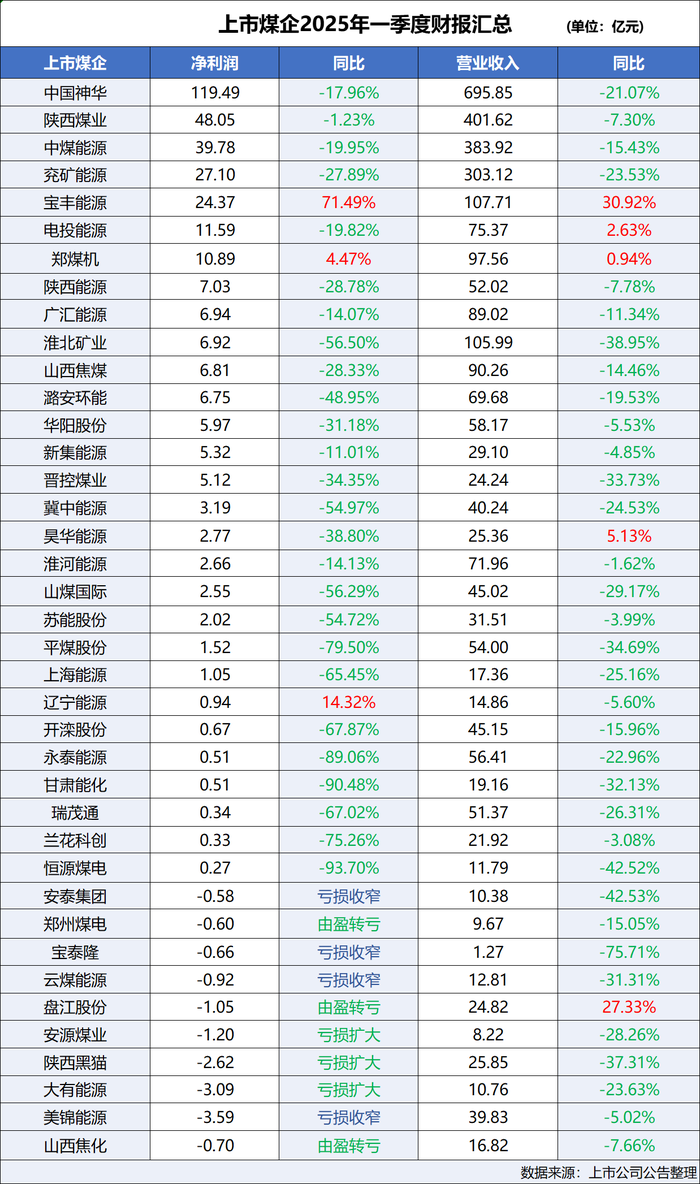
Core Insights - The coal industry in China reported mixed results for Q1 2025, with over 70% of listed coal companies remaining profitable, yet most experienced significant declines in net profit year-on-year, with some companies even reporting losses [1][4][12] - Baofeng Energy, led by Ningxia's richest man, achieved a remarkable net profit growth of 71.49%, standing out in an otherwise declining industry [1][8] Financial Performance Summary - Major coal companies reported the following net profits and year-on-year changes: - China Shenhua: 11.949 billion, -17.96% - Shaanxi Coal and Chemical: 4.805 billion, -1.23% - Baofeng Energy: 2.437 billion, +71.49% [2] - A total of 32 out of 39 listed coal companies saw a decline in net profit, with 12 companies experiencing declines over 30% [4][12] Factors Behind Profit Decline - Market price fluctuations have directly impacted coal company profits, with average prices for major coal types, such as thermal coal, dropping approximately 25% year-on-year [5][6] - The supply-demand imbalance is exacerbated by a warm winter and increased renewable energy generation, which saw a 18.7% year-on-year increase in wind and solar power output [5][12] - Rising production costs due to deeper mining and increased safety and environmental expenditures have further squeezed profit margins [6][12] Baofeng Energy's Growth Strategy - Baofeng Energy's success is attributed to its integrated "coal-coke-chemical" business model, which allows it to convert raw material advantages into high-value products [8][9] - The company's olefin project has become a significant profit driver, with a production efficiency that exceeds industry averages [8][9] - Investment in technology and digital transformation has enhanced operational efficiency and reduced costs, contributing to its strong performance [9][11] Industry Challenges - The coal industry faces significant challenges from the dual carbon goals and the increasing competitiveness of renewable energy sources [12][13] - The average utilization hours for thermal power plants have decreased, indicating a decline in coal demand [13][14] - The industry is experiencing a supply surplus, with total coal production capacity exceeding 4.5 billion tons per year, while consumption is projected at around 4.2 billion tons [13][14] Conclusion - The Q1 2025 performance of the coal industry reflects the urgent need for transformation amid evolving energy dynamics, with a clear divide emerging between companies that adapt and those that do not [16]




转转集团:五一期间回收订单总量增长40%
Xin Lang Ke Ji· 2025-05-06 11:52
Group 1 - The core viewpoint of the articles highlights a significant increase in the recycling orders and transactions of the company during the May Day holiday, driven by the effective implementation of the trade-in policy across various regions [1][2] - The total number of recycling orders during the May Day period grew by 40%, while offline store transaction orders surged by 50% [1] - The recycling orders for personal care small appliances, kitchen appliances, and photography equipment saw remarkable year-on-year increases of 700%, 550%, and 106% respectively [1] Group 2 - The company has opened over 800 stores nationwide, covering more than 300 cities, providing a wide range of services including the recycling and retail of 10 categories of digital 3C products [2] - Major cities such as Chengdu, Chongqing, Beijing, Guangzhou, and Shenzhen ranked among the top ten in terms of second-hand transaction orders, indicating that first-tier and new first-tier cities remain the most active in second-hand trading [2] - The total weight of gold recycled during the holiday period increased by over 367% year-on-year, reflecting a growing interest in gold recycling amid significant price fluctuations [2]
金银河(300619) - 300619金银河投资者关系管理信息20250506
2025-05-06 11:01
Group 1: Company Development Plans - The company aims to focus on breakthroughs in solid-state battery technology, enhancing production efficiency and performance to meet market demands for high energy density and safety [3] - Plans include deepening the layout of negative electrode materials and scaling up the application of silicon-carbon materials to enhance competitiveness in key lithium battery materials [3] - Development of lithium resources and rare metals through low-temperature sulfuric acid production lines to strengthen upstream resource security [3] - Establishing a circular economy system by improving battery recycling processes and promoting resource recycling [3] - The company will leverage technological innovation and equipment upgrades to become a core competitive player in the new energy sector [3] Group 2: Financial Challenges and Strategies - The company faces significant challenges with declining revenue and net profit, high debt ratios, and cash flow pressures due to long accounts receivable periods [4][7] - Measures to address these challenges include enhancing risk awareness regarding bad debts, optimizing product structures, and increasing R&D investments in subsidiaries [4] - The first quarter inventory increased by 33% year-on-year, primarily due to increased orders for lithium battery equipment [5] - The company reported a 33% decline in total revenue for 2024, with lithium battery equipment revenue dropping from 55% to 47% [8] Group 3: Market Expansion and Opportunities - The company plans to expand into overseas markets by leveraging partnerships with domestic battery manufacturers and participating in international industry exhibitions [6] - Future growth points include focusing on solid-state battery technology, negative electrode material development, and the construction of a circular economy [6][9] - The company is addressing the challenges of high customer concentration and industry growth slowdown by enhancing technology and product offerings [9] Group 4: R&D and Innovation - In 2024, the company invested approximately 89.29 million CNY in R&D, accounting for 5.92% of total revenue, which has facilitated breakthroughs in various technology fields [12] - The company has developed a series of intelligent manufacturing equipment for lithium (sodium) batteries, enhancing production efficiency [13] - The low-temperature sulfuric acid method significantly reduces waste generation compared to traditional methods, promoting sustainable practices [8] Group 5: Future Industry Outlook - Despite challenges in 2024, the lithium battery equipment industry is expected to see positive trends driven by the rapid development of the new energy vehicle market [11] - Emerging applications in semi-solid and solid-state batteries will create new growth opportunities [11] - The company’s low-temperature sulfuric acid lithium extraction technology is internationally leading and could change industry standards if widely adopted [11]

恒誉环保亮相第26届环博会 加速绿色转型步伐
Zhong Guo Jin Rong Xin Xi Wang· 2025-05-06 09:20
Core Viewpoint - Jinan Hengyu Environmental Technology Co., Ltd. showcased its advanced continuous intelligent pyrolysis technology at the 26th China Environmental Expo, emphasizing its role in the circular economy and resource regeneration [1][5] Group 1: Technology and Innovation - The company presented its "Next Generation Large Industrial Continuous Intelligent Pyrolysis Production Line," which integrates nearly 10,000 technical parameters accumulated over 30 years of research [3] - The production line consists of eight major systems, including intelligent feeding, continuous pyrolysis, and smoke purification systems, utilizing patented technologies focused on heat dispersion and optimization [4] - The new production line is designed to efficiently process over 30 types of organic waste, including waste tires, plastics, and medical waste, making it an ideal choice for state-owned capital and large enterprises interested in circular economy investments [4] Group 2: Recognition and Awards - Hengyu Environmental was awarded the title of one of the top 100 enterprises at the China Environmental Expo, recognized for its market position, comprehensive strength, brand value, and market influence [5] - This recognition reflects the industry's acknowledgment of the company's commitment to high-end, intelligent, and green technology solutions [5] Group 3: Future Outlook - The company aims to accelerate its green transformation and contribute to China's sustainable development and global environmental efforts [7]

东营经开区:链式布局锡基新材料产业
Zhong Guo Hua Gong Bao· 2025-05-06 08:23
日前,在东营经济技术开发区云南锡业锡基新材料产业园(华东)项目现场,打桩机、挖掘机等30余台 重型机械忙碌作业,钢结构厂房已初具雏形。 据悉,锡基新材料产业园(华东)项目一期计划投资约5.4亿元,设计年产能3.89万吨,达产后预计年产 值约22亿元,主要生产甲基锡、丁基锡、辛基锡等具有高技术含量、高附加值的产品,将填补东营经济 技术开发区锡基新材料产业空白,进一步丰富省内锡基新材料产品种类和结构,助力东营高质量发展。 "前期,我们招商团队不间断与企业对接,把他们的原料需求摸清了,再逐个与园区相关企业对接。双 方一拍即合。管道一接、车子一跑,运费哗哗省,企业老总眼睛当时就亮了。"东营经济技术开发区投 资促进部二级主管胡金凤说。 "在前期项目选址时,我们对产业配套、降本增效等诸多因素确实有着更多的考量。"锡基新材料产业园 (华东)项目负责人高志坚说。此前企业一直存在原材料和市场两头成本较高的痛点,而东营经济技术 开发区广利临港化工园区集聚华泰化工、金岭新材料等高端化工企业,具备明显的氯碱产业集群优势, 云锡项目所需的液氯、氢氧化钠等核心原料在园区内可实现"一站式"采购,生产过程中产生的氯化钠等 副产品,可通过管道 ...