量子计算

Search documents
美股部分量子计算概念股强势冲高
Ge Long Hui A P P· 2025-09-12 14:03
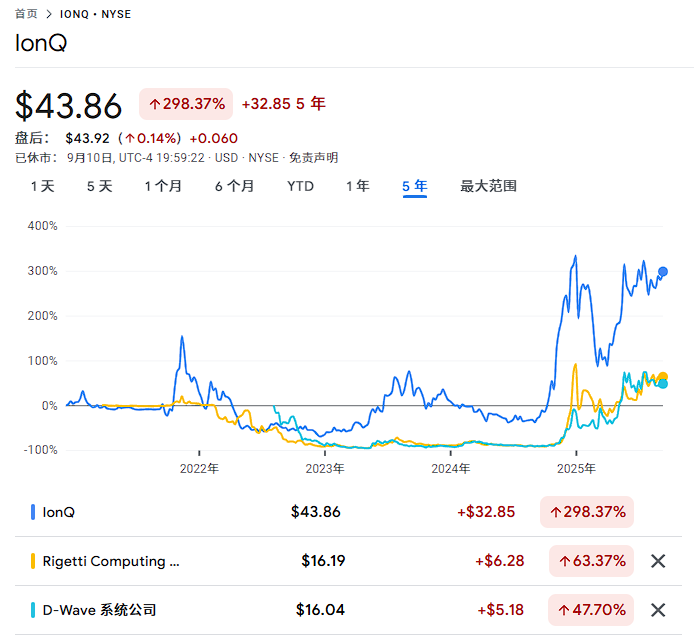
Group 1 - IONQ shares increased by over 12% [1] - RGTI shares rose nearly 8% [1] - QUBT shares climbed over 6% [1] - ARQQ, QBTS, and Quantum shares each saw an increase of over 4% [1]
AI迈向落地金融场景 如何释放关键价值?
Zhong Guo Jing Ying Bao· 2025-09-12 13:54
Core Insights - The integration of AI into the financial sector is crucial for achieving sustainable development and requires a systematic approach [1][3] Group 1: AI's Role in Finance - AI is reshaping the foundational logic of the financial industry, enhancing service efficiency and contributing to a more resilient and inclusive global economy [2] - The financial sector is identified as a key area for AI technology to unlock value and achieve breakthrough applications [1] Group 2: Key Areas for Development - Five critical areas need attention for the sustainable development of AI in finance: assessing the current state of AI in finance, understanding the basic attributes of finance that influence AI requirements, analyzing the profound impacts of AI on the financial system, conducting forward-looking research on AI trends, and building a robust ecosystem for AI in finance [3] - Collaboration across disciplines and industries is essential for the successful integration of AI into finance, with a focus on creating a "technology-finance-industry" ecosystem [2][3] Group 3: Quantum Computing and AI - The combination of AI and quantum computing is seen as a potential paradigm shift in addressing real-world challenges in financial technology [4] - Quantum computing is expected to play a significant role in areas such as financial modeling, derivative pricing, and data analysis, particularly concerning information security [4] Group 4: Future Directions - The next phase of AI development in finance will focus on leveraging industry-specific knowledge to solve problems rather than merely applying external scenarios [4][5] - The importance of partnerships and collaborative efforts in the AI era is emphasized, with a focus on the need for hybrid talent that bridges technology and business insights [5]
聚焦数字时代知识产权 第十四届中国知识产权年会举行
Zhong Guo Xin Wen Wang· 2025-09-12 02:34
Group 1 - The 14th China Intellectual Property Annual Conference, themed "Intellectual Property in the Digital Age," was held in Beijing with over 8,000 participants from China and abroad [1][2] - The conference featured one main forum and 12 sub-forums, along with various activities such as roadshows and competitions to showcase the latest achievements and enhance communication and cooperation in the industry [1] - The Director of the National Intellectual Property Administration, Shen Changyu, emphasized the importance of core technologies in supporting the development of the digital economy and the transformation of intellectual property systems in the digital age [1] Group 2 - The Director General of the World Intellectual Property Organization, Daren Tang, highlighted the global economic transformation towards an intellectual property-driven economy, with many countries increasing investments in digital and creative economies [1] - China has made significant progress in cutting-edge technology fields such as generative artificial intelligence, quantum computing, and cloud infrastructure, reflecting its commitment to innovation [1] - The Eurasian Patent Office's Director, Grigory Ivliev, noted the importance of international relations in enhancing practical cooperation across various fields and expressed a desire to elevate cooperation with China [2]
中国资产,深夜大涨
Zheng Quan Shi Bao· 2025-09-11 23:24
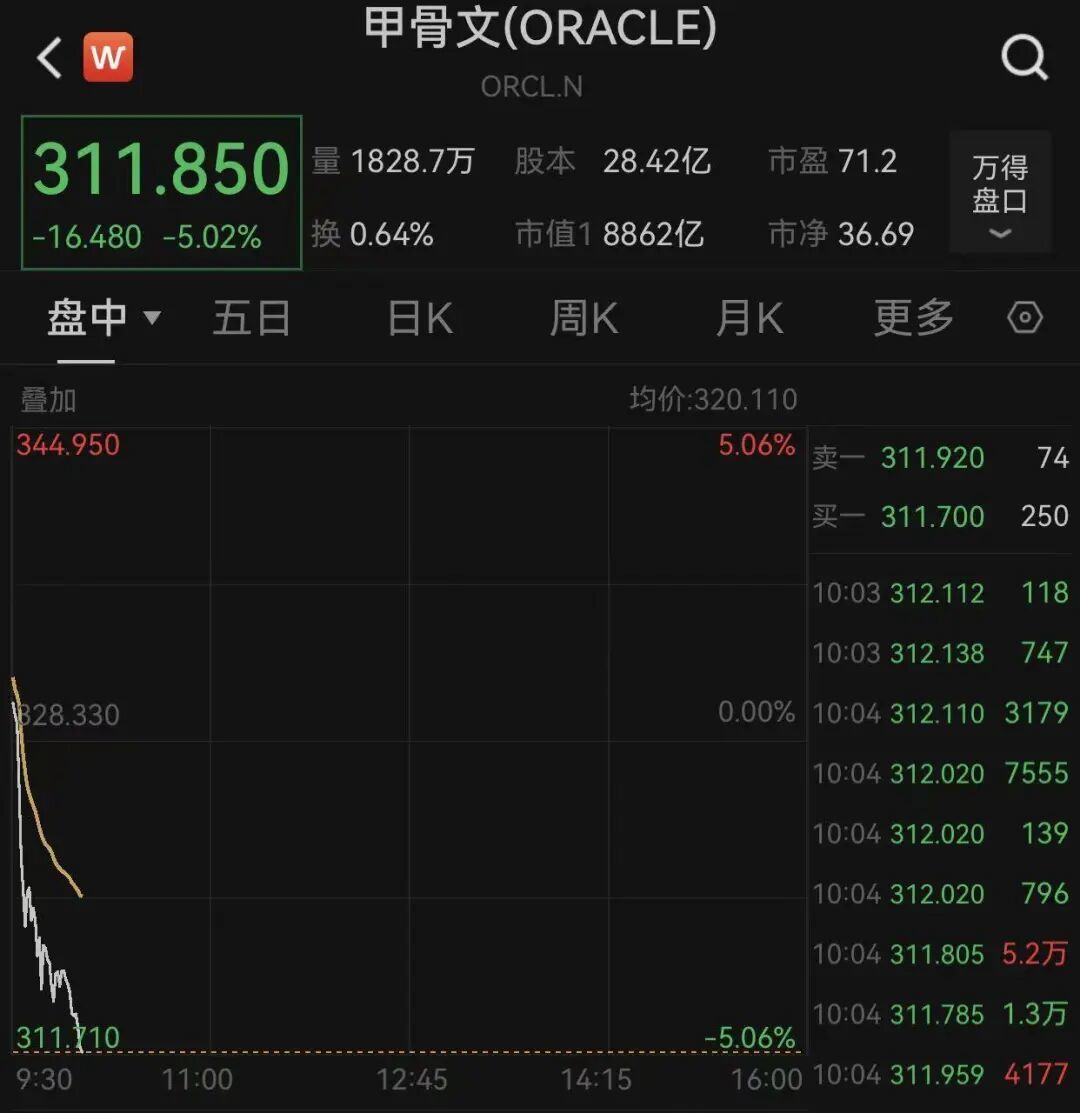
Market Overview - On September 11, U.S. stock indices opened slightly higher, with the S&P 500 index rising over 0.5% to reach a new high, and the Dow Jones index increasing nearly 1% [1] - The Nasdaq China Golden Dragon Index rose over 2%, with most popular Chinese concept stocks experiencing gains [2][6] Company Highlights - Nvidia's stock rose over 1%, following the announcement that its investment in quantum computing unicorn PsiQuantum has completed a $1 billion financing round [1][5] - Oracle's stock fell over 5% after a significant increase of 36% the previous day, resulting in a market capitalization surge of approximately $250 billion [1][2] - Micron Technology's stock increased over 10%, driven by a report predicting a significant rise in memory demand due to the rapid development of artificial intelligence [5] - SanDisk's stock rose over 14% after announcing a 10% price increase across all channels for consumer products, citing strong demand for NAND flash products [5] Investment Activities - DayOne, a data center operator associated with GDS Holdings, is seeking to raise at least $1 billion in a new round of private financing to expand its international market presence [7] - Alibaba announced the issuance of approximately $3.2 billion in zero-coupon convertible senior notes, with about 80% of the proceeds allocated to enhancing cloud infrastructure [8]

中国资产 深夜大涨!
Zheng Quan Shi Bao Wang· 2025-09-11 15:24
Group 1: Market Overview - The US stock market opened slightly higher on September 11, with the S&P 500 index rising over 0.5% to reach a new high and the Dow Jones index increasing nearly 1% [1] - The Nasdaq China Golden Dragon Index rose over 2%, with most popular Chinese concept stocks experiencing gains [3] Group 2: Semiconductor Sector - The Philadelphia Semiconductor Index increased by over 1%, with Micron Technology rising more than 10% and other companies like Nvidia and ASML also seeing gains [4] - Citigroup analysts predict that rapid advancements in artificial intelligence will significantly boost memory demand, leading to supply shortages of DRAM and NAND by 1.8% and 4.0% respectively by 2026 [4] - SanDisk's stock rose over 14% after announcing a 10% price increase across all channels for consumer products, driven by strong demand for NAND flash products in AI applications and data centers [4] Group 3: Chinese Concept Stocks - Among popular Chinese concept stocks, WanGuo Data rose over 7%, with news of its data center operator DayOne seeking to raise at least $1 billion in a new round of private financing [5] - Kingsoft Cloud's stock increased over 4% after Bank of America raised its target price to $20.4, with a report predicting the Chinese AI cloud market to reach 22.3 billion yuan by the first half of 2025 [5] - Alibaba's stock rose over 3% following the announcement of a $3.2 billion zero-coupon convertible senior note issuance, aimed at enhancing cloud infrastructure and international business operations [6]
启明星辰:公司将继续推广后量子密码等创新技术的研发和应用
Zheng Quan Ri Bao Wang· 2025-09-11 12:43
Core Viewpoint - The company is actively pursuing advancements in quantum computing and integrating quantum cryptography and anti-quantum cryptographic algorithms into its security products to meet high-security demands from clients against quantum threats [1] Group 1 - The company is focusing on the development of "post-quantum cryptography" and other innovative technologies to enhance the anti-attack capabilities of its cryptographic services [1] - The company aims to strengthen the entire process of cryptographic application services to address future challenges posed by quantum computing [1]

英伟达,再次杀入量子计算
Zheng Quan Shi Bao Wang· 2025-09-11 10:47
Core Insights - PsiQuantum has completed a $1 billion Series E funding round, with a post-money valuation of $7 billion, aimed at building the world's first commercially viable fault-tolerant quantum computer [2][3] - Nvidia's venture capital arm has invested in PsiQuantum, marking its second investment in the quantum computing sector within a short timeframe [1][5] - The company plans to use the new funds to develop large-scale prototype systems and enhance the performance of its quantum photonic chips and fault-tolerant architecture [2][3] Company Overview - PsiQuantum was founded in 2016 by Jeremy O'Brien and three other scholars, focusing on creating a quantum computer with 1 million qubits capable of fault-tolerant operations [2][3] - The company differentiates itself by using massless photons as qubits, referred to as "flying qubits," which offer unique advantages over traditional qubit materials [3] Investment and Strategic Partnerships - Major investors in the recent funding round include BlackRock, Temasek, and Baillie Gifford, along with new entrants like Macquarie Capital and Qatar Investment Authority [2] - Nvidia has established a strategic partnership with PsiQuantum to collaborate on quantum algorithms, software, and the integration of quantum hardware with AI chips [5] Industry Context - Quantum computing is anticipated to revolutionize various industries, including pharmaceuticals, finance, and communications, by fundamentally altering their underlying logic [3] - The quantum computing sector is experiencing a surge in investment, with other companies like IQM and Infleqtion also securing significant funding recently [6]

10亿美元融资创纪录!量子计算“爆了”,贝莱德、淡马锡和Baillie Gifford入股
Hua Er Jie Jian Wen· 2025-09-11 03:50
Group 1: Core Insights - PsiQuantum has raised $1 billion in a single funding round, setting a record in the quantum computing sector, with a valuation of $7 billion [1] - The funding round was led by BlackRock, Temasek, and Baillie Gifford, with participation from Nvidia's venture arm [1] - The funds will be used to build a quantum computer with 1 million qubits by 2028, significantly surpassing current devices with hundreds of qubits [1][6] Group 2: Competitive Landscape - PsiQuantum's timeline may give it a competitive edge over Google and IBM in the quantum computing race [2] - Other competitors in the field, such as Quantinuum and IQM, have also announced significant funding rounds, with Quantinuum raising $600 million and a valuation of $10 billion, and IQM raising $300 million [3] - The total market capitalization of U.S. publicly listed quantum system companies has surged from under $5 billion to $22 billion since last November [3] Group 3: Technological Differentiation - PsiQuantum utilizes a unique technology path based on photonic qubits, which allows for easier production in existing chip manufacturing facilities [7] - This technology does not require operation at extremely low temperatures, reducing the need for costly cryogenic equipment compared to solutions from Google and IBM [7] - Despite these advantages, PsiQuantum has not yet demonstrated its ability to handle error correction, a critical technical hurdle in the field [7] Group 4: Future Plans and Developments - PsiQuantum plans to begin construction of its first full-scale quantum computing facility in Australia later this year, having secured a commitment of AUD 940 million from the Australian government [7] - The company has also reached an agreement to build a full-scale quantum system in Chicago [7]
易凯资本GP/LP服务团队完成两笔重要老股退出交易,持续推动S市场专业生态建设
Xi Niu Cai Jing· 2025-09-11 03:19
Core Insights - 易凯资本 has successfully completed two significant secondary market transactions, marking its growing expertise in the S transaction segment [1] - The transactions involve the transfer of old shares from a major liquid oxygen reusable rocket company and a leading domestic DRAM enterprise, both aligned with the national focus on "new quality productivity" [1][2] - The firm is actively seeking opportunities in key sectors such as semiconductors, aerospace, embodied intelligence, and quantum computing [2] Group 1 - The Chinese private equity market is transitioning from an "incremental era" to a "stock optimization" phase, with S transactions becoming crucial for connecting GP and LP, as well as assets and liquidity [2] - 易凯资本 is focusing on high-quality asset transactions to link the existing market with long-term capital [2] - The firm is executing various transactions involving staggered income assets and structured financing to meet the demand for safety and certainty in returns [3] Group 2 - 易凯资本 is enhancing its private equity investment banking services to cover the entire chain from financing to mergers and S transactions [4] - The company aims to address the systemic challenges of asset exit and liquidity management faced by LPs and GPs [4] - The GP/LP service team is leveraging 25 years of experience and a network of over 6,000 domestic and international investment institutions to establish itself as a third-party professional S transaction platform [4]
黄仁勋最打脸的投资来了
投中网· 2025-09-11 02:45
Core Viewpoint - Huang Renxun's shift from skepticism to support for quantum computing marks a significant turning point in the tech industry, as NVIDIA enters the quantum computing space with substantial investments and strategic initiatives [4][5][8]. Investment and Company Developments - NVIDIA's venture capital arm has invested in Quantinuum, a quantum computing company valued at $10 billion, marking its first foray into the quantum computing sector [5][7]. - Quantinuum's valuation doubled from $5 billion in January 2024 to $10 billion within 18 months, indicating strong investor confidence and growth potential in the quantum computing market [7]. - The recent $6 billion funding round for Quantinuum included investments from NVIDIA and other major players, aimed at accelerating the development of their new quantum computing system, Helios, expected to launch in late 2025 [8][13]. Technological Integration and Future Prospects - Huang Renxun envisions a future where quantum processing units (QPU) and graphics processing units (GPU) work in tandem, enhancing computational capabilities beyond traditional methods [11][12]. - The CUDA-Q platform, introduced by NVIDIA, aims to integrate quantum and classical computing, allowing developers to utilize GPU, CPU, and QPU resources simultaneously [12][13]. - Huang predicts exponential growth in quantum computing capabilities, with qubit numbers potentially increasing tenfold every five years, which could revolutionize complex problem-solving across various fields [11][12]. Industry Trends and Competitive Landscape - The global focus on quantum computing is intensifying, with significant investments from various tech giants and governments, indicating a race to dominate the next wave of technological advancement [15][16]. - Other notable investments in the quantum computing sector include PsiQuantum's $620 million funding round and IQM's $320 million financing, highlighting the growing interest and competition in this field [15][16]. - The U.S. quantum computing market has surpassed 200 companies, reflecting a burgeoning ecosystem and increasing investor enthusiasm [17]. Implications for AI and Computing - Quantum computing is expected to dramatically reduce the time required for AI model training, potentially compressing months of work into mere minutes, thus accelerating advancements in AI technology [18]. - The integration of quantum computing with AI could lead to unprecedented growth in computational power, driving a "flywheel effect" and triggering a new era of technological evolution [18].