人民币国际化

Search documents
外汇局刘斌:鼓励在上海率先落地一些首创性、集成性探索政策
Zheng Quan Shi Bao Wang· 2025-10-23 13:47
Core Insights - The State Administration of Foreign Exchange (SAFE) is encouraging innovative and integrated exploratory policies in Shanghai, focusing on the application of technologies like artificial intelligence and big data to enhance foreign exchange services [1] - Shanghai has become a hub for various financial markets, and the SAFE has been enhancing the interconnectivity of domestic and foreign financial markets, which has increased the attractiveness and activity of foreign investment in China [1] - The SAFE aims to improve the cross-border financial service capabilities in Shanghai by establishing a more convenient, open, secure, and intelligent foreign exchange management system [1] Group 1 - The SAFE plans to steadily expand high-level institutional openness in the foreign exchange sector, focusing on the integration of RMB internationalization and high-quality capital account opening [2] - There will be a push for the development of the foreign exchange market, addressing issues related to long-term, multi-variety, and small currency markets, while enhancing the capabilities of foreign exchange trading centers [2] - The SAFE will promote the convenience of cross-border trade and investment financing, encouraging innovative policies to be implemented in Shanghai [2] Group 2 - The relationship between financial openness and security will be carefully managed, ensuring that all openness and convenience measures are predicated on safety [2] - The SAFE will implement a dual management approach of "macro-prudential + micro-regulation" to prevent risks from spreading across regions, markets, and borders [2]
【2025外滩年会】渣打中国行长鲁静:积极探索跨境金融领域创新模式
Zhong Guo Jin Rong Xin Xi Wang· 2025-10-23 13:47
Core Viewpoint - Standard Chartered Bank aims to enhance its role as a bridge in cross-border financial innovation and exploration in Shanghai, leveraging the city's advanced financial market and regulatory environment [1][2]. Group 1: Company Initiatives - Standard Chartered Bank has successfully completed a ten-year USD-RMB currency swap for a major state-owned enterprise based in Shanghai, addressing the challenges of high USD financing costs and exchange rate risks associated with long-term financing for overseas mining projects [1]. - The bank's tailored long-term foreign exchange derivative solutions utilize the cross-border RMB flow facilitation provided by the Shanghai Free Trade Zone, helping clients reduce project financing costs and manage long-term exchange rate risks effectively [1]. Group 2: Industry Impact - The recent transaction promotes the use of RMB in cross-border trade and investment, enhancing its liquidity and recognition in offshore markets, particularly as Shanghai connects with other international financial centers like Hong Kong, London, New York, Singapore, and Dubai [2].
国家外汇局:将研究长期限、小币种等外汇市场发展问题
Zhong Guo Xin Wen Wang· 2025-10-23 13:34
Core Viewpoint - The State Administration of Foreign Exchange (SAFE) plans to enhance the development of the foreign exchange market in Shanghai, focusing on long-term, multi-currency, and small currency issues to support the city's international financial center construction [1][2]. Group 1: Foreign Exchange Market Development - SAFE will deepen the development of the foreign exchange market by researching long-term, multi-currency, and small currency issues [1]. - The administration aims to create a more convenient, open, secure, and intelligent foreign exchange management system, aligning with Shanghai's development needs [1]. Group 2: Financial Infrastructure and Risk Management - SAFE will strengthen the financial infrastructure and service capabilities of the foreign exchange trading center, enhancing the management of exchange rate risk for financial institutions [1]. - The administration emphasizes the importance of integrating macro-prudential and micro-regulatory management to prevent risk transmission across regions, markets, and borders [2]. Group 3: Innovation and Technology - SAFE encourages the implementation of innovative and integrated exploratory policies in Shanghai, utilizing technologies such as artificial intelligence and big data to provide smarter and more efficient foreign exchange services [2].
刘斌:从三方面入手提升上海跨境金融服务能级
Jing Ji Guan Cha Wang· 2025-10-23 13:15
Core Viewpoint - The National Foreign Exchange Administration aims to enhance Shanghai's cross-border financial services by establishing a more convenient, open, secure, and intelligent foreign exchange management system, supporting the city's development as an international financial center [1][2]. Group 1: Expansion of Foreign Exchange System - The administration plans to steadily expand high-level institutional openness in the foreign exchange sector, focusing on the integration of RMB internationalization and high-quality capital account opening [1]. - There will be an emphasis on facilitating foreign financial institutions' investment in China while deepening the development of the foreign exchange market [1]. - The administration will explore issues related to long-term, multi-variety, and small currency foreign exchange market development, enhancing the financial infrastructure and services of the foreign exchange trading center [1]. Group 2: Promotion of Cross-Border Trade and Investment - The administration will continue to innovate foreign exchange management reforms based on market demand and national conditions, providing higher convenience for compliant entities [1]. - There is encouragement for Shanghai to implement pioneering and integrated exploratory policies, utilizing technologies such as artificial intelligence and big data to offer smarter, more efficient, and secure foreign exchange services [1]. Group 3: Balancing Financial Openness and Security - The relationship between financial openness and security will be carefully managed, ensuring that convenience and openness are predicated on safety [2]. - The administration will strengthen the dual management of macro-prudential and micro-regulation in the foreign exchange market to prevent risks across regions, markets, and borders [2].
拉卡拉(300773):2025年三季报点评:天财商龙并表推动科技业务增长,跨境业务延续高增
Guolian Minsheng Securities· 2025-10-23 13:01
Investment Rating - The investment rating for the company is "Buy" (maintained) [5] Core Insights - The company reported a revenue of 4.068 billion yuan for the first nine months of 2025, a year-on-year decrease of 7.32%. The net profit attributable to shareholders was 339 million yuan, down 33.90% year-on-year. The net profit excluding non-recurring items was 241 million yuan, a decline of 53.32% year-on-year. In Q3 2025, the company achieved a revenue of 1.418 billion yuan, an increase of 0.72% year-on-year, and a net profit of 110 million yuan, up 17.46% year-on-year [4][11][12] Summary by Sections Financial Performance - For 9M2025, the company’s revenue was 40.68 billion yuan, down 7.32% year-on-year, primarily due to pressure on card payments affecting digital payment revenue. The payment transaction amount was 2.92 trillion yuan, a decrease of 8.29% year-on-year, with card transactions down 13.72% and scan transactions up 3.50% [12] - The net profit attributable to shareholders for 9M2025 was 3.39 billion yuan, down 33.90% year-on-year, while the net profit excluding non-recurring items was 2.41 billion yuan, down 53.32% year-on-year. The Q3 2025 net profit showed a significant increase, mainly due to the consolidation of Tian Cai Shang Long, which boosted technology business revenue and profit [12][14] Business Growth - The company’s cross-border business continued to grow significantly, with transaction amounts and customer numbers increasing by 77.56% and 71.91% year-on-year, respectively. The company has also accelerated its global expansion by actively pursuing overseas licenses and business opportunities [13] - The introduction of AI-integrated services, including the launch of an AI wallet, has positioned the company as a leader in innovation within the industry, with nearly 8 million registered users and 1.5 million monthly active users by the end of September 2025 [13] Future Outlook - The company is expected to benefit from the ongoing recovery in domestic consumption and the high growth of its cross-border business. Projections for net profit attributable to shareholders for 2025-2027 are 407 million, 412 million, and 424 million yuan, reflecting growth rates of 15.9%, 1.2%, and 2.9%, respectively [14]

建信金租董事长宋涛:已建立全球市场营销体系 不断提升国际市场竞争力
Zhong Zheng Wang· 2025-10-23 12:37
Core Viewpoint - The 12th China Aviation Finance Forum highlighted the growth and strategic initiatives of the company in the aircraft leasing sector, emphasizing its international expansion and innovative financing solutions [1][2]. Group 1: Business Development - The company has evolved through several stages in aircraft leasing since 2012, currently focusing on operational leasing as the primary business model, with a total aircraft asset scale ranking 16th globally in the aircraft leasing industry, reaching a level comparable to medium-sized international leasing companies [1][2]. - As of September 2025, the company manages and holds 210 aircraft and engines, with a leasing asset balance of approximately 51 billion RMB, accounting for about 32% of the company's total leasing assets [2]. - The company has established a global customer base of 40 airlines, with a balanced distribution between domestic and international clients, and has recently onboarded top-tier airlines such as Lufthansa, Turkish Airlines, and Korean Air [2]. Group 2: International Expansion - The company has set up leasing platforms in Beijing, Hong Kong, and Ireland, enabling it to provide comprehensive aircraft leasing services globally, supported by a mature operational system and a marketing network that spans multiple continents [2][3]. - The company has successfully executed the first offshore engine leasing transaction in the East Tianjin Free Trade Zone, collaborating with Norwegian Air, which demonstrates its innovative leasing structures that overcome cross-border tax challenges [3]. - The company is actively participating in the Belt and Road Initiative and the internationalization of the RMB, having completed its first offshore RMB financing leasing project with Turkish Airlines, marking a significant milestone in its international operations [4]. Group 3: Risk Management - The company has developed a robust risk management framework consisting of three lines of defense: market department, risk approval, and auditing, ensuring comprehensive oversight of its international operations [5]. - The risk management strategy is based on three dimensions (country, aircraft type, and customer), two cycles (aviation and interest rate cycles), and three methods (global marketing, asset trading, and specialized team collaboration) to optimize returns and manage risk exposure [5]. - The company is also focused on compliance risk management, establishing a comprehensive overseas compliance management system to adhere to local regulations in international markets [5].
多国开始用人民币,人民币使用储存都翻倍,外媒:我们到底怎么了
Sou Hu Cai Jing· 2025-10-23 11:55
Core Insights - The global economic landscape is shifting towards the use of the Chinese yuan (RMB) for trade settlements, with several countries increasingly adopting this practice as a strategic move to reduce reliance on the US dollar [2][4][5]. Group 1: Trade Settlement Trends - Russia has significantly increased the proportion of trade settled in RMB, rising from 2% in 2022 to 25% by the end of 2023, and projected to reach 36% in the first half of 2024 [2]. - Argentina announced in April 2023 that it would use RMB to repay part of its IMF debt and expanded its currency swap agreement with China to 130 billion RMB [2]. - Brazil established a RMB clearing bank in March 2023, facilitating direct settlements for coffee and soybean trade, with initial transaction volumes reaching several hundred billion USD [4]. Group 2: Regional Developments - Thailand expanded its cross-border payment system with China in 2024, allowing local businesses to settle 25% of imports in RMB, which is expected to rise to 35% by 2025 [4]. - Indonesia initiated a similar mechanism in 2024, with RMB accounting for 20% of bilateral trade, projected to increase to 28% in 2025 [5]. - Saudi Arabia began testing RMB settlements for oil in late 2023, signing a local currency swap agreement with China [5]. Group 3: Financial Infrastructure and Growth - The cross-border RMB settlement volume reached 64 trillion RMB in 2024, a year-on-year increase of 22.5%, with trade financing in RMB accounting for 6% of the global market [9]. - The issuance of panda bonds nearly doubled in 2023 to 154 billion RMB, indicating growing interest from overseas investors [9]. - The RMB's share in global SWIFT payments increased from 2.2% at the end of 2022 to 4.5% by February 2024, reflecting its rising international usage [9]. Group 4: Geopolitical Implications - The shift towards RMB is seen as a response to geopolitical risks and the desire for countries to diversify their currency reserves away from the US dollar [11][15]. - The International Monetary Fund (IMF) reported that as of March 2025, the RMB accounted for 2.1% of central bank reserve allocations, with over 70 central banks holding RMB reserves [11]. - The trend of increasing RMB usage is expected to continue, driven by bilateral agreements and the establishment of clearing networks, enhancing its role in global trade and finance [15].

华泰证券王越昊:十年科技投入夯实结构化产品体系,助力内地投资者参与港股新机遇
Xin Lang Zheng Quan· 2025-10-23 10:48
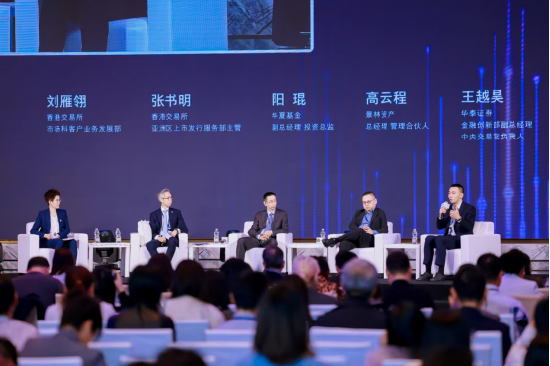
文/新浪财经上海站 陈秀颖 10月22日,港交所在上海举办2025HKEX中国机遇论坛。华泰证券金融创新部副总经理、中央交易室负 责人王越昊在圆桌讨论中表示,华泰证券与内地投资者一样,高度认可香港作为亚太地区金融中心以及 离岸人民币资产配置地的独特地位,并十分看好香港资本市场的发展前景。 他表示,从券商角度来看,近年来内地投资者对于港股市场的兴趣持续上升,尤其在科技与生物医药板 块表现活跃。在服务投资者投资港股市场方面,华泰主要从三个方向开展创新:通过结构化产品服务机 构投资者、优化个人投资者产品设计、强化科技系统投入以提升服务效率。 炒股就看金麒麟分析师研报,权威,专业,及时,全面,助您挖掘潜力主题机会! 王越昊介绍,首先,对于机构投资者,华泰证券重点通过结构化金融工具帮助投资者充分表达投资观 点。他指出,并非所有投资者都倾向于单边看多的策略,结构化产品能够帮助机构投资者在规避下行风 险的同时,让渡部分上行收益,以实现风险与收益的平衡。他强调,华泰在这一领域已经积累了丰富的 产品设计经验。 其次,对于个人投资者,王越昊特别强调风险控制的重要性。他提到,国内市场曾出现过个人投资者因 结构化产品亏损而引发舆情的 ...

美元波动加剧背景下,中国央行如何用黄金对冲金融风险?
Di Yi Cai Jing· 2025-10-23 10:20
Core Insights - As of October 17, spot gold has surpassed $4,300 per ounce, with global gold ETFs recording the largest monthly net inflow of the year in September [1] - Emerging market central banks, including those of Poland, Kazakhstan, and Turkey, have been the main buyers of gold in this cycle, while the People's Bank of China has increased its gold holdings for 11 consecutive months, with gold now accounting for 7.7% of its official reserves [1] Group 1: Strategic Considerations Behind Gold Holdings - The People's Bank of China is diversifying its official reserve assets by increasing gold holdings, responding to geopolitical uncertainties and the use of financial sanctions, which enhances the safety of sovereign assets [2] - The central bank's gold accumulation serves as a strategic rebalancing against risks associated with the US dollar and dollar-denominated assets, as the dollar index has shown increased volatility due to policy uncertainties and high government debt [3] - Increasing gold reserves supports the internationalization of the renminbi, providing a solid asset base to enhance its credibility in the global financial system [3] Group 2: Relationship Between Gold Accumulation and De-dollarization - While increasing gold holdings helps reduce dependence on the dollar, it does not equate to a rapid de-dollarization, as the dollar's dominance in trade and finance remains largely intact [4] - The central bank's strategy focuses on optimizing reserve structures and hedging risks rather than large-scale divestment from dollar assets [4] Group 3: Future Trends in Central Bank Gold Allocation - The central bank's ongoing and diversified gold purchasing strategy is expected to provide support for gold prices in the medium term, despite potential short-term corrections due to market dynamics [5] - The proportion of gold in foreign exchange reserves is likely to gradually increase, with the central bank expected to adopt a cautious "small steps" approach to gold purchases [5] - As the internationalization of the renminbi progresses, gold is anticipated to continue serving as a stabilizing anchor for foreign exchange reserves, enhancing the renminbi's credibility in international markets [5]
港交所:持续优化上市制度及互联互通机制
Xin Lang Cai Jing· 2025-10-23 07:50
Core Insights - Hong Kong Exchanges and Clearing Limited (HKEX) is committed to enhancing collaboration with various parties, optimizing listing arrangements, and expanding connectivity mechanisms to promote the development of capital markets in both Hong Kong and mainland China [1][2] Group 1: Market Performance - Since September of the previous year, China's investment opportunities have gained global investor attention, leading to strong performance in the Hong Kong market, with trading volumes in the securities and derivatives markets reaching six-month highs [1] - As of September 30, 2023, the total IPO financing amount for the year reached HKD 182.9 billion, more than doubling compared to the same period in 2024 [1] - The average daily trading volume in the Hong Kong securities market was HKD 256.4 billion, a year-on-year increase of 126% [1] - The derivatives market saw an average daily trading volume of 1.68 million contracts, an increase of 11% year-on-year [1] Group 2: Strategic Developments - HKEX plans to launch the Hang Seng Biotechnology Index futures to meet the growing risk management needs of investors in the biotechnology sector [2] - The company is collaborating closely with the Shanghai and Shenzhen stock exchanges to incorporate REITs into the Stock Connect, introduce block trading mechanisms, and include RMB counters in the Hong Kong Stock Connect [2] - HKEX aims to enhance the international competitiveness of the Hong Kong stock market and cater to the diverse investment needs of global investors, including those from mainland China [2] - As a leading offshore RMB center, HKEX will continue to build a competitive ecosystem for fixed income and currency products, providing various asset allocation and risk hedging tools to support the steady internationalization of the RMB [2]