生成式AI

Search documents
AI资本开支太狂热了?高盛:这才到哪呢
美股IPO· 2025-10-19 22:59
Core Viewpoint - Despite record nominal investments in AI infrastructure, the current investment level is not excessive compared to historical technology cycles, with AI investment in the U.S. accounting for less than 1% of GDP, while peaks in past cycles like railroads and IT reached 2-5% [1][7]. Group 1: AI Investment Sustainability - Recent capital expenditures in the AI sector have raised concerns about sustainability; however, Goldman Sachs' latest report indicates that the current scale of AI investment is not overheated and remains sustainable [3]. - Since mid-2023, AI infrastructure investments have accelerated, with U.S. companies projected to generate an additional $300 billion in AI-related infrastructure revenue by 2025 [5]. - AI-related spending has seen an annualized growth of $277 billion compared to 2022 [5]. Group 2: Productivity and Computational Demand - The report highlights two main reasons supporting continued AI capital expenditure: significant productivity gains and increasing computational demand [6]. - Goldman Sachs estimates that the widespread application of generative AI will enhance U.S. labor productivity by 15% over the next decade, with AI applications potentially delivering a 25-30% average productivity increase [6]. - The demand for computational power is growing at an annual rate of 400%, outpacing the cost decline of computational resources at 40% per year, indicating sustained investment motivation in AI infrastructure [6]. Group 3: Economic Impact of AI - Goldman Sachs projects that productivity improvements from generative AI could create a present value of $20 trillion for the U.S. economy, with $8 trillion flowing as capital gains to U.S. companies [7]. - Even under pessimistic or optimistic scenarios, the projected economic impact ranges from $5 trillion to $19 trillion, significantly exceeding current and future AI investment totals [7].


商业管理者如何用好AI技术?这场会议这么说
Guo Ji Jin Rong Bao· 2025-10-19 22:17
"未来企业的竞争本质是'AI 赋能能力'与'人类独特价值'的协同进化能力竞争。管理者需跳出 "AI替 代人类" 的二元思维,建立'AI 作为认知延伸'的新范式,在数据洪流中坚守人类独有的价值判断、伦理 感知与创新直觉,实现技术赋能与人文理性的辩证统一。"上海国家会计学院刘凤委教授分享道。 他进一步表示,互联网与生成式 AI 的本质差异在于前者聚焦信息传播,而后者核心是知识创造, 这一特质将对公司组织产生影响,其重塑了商业决策逻辑,深度改变了组织协同与运行控制方式,对企 业经营与管理甚至带来革命性变革。伴随技术革新的风险与挑战也不容忽视:一是对企业知识型员工的 职业冲击;二是AI训练数据质量不足可能导致知识创造与运用出现偏差甚至 "幻觉";三是 AI 在缺乏伦 理情境下仅能进行事实判断,难以处理复杂价值判断进而影响决策最优性;四是责任认定层面存在模糊 地带。 刘凤委认为可采取的改进路径包括:让AI专注于任务边界明确的知识型工作以降低出错概率,提 升AI训练数据质量,发挥AI在事实判断领域的优势而由人类主导复杂逻辑下的价值决策。同时,推动 管理者能力重构与组织能力升级 —— 管理者需平衡 "算法思维" 与 "人类 ...
腾讯研究院AI速递 20251020
腾讯研究院· 2025-10-19 16:01
Group 1: Nvidia and TSMC Collaboration - Nvidia and TSMC unveiled the first Blackwell chip wafer produced in the U.S., marking a significant milestone in domestic chip manufacturing [1] - The TSMC Arizona factory has a total investment of $165 billion and will produce advanced chips using 2nm, 3nm, and 4nm processes [1] - The Blackwell chip features 208 billion transistors and achieves a connection speed of 10TB/s between its two sub-chips through NV-HBI [1] Group 2: Anthropic's Agent Skills - Anthropic launched the Agent Skills feature, allowing users to load prompts and code packages as needed, enhancing the capabilities of AI [2] - Skills can be used across Claude apps, Claude Code, and API platforms, with a focus on minimal necessary information loading [2] - The official presets include nine skills for various document formats, and users can upload custom skills [2] Group 3: New 3D World Model by Fei-Fei Li - Fei-Fei Li's World Labs introduced a real-time generative world model, RTFM, which can render persistent 3D worlds using a single H100 GPU [3] - RTFM employs a self-regressive diffusion Transformer architecture to learn from large-scale video data without explicit 3D representations [3] - The model maintains spatial memory for persistent world geometry through pose-aware frames and context scheduling technology [3] Group 4: Manus 1.5 Update - Manus released version 1.5, introducing a built-in browser that allows AI to interact with web pages, test functions, and fix bugs [4] - A new Library file management system enables collaborative editing within the same Agent session, reducing average task completion time significantly [4] - The system allows for no-code music web application construction through natural language, supporting real-time updates [4] Group 5: Windows 11 Major Update - Windows 11's major update features "Hey Copilot" for voice activation and Copilot Vision for screen understanding, enhancing user interaction [5][6] - Copilot Actions can perform operations on local files, while Copilot Connectors integrate with OneDrive, Outlook, and Google services [5][6] - Manus AI operations are integrated into the file explorer, allowing for automatic website generation and video editing functionalities [6] Group 6: Baidu's PaddleOCR-VL Model - Baidu open-sourced the PaddleOCR-VL model, achieving a score of 92.6 on the OmniDocBench V1.5 leaderboard with only 0.9 billion parameters [7] - The model supports 109 languages and excels in text recognition, formula recognition, table understanding, and reading order prediction [7] - It utilizes a two-stage architecture combining dynamic resolution visual encoding and a language model, achieving high inference speed on A100 [7] Group 7: AI in Fusion Energy Development - Google DeepMind collaborates with CFS to accelerate the development of the SPARC fusion device using AI [8] - The partnership focuses on creating precise plasma simulation systems and optimizing fusion energy output [8] - The TORAX simulator is a key tool for CFS, enabling extensive virtual experiments and real-time control strategy exploration [8] Group 8: Harvard Study on AI's Impact on Employment - A Harvard study tracking 62 million workers found a significant decline in entry-level positions in companies using AI, primarily through slowed hiring [9] - The impact of AI is most pronounced among graduates from mid-tier universities, while top-tier and bottom-tier institutions are less affected [9] - The wholesale and retail sectors face the highest risk for entry-level jobs, with a trend towards skill polarization [9] Group 9: Concerns Over AI-Generated Content - Reddit co-founder Ohanian warned that much of the internet is "dead," overwhelmed by AI-generated content [10] - Reports indicate that automated traffic could reach 51% by 2024, with AI-generated articles surpassing human-written ones [10] - Research suggests that training models on AI-generated data may lead to a decline in model performance [10] Group 10: Andrej Karpathy on AGI Development - AI expert Andrej Karpathy expressed skepticism about the current state of AI agents, predicting that AGI is still a decade away [11] - He criticized the noise in reinforcement learning and the limitations of pre-training methods [11] - Karpathy anticipates that AGI will contribute modestly to GDP growth, emphasizing the importance of education in the AI era [11]



人工智能到底是不是泡沫?回答业内最大问题的一个实用框架
3 6 Ke· 2025-10-19 10:16
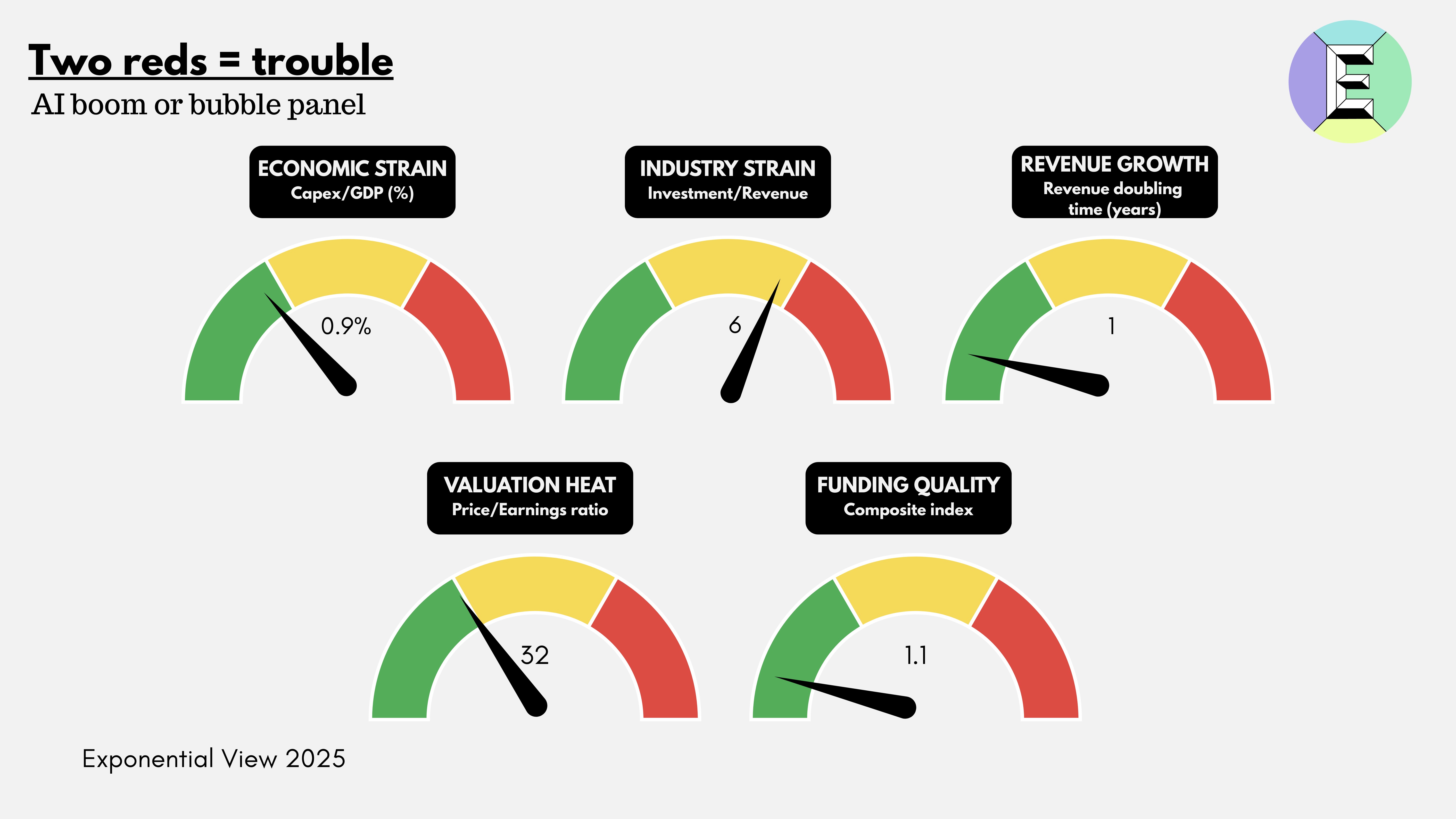
Core Viewpoint - The article argues that the current state of artificial intelligence (AI) is not a bubble, but there are potential danger signals that need to be monitored through a framework of five indicators [1][2][6]. Group 1: Definition and Historical Context of Bubbles - Bubbles are not just financial phenomena but also cultural products, often associated with greed and folly [7]. - Historical examples of bubbles include the South Sea Bubble, the Roaring Twenties stock market, and the 2008 housing market crash, each characterized by overvaluation and subsequent collapse [9][10]. - The article defines a bubble as a situation where stock values drop by 50% from their peak and remain low for at least five years [10][13]. Group 2: Current AI Investment Landscape - Since the launch of ChatGPT, capital expenditures by large-scale cloud service providers have more than doubled, raising questions about the sustainability of such spending [14][16]. - Morgan Stanley predicts that AI infrastructure spending will reach $3 trillion by 2029, indicating significant investment momentum [17]. Group 3: Five Indicators Framework - The five indicators to assess the AI landscape are: 1. Economic Pressure: Evaluates whether current investment levels are distorting the economy [18]. 2. Industry Pressure: Assesses if industry revenues align with capital expenditures [30]. 3. Revenue Growth: Measures the speed of revenue growth relative to investment [35]. 4. Valuation Heat: Analyzes how high valuations are compared to historical standards [39]. 5. Quality of Capital: Examines the source and structure of funding supporting the industry [46]. Group 4: Economic Pressure - Current AI investment is at approximately 0.9% of U.S. GDP, projected to rise to 1.6% by 2030, indicating it is currently in the green zone but may soon enter the yellow zone [23][27]. Group 5: Industry Pressure - The capital expenditure to revenue ratio for generative AI is currently six times, indicating significant pressure, but this is not yet a warning sign as demand for AI services remains high [33]. Group 6: Revenue Growth - Generative AI revenue is expected to grow significantly, with estimates suggesting it could reach $1 trillion by 2028, indicating strong growth potential [38]. Group 7: Valuation Heat - Current market valuations are not as extreme as during the internet bubble, with the Nasdaq's P/E ratio around 32, which is lower than the peak of 72 during the internet boom [42][44]. Group 8: Quality of Capital - The quality of capital in the AI sector appears stable, with major companies generating substantial cash flow to support investments, although there are concerns about future funding gaps [49][51]. Group 9: Conclusion - The analysis suggests that generative AI is in a demand-driven, capital-intensive growth phase rather than a bubble, but vigilance is required as certain indicators may signal a shift towards instability in the future [52][54].


AI资本开支太狂热了?高盛:这才到哪呢
Hua Er Jie Jian Wen· 2025-10-19 08:12
Core Insights - The current scale of AI investment is sustainable and not overheated, indicating a robust macro story for AI infrastructure development [1][4] - AI-related investments account for less than 1% of the US GDP, significantly lower than historical peaks in other technology cycles [4] - The productivity gains from AI are projected to generate $8 trillion in capital income for US companies, far exceeding current and foreseeable AI investment totals [1][4] Investment Trends - Since mid-2023, there has been a significant acceleration in AI infrastructure investment, with an estimated $300 billion in revenue growth for US companies in AI-related infrastructure by 2025 [2] - AI-related spending has seen an annualized growth of $277 billion compared to 2022 [2] - Major investment agreements have been announced by OpenAI, including a $300 billion partnership with Oracle and a $100 billion investment from Nvidia [2] Supporting Factors for AI Capital Expenditure - Productivity improvements are expected to be substantial, with a projected 15% increase in US labor productivity due to the widespread application of generative AI over the next decade [3] - The demand for computing power is increasing rapidly, with AI model sizes growing at an annual rate of 400%, outpacing the 40% annual decline in computing costs [3] - The growth rates for training queries and cutting-edge models are 350% and 125% respectively, indicating sustained demand for AI infrastructure investment [3] Historical Context of AI Investment - Although nominal AI infrastructure investment has reached new highs, it remains modest compared to historical technology cycles, where peaks accounted for 2-5% of GDP [4] - The estimated present value of productivity gains from generative AI is $20 trillion, with $8 trillion expected to flow as capital gains to US companies [4] - Even under pessimistic or optimistic scenarios, the projected economic benefits from AI significantly exceed current and future investment totals [4]
英伟达(NVDA.US)的又一场“阳谋”
智通财经网· 2025-10-19 05:49
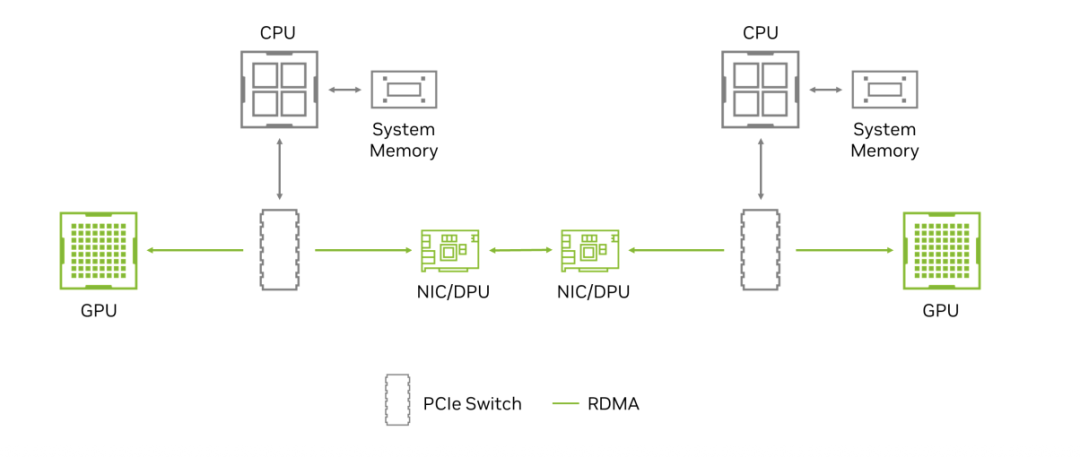
Core Insights - The performance advancements in data centers over the past two decades have primarily relied on the evolution of computing chips, but the advent of generative AI has redefined the entire computing power framework, emphasizing the importance of network efficiency in large model training [1][10] - NVIDIA's Spectrum-X Ethernet switch and related technologies have been adopted by major tech giants Meta and Oracle, marking a significant step towards AI-optimized Ethernet solutions [1][9] Group 1: Spectrum-X Features - Spectrum-X is designed to address the unique challenges of AI workloads, focusing on ensuring performance under extreme conditions rather than average performance [2] - Key improvements of Spectrum-X include: - Lossless Ethernet capabilities achieved through RoCE technology, PFC, and DDP, ensuring end-to-end lossless transmission [2][5] - Adaptive routing and packet scheduling to manage large "elephant flows" and prevent network congestion [5][7] - Advanced congestion control with in-band telemetry for real-time network status reporting, achieving 95% data throughput compared to 60% for traditional Ethernet [7][8] - Performance isolation and security features, including shared buffer architecture and encryption mechanisms, providing a level of security akin to private clusters [8][9] Group 2: Industry Impact - The introduction of Spectrum-X represents a strategic shift in the Ethernet networking industry, effectively integrating multiple components into a cohesive ecosystem that challenges traditional network vendors [11][12] - Companies like Broadcom and Marvell, which have historically dominated the high-end Ethernet chip market, may face challenges as Spectrum-X's capabilities threaten their value proposition [13] - Traditional network equipment suppliers such as Cisco and Arista Networks may also be impacted, as NVIDIA's integrated approach reduces reliance on their optimization solutions in AI-centric environments [14][15] Group 3: Competitive Landscape - The launch of Spectrum-X could significantly alter the competitive dynamics within the Ethernet networking sector, compelling companies to either integrate into NVIDIA's AI network framework or risk marginalization [12][13] - Startups focused on interconnect solutions may find their market space constrained as large cloud providers adopt Spectrum-X architecture, which centralizes control and reduces compatibility with independent solutions [16][17] - NVIDIA's Quantum InfiniBand remains the leading high-performance network standard, emphasizing the contrast between its closed ecosystem and the open standards being pursued by the Ultra Ethernet Consortium [19][21]
库克忙着直播带货!苹果下一任CEO专心搞AI……
Sou Hu Cai Jing· 2025-10-19 04:06
Core Points - Apple has announced a significant expansion and redesign of its vulnerability reward program, doubling the maximum payout and introducing new research categories with a more transparent reward structure [2][6] - Since the program's launch in 2020, Apple has awarded $35 million to 800 security researchers, with rewards reaching up to $500,000 for specific vulnerabilities [4][6] - The maximum base reward has increased to $2 million for reporting vulnerabilities that could lead to zero-click remote intrusions [5][6] Summary by Category Vulnerability Reward Program - Apple has expanded its vulnerability reward program, increasing the maximum payout to $2 million and introducing new categories for research [2][6] - The program has awarded $35 million to 800 researchers since its inception in 2020, with specific rewards for various types of vulnerabilities [4][6] Reward Structure - The reward structure includes a range of payouts, from $5,000 to $500,000, depending on the severity and type of vulnerability reported [5] - For less impactful but valid reports, Apple will issue a $1,000 "encouragement award" [8] Leadership and Future Direction - Mark Gurman suggests that John Ternus, Apple's Senior Vice President of Hardware Engineering, is a leading candidate to succeed Tim Cook as CEO due to his technical expertise and increasing visibility [12][15] - Ternus has been entrusted with key decisions regarding product roadmaps and strategies, indicating his growing influence within the company [15]

30天,香农芯创13次新高
Zhong Guo Zheng Quan Bao· 2025-10-18 12:15
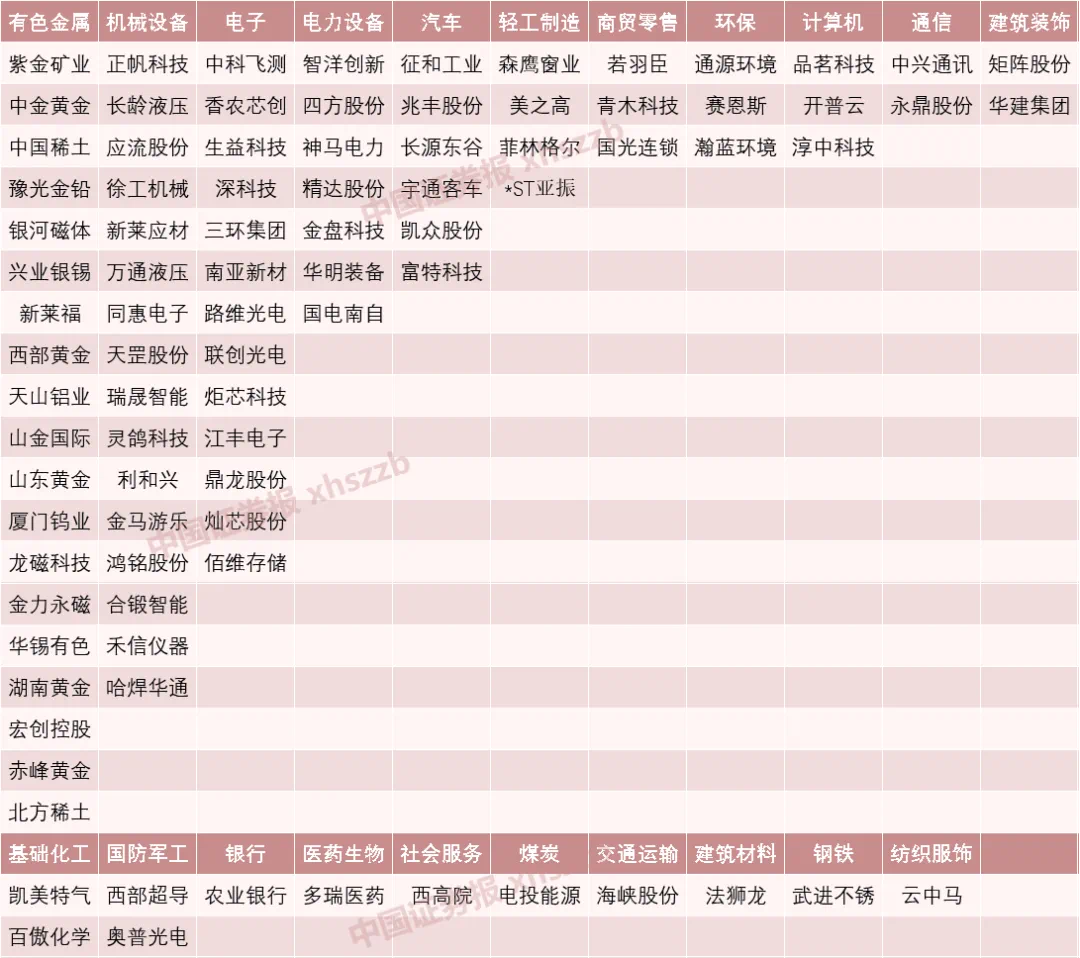
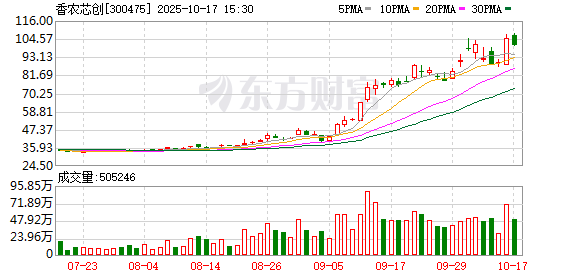
Core Insights - This week, 90 stocks reached historical highs, excluding newly listed stocks from the past year, with a total of 929 stocks achieving this milestone since the beginning of the year as of October 17 [1][2] Group 1: Stock Performance - Among the 90 stocks that hit new highs, sectors such as non-ferrous metals and storage chips saw active trading, with leading storage chip stock, Xiangnong Chip, achieving a market capitalization of 46.6 billion yuan [2] - Agricultural Bank's stock price increased by 11.57% this week, drawing market attention [2] - The stocks that reached new highs are concentrated in the non-ferrous metals (19 stocks), machinery equipment (16 stocks), and electronics (13 stocks) sectors [2] - The main board had 49 stocks, the Sci-Tech Innovation Board had 17, the Growth Enterprise Market had 19, and the Beijing Stock Exchange had 5 [2] - The top five stocks by trading volume this week were ZTE Corporation (85.04 billion yuan), Northern Rare Earth (81.37 billion yuan), Zijin Mining (58.61 billion yuan), Deep Technology (35.53 billion yuan), and China Rare Earth (27.95 billion yuan) [2] Group 2: Storage Chip Sector - The storage chip sector has seen significant price increases due to several catalysts, including a surge in AI computing power demand and a shift by manufacturers towards high-margin products [4][5] - Supply tightness from original manufacturers and a rise in market inquiries have led to increased prices for storage chips [6] - Notable stocks in the storage chip sector that frequently reached new highs include Jinma Amusement (17 times), Feiling Keer (16 times), and Zijin Mining (14 times) [6] Group 3: Market Trends - The recent surge in dividend assets has attracted market attention, with a shift in market style globally, leading to a recovery opportunity for high-dividend sectors [6] - The top gainers this week included Xinlaifu (up 49.84%), Matrix Shares (up 39.20%), Haixia Shares (up 30.48%), Duori Pharmaceutical (up 28.84%), and Huajian Group (up 28.11%) [6] Group 4: High-Value Stocks - As of October 17, there are 9 stocks with prices exceeding 100 yuan, with the highest closing prices being Kaipu Cloud (184.4 yuan), Chunz中科技 (147.81 yuan), and Canxin Shares (131.10 yuan) [7]

30天,香农芯创,13次新高!
Zhong Guo Zheng Quan Bao· 2025-10-18 11:41
Core Insights - This week, 90 stocks reached historical highs, excluding newly listed stocks from the past year, with a total of 929 stocks achieving this milestone since the beginning of the year [2][3]. Group 1: Stock Performance - Among the 90 stocks that hit new highs, sectors such as non-ferrous metals and storage chips saw significant trading activity, with leading storage chip stock, Xiangnong Chip, achieving a market cap of 46.6 billion yuan [3][4]. - Agricultural Bank's stock price increased by 11.57% this week, drawing market attention [3]. - The stocks that reached new highs are primarily concentrated in the non-ferrous metals (19 stocks), machinery (16 stocks), and electronics (13 stocks) sectors [3][10]. Group 2: Trading Volume - The stocks with the highest trading volumes this week include ZTE Corporation (85.04 billion yuan), Northern Rare Earth (81.37 billion yuan), Zijin Mining (58.61 billion yuan), Deep Technology (35.53 billion yuan), and China Rare Earth (27.95 billion yuan) [3]. Group 3: Storage Chip Sector - The recent surge in the storage chip sector is attributed to several factors, including a significant increase in AI computing power demand, leading to a sharp rise in high-bandwidth memory (HBM) requirements [5]. - Manufacturers are shifting towards producing high-margin, high-value-added products, resulting in tight supply for traditional memory types like DDR4 [6]. - Supply tightness from original manufacturers and a rise in market inquiries have accelerated inventory depletion, causing storage chip prices to increase [7]. Group 4: Market Trends - The total market capitalization of stocks reaching new highs includes eight stocks with market caps exceeding 100 billion yuan, with Agricultural Bank, Zijin Mining, ZTE Corporation, Northern Rare Earth, and Shandong Gold leading the list [7]. - Recent market trends indicate a shift towards dividend assets, which have shown resilience during market fluctuations, suggesting a recovery opportunity for high-dividend sectors [7]. Group 5: Notable Stock Movements - The top gainers this week include Xinlaifu (up 49.84%), Matrix Shares (up 39.20%), Haixia Shares (up 30.48%), Duori Pharmaceutical (up 28.84%), and Huajian Group (up 28.11%) [7]. - As of October 17, nine stocks have prices exceeding 100 yuan, with the highest being Kaipu Cloud (184.4 yuan) and Chunzong Technology (147.81 yuan) [8].
库克已在中国近一周!“正推动苹果智能进入中国”
第一财经· 2025-10-18 08:29
Core Viewpoint - Apple's CEO Tim Cook is focusing on entering the Chinese market with Apple Intelligence, integrating AI capabilities into its operating system and applications, while facing significant challenges in achieving these goals [3][4]. Group 1: Apple's Strategic Initiatives - Tim Cook's visit to China aims to promote Apple Intelligence and the use of eSIM technology in iPhone Air smartphones [4]. - Apple is working to integrate AI functionalities across all applications, which requires advancements in personalized reasoning, intelligent task linking, and semantic understanding of unstructured information [4]. Group 2: Challenges and Competition - Apple faces challenges in deploying AI at scale, with several high-level executives in AI-related roles recently leaving the company, complicating its efforts to compete with OpenAI, Meta, and Google [4][5]. - The departure of Ke Yang, a key executive in AI search development, adds uncertainty to the planned major overhaul of Siri, which is crucial for enhancing Apple's AI capabilities [5]. - The delay in launching Apple Intelligence in China may put the company at a competitive disadvantage, as local smartphone manufacturers are rapidly integrating AI features into their products [5].