
双碳战略

Search documents
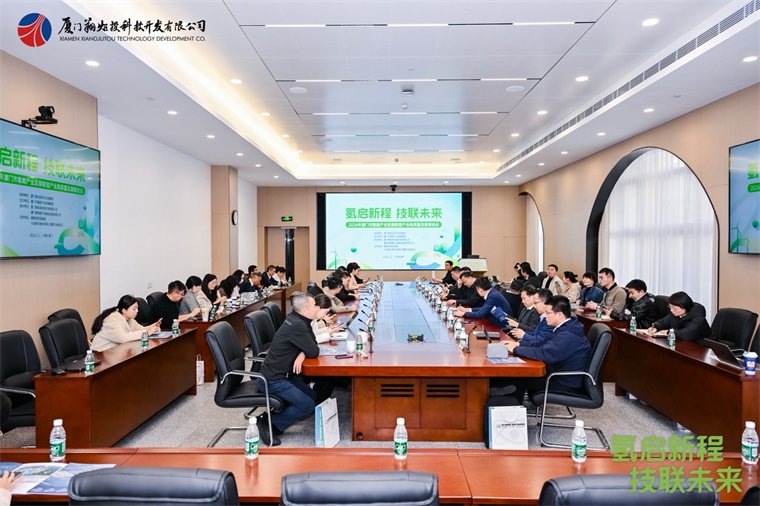
“氢启新程・技联未来”2026年厦门市氢能产业发展联盟产业高质量发展推进会圆满举办
Qian Zhan Wang· 2026-02-04 02:17
Core Insights - The conference titled "Hydrogen New Journey · Technology Alliance Future" was successfully held in Xiamen, focusing on the development path of the hydrogen energy industry in 2026 [1] - The event gathered representatives from government departments, industry experts, enterprises, and financial institutions to discuss the future of hydrogen energy in Xiamen [1] Group 1: Industry Development - Xiamen has actively laid out the hydrogen energy sector, establishing a complete industrial chain from production to application, and is beginning to export the "Xiamen solution" domestically and internationally [3] - The city has achieved multiple breakthroughs in technology, including the PEM electrolysis hydrogen production equipment recognized as a major technological equipment by the National Energy Administration [3] - Jinlong Automobile Group has developed a full range of hydrogen fuel vehicles, with its hydrogen fuel cell buses winning procurement projects, showcasing the industry's transition from laboratory to market [3] Group 2: Alliance Activities and Plans - The Xiamen Hydrogen Energy Industry Alliance's 2025 annual report and 2026 work plan were shared, focusing on expanding quality membership, enhancing policy frameworks, and promoting resource integration [4] - In 2026, the alliance plans to establish dedicated workstations in the airport economic zone and enhance member services through a digital platform and targeted promotional events [4] Group 3: Policy and Infrastructure - The Xiamen Airport Economic Zone will promote hydrogen industry development through improved mechanisms, policy support, application scenarios, public platforms, and industrial ecology [5] - A hydrogen innovation fund will be established to support high-quality industrial clustering, with a focus on integrated hydrogen production and application stations [5] Group 4: Marine Hydrogen Energy Focus - The conference highlighted the importance of "marine hydrogen energy" technology transfer, with plans for a national technology transfer center focusing on marine hydrogen energy [7] - The center aims to support projects related to high-end marine equipment and hydrogen energy materials, with financial backing available for significant investments [7] Group 5: Future Outlook - Xiamen aims to become a core hub for hydrogen energy development in Fujian, targeting 4,000 fuel cell vehicles and 50 billion yuan in output by 2025 [6] - The city plans to cultivate over 30 hydrogen-related enterprises by 2027, promoting high-quality development through technological innovation and diverse application scenarios [6] - The conference served as a summary of past achievements and a proactive response to the "Xiamen Hydrogen Energy Industry High-Quality Development Action Plan (2025-2027)" [11]

“十五五”取向硅钢产业深度研究及趋势前景预判报告
Xin Lang Cai Jing· 2026-02-03 12:52
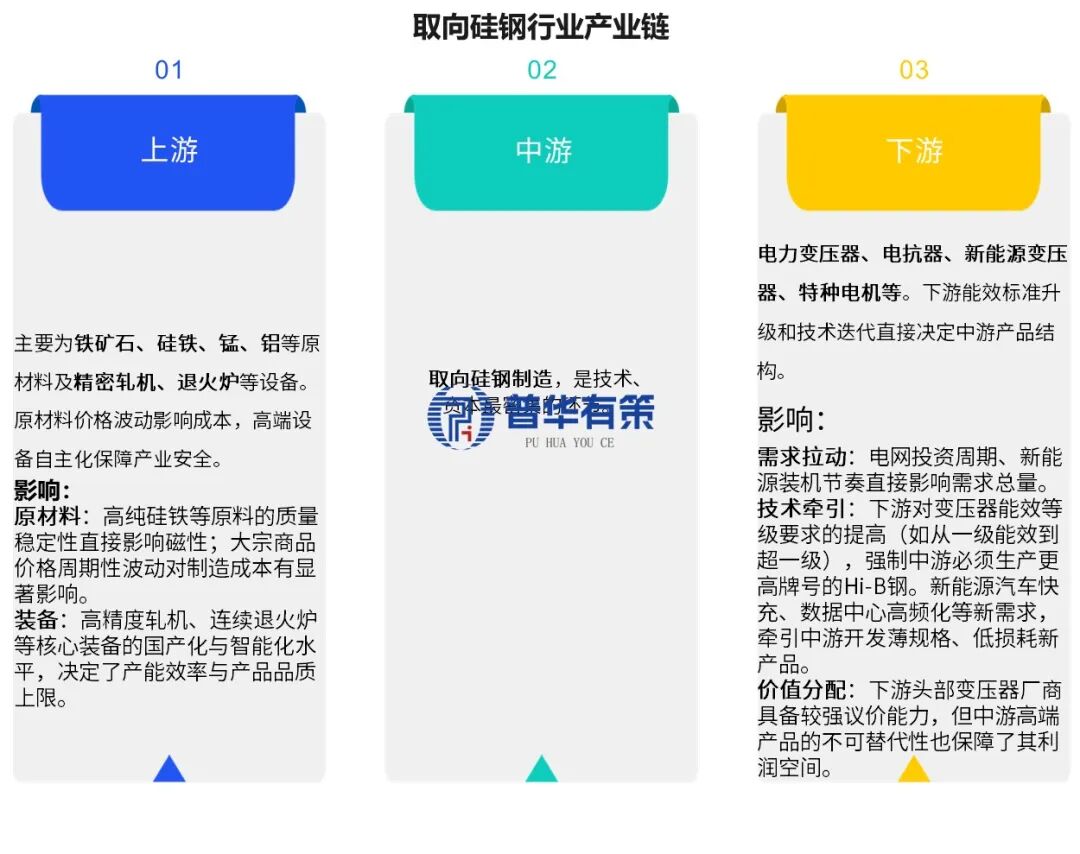
(来源:普华有策) 硅钢"皇冠上的明珠":能效革命与新质生产力驱动千亿级高端市场 1、取向硅钢行业概述 取向硅钢,学名冷轧取向电工钢,是一种关键的软磁合金材料。在业内,它被归类为用于制造电机和变压器铁芯的软磁钢。因其性能的不可替代性,取向 硅钢被公认为制造各类电力变压器铁芯,尤其是高效节能变压器核心的"钢铁艺术品",其发展水平直接关系到国家电网的能源传输效率和"双碳"战略的实 施。 中国已成为全球最大的生产和消费国。产能集中于宝武节能。"双碳"战略、《变压器能效提升计划》直接拉动高端硅钢需求。2025年中央经济工作会议强 调发展"新质生产力",推动产业高端化、绿色化,为行业技术创新与高质量发展注入核心动力。 2、取向硅钢行业产业链分析 取向硅钢行业产业链分析 3、取向硅钢行业竞争格局 中国取向硅钢行业呈现出高集中度、高壁垒、龙头主导的"一超多强"式竞争格局。 市场由中国宝武钢铁集团绝对主导,其通过旗下的宝钢股份、武汉钢铁有限公司,占据了国内超过60%的高端产能,拥有最完备的产品谱系和最深厚的技 术积累,是行业技术标准和价格的主要制定者,扮演着"市场压舱石"和"技术引领者"的双重角色。 首钢集团作为最强劲的追赶 ...
7大院士领衔!国家级零碳园区创建专家指导委员会正式成立 赋能双碳战略落地
Zhong Guo Neng Yuan Wang· 2026-02-03 11:01
Core Insights - The AI + Energy Development Conference held on January 30, 2026, focused on the establishment of a national-level zero-carbon park expert advisory committee to support China's dual carbon strategy [1][2] - The committee aims to address key challenges in zero-carbon park construction, including policy implementation, industrial transformation, technology selection, financing, and evaluation [1][3] Group 1: Expert Committee Formation - The expert advisory committee is led by Zhong Faping, a prominent figure in energy storage technology, with seven academicians from various fields as deputy chairs [2] - The committee's formation reflects China's commitment to high-quality development of zero-carbon parks, leveraging top-tier expertise [2] Group 2: Zero-Carbon Park Significance - Zero-carbon parks are crucial for achieving macro dual carbon goals and meeting the development needs of enterprises through cost reduction and carbon emission control [3] - The goal is to establish around 100 national-level zero-carbon parks during the 14th Five-Year Plan, which will lead to significant changes in production methods, energy structures, governance models, and business models [3] Group 3: Systematic Integration and Collaboration - The construction of zero-carbon parks is a complex integration project involving energy, policy, technology, and finance, requiring collaboration across multiple sectors [3][4] - The establishment of a large-scale energy storage ecological innovation consortium aims to create a deeply integrated development model, demonstrating successful practices in various provinces [3] Group 4: Future Directions - The committee plans to promote technological innovations and develop replicable national-level zero-carbon park models, contributing to the dual carbon goals and high-quality energy development [4]

中粮科技(000930) - 中粮科技:000930中粮科技投资者关系管理信息20260202②
2026-02-03 08:16
Group 1: Business Overview - The company operates in three main business segments: - Fuel ethanol business accounts for approximately 44% of revenue, with a production capacity of 1.3 million tons and a market share of 32%-40% in a domestic market of about 3 million tons per year [1][2] - Food raw materials business contributes around 20%-30% of revenue, focusing on customized sweetener solutions for leading food and beverage companies [2][3] - Biobased new materials business is a strategic emerging segment expected to start production in Q1 2026, leveraging existing corn deep processing capacity [3][4] Group 2: Competitive Landscape - Fuel ethanol is categorized as biomass energy, with no direct competition from coal-based ethanol due to regulatory restrictions [3][4] - Long-term demand for fuel ethanol remains stable, driven by the coexistence of fuel and new energy vehicles and regulatory requirements for gasoline quality [4][5] - The company aims to maintain its market position by building a comprehensive cost advantage through technology upgrades, diversified raw material sourcing, and optimized internal management [5][6] Group 3: Regional Strategies - In Northeast China, the company focuses on cost reduction and efficiency improvements through personnel optimization and major technological upgrades [6][7] - The company is adapting its competitive strategy in the starch and MSG sectors by shifting focus from low-value products to high-margin offerings [7][8] Group 4: Innovation and Future Prospects - The company has a three-step strategy for its core health sweetener product, allulose, with plans for market expansion and collaboration with leading food and beverage companies [8][9] - The company anticipates that high-value products like flavored syrups will see increased revenue share as market demand grows [9] - The progress of the lactide project has been delayed due to site relocation and necessary adjustments, but the long-term outlook remains positive [9] Group 5: Raw Material Management - The company employs risk management strategies, including hedging, to manage procurement costs and mitigate price volatility risks, particularly for corn [9]

把握产业发展格局 广期所举办“新能源·向未来”碳酸锂业务专题培训
Qi Huo Ri Bao Wang· 2026-02-03 08:14
期货日报网讯(记者 刘威魁)受供需多重因素持续影响,近期碳酸锂价格波动较大,为助力市场参与 者把握碳酸锂产业发展格局及未来趋势,加深对期货业务规则的理解,增强风险防范意识和能力,1月 30日,广期所在上海举办"新能源·向未来"碳酸锂业务专题培训,通过"现场+线上直播"相结合的模式, 面向期货公司分析师、产业企业及投资者等市场参与者,系统化讲解碳酸锂市场的运行情况,有效帮助 市场参与者及时把握行业动态、合理运用期货工具。据悉,本次活动共吸引期货公司、产业客户及其他 投资者等共计近2500人参与。 产业企业应注重加强风险管理 在国家"双碳"战略指引下,锂电产业发展迅猛,成为推动全球能源绿色低碳转型的重要引擎,产业地位 不断提升。我国锂产业在产业规模、技术经济指标、综合竞争力等方面成果突出,在全球具有一定影响 力。 2025年以来,受供需多重因素持续影响,碳酸锂价格波动较大。相关数据显示,2025年,碳酸锂价格呈 现"先抑后扬、触底反转"态势,上半年从7.8万元/吨阴跌至6月的5.9万元/吨;下半年受江西锂矿减产、 储能需求增长影响,价格反弹,四季度主力合约突破13万元/吨,较年内低点翻倍。 自碳酸锂期货上市以来, ...
中粮科技(000930) - 中粮科技:000930中粮科技投资者关系管理信息20260202②
2026-02-03 06:24
Group 1: Business Overview - The company operates in three main business segments: - Fuel ethanol business accounts for approximately 44% of revenue, with a production capacity of 1.3 million tons and a market share of 32%-40% in a domestic market of about 3 million tons [1][2] - Food raw materials business contributes around 20%-30% of revenue, focusing on customized sweetener solutions for leading food and beverage companies [2] - Bio-based new materials business is a strategic emerging segment expected to start production in Q1 2026, leveraging existing corn deep processing capacity [2][3] Group 2: Competitive Landscape - Fuel ethanol is categorized as a biomass energy source, with no direct competition from coal-based ethanol due to regulatory restrictions [3] - Long-term demand for fuel ethanol remains stable, driven by the coexistence of fuel and new energy vehicles and stringent gasoline quality standards [3][4] - The company aims to maintain its market position by building a comprehensive cost advantage through technology upgrades, diversified raw material sourcing, and optimized internal management [4] Group 3: Regional Strategies - In Northeast China, the company focuses on cost reduction and efficiency improvements by optimizing personnel and implementing major technological upgrades [5] - The company is actively responding to competition from private enterprises in the starch and MSG sectors by shifting focus to high-value products and differentiating its offerings [6] Group 4: Innovation and Product Development - The company has a three-step strategy for the development of allulose, a key health sweetener, with plans for market launch in Q1 2026 [7] - Allulose is expected to have a higher gross margin than traditional glucose syrup, with optimistic short-term performance depending on market demand [7] - High-value products like flavored syrups are in the market incubation phase, with significant growth potential as consumer scenarios expand [8] Group 5: Project Management and Future Outlook - The company has relocated its lactide project to Anhui, which has caused delays due to necessary design optimizations and equipment adjustments [9] - The long-term outlook for the lactide business is positive, with plans to ensure stable operation of the initial 30,000 tons capacity and potential expansion into downstream polylactic acid markets [9] - The company employs risk management strategies, including hedging, to manage corn price fluctuations and secure profit margins [9]
山东港口渤海湾港与山东能源集团共建煤炭储配贸易分销中心
Da Zhong Ri Bao· 2026-02-03 04:59
项目运营所需的各类装卸、仓储、加工设备用能,均来自渤海湾港自主开发的风电绿电,从能源消耗源 头减少碳排放,将港口新能源开发与煤炭储运业务深度融合,既践行了国家"双碳"战略,又推动煤炭储 运环节的清洁化升级,实现港口生产作业环节的"零碳"目标,让传统煤炭业务搭上绿色能源发展快车。 为实现煤炭物流全链条低碳化,项目同步打造专业化"绿色集疏运走廊"。集疏运环节摒弃传统燃油运输 模式,全面采用LNG燃气车辆与新能源重卡搭配的运输体系,所有运输车辆均为清洁能源驱动,实现 煤炭从港区到腹地、从仓储到配送的全程低碳运输,有效减少运输环节的扬尘与尾气污染,推动潍坊 港"零碳港口3.0"建设探索,让煤炭运输真正实现"绿色通行"。 此次合作,是港企协同推进煤炭清洁高效利用的重要探索,通过煤炭全链条绿色升级,强化区域能源保 供能力,也为港口与能源企业携手推动低碳发展提供可复制、可推广的实践经验。 该项目以港口为核心枢纽,融合绿电全场景应用与绿色集疏运走廊建设,打造煤炭储运贸一体化低碳发 展样板,为区域能源保供与绿色转型注入新动能,也为煤炭清洁高效利用提供港企合作的全新实践路 径。 据悉,该项目立足渤海湾港区位与物流优势,整合山东能 ...
400亿电池巨头欣旺达冲刺A+H上市
2 1 Shi Ji Jing Ji Bao Dao· 2026-02-03 01:56
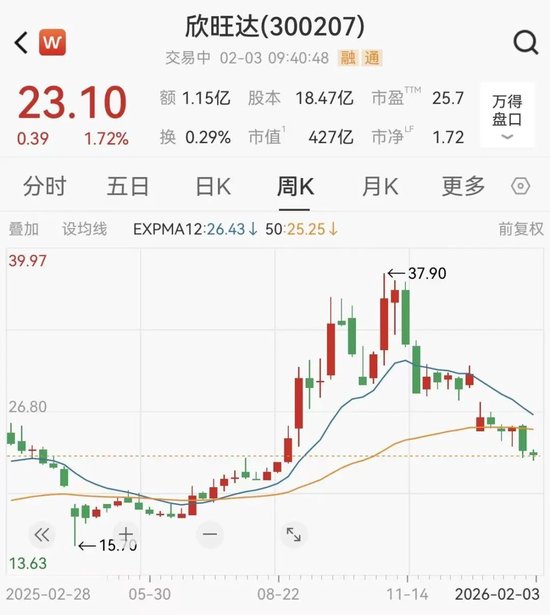
Core Viewpoint - XINWANDA has re-submitted its application to the Hong Kong Stock Exchange for an IPO, focusing on raising funds to support its overseas production capacity expansion, particularly in Hungary, Vietnam, Morocco, and India [1] Group 1: Company Overview - XINWANDA is a leading player in the consumer battery sector, holding a 34.3% market share in global mobile phone batteries [4] - The company has expanded into automotive power batteries and energy storage systems, becoming one of the fastest-growing manufacturers in these segments [4] - Revenue figures for XINWANDA from 2022 to 2024 are projected at 52.16 billion, 47.86 billion, and 56.02 billion RMB, respectively, with a compound annual growth rate of 3.6% [4] Group 2: Financial Performance - In the first three quarters of 2025, XINWANDA reported revenue of 43.534 billion RMB, a year-on-year increase of 13.73%, and a net profit of 1.405 billion RMB, up 15.94% [4] - The sales volume of consumer batteries increased, while power battery sales grew by 80% and energy storage systems saw nearly a threefold increase compared to the same period in 2024 [5] - Despite the increase in sales volume, the average selling prices for consumer and power batteries have declined, with consumer batteries dropping from 47.2 RMB to 47.6 RMB per unit and power batteries from 0.7 RMB/Wh to 0.5 RMB/Wh [6] Group 3: Legal Issues - XINWANDA faces a lawsuit from Geely's subsidiary, Weirui Electric, claiming 2.314 billion RMB, which poses a risk to its IPO process [10] - The company believes the lawsuit lacks sufficient evidence and that the likelihood of a court ruling in favor of the plaintiff is low [11] - XINWANDA has made provisions for potential liabilities related to the lawsuit, including a 275 million RMB provision for warranty claims and a 109 million RMB provision for bad debts [12]

400亿电池巨头冲刺A+H上市
21世纪经济报道· 2026-02-03 01:52
Core Viewpoint - The article discusses the recent actions of XINWANDA, including its reapplication for an H-share listing in Hong Kong, focusing on overseas production capacity and the implications of a significant lawsuit with Geely's subsidiary, which could impact investor sentiment [1][9]. Group 1: Company Overview - XINWANDA has submitted its application to the Hong Kong Stock Exchange again, with a focus on supporting its overseas production capacity, particularly in Hungary, Vietnam, Morocco, and India [1]. - The company has a leading position in the consumer battery market, holding a 34.3% global market share in mobile phone batteries, and is among the fastest-growing manufacturers in the power battery and energy storage sectors [4]. - Revenue figures for XINWANDA from 2022 to 2024 are projected at 52.16 billion, 47.86 billion, and 56.02 billion RMB, respectively, with a compound annual growth rate of 3.6% [4]. Group 2: Financial Performance - In the first three quarters of 2025, XINWANDA achieved a revenue of 43.534 billion RMB, a year-on-year increase of 13.73%, and a net profit of 1.405 billion RMB, up 15.94% [4]. - The sales volume of consumer batteries increased, while power battery sales grew by 80% and energy storage systems saw nearly a threefold increase compared to the same period in the previous year [5]. - Despite the increase in sales volume, the average selling prices for consumer batteries decreased from 47.2 RMB to 47.6 RMB per unit, and for power batteries from 0.7 RMB/Wh to 0.5 RMB/Wh [5][6]. Group 3: Legal Issues - XINWANDA faces a lawsuit from Geely's subsidiary, Weirui Electric, claiming 2.314 billion RMB, which poses a significant risk to the company's operations and investor confidence [9]. - The company believes the lawsuit lacks sufficient evidence and that the likelihood of a ruling against them is low, as the claims cover a wide range of issues beyond the supplied battery cells [10]. - XINWANDA has made provisions of 275 million RMB for warranty claims and potential costs related to the lawsuit, indicating a cautious approach to financial management [11].

云南省嵩明县纪委监委助力优化营商环境——监督赋能 服务加力
Ren Min Ri Bao· 2026-02-02 22:27
Group 1 - The Yunnan Province Songming County's disciplinary inspection and supervision department is actively working to improve the business environment by conducting targeted supervision on service quality and policy implementation [1] - The county's disciplinary inspection and supervision committee has implemented "embedded" supervision and "preventive" reminders to address issues related to key projects, ensuring a closed-loop process of "assignment - rectification - implementation" [1] - The PET bottle recycling production line project is a key initiative under the county's "dual carbon" strategy, with the committee facilitating collaboration among various departments to overcome challenges related to land, electricity, and labor [1] Group 2 - The demand for skilled welding technicians is increasing, prompting the county's disciplinary inspection and supervision department to encourage the human resources bureau to assess employment needs and integrate training resources [2] - The county has initiated "order-based" skill training programs in collaboration with vocational education institutions, resulting in stable employment for over 2,000 individuals annually and indirectly benefiting more than 5,000 others [2] - The county's disciplinary inspection and supervision committee emphasizes strict enforcement of regulations while promoting accountability among officials to support major project construction and healthy business development [2]