开源模型

Search documents
中美大模型分歧下,企业们也站在选择路口
财富FORTUNE· 2025-11-22 13:09
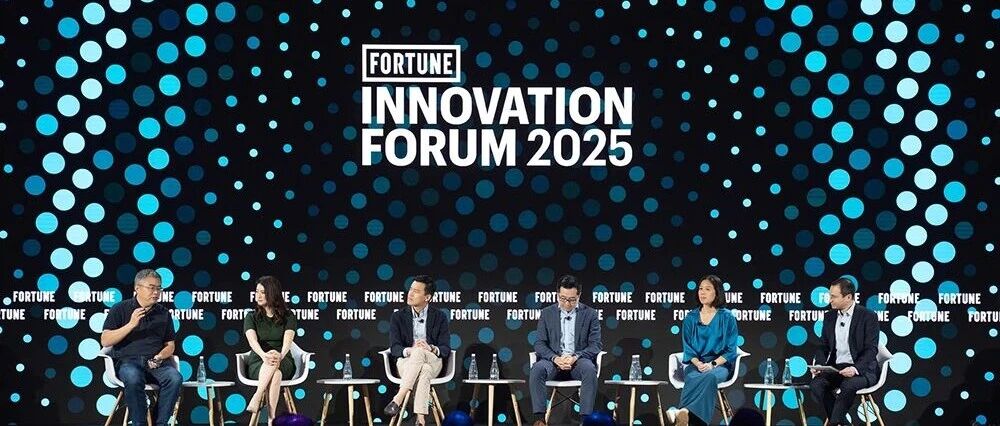
祥峰投资东南亚与印度区执行董事Chan Yip Pang认为,公司选择路线时要基于使用目的——是将它用 于内部生产力的提升,还是用于原生AI应用程序的构建? 如果是前者,企业要测试AI解决方案是否真的能够提高生产力,那么通常会采用闭源模型,这样可以 迅速获取投资回报率。但随着时间推移,费用会逐渐增加,在一个时间点公司会为了降低成本转向开 源。 如果是为了开发AI应用并将其作为服务销售的初创公司,选择开源模型是更好的选择,因为开源模式 能够让公司完全掌控技术栈,成本可控,且不必依赖大模型背后的巨头。相比之下,闭源模型随时可能 涨价,甚至改变模型特征,而用户公司对此毫无还手之力。 来自金融科技领域的Dyna.AI总经理兼投资者关系负责人Cynthia Siantar指出,她所在的领域受到严格监 管,监管者不会问公司的大模型是开源还是闭源,而是会问如何做出决策的?公司需要对此给出解释, 这时开源模型的优势就会凸显。 Amplify AI Group首席执行官Will Liang的客户大多来自金融服务行业,他表示,如果AI是用于关乎公司 竞争优势和机密的事项,大多情况下开源模式是更安全的选择,因为公司可以亲自部署并严 ...

GPU寿命,远超想象
半导体芯闻· 2025-11-20 10:49
Core Viewpoint - The prevailing concern regarding the depreciation of GPUs in the AI industry is largely unfounded, as the actual depreciation cycle is more favorable than many investors believe [1][2]. GPU Depreciation and Lifespan - Analysts suggest that the profit cycle for GPUs is approximately 6 years, and the depreciation accounting practices of major cloud computing firms are deemed reasonable [2]. - The cost of operating GPUs in AI data centers is significantly lower compared to the GPU rental market, allowing for a high marginal contribution rate when extending the lifespan of older GPUs [3]. - GPUs can have a practical lifespan of 7 to 8 years, with many companies still using GPUs that are over 5 years old and generating substantial profits [5]. Lifecycle Transition of GPUs - GPUs transition from high-performance tasks, such as training advanced AI models, to lower-demand inference workloads, allowing older GPUs to remain in active service [6]. - The variety of AI workloads enables older GPUs to be repurposed effectively, maintaining their profitability [6]. Cost Considerations - AI cloud computing companies often choose GPUs based on user expectations and budget, with older GPUs being utilized for lower-tier services while newer models are reserved for premium offerings [7]. - Many AI services can run on open-source models that require less computational power, further enhancing the utility of older GPUs [8]. Economic Advantages of Older GPUs - Despite higher energy consumption, older GPUs are often preferred due to their lower procurement costs, making them more cost-effective overall [10].

「千问」正式上线,阿里要认真做一款AI应用了
36氪· 2025-11-17 13:07
Core Viewpoint - Alibaba's launch of the "Qianwen" app is seen as a strategic move in the "AI era's future battle," aiming to create a personal AI assistant that can chat and perform tasks, positioning itself as a future AI lifestyle gateway [4][6]. Group 1: Product Launch and Features - On November 17, Alibaba officially announced the "Qianwen" project, with the public beta version of the app now available [5]. - The "Qianwen" app is positioned as Alibaba's most powerful model official AI assistant, featuring capabilities such as conversational Q&A, intelligent writing, and a multi-modal camera function [7]. - A key anticipated feature of the "Qianwen" app is the upcoming shopping agent, which will allow users to shop on platforms like Taobao and Tmall using natural language commands [10]. Group 2: Market Positioning and Strategy - The launch of the "Qianwen" app is widely regarded as Alibaba's determination to compete directly with ChatGPT in the consumer application market [13]. - Alibaba's Qwen model series has achieved significant success, with over 600 million downloads and more than 170,000 derivative models as of September 2024, accounting for over 30% of global model downloads on Hugging Face [13]. - The company is consolidating its consumer-facing AI products to create a unified application outlet, enhancing its influence in the consumer market [15]. Group 3: Industry Trends and Competitive Landscape - The transition from "Tongyi" to "Qianwen" reflects an industry consensus that the success of AI products in attracting consumer users increasingly relies on the enhancement of underlying model capabilities rather than traditional marketing [17]. - Major companies are accelerating investments in consumer AI products and organizational integration, as seen with Tencent and Baidu's strategic realignments [18]. - The competitive landscape is intensifying, with OpenAI continuously releasing new applications, indicating that the cycle of model advancement is shortening, making model capability a critical product for companies [21].

千问App上线公测 与ChatGPT展开全面竞争
Shang Hai Zheng Quan Bao· 2025-11-17 05:05
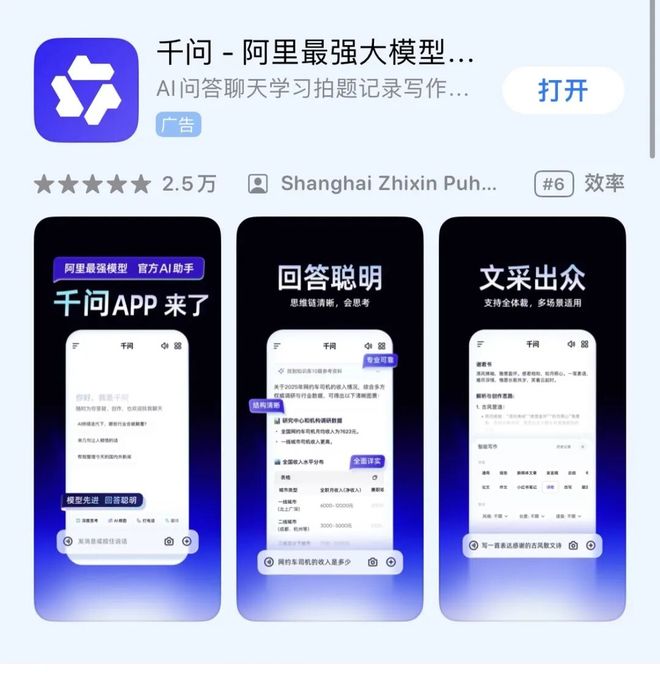
阿里方面表示,这次发布的千问App是一个初级版本,将用最先进的模型,打造一个"会聊天能办事的个人AI助手"。除了聊天足够聪明外,"能办事"将是 千问App的一个重要发力方向。千问App的战略目标是打造未来的AI生活入口。 目前,千问App已经展现出一定的办事能力。比如,一句指令就能让千问App几秒钟完成一份研究报告,并制作成几十页的精美PPT。不久前,千问在与 ChatGPT、Gemini、Grok等全球顶级模型PK的实盘投资大赛中斩获冠军。 据透露,阿里巴巴正在计划将地图、外卖、订票、办公、学习、购物、健康等各类生活场景接入千问App,让千问具备更强大的办事能力。 ChatGPT提供免费版本和付费订阅计划。免费版对所有人开放,但消息数量、响应速度和功能受限。付费计划以美元计费,按用户每月收费,支持月付或 年付,Plus计划每月20美元。如今,免费开放的千问App正在与各类生活场景生态结合,与ChatGPT展开全面竞争。 11月17日,阿里巴巴正式宣布"千问"项目,全力进军AI to C市场。当天,千问App公测版上线。 千问App基于全球性能第一的开源模型Qwen3,凭借免费,以及与各类生活场景生态的结合, ...
阿里千问App上线,美国又在担忧什么?
Huan Qiu Wang· 2025-11-17 03:07
Group 1 - Alibaba launched its Qwen-based AI assistant app, Qianwen, on November 14, directly competing with ChatGPT [1] - A White House national security memo cited intelligence suggesting Alibaba provided technical support to the Chinese military, raising concerns in the U.S. [1][2] - Alibaba denied the allegations, calling them baseless and an attempt to manipulate public perception [2][4] Group 2 - The U.S. government's scrutiny of Chinese tech companies is increasing, particularly regarding cloud services and AI developments [2][6] - Alibaba is one of the first domestic companies to open-source its self-developed large models, with over 300 models released and global downloads exceeding 600 million [4] - The company is reportedly revamping its main AI app to better compete with OpenAI's ChatGPT, indicating a significant investment in AI infrastructure [5][6] Group 3 - Concerns about the potential dominance of Chinese AI models have been voiced by U.S. figures, including former Google CEO Eric Schmidt, who noted the geopolitical implications of open-source versus closed-source models [5][6] - The U.S. Congress has proposed the "No Adversarial AI Act" to prohibit federal agencies from using Chinese-developed AI models, reflecting a formal push to resist Chinese AI technology [6] - The emergence of Alibaba's Qianwen has sparked a "Qwen panic" in Silicon Valley, highlighting fears of losing competitive advantage in the AI space [6]

“千问”正式上线,阿里要认真做一款AI应用了
3 6 Ke· 2025-11-17 02:35
Core Insights - Alibaba officially announced the launch of the "Qianwen" project on November 17, with the public beta version of the Qianwen app now available, aiming to create a personal AI assistant that can chat and perform tasks, marking a strategic move into the AI To C market [1][4][6] Product Features - The Qianwen app is positioned as Alibaba's most powerful AI assistant, featuring capabilities such as conversational Q&A, intelligent writing, and a multi-modal camera function [1][3] - A key upcoming feature is the shopping agent, which will allow users to shop on platforms like Taobao and Tmall using natural language commands [4][5] Strategic Direction - The launch of the Qianwen app is seen as a direct response to ChatGPT, indicating Alibaba's commitment to the consumer application market [6][11] - Alibaba's AI To C strategy includes a range of products from the Qianwen app to AI glasses, all overseen by the president of the Intelligent Information Business Group, Wu Jia [5][6] Market Positioning - The Qwen model series has achieved significant traction, with over 600 million downloads and more than 170,000 derivative models, capturing over 30% of global model downloads on HuggingFace [6][10] - Alibaba's previous AI assistant, the "Tongyi" app, was launched earlier than competitors, but initial efforts in the To C space were limited [6][7] Competitive Landscape - The AI product landscape is shifting towards enhancing model capabilities rather than relying solely on marketing and operations for user acquisition [8][9] - Alibaba is also developing an international version of the Qianwen app to compete directly with ChatGPT in overseas markets [10][11] Future Outlook - The rapid evolution of AI models necessitates a unified branding approach for Alibaba's To C products to effectively capture user engagement and establish a commercial ecosystem [11]
这样的伎俩,中国人见过太多
Xin Lang Cai Jing· 2025-11-16 03:13
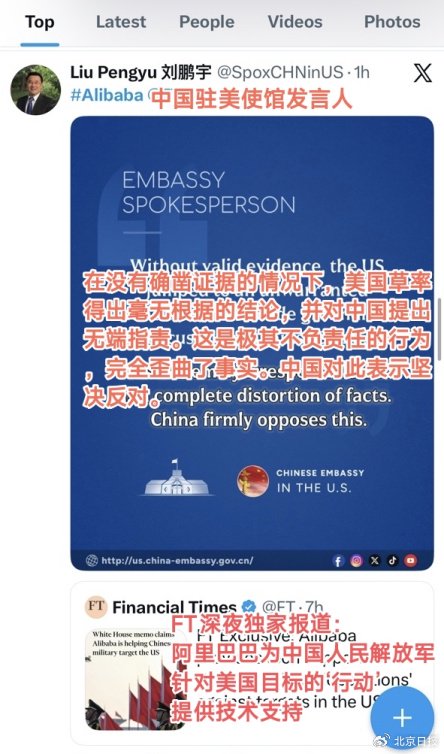
Core Viewpoint - The article discusses allegations made by the U.S. government against Alibaba, claiming that the company provides technological support to the Chinese military for actions targeting the U.S. However, the report lacks specific details and has been criticized as unfounded by both Alibaba and the Chinese embassy in the U.S. [1][2] Group 1: Allegations and Responses - The U.S. White House accused Alibaba of providing technical support to the Chinese military, but the report did not specify the capabilities or actions involved [1] - Alibaba issued a strong statement denying the allegations, questioning the motives behind the anonymous leak and labeling it as a malicious public relations campaign [1] - The Chinese embassy in the U.S. refuted the claims, stating that the accusations were baseless and irresponsible [1][2] Group 2: Context of the Allegations - The allegations come amid reports that Alibaba has launched the "Qwen" project, creating a personal AI assistant app that competes directly with ChatGPT [3] - Concerns among U.S. tech giants have increased due to the competitive nature of Alibaba's AI developments, particularly the open-source nature of its models [5] Group 3: Impact on the AI Industry - The Qwen model has gained significant traction, with over 600 million downloads and more than 170,000 derivative models, surpassing previous leaders in the open-source AI space [6] - The rise of Alibaba's Qwen has led to a "Qwen Panic" among U.S. tech companies, prompting some to reconsider their strategies in the face of competitive pressure [6] - The article emphasizes that AI should be viewed as a public good, and the politicization of technology competition could hinder global technological progress [7][8] Group 4: Future Implications - The article suggests that the U.S. and China, as the world's two largest economies, have a responsibility to set an example for global tech governance and should focus on cooperation rather than confrontation in the AI sector [8]
谷歌前CEO公开发声,英伟达黄仁勋果然没说错,美国不愿看到的局面出现了!
Sou Hu Cai Jing· 2025-11-14 19:45
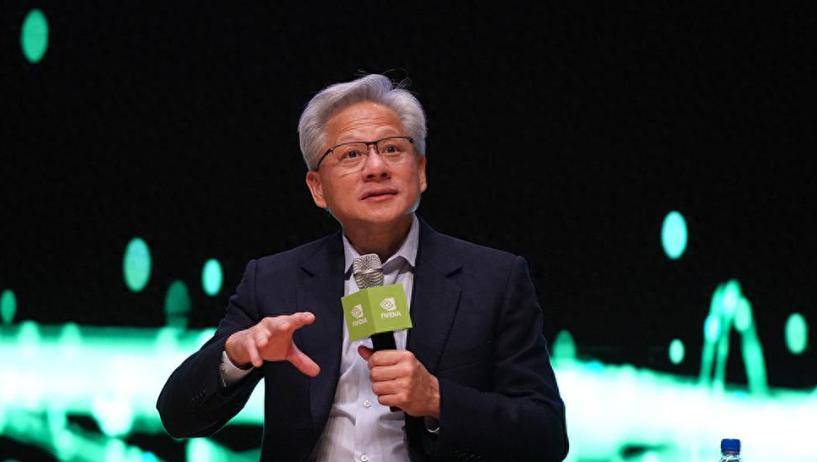
Core Viewpoint - The article discusses the growing influence of Chinese open-source AI models on the U.S. AI industry, highlighting a shift in competitive dynamics where U.S. companies are increasingly challenged by China's free and open-source offerings [1][3][19]. Group 1: U.S. AI Industry Challenges - U.S. tech giants have adopted a closed-source model, believing that maintaining control over advanced technology is essential for market position and profit [3][4]. - This closed-source strategy has led to high usage costs, limiting access for developers and hindering global adoption [5][6]. - The regulatory environment in the U.S. is becoming a burden, with numerous state-level regulations increasing operational costs and complicating compliance for AI companies [10][12]. Group 2: Chinese AI Industry Advantages - Chinese AI companies are taking a different approach by offering open-source models that are free and powerful, gaining popularity among global developers [7][9]. - The cumulative download of Alibaba's Qwen has surpassed Meta's Llama, indicating its growing acceptance in the global market [9]. - Chinese firms benefit from government support and lower operational costs, allowing them to maintain competitive pricing and foster innovation [12][18]. Group 3: Future Implications - The article suggests that the U.S. AI industry is at a crossroads, needing to reconsider its closed-source strategy to remain competitive [18][19]. - The shift towards open-source models in China is creating a robust ecosystem that could redefine industry standards and market dynamics [14][15]. - Warnings from industry leaders like Eric Schmidt and Jensen Huang highlight the urgency for U.S. companies to adapt or risk losing market share [19].
全球都用上中国免费大模型后,美国AI该怎么办?
Guan Cha Zhe Wang· 2025-11-13 13:00
Core Viewpoint - Eric Schmidt, former CEO of Google, expressed concerns that due to cost issues, most countries may ultimately adopt Chinese AI models, following Nvidia CEO Jensen Huang's statement that "China will win the AI race" [1][3]. Group 1: AI Model Landscape - Schmidt highlighted a "strange paradox" in the global AI landscape, where the largest AI models in the U.S. are closed-source and paid, while China's largest models are open-source and free [3]. - Open-source AI models allow free and public use and sharing, making them attractive to governments and countries lacking substantial funding, leading them to adopt Chinese models not necessarily because they are superior, but because they are free [3][4]. Group 2: Open Source vs. Closed Source - The early development of large models favored open-source as the mainstream choice, with even OpenAI initially releasing GPT-1 and GPT-2 as open-source [4]. - Supporters of open-source argue it promotes rapid technological development and offers significant cost advantages, while proponents of closed-source models claim higher security and advanced capabilities [5]. - The rise of Chinese open-source models has diminished the perceived security advantages of closed-source models, as open-source can be deployed locally, and performance gaps are closing [5]. Group 3: Chinese AI Model Advancements - Chinese models like DeepSeek, Alibaba's Qwen, and others have embraced open-source and consistently updated their large models, gaining popularity and raising concerns about the U.S. AI competitive edge [5][6]. - MiniMax's new open-source model, MiniMax-M2, ranked in the top five globally, while Kimi's K2 Thinking model reportedly surpassed GPT-5 in performance with a development cost of only $4.6 million [6]. - Chinese models are increasingly being adopted globally, with reports of Japanese companies using Qwen as a foundational technology [6][7]. Group 4: Global Implications - The cumulative download of Alibaba's Qwen surpassed that of Meta's Llama, indicating its popularity as an open-source model [7]. - The choice of a U.S. company to use a Chinese open-source model instead of its parent company's offerings reflects a shift in preference towards quality and cost-effectiveness [7]. - Concerns have been raised about the U.S. AI industry's reliance on closed-source strategies, which may pose significant risks if they fail [7][8]. - The rapid development of Chinese open-source models is reshaping the global AI competitive landscape, prompting fears that more countries may turn to Chinese models due to their advantages in openness, security, and cost [8].

阿里“千问”突袭:从开源之王到全面对标ChatGPT
硬AI· 2025-11-13 07:06
Core Viewpoint - Alibaba has secretly launched a strategic project named "Qianwen" to develop a personal AI assistant app, aiming to compete directly with ChatGPT in the global AI race [4][8]. Group 1: Strategic Shift - Alibaba is shifting its strategic focus from B-end AI services to C-end large model applications, marking a significant transition in its AI strategy [8][25]. - The "Qianwen" project represents Alibaba's ambition to create an "AI operating system" for global users, moving beyond merely providing tools for enterprises [9][22]. Group 2: Technological Advancements - Qwen has rapidly evolved over the past three years, becoming one of the most popular open-source large models globally, with over 600 million downloads, ranking first worldwide [12]. - The latest version, Qwen3-Max, has surpassed competitors like GPT-5 and Claude Opus 4 in various capability assessments, indicating its growing influence [12]. Group 3: Global Competitive Landscape - The launch of "Qianwen" comes at a time when open-source models are gaining traction, with significant figures like former Google CEO Eric Schmidt noting a shift towards Chinese open-source AI models due to their cost-effectiveness and accessibility [18][19]. - Alibaba's initiative is seen as a strategic acceleration, transitioning from a B-end model service provider to an "AI super entrance" [25]. Group 4: Market Implications - The "Qianwen APP" aims to establish a global AI system entry point centered around Qwen and the Chinese open-source ecosystem, indicating a potential shift in the competitive landscape of the AI industry [23][29]. - As open-source technology becomes a mainstream choice for multinational companies, it may reshape the future industrial landscape, highlighting the significance of Alibaba's move [29].