智能经济

Search documents
政策加速AI应用与商业化落地
Zhao Yin Guo Ji· 2025-08-29 07:06
Investment Rating - The report suggests a positive investment outlook for the AI sector, particularly in areas such as AI cloud services, semiconductor supply chains, and smart automotive applications [1][14][15]. Core Insights - The report emphasizes the acceleration of AI applications and commercialization driven by government policies, with specific targets set for 2027, 2030, and 2035 regarding the integration of AI into various sectors [5][6][15]. - Key investment opportunities are identified in the internet and software sectors, semiconductor industry, and smart automotive sector, with specific companies highlighted as potential beneficiaries [1][2][10][14]. Internet and Software Sector - The report highlights the importance of AI cloud services, recommending investment in leading companies such as Baidu, Alibaba, Tencent, and SenseTime, which are well-positioned in AI computing resources and operational capabilities [1][10][12]. - It notes the expected growth in AI applications within entertainment and e-commerce, with companies like Tencent, Alibaba, and Kuaishou being key players due to their strong AI capabilities and application scenarios [1][10][11]. - The report also points to the integration of AI in education and healthcare, with companies like New Oriental and Alibaba Health being recognized for their advancements in AI-driven solutions [10][11][12]. Semiconductor Industry - The report identifies three main investment themes: the computing power supply chain, opportunities under the theme of self-sufficiency, and emerging application areas for semiconductors [1][14][19]. - It emphasizes the expected increase in demand for high-performance computing chips, storage chips, and specialized acceleration chips due to the growing AI applications [17][19]. - Key semiconductor companies such as Zhongji Xuchuang, Shengyi Technology, and Horizon Robotics are highlighted as potential beneficiaries of the AI-driven growth in the semiconductor sector [1][19][20]. Smart Automotive Sector - The report predicts a significant increase in the penetration rate of L2+ level autonomous driving vehicles, with expectations of surpassing 50% by 2026 [2][14]. - It highlights the synergy between the automotive and robotics industries, suggesting that leading automotive companies are well-positioned to leverage advancements in AI for both sectors [2][14]. - Companies like Xpeng, Li Auto, and BYD are identified as key players in the smart automotive supply chain, benefiting from the integration of AI technologies [1][2][14].





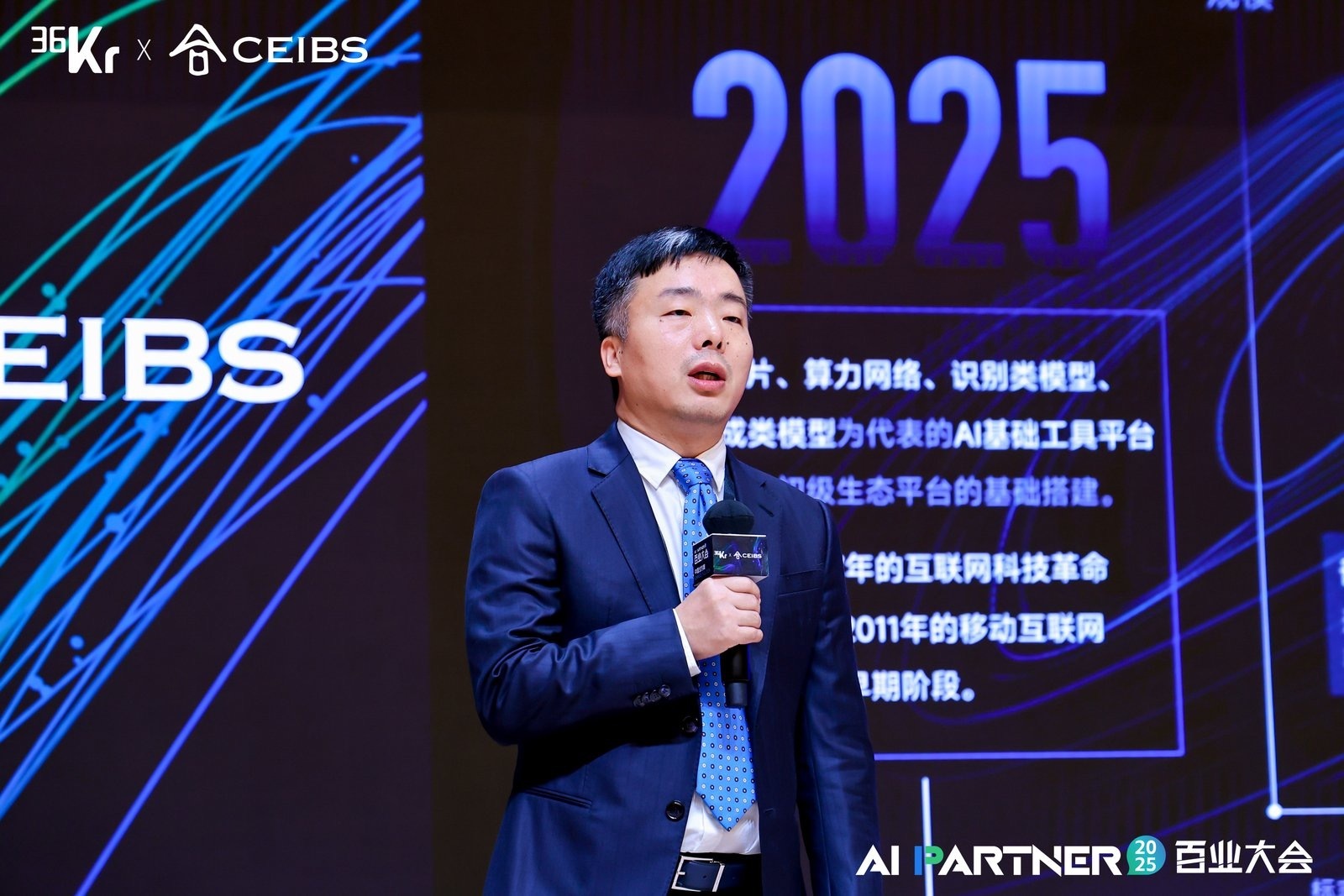
AI Agent 2025大赛组委会联席主席代永波:发掘AI新英雄,共筑智能新生态| 36氪2025AI Partner百业大会
3 6 Ke· 2025-08-29 06:30
8月27日,由36氪与中欧国际工商学院联合主办的2025 AI Partner百业大会于北京中关村软件园盛大启幕。本次大会以"中国式方案"为主题,分为"中国式方 案"和"谁来定义下一个人工智能时代"两大篇章,围绕"中国式创新的黄金时刻""超级智能体能否成为下一代AI的核心形态""中国式方案重塑世界科技竞争格 局""AI+千行百业融合创新的繁荣景象"四大话题,全方位集中呈现中国AI的最新突破与生态体系,分享中国式AI的成长路径和未来前景,探索中国式方案 的创新模式。 当日,AI Agent 2025大赛组委会联席主席代永波带来了《发掘并服务 AI 时代的新人类英雄》主题演讲。 以下为致辞内容,经36氪整理编辑: 非常感谢 36 氪主办方的邀请。我是 AI Agent 2025 大赛组委会联席主席代永波,今天想和大家分享的核心主题是:如何在 AI 时代,精准发掘并用心服务那 些即将定义未来的 "新人类英雄"。 过去几年,人工智能技术从实验室快速走向市场,已成为改变人类生活方式与产业结构的核心力量。按照国家 "人工智能 +" 战略规划:到 2027 年,人工智 能将在六大重点领域广泛应用,智能体与新终端普及率超 7 ...

中国国家发改委:当前实施“人工智能+”的条件已基本具备
Zhong Guo Xin Wen Wang· 2025-08-29 05:59
Core Viewpoint - The current conditions for implementing "Artificial Intelligence +" are fundamentally in place, making the timing mature for such initiatives [1][2] Group 1: Implementation of "Artificial Intelligence +" - The State Council has recently issued opinions on the in-depth implementation of the "Artificial Intelligence +" initiative, which has garnered significant attention from various sectors [1] - "Artificial Intelligence +" is similar to the previous "Internet +" initiative, sharing commonalities while also having distinct differences [1] - Both "Internet +" and "Artificial Intelligence +" are general-purpose technologies that exhibit characteristics such as new application models, rapid iteration, and strong capabilities for transforming traditional business formats [1] Group 2: Transformation and Impact - "Internet +" emphasizes "connection" through networks to enhance information transmission, leading to process reengineering and efficiency improvements [1] - "Artificial Intelligence +" represents a leap from "information connection and dissemination" to "knowledge application and creation," driving transformative changes in the reorganization of production factors, upgrading value creation methods, evolving organizational forms, and altering social governance models [1] - The implementation of "Artificial Intelligence +" is seen as a critical measure to accelerate the development of new productive forces and is a necessary requirement for advancing the digital economy towards an intelligent economy and society [2]
国家发改委:未来1-2年是人工智能落地的关键窗口期
智通财经网· 2025-08-29 03:35
Core Viewpoint - The National Development and Reform Commission (NDRC) emphasizes the importance of the "Artificial Intelligence +" initiative, aiming for significant integration of AI across six key sectors by 2027, with a target application penetration rate exceeding 70% for new intelligent terminals and systems [1][11]. Group 1: AI Integration and Economic Impact - By 2027, the initiative aims for AI to be widely integrated into six key sectors, enhancing public governance and establishing a robust AI cooperation framework [1][11]. - The "Artificial Intelligence +" initiative is expected to transform consumer behavior from merely having products to prioritizing quality, enhancing service consumption across various sectors such as entertainment, e-commerce, and healthcare [1][17]. - The initiative will foster new consumption patterns through the proliferation of smart devices and applications, creating a comprehensive intelligent interaction environment [1][17]. Group 2: Policy Framework and Implementation - The NDRC has established a collaborative mechanism involving 42 departments to ensure effective implementation of the "Artificial Intelligence +" initiative, focusing on coordinated efforts and information sharing [2][5]. - The initiative outlines four key principles: collaborative action, localized strategies, sector-specific policies, and open sharing of resources [2][5]. - The NDRC plans to develop specific implementation plans for various sectors, ensuring a unified policy approach to support AI integration [14]. Group 3: Global Cooperation and Standards - The "Artificial Intelligence +" initiative introduces a global cooperation aspect, aiming to share AI advancements and address global challenges collaboratively [9]. - The NDRC emphasizes the importance of establishing standards for AI applications to facilitate interoperability and enhance collaborative efforts across sectors [14]. Group 4: Societal Benefits and Quality of Life - The initiative aims to improve work environments and reduce labor risks through AI applications in high-risk industries, enhancing overall worker safety [17]. - AI is expected to revolutionize education by providing personalized learning experiences and improving access to quality educational resources, particularly in underdeveloped areas [17]. - The initiative will enhance the quality of life through improved healthcare services, smart home technologies, and cultural content creation, ultimately benefiting the general public [17][18].
国家发改委:发展“人工智能+”坚决避免无序竞争和一拥而上
财联社· 2025-08-29 03:08
国家发展改革委今日上午10时召开国家发展改革委8月份新闻发布会。 国家发改委:发展"人工智能+"坚决避免无序竞争和一拥而上 李超表示,下半年,国家发展改革委将紧盯重点领域重点任务,加快建设全国统一大市场,研究制定纵深推进全国统一大市场建设的行动方 案,强化妨碍全国统一大市场建设典型案例通报,持续推进市场准入壁垒的清理整治行动,统一政府行为尺度,进一步规范地方招商引资行 为,加快推进价格法修订,出台互联网平台价格行为规则,会同有关部门依法依规查处低于成本倾销、夸大和虚假宣传的行为,加快治理部 分领域的无序竞争等问题。 国家发改委:加快人工智能加消费等领域政策出台 李超表示,接下来,国家发展改革委要打好提振消费组合拳,激发市场活力。在扩大优质供给方面,国家发展改革委将平稳有序实施消费品 以旧换新,做好政策接续,加快首发经济、数字消费、人工智能加消费等领域的政策出台,促进文旅、赛事、露营等服务消费。 国家发改委:未来1-2年是人工智能落地的关键窗口期 国家发展改革委创新驱动发展中心主任霍福鹏在新闻发布会上表示,到2027年,要率先实现人工智能与6大重点领域广泛深度融合,新一代 智能终端、智能体等应用普及率超70%, ...

百度智能云重磅升级:百舸5.0千帆4.0齐发,数字员工“吴彦祖”亮相
Sou Hu Cai Jing· 2025-08-29 01:52
Group 1 - The core viewpoint of the articles emphasizes that Baidu Smart Cloud is setting a new benchmark in the cloud computing industry, positioning AI cloud as a critical infrastructure for the intelligent economy era [1][3] - Baidu Smart Cloud's two major platforms, the Baichuan AI Computing Platform and the Qianfan Enterprise-level AI Development Platform, have undergone significant upgrades [1][3] - The Baichuan AI Computing Platform 5.0 has achieved breakthroughs in network architecture, computing power, inference systems, and integrated training and inference, aiming to enhance AI computing efficiency for enterprises [1][3] Group 2 - The Qianfan platform has entered its 4.0 era, focusing on addressing challenges in Agent development during the AI-native era, providing a comprehensive service platform for developers [3] - Baidu Smart Cloud introduced the innovative application "Wu Yanzu Digital English Coach," which integrates advanced AI technologies to offer a new English learning experience [3] - The collaboration with Yashi Education to develop the "Wu Yanzu Digital English Coach" showcases Baidu's deep expertise in AI technology and its forward-looking approach to integrating AI with education [3]
21社论丨建设智能社会需要系统性规划
21世纪经济报道· 2025-08-29 00:20
Core Viewpoint - The article outlines China's strategic plan to advance towards an intelligent economy and society by 2035, emphasizing the need for a systematic support framework encompassing technology innovation, policy regulations, talent cultivation, and open cooperation [1][5]. Group 1: Technology Foundation - The establishment of a "data-computing-algorithm" collaborative system is crucial for the intelligent economy, focusing on high-quality data sets as essential for training intelligent models [1]. - The plan includes the development of a national integrated computing network to optimize resource allocation, addressing the imbalance between the high demand in the east and energy abundance in the west [1]. - There is a call for breakthroughs in algorithms through enhanced theoretical research and model architecture innovation, alongside promoting the sharing of open-source codes and datasets to reduce R&D costs for enterprises [1]. Group 2: Policy and Regulation - The rapid development of artificial intelligence presents challenges in ethics, law, and social governance, necessitating a robust framework for data security and privacy protection [2]. - The article stresses the importance of algorithm transparency and fairness, advocating for research into algorithm interpretability and the establishment of ethical review mechanisms for algorithms [2]. Group 3: Talent Development - The development of artificial intelligence relies heavily on high-quality talent, necessitating the integration of AI into traditional education systems, including programming education in primary and secondary schools [3]. - The article suggests a "production-education integration" model led by enterprises to provide practical opportunities for students, bridging the gap between theory and application [3]. - It emphasizes the need for a collaborative innovation alliance among enterprises, universities, and research institutions, supported by government incentives for R&D investment [3]. Group 4: Open Cooperation - The article highlights the global nature of AI development, urging China to engage in global governance and promote technology inclusivity and shared outcomes [4]. - Active participation in multilateral mechanisms like the UN and G20 for AI governance dialogue is recommended, along with promoting smart infrastructure projects under the Belt and Road Initiative [4]. - The need to enhance China's influence in international AI standard-setting and to create a comprehensive ecosystem across the hardware, software, and application spectrum is emphasized [4]. Group 5: Societal Impact - The ultimate goal of the intelligent society is to enhance human well-being rather than merely expanding technology, focusing on inclusive applications in areas like healthcare and education [5]. - The article advocates for a new governance model of "human-machine symbiosis" to optimize public resource allocation through systems like urban brain technology [5]. - It calls for a development philosophy that combines technological advancement with humanistic values to achieve high-quality development in the intelligent society [5].

21评论|建设智能社会需要系统性规划
2 1 Shi Ji Jing Ji Bao Dao· 2025-08-28 18:01
Core Viewpoint - The recent government document outlines a comprehensive plan for China to transition into an intelligent economy and society by 2035, emphasizing the need for a multi-dimensional support system involving technological innovation, policy regulations, talent cultivation, and open cooperation [1][5]. Technological Foundation - The establishment of a "data-computing power-algorithm" collaborative system is crucial for the intelligent economy, focusing on data element innovation, networked computing power, and autonomous breakthroughs in algorithms [1]. - High-quality datasets are essential for training intelligent models, and the government aims to enhance data property rights and promote public data openness [1]. - The "national integrated computing network" is being developed to optimize resource allocation, addressing the disparity between high demand in the east and abundant energy in the west [1]. - There is a push for foundational theoretical research and model architecture innovation, alongside the establishment of a model capability assessment system [1]. Policy and Regulation - The rapid development of artificial intelligence presents challenges in ethics, law, and social governance, necessitating a robust regulatory framework [2]. - Data security and privacy protection are highlighted as fundamental issues, with a need to balance convenience and privacy rights in applications like facial recognition [2]. - The document emphasizes the importance of algorithm transparency and fairness, advocating for research into algorithm explainability and the establishment of ethical review mechanisms [2]. Talent Development - The growth of artificial intelligence relies on high-quality talent, necessitating the integration of AI into traditional education systems [3]. - Initiatives include introducing programming education in primary and secondary schools and enhancing interdisciplinary studies in higher education [3]. - A collaborative innovation alliance among enterprises, universities, and research institutions is recommended to bridge the gap between theory and application [3]. Open Cooperation - The global nature of AI development calls for China to engage in international governance and promote technology sharing [4]. - Active participation in multilateral mechanisms like the UN and G20 is encouraged to shape AI governance dialogues [4]. - The document suggests enhancing China's influence in international AI standard-setting and fostering a complete ecosystem across hardware, software, and applications [4]. Societal Impact - The ultimate goal of an intelligent society is to enhance human well-being rather than merely expanding technology [5]. - AI applications should focus on inclusive scenarios, such as AI-assisted healthcare and smart education platforms for remote areas [5]. - A new governance model promoting "human-machine symbiosis" is proposed to optimize public resource allocation through real-time monitoring systems [5]. - The document advocates for a development philosophy that combines technological advancement with humanistic values to achieve high-quality development [5].
“人工智能+”行动推进,建筑全产业链受益
Changjiang Securities· 2025-08-28 15:36
Investment Rating - The report maintains a "Positive" investment rating for the construction and engineering industry [10]. Core Insights - The release of the "Artificial Intelligence+" action plan by the State Council on August 26, 2025, aims to integrate AI across various sectors, leading to a transformative shift in productivity and economic structure [2][7]. - By 2027, the plan targets over 70% penetration of AI applications in six key areas, with a goal of exceeding 90% by 2030, indicating significant infrastructure development opportunities [7][13]. - The rapid development of AI is expected to create new demands for infrastructure, including intelligent upgrades in scientific research platforms and municipal facilities [13]. - The report highlights that design firms are likely to benefit significantly from the AI-driven initiatives, enhancing their operational efficiency and capabilities [13]. Summary by Sections Event Description - The "Artificial Intelligence+" action plan aims to deeply integrate AI into various sectors, reshaping production and living paradigms [7]. Event Commentary - The plan emphasizes the need for intelligent urban planning and governance, which is expected to directly benefit the construction industry [13]. - It outlines key actions for AI integration in design, production, and service operations, enhancing overall industry efficiency [13]. Future Opportunities - Companies specializing in planning and design, such as Huasheng Group and Huayang International, are identified as potential beneficiaries of the AI initiatives [13]. - The report suggests that state-owned design platforms are also exploring AI applications to enhance digital infrastructure and urban intelligence [13].
AI营收首超百亿,百度智能云有更大的野心
Bei Jing Shang Bao· 2025-08-28 14:34
Core Insights - The core viewpoint emphasizes the necessity of new infrastructure, specifically AI cloud, to support the intelligent economy era, as articulated by Baidu's executive vice president [1] - Baidu's intelligent cloud has launched upgraded platforms, indicating a significant growth trajectory in AI-related revenue, projected to exceed 10 billion yuan by Q2 2025, marking a 34% year-on-year increase [1][7] Group 1: AI Cloud Infrastructure - The transition from cost-saving to value creation in enterprise infrastructure is highlighted, with AI cloud becoming a profit center rather than a cost center [2] - Four core elements of true AI cloud are identified: computing power, models, data, and engineering capabilities, which together form a unified and evolving AI cloud infrastructure [3] Group 2: Upgraded Platforms - Baidu has launched the upgraded Baidu AI Computing Platform 5.0, which features faster communication, lower latency, and enhanced model training efficiency [4] - The platform supports the largest open-source model parameters reaching 1 trillion, demonstrating significant computational capabilities [4] Group 3: Collaboration and Development - Companies like LingSheng Technology have benefited from Baidu's cloud technology, significantly reducing testing costs and accelerating the transition from lab to large-scale application [5] - The 千帆 4.0 platform aims to lower the development threshold for Agents, with over 460,000 enterprise users and 1.3 million Agents developed [6] Group 4: Market Position and Growth - The Chinese AI public cloud service market is projected to reach 19.59 billion yuan in 2024, with Baidu and Alibaba sharing the top market position at 24.6% market share [6] - The natural language processing public cloud service market is expected to grow by 51.1% in 2024, with Baidu, Huawei, and Alibaba leading the market [6]