港股市场

Search documents
香港交易所集团行政总裁陈翊庭:中国资产已变成“不能不投资”
Zheng Quan Shi Bao· 2025-09-07 23:40
Core Viewpoint - The Hong Kong stock market's IPO activity is expected to continue thriving, with foreign investment in Chinese assets shifting from "cannot invest" to "cannot miss" [1][2][3]. Group 1: IPO Market Dynamics - Since September of last year, the Hong Kong IPO market has rebounded, regaining the top position globally in terms of IPO scale in the first half of this year [1]. - The market has seen significant interest from foreign investors, with many new stocks experiencing oversubscription rates in the thousands [2]. - Currently, over 200 companies are in the pipeline for IPOs, with a substantial portion being technology firms, indicating a healthy supply of potential listings [3]. Group 2: Foreign Investment Trends - There is a notable increase in foreign interest in Chinese assets, with foreign investors actively participating in IPOs, particularly in high-tech sectors [3]. - The shift in perception among global investors is attributed to a reassessment of Chinese companies and their supply chains, leading to a more favorable outlook [3]. - Long-term funds are increasingly viewing the Hong Kong market as a viable option for diversification, especially in the context of global market volatility [3]. Group 3: Market Performance and Financing - The total financing amount for new stock issuances in Hong Kong reached HKD 137.5 billion by the end of August, marking a nearly sixfold increase compared to the same period in 2024 [4]. - The A+H listing model has been particularly successful, accounting for 70% of the total financing in the first half of the year [4]. Group 4: Market Structure and Future Outlook - The Hong Kong stock market is characterized by its inclusivity, allowing both large and small companies to list, which attracts a diverse range of investors [6]. - The market is expected to continue optimizing its regulatory framework to better meet the diverse needs of companies and investors [6]. - There is a recognition of the need to enhance product offerings beyond equities, particularly in fixed income and commodities, to remain competitive [7][8].

港股午评:恒指涨0.62%、科指涨0.82%,科网股、黄金及能源股走高,创新药概念股飙升-股票-金融界
Jin Rong Jie· 2025-09-05 04:14
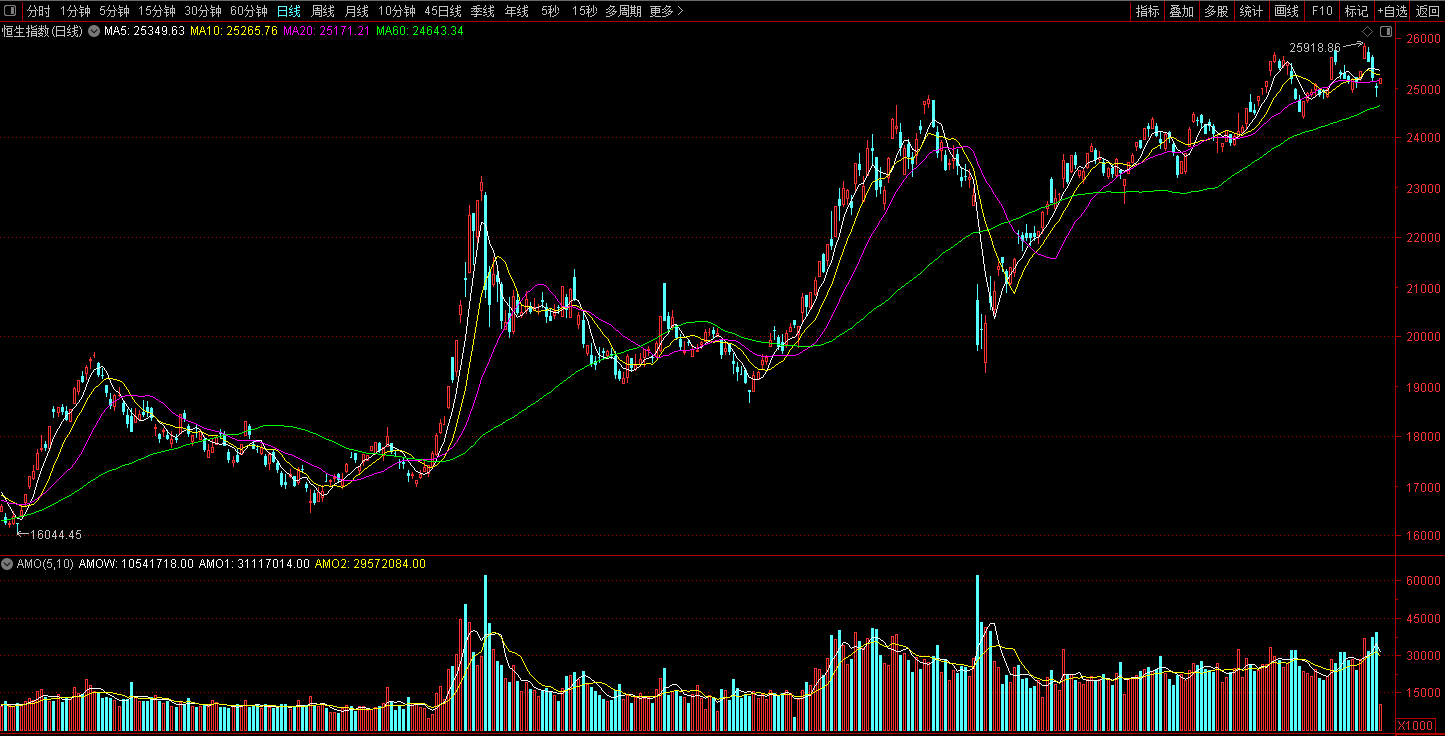
Market Performance - The Hong Kong stock market opened higher and maintained fluctuations, with the Hang Seng Index rising by 0.62% to 25,212.85 points, the Hang Seng Tech Index up by 0.82% to 5,624.75 points, the National Enterprises Index increasing by 0.59% to 8,989.62 points, and the Red Chip Index up by 0.88% to 4,238.01 points [1] Sector Performance - Energy, power equipment, gold stocks, semiconductors, batteries, and pharmaceuticals showed the highest gains, while Alibaba concept stocks, online education, insurance, beer, and food stocks experienced the largest declines [1] Notable Stock Movements - Tai Ling Pharmaceutical surged over 16%, GCL-Poly Energy increased over 10%, Horizon Robotics rose nearly 8%, Tongguan Gold gained over 6%, and Zijin Mining and China National Pharmaceutical Group both rose over 5% [1] - Conversely, Uni-President China and Sika Education fell over 3%, while China Ping An dropped over 1% [1] Corporate News - China Tobacco Hong Kong signed an exclusive distribution agreement for "Huanghelou" cigars in the global market with Hubei Tobacco [2] - Fosun International's subsidiary Fidelidade sold a 40% stake for €310 million [3] - Xinyi International reported a net revenue of approximately HKD 11.01 billion for the first eight months, a decrease of 5.5% year-on-year [4] - China Overseas Development's contract sales for the first eight months amounted to CNY 150.33 billion, down 16.5% year-on-year [5] - China Construction Bank's subsidiary plans to increase capital by CNY 3 billion [6] - Heng Rui Pharmaceutical received approval for clinical trials of two new drugs targeting skin conditions and diabetes [7] Analyst Insights - Industrial analysts noted that the earnings forecast for Hong Kong stocks has been continuously revised down since July 2025, but a turnaround is expected post interim results [9] - The Hang Seng Index is consolidating around 25,000 points with active trading and stable sentiment, despite manufacturing PMI remaining in contraction territory [9] - Analysts from Everbright Securities anticipate a potential upward trend for Hong Kong stocks, supported by strong overall profitability and low valuations despite recent gains [9]
港股收评:恒生指数跌1.12%,恒生科技指数跌1.85%
Xin Lang Cai Jing· 2025-09-04 09:17
Core Viewpoint - The Hong Kong stock market experienced a decline, with the Hang Seng Index falling by 1.12% and the Hang Seng Tech Index decreasing by 1.85% on September 4 [1] Group 1 - The Hang Seng Index closed lower, indicating a bearish sentiment in the market [1] - The decline in the Hang Seng Tech Index suggests a negative trend in technology stocks specifically [1]
港股5倍大牛股,遭港交所谴责!挪用IPO募资,“血亏”超4亿元
Zheng Quan Shi Bao· 2025-09-03 13:28
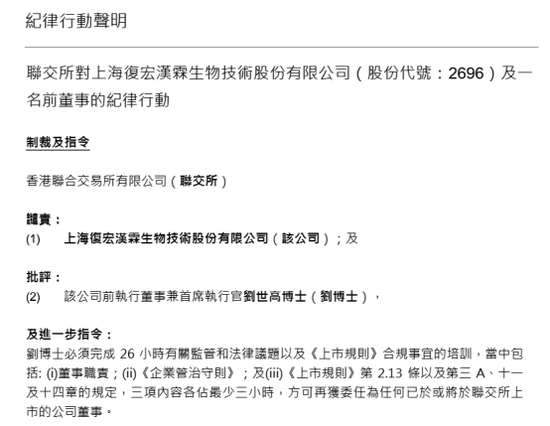
Core Viewpoint - The Hong Kong Stock Exchange has issued a disciplinary action statement against Fuhong Hanlin (02696.HK), a significant stock that has seen a 465.4% increase in price this year, raising concerns about the company's compliance with listing rules and the management of its IPO proceeds [1][2][3]. Group 1: Disciplinary Action and Compliance Issues - The Hong Kong Stock Exchange criticized Fuhong Hanlin and its former CEO Liu Shigao for failing to adhere to regulatory and legal compliance matters [2]. - Liu Shigao is required to complete 26 hours of training on regulatory and legal issues before being eligible for reappointment as a director of any listed company [2]. - The investment management agreement signed by Fuhong Hanlin's former CFO on the first day of listing was not disclosed in the company's IPO documents, raising significant compliance concerns [6][8]. Group 2: Financial Performance and Fund Utilization - Fuhong Hanlin raised a net amount of HKD 31.47 billion (approximately USD 4.03 billion) during its IPO, with 29% of the funds allocated to a placement managed by a financial institution [5]. - The company approved management fees of USD 3.5 million for the first two years based on the investment management agreement, which was not aligned with the intended use of IPO proceeds as stated in the prospectus [7][8]. - From 2020 to 2022, Fuhong Hanlin recovered a total of USD 30.64 million from the investment management agreement, with an additional USD 20 million recovered in 2023 [9]. - As of June 30, 2025, the outstanding balance of the investment principal in the management account was USD 66.36 million (approximately RMB 475 million) [9][11].

南向资金年内净流入超1万亿港元!
Zheng Quan Ri Bao Zhi Sheng· 2025-09-03 00:22
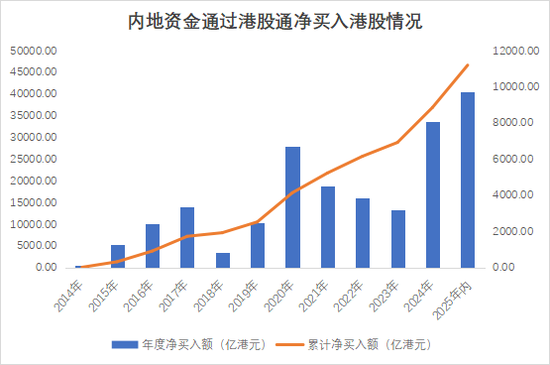
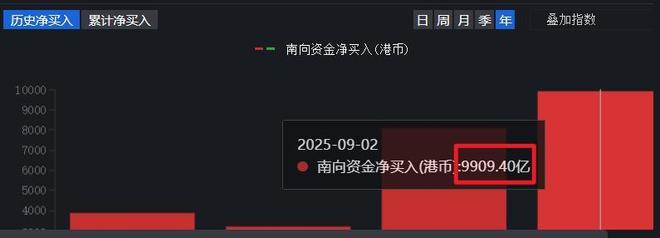
Core Viewpoint - The net inflow of southbound funds has exceeded 1 trillion Hong Kong dollars this year, indicating strong investor interest in the Hong Kong stock market [1][2]. Group 1: Southbound Fund Inflows - As of September 2, 2023, the total net inflow of southbound funds for the year reached approximately 10,002.21 billion Hong Kong dollars [1][2]. - The daily net inflow on September 2 was 92.81 billion Hong Kong dollars, with a weekly total of 212.23 billion Hong Kong dollars [2]. - Over the past three months, the net inflow was 3,492.79 billion Hong Kong dollars, and for the past six months, it was 7,218.51 billion Hong Kong dollars [2]. Group 2: Historical Trends and Predictions - From 2020 to 2024, the net buying amounts of southbound funds were 6721.25 billion, 4543.96 billion, 3862.81 billion, 3188.42 billion, and 8078.69 billion Hong Kong dollars respectively [3]. - Goldman Sachs has raised its forecast for the total southbound fund inflow in 2025 from 110 billion US dollars to 160 billion US dollars, approximately 1.25 trillion Hong Kong dollars [3]. Group 3: Market Impact and Sector Performance - Southbound funds have shown strong allocation value and strategic effectiveness in the Hong Kong stock market, particularly in the financial and mature internet sectors, which offer high dividend yields [5]. - The total market capitalization of software services and media in Hong Kong accounts for 55% of the technology sector, with key stocks including Tencent and Alibaba [5]. - In the first half of this year, transactions through southbound funds accounted for 23% of the total trading volume in the Hong Kong stock market, up from 9% in 2020 [5]. Group 4: Future Outlook - The macro liquidity expectations are improving, with institutions optimistic about the long-term performance of the Hong Kong stock market [5]. - The potential for a decline in the US dollar and expectations of interest rate cuts by the Federal Reserve could lead to a favorable environment for the Hong Kong market [6]. - Analysts suggest focusing on internet giants benefiting from AI applications and sectors like hard technology and mid-to-high-end manufacturing for future investments [7].

爆买!超1万亿港元!
Zheng Quan Shi Bao· 2025-09-02 12:49
Core Insights - The Hong Kong stock market has seen significant inflows from southbound funds, with a net purchase of 92.81 billion HKD on September 2, leading to an annual net purchase exceeding 1 trillion HKD, the highest since the launch of the mutual market access mechanism [1][2] - The Hang Seng Index and Hang Seng Tech Index have both risen over 20% this year, contributing to the attractiveness of the Hong Kong market for mainland investors [2][4] Group 1: Southbound Fund Inflows - Southbound funds have accumulated a total net purchase of nearly 4.7 trillion HKD in the Hong Kong stock market, setting a historical record [1][2] - The proportion of trading volume attributed to southbound funds has increased to over 45% this year, compared to 34.63% in 2024 [6][8] - The influx of southbound funds has created a positive cycle, enhancing liquidity and valuation in the Hong Kong market [1][4] Group 2: Market Dynamics and Investor Behavior - The return of the Hong Kong market's performance has attracted mainland investors, with notable stocks like Xiaomi and Pop Mart reaching new highs, creating a "wealth effect" [4][5] - Low valuations and high dividend yields in the Hong Kong market are appealing to risk-averse investors, especially in a low domestic interest rate environment [5][11] - The strategic positioning of Hong Kong as a platform for RMB internationalization and the return of Chinese concept stocks has further attracted capital [5][8] Group 3: Future Outlook - While there is still room for net purchases from southbound funds, the pace of inflows may slow down due to the recent strong performance of the A-share market, which offers more immediate profit opportunities [11][12] - The overall valuation of the Hong Kong market remains low, but the recent rise in A-shares may lead to a shift in investor focus away from Hong Kong stocks [11][12] - The increasing influence of southbound funds is expected to enhance the correlation between Hong Kong and A-share markets, although southbound funds do not possess absolute pricing power [8][11]
爆买!超1万亿港元!
证券时报· 2025-09-02 12:48
互联互通机制下,港股通为希望多元化资产配置的内地投资者提供了机遇,也为香港市场注入了新的 流动性和活力。 9月2日,南向资金净买入92.81亿港元,年度净买入额超1万亿港元,创下互联互通机制开通以来的最高 纪录。截至目前,南向资金累计净买入港股市场的金额接近4.7万亿港元,同样刷新了历史纪录。 在内地投资者加码买入的背景下,南向资金在港股市场的成交占比也在不断提升。受访人士表示,今年以 来,港股市场因南向资金持续流入,流动性已有明显提升,对于估值与交易层面均有正向推动。未来随着 海外资金的重新回流,或将进一步带来推升效应。 年度净买入额突破万亿港元 今年以来,受益于估值修复、海外货币政策转向,以及国内刺激政策预期上升等因素,港股市场出现明显 回升。截至目前,恒生指数、恒生科技指数的年度涨幅均在20%以上。 在港股市场回暖的背景下,今年以来,南向资金加码净流入港股市场。9月2日,南向资金净买入92.81亿 港元,使得年度净买入额已超万亿港元关口,创下互联互通机制开通以来的最高纪录。 拉长时间来看,2020年至2024年,南向资金成交净买入额分别为6721.25亿港元、4543.96亿港元、 3862.81亿港元 ...

南向资金年内净买入近万亿港元,这些板块将受益
Xin Lang Cai Jing· 2025-09-02 07:02
Group 1 - Southbound funds have continuously flowed into Hong Kong stocks, with a cumulative net purchase amount exceeding 990 billion HKD this year, indicating strong investor confidence in the Hong Kong market [1] - Key sectors attracting significant investment include pharmaceuticals, technology, internet, and consumer markets, reflecting a focused investment strategy [1] Group 2 - Institutional views on the Hong Kong and A-share markets are optimistic, citing strong resilience in the fundamentals and ongoing policy support, which has led to a notable recovery in investor confidence [1] - The acceleration of southbound fund inflows, combined with expectations of interest rate cuts by the Federal Reserve, suggests a favorable liquidity environment that may further boost the Hong Kong market [1] Group 3 - Technology, pharmaceuticals, and internet sectors are expected to benefit from the increased liquidity, as these sectors are more sensitive to changes in market conditions [1] - Specific ETFs mentioned include the Hang Seng Technology ETF, focusing on tech leaders and new energy vehicle manufacturers, the Hang Seng Internet ETF, targeting Hong Kong internet leaders, and the Hang Seng Pharmaceuticals ETF, which emphasizes innovative drugs and CXO services [1]
南向资金年内净买入近万亿港元,机构看好港股,这些板块将受益
Mei Ri Jing Ji Xin Wen· 2025-09-02 02:49
Group 1 - Southbound funds have continuously bought into Hong Kong stocks, with a cumulative net purchase amount exceeding 990 billion HKD as of September 1, indicating strong investor confidence in the Hong Kong market [1] - Key sectors attracting significant capital include pharmaceuticals, technology, internet, and consumer markets, reflecting a focused investment strategy [1] - Both the Hong Kong and A-share markets are experiencing a notable recovery in investor confidence, supported by resilient fundamentals and ongoing policy benefits, which may drive positive market trends [1] Group 2 - The overall liquidity environment is favorable due to expectations of interest rate cuts by the Federal Reserve, which may further enhance capital inflows into the Hong Kong stock market [1] - Technology, pharmaceuticals, and internet sectors, which are more sensitive to liquidity changes, are expected to benefit from this influx of capital [1] Group 3 - Relevant ETFs include the Hang Seng Technology Index ETF (513180), focusing on technology leaders and new energy vehicles, the Hang Seng Internet ETF (513330), which targets leading internet companies in Hong Kong, and the Hang Seng Pharmaceutical ETF (159892), concentrating on innovative drugs and contract research organizations [2]
离岸人民币急涨400点,为何港股无动于衷?
Sou Hu Cai Jing· 2025-08-29 03:11
Group 1 - The offshore RMB experienced a significant appreciation, rising from 7.15 to around 7.11, with an intraday increase of nearly 400 basis points [1] - Two main reasons for this appreciation are identified: first, the Federal Reserve's support for a 25 basis point rate cut in September and further cuts expected in the next 3 to 6 months, which tends to strengthen other currencies [1] - Second, the recent bullish trend in the A-share market has created a noticeable profit effect, increasing demand for RMB and attracting foreign capital, which further supports the exchange rate [1] Group 2 - The performance of the Hang Seng Index and the Hang Seng Tech Index has shown a divergence from the RMB's stability, indicating a potential adjustment phase for the Hong Kong market [1] - Despite the RMB's significant rise, the Hang Seng Index only saw a slight increase of 0.43%, and the Hang Seng Tech Index remained flat, suggesting that the Hong Kong market is under notable adjustment pressure [4] - Historically, A-share bull markets have been driven by the Hong Kong market, but the current situation raises questions about the sustainability of A-shares if Hong Kong does not respond positively [4]