
经济结构转型

Search documents
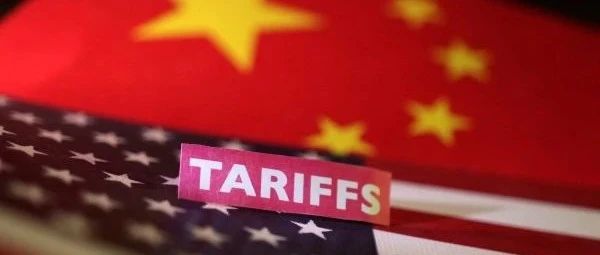
中国未雨绸缪压倒了特朗普
日经中文网· 2025-05-15 03:06
Core Viewpoint - China has strengthened its economic resilience since the first Trump administration's trade war, focusing on structural economic transformation to survive without the U.S. [1] Group 1: Trade Relations and Economic Impact - Since 2018, China's exports to countries outside the U.S. have increased by over $1 trillion, with total exports reaching approximately $3.6 trillion, equating to about twice the annual export amount to the U.S. [2] - The U.S. has reduced additional tariffs on China from 145% to 30%, but the burden on China's export industry remains significant, and the future direction of negotiations is uncertain [3] - The U.S. tariffs on Chinese goods include a 10% base rate and an additional 20% for illegal drug-related imports, totaling 30% [1] Group 2: Strategic Shifts and Future Considerations - China is diversifying its imports, particularly in agriculture, reducing reliance on the U.S. for soybeans and wheat by sourcing from Brazil and Central Asia [2] - The ongoing trade tensions are viewed as a "game of endurance," with the U.S. midterm elections in 2026 being a critical factor, as prolonged high tariffs could lead to product shortages for American consumers [2] - China's dominance in rare earth production, accounting for about 70% globally and 90% in refining, is a strategic advantage that could impact U.S. high-tech industries and military capabilities [2] Group 3: Domestic Economic Challenges - The shift of factories overseas, particularly in the electronics sector, poses risks of unemployment and economic instability in China, even if these changes are temporary during the transition [4] - The potential migration or closure of e-commerce platforms like SHEIN and Temu could further exacerbate job losses and economic challenges [4]

4月金融数据出炉 支持实体经济“稳”又“实”
Yang Shi Wang· 2025-05-15 00:15
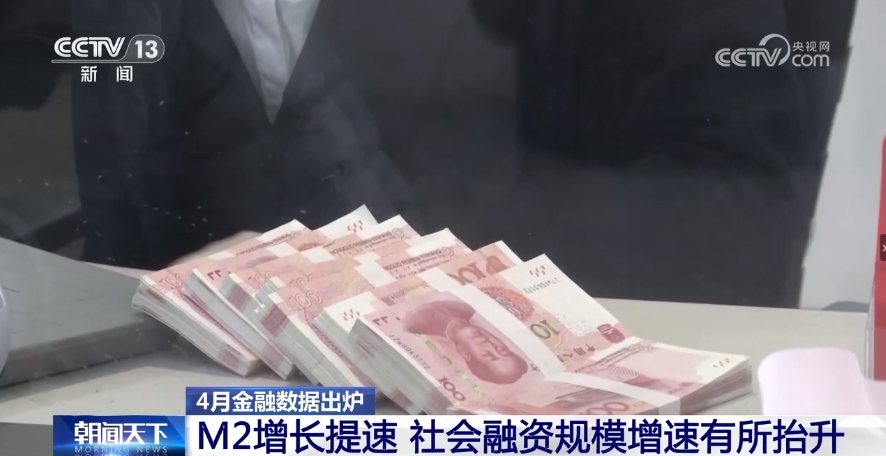
Group 1 - The core viewpoint of the article highlights the stable and substantial growth of financial metrics in China, with significant acceleration in M2 and a high level of social financing [1][2] - As of the end of April, the broad money supply M2 reached approximately 325 trillion yuan, reflecting a year-on-year growth of 8.0%, while the total social financing stock was about 424 trillion yuan, with a year-on-year increase of 8.7% [2] - Experts indicate that the acceleration in government bond issuance is a primary driving factor for this growth, supported by strong fiscal measures and a rapid pace of bond issuance aimed at expanding domestic demand and easing credit [3] Group 2 - Credit growth remains robust, with a total increase of 10.06 trillion yuan in various RMB loans from January to April, indicating strong support for the real economy [4] - The growth rate of RMB loans is significantly higher than the nominal economic growth rate, suggesting that the actual support from loans is even greater when accounting for local debt replacement effects [6] - The average interest rate for newly issued corporate loans was approximately 3.2%, down about 4 basis points from the previous month, while the average interest rate for new personal housing loans was around 3.1% [6] Group 3 - The credit structure has improved in April, with inclusive small and micro loans and medium to long-term loans for the manufacturing sector growing by 11.9% and 8.5% year-on-year, respectively, both exceeding the overall loan growth rate [7] - The allocation of credit has shifted significantly, with the proportion of loans to enterprises increasing from about 63% at the beginning of 2021 to approximately 68%, while the share of loans to residents decreased from around 37% to 32% [10] - From the perspective of enterprise types, the share of loans to small and micro enterprises rose from about 31% to 38%, while loans to large and medium-sized enterprises fell from around 69% to 62% [11]
信贷结构亮点频现,一揽子政策发力赋能经济
第一财经· 2025-05-14 12:06
Core Viewpoint - Despite increased external uncertainties since April, the domestic economy shows strong resilience, supported by rising social financing and stable foreign trade growth [1]. Financial Data and Trends - In April, the growth rate of social financing increased, with RMB loans growing by 7.2% year-on-year, exceeding 8% after adjusting for local debt replacement [1]. - The total value of goods trade imports and exports in the first four months increased by 2.4% year-on-year in RMB terms and 1.3% in USD terms, both accelerating by 1.1 percentage points compared to the first quarter [1]. Credit Structure Improvement - From January to April, RMB loans increased by 10.06 trillion yuan, roughly unchanged from the previous year, with notable improvements in credit structure [3]. - The balance of inclusive small and micro loans reached 34.31 trillion yuan, growing by 11.9% year-on-year, while medium to long-term loans for manufacturing increased by 8.5% to 14.71 trillion yuan [3]. Economic Structure and Credit Allocation - The evolution of credit structure reflects changes in the economic structure and promotes economic transformation, driven by the need for high-quality development [4]. - The proportion of corporate loans increased from 63% in 2021 to about 68%, while the share of household loans decreased from 37% to about 32%, indicating a shift towards funding for real enterprises [4]. Sector-Specific Loan Trends - The share of small and micro enterprise loans rose from 31% to about 38% of total corporate loans, while large and medium-sized enterprises' share fell from 69% to about 62% [5]. - In terms of industry allocation, loans to the manufacturing sector increased from 5.1% to about 9.3% of all medium to long-term loans, while traditional real estate and construction loans decreased from 15.9% to about 13% [5]. Consumer Spending and Policy Recommendations - Experts suggest that promoting consumption requires top-level design and a long-term development strategy, addressing employment, income, and social security to enhance consumer willingness and capacity [6]. - The focus should be on increasing the supply of high-quality consumer goods, supported by industrial and financial policies [6]. Future Financial Growth Outlook - Following external shocks, a package of policy measures was released on May 7, including interest rate cuts and structural tool optimization, aimed at fostering a favorable monetary environment for economic recovery [8]. - The People's Bank of China has implemented moderately loose monetary policies, with expectations for continued reasonable growth in financial totals [8]. Policy Innovation and Economic Support - Recent policy innovations, particularly in structural re-lending tools, aim to optimize financial resource allocation in line with economic transformation needs [9]. - The alignment of monetary policy with the goals of stimulating consumption and expanding domestic demand is evident in recent adjustments [9].
央行:居民买房投资更趋理性
第一财经· 2025-05-14 09:29
Core Viewpoint - The credit structure has been continuously improving this year, supporting the transformation of the economic structure [1] Group 1: Credit Allocation - From 2021 to present, the proportion of corporate loans has increased from 63% to approximately 68%, while the proportion of household loans has decreased from 37% to about 32%, indicating a shift in credit funds towards real enterprises [1] - The decline in household financing demand is attributed to a more rational approach to investments such as home purchases [1] Group 2: Industry Focus - In the total medium and long-term loans from 2021 to present, the proportion allocated to the manufacturing sector has risen from 5.1% to approximately 9.3% [1] - The share of loans directed towards consumer-related industries has increased from 9.6% to about 11.2% [1] - Conversely, the traditional real estate and construction sectors have seen their loan share decrease from 15.9% to approximately 13% [1]

央行:居民买房投资更趋理性,5年来居民贷款占比降5个百分点
news flash· 2025-05-14 09:15
Core Viewpoint - The credit structure has been continuously improving this year, supporting the transformation of the economic structure [1] Group 1: Credit Allocation - From 2021 to present, the proportion of corporate loans has increased from 63% to approximately 68%, while the proportion of household loans has decreased from 37% to about 32%, indicating more credit funds are directed towards real enterprises [1] - The decline in household financing demand is attributed to a more rational approach to investments such as home purchases [1] Group 2: Industry Focus - From 2021 to present, the share of manufacturing in total medium and long-term loans has risen from 5.1% to approximately 9.3% [1] - The share of consumer-related industries in total medium and long-term loans has increased from 9.6% to about 11.2% [1] - In contrast, the traditional real estate and construction sectors have seen their share decrease from 15.9% to approximately 13% [1]
权威专家:M2/GDP 5年时间提升了35个百分点
news flash· 2025-05-14 09:15
Core Insights - The central bank reported that as of the end of April, the broad money supply (M2) reached 325.17 trillion yuan, reflecting a year-on-year growth of 8% [1] - Experts suggest that analyzing financial data in conjunction with GDP and other economic indicators can provide a clearer picture of the effectiveness of monetary policy [1] - The M2 to GDP ratio has increased from 197% at the end of 2019 to 232% by the end of 2024, marking a 35 percentage point rise over five years [1] - The use of M2 growth rate as an observational indicator for monetary policy is deemed reasonable, as the correlation between money supply and economic growth is weakening [1] Financial Data Analysis - The broad money supply (M2) stood at 325.17 trillion yuan as of April, with an 8% increase year-on-year [1] - The M2 to GDP ratio has risen significantly, indicating a growing divergence between monetary supply and economic output [1] - The trend of diminishing correlation between total money supply and economic growth is noted, aligning with patterns observed in major developed economies [1]
我国物价有望保持低位回升态势
Zheng Quan Shi Bao· 2025-05-11 18:52
Group 1 - The Consumer Price Index (CPI) increased by 0.1% month-on-month in April, while it decreased by 0.1% year-on-year. The Producer Price Index (PPI) decreased by 0.4% month-on-month and by 2.7% year-on-year, indicating a moderate recovery in market demand supported by domestic demand expansion policies [1] - The decline in international prices of crude oil and non-ferrous metals such as aluminum, zinc, and copper has exerted downward pressure on domestic prices, contributing to the year-on-year decrease in CPI. However, the core CPI, excluding food and energy prices, rose by 0.5%, maintaining stability [1] - Some industrial sectors, such as black metal smelting and non-metallic mineral products, showed a narrowing decline in prices year-on-year, while industries like smart manufacturing and high-end equipment manufacturing experienced price increases [1] Group 2 - Recent macroeconomic policies signal a sustained effort to support economic stability, with measures aimed at stabilizing employment and promoting high-quality development. New policies, including fiscal measures to boost consumption and infrastructure investment, are expected to be introduced soon [2] - The strong demand for holiday tourism is anticipated to further release consumer potential, leading to price increases in related services [2] - In the medium to long term, the ongoing structural transformation and industrial upgrading in the economy are expected to lead to a more balanced supply-demand relationship, with a smoother economic cycle and a moderately loose monetary environment [2]
央行首次全面下调结构性货币政策工具利率 权威专家:未来货币政策需更多采用结构性工具
Zheng Quan Shi Bao Wang· 2025-05-07 03:44
5月7日,中国人民银行行长潘功胜在国新办新闻发布会上宣布下调结构性货币政策工具利率0.25个百分 点,推出服务消费与养老再贷款,分别增加科技创新和技术改造再贷款与支农支小再贷款额度3000亿 元。总体来看,央行此次再贷款工具量价结合,力度大、支持面广、使用也更为便利,发挥了货币政策 工具总量和结构双重功能。权威专家表示,当前经济循环仍然存在堵点,结构性矛盾较为突出,未来货 币政策需要更多采用结构性工具,支持扩内需,挖掘新动能,助力经济结构转型和产业升级。 结构性货币政策工具利率是人民银行对商业银行提供再贷款的利率。据了解,此次是央行首次全方面下 调各项结构性政策工具利率,既包括支农支小再贷款等长期性工具,也包括碳减排支持工具、科技创新 和技术改造再贷款、保障性住房再贷款、股票回购增持再贷款等阶段性工具。 "结构性降息也是降息,有利于强化对商业银行的政策激励作用。"权威专家指出,截至2025年一季度 末,结构性货币政策工具余额5.9万亿元,是央行重要的基础货币投放渠道。此次降低利率0.25个百分 点,有利于强化对商业银行的政策激励,进一步发挥结构性货币政策工具对商业银行的牵引带动作用, 激励商业银行加强对重大战 ...
曹德旺怒批楼市:砖头水泥不值钱!马光远反驳:会误导普通民众
Sou Hu Cai Jing· 2025-04-30 10:07
Group 1 - The core viewpoint presented by Fuyao Glass founder Cao Dewang is that the value of real estate is significantly overestimated, with construction costs being only 2,000 to 3,000 yuan per square meter, while prices exceed 10,000 to 20,000 yuan [1] - Cao Dewang argues that high housing prices attract excessive social capital into the real estate sector, hindering the development of the real economy due to a lack of capital inflow [1] - Independent economist Ma Guangyuan counters that dismissing real estate as merely "bricks and cement" overlooks its substantial contributions to GDP and employment, with the sector's contribution to GDP declining from nearly 30% to 22% [3][5] Group 2 - Ma Guangyuan emphasizes that the real estate sector supports over 56 related industries, providing employment for more than 50 million people, and a downturn in the market could lead to increased unemployment [3][5] - He warns that portraying housing as worthless could mislead the public, as housing demand remains rigid, and even renting incurs living costs [5] - The discussion highlights the need for a balanced approach to real estate, avoiding excessive financialization while recognizing its short-term economic contributions [9] Group 3 - Cao Dewang's perspective aligns with the idea that housing prices should reflect true value to avoid economic bubbles, citing that in cities like Shanghai and Shenzhen, the price-to-income ratio is as high as 40 [7] - Ma Guangyuan argues for the importance of maintaining a prosperous real estate market for GDP growth and employment, suggesting that the economy is overly reliant on real estate [7] - The urgent need is to stabilize the real estate market to allow for a gradual transition towards high-end manufacturing and high-tech industries, reducing dependency on real estate investment [9]

谢治宇最新发声!A股、港股估值兼具向下保障和向上弹性
Zhong Zheng Wang· 2025-04-28 09:07
科技领域方面,过去几年,国内科学技术领域取得巨大突破,研发投入、研发强度不断提升。 炒股就看金麒麟分析师研报,权威,专业,及时,全面,助您挖掘潜力主题机会! 4月28日,兴证全球基金副总经理、知名基金经理谢治宇亮相2025年度中国投资人峰会。谢治宇表示, 面对当下国内外宏观环境和经济形势,仍能观察到多方面积极转变。 谢治宇表示,我国城投债务比例增速一定程度上得到控制。随着政府债务久期被拉长,债务利率开始明 显下降,"以时间换空间",推动国内经济结构转型。 行业产能方面,过去几年,上游行业基本处在产能利用率相对饱满的状态,部分中游行业还有产能利用 率偏低的压力。部分行业由于供给约束,慢慢开始改善,并且市场对于控制产能逐渐形成共识,能够有 意识地认为这是影响后续行业持续发展的关键因素之一。 谢治宇表示,国内政策工具箱里还有非常多的工具。过去两年保持定力,现在非常有优势。 谢治宇还提到,之前国内市场承担的更多是企业融资需求,去年开始,更多强调权益市场如何能更好地 从投资角度提供新的可持续范式。这样的转变有利于科技投入。科技行业通过资本市场的融资发展,一 般效果相对较好,能够承担更大的风险和波动。此外,我国居民储蓄长 ...