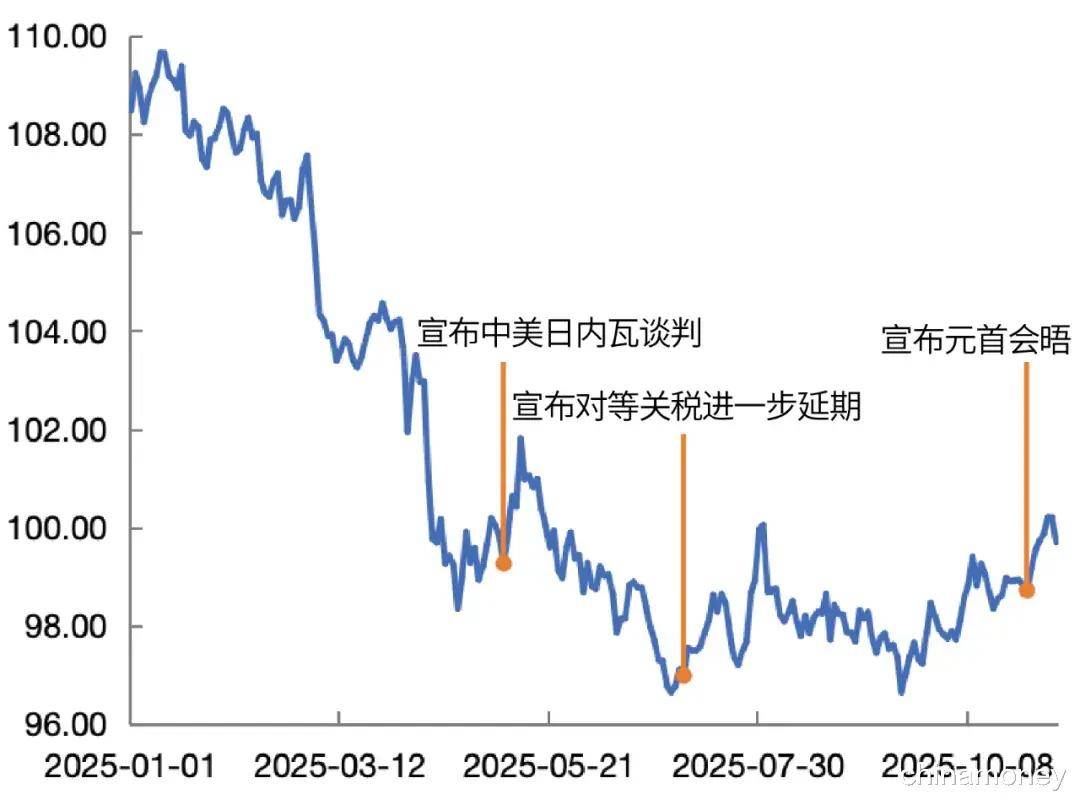
美元走势

Search documents
汇率测不准 切莫赌人民币单边升值
Sou Hu Cai Jing· 2025-12-28 20:33
人民币汇率在岁末走出强势行情,引来各界关注。日前,离岸人民币对美元汇率收复7.0整数关口,为 2024年9月以来首次;在岸人民币对美元汇率则升破7.01关口,距离"破7"一步之遥。多重因素驱动人民 币近期持续走强。一方面,12月,随着美联储降息落地,美元走势趋弱,带动人民币对美元汇率被动走 强;另一方面,年末季节性结汇需求增加,供需关系对人民币构成支撑。在突破关键点位之后,市场热 议人民币走势,并积极展望后续点位。有较多分析称,人民币仍将继续走强。对此,多位业内人士提 醒,人民币后续走势依然面临多重不确定性。"汇率是测不准的。"近年来,伴随着人民币对美元汇率双 向波动态势进一步凸显,金融管理部门频频发声,引导市场理性预期。多位专家也提示,企业和金融机 构切忌盲目跟风、赌汇率走势,应坚持风险中性理念,做好汇率风险管理。 (上证报) 来源:滚动播报 ...
金价突破意料之外 年度涨势注定载入史册
Jin Tou Wang· 2025-12-26 10:32
摘要周五(12月26日)亚洲时段开盘,贵金属大涨,现货黄金涨逾25美元至4505美元/盎司附近,银价暴涨 刷新历史高位。地缘紧张与委内瑞拉油轮封锁推升避险需求,交易员押注2026年美进一步降息。2025年 金价累涨约70%,或创1979年来最佳年度表现。机构看好2026年金价续涨,驱动含央行购金、降息预 期、去美元化及地缘风险等。 周五(12月26日)亚洲时段开盘,贵金属大涨,现货黄金涨逾25美元至4505美元/盎司附近,银价暴涨刷新 历史高位。地缘紧张与委内瑞拉油轮封锁推升避险需求,交易员押注2026年美进一步降息。2025年金价 累涨约70%,或创1979年来最佳年度表现。机构看好2026年金价续涨,驱动含央行购金、降息预期、去 美元化及地缘风险等。 尽管美联储年内已降息三次,但名义中性利率由2.5%升至3.5%,引发"鹰派转向"担忧——市场恐宽松 周期过早结束,2026年甚至可能逆转路径。债市已现端倪:10年期美债收益率坚守4.2%高位,收益率 曲线"熊陡"显示市场预判未来物价压力复燃,这意味着房贷、信用卡利率的下行缓解或比预期更弱更 短,对黄金而言,高利率环境会削弱其零息资产的相对吸引力,短期构成压制 ...
专家:综合看明年人民币汇率大概率不会出现单边走势
Xin Lang Cai Jing· 2025-12-26 08:47
"从中国自身来看,对外经贸环境的复杂性与不确定性仍然不容忽视。"管涛认为,2025年中央经济工作 会议特别强调要更好统筹国内经济工作和国际经贸斗争,这也预示着经贸斗争的长期性与复杂性。"中 美关系在磋商过程中可能出现反复,中国与其他国家的经贸关系也存在变数,部分国家可能因中国持续 扩大的贸易顺差采取针对性措施,且部分国家与美国签订的贸易协定中包含针对第三方的条款,这些都 可能对人民币汇率产生影响。" 中国青年报客户端讯(中青报·中青网记者 朱彩云)时隔15个月,离岸人民币对美元汇率开盘升破"7"关 口。Wind数据显示,截至12月25日10时29分,离岸人民币兑美元汇率报6.9999,较前收盘价上涨77个基 点。 "从实际情况来看,近期人民币的升值更多是短期利多因素占据上风,并非意味着升值新周期的开 启。"中银证券全球首席经济学家管涛日前接受中青报·中青网记者采访时表示,推动近期人民币升值的 短期因素较为明确:一方面,美元走势呈现疲软态势,11月美元指数曾升至100以上,随后持续回落并 跌破98,美元走弱为人民币升值提供了外部支撑;另一方面,中国经济基本面表现稳健,2025年前11个 月,中国货物贸易顺差达1 ...
【UNFX知识课堂】影响白银市场行情的最大因素是什么
Sou Hu Cai Jing· 2025-12-25 08:55
UNFX知识分享 影响白银市场最大的因素通常是全球经济状况和货币政策,尤其是美元走势和利率变 化。以下是具体原因: 1. 美元走势 白银以美元计价,美元与白银价格通常呈负相关。 美元走强:白银价格往往下跌,因为持有白银的成本增加。 美元走弱:白银价格通常上涨,因为持有白银的成本降低。 美元是全球储备货币,其走势受美国经济数据、货币政策(如美联储利率决策)和全球经济形势影响。 2. 货币政策(尤其是美联储政策) 经济强劲时,工业需求(如电子、光伏)增加,推动白银价格上涨。 经济衰退时,工业需求减少,白银价格可能下跌。 利率变化: 加息:利率上升时,持有白银的机会成本增加,投资者可能转向收益更高的资产,导致白银价格下跌。 降息:利率下降时,白银的吸引力增强,价格可能上涨。 量化宽松(QE):当美联储实施宽松政策(如印钞、购债)时,市场流动性增加,通胀预期上升,白 银作为抗通胀资产,价格往往上涨。 3. 全球经济状况 经济增长: 5. 供需关系 供应:矿山产量、回收量、生产成本等影响白银供应。 需求:工业需求(占白银总需求的50%以上)、投资需求和珠宝需求的变化也会显著影响价格。 供需失衡(如供应短缺或需求激增)会 ...
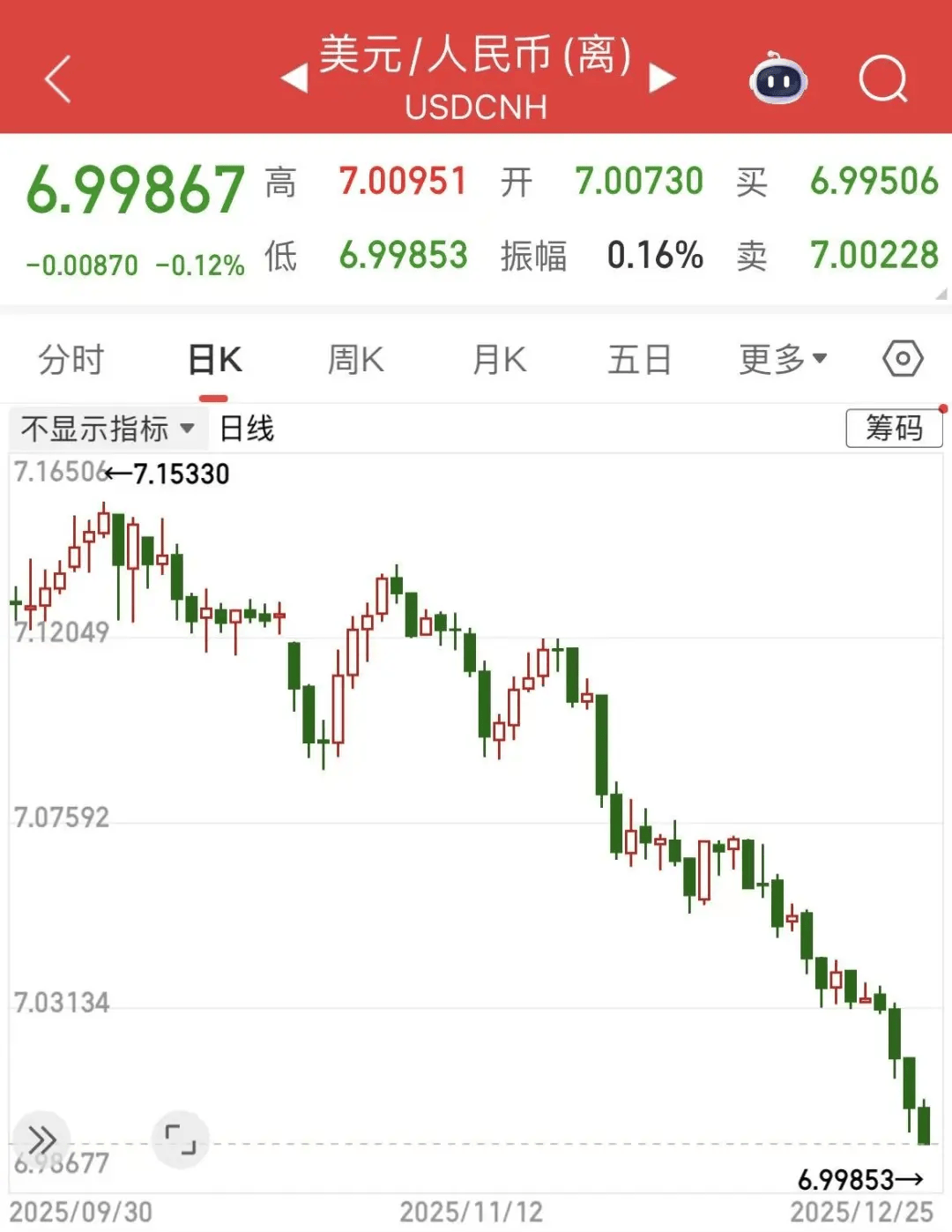
人民币汇率,破7!
Sou Hu Cai Jing· 2025-12-25 04:49
Core Viewpoint - The recent appreciation of the Renminbi (RMB) against the US dollar is attributed to a combination of external pressures easing, internal resilience strengthening, precise policy adjustments, and a shift in market expectations [3]. Group 1: Factors Influencing RMB Appreciation - The direct driving force behind the current RMB appreciation is the changing environment of the US dollar, with market expectations that continued interest rate cuts by the Federal Reserve will suppress the long-term outlook for the dollar, providing external appreciation space for the RMB [4]. - Near the end of the year, increased demand for foreign exchange settlement by enterprises is contributing to the seasonal strengthening of the RMB, particularly as previous accumulated settlement demand may accelerate release following the recent RMB strength [4]. - The continuous appreciation of the RMB is expected to enhance the attractiveness of the domestic capital market to foreign capital, directly increasing foreign exchange earnings for investors [4]. Group 2: Future Outlook on RMB Exchange Rate - Experts predict that the RMB exchange rate will fluctuate around the 7 yuan mark, with a stable yet slightly strong operation expected, and the likelihood of rapid one-sided trends is low [4]. - The future decoupling of the RMB exchange rate from the US dollar index is anticipated to become a norm, with the RMB breaking the 7 yuan mark supported by both fundamental and policy factors [4]. - Looking ahead to 2026, the RMB is expected to maintain a moderate appreciation, influenced by a potentially weak US dollar index and a balanced approach to exchange rate policy by the central bank [5].

刚刚,人民币汇率破7!
清华金融评论· 2025-12-25 04:06
根据公开数据显示,2025年12月25日, 离岸人民币对美元汇率最高触及6.9985元 ,升破7元大关。此外在岸人民币兑美元升破7.01关口,最高 触及7.0061元。 相关专家表示近期人民币升值行情,是外部压力趋缓、内部韧性增强、政策精准调控与市场预期转向等多种因素共同作用的结果。本轮人民 币升值的直接推动力,来自美元环境的转变。市场预期,伴随美联储继续开展降息,将进一步压制美元长期走势,为人民币提供外部升值空 间。 人民币兑美元汇率中间价走势图表 来源:人民银行 来源丨根据公开信息整理 编辑丨兰银帆 审核丨许晨辉 往期回顾 在风格上 既可以是分析研判式的文稿,也可以是解读评论型的文稿, 既可以建言献策经济金融理论与实践,也可以归纳总结新经 济金融模式与案例。 在形式上 无需复杂的理论与计量模型,无需过多的图形与数据表格, 无需臃肿的注释与参考文献,一句话,我们不需要学术性的 论文,但我们希望您的观点、结论和判断建立在扎实的学术 基础和理论基础之上。 Review of Past Articles - 等你来投!《清华金融评论》2026年1月刊 "十五五"开局:长短协同 保持经济增长在合理区间 等你来投!《 ...

刚刚,人民币汇率,破7!
Sou Hu Cai Jing· 2025-12-25 03:00
图片来源:Wind 图片来源:Wind 12月25日盘中,离岸人民币对美元汇率续创15个月以来新高,升破7.0元关口。 Wind数据显示,截至25日10:29,离岸人民币对美元汇率报6.9999元,较前收盘价上涨77个基点,盘中 最高报6.9981元,升破7元关口。 在岸人民币方面,Wind数据显示,截至25日10:28,该市场汇率报7.0073元,较前收盘价上涨88个基 点,盘中最高报7.0061元。 "近期人民币升值行情,是外部压力趋缓、内部韧性增强、政策精准调控与市场预期转向等多种因素共 同作用的结果。"国家金融与发展实验室特聘高级研究员庞溟表示。 庞溟分析,本轮人民币升值的直接推动力,来自美元环境的转变。市场预期,伴随美联储继续开展降 息,将进一步压制美元长期走势,为人民币提供外部升值空间。 东方金诚首席宏观分析师王青表示,临近年底,企业结汇需求增加,带动人民币季节性走强;特别是近 期人民币持续走强后,前期累积的结汇需求有可能加速释放。 "人民币持续升值,会增大国内资本市场对外资的吸引力,直接增加外资的汇兑收益。就当前来说,汇 市走强有助于提振国内资本市场信心。"王青说。 对于人民币汇率升破7元关口, ...
Bitcoin bulls eye possible tailwind as U.S. dollar index continues to leg lower
Yahoo Finance· 2025-12-23 14:47
Core Viewpoint - The U.S. dollar index (DXY) is experiencing a decline, trading near its 2025 low, following a significant drop in the first half of 2025 after a strong gain post the November 2024 election of Donald Trump [1][2]. Group 1: Dollar Performance - The dollar's substantial drop in 2025 was initially accompanied by a broader market reaction, with stocks, gold, and bitcoin rising sharply to new records [2]. - Despite the dollar's weakness, gold, silver, and copper have reached new record highs, while bitcoin and the broader crypto markets have faced significant declines [2]. Group 2: Technical Analysis - The DXY index is currently trading just above a critical long-term support level established since the 2008 global financial crisis, which has been tested multiple times [3]. - The potential for the dollar to fall below this major support level is heightened as foreign central banks, including the Bank of Japan, move towards tighter monetary policies, contrasting with pressure on the U.S. Federal Reserve to lower interest rates [4]. Group 3: Implications for Crypto - A break below the long-term support level of the dollar could potentially trigger a reversal in the downtrend of the cryptocurrency market, which has not yet benefited from the weak dollar this year [5].
Dollar Falls Ahead of U.S. Data
Barrons· 2025-12-23 09:19
The dollar was hovering near a one-week low ahead of a slew of U.S. economic data in holiday-thinned trade.The delayed third-quarter U.S. economic growth report and durable goods orders for October will be released at 8:30 a.m. Eastern time. Industrial production data for November are due at 9:15 a.m. ET while the Richmond Fed's manufacturing survey for December and Conference Board's consumer confidence survey for December are at 10 a.m. ET.Any weakness in the data could add to U.S. rate-cut expectations, ...
2025年美元走势回顾与展望
Sou Hu Cai Jing· 2025-12-22 03:09
Group 1 - The core viewpoint of the article is that the US dollar has weakened since 2025 due to policy, funding, and fundamental factors, with potential future support for the dollar from various economic conditions [1][2][19] - Since the beginning of 2025, the dollar has depreciated significantly, dropping from around 110 to a low of 96.98, and has remained below 100 despite some recovery in the fourth quarter [2][19] - The article highlights three deviations from traditional expectations regarding the dollar's performance: the dollar's depreciation despite tariff increases, the lack of support from high interest rates, and the dollar's failure to strengthen as a safe-haven asset during market turmoil [2][5][8] Group 2 - From a policy perspective, the economic policies of the Trump administration, particularly the imposition of "reciprocal tariffs," have directly contributed to the dollar's depreciation, with significant increases in overall tariff levels [11][12] - The sustainability of the US fiscal deficit has come under scrutiny, with the deficit reaching 6.4% of GDP and government debt at 98% of GDP, raising concerns about the long-term viability of US fiscal policy [12][19] - The independence of the Federal Reserve has been challenged by external pressures from the Trump administration, which has led to increased uncertainty in monetary policy decisions [12][19] Group 3 - Changes in foreign investment structures have amplified dollar volatility, with a shift towards equity investments and a decrease in government bond holdings, leading to increased sensitivity to market fluctuations [15][17] - The proportion of private sector investors has increased significantly, which tends to react more quickly to market conditions compared to official sector investors, further contributing to dollar volatility [15][17] - The dollar's depreciation has also been influenced by private sector investors beginning to hedge against currency risk as the dollar shows signs of weakness [17][19] Group 4 - The US economy has shown signs of slowing growth, with GDP growth at 1.9% in the first half of 2025, the lowest since 2023, and inflation risks rising due to tariff impacts [18][19] - Employment data has also been weak, with significant downward revisions in non-farm payroll numbers, indicating a potential drag on consumer spending [18][19] - Despite these challenges, the dollar may not experience rapid depreciation in the short term due to relative economic resilience compared to other developed economies [19][20] Group 5 - In the short term, the dollar's exchange rate is expected to remain stable, supported by the relative strength of the US economy and a potential easing of policy uncertainty from the Trump administration [19][20] - However, the volatility of the dollar may increase due to the unpredictable nature of Trump's policies and the reliance on stock market performance to attract capital inflows [20] - Long-term challenges to the dollar's status as a global currency are emerging, with concerns about the stability of the dollar's value and the increasing sensitivity of US Treasury bonds to market risks [20][23]