
自主创新

Search documents
张玉卓:做强做优做大国有企业和国有资本
Ren Min Ri Bao· 2025-12-22 07:55
Core Viewpoint - The interview with Zhang Yuzhuo, Secretary of the Party Committee and Director of the State-owned Assets Supervision and Administration Commission (SASAC), emphasizes the importance of state-owned enterprises (SOEs) as a pillar of the party's governance and the need for deepening reforms to strengthen and optimize SOEs and state capital during the 14th Five-Year Plan period [2]. Group 1: Enhancing Innovation Capabilities - Central enterprises are identified as the national team for technological innovation, with R&D investments exceeding 1 trillion yuan for three consecutive years, focusing on key technologies such as industrial mother machines and software [3]. - The goal is to enhance mission awareness and focus on solving major technological issues that affect national development and security, aiming for high-level technological self-reliance [3]. - There is a commitment to increase high-quality technological supply and tackle "bottleneck" areas, ensuring more original achievements in critical technologies [4]. Group 2: Reforming State-Owned Enterprises - The 14th Five-Year Plan outlines clear requirements for deepening SOE reforms, with a focus on enhancing core functions and competitiveness [5]. - The strategy includes improving the service capabilities of SOEs in relation to national strategies, emphasizing the importance of aligning SOE functions with national security and public service needs [5]. - There is a push to enhance the modern enterprise system with a focus on governance, management, and talent cultivation to boost operational efficiency [5]. Group 3: Optimizing Industrial Layout - SOEs are working on upgrading traditional industries while simultaneously fostering emerging industries, with an average annual investment growth rate of over 20% in new industries during the 14th Five-Year Plan [7]. - The focus will be on transitioning the industrial system towards higher value-added and technology-intensive sectors, playing a leading role in building a modern industrial system [7]. - Efforts will be made to promote digital transformation in traditional industries and integrate advanced technologies such as AI and big data [8]. Group 4: Developing New and Future Industries - The strategy includes identifying and nurturing new industries with significant growth potential, such as renewable energy and aerospace, while also planning for future technologies like quantum science and 6G [8]. - A specialized and market-oriented investment and financing system will be established to support the development of these industries, utilizing various financial tools and funds [8].
吴晓求:财政资源不能仅聚焦短期盈利项目 “投资于人” 等具有长远价值的领域同样应获资源倾斜
Xin Lang Cai Jing· 2025-12-21 07:51
Core Viewpoint - The speech by Wu Xiaoqiu emphasizes the importance of long-term investment in fundamental research and human capital for sustainable economic development, advocating for a shift away from short-term profit-focused thinking [1][7]. Group 1: Economic Development and Modernization - Wu Xiaoqiu highlights that building a modernized nation requires both "economic development" and "social civilization," with clear quantitative indicators for economic development, such as a per capita GDP exceeding $15,000 to be classified as a developed country [3][9]. - He stresses that "institutions may be more important than knowledge," as well-structured systems can define development boundaries and ensure returns, while frequent policy changes can lead to speculative behavior that hinders long-term growth [3][9]. Group 2: Role of Finance - Wu Xiaoqiu asserts that finance plays a crucial role alongside technology in the modernization process, often overlooked in its capacity to facilitate the transformation of technology into new products and industries [3][9]. - He identifies two core capabilities of modern finance: value discovery, which allows capital to assess the application and development potential of technologies, and risk diversification, which helps manage risks during the transition from technology to industry [3][9]. Group 3: Functions of Finance - The first function of finance is payment and clearing, which enhances economic and trade efficiency, exemplified by the transparency of mobile payment systems in China that have improved operational efficiency [4][10]. - The second function is pricing and resource allocation, where accurate pricing is essential for efficient resource utilization, facilitated through indirect financing via financial intermediaries and direct financing through market mechanisms [5][10]. - The third function involves risk management and hedging, where finance must create tools to manage various risks to stabilize the investment environment and attract foreign investment [6][11]. - The fourth function is to promote industrial upgrading and meet social wealth management needs by creating a diverse range of financial assets that cater to different investor profiles [6][12]. - The fifth function is to create diversified liquidity, which includes both monetary and asset liquidity, essential for the normal operation of the economy and providing more options for asset allocation [6][12].

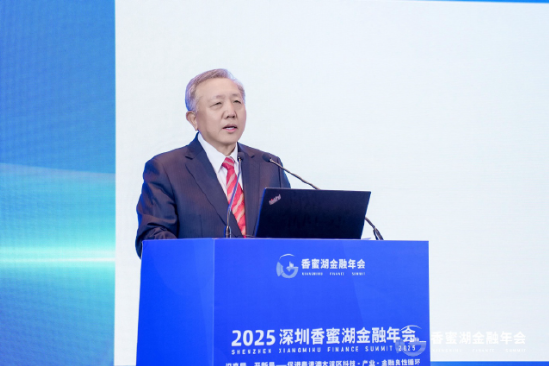
经济日报评论员:苦练内功把握发展主动权——论贯彻落实中央经济工作会议精神
Jing Ji Ri Bao· 2025-12-20 07:27
Group 1 - The central economic work conference emphasizes the need to strengthen internal capabilities to address external challenges, providing important guidance for economic work in the coming year [1] - The international environment is increasingly complex, with rising unilateralism and protectionism, leading to significant challenges for global economic growth and increased external pressures on China's development [1] - Domestic economic challenges include a prominent contradiction between strong supply and weak demand, with risks in key areas that can be resolved through focused efforts [1] Group 2 - The strategy to build a strong domestic market aims to enhance domestic circulation, leveraging China's vast internal demand to counter international uncertainties and reshape competitive advantages [2] - The focus is on boosting consumption and investment through a dual approach of supply and demand, fostering a positive interaction between them to enhance the internal dynamics of the economy [2] - The commitment to a manufacturing powerhouse strategy includes maintaining a reasonable proportion of manufacturing, developing advanced manufacturing, and creating a modern industrial system centered on advanced manufacturing [2] Group 3 - There is a call to enhance independent innovation capabilities and seize the high ground in technological development, emphasizing the need for systematic deployment in key core technology breakthroughs [3] - The focus is on original and disruptive innovation to fundamentally address core scientific and technical issues, with an emphasis on building regional innovation systems and technology innovation centers [3] - The integration of innovation resources into enterprises is crucial for deepening the fusion of technological and industrial innovation, reinforcing the role of enterprises as the main body of technological innovation [3]
苦练内功把握发展主动权
Jing Ji Ri Bao· 2025-12-20 00:51
Group 1 - The central economic work meeting emphasizes the need to "practice internal skills" to respond to external challenges, providing important guidance for economic work in the coming year [1] - The global environment is characterized by rising unilateralism and protectionism, leading to significant challenges for international economic and trade order, which increases external pressure on China's development [1] - Domestic economic challenges include a prominent contradiction between strong supply and weak demand, with risks in key areas that can be addressed through focused efforts [1] Group 2 - The strategy focuses on expanding domestic demand to counter international market uncertainties, aiming to reshape new competitive advantages through a consumption-driven economic model [2] - Emphasis on strengthening the real economy by implementing a manufacturing powerhouse strategy, maintaining a reasonable proportion of manufacturing, and developing advanced manufacturing sectors [2] - The plan includes fostering emerging pillar industries such as new energy, new materials, and aerospace, while optimizing traditional industries through upgrades and brand building [2] Group 3 - The goal is to enhance independent innovation capabilities and seize the high ground in technological development by addressing key core technologies and shortening innovation cycles [3] - The strategy involves strengthening original and disruptive innovation to fundamentally resolve basic scientific issues and improve regional innovation systems [3] - The focus is on integrating innovation resources into enterprises and promoting deep integration of technological and industrial innovation [3]
苦练内功把握发展主动权——论贯彻落实中央经济工作会议精神
Jing Ji Ri Bao· 2025-12-19 22:24
Group 1 - The central economic work conference emphasized the need to strengthen internal capabilities to address external challenges, providing important guidance for economic work in the coming year [1] - The international environment is increasingly complex, with rising unilateralism and protectionism, leading to significant challenges for global economic growth and increased external pressures on China's development [1] - Domestic economic challenges include a prominent contradiction between strong supply and weak demand, with risks in key areas that can be resolved through focused efforts [1] Group 2 - The strategy to build a strong domestic market aims to enhance domestic circulation, leveraging China's vast market size to counter international uncertainties and reshape competitive advantages [2] - Efforts will focus on boosting consumption and investment through a dual approach of supply and demand, enhancing the internal dynamics of the domestic economy [2] - The manufacturing sector will be prioritized, with a commitment to developing advanced manufacturing and modern industrial systems, while also optimizing traditional industries [2] Group 3 - There is a strong emphasis on enhancing independent innovation capabilities to secure a leading position in technological development, with a focus on overcoming reliance on external technologies [3] - The strategy includes strengthening the entire chain of key core technology research and development, promoting original and disruptive innovations [3] - The integration of innovation resources into enterprises is crucial for deepening the synergy between technological and industrial innovation [3]
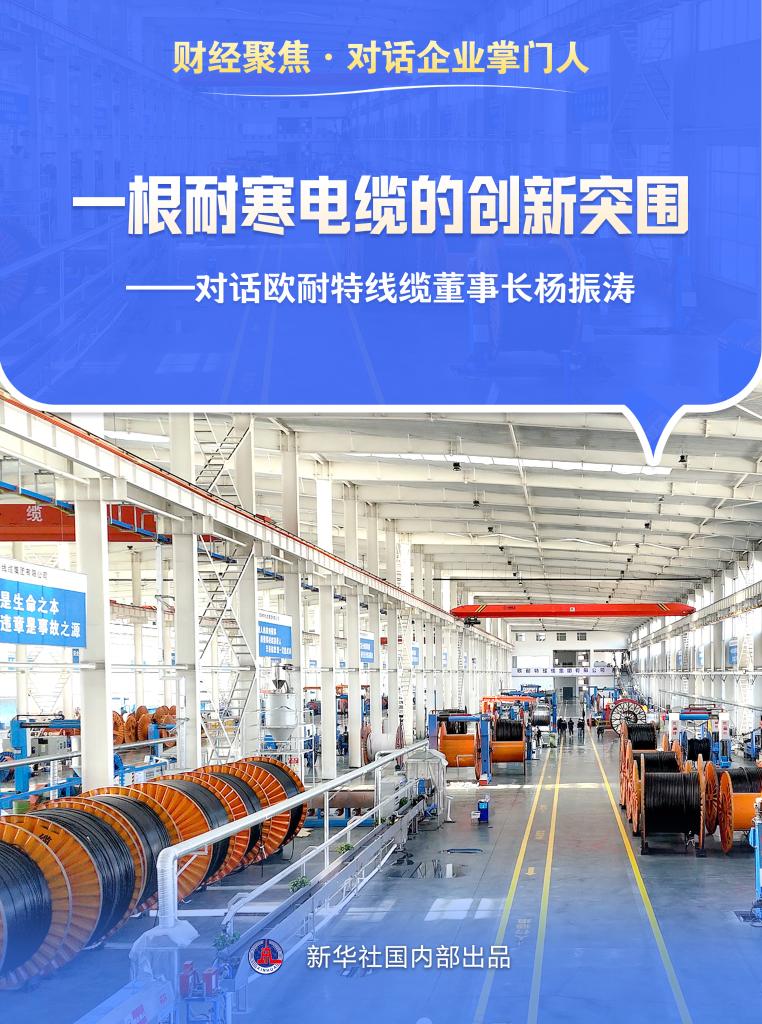
财经聚焦·对话企业掌门人丨一根耐寒电缆的创新突围——对话欧耐特线缆董事长杨振涛
Xin Hua Wang· 2025-12-19 11:47
Core Viewpoint - Ounait Cable Group has successfully developed a special cable that can withstand temperatures as low as -40°C, winning a major project bid, showcasing its innovation and commitment to the highland cable industry [2][5]. Group 1: Company Development - Ounait Cable Group has evolved from a sales agency to a national high-tech enterprise, focusing on research, production, and sales in the highland cable sector for over a decade [2]. - The company was founded by Yang Zhentao in 2005, capitalizing on the opportunity presented by China's western development strategy [4]. - The brand name "Ounait" reflects a commitment to high European standards and durability, marking a significant transition from selling cables to manufacturing them in 2012 [4]. Group 2: Challenges and Innovations - The company faced significant challenges during its transition, including inadequate understanding of production equipment and the need for skilled talent, leading to initial losses of approximately 2 million yuan [5]. - In response to market changes, particularly the slowdown in real estate, the company pivoted towards the burgeoning renewable energy sector, focusing on high-voltage cables and specialized cables for highland conditions [5]. - Ounait's cables maintain flexibility at -40°C and resist high UV exposure, salt, and corrosion, addressing the unique challenges of highland environments [2][5]. Group 3: Market Position and Future Plans - Ounait holds a market share of about 40% in the highland special cable sector, with R&D investment consistently exceeding 5% of revenue and 143 patents secured [10]. - The company is expanding its production capabilities, including a project for aluminum rods to reduce costs and plans for ultra-high voltage cables to meet smart grid demands [11]. - Ounait aims to establish and internationalize standards for highland special cables, contributing to the development of domestic standards and enhancing China's global presence in this sector [12].
“十四五”成就综述·电网篇丨我国建成世界规模最大、最复杂输变电工程
Zhong Guo Dian Li Bao· 2025-12-19 02:56
Core Insights - China's electricity consumption is projected to exceed 10 trillion kilowatt-hours by 2025, surpassing the total consumption of the EU, Russia, India, and Japan combined for 2024 [1] - The country has established the world's largest and most advanced power transmission network, with a reliability rate of 99.924% [1] Group 1: Power Transmission Capacity - During the "14th Five-Year Plan," China's ultra-high voltage (UHV) construction accelerated, increasing cross-province and cross-region transmission capacity from 270 million kilowatts at the end of the "13th Five-Year Plan" to 340 million kilowatts, a growth of over 25% [2] - The total length of UHV direct current lines has surpassed 40,000 kilometers, a 43% increase from the 28,000 kilometers during the "13th Five-Year Plan" [2] - The length of UHV alternating current lines has increased by over 67%, from 12,000 kilometers to over 20,000 kilometers [2] Group 2: Electricity Demand and Load - In the summer of 2025, China's electricity load reached a historical peak, with the total electricity consumption exceeding 1 trillion kilowatt-hours for two consecutive months [3] - The peak load reached 1.508 billion kilowatts, setting a new record [3] Group 3: Green Energy Transition - The proportion of clean energy transmitted through cross-regional UHV direct current channels increased from less than 40% at the end of the "13th Five-Year Plan" to nearly 60% by 2024, with annual clean energy transmission reaching 420 billion kilowatt-hours, a 70% increase [4] - New UHV projects have been developed to facilitate the transmission of renewable energy, including the first integrated UHV project for wind, solar, and storage [4] Group 4: Technological Advancements - China's UHV technology has achieved breakthroughs in various fields, establishing a self-controlled technical standard system and creating 26 world-first achievements [6] - Key technologies have overcome significant challenges, such as high altitude and severe weather conditions, enhancing the country's position as a global leader in UHV technology [6] - The integration of digital technology has improved the efficiency and reliability of the power grid, with significant advancements in operational decision-making and equipment assessment [7] Group 5: Global Influence - China's UHV technology is being exported globally, exemplified by the successful operation of UHV projects in Brazil, which has facilitated the export of clean hydropower over long distances [7] - The development of a comprehensive energy security network supports China's modernization and green development goals [7]
以自身确定性应对外部不确定性
Xin Hua She· 2025-12-19 00:38
Group 1 - The core message emphasizes the importance of self-reliance and internal development in response to external uncertainties and challenges [1][2] - The focus on expanding domestic demand is highlighted as a strategic move for economic stability and security, with a commitment to prioritize domestic market construction in the upcoming economic tasks [3] - Innovation is identified as a key factor for overcoming challenges, with significant emphasis on technological advancements and the establishment of international innovation centers in major regions [4] Group 2 - The upcoming year marks the beginning of the "14th Five-Year Plan," underscoring the critical nature of economic work for achieving socialist modernization, regardless of global fluctuations [5]
民营企业高质量的昆山之路
Xin Hua Ri Bao· 2025-12-18 21:43
Core Viewpoint - The development of private enterprises in China has significantly contributed to economic growth, technological innovation, employment expansion, and improved living standards since the reform and opening-up policy, with strong support from government policies and leadership [1] Group 1: Government Support - The government has established a "policy + talent + organization" empowerment system to support private enterprises, focusing on financial support, talent acquisition, and organizational guidance to enhance core competitiveness [2] - Efforts to optimize the business environment include building industrial clusters and providing timely assistance to enterprises during critical periods, ensuring their growth and international expansion [2] - Various measures have been implemented to facilitate international market entry, including improving financial services, simplifying foreign exchange processes, and providing risk management tools [2] Group 2: Enterprise Development - Enterprises are focusing on independent innovation and quality enhancement, increasing R&D investment, and establishing stringent quality standards to build global brand influence [3] - Companies are expanding their domestic market presence by developing localized products and protecting intellectual property, thereby solidifying their leadership in the industry [3] - Global expansion strategies are being pursued through a robust patent portfolio and international collaborations, allowing companies to navigate global supply chains and market challenges effectively [3] Group 3: Party Leadership - The integration of party leadership with enterprise development is emphasized, fostering a culture that aligns political and operational goals to drive high-quality growth [4] - Strengthening party organizations within enterprises enhances governance and cultural development, translating political advantages into competitive strengths [4] - Deepening the connection between party and enterprise fosters employee engagement and loyalty, contributing to a new phase of high-quality development [4]

数智转型 向海图强
Ren Min Ri Bao· 2025-12-18 00:17
Group 1 - The "Hai Xun 176," a large navigation support vessel designed and built by China, has officially joined the South China Sea Navigation Guarantee Center, marking it as the largest and most advanced navigation vessel in China's transportation system [1] - The vessel measures 75.2 meters in length, 14 meters in width, has a full-load displacement of 2360 tons, a range of 5000 nautical miles, and a maximum speed exceeding 15 knots, enhancing maritime navigation support and emergency response capabilities in the South China Sea [1] - China Shipbuilding Group has developed a world-class marine equipment industry cluster, delivering various vessels including the world's first self-propelled closed salmon farming vessel and China's first ocean-grade intelligent research vessel, with improving operational performance and positive economic indicators [1] Group 2 - China Shipbuilding Group has achieved significant advancements in core technologies through independent innovation, particularly in the development of laser gyroscopes, which are critical for navigation quality [2] - The company has established a first-class precision laser gyroscope production line, with applications across various platforms including land, sea, air, high-speed rail, and drones [2] Group 3 - The company has developed a digital operation support system that provides comprehensive digital solutions for ship operations, enhancing operational efficiency, safety, and economic benefits [3] - Intelligent navigation systems have been created, making ship operation as simple as driving a car, showcasing the company's commitment to smart ship and equipment transformation [3] Group 4 - China Shipbuilding Group is optimizing its new energy technology system to address environmental concerns associated with traditional fuel engines, which emit harmful pollutants [4] - The company has delivered multi-fuel main engines since 2021, with methanol dual-fuel engines reducing carbon emissions by 11% and LNG dual-fuel engines by 24%, while future ammonia fuel applications could potentially reduce CO2 emissions by over 95% [4]