
自有品牌

Search documents
万辰集团2025年中期成绩单:何以实现品牌力与效益双重跃升?
Mei Ri Jing Ji Xin Wen· 2025-08-28 13:56
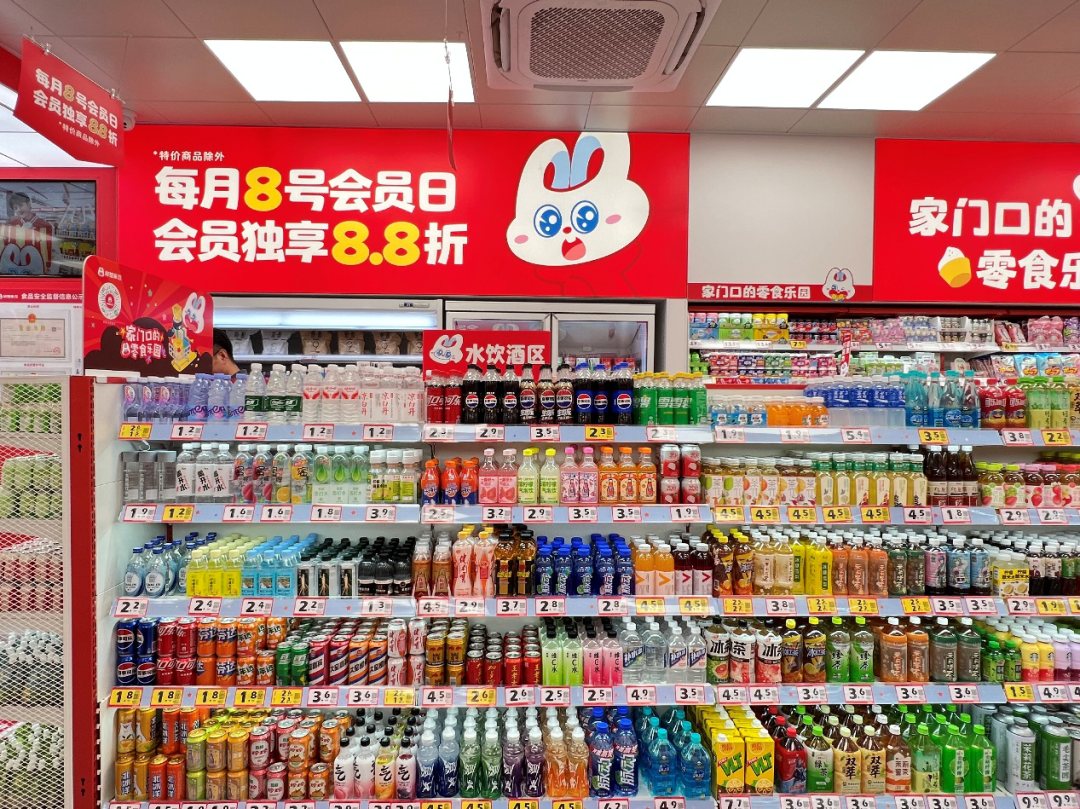
Core Insights - The core viewpoint of the article highlights the impressive financial performance of Wancheng Group, with significant year-on-year growth in revenue and net profit, driven by innovative product offerings and effective marketing strategies [1][3]. Financial Performance - In the first half of 2025, Wancheng Group reported total revenue of 22.583 billion yuan, a year-on-year increase of 106.89% [1] - The net profit reached 870 million yuan, up 504.17% year-on-year, while the net profit attributable to shareholders was 472 million yuan, reflecting a staggering growth of 50358.8% [1] - The company ended the period with a cash balance of 3.436 billion yuan, indicating strong liquidity [1]. Product and Brand Development - The company’s snack brand, "Haoxianglai," achieved revenue of 22.345 billion yuan, growing 109.33% year-on-year, and a net profit of 956 million yuan, up 241.43% [1]. - Wancheng Group is focusing on developing its own brand series, such as "Haoxianglai Super Value" and "Haoxianglai Selection," aimed at providing high-quality products at competitive prices [4][5]. - The introduction of innovative products, like the sugar-free tea and unique flavored beers, showcases the company's ability to meet contemporary consumer preferences [5][7]. Marketing and Membership Strategy - The company has built a robust membership system, with over 100 million registered members across more than 15,000 stores, enhancing customer retention and engagement [8][9]. - Wancheng Group's marketing strategy includes high-frequency activities and personalized member benefits, which have successfully increased customer loyalty and spending [9][11]. - The appointment of celebrity spokesperson Tan Jianzi has generated significant buzz, leading to a 70% increase in average transaction value and a 140% rise in new member sales [14][15]. Supply Chain and Retail Strategy - Wancheng Group leverages its supply chain capabilities to enhance product quality and reduce costs, allowing for competitive pricing [7]. - The company has expanded its instant retail business, integrating with major platforms like Meituan and Taobao, resulting in explosive growth in online orders [11][13]. - The focus on immediate retail aligns with current consumer trends for both value and convenience, effectively capturing market demand [13]. Brand Positioning and Future Outlook - Wancheng Group is positioning "Haoxianglai" as a national consumer brand, moving beyond mere snack sales to create a comprehensive brand ecosystem [17]. - The company's multi-faceted approach, combining product innovation, emotional branding, and a strong membership framework, is expected to sustain long-term growth and market relevance [17].

普莱得上半年净利润同比增长14.23% 自有品牌业务提速成增长新引擎
Zheng Quan Ri Bao Wang· 2025-08-27 12:45
Core Insights - Zhejiang Plade Electric Co., Ltd. reported a revenue of 461 million yuan for the first half of 2025, marking a year-on-year increase of 11.98%, with a net profit attributable to shareholders of 45.65 million yuan, up 14.23% [1] - The rapid growth of the company's proprietary brand business has become a significant highlight, with its revenue share exceeding 20% [1] Financial Performance - The total assets of the company reached approximately 1.503 billion yuan, a slight increase of 0.20% compared to the end of the previous year [4] - The net assets attributable to shareholders rose by 0.77% to 1.273 billion yuan [4] - The net cash flow from operating activities was 74.45 million yuan, a substantial increase of 67.98% year-on-year, primarily due to increased sales receipts and reduced procurement expenses [4] Brand Development - The company is focusing on a dual strategy of "independent innovation + proprietary brand" to enhance its brand influence and accelerate global market penetration [4] - In the first half of 2025, Plade invested 17.82 million yuan in R&D, a year-on-year increase of 15.92%, with a focus on developing high-value lithium battery products [2] - The company has obtained a total of 561 patents, including 53 invention patents, which enhance product competitiveness and support the establishment of a differentiated advantage in the mid-to-high-end market [2] Market Expansion - Plade has been actively promoting its proprietary brand through both online and offline channels, establishing flagship stores on platforms like Tmall, Amazon, and Walmart, and entering key markets such as the US, Europe, Australia, and India [2] - The acquisition of the European company BATAVIA B.V. has resulted in over 80% revenue growth, enhancing the company's penetration in the European market and facilitating access to high-end consumer segments [3] - The company is advancing an "annual production of 8 million DC lithium electric tools" project, expected to be completed by the end of 2025, which will significantly enhance production efficiency and delivery capabilities [3] Industry Trends - The demand for electric tools is experiencing comprehensive growth, with established markets like Europe and the US showing stable consumer habits for household tools [5] - The domestic manufacturing sector is accelerating its transition to high-end and intelligent production, driven by increased infrastructure investment and rising demand for industrial-grade electric tools [6] - The renovation of existing homes and the growing demand for home improvement are driving the rigid demand for basic tools like drills and angle grinders [6]
巨星科技20250826
2025-08-26 15:02
Summary of Key Points from the Conference Call of Giant Star Technology Company Overview - **Company**: Giant Star Technology - **Period**: First half of 2025 Financial Performance - **Net Profit**: 1.254 billion CNY, up 3.94% year-on-year [2][3] - **Operating Cash Flow**: Increased by 76.54% to 1.033 billion CNY [2][3] - **Net Assets**: 18.1 billion CNY, a growth of 10.69% [2][3] - **Revenue**: 7.027 billion CNY, a year-on-year increase of 4.87% [3][4] - **Gross Margin**: Improved to 33.74%, the highest since the accounting standard change in 2021 [3] Revenue Composition - **Hand Tools**: Main revenue source, accounting for 65.74% [2][4] - **Power Tools**: Significant growth, increasing from 7% to 10% of total revenue [2][4] - **Industrial Tools**: Remained stable, affected by European economic conditions [2][4] - **Americas Market**: Growth outpaced Europe, with self-branded products growing faster than customer brands [2][4] Brand and Product Strategy - **Self-Branded Products**: Rapid growth through international e-commerce (WorkPro, Duratech) and offline channels (Arrow) [2][7] - **Profitability**: Self-branded products have significantly higher margins compared to customer brands, benefiting from price increases in the North American inflation environment [2][6][7] - **Acquisition Plans**: Continued expansion of acquired brands and increased investment in self-branded products to maintain long-term growth [2][8][9] Market and Economic Conditions - **Debt Management**: Debt ratio decreased to a historical low of 19.04%, with plans to further reduce debt [4][10] - **Dividend Policy**: Aiming for a dividend payout ratio of around 30%, with a total dividend of 298 million CNY for the first half of 2025 [4][10][11] - **Inflation and Deflation**: Strategies in place to navigate the inflation in the U.S. and deflation in China [2][9] Future Outlook - **Growth Expectations**: Anticipated revenue growth in the mid-single digits for the year, with improved performance expected in Q3 [4][24] - **Interest Rate Impact**: Potential for increased demand in the tools industry if interest rates decrease, with historical data supporting this correlation [19][20] - **Investment in Production**: Ongoing construction of production bases in Vietnam and Thailand to enhance capacity and efficiency [2][12] Challenges and Risks - **Tariff Impacts**: High tariffs on Chinese exports to the U.S. affecting competitiveness, but the company maintains strong international competitiveness [13][16] - **Market Demand**: Declining demand in the U.S. tools market due to low housing turnover rates linked to high mortgage rates [17] - **Operational Costs**: Rising operational costs due to tariffs and logistics, but self-branded products are expected to mitigate some of these impacts [23][29] Conclusion - **Long-term Confidence**: Despite short-term uncertainties, the company is optimistic about maintaining market share and growth, particularly with the anticipated shift to a lower interest rate environment [34][35]

乖宝宠物(301498):自有品牌提速带动营收高增
Shenwan Hongyuan Securities· 2025-08-26 13:13
Investment Rating - The report maintains a "Buy" rating for the company [6] Core Insights - The company has shown significant revenue growth driven by its proprietary brand, with a projected revenue increase of 26% in 2025 [6] - The company's self-owned brand revenue has increased by 50% year-on-year in the first half of 2025, with high-end product revenue share rising significantly [6] - The company is expected to continue its rapid growth in proprietary brand revenue over the next three years, supported by product upgrades and an increasing share of high-end products [6] Financial Data and Profit Forecast - Total revenue for 2025 is estimated at 6,624 million, with a year-on-year growth rate of 26.3% [5] - The net profit attributable to the parent company is projected to be 789 million in 2025, reflecting a year-on-year growth of 26.4% [5] - The gross margin is expected to improve to 44.3% in 2025, up from 42.8% in the first half of 2025 [5] - The company’s return on equity (ROE) is forecasted to reach 16.4% in 2025 [5] - The price-to-earnings (PE) ratio is projected to be 49x for 2025 [6]
能给主人“打电话”! 全球首款宠物智能手机来了
Mei Ri Jing Ji Xin Wen· 2025-08-26 13:05
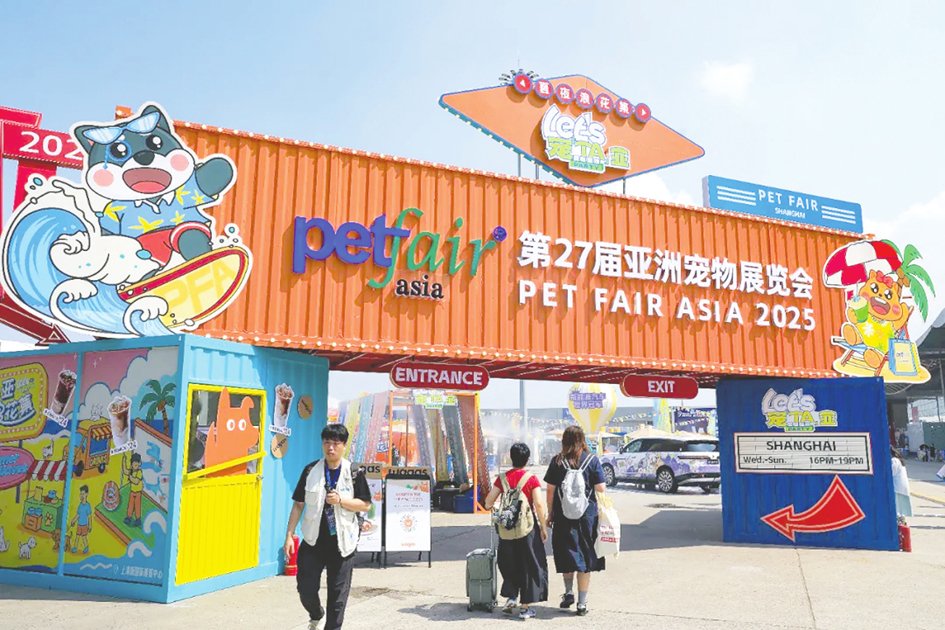
Core Insights - The pet industry in China is experiencing significant growth, driven by rising disposable income, an expanding pet owner demographic, and consumption upgrades [4][10] - The 27th Asia Pet Expo set new records, attracting over 130,000 professional visitors and more than 390,000 pet enthusiasts, with over 2,600 exhibitors [3][4] - The market for pet products and services is projected to reach 300.2 billion yuan in 2024, reflecting a 7.5% increase from 2023 [4] Industry Trends - Pet food remains the primary consumption category, accounting for 52.8% of the market share [5] - Major pet companies reported substantial revenue growth in the first half of 2025, with Guai Bao Pet achieving 3.221 billion yuan in revenue, a 32.72% increase year-on-year [5][6] - The pet industry is witnessing four key trends: the rise of domestic brands, increased penetration and consumption upgrades, market concentration, and the importance of supply chain and product quality [5][6] Competitive Landscape - The competition in the pet food market is shifting from price and channel competition to brand competition, with a focus on private label brands [7] - Sales expenses for leading companies have increased significantly, with Guai Bao Pet's sales expenses rising by 47.34% to 680 million yuan [7][8] - E-commerce platforms are evolving, influencing how pet brands engage with consumers through targeted marketing strategies [7] Technological Innovations - The Asia Pet Expo showcased advanced pet technology, including the world's first pet smartphone, PetPhone, which features AI communication and health monitoring capabilities [9] - The pet insurance sector is rapidly growing, with Zhong An Online reporting a total premium scale of approximately 563 million yuan, a year-on-year increase of over 51.3% [10] - The pet insurance market is projected to reach 3.2 billion yuan by 2025, with a penetration rate nearing 10%, indicating substantial growth potential [10]
部分“胖永辉”已进盈利期 今年门店量有望达20家
Bei Jing Shang Bao· 2025-08-25 16:06
Core Viewpoint - Yonghui Supermarket is actively transforming its stores into "Fat Modified Stores" to enhance profitability and competitiveness in the retail sector, with a significant number of stores undergoing renovation and a focus on improving product offerings and customer experience [1][2]. Group 1: Store Transformation - Yonghui Supermarket will open its 12th "Fat Modified Store" in Beijing on August 26, contributing to nearly 170 modified stores nationwide [1]. - The company plans to continue its store renovation efforts, with the expectation that sales will improve significantly post-renovation [1]. - The management indicated that stores in a stable modified state have already entered a profitable phase within three months of opening [1]. Group 2: Financial Strategy - Yonghui Supermarket is pursuing a private placement to raise up to 4 billion yuan for store renovations, working capital, and debt repayment [1]. - The company anticipates that while the transformation may lead to short-term financial pressure, profitability is expected to improve significantly in the fourth quarter [1]. Group 3: Product Strategy - The company is enhancing its private label products based on the supply chain experience of "Fat Donglai," with over 80% of the product structure aligned with this model [2]. - A specific product, a microcapsule fragrance enzyme laundry detergent priced at 19.8 yuan, has been upgraded to include features like antibacterial and anti-mite properties [2]. - Yonghui's customized products, such as a special edition of fresh milk from Yili, have seen significant sales, with over one million units sold within four days [2]. Group 4: Industry Insights - The transformation in retail requires substantial investment and resources, which can enhance a company's competitive position in the industry [2]. - The future of retail will be characterized by diversification and differentiation, necessitating continuous exploration of new business models and technology applications to meet evolving market demands [2].

1.2亿只“毛孩子”撬动千亿元市场!多家宠物行业上市公司业绩上涨,重金砸向自有品牌推广
Mei Ri Jing Ji Xin Wen· 2025-08-25 15:33
Core Insights - The pet industry in China is experiencing significant growth, driven by rising disposable income, an expanding pet owner demographic, and consumption upgrades [2][3] Group 1: Market Trends - The 27th Asia Pet Expo attracted over 130,000 professional visitors and more than 390,000 pet enthusiasts, with over 2,600 exhibitors and an exhibition area of 310,000 square meters, indicating a robust market presence [1] - The number of urban pet owners is projected to reach 76.89 million by 2024, a 2.4% increase from 2023, with pet dog and cat populations growing by 1.6% and 2.5% respectively [2] - The total market size for urban pet consumption is estimated at 300.2 billion yuan, reflecting a 7.5% growth from 2023, with pet food accounting for 52.8% of the market share [2] Group 2: Company Performance - Several listed pet companies reported revenue growth in the first half of 2025, with Guobao Pet achieving 3.221 billion yuan in revenue, a 32.72% increase, and Tianyuan Pet reporting 1.435 billion yuan, up 14.59% [3] - Petti Co. noted nearly 50% revenue growth for its self-owned pet food brand "Jueyan" in the same period [3] Group 3: Industry Dynamics - The pet industry is witnessing four major trends: the rise of domestic brands, simultaneous penetration and consumption upgrades, increased market concentration, and the importance of supply chain and product quality [3] - Competition is shifting from price and channel competition to brand competition, with a focus on private label brands becoming a key strategy for pet product companies [4] - Sales expenses for major companies have increased significantly, with Guobao Pet's sales expenses rising by 47.34% to 680 million yuan, reflecting increased investment in private label and direct sales channels [5]
产销一体+自有品牌,汇通达网络(9878.HK)家居产业发展觅得“加速器”
Cai Fu Zai Xian· 2025-08-22 04:07
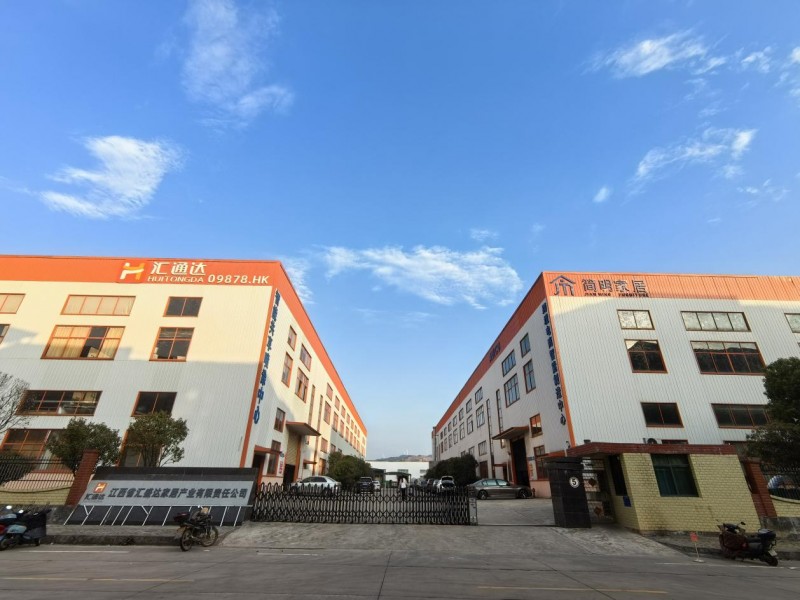
Core Viewpoint - Huitongda Network is advancing its strategic layout in the home furnishing and building materials sector, focusing on "production and sales integration" and developing its own brand products to enhance profitability and market presence [1][3]. Group 1: Strategic Developments - Since 2018, Huitongda has been developing an industrial internet model across multiple sectors, entering the home furnishing market [3]. - In 2024, the company initiated an industrial upgrade focusing on a B2F efficient supply chain driven by orders, integrating raw materials, factories, and channels [3]. - The introduction of high-quality, competitively priced proprietary home furnishing brands aims to expand market reach [3]. Group 2: Profitability and Efficiency - The new model has resulted in a significant increase in gross margins, with proprietary home furnishing products achieving over double the gross margin compared to previous agency or cooperative brands [3]. - The integration of production and sales has led to cost reductions and efficiency improvements across the entire supply chain, benefiting upstream processing plants, home furnishing factories, channel distributors, and consumers [5]. - For example, a high-quality water-based lacquer oak bed can be priced 10%-15% lower than well-known brands, providing stable orders for factories and better prices for consumers [5]. Group 3: Growth and Expansion - The home furnishing industry upgrade represented by Huitongda injects new momentum for high-quality development, with visible long-term scale and profit potential [7]. - The proprietary home furnishing products are sold through the company's member store network and expanded into e-commerce and third-party offline channels [7]. - Huitongda is also participating in local government initiatives to promote consumption, further enhancing its market presence [7]. - Future plans include leveraging AI and digitalization to improve efficiency across the entire production, research, and sales chain [7].
上半年由盈转亏,永辉超市:预计Q4会有明显好转
Feng Huang Wang· 2025-08-21 06:01
Core Viewpoint - The company has transitioned from profit to loss in the first half of the year, with a focus on store adjustments and closures impacting overall performance, but expects significant improvement in Q4 [1][2]. Financial Performance - In the first half of the year, the company reported revenue of 29.948 billion yuan, a year-on-year decrease of 20.73%, and a net loss attributable to shareholders of 241 million yuan, an increase in loss of 516 million yuan year-on-year [1]. - The adjusted net loss attributable to shareholders was 802 million yuan, an increase in loss of 832 million yuan year-on-year [1]. - The decline in revenue is attributed to the closure of long-term loss-making stores and the temporary suspension of operations during store adjustments [1]. Store Adjustments and Closures - The company closed a total of 227 loss-making stores in the first half of the year, with 552 stores still in operation and 124 stores undergoing adjustments as of the reporting period [2]. - The company plans to reach 200 adjusted stores by the end of September, with 160 adjusted stores reported as of mid-month [2]. - The chairman indicated that the closure of stores will continue in the second half of the year, based on market conditions and overall store performance [2]. Product Development - The company is also advancing its private label products, having launched orange juice and laundry detergent, with plans to introduce 60 new items covering daily and food products throughout the year [2]. Investor Concerns - Despite the net loss, the company reassured investors that it has sustainable operational capabilities and does not face ST risk [3].
永辉超市(601933):2025年半年报点评:归母净亏损2.4亿元,调改快速推进,供应链、自有品牌取得进展
Soochow Securities· 2025-08-21 04:58
Investment Rating - The investment rating for the company is "Accumulate" [1] Core Views - The company reported a net loss attributable to shareholders of 240 million yuan for the first half of 2025, with revenue declining by 20.7% year-on-year [7] - The company is undergoing rapid adjustments, with progress in supply chain and private label development [7] - The closure of unprofitable stores is expected to lead to a quicker path to sustained profitability [7] Financial Performance Summary - For the first half of 2025, total revenue was 29.95 billion yuan, down 20.7% year-on-year, and the net profit attributable to shareholders was a loss of 240 million yuan, compared to a profit of 275 million yuan in the same period last year [7] - The company closed 227 unprofitable stores, reducing the total number of stores from 775 to 552 [7] - The gross margin for the first half of 2025 was 20.8%, a decrease of 0.77 percentage points year-on-year, while the net profit margin was -1.0%, down 1.55 percentage points year-on-year [7] Future Projections - The company expects to reduce net losses to 870 million yuan in 2025, achieve profitability in 2026 with a net profit of 439 million yuan, and further increase to 1.04 billion yuan in 2027 [7] - The projected earnings per share (EPS) for 2025 is -0.10 yuan, with expectations of positive EPS of 0.05 yuan in 2026 and 0.11 yuan in 2027 [1][8] Strategic Initiatives - The company has accelerated the transformation of its stores, with 162 remodeled stores opened as of August 21, 2025 [7] - The company has signed contracts for direct procurement with 2,860 suppliers, reducing the number of suppliers by approximately 50% [7] - The proportion of direct sourcing for fresh products has increased to over 60%, and the self-operated product ratio has risen from 40.2% to 78% [7]