
风险溢价

Search documents
港股估值底层逻辑再思考:港股风险溢价 2.0
Guoxin Securities· 2025-10-14 08:59
Investment Rating - The report maintains an investment rating of "Outperform" for the Hong Kong stock market, indicating a positive outlook compared to the broader market [5]. Core Insights - The report emphasizes a new understanding of the equity risk premium (ERP), suggesting that it is significantly influenced by short-term growth expectations, particularly the nominal GDP growth rate in USD terms [1][2]. - The analysis identifies a strong correlation between the Hang Seng Index's ERP and the short-term growth rate of China's nominal GDP, with a correlation coefficient of -0.8, indicating that predicting ERP is effectively predicting short-term growth [2][4]. - The report outlines three phases of the current bull market in Hong Kong stocks, driven by factors such as the recovery of US dollar liquidity, changes in domestic policy, and expectations of aggressive monetary easing by the US government [3][4]. Summary by Sections Risk Premium: A Short-Term Growth Indicator - The report revisits the concept of ERP, previously viewed as a stable emotional indicator, and suggests that recent market conditions have led to a re-evaluation of its significance [1][14]. - It highlights that the ERP has broken historical lower limits, particularly in the context of the Hang Seng Index, which reflects a shift in nominal growth expectations [1][19]. Direct Derivation of Short-Term Growth - The report breaks down China's nominal GDP growth into three components: real GDP growth, inflation, and exchange rate changes, emphasizing the importance of these factors in predicting short-term growth [45][46]. - It notes that while real GDP growth is a primary driver, inflation and exchange rate fluctuations have become increasingly significant in recent years [46][51]. Reconstruction of Short-Term Growth Framework - The report proposes a new framework for predicting short-term growth by focusing on the relationship between China's real GDP and the value of the US dollar, suggesting that these factors are more relevant than previously considered [69][75]. - It concludes that the value of Chinese assets in USD terms is primarily determined by China's real GDP and the ratio of US dollar supply to US real GDP, simplifying the predictive model for nominal GDP growth [75].
资产配置全球跟踪 2025年10月第1期:资产概览:资产分化显著,日股黄金新高
GUOTAI HAITONG SECURITIES· 2025-10-13 15:10
Core Insights - The report highlights significant asset differentiation, with Japanese stocks reaching new highs while global equities face pressure. Gold and silver have seen substantial gains, with COMEX silver up over 60% and gold surpassing $4000 per ounce for the first time [1][6][11]. Cross-Asset Overview - From September 30 to October 10, Japanese and Korean equities led the market, with the Nikkei 225 hitting a new high and the KOSPI and KOSDAQ showing strong performance. In contrast, major US indices declined approximately 2%, and A-shares and Hong Kong stocks experienced slight pullbacks. Gold reached a historic high, while oil prices fell significantly, with Brent and WTI down 6.4% and 5.6%, respectively [6][16][18]. Equity Market Performance - Asian emerging markets outperformed, particularly Japan and South Korea. The MSCI global index fell by 1.3%, but the Asian markets showed resilience. The Nikkei 225 surged by 7.0%, benefiting from a weaker yen and optimistic policy expectations. Meanwhile, A-shares saw a minor decline, with the CSI 300 down 0.5% [16][18]. Bond Market Analysis - The Chinese bond market exhibited a "bull steep" curve, with overall yields declining but long-term yields (20-30 years) rising. The 10Y-2Y yield spread narrowed, while the 10Y-3M and 30Y-10Y spreads widened. In the US, the bond market showed a "bull flat" characteristic, with expectations of rate cuts increasing significantly [29][30]. Commodity and Currency Trends - Gold prices rose while oil prices fell, with the dollar index increasing by 1%. Major non-dollar currencies weakened, particularly the yen, which depreciated by 2.2%. The report notes that 11 out of 13 major commodity futures recorded gains, with precious metals leading the way [6][11][30].
国泰海通|策略:资产概览:资产分化显著,日股黄金新高
国泰海通证券研究· 2025-10-13 14:03
Core Insights - Global equity markets faced overall pressure, with significant performance divergence, particularly in Asia where Japanese and Korean markets excelled [1][2] - Precious metals, especially gold and silver, reached new highs, while oil prices declined [1][4] - The bond market showed a "bull steep" trend in China, while US bonds exhibited a "bull flat" trend, indicating differing yield curve behaviors [3] Group 1: Equity Market Performance - The MSCI global index fell by 1.3%, with developed markets underperforming compared to emerging markets, particularly in Asia [2] - The Nikkei 225 index surged by 7.0%, reaching a new high, driven by a weaker yen and optimistic policy expectations [2] - A-shares experienced a slight decline, with the Wande All A index down by 0.4%, while the KOSPI and KOSDAQ in South Korea rose by 5.4% and 2.1%, respectively [2] Group 2: Commodity and Currency Trends - The COMEX silver and gold prices increased significantly, with silver up over 60% and gold over 50% year-to-date [1][4] - The South China commodity index and CRB commodity index rose by 0.2% and 2.0%, respectively, with most major commodities showing gains except for WTI and Brent crude [4] - The US dollar index increased by 1%, while the Japanese yen depreciated by 2.2% against the dollar [4] Group 3: Bond Market Dynamics - In China, the yield curve showed a downward trend overall, with the long end (20-30 years) rising, indicating a "bull steep" characteristic [3] - The US bond market also saw a downward shift in the yield curve, with a narrowing 10Y-2Y spread, reflecting a "bull flat" trend [3] - As of October 12, the probability of a 25 basis point rate cut in October rose to 98.3%, with expectations for two rate cuts within the year [3]


创金合信基金魏凤春:铁马秋风塞北
Xin Lang Ji Jin· 2025-10-13 03:31
Market Overview - The technology growth sector has shown significant adjustments, with the ChiNext Index and the STAR Market Index rising approximately 40%, while the Hang Seng Tech Index increased by 19% [2] - Investors are exhibiting a clear shift towards defensive strategies, as evidenced by the performance of gold and silver, which have seen substantial gains amid global economic uncertainties [2] Global Risk Premium - Gold prices reached a new high of $4,000 per ounce on October 8, reflecting a shift in global asset allocation strategies [3] - The increase in gold prices, which have risen over 50% this year, is driven by trade tensions, geopolitical instability, and a weakening dollar [3][4] - Central banks are actively purchasing gold, with significant inflows into gold-backed ETFs recorded in September, marking the largest monthly inflow in over three years [3] Economic Indicators - The Citigroup Economic Surprise Index for China has been declining since mid-August, indicating a growing disconnect between A-share performance and economic fundamentals [5] - Historical data suggests that the Citigroup China Surprise Index and the CSI 300 Index typically move in the same direction, but recent trends show increasing divergence [5] Global Liquidity and Interest Rates - The Federal Reserve's recent interest rate cuts are expected to continue, with two more cuts anticipated by the end of the year, each by 25 basis points [7] - The Fed's approach aims to balance employment and inflation, with a focus on preventing economic recession rather than rescuing it [7] Geopolitical Dynamics - The reintroduction of tariffs by the Trump administration has disrupted existing investment strategies, leading to increased uncertainty among investors [9] - The ongoing U.S.-China trade negotiations are characterized by a "credible threat" strategy, suggesting that any tariff increases may be more about negotiation tactics than actual implementation [10] Investment Strategy - The current market environment necessitates a focus on growth technology investments, while also emphasizing the importance of timing in investment decisions [11] - The recent market adjustments are seen as a confirmation of the need for strategic asset allocation, particularly in light of the anticipated economic conditions [11]
宗馥莉辞职,恰恰宣告了“家族接班”范式的终结
Hu Xiu· 2025-10-12 06:16
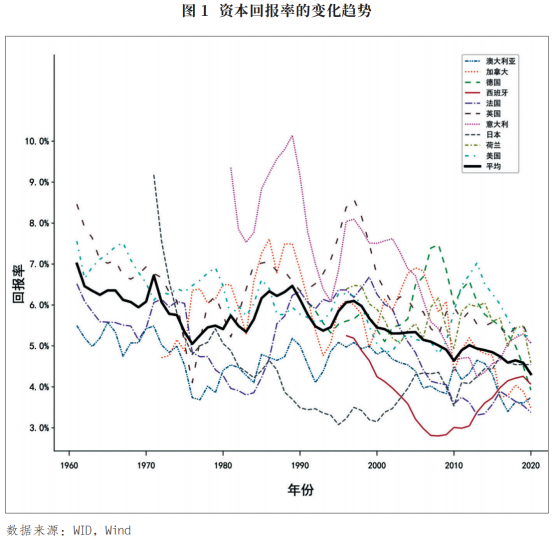
Core Viewpoint - The resignation of Zong Fuli from Wahaha Group's leadership has sparked discussions about the internal family conflict and the future of this iconic Chinese enterprise, highlighting issues related to offshore trusts, equity arrangements, and the transition of mixed-ownership enterprises in China [1] Group 1: "National Stock Private" Model - The ideal "National Stock Private" model involves the state allocating funds based on asset management plans' historical performance, decentralizing investment decisions to competing market institutions [2][3] - Implementing the "National Stock Private" model can potentially break the bottleneck of economic growth, transcending family interests and impacting the trajectory of Chinese enterprises and the economy [3] Group 2: Economic Challenges and Demand Shortage - Demand shortage has been a persistent issue since the industrial era, with various economic theories attempting to address it, yet fiscal policies have often led to increased national debt without the expected economic recovery [4][5] - The current economic landscape in China shows signs of demand shortage, with declining investments and a lack of private sector confidence attributed to policy risks in sectors like real estate and education [5][6] Group 3: Capital Return Rates and Investment Dynamics - The return rate on physical assets in China has decreased from 7% in 2001 to 4.2% in 2023, indicating a weakening profitability of physical assets [6][7] - The overall capital return rate is influenced by the distribution of capital and the economic growth rate, with a historical trend showing that capital return rates tend to decline when capital growth outpaces economic growth [8][9] Group 4: Implications of Wealth Concentration - Wealth concentration among high-income groups leads to a mismatch in demand, where those with capital do not consume enough, resulting in unsold goods and economic stagnation [10][11] - Historical patterns suggest that when wealth becomes overly concentrated, it can lead to social unrest and economic crises, necessitating interventions to redistribute wealth [13][14] Group 5: Future of Corporate Governance - As the founding generation of companies ages, the next generation may lack the management skills needed, leading to a shift from management to mere ownership, which could necessitate changes in governance structures to protect minority shareholders [24][25] - The "National Stock Private" model aims to create a more equitable management structure that aligns the interests of large shareholders, small shareholders, and public shareholders, ultimately benefiting all investors [25][26]
AH溢价逼近十年新低!收窄交易近尾声后市怎么走?
Xin Lang Cai Jing· 2025-09-30 06:01
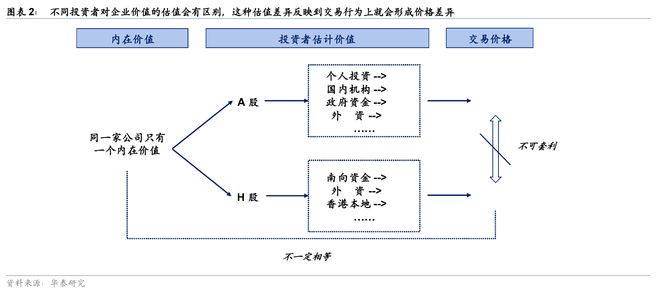
Core Viewpoint - The recent decline in the AH premium index, approaching a 10-year low, has raised concerns among investors regarding the significant price differences of the same companies listed in both A-shares and H-shares markets [1][3]. Group 1: AH Premium Performance - The AH premium index has dropped from 134 in May to 117, marking the lowest level since 2018, leading to widespread market confusion about the reasons behind this decline [1][3]. - Historical data indicates that the AH premium does not exhibit a tendency for short-term rapid mean reversion, with average premiums varying significantly over different periods [3][4]. Group 2: Fundamental Reasons for AH Premium - The fundamental reason for the AH premium lies in the differing valuations by investors in the two markets, as there is no sufficient arbitrage mechanism allowing for easy conversion between A-shares and H-shares [4][6]. - The differences in investor structure and trading systems between the two markets contribute to the observed price discrepancies, with foreign capital playing a larger role in the H-share market [6][7]. Group 3: Quantitative Analysis of Factors - The impact of dividend tax on the price difference is estimated to be around 5%, contrary to the common belief of 25%, indicating a more nuanced understanding of the factors affecting the AH premium [7][10]. - A comprehensive analysis suggests that the long-term theoretical center for the AH price difference may be around 26% to 27%, but this is subject to significant variability due to the lack of effective short-term theoretical centers [10][12]. Group 4: Future Outlook on AH Premium - The current trading dynamics suggest that while the AH premium may remain low, it does not guarantee a reversal opportunity, as external factors like the strength of the US dollar and market trends play a crucial role [10][12]. - Predictions indicate that if the US dollar weakens and the Hang Seng Index valuation rises, the AH premium could potentially decline further to below 15% [10][12]. Group 5: Investment Strategy - In investment decisions, it is essential to consider both capital gains and dividend returns, with capital gains being significantly more impactful than dividend yields [11][12]. - The assessment of AH premium trends is critical for stock selection between A-shares and H-shares, as the dividend yield advantage of H-shares may not compensate for capital gains from A-shares if the AH premium expands [12][13].
A股市场快照:宽基指数每日投资动态-20250929
Jianghai Securities· 2025-09-29 13:12
- The report provides a snapshot of the A-share market performance, highlighting that all broad-based indices experienced a decline on September 26, 2025, with the largest drops seen in the ChiNext Index (-2.6%) and CSI 2000 (-1.55%) [1][2][10] - The report notes that most indices, except SSE 50, fell below their 5-day moving averages, with CSI 1000 and CSI All Share Index also falling below their 10-day moving averages, and SSE 50 and CSI 2000 dropping below their 20-day moving averages [2][13][15] - The turnover rate of the indices on September 26, 2025, is highlighted, with CSI 2000 having the highest turnover rate (3.69), followed by ChiNext Index (3.02) and CSI 1000 (2.67) [2][18] - The daily return distribution of the indices is analyzed, showing that CSI All Share Index has the largest negative kurtosis deviation, while CSI 1000 has the smallest negative kurtosis deviation. CSI All Share Index also has the largest negative skewness, whereas SSE 50 and CSI 300 have the smallest negative skewness [2][23][25] - The risk premium of the indices relative to the 10-year government bond yield is discussed, with SSE 50 (33.65%) and CSI 300 (14.92%) having relatively high 5-year percentile values, while CSI 500 (10.63%) and ChiNext Index (4.68%) have lower values [2][30][32] - The PE-TTM values and percentiles of the indices are analyzed, showing that CSI 500 (99.75%) and CSI All Share Index (96.45%) have high 5-year percentile values, while SSE 50 (82.48%) and ChiNext Index (60.5%) have lower values [3][40][42] - The stock-bond valuation ratio is calculated using the reciprocal of PE-TTM and the difference with the 10-year government bond yield. None of the indices exceed their 80% percentile, and CSI 500 is below its 20% percentile [45][46] - Dividend yield trends are analyzed, showing that ChiNext Index (63.39%) and CSI 1000 (47.19%) are at relatively high 5-year historical percentiles, while CSI 2000 (18.6%) and CSI 500 (15.12%) are at lower percentiles [3][50][53] - The report highlights the current net asset value discount rates of the indices, with SSE 50 having the highest rate (26.0%), followed by CSI 300 (17.33%) and CSI 500 (12.0%), while ChiNext Index has the lowest rate (1.0%) [3][54]
国泰海通|策略:资产概览:商品表现强于股债——资产配置全球跟踪2025年9月第4期
国泰海通证券研究· 2025-09-28 12:34
Group 1: Market Overview - Global equity indices experienced a pullback, with the MSCI Global Index declining by 0.5% after three consecutive weeks of gains [2] - Emerging markets saw a greater decline compared to developed markets, with Asian markets underperforming Europe and North America [2] - A-shares performed well, particularly the Sci-Tech 50 index which surged by 6.5%, while the ChiNext Index and CSI 300 rose by 2.0% and 1.1% respectively [2] Group 2: Bond Market - The Chinese bond market showed a "bear flattening" trend, with the yield curve shifting upward and the 10Y-2Y spread narrowing [3] - In the U.S. bond market, the yield curve also moved upward, indicating a "bear steepening" trend, with the 10Y-3M spread widening [3] - As of September 27, the probability of a 25 basis point rate cut in October dropped to 87.7%, with expectations for two rate cuts this year totaling 50 basis points [3] Group 3: Commodity and Currency - Commodity prices overall increased, with the South China and CRB commodity indices rising by 0.2% and 2.0% respectively [4] - COMEX silver has seen a year-to-date increase of 59.6%, marking a significant rise [4] - The U.S. dollar index rose by 0.6%, while major currencies like the euro, pound, and yuan depreciated against the dollar [4]

A股市场快照:宽基指数每日投资动态-20250922
Jianghai Securities· 2025-09-22 07:31
The provided content does not contain any specific quantitative models or factors, nor does it detail their construction, evaluation, or backtesting results. The report primarily focuses on descriptive statistics and market analysis of broad-based indices in the A-share market, including metrics such as risk premium, PE-TTM, dividend yield, and turnover rates. Below is a summary of the key points extracted from the content: Quantitative Analysis and Metrics - **Market Performance**: The report tracks the performance of broad-based indices such as the CSI 300, CSI 500, CSI 1000, and others, analyzing daily, weekly, monthly, and yearly returns[1][10][12] - **Moving Averages**: All indices have fallen below their 5-day moving averages, with the ChiNext Index showing the most significant distance from its moving average support levels[15][17] - **Turnover Rates**: The CSI 2000 has the highest turnover rate (4.56), while the CSI 1000 and ChiNext Index follow with 3.06 and 3.28, respectively[19][20] - **Risk Premium**: The CSI 300 and ChiNext Index exhibit high 5-year percentile risk premiums (54.52% and 47.62%), while the CSI 1000 and CSI 2000 show lower values (31.11% and 24.21%)[31][32][33] - **PE-TTM**: The CSI 500 and CSI All Share Index have the highest 5-year PE-TTM percentiles (99.75% and 96.61%), while the ChiNext Index has a relatively lower percentile (59.5%)[43][45][46] - **Dividend Yield**: The ChiNext Index and CSI 1000 have the highest 5-year dividend yield percentiles (66.03% and 44.46%), while the CSI 500 and CSI 2000 have the lowest (14.88% and 13.14%)[55][56] - **Break-even Rates**: The ChiNext Index has the lowest break-even rate (1.0%), while the CSI 2000 and CSI 1000 follow with 3.35% and 7.4%, respectively[57] Observations on Statistical Distributions - **Kurtosis and Skewness**: The ChiNext Index has the highest kurtosis and skewness, indicating a higher concentration of returns and a greater likelihood of extreme positive returns. Conversely, the CSI 2000 has the lowest values, suggesting a more dispersed return distribution[26][27] Risk Premium Analysis - **Volatility Trends**: The risk premium of indices like the CSI 1000 and CSI 2000 shows significant volatility, with notable spikes in September 2024 and April 2025 due to external events[30][31] - **Distribution Characteristics**: The CSI 1000, CSI 2000, and ChiNext Index exhibit more dispersed risk premium distributions, indicating higher uncertainty compared to indices like the SSE 50 and CSI 300, which have more concentrated distributions[36][37] PE-TTM and Valuation - **Historical Trends**: The PE-TTM values of most indices have shown a sharp increase since September 2024, with the CSI 500 and CSI All Share Index reaching the highest valuation levels relative to their historical ranges[41][43][45] - **Investment Implications**: The report highlights that no indices currently exceed their 80% valuation opportunity threshold, with the CSI 500 falling below its 20% danger threshold[48] Dividend Yield Analysis - **Historical Context**: The ChiNext Index and CSI 1000 have the highest historical dividend yield percentiles, suggesting their attractiveness in terms of cash flow returns. In contrast, the CSI 500 and CSI 2000 have the lowest percentiles, indicating less favorable dividend yields[55][56] Break-even Rates - **Current Levels**: The ChiNext Index has the lowest break-even rate, reflecting a more optimistic market valuation, while the CSI 2000 and CSI 1000 have slightly higher rates, indicating relatively lower market confidence[57] This report does not include specific quantitative models or factors, nor does it provide detailed construction methodologies, formulas, or backtesting results. Instead, it focuses on descriptive metrics and their implications for market analysis.
大类资产早报-20250918
Yong An Qi Huo· 2025-09-18 02:26
Report Overview - The report is a macro asset market analysis released by the research center's macro team on September 18, 2025, covering global asset market performance, including bond yields, exchange rates, stock indices, and trading data of stock index futures and treasury bond futures [2][3] Global Asset Market Performance Bond Yields - **10 - year Treasury Bond Yields**: Yields of major economies showed different trends. For example, the US 10 - year Treasury bond yield was 4.089 on September 17, 2025, with a latest change of 0.060, a one - week change of 0.042, a one - month change of - 0.203, and a one - year change of 0.388 [3] - **2 - year Treasury Bond Yields**: The US 2 - year Treasury bond yield was 3.540 on September 17, 2025, with a latest change of - 0.020, a one - week change of 0.050, and a one - year change of - 0.210 [3] Exchange Rates - **USD against Major Emerging Economies' Currencies**: The exchange rate of the US dollar against the Brazilian real was 5.305 on September 17, 2025, with a latest change of 0.14% and a one - month change of - 3.24% [3] - **Renminbi**: The on - shore RMB exchange rate was 7.104 on September 17, 2025, with a latest change of - 0.14%, a one - week change of - 0.24%, a one - month change of - 1.00%, and a one - year change of - 0.13% [3] Stock Indices - **Major Economies' Stock Indices**: The S&P 500 index was 6600.350 on September 17, 2025, with a latest change of - 0.10%, a one - week change of 1.05%, a one - month change of 3.20%, and a one - year change of 20.64% [3] - **Emerging Economies' Stock Indices**: The emerging economies' stock index was 1347.850 on September 17, 2025, with a latest change of 0.59%, a one - week change of 3.09%, a one - month change of 6.98%, and a one - year change of 26.74% [3] Credit Bond Indices - Different credit bond indices, such as the US investment - grade credit bond index (3528.030 on September 17, 2025) and the euro - zone high - yield credit bond index (407.110 on September 17, 2025), showed various trends in the latest, one - week, one - month, and one - year changes [3][4] Stock Index Futures Trading Data Index Performance - The A - share index closed at 3876.34 with a 0.37% increase, the CSI 300 index closed at 4551.02 with a 0.61% increase, etc. [5] Valuation - The PE (TTM) of the CSI 300 was 14.16 with a 0.07环比 change, and the PE (TTM) of the S&P 500 was 27.47 with a - 0.03环比 change [5] Risk Premium - The risk premium (1/PE - 10 - year interest rate) of the S&P 500 was - 0.45 with a - 0.06环比 change, and that of the German DAX was 2.52 with a 0.02环比 change [5] Fund Flows - The latest fund flow of A - shares was - 198.10, and the latest fund flow of the CSI 300 was 79.42 [5] Trading Volume - The latest trading volume of the Shanghai and Shenzhen stock markets was 23767.38, and the latest trading volume of the CSI 300 was 6084.54 [5] Basis and Spread - The basis of IF was 2.18 with a 0.05% spread, the basis of IH was 3.42 with a 0.12% spread, and the basis of IC was - 7.64 with a - 0.11% spread [5] Treasury Bond Futures Trading Data - Treasury bond futures T00, TF00, T01, and TF01 closed at 108.155, 105.890, 107.855, and 105.760 respectively, with increases of 0.18%, 0.13%, 0.18%, and 0.14% [6] - The R001, R007, and SHIBOR - 3M in the money market were 1.5536%, 1.5493%, and 1.5540% respectively, with daily changes of 5.00 BP, 5.00 BP, and 0.00 BP [6]