高性能计算

Search documents
英伟达表示,并未放弃 64 位计算
半导体行业观察· 2025-12-11 01:23
Core Viewpoint - Nvidia has faced criticism for neglecting the 64-bit performance needed for traditional modeling and simulation workloads, focusing instead on enhancing low-precision computing for AI applications. However, the company asserts it has not abandoned 64-bit computing and plans to improve its performance in future GPU generations [2][5][6]. Group 1: Performance Comparison - The transition from Nvidia's Hopper to Blackwell architecture did not yield significant improvements in FP64 performance, as highlighted by Jack Dongarra during the SC25 conference. He noted that the floating-point computing capability did not surpass the previous generation [2]. - Nvidia's Hopper H100 and H200 GPUs offer 340 teraflops of FP64 performance and 670 teraflops of FP64 Tensor Core performance, a substantial increase from the Ampere A100's 97 teraflops and 195 teraflops, respectively [2]. - The Blackwell architecture's B100 GPU was initially expected to have lower 64-bit computing capabilities, with FP64 and FP64 Tensor Core performance at only 30 teraflops. Ultimately, Nvidia released the B200 and GB200 Grace Blackwell "super chip," which still does not match the performance of the H200 [3][4]. Group 2: Market Response and Future Directions - Nvidia's Blackwell chips are primarily designed for low-precision AI workloads, responding to the increasing computational demands for training and running large language models. This focus has led to strong sales, making Nvidia the first company to surpass a market capitalization of $5 trillion [5]. - Despite the advancements in AI, the HPC community feels overlooked, as traditional FP64 computing remains essential for fields like materials science and climate modeling. The demand for high bandwidth memory is driven by AI needs rather than HPC requirements [5][6]. - Addison Snell from Intersect360 Research emphasized the critical importance of FP64 computing across various industries, including manufacturing, energy, finance, and healthcare. He noted that 64-bit computing should be considered a fundamental requirement for "scientific AI" [6]. Group 3: Future Enhancements - Nvidia's senior director, Dion Harris, acknowledged that while Blackwell's 64-bit performance is not as strong as Hopper's, the company remains committed to maintaining its leadership in this area. He mentioned the release of cuBLAS, a CUDA-X math library that can enhance FP64 matrix multiplication performance by 1.8 times [6][8]. - Harris indicated that Nvidia is working on improving the core underlying performance of future GPUs in 64-bit computing, although specific details were not disclosed. The HPC market is eager for significant enhancements in FP64 performance similar to those seen in previous generations [9].


新思科技(SNPS.US)“AI换挡”战略见效:联手英伟达发力,业绩指引超预期
智通财经网· 2025-12-10 23:48
Core Insights - Synopsys reported Q4 revenue of $2.26 billion, a 38% year-over-year increase, exceeding expectations of $2.24 billion [1] - Adjusted EPS for Q4 was $2.90, slightly above the market expectation of $2.88 [1] - The company anticipates FY2026 revenue between $9.56 billion and $9.66 billion, aligning with analyst expectations of $9.63 billion [1] Financial Performance - Q4 revenue breakdown: Design Automation contributed $1.85 billion, and Design IP contributed $407 million [1] - Adjusted operating profit grew 36% year-over-year to $822.6 million, surpassing the expected $803 million [1] - FY2025 revenue reached a record $7.1 billion, a 15% increase from FY2024's $6.1 billion [1] Future Outlook - The company expects Q1 revenue between $2.37 billion and $2.42 billion, above the analyst forecast of $2.36 billion [1] - Adjusted EPS for Q1 is projected between $3.52 and $3.58, exceeding the expected $3.46 [1] - Synopsys has a backlog of $11.4 billion, indicating strong future revenue potential [1] Strategic Developments - NVIDIA invested $2 billion in Synopsys to co-develop tools for product development [2] - Synopsys plans to lay off about 10% of its workforce to reinvest in AI-driven design and system-level solutions [2] - The acquisition of Ansys contributed $667.7 million to Q4 revenue, enhancing Synopsys's capabilities [2] Market Position - Synopsys competes in the electronic design automation market against Cadence Design Systems and Siemens [2] - The market is expected to grow as chip manufacturers develop AI and high-performance computing processors [2] - Mizuho Securities described Synopsys's Q4 performance as "better than expected," highlighting strong backlog as a positive indicator for future performance [3]

突发!688041、603019,宣布终止重大资产重组
Hua Xia Shi Bao· 2025-12-10 00:57
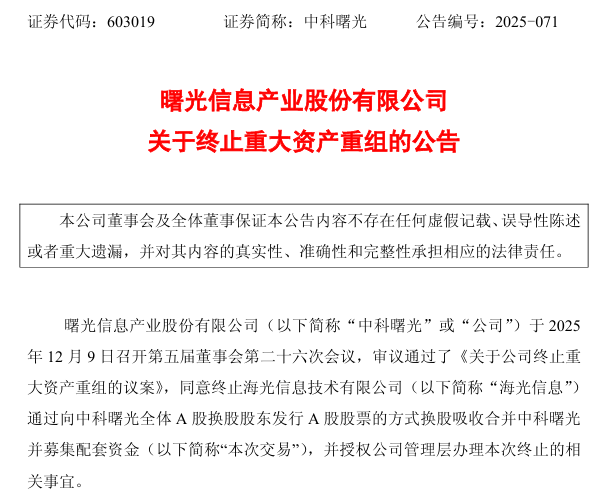
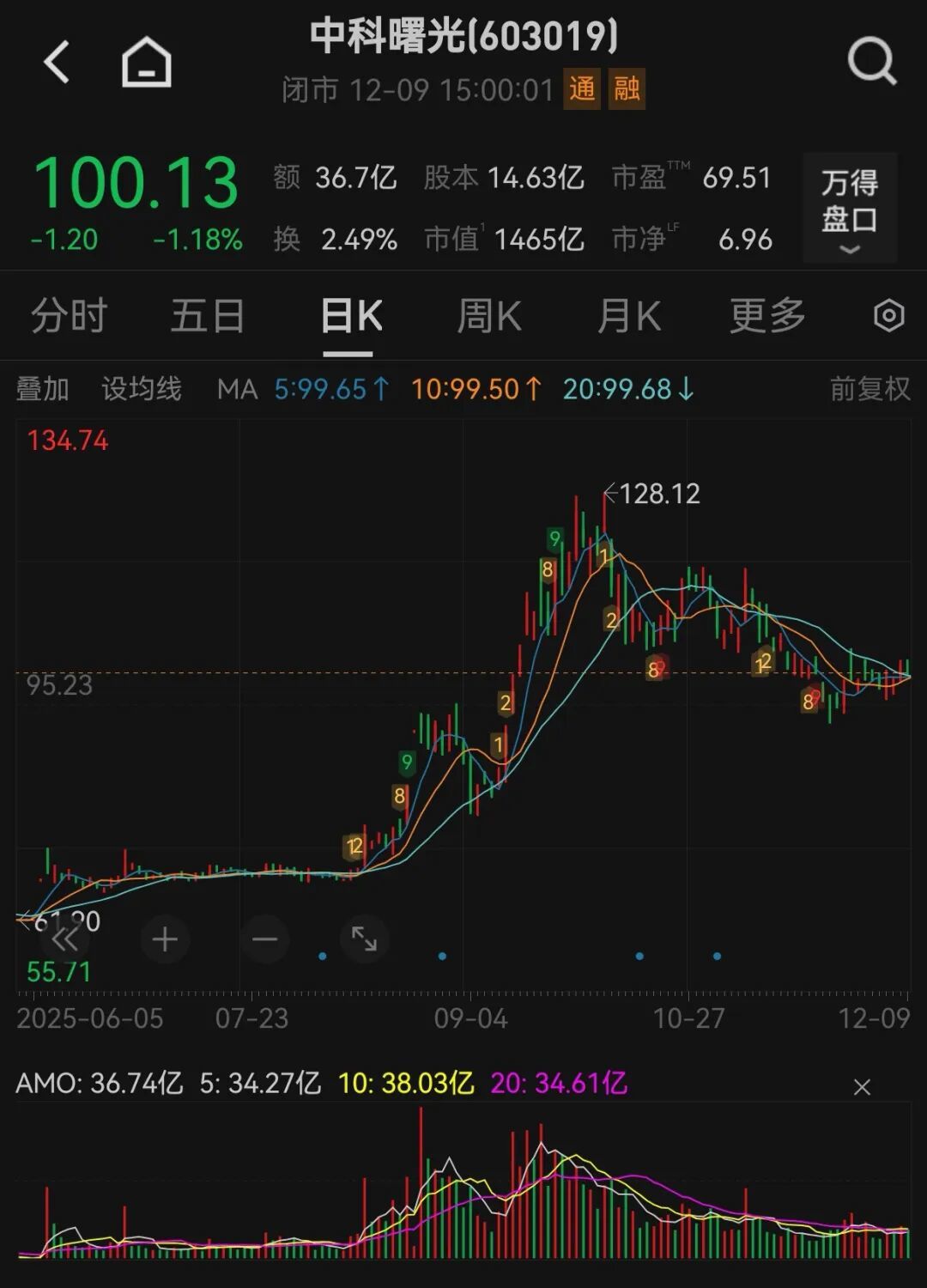
Core Viewpoint - The major asset restructuring plan between Haiguang Information and Zhongke Shuguang has been officially terminated due to changes in market conditions and the complexity of the transaction, which was deemed not mature enough for implementation [5][6]. Group 1: Termination of Restructuring - Both companies announced the termination of the major asset restructuring plan on December 9, 2025, with Haiguang Information and Zhongke Shuguang holding board meetings to approve the decision [1][3]. - The termination was based on extensive discussions and research, with both companies emphasizing that the decision was made in the interest of maintaining long-term benefits for the companies and their investors [5][6]. Group 2: Background of the Restructuring - The restructuring plan began in May 2025, with Haiguang Information suspending trading on May 26 and resuming on June 10, during which time they disclosed progress updates [5]. - The original plan involved Haiguang Information issuing A-shares to all A-share shareholders of Zhongke Shuguang at a swap ratio of 0.5525:1, with the intention of absorbing Zhongke Shuguang and raising additional funds [6]. Group 3: Market Impact and Future Plans - Prior to the termination, Haiguang Information had a market capitalization of 315.8 billion yuan, while Zhongke Shuguang was valued at approximately 90.3 billion yuan, totaling over 400 billion yuan [6]. - Following the announcement of the merger, both companies experienced significant increases in market capitalization, with Haiguang Information reaching 509.7 billion yuan and Zhongke Shuguang 146.5 billion yuan, leading to a combined market value of 656.2 billion yuan [7]. - Both companies have committed to not planning any major asset restructuring for at least one month following the termination announcement and will hold an investor briefing on December 10, 2025, to address market concerns [5].


海光信息、中科曙光,突然宣布终止重大资产重组
Zheng Quan Shi Bao· 2025-12-09 22:55
Core Viewpoint - The major asset restructuring between Haiguang Information and Zhongke Shuguang has been officially terminated due to changes in market conditions and the complexity of the transaction [1][4][5] Group 1: Termination of Major Asset Restructuring - Haiguang Information announced the termination of the major asset restructuring plan to absorb Zhongke Shuguang through a share exchange, which was approved by the board with 8 votes in favor [4] - The termination was attributed to the large scale of the transaction, involvement of multiple parties, and significant changes in the market environment since the initial planning [4][5] - Both companies emphasized that the termination does not affect their ongoing collaboration and will continue to focus on high-end chip products and AI solutions [4][5] Group 2: Financial Performance and Dividends - Both companies have announced a mid-term cash dividend plan for 2025, which has been approved by their boards and will be submitted for shareholder approval [12] - Haiguang Information plans to distribute a cash dividend of 0.90 yuan per 10 shares, totaling 209 million yuan, which represents 10.64% of its net profit attributable to shareholders [12] - Zhongke Shuguang intends to distribute a cash dividend of 0.70 yuan per 10 shares, totaling 102 million yuan, which accounts for 10.60% of its net profit attributable to shareholders [12] Group 3: Historical Context and Market Impact - The restructuring plan began in May 2025, with Haiguang Information's shares suspended from trading on May 26 and resumed on June 10, during which due diligence and other preparatory work were conducted [7] - The initial merger aimed to integrate the supply chain and enhance efficiency, leveraging Haiguang's strengths in high-end chip design and Zhongke's capabilities in hardware and cloud computing solutions [8] - Following the announcement of the merger, both companies experienced a significant increase in market capitalization, with Haiguang reaching 509.7 billion yuan and Zhongke 146.5 billion yuan, totaling 656.2 billion yuan [8]
华安证券:OCS光交换机有望迎来高速成长期 建议关注赛微电子等
Zhi Tong Cai Jing· 2025-12-08 07:49
Core Insights - The training of AI large models requires high communication bandwidth, low latency, and low power consumption, making Optical Circuit Switches (OCS) an ideal interconnection solution due to their high bandwidth and low latency characteristics [1][3] - The global OCS optical switch market is projected to grow from $0.07 billion in 2020 to $0.78 billion by 2025, with a compound annual growth rate (CAGR) of 62%, and is expected to reach $2.02 billion by 2031, with a CAGR of approximately 17.2% from 2025 to 2031 [3] Industry Overview - OCS is primarily applied in three major scenarios for AI computing clusters: Scale-Up (enhancing single-node performance), Scale-Out (multi-node collaboration), and Scale-Across (interconnecting across data centers) [2] - In a Google TPU cluster, a setup with 4,096 TPU v4 chips requires 48 OCS switches, indicating a TPU to OCS ratio of approximately 85:1, which improves to 192:1 with the future TPU v7 cluster [2] Market Dynamics - The OCS market is currently concentrated, with the top four manufacturers expected to hold about 69% of the market share by 2025, with Google and Coherent being key players [3] - The OCS industry chain consists of upstream core components, midstream equipment integration, and downstream applications, with high technical barriers and significant value concentration in upstream core components like MEMS micro-mirror arrays [3] Company Focus - Ying Tang Intelligent Control (300131) is expanding from electronic component distribution to semiconductor design and manufacturing, planning to acquire Guilin Guanglong Integration by 2025 to strengthen its OCS full-process layout [4] - Saiwei Electronics (300456) is a leader in MEMS process development and wafer manufacturing, with a significant portion of its revenue (83%) coming from MEMS business, and is expected to benefit from the growing demand for AI computing [4]

台积电先进封装订单大爆满 扩大委外释单 日月光大赢家
Jing Ji Ri Bao· 2025-12-07 23:12
Core Viewpoint - TSMC's advanced packaging capacity is fully booked, leading to significant outsourcing opportunities, benefiting companies like ASE Technology Holding and Siliconware Precision Industries [1][2] Group 1: TSMC's Outsourcing and Market Impact - TSMC is experiencing strong demand for its advanced packaging services, particularly in CoWoS and CoWoP technologies, which are critical for high-performance computing [1] - The company has fully booked its advanced process capacities, including 2nm and 3nm technologies, prompting it to accelerate outsourcing of advanced packaging and testing to meet AI customer demands [1] Group 2: ASE Technology Holding and Siliconware Precision Industries - ASE Technology Holding and Siliconware Precision Industries have invested over NT$11.17 billion in the past two months to expand production and acquire equipment in response to TSMC's outsourcing orders [1][2] - ASE Technology Holding anticipates strong performance in its advanced packaging and testing business, projecting annual revenue of $1.6 billion for this year, with expectations to increase by over $1 billion by 2026, reflecting a growth rate of over 60% [2] Group 3: Industry Trends and Future Outlook - The demand for high-performance computing driven by generative AI is expected to remain strong, with major companies like NVIDIA, AMD, Microsoft, Meta, Amazon AWS, and Google competing for capacity [1] - ASE Technology Holding's new facilities, including the Dulin and Douliu plants, are expected to be operational by next year, further solidifying its position in the semiconductor packaging market [2]

液冷迎来千亿拐点:AI算力驱动热管理升级,国产链迎历史性入局机遇
材料汇· 2025-12-07 15:30
Core Viewpoint - The article emphasizes the rapid growth of global computing power demand driven by advancements in artificial intelligence, cloud computing, and high-performance computing, leading to unprecedented cooling challenges for data centers. Liquid cooling technology is evolving from an optional solution to a necessary one due to its energy efficiency, low power consumption, and noise reduction advantages, especially in light of tightening national PUE (Power Usage Effectiveness) requirements. The article outlines the evolution of liquid cooling technology, market landscape, and future trends, predicting that the global liquid cooling market will exceed 100 billion yuan by 2026, marking the beginning of a liquid cooling revolution driven by technology, policy, and industry collaboration [2]. Group 1: Liquid Cooling Technology - Liquid cooling technology is essential for addressing the cooling pressures of data centers. It utilizes liquid to dissipate heat from components, leveraging the high thermal conductivity and heat capacity of liquids compared to air, resulting in lower energy consumption, higher cooling efficiency, and reduced noise [6][13]. - The core advantages of liquid cooling include low energy consumption, high cooling capacity (4-9 times that of air cooling), low noise levels, and lower total cost of ownership (TCO), with PUE values potentially dropping below 1.2 [13][26]. - The rapid increase in chip power density necessitates the adoption of liquid cooling solutions, as traditional air cooling struggles to meet the demands of next-generation architectures like NVIDIA's Rubin, which anticipates power densities reaching up to 600 kW [14][18]. Group 2: Market Trends and Future Outlook - The liquid cooling market is expected to surpass 100 billion yuan by 2026, driven by technological advancements, policy support, and collaboration across the supply chain [2]. - The evolution of liquid cooling technology is characterized by the emergence of microchannel cold plates and phase change cooling plates, which enhance efficiency and customization [2][14]. - The article highlights the increasing importance of liquid cooling in meeting national PUE requirements, with policies pushing for lower PUE values, thereby promoting the adoption of energy-efficient technologies [22][25]. Group 3: Industry Applications and Solutions - Liquid cooling solutions are categorized into direct contact and indirect contact types, with single-phase immersion cooling being the primary development direction due to its high efficiency and energy savings [30][47]. - Single-phase cold plate cooling is expected to remain the mainstream solution for a considerable time due to its compatibility with existing infrastructure and lower retrofit costs [37]. - Immersion cooling offers high energy efficiency (PUE < 1.13) and supports high-density deployments, although it presents challenges in product design and maintenance [48][49].

首届巴西—印度数字对话在巴西利亚举行
Shang Wu Bu Wang Zhan· 2025-12-06 16:26
Core Insights - The first Brazil-India Digital Dialogue was held in Brasília, showcasing the comprehensive and strategic cooperation between the two countries in the digital sector [1] - Key topics discussed included AI governance, public digital infrastructure, effective connectivity, high-performance computing, semiconductors, technological innovation, data protection, and multilateral collaboration [1] - Both countries aim to enhance bilateral coordination through joint initiatives, technology exchanges, and regular consultations to establish a closer partnership on digital issues [1] - The importance of basing digital transformation on technological sovereignty and inclusive sustainable development was emphasized [1] - Brazil welcomed India's hosting of the India AI Impact Summit 2026 in New Delhi, with Brazilian representatives expected to attend [1]
人工智能泡沫还是超级周期?AMD CEO 公开说出不为人知的一面
美股研究社· 2025-12-05 10:52
Core Viewpoint - AMD is not in an AI bubble but is in the "third year of a ten-year super cycle of computing demand" [1][10]. Group 1: AMD's Strategic Positioning - AMD has transitioned from being a "CPU follower" to a data center powerhouse [3]. - The company has reallocated R&D resources towards high-performance computing and AI, resulting in a data center business growth rate exceeding 50%, projected to rise above 60% [5][6]. - AMD aims to capture a double-digit market share in a projected $1 trillion data center market by 2030, leveraging its comprehensive product portfolio [6][8]. Group 2: Competitive Advantages - AMD's chiplet-first architecture and rack-scale systems provide a significant competitive edge [2]. - The company possesses unique capabilities across CPUs, GPUs, FPGAs, and ASICs, allowing for integrated solutions that adapt to changing workloads [6][8]. - AMD believes that GPUs will dominate the market for the next five years due to their programmability and flexibility, while custom ASICs will complement rather than replace them [7][12]. Group 3: Transition to System Solutions - AMD is evolving from a "chip company" to a "system company," focusing on full-stack solutions to enhance deployment efficiency [9][10]. - The acquisition of ZT Systems and partnerships for rack-level designs like Helios demonstrate AMD's commitment to this strategy [9][10]. Group 4: AI Market Dynamics - AMD's CEO asserts that the current AI landscape is not speculative but integral to productivity and innovation across various sectors [10][12]. - The demand for CPUs is rising due to the increasing need for general-purpose processing in AI applications, countering the notion that GPUs will solely dominate [11][12]. Group 5: Future Outlook - AMD's strategic focus on high-performance computing and AI positions it well for significant growth, with analysts projecting a potential stock price of $775, and in optimistic scenarios, close to $1000 [2].

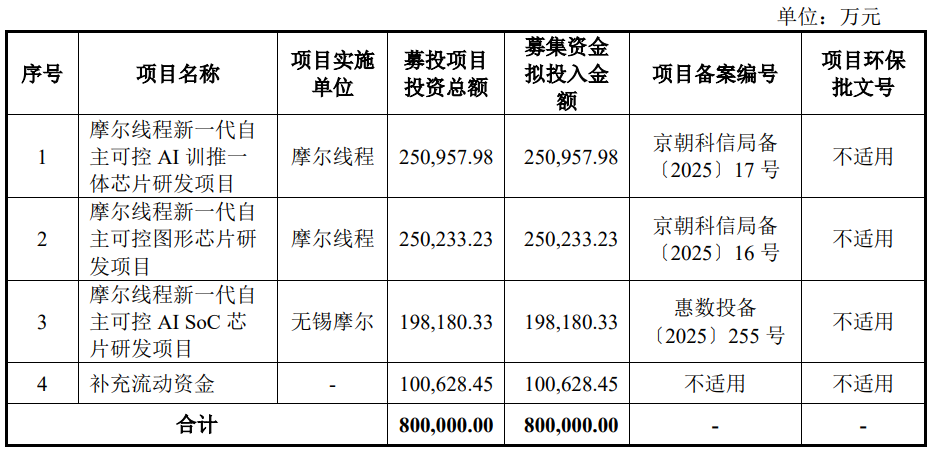
摩尔线程上市募80亿首日涨425% 3年3季累计亏损59亿
Zhong Guo Jing Ji Wang· 2025-12-05 07:27
中国经济网北京12月5日讯 今日,摩尔线程智能科技(北京)股份有限公司(股票简称:摩尔线程,股票代码:688795.SH)在上交所科创 板上市。该股开盘报650.00元,截至收盘报600.50元,涨幅425.46%,成交额153.07亿元,振幅115.51%,换手率85.49%,总市值2822.52亿元。 摩尔线程主要从事GPU及相关产品的研发、设计和销售。自2020年成立以来,公司以自主研发的全功能GPU为核心,致力于为AI、数字孪 生、科学计算等高性能计算领域提供计算加速平台。 本次发行前或截至上市公告书签署日,公司无单一持股30%以上的股东,不存在控股股东,公司实际控制人为张建中。 本次发行前,张建中直接持有公司11.06%的股份,同时张建中与持股平台南京神傲、杭州华傲签署一致行动人协议(一致行动期限至任何 一方不再持有发行人股权之日),并担任杭州华傲、杭州众傲及杭州京傲三家员工持股平台的执行事务合伙人(持股比例较低,但根据合伙协 议的约定,拥有对三家员工持股平台持续稳定的控制权),合计控制公司36.36%的股份,为公司实际控制人。 2.请发行人代表结合报告期内主要客户情况、收入确认时点和方式、经销商采 ...