
自动驾驶

Search documents
特斯拉Model 3/Y/Y L车型官宣5年0息购车方案;蔚来宣布第100万台量产车下线,车型为全新蔚来ES8丨汽车交通日报
创业邦· 2026-01-06 10:05
Group 1 - NIO announced the production of its 1 millionth vehicle, a new ES8 model, marking a significant milestone since the first vehicle was produced in 2018 [2] - NVIDIA introduced the Alpamayo automotive platform at CES, enabling vehicles to "reason" in real-world scenarios, with the first cars using this technology expected to hit the roads in the US in Q1 and Europe in Q2 [2] - GAC Honda announced a two-week production halt due to semiconductor supply issues and production line upgrades, with adjustments expected to be manageable and not affecting overall annual output [3] Group 2 - Hyundai Motor Group plans to build a new headquarters in Seoul, consisting of three 49-story skyscrapers, with an estimated cost of 5.24 trillion KRW [3] - Tesla launched a low-interest financing plan for Model 3/Y/Y L vehicles, including a 5-year 0% interest option for orders placed by January 31, with monthly payments starting at 1,918 CNY for Model 3 [5]



利好密集!这一板块领涨龙头5连板 19股涨停!
Zheng Quan Ri Bao· 2026-01-06 09:43
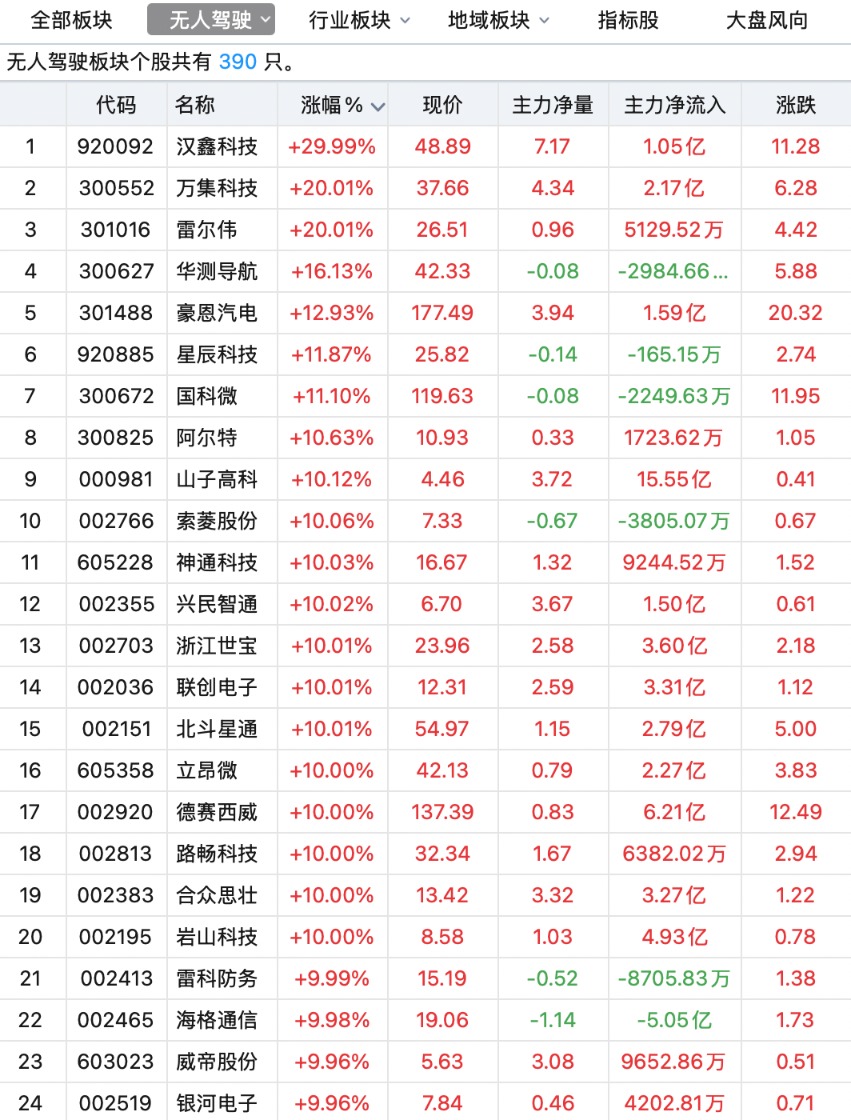
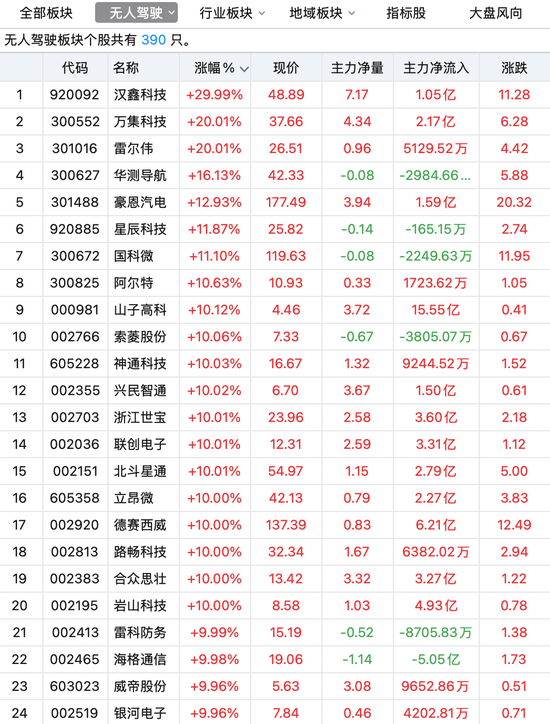
1月6日,无人驾驶板块表现活跃。截至当日收盘,汉鑫科技(920092)、万集科技(300552)、雷尔伟(301016)、山 子高科(000981)、索菱股份(002766)、神通科技(605288)、兴民智通(002355)、北斗星通(002151)、德赛西 威(002920)、路畅科技(002813)、立昂微(605358)、银河电子(002519)、岩山科技(002195)等19股涨停。其 中,雷科防务5连板,索菱股份3连板。 另外,华测导航(300627)、豪恩汽电(301488)、星辰科技(920885)、国科微(300672)等个股涨超10%。 | | 代码 | 名称 | 涨幅% √ | 现价 | 主力净量 | 主力净流入 | 涨跌 | | --- | --- | --- | --- | --- | --- | --- | --- | | 1 | 920092 | 汉鑫科技 | +29.99% | 48.89 | 7.17 | 1.05亿 | 11.28 | | 2 | 300552 | 万集科技 | +20.01% | 37.66 | 4.34 | 2.17 亿 | 6.28 | | 3 | 3 ...
今夜无显卡,老黄引爆Rubin时代,6颗芯狂飙5倍算力
3 6 Ke· 2026-01-06 09:40
Core Insights - NVIDIA unveiled its new Vera Rubin architecture at CES 2026, boasting a 5x increase in inference performance and a 3.5x increase in training performance compared to the previous Blackwell architecture, while reducing costs by 90% [1][3][8] - The Rubin platform is designed to address the urgent demand for AI computing power, with large-scale production set to begin in the second half of 2026 [3][10][47] Group 1: Vera Rubin Architecture - The Vera Rubin architecture integrates CPU, GPU, networking, storage, and security into a cohesive system, moving away from merely stacking GPUs to creating a unified AI supercomputer [13] - Key components of the Rubin platform include the Vera CPU, Rubin GPU, NVLink 6, ConnectX-9 SuperNIC, BlueField-4 DPU, and Spectrum-6 Ethernet, all designed to enhance AI performance [14][16] - The Rubin GPU achieves 50 PFLOPS of NVFP4 computing power, significantly outperforming the Blackwell GPU [16][27] Group 2: Performance Enhancements - The Rubin architecture's training speed reaches 35 petaflops, while inference tasks can achieve up to 50 petaflops, marking a substantial improvement over Blackwell [27][28] - The architecture's HBM4 memory bandwidth has increased to 22 TB/s, and the NVLink interconnect bandwidth has doubled to 3.6 TB/s, facilitating efficient multi-GPU training [27][29] - The platform reduces the number of GPUs needed for training MoE models by 75%, leading to significant energy savings [28][32] Group 3: AI Applications and Innovations - NVIDIA introduced AlphaMayo, an end-to-end autonomous driving AI capable of reasoning and decision-making without human intervention [49][55] - The company is also launching a comprehensive open-source suite for physical AI, which includes models and frameworks for various applications, including robotics [62][64] - The new DGX SuperPOD, featuring multiple Rubin NVL72 racks, can handle thousands of AI agents and millions of tokens, providing a robust AI infrastructure [41][39] Group 4: Market Impact and Future Outlook - Major cloud providers like AWS, Microsoft Azure, and Google Cloud are expected to be the first to deploy the Rubin architecture, with widespread commercial use anticipated by late 2026 [47] - The advancements in AI infrastructure are expected to drive a significant increase in investment in AI, with estimates of $3 to $4 trillion over the next five years [8] - NVIDIA's innovations are set to redefine the AI landscape, making high-performance computing more accessible and affordable, akin to electricity [8][71]

【天风汽车】英伟达开源智驾大模型,商业化落地加速-0106
Ge Long Hui· 2026-01-06 09:39
Group 1 - Nvidia has launched an open-source vision-language-action model, Alpamayo 1, for autonomous driving, featuring 10 billion parameters and a significant breakthrough in openness, providing complete development resources from data to deployment [1] - The model is an inference-based VLA that can reason causal relationships before decision-making, predict intentions of others, and handle multi-step decisions, resulting in a 12% improvement in planning accuracy, a 37% increase in action consistency, and a 25% reduction in collision rates [1] - Nvidia's DRIVE system is entering mass production, with the first model being the new Mercedes CLA, set to hit the roads in the US in 2026, and plans to test Robotaxi services in collaboration with partners in 2027 [1] Group 2 - The open-source end-to-end model is expected to reconstruct the intelligent driving ecosystem, further lowering the threshold for Level 4 (L4) autonomous driving, with recommendations for Robotaxi algorithm companies such as Xiaoma and Wenyuan, and attention on unmanned mining vehicle targets like Xidi Zhijia and Boleton, as well as the upcoming listing of Yikong Zhijia [2] - Recommended components for safety redundancy include steering systems from Cybercab's exclusive supplier, Nexperia, braking systems from Bertley and Ruikem, lidar from Hesai and Suteng, and chips from Horizon and Black Sesame [2] - In addition to intelligent driving, Nvidia's Isaac platform and GR00T basic module development cover various types of robots, including industrial, humanoid, and consumer-grade, with a positive outlook on the resonance between intelligent driving and robotics domain control companies like Kobot, Desay SV, and Jingwei Hengrun [2]
【招商电子】英伟达CES 2026跟踪报告:Vera Rubin已正式量产,展示全新Agentic和Physical AI平台
招商电子· 2026-01-06 09:28
Core Viewpoint - NVIDIA's CEO Jensen Huang presented significant advancements in AI and computing technology at CES, highlighting the launch of the Vera Rubin chip and its applications in AI Agent and Physical AI [2][4]. Group 1: Vera Rubin Chip and Cabinet - The Vera Rubin chip has entered mass production, consisting of six types of chips, including Vera CPU with 227 billion transistors and support for 1.8 TB/s NVLink-C2C connections [2]. - The Rubin GPU features 336 billion transistors with HBM4 bandwidth reaching 22 TB/s, and single GPU NVLink interconnect bandwidth of 3.6 TB/s [2]. - The overall transistor count in the Rubin cabinet is 1.7 times higher than previous generations, with peak inference performance increasing by 5 times and training performance by 3.5 times [3]. Group 2: Design and Storage Enhancements - The Rubin computing board adopts a cable-free design, significantly improving assembly efficiency, reducing assembly time from 2 hours to 5 minutes [3]. - A new storage system, the NVIDIA Context Memory platform, has been introduced, featuring a separate rack that enhances cluster storage capacity and processing capabilities [3]. Group 3: Advancements in AI Technology - NVIDIA introduced the Alpamayo model, a 10 billion parameter visual-language-action model aimed at enhancing autonomous driving capabilities [4]. - The transition to Agentic AI represents a significant shift towards autonomous action, utilizing multi-model and multi-modal systems to create reasoning chains [4]. - The Physical AI platform integrates training, simulation, and inference processes, aiming to accelerate the deployment of Level 4 autonomous driving technology [4]. Group 4: Investment Recommendations - The CES showcase indicates a substantial upgrade in NVIDIA's VR platform, suggesting investment opportunities in the GPU sector and related hardware components [5]. - Attention is recommended for domestic computing power manufacturers and companies involved in advanced manufacturing, packaging, and HBM technologies [5].
告别2025!业内头部公司2025年硬核工作总结(地平线/理想/英伟达等)
自动驾驶之心· 2026-01-06 09:17
Core Insights - The article discusses the evolution of autonomous driving technology in 2025, marking a transition from research to practical implementation, with significant advancements in various technical areas [2][3]. Group 1: Industry Trends - The year 2025 is characterized as a turning point for autonomous driving, with technologies like BEV perception, multi-sensor fusion, and trajectory prediction reaching maturity [2]. - The competition in the smart electric vehicle sector is intensifying, with companies like Horizon, Xiaomi, and Li Auto making notable advancements [4][22]. Group 2: Company Highlights - Horizon has made significant strides with its HSD technology, showcasing high potential in end-to-end solutions and innovative approaches like GoalFlow and ResAD [9]. - Xiaomi's autonomous driving development has rapidly progressed, with a team exceeding 1000 members and a series of iterative improvements leading to the release of HAD enhanced version [10][11]. - Li Auto has established itself in the domestic autonomous driving tier, although it faces challenges in transitioning from range-extended to pure electric vehicles [13]. - Xiaopeng Motors experienced a rebound in sales, doubling its volume to nearly 430,000 units in 2025, driven by the successful launch of VLA 2.0 technology [14]. - Bosch is actively investing in both research and production lines, focusing on end-to-end solutions and enhancing its engineering capabilities [16]. Group 3: Future Outlook - The competition in the smart electric vehicle market is expected to become more fierce in 2026, with a shift towards L3 and L4 autonomous driving technologies gaining traction [22][23].



利好密集!这一板块领涨龙头5连板,19股涨停!
Xin Lang Cai Jing· 2026-01-06 09:04
炒股就看金麒麟分析师研报,权威,专业,及时,全面,助您挖掘潜力主题机会! | 全部板块 | | 无人驾驶 √ | 行业板块 v | | 地域板块 v | 指标股 | 大盘风向 | | --- | --- | --- | --- | --- | --- | --- | --- | | | 无人驾驶板块个股共有 390 只。 | | | | | | | | | 代码 | 名称 | 涨幅% √ | 现价 | 主力净量 | 主力净流入 | 涨跌 | | 1 | 920092 | 汉鑫科技 | +29.99% | 48.89 | 7.17 | 1.05亿 | 11.28 | | 2 | 300552 | 万集科技 | +20.01% | 37.66 | 4.34 | 2.17 亿 | 6.28 | | ਤੇ | 301016 | 雷尔伟 | +20.01% | 26.51 | 0.96 | 5129.52万 | 4.42 | | 4 | 300627 | 华测导航 | +16.13% | 42.33 | -0.08 | -2984.66 ... | 5.88 | | 5 | 301488 | 豪恩汽电 | +12.93 ...
文远知行亮相英伟达自动驾驶朋友圈,Robotaxi GXR全球首搭DRIVE Thor X芯片
Ge Long Hui· 2026-01-06 09:03
Core Insights - WeRide has announced its Robotaxi GXR as the world's first Robotaxi equipped with NVIDIA DRIVE Thor X chip, achieving fully autonomous commercial operations in China and the UAE [1][7] - NVIDIA's CEO Jensen Huang highlighted the future of autonomous driving, predicting that most cars will be autonomous in the next decade, with WeRide being a key player in this global L4 autonomous driving ecosystem [3][5] Group 1: Technology and Infrastructure - WeRide collaborates with Lenovo to develop the HPC 3.0 high-performance computing platform, which utilizes dual NVIDIA DRIVE AGX Thor configurations, providing 2000 TOPS AI computing power to meet L4 autonomous driving requirements [5][7] - The HPC 3.0 platform has significantly reduced the production cost of autonomous driving systems, lowering the price to one-fourth of previous generations and cutting the total cost of ownership (TCO) by 84% [5][7] Group 2: Market Deployment and Operations - The Robotaxi GXR has been deployed in multiple cities including Beijing, Guangzhou, Singapore, Abu Dhabi, Dubai, and Riyadh, marking it as the first Robotaxi to operate commercially in China and the UAE [7][9] - In Guangzhou, each GXR can complete up to 25 trips per day, while in Beijing, it can achieve 23 trips during operational hours; the fleet in Abu Dhabi has quadrupled since the start of operations in December 2024 [10] - WeRide aims to deploy hundreds of thousands of Robotaxis globally by 2030, continuing its partnership with NVIDIA to enhance commercial applications and provide safe and reliable transportation solutions [10]


港股收盘(01.06) | 恒指收涨1.38% 大金融股发力走高 有色、智驾概念走势强劲
智通财经网· 2026-01-06 08:57
Market Overview - The Hong Kong stock market indices showed strong performance, with the Hang Seng Index rising by 1.38% to close at 26,710.45 points, and a total trading volume of HKD 2,917.58 million [1] - The government policies and support from the "national team" are expected to stabilize the Hong Kong stock index, making it a favorable time for investment [1] Blue-Chip Stocks Performance - China Hongqiao (01378) led the blue-chip stocks with a 6.14% increase, closing at HKD 35.26, contributing 10.84 points to the Hang Seng Index [2] - Other notable performers included JD Health (06618) up 5.41%, China Ping An (02318) up 4.96%, while Hengan International (01044) and Alibaba-W (09988) saw declines of 2.57% and 1.31% respectively [2] Sector Highlights - Large technology stocks showed mixed results, with financial stocks, particularly Chinese brokerage firms, performing well [3] - The non-ferrous metals sector was strong, with significant gains in gold and copper stocks [4] - The commercial aerospace sector saw a rise, with companies like Goldwind Technology and JunDa Co. experiencing notable increases [6] Investment Opportunities - The capital market is expected to maintain a strong performance in 2026, with brokerage firms likely to benefit from a relatively low valuation environment [4] - The non-ferrous metals sector is anticipated to continue its upward trend due to tight supply conditions and rising prices [5] - The autonomous driving sector is gaining traction, with companies like NVIDIA and their partnerships driving demand for related technologies [6] Notable Stock Movements - Xindong Company (02400) saw a 6.04% increase following the announcement of a large share buyback plan [7] - Hesai Technology (02525) rose 5.9% after being selected as a lidar partner for NVIDIA's platform and announcing a significant increase in production capacity [8] - Cathay Pacific (00293) faced pressure, with a 2.6% decline due to a share placement by China National Aviation [9]
德昌股份:目前,公司已有国内外自动驾驶车型的EPS电机定点项目,尚未进入量产阶段
Mei Ri Jing Ji Xin Wen· 2026-01-06 08:28
Core Viewpoint - The company is engaged in the development of EPS (Electric Power Steering) motors, which are critical components for steering execution in L3 and L4 autonomous driving vehicles, highlighting the increasing importance of steering systems in the context of advanced driving technologies [1]. Group 1: Company Collaboration and Projects - The company has been asked about potential collaborations with steering system suppliers like Zhejiang Shibao for L3 autonomous driving projects [1]. - Currently, the company has established EPS motor projects for domestic and international autonomous vehicle models, but these projects have not yet entered the mass production stage [1]. Group 2: Technical Specifications and Market Position - The EPS motor significantly influences steering control precision, response, and safety, with L3 and L4 autonomous driving requiring higher safety levels and performance compared to traditional vehicles [1]. - The steering commands in L3 and L4 vehicles can originate from the autonomous driving controller, indicating a shift from traditional vehicle steering systems [1].
