
具身智能

Search documents
具身智能企业千寻智能完成近20亿融资
Xin Lang Cai Jing· 2026-02-24 00:50
(本文来自第一财经) 据千寻智能消息,具身智能企业千寻智能近日连续完成两轮融资近20亿。投资方包括云锋基金、某头部 国资机构、混沌投资(葛卫东)、红杉中国等超一线机构,Synstellation Capital、TCL创投、明荟致远 等产业资本,重庆产业投资母基金、杭州金投等国有资本,以及360基金、厚雪资本等战投机构。顺为 资本、Prosperity7、达晨财智、柏睿资本、弘晖基金、华泰紫金、东方嘉富、千乘资本、广发信德等老 股东继续大额跟投。 ...
马年AI首战:大模型“入户”之战没有旁观者
Bei Jing Shang Bao· 2026-02-24 00:46
Core Viewpoint - The capital market has shown strong support for major AI players like Tencent and Alibaba during the Spring Festival, reflecting a positive response to the rapid deployment of large models in the past month [1][3]. Group 1: Market Performance - Tencent and Alibaba's stock prices rose by 3.07% and 3.47% respectively on February 23, indicating investor confidence [1]. - Other AI companies like Zhiyu and MiniMax also saw significant stock price increases, with Zhiyu rising 42.7% and MiniMax increasing 14.5% before experiencing a slight decline [3]. - The trading activity during the Spring Festival highlighted the competitive landscape among both large and smaller AI firms [3]. Group 2: Technological Developments - Zhiyu publicly addressed issues related to its GLM-5 model, offering refunds and clarifications on its technology, which aims to shift programming paradigms [4]. - The K2.5 model from Kimi generated over its entire 2025 revenue within 20 days of its launch, showcasing rapid commercial success [5]. Group 3: User Engagement and AI Applications - Tencent's Yuanbao platform reported over 36 billion lottery draws and 10 billion AI tasks completed during the Spring Festival, indicating high user engagement [16]. - ByteDance's Doubao AI facilitated 19 billion interactions and generated 50 million new year-themed avatars, demonstrating the widespread adoption of AI applications [18]. - The introduction of new models like Qwen3.5-Plus in the Qianwen app reflects ongoing technological advancements and user experience improvements [19]. Group 4: Competitive Strategies - Tencent is focusing on social interactions through its Yuanbao platform, integrating features like live streaming and random red envelope drops to enhance user engagement [6][7]. - Alibaba's Qianwen app launched promotional activities that attracted over 1.3 million new users to experience AI ordering, indicating a strategic push in the e-commerce space [7]. - ByteDance is reportedly developing its own AI chip, expanding its capabilities in the AI hardware space, which could enhance its competitive edge [8].


太空算力升维之战:从地面“内卷”到太空“新战场”
GOLDEN SUN SECURITIES· 2026-02-24 00:45
Investment Rating - The report maintains an "Increase" rating for the industry [4]. Core Insights - The space computing sector is emerging as a new battleground for technology giants and national powers, with China leveraging its advantages in satellite networking and laser communication to establish a foothold in this domain [1]. - The transition of computing power to space is driven by the need to overcome three major bottlenecks in terrestrial computing: energy costs, transmission efficiency, and service coverage [2]. - The global competition in space computing is primarily led by the US and China, each focusing on different technological paths and stages of development [3]. Summary by Sections 1. Space Computing Landscape - Near-Earth orbit is becoming a "clean land" for computing power due to its abundant solar energy and low-temperature environment, which presents a historic opportunity for the related industry chain [1]. 2. Drivers for Space Computing - Energy costs can potentially be reduced by over 70% as space offers nearly unlimited solar energy and a near-absolute zero environment, eliminating significant cooling costs [2]. - The efficiency of data transmission is revolutionized by in-orbit computing, allowing satellites to process data on-site and only send results back to Earth, significantly improving response times for critical applications [2]. - A network of thousands of computing satellites will create a global, borderless computing service, enabling seamless access in remote areas and for future technologies like IoT and autonomous driving [2]. 3. Global Competition - The US is pursuing a "single-point breakthrough" model, focusing on maximizing the performance of individual satellites, while China is developing a comprehensive industry chain from satellite manufacturing to application services [3]. - China is leading in scale with plans to deploy 2,800 computing satellites, achieving a computing power of 5 Peta Operations Per Second (POPS) [3]. - China has made significant technological advancements, particularly in inter-satellite laser communication, achieving speeds of 100 Gbps [3]. 4. Commercialization and Applications - China has integrated low-orbit satellite constellations into its "new infrastructure" strategy, with clear market applications in areas like smart cities and vehicle networking [5]. - Recent breakthroughs include the successful on-orbit computation of AI models and the development of robots connected to low-orbit satellites, marking significant progress in integrated intelligent collaboration [5]. 5. Investment Opportunities - The rise of the space computing industry will lead to a reevaluation of the entire value chain, with key investment lines including satellite manufacturing, onboard computing and communication, ground operations, and space energy solutions [7]. - Companies involved in satellite platform manufacturing are expected to benefit significantly from the demand for scalable satellite networks [7]. - The development of high-performance computing chips and laser communication systems is crucial for enhancing satellite intelligence and interconnectivity [8]. - Ground operations and system integration companies will play a vital role in managing satellite constellations and providing computing services across various industries [10].
2026年端侧AI产业深度:应用迭代驱动终端重构,见证端侧SoC芯片的价值重估与位阶提升
Soochow Securities· 2026-02-24 00:45
Investment Rating - The report maintains a rating of "Buy" for the electronic industry, indicating a positive outlook for investment opportunities in this sector [1]. Core Insights - The IoT market is identified as the largest blue ocean market, presenting significant opportunities for domestic substitution, particularly in customized solutions and software ecosystems [2]. - The report emphasizes the importance of hardware supply chain enterprises in the AI transformation, as major internet and cloud computing companies accelerate their hardware ecosystem development [2]. - The evolution of edge AI is seen as a critical trend, with the need for high-performance edge hardware driving innovation in traditional mobile and PC markets [5][6]. - The automotive sector is highlighted as a prime application area for edge AI, with significant opportunities arising from the upgrade of in-vehicle chips and the construction of domestic ecosystems [5]. Summary by Sections 1. Edge AI and Domestic Supply Chain Opportunities - The transition of edge AI from concept to a well-defined industry path marks a strategic shift towards physical world applications, driven by privacy, security, and latency considerations [15]. - The deep restructuring of edge hardware provides a systemic elevation opportunity for domestic supply chains, particularly in new terminal markets like AI glasses and embodied intelligent robots [16]. 2. AI Empowering Mobile and PC Market Innovations - The demand for high-end smartphones is increasing due to the rapid adoption of AI technology, with projections indicating that by 2028, 54% of smartphones will feature edge AI capabilities [18]. - The average selling price (ASP) of smartphones is expected to rise, with a notable increase in the proportion of high-end models, driven by the demand for AI functionalities [21][19]. - The report notes that the semiconductor industry is experiencing a shift towards higher-end chip manufacturing processes, with TSMC's 2nm technology expected to enhance performance and efficiency significantly [23][24]. 3. Automotive Electronics and Edge AI Growth - The automotive sector is positioned as a second growth engine for edge AI, with in-vehicle chips evolving to meet the demands of intelligent driving and user interaction [5]. - The report discusses the competitive landscape of automotive chips, highlighting the rapid advancements in domestic chip manufacturers and their collaboration with new energy vehicle companies [5]. 4. Internet Giants Building Edge-Cloud Collaborative Ecosystems - Major internet companies are establishing comprehensive strategies that integrate cloud, AI, and chip development to strengthen their hardware foundations for AI transformation [10]. - The report outlines the strategic moves of companies like Alibaba, ByteDance, and Tencent in creating a cohesive hardware ecosystem that supports AI applications across various sectors [10].
开源晨会0224-20260224
KAIYUAN SECURITIES· 2026-02-24 00:43
Core Insights - The report highlights the ongoing tension between the US and Iran, with potential implications for global markets and trade policies [5] - It notes a significant decline in the US GDP growth rate, which may impact investment strategies moving forward [6] - The report emphasizes the importance of domestic consumption and technological advancements as key drivers for China's economic growth in 2026 [7] Industry Analysis Electronics - The demand for AI computing power is expected to continue growing due to the frequent updates of large models both domestically and internationally [36] - Major semiconductor companies are experiencing price increases due to heightened demand for AI-related products, with significant investments being made in production capacity [38][39] - Recommended stocks include Jiangfeng Electronics and other beneficiaries of the AI computing power expansion [40] Robotics - The report indicates that humanoid robots are entering a new strategic development phase, with significant government support and market interest following their prominent display during the Spring Festival [44] - The commercialization of humanoid robots is accelerating, with companies showcasing advanced capabilities beyond mere performance [45] - Key investment directions include core component suppliers and companies with strong AI algorithm capabilities [46] Food and Beverage - The food and beverage sector is showing signs of recovery, particularly in the liquor market, where high-end brands are outperforming [51] - The report suggests that consumer demand is being driven by longer stocking cycles and an increase in holiday consumption scenarios [52] - Recommended stocks include Guizhou Moutai and Shanxi Fenjiu, which are expected to benefit from the recovery in consumer spending [53] Non-Bank Financials - The report identifies a significant opportunity in the non-bank financial sector due to the migration of household deposits, which is expected to enhance the performance of insurance and brokerage firms [54] - The anticipated slow bull market is likely to attract more investment into these sectors, benefiting from increased market participation [55]
开年,深圳首个百亿独角兽诞生
3 6 Ke· 2026-02-24 00:32
Group 1 - The core point of the article is the emergence of AI² Robotics as the first unicorn in the field of embodied intelligence in Shenzhen, achieving a valuation exceeding 10 billion RMB after completing a series B financing round [2] - AI² Robotics has completed a total of 12 financing rounds within a year, attracting investments from notable firms including CRRC Capital, Baidu, and several leading companies in the Tesla ecosystem [2][10] - The company is recognized for its unique positioning as a productivity-oriented general intelligent robot developer, akin to Tesla in the robotics sector, which has garnered significant investor interest [2][10] Group 2 - The founder and CEO, Guo Yandong, is an accomplished individual with a strong academic background and extensive experience in technology innovation and industry application [3][5] - Guo's vision for AI² Robotics focuses on creating robots that can perform tasks humans are unwilling or unable to do, emphasizing the importance of original capabilities and continuous iteration in large models [5][6] - The company has adopted a full-stack self-research and algorithm-driven hardware approach, distinguishing itself from competitors who are still focused on either algorithm or hardware development [6][9] Group 3 - AI² Robotics has developed the GOVLA model, achieving significant performance improvements while maintaining a smaller model size compared to competitors, which has attracted attention from industry experts [6][9] - The company has established a robust production capacity, with plans to scale up to 10,000 units annually by 2026, and has already delivered over 100 units of its AlphaBot 2 in a single month [11][12] - AI² Robotics has secured a notable three-year order for 1,000 units from a major panel manufacturer, recognized as one of the largest single orders in the productivity robot sector [12] Group 4 - The current landscape of embodied intelligence in China is characterized by intense competition and rapid financing, with many companies vying for market position [16] - The industry is witnessing a shift towards commercial viability, where companies must demonstrate their ability to secure stable orders to sustain their valuations [16] - The emergence of head players in the market indicates a critical juncture, where the ability to commercialize and deliver real-world applications will determine long-term success [16]
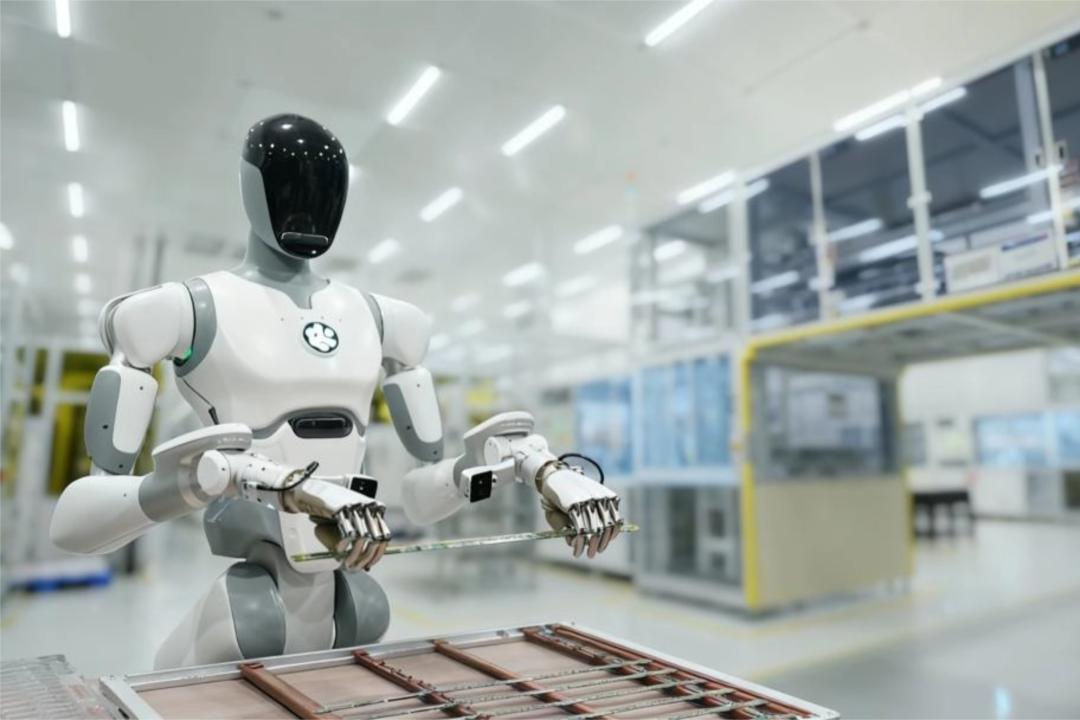
春晚人形机器人爆火出圈!机构预计今年年产业链迎来规模放量阶段(附概念股)
Zhi Tong Cai Jing· 2026-02-24 00:10
Core Insights - The performance of humanoid robots has significantly improved from the Spring Festival Gala in 2025 to 2026, showcasing advancements in movement capabilities and intelligence [1] - The rise of robot stocks during the Spring Festival indicates a strong market interest, with companies like UBTECH, Hesai, and Yujian seeing stock price increases [1] - The 2026 Spring Festival Gala will mark a transition from the validation phase to mass production in the humanoid robot industry, driven by rapid technological iterations [1] Industry Developments - The performances of humanoid robots at the Spring Festival included impressive feats such as the first-ever robot Airflare and synchronized speech and facial movements [2] - Various regional Spring Festival Galas also featured robot performances, indicating a growing trend in the entertainment sector [2] - Data from the Spring Festival shows a significant increase in robot-related searches and orders, highlighting consumer interest and market potential [2] Policy and Investment - Recent government initiatives in the Beijing-Tianjin-Hebei region focus on developing key components for humanoid robots, signaling strong institutional support for the industry [3] - The National Development and Reform Commission has outlined plans to support emerging industries, including humanoid robots, through government investment funds [3] Market Trends - Analysts predict that 2026 will be a pivotal year for the robot industry, transitioning from proof of concept to broader market adoption, particularly in industrial and consumer applications [4] - The robot sector is expected to experience significant growth, with companies like UBTECH and Galaxy General leading the way in educational and retail applications [4] - The industry is moving towards a phase of mass production, with various companies preparing for large-scale deployments of humanoid robots [5] Company Highlights - UBTECH has launched an open-source intelligent model, enhancing its position in the industrial humanoid robot market [6] - Horizon Robotics plans to expand into humanoid robots while enhancing its autonomous driving technology [6] - Port Robot has signed a memorandum for collaboration in humanoid robot applications, indicating strategic partnerships in the sector [7] - Yujian has initiated mass production of its humanoid robot ATOM, marking a significant step towards large-scale application [8]

科学谋划未来产业
Jing Ji Ri Bao· 2026-02-23 23:53
Core Viewpoint - The future industry is characterized by foresight, strategy, and disruption, requiring scientific planning and overall coordination to align with China's "14th Five-Year Plan" for development [1][4] Group 1: Future Industry Characteristics - Future industries are emerging sectors that rely heavily on original innovation and disruptive technologies, often in the early stages of development, with high technological content and significant market potential [1] - Not all nascent industries qualify as future industries; true future industries must demonstrate initial market scale and align with future technological trends [1] Group 2: Relationship Between Future, Emerging, and Traditional Industries - Future industries may evolve into emerging, leading, and pillar industries, with future industries guiding technological directions while emerging industries focus on scaling advantages [2] - A balanced approach is necessary to avoid overemphasis on future industries at the expense of existing ones, promoting a gradient development and integrated ecosystem [2] Group 3: Strategic Focus Areas - The "14th Five-Year Plan" identifies six key areas for future industry focus: quantum technology, biomanufacturing, hydrogen energy, nuclear fusion, brain-computer interfaces, and sixth-generation mobile communications, which align with China's industrial advantages and economic needs [3] - These areas are expected to leverage China's complete industrial system to create cluster effects, enhancing overall competitiveness [3] Group 4: Strategic Planning and Risk Management - Effective planning for future industries requires enhanced strategic foresight regarding cutting-edge technologies, acknowledging the uncertainties and long development cycles associated with these sectors [3] - Companies must stay attuned to global technological trends, rigorously validate technological routes, and maintain innovation leadership to mitigate risks of stagnation and market obsolescence [3][4]
当人形机器人闹完春晚:马年具身智能十大前瞻
Xin Lang Cai Jing· 2026-02-23 23:45
Core Insights - The article discusses the evolution of embodied intelligent robots, predicting significant advancements by 2026, particularly in their application in various industries rather than households [1] Group 1: Industry Adoption - By 2026, robots are expected to first scale in enterprises, particularly in night shifts, due to structural labor issues such as high costs and recruitment challenges [2] - Key indicators for robot adoption will be the night shift replacement rate and the operational hours of robots in real environments, rather than household penetration rates [2] Group 2: Functionality and Reliability - The competition in embodied intelligence will not be about mimicking human actions but about performing repetitive physical tasks reliably in real environments [3] - Companies that can manage common failures and ensure safety will have a competitive edge, as reliability in real-world applications is crucial [4] Group 3: Simplification and Standardization - Successful robots in 2026 will likely be simpler and more focused on specific tasks rather than trying to be multifunctional [5] - The emphasis will shift from complex capabilities to consistent performance in a few key actions, leading to a demand for standardized components and systems [5] Group 4: Component Demand - The most reliable revenue opportunities will come from key components rather than complete robots, as these components will be essential across various robotic applications [6] - Critical components such as actuators, sensors, and battery management systems are expected to see increased demand by 2026 [6] Group 5: Long-term Contracts - The business model will evolve to include hardware, software subscriptions, and maintenance services, reflecting a shift towards long-term operational contracts rather than one-time purchases [7] - The focus will be on the robot's ability to operate reliably over time, rather than just its initial performance [7] Group 6: Engineering Speed and Adaptability - The ability to quickly adapt and improve robotic designs in response to real-world challenges will be a key competitive factor [8] - Companies that can efficiently address issues and streamline maintenance will be better positioned for success [8] Group 7: Collaborative Robotics - The future of robotics will involve multiple robots working together effectively, rather than focusing on individual capabilities [9] - The emphasis will be on creating systems that can operate collaboratively in various environments, enhancing overall productivity [9] Group 8: Industry Packages - The emergence of industry-specific packages for robotic applications will precede the development of a broader "robot application store" [10] - Companies that can integrate robots into existing workflows will have a competitive advantage [10] Group 9: Responsibility and Insurance - The transition to large-scale deployment of robots will hinge on addressing liability and insurance issues, rather than just technological capabilities [11] - Establishing clear standards and responsibilities will be essential for companies to gain acceptance for widespread robotic use [11] Conclusion - The key transition for embodied intelligent robots by 2026 will be from trial phases to scalable applications, focusing on reliability, responsibility, and integration into existing workflows [12]
松延动力姜哲源:具身智能产业“马拉松”刚跑了十米
Xin Lang Cai Jing· 2026-02-23 23:18
Core Viewpoint - The article highlights the debut of all robot products from the embodied intelligence company Songyan Power at the 2026 CCTV Spring Festival Gala, emphasizing the early stage of the global embodied intelligence industry, likening it to a marathon that has just begun [1] Group 1: Company Developments - Songyan Power showcased its N2 robot, which won second place in the 2025 humanoid robot half marathon, along with other products like the E1 robot and the bionic robot [1] - The founder and chairman of Songyan Power, Jiang Zheyuan, stated that the company is preparing for the delivery of its first consumer-grade robot, Xiaobumi, priced at around 10,000 yuan [1] Group 2: Market Strategy - The company aims to target family scenarios for applications such as companionship and education, with plans to gradually expand into new scenarios to drive order and delivery growth [1]