算力

Search documents
十一假期期间事件点评:不确定性提升,黄金牛市延续
Shanghai Securities· 2025-10-08 11:01
Market Performance - During the National Day holiday (October 1-7, 2025), the Nasdaq, S&P 500, and Dow Jones Industrial Average increased by 0.57%, 0.39%, and 0.44% respectively[3] - The Nasdaq China Technology Index rose by 1.59%, while the Hang Seng Index increased by 0.38% during the same period[3] Bond Market - U.S. Treasury yields primarily decreased, with the 10-year yield falling by 2 basis points to 4.14% as of October 7, 2025[4] - The yield curve steepened, with all maturities except for the 30-year remaining unchanged or decreasing during the holiday[4] Currency Trends - The U.S. Dollar Index increased by 0.78%, with the dollar appreciating against the Euro, Pound, and Yen by 0.65%, 0.17%, and 2.70% respectively[5] - The offshore RMB depreciated against the U.S. dollar, rising to 7.1458, a 0.24% increase[5] Gold Market - Gold prices surged, with London spot gold rising by 4.02% to $3979.00 per ounce, and COMEX gold futures increasing by 3.40% to the same price[6] - A rebound in domestic gold prices is anticipated post-holiday due to the significant rise in international prices[6] Economic Uncertainty - The U.S. government shutdown began on October 1, 2025, due to budget disagreements, which may lead to increased unemployment and reduced consumer spending, negatively impacting GDP growth[7] - The delay in non-farm payroll data release adds to economic uncertainty, affecting market predictions[8] Political Developments - Japan's political landscape may shift with the election of the first female president of the Liberal Democratic Party, which could escalate geopolitical tensions in East Asia due to her conservative stance[9] Monetary Policy - The central bank plans to conduct a 1.1 trillion yuan reverse repo on October 9, 2025, to maintain liquidity, despite a net withdrawal in October due to maturing repos[10] Consumer Spending - The fourth batch of 690 billion yuan in special bonds for consumer goods has been allocated, expected to boost retail sales in the fourth quarter[10] Investment Strategy - The market may present structural investment opportunities in sectors such as AI, energy storage, and gold, while the bond market remains attractive despite short-term risks[11]
AI的新起点与新思考
GOLDEN SUN SECURITIES· 2025-10-08 10:21
Investment Rating - The report maintains a "Buy" rating for key companies in the computing power sector, including Zhongji Xuchuang and Xinyi Sheng [5][9]. Core Insights - The AI infrastructure is rapidly expanding, with major cloud service providers (CSPs) like Amazon, Microsoft, Google, and Meta expected to collectively spend over $350 billion by 2025, reflecting an annual growth rate exceeding 40% [3][27]. - OpenAI's valuation has surged to $500 billion, making it the most valuable startup globally, driven by the commercialization of generative AI [3][27]. - The launch of OpenAI's Sora 2 represents a significant advancement in AI video generation technology, marking a shift from productivity tools to native social media applications [27][28]. - AMD and OpenAI have entered a strategic partnership, with OpenAI set to deploy a total of 6 GW of AMD Instinct GPU clusters, indicating a deep integration of hardware and software [27][39]. - The SEC's investigation into AppLovin highlights the ethical and regulatory challenges facing the AI industry, emphasizing the need for compliance and data privacy [4][8]. Summary by Sections AI Infrastructure Expansion - Major CSPs are shifting their investment focus towards AI infrastructure, with a projected capital expenditure of over $350 billion by 2025 [3][27]. - The partnership between OpenAI and AMD is expected to significantly enhance AI computing capabilities, with AMD committing to a long-term supply of GPUs [27][39]. Regulatory and Ethical Considerations - The ongoing SEC investigation into AppLovin serves as a warning regarding data privacy and ethical practices in AI technology [4][8]. - There is a growing trend of regulatory scrutiny on tech giants concerning data usage and algorithm transparency [8]. Investment Recommendations - The report recommends focusing on companies within the computing power supply chain, particularly leaders in optical modules and domestic computing power sectors [9][10]. - Specific companies highlighted for investment include Zhongji Xuchuang, Xinyi Sheng, and Tianfu Communication, among others [9][10].
长假期间的几大看点!两个方向蓄势待进攻?——投资手记
Mei Ri Jing Ji Xin Wen· 2025-10-08 10:10
Market Overview - During the holiday period, major global stock indices showed positive performance, with the Dow Jones up 0.44%, Nasdaq up 0.57%, and S&P 500 up 0.39% [2] - European markets also saw gains, with the UK FTSE 100, France's CAC 40, and Germany's DAX rising approximately 1.70%, 1.29%, and 2.05% respectively [2] - In the Asia-Pacific region, the Hang Seng Index fell 0.1%, while the Hang Seng Tech Index rose 0.75%. The Korean Composite Index and Nikkei 225 increased by 3.64% and 6.24% respectively [2] - Commodity prices rose significantly, with COMEX gold and silver increasing by 4.82% and 4% respectively, and various base metals also showing gains [2] A-Share Market Insights - The last trading day before the holiday saw the Shenzhen Component Index, ChiNext Index, STAR 50 Index, and CSI 500 Index reach new highs [3] - The Shanghai Composite Index and the SSE 50 Index approached their previous highs, forming a W-bottom pattern since September [3][4] - The performance of brokerage stocks is highlighted as a key area to watch for potential market movements [3][4] Future Market Expectations - The outlook for the post-holiday market is bullish, with expectations that fluctuations in global markets will not alter the upward trend of the A-share market [5][6] - Gold and silver prices continue to rise, with gold surpassing $4000 per ounce, positively impacting precious and base metals [6] Sector Analysis - The semiconductor sector is driven by AMD's significant partnership with OpenAI, leading to a 28% increase in AMD's stock price [7] - The storage sector in A-shares is showing strong upward momentum, with ETF funds recommended as a good investment choice [7] - The new energy battery sector, particularly solid-state batteries, is expected to grow, with major companies like Ganfeng Lithium and CATL seeing substantial gains [8] Robotics and AI Hardware - The humanoid robot sector is gaining attention, with Tesla's humanoid robot supply chain highlighted as a key area for investment [10] - The upcoming release of Tesla's humanoid robot Figure 03 is anticipated to impact the market positively [11] Conclusion - The recent highs in major indices are seen as a positive sign for the overall market, with a focus on whether the Shanghai Composite Index can achieve new highs [11] - Key sectors to monitor include technology, AI, solid-state batteries, and humanoid robotics, as these are expected to remain the main investment themes [11]

她,河北女首富
投资界· 2025-10-08 07:36
Core Viewpoint - The article highlights the success story of Runze Technology, which has capitalized on the AI boom by providing computing power services, transforming from a struggling company to a market leader with a valuation of 870 billion yuan, significantly increasing its market value by over 500% since 2022 [2][3]. Company Overview - Founded in 2009 by Zhou Chaonan, Runze Technology initially focused on computing infrastructure but faced losses for the first ten years until the AI wave began in 2018, leading to a turnaround [3][5]. - The company has established seven AIDC intelligent computing centers across six major economic regions in China, emphasizing the importance of computing power in the global AI competition [5][6]. Financial Performance - Runze Technology reported a revenue increase of 60.27% in 2023, reaching 4.351 billion yuan, with a net profit of 1.762 billion yuan [7]. - The stock price surged over 90% during the ChatGPT boom, with a cumulative increase of over 100% in 2024, briefly exceeding a market capitalization of 1 trillion yuan [7][8]. Client Relationships - ByteDance has become Runze Technology's largest client, with its business accounting for a significant portion of the company's revenue from 2018 to 2021, highlighting the dependency on major clients [5][6]. - The company has also collaborated with other clients, including Huawei and Kuaishou, contributing to its profitability [6]. Market Position and Challenges - Runze Technology's rapid growth has positioned Zhou Chaonan as a prominent figure in the AI industry, with her family ranking 600th on the 2025 Global Rich List [3][10]. - Despite the success, the company faces challenges due to its reliance on a few major clients, which account for over 90% of sales, posing potential risks to its revenue stability [11].


“5年烧掉3万亿美元”,越来越喂不饱的AI
吴晓波频道· 2025-10-08 06:09
Core Viewpoint - The article discusses the escalating competition among global tech giants in building AI infrastructure, highlighting the massive investments and the urgent demand for computing power in the AI sector, which is likened to a "power war" reminiscent of historical resource struggles [2][30]. Group 1: Investment and Spending - Current AI infrastructure spending by major companies has already surpassed half of the total expenditure on building the information superhighway over 20 years [24]. - NVIDIA announced a $100 billion investment in OpenAI for large-scale computing centers, marking a significant commitment to AI infrastructure [6][7]. - Morgan Stanley predicts that global spending on AI data centers will reach approximately $3 trillion over the next five years, equivalent to France's GDP in 2024 [7]. Group 2: Computing Power Demand - The demand for computing power in AI is experiencing explosive growth, with Microsoft Azure processing over 100 trillion tokens in Q1, a fivefold increase year-on-year [14]. - The training of top-tier AI models, such as ChatGPT-4, requires exponentially more computing power compared to previous versions, with a reported need 446 times greater than GPT-3 [14]. - By 2035, global computing power demand is expected to increase by 100,000 times, according to Huawei's report [15]. Group 3: Supply Constraints - The supply of computing power is constrained by chip availability and energy resources, with NVIDIA holding an 80% market share in AI chips but facing production and geopolitical challenges [15]. - Data centers are significant energy consumers, with projections indicating that by 2035, their electricity demand in the U.S. will double, representing the largest increase in energy demand since the 1960s [15]. - The rising electricity costs have led to a 267% increase in local electricity bills in areas with dense data center activity [15]. Group 4: Collaborative Strategies - Major companies are forming alliances to strengthen their positions in the computing power market, with NVIDIA's investment in OpenAI reinforcing its influence over AI chip supply [18][19]. - OpenAI's recent contracts with Oracle and NVIDIA illustrate a trend of strategic partnerships aimed at securing computing resources and enhancing operational capabilities [25][28]. - The competition has evolved from individual corporate strategies to a collaborative ecosystem where companies work together to establish industry standards and practices [29]. Group 5: China's AI Infrastructure Development - Chinese companies are also ramping up investments in AI infrastructure, with Alibaba planning to invest over 380 billion yuan in cloud and AI hardware over the next three years [32]. - The "East Data West Computing" initiative aims to optimize resource allocation across regions, addressing supply and demand imbalances in computing power [36]. - China's approach emphasizes a coordinated national strategy to enhance computing capabilities, contrasting with the more fragmented strategies of Western companies [40].

AI“闭环”继续:马斯克旗下xAI接近募资200亿美元,英伟达出资20亿入股且“挂钩芯片”
美股IPO· 2025-10-08 05:00
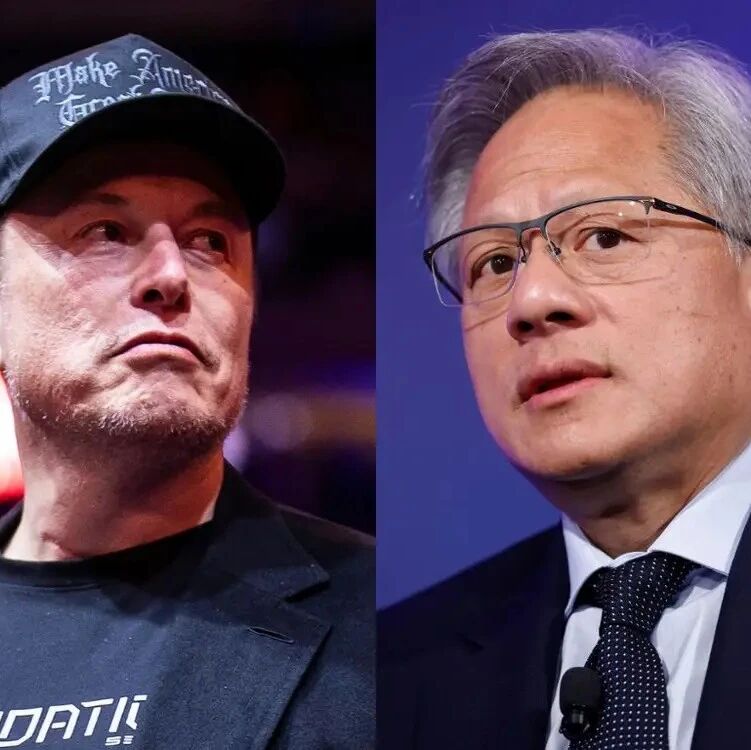
此次融资最引人注目的特点是,芯片巨头英伟达不仅将作为重要的股权投资方参与其中,出资额或高达20亿美元,且整轮融资的结构都与 xAI采购英伟达GPU的计划深度绑定。 精巧的"芯片杠杆" 媒体援引知情人士消息称,200亿美元的总额将拆分为约75亿美元的股权和125亿美元的债权。 交易并非直接向xAI注资,而是通过设立一个SPV来运作。该SPV将利用所筹资金购买英伟达的处理器,随后,xAI将以一份为期五年的租赁 合同,从SPV处获得这些芯片的使用权。 这一设计使得华尔街的金融投资者得以收回其投资。 据悉,这笔资金的核心目标,是为xAI位于孟菲斯的"Colossus 2"大型数据中心项目提供算力支持。 OpenAI将使用AMD自身的股票来支付费用。这一独特的融资安排实质上让AMD为客户的大额采购提供融资,而最终的成本可能由推高股价 的投资者承担。 算力"军备竞赛" 对于成立仅一年多的xAI而言,资本的注入已是极度迫切。据称,该公司每月的资金消耗高达10亿美元。 在今年早些时候已完成约100亿美元的股权和债务融资后,其庞大的算力建设计划仍面临巨大资金缺口。为此,马斯克已开始调动其商业帝 国的资源为xAI"输血",包括引 ...
A股开市倒计时 五大私募火线解盘
Zhong Guo Zheng Quan Bao· 2025-10-08 02:19
Core Viewpoint - The A-share market is expected to perform positively after the National Day and Mid-Autumn Festival holidays, supported by favorable external markets and domestic consumption recovery [1] Market Outlook: External Factors Boost Confidence - The overall positive performance of external markets during the holiday period creates a favorable environment for the A-share market [2] - The Hong Kong stock market, particularly the semiconductor sector, has shown strong performance, providing emotional support for A-shares [2] - Improved trading sentiment is anticipated as global asset classes have generally risen, reducing uncertainties affecting Chinese assets [2] - Domestic macroeconomic stability and high service consumption during the holiday are expected to attract risk-averse funds back to the A-share market [2] - Collaborations in the tech sector, such as OpenAI and AMD, may catalyze related A-share sectors like computing power and AI applications [2] Strategic Response: Balanced and Selective Investment - Multiple private equity firms emphasize the importance of balanced allocation and selective stock picking in the upcoming trading period [3] - A proactive investment strategy is recommended, with an increase in positions and optimization of portfolios, as historical data suggests a recovery in A-share sentiment post-holiday [3] - The trend of household savings flowing into equity markets is expected to continue, indicating significant long-term upside potential for A-shares [3] - A combination of high-position operations and balanced holdings is advised, focusing on technology growth and high-end manufacturing while also including low P/B and high dividend assets for risk mitigation [3] Investment Themes: Consensus on Tech Growth - The technology growth sector is unanimously favored by five private equity firms, alongside opportunities in consumer recovery and undervalued sectors [5] - Continued optimism for technology stocks is noted, particularly in computing power, storage, and AI infrastructure-related sectors [5] - The upcoming third-quarter earnings reports are expected to present opportunities for well-performing sectors [5] - Specific areas of interest include internet giants, domestic semiconductor supply chains, and innovative pharmaceuticals [5] - Focus areas post-holiday include AI, humanoid robotics, high-end manufacturing, and potential recovery in financial and cyclical sectors [5] - Market style is expected to become more balanced, with investment opportunities across various asset classes, including technology, consumer, and cyclical sectors [5] Key Sectors of Interest - Emphasis on graphics processors and humanoid robotics, along with identifying oversold weight sectors for investment [6]
寻踪节后轮动线索 机构热议四大主线
Shang Hai Zheng Quan Bao· 2025-10-08 00:43
Group 1 - The A-share market has experienced a consolidation pattern throughout September, with the Shanghai Composite Index stabilizing above 3800 points, indicating a potential new round of upward movement [1] - Institutional investors remain optimistic about the post-holiday market, citing a favorable policy environment, friendly liquidity conditions, resilient fundamentals, improved risk appetite, and historically low valuation levels as key reasons [2][3] - The technology sector, particularly semiconductor and AI, continues to attract attention, alongside new energy represented by batteries, innovative pharmaceuticals, and cyclical materials benefiting from interest rate cuts [1][3] Group 2 - The market is expected to focus on four main lines of investment post-holiday, including innovative pharmaceuticals, AI, military industry, and batteries, with new energy and innovative pharmaceuticals likely to be the hottest themes [3][4] - The lithium battery equipment sector is experiencing a strong recovery driven by policy incentives and technological innovations, with solid-state battery technology making significant progress [4] - The innovative pharmaceutical sector is seeing increased investment from multinational companies in China, with a positive outlook for the production and global market share of Chinese innovative drugs [4][5] Group 3 - The cyclical materials sector, particularly non-ferrous metals, is benefiting from macroeconomic easing, supply constraints, and increasing demand from sectors like new energy and AI [5] - The Hong Kong stock market is viewed as having significant investment value, particularly in the technology sector, due to the presence of leading companies and a growing number of quality tech firms listing in Hong Kong [5]
节后A股,看什么?
Sou Hu Cai Jing· 2025-10-07 00:07
Group 1 - The A-share market has experienced significant growth in 2023, with the Shanghai Composite Index rising over 15.5% and the Shenzhen Component Index nearly 30%, while the ChiNext and Sci-Tech 50 indices both surged by 51.2% [3] - The surge is primarily driven by emerging sectors such as the semiconductor industry, robotics, artificial intelligence, and lithium battery supply chains, marking a different pattern compared to previous market surges [3] - Retail investors are currently the backbone of the A-share market, with daily trading volume dominated by retail participation at approximately 90%, contrasting sharply with major global exchanges where institutional investors lead [5][6] Group 2 - There is a notable trend of retail investors shifting bank savings into the stock market, with household savings exceeding 160 trillion yuan, of which only 5% is currently allocated to stocks, indicating potential for increased market participation [5][6] - Recent reports suggest that since May, there has been a noticeable movement of deposits into stock accounts, with a potential influx of 5-7 trillion yuan into the market, surpassing previous market cycles [6][7] - The average daily trading volume and margin financing in the A-share market have been on the rise, reaching 2.3 trillion yuan by August [7] Group 3 - The technology sector, particularly artificial intelligence, semiconductors, and lithium batteries, has shown signs of stabilizing profitability, supported by measures to curb price wars and enhance profit margins [9] - The launch of the DeepSeek R1 AI language model has highlighted China's advancements in AI, with expectations for significant growth in AI applications and investments from major internet companies by 2025 [10] - The optimistic outlook for technology stocks is fueled by the narrative of "domestic substitution" and "self-control," leading to heightened investor enthusiasm and potential for further valuation increases in tech stocks post-holiday [10]
到中东搞钱、到东亚搞芯片,Altman的第二次“算力帝国路演”
华尔街见闻· 2025-10-05 13:17
Group 1 - OpenAI CEO Sam Altman is actively seeking funding and manufacturing partners to meet the company's significant demand for computing power, having visited Taiwan, South Korea, and Japan to accelerate AI chip manufacturing capabilities [1][2] - Altman aims to raise funds for OpenAI's infrastructure expansion, including a data center in Abu Dhabi, with potential new capital partly allocated for this purpose [1][10] - OpenAI's valuation has reached $500 billion, comparable to major global companies like Netflix and ExxonMobil [4] Group 2 - Altman has engaged with major companies such as TSMC, Samsung, and SK Hynix to secure chip production capacity, with OpenAI's demand potentially reaching 900,000 wafers per month, more than double the current global high-bandwidth memory capacity [6][7] - OpenAI has established a partnership with Hitachi in Japan to support the development of AI infrastructure, including power transmission and distribution equipment for its data centers [7] - Altman discussed the manufacturing and deployment of NVIDIA's upcoming Rubin system, with OpenAI set to be one of the first customers in the second half of 2026 [8] Group 3 - In the Middle East, Altman plans to meet with investment funds in Abu Dhabi to secure funding for the Stargate data center [10] - OpenAI's projected spending on leasing computing servers is approximately $16 billion this year, potentially rising to around $400 billion by 2029 [11] - OpenAI aims to create a factory capable of producing 1GW of new AI infrastructure weekly, with plans to deploy at least 10GW of NVIDIA computing systems for training and running next-generation models [12][13]