
现代化产业体系

Search documents
盘锦聚焦“六个走在前列”迎难而上蓄胜势
Liao Ning Ri Bao· 2025-06-19 01:05
Group 1 - The core objective of Panjin City is to lead in six areas: building a modern industrial system, high-quality economic development, reform and opening up, regional coordinated development, ecological civilization construction, and enhancing people's well-being [1] - Panjin City is focusing on industrial transformation by developing three traditional advantageous industries, four characteristic industries, four consumer goods industries, and two future industries, aiming to establish a "3442" modern industrial system [2] - The city has seen significant growth in fixed asset investment, with a 17% increase, the highest in the province, and a 15.2% growth in actual domestic capital [2] Group 2 - Consumption expansion efforts have led to over 180 promotional activities, resulting in a sales increase of 1.9 billion yuan in key products such as automobiles and home appliances [3] - Panjin City has implemented 12 reform plans to enhance its internal and external openness, achieving a 22.9% growth in total import and export volume [3] - The city is actively addressing 15 key livelihood projects, with urban and rural residents' disposable income growth outpacing GDP growth [3] Group 3 - Risk prevention measures include thorough inspections in key areas, with 9,200 units checked and over 3,800 hidden dangers rectified [4] - In the second half of the year, Panjin City plans to implement a comprehensive revitalization action plan to stimulate economic growth and improve various sectors [4]
2025“投资成都”全球招商大会开幕!“链主基金行动计划”同步启动
Sou Hu Cai Jing· 2025-06-18 06:44
Group 1 - The "Invest Chengdu" Global Investment Conference aims to create a global industrial cooperation platform, attracting quality resources and capital to Chengdu, and supporting major projects for economic enhancement [1][15] - The conference saw participation from nearly 400 guests, including representatives from Fortune 500 companies, multinational corporations, and key state-owned enterprises, with over 80% of attendees being significant players in their respective industries [1][3] - A total of 16 major industrial projects were signed at the conference, with a total investment amount exceeding 82.53 billion yuan, covering emerging sectors such as commercial aerospace, artificial intelligence, advanced energy, and new materials [3][4] Group 2 - Chengdu introduced an innovative "chain master fund investment" model to attract more social capital, facilitating the signing of multiple aerospace industry chain projects [4][6] - The "Invest Chengdu" policy package was launched, addressing investor needs across 11 areas, including industrial funds, innovation, and talent acquisition, with significant financial support for various projects [6][7] - The Chengdu chain master fund action plan aims to establish 12 chain master funds by 2030, targeting a total scale of over 60 billion yuan, focusing on key industries such as integrated circuits and biomedicine [7][11] Group 3 - The "Chengdu Urban Circle Investment Guide" was jointly released by Chengdu and surrounding cities, promoting the investment ecosystem and enhancing regional cooperation for high-quality development [11][12] - The conference also featured simultaneous investment promotion activities in several countries, showcasing Chengdu's development advantages and investment opportunities to a global audience [14][15] - Chengdu's significant increase in major industrial projects and foreign investment in the first five months of the year indicates a robust growth trajectory, with a year-on-year increase of 182% in major projects and 58.89% in foreign capital [14][15]

国务院国资委最新部署
证券时报· 2025-06-17 08:20
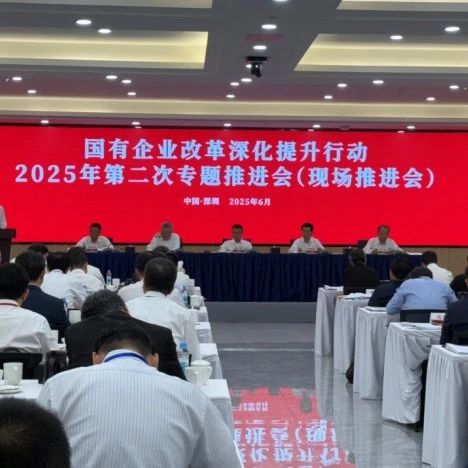
Core Viewpoint - The State-owned Assets Supervision and Administration Commission (SASAC) emphasizes the importance of enhancing technological and industrial innovation through reforms in state-owned enterprises (SOEs) as a priority for 2025 [1][2]. Group 1: Reform Progress and Goals - As of the end of Q1 2025, the average completion rate of key reform tasks among central and local SOEs has exceeded 80% [2]. - The meeting highlighted that achieving high-quality completion of the reform actions is a top priority for SOE reform this year [2]. Group 2: Technological and Industrial Innovation - SOEs are urged to improve the quality of technological innovation supply and take responsibility for building a modern industrial system [4]. - The focus is on integrating artificial intelligence and digital technologies to drive the transformation and upgrading of traditional industries [4][8]. - There is a call for increased investment in new industries and to avoid blind diversification and "involution" competition [4]. Group 3: Integration and Support for New Industries - Emphasis is placed on the importance of restructuring and integrating new business models post-merger and acquisition [6]. - A supportive environment for new technologies and business models is necessary to nurture startups and cultivate specialized "little giants" and unicorns [6]. Group 4: Transformation and Workforce Adaptation - SOEs are encouraged to leverage digital technologies for the high-end, intelligent, and green transformation of traditional industries [8]. - There is a need for proactive workforce training to adapt to changes in business structures due to the "three transformations" [8]. Group 5: Innovation Evaluation and Incentives - The establishment of a robust innovation evaluation and incentive mechanism is crucial for activating innovation vitality [10]. - There is a focus on market-oriented salary systems for key scientific personnel to ensure competitive compensation [10].
深圳将从四个方面推进改革
Guang Zhou Ri Bao· 2025-06-17 03:13
Core Viewpoint - The release of the "Opinions" by the Central Committee of the Communist Party of China and the State Council marks a significant step in advancing comprehensive reforms in Shenzhen, aiming to enhance innovation and openness in the city [1][2]. Group 1: Major Reform Initiatives - The "Opinions" outline a series of high-value, impactful, and comprehensive reform measures across four main areas: education and talent system reform, financial and technological empowerment for high-quality economic development, establishment of a higher-level open economy, and improvement of governance models [2][3]. - In education and talent reform, the focus is on enhancing collaboration between industry, academia, and research, and improving mechanisms for supporting overseas talent [2][4]. - The financial and technological initiatives aim to create a modern industrial system unique to Shenzhen, emphasizing the integration of finance, technology, and data to support the real economy [2][4]. Group 2: Implementation and Governance - Shenzhen has made significant progress in reform tasks over the past five years, with 48 typical experiences promoted by the National Development and Reform Commission [4]. - The city plans to implement the "Opinions" through a structured approach, ensuring that each reform task is paired with a corresponding plan, operational standards, application scenarios, and evaluation systems [5][6]. - The focus on economic system reform is expected to enhance the overall effectiveness of reforms across various sectors, with specific measures to relax market access and improve resource allocation [7][8]. Group 3: Industry Response - Technology companies, such as Tencent, view the "Opinions" as an opportunity for innovation and growth, highlighting the integration of finance and technology as a national strategy [9]. - The establishment of a supportive environment for enterprises through the "four ones" approach is anticipated to ensure that reform benefits reach businesses directly, fostering a collaborative model between government and industry [9].
新视野 | 统筹好培育新动能和更新旧动能的关系
Zhong Yang Ji Wei Guo Jia Jian Wei Wang Zhan· 2025-06-17 00:07
Group 1 - The core viewpoint emphasizes the importance of balancing the cultivation of new driving forces and the updating of old driving forces in economic development, highlighting the need for innovation-driven strategies to facilitate the transition from traditional to modern industrial systems [2][3][4] - The transformation of new and old driving forces is characterized by a dialectical relationship, where new driving forces, represented by strategic emerging industries like AI and biotechnology, coexist and interact with traditional sectors such as manufacturing and agriculture [3][4] - The current economic landscape shows significant achievements in the development of new productive forces, with the added value of new industries and business models expected to exceed 18% of GDP by 2024, alongside the establishment of nearly 10,000 digital workshops and smart factories [6] Group 2 - Structural contradictions in the transformation process include issues such as the disconnect between technology supply and industrial demand, particularly affecting small and medium-sized enterprises that struggle with innovation due to funding and talent shortages [6][7] - The disparity in industrial structure remains a challenge, with the service sector's share still below the average of 70% in developed countries, indicating a need for further enhancement of strategic emerging industries [7][8] - Regional differences in industrialization stages lead to varied speeds and effects in the transformation of driving forces, with coastal areas being more advanced compared to central and western regions [8][9] Group 3 - The practical path for promoting the smooth transition of new and old driving forces involves innovative allocation of production factors, deep industrial transformation, and systematic reforms to create a dual-driven model of traditional industry upgrading and emerging industry growth [9][10] - Emphasis on creating a technology-industry collaborative leap system is crucial, focusing on core technological breakthroughs and integrating technology with market needs to accelerate industrial upgrades [9][10] - The establishment of a market-oriented mechanism for factor allocation is necessary to enhance the flow of resources and improve the efficiency of production factors, including data as a new production element [10][11]
长三角先进制造业集群联盟揭牌
Zhong Guo Hua Gong Bao· 2025-06-16 14:36
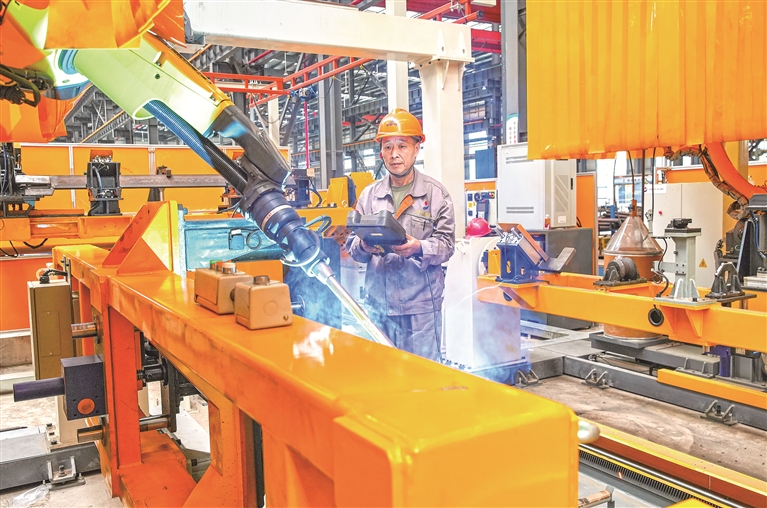
Group 1 - The Yangtze River Delta (YRD) region has established an Advanced Manufacturing Cluster Alliance to enhance collaboration among Jiangsu, Zhejiang, Anhui, and Shanghai, aiming to cultivate world-class advanced manufacturing clusters [1][2] - The alliance will focus on key sectors such as aerospace, biomedicine, integrated circuits, new materials, and high-end equipment, contributing to the modernization of the industrial system in the YRD [1][2] - As of now, the YRD has formed 26 national-level advanced manufacturing clusters, accounting for 32.5% of the total in China [2] Group 2 - The YRD provinces and city are implementing a policy system that includes targeted funding and tailored development plans for key clusters, enhancing inter-provincial cooperation [2] - Zhejiang has organized a series of matchmaking events, totaling 956 activities, which have facilitated financing of 476.2 billion yuan [2] - Shanghai has become a unique hub for shipbuilding, hosting multiple national-level innovation platforms, while Anhui is leveraging significant events to attract industrial investment [2]
齐鲁政声丨山东16地市书记一周动态(6.9-6.15)
Xin Lang Cai Jing· 2025-06-16 03:30
Group 1 - The Shandong provincial government is emphasizing the importance of ecological environment protection and is taking immediate actions to rectify issues highlighted by the Central Ecological Environment Protection Inspectorate [1][6][10] - Shandong is focusing on the development of strategic emerging industries and aims to build a modern industrial system while ensuring economic stability and health [2][5] - The provincial leadership is committed to enhancing national defense mobilization and supporting military readiness, reflecting Shandong's status as a major military province [2] Group 2 - Various city leaders in Shandong are actively engaging in discussions and meetings to promote industrial cooperation, particularly in fields like automation, renewable energy, and artificial intelligence [5][7][29] - The emphasis on ecological civilization and environmental protection is consistent across multiple cities, with leaders conducting inspections and meetings to ensure compliance with national directives [9][10][19] - There is a strong focus on education and vocational training, with local leaders advocating for the integration of education with industry needs to support regional development [14][28]
【汉中】以重点项目“强健”产业“筋骨”
Shan Xi Ri Bao· 2025-06-16 00:12
Core Insights - The establishment of the Shaanxi Oufusi automotive engine assembly project in Xixiang County is a significant step for Hanzhong City in building a modern industrial system, focusing on creating industrial clusters and enhancing the local economy [1][2]. Group 1: Project and Industry Development - The Shaanxi Oufusi project aims to fill the gap in the automotive engine manufacturing sector in Xixiang County and collaborates with 12 local auto parts manufacturers to form a comprehensive industrial chain [2]. - Hanzhong City is targeting the development of five trillion-level industrial clusters and three hundred billion-level clusters, emphasizing intelligent, green, and integrated industrial growth [1][3]. - In 2023, Hanzhong City has implemented 283 projects to extend and supplement industrial chains, focusing on key sectors such as aviation equipment and traditional Chinese medicine [3]. Group 2: Technological Innovation - Hanzhong is revitalizing traditional industries through innovation and technology, with projects like the Jihua 3503 clothing manufacturing base utilizing automated systems to enhance production efficiency [4][5]. - The clothing manufacturing base is expected to produce over 1.3 million sets of clothing annually, generating nearly 300 million yuan in output value [5]. - The city has released 23 technology lists for industry chains and has transformed 56 technological achievements this year, promoting deep integration between innovation and industry [5]. Group 3: Legal and Business Environment - Hanzhong City is enhancing its business environment by addressing legal issues faced by enterprises, with initiatives like the "100 Legal Risk Prevention Measures" to guide businesses [6]. - The local court has established specialized services for enterprise-related litigation, streamlining processes to improve efficiency for businesses [6][7]. - Recent reforms aim to reduce various operational costs for enterprises, contributing to a more competitive and attractive business environment [7].
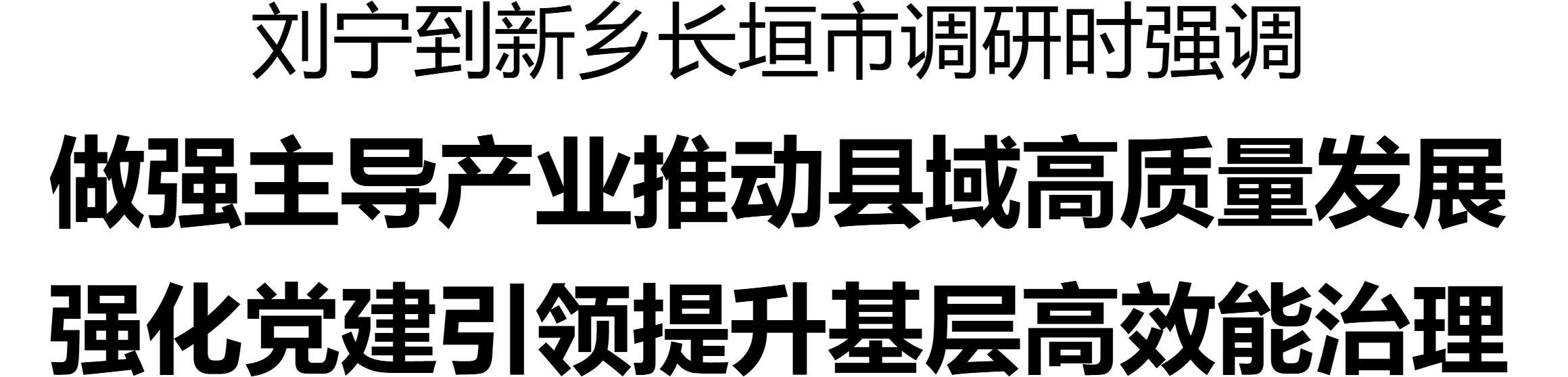
刘宁到新乡长垣市调研产业发展、基层治理等工作
He Nan Ri Bao· 2025-06-15 10:42
调研中,刘宁听取长垣市经济社会发展情况汇报,强调要深刻领悟"两个确立"的决定性意义,坚决做到"两个维护",深学细悟习近平总书记考察河南重要讲 话精神,聚焦"两高四着力",立足自身定位,发挥产业优势,加快构建现代化产业体系,推动科技创新和产业创新深度融合,统筹推进新型城镇化和乡村全 面振兴,扎实开展我省深入贯彻中央八项规定精神学习教育"学查改"系列专项行动,保持经济运行良好态势,确保实现"双过半"。 省领导陈星参加。(记者 刘婵 张笑闻/文 董亮/图) 责任编辑: 杨露露 近年来,长垣市做优做强产业集群,发展培育了起重装备、医疗器械等主导产业。在卫华集团有限公司、河南省矿山起重机有限公司,刘宁详细询问技术创 新、应用场景等情况。"习近平总书记在河南考察时指出,现代制造业离不开科技赋能,要大力加强技术攻关,走自主创新的发展路子。"刘宁说,要强化企 业创新主体地位,加强研发投入,攻克关键技术,加快人工智能、数字化等技术全链条应用,持续做好非公企业党建工作,探索独具特色的现代企业管理模 式。刘宁还来到驼人控股集团有限公司,察看产品研发、市场运行等情况,希望企业发挥龙头带动作用,不断开拓国内国际市场,打通企业、医院、科 ...
如何更高质量推进“百千万工程”?中山发布四个升级行动方案
Nan Fang Du Shi Bao· 2025-06-13 11:57
Core Viewpoint - The "Hundred Counties, Thousand Towns, Ten Thousand Villages High-Quality Development Project" (referred to as "Hundred Thousand Project") in Zhongshan aims to enhance industrial technology, urban-rural morphology, government services, and social governance through four upgrade action plans, emphasizing systematic and integrated reforms to achieve long-term development goals [1][2]. Group 1: Upgrade Action Plans - The implementation of the industrial technology upgrade reform action focuses on building a modern industrial system to strengthen the economy [2]. - The urban-rural morphology upgrade reform action aims to reshape the spatial layout and upgrade the urban-rural form, creating a more beautiful Lingnan water town by optimizing living environments [2]. - The social governance upgrade reform action seeks to mobilize social forces to establish a new governance model characterized by co-construction, co-governance, and shared benefits [2][3]. - The government service upgrade reform action is designed to improve the work style of the cadre team and create a first-class business environment, enhancing satisfaction for entrepreneurs and convenience for the public [2]. Group 2: Specific Measures - The industrial technology upgrade reform action plan outlines four key areas: what industries to develop, how to layout, how to develop, and how to ensure support, proposing 28 reform measures across nine aspects [2]. - The urban-rural morphology upgrade reform action plan targets the shortcomings in living environments, aiming to achieve significant results by 2025, with a complete transformation of the city's appearance by 2032 [2]. - The government service upgrade reform action plan focuses on creating a smart governance system that covers the entire lifecycle of enterprise attraction, establishment, and growth, proposing 38 reform measures across six areas [2]. - The social governance upgrade reform action plan emphasizes a comprehensive governance system led by the Party, with 23 specific measures to enhance collaboration and public participation [3].
