金融科技

Search documents
银信科技跌2.08%,成交额1.22亿元,主力资金净流出486.43万元
Xin Lang Cai Jing· 2025-10-10 06:39
Core Viewpoint - Yinxin Technology's stock has experienced a decline of 8.74% this year, with significant drops in recent trading days, indicating potential challenges in market performance [2]. Financial Performance - For the first half of 2025, Yinxin Technology achieved a revenue of 838 million yuan, representing a year-on-year growth of 7.36%. The net profit attributable to shareholders was 48.91 million yuan, reflecting a growth of 20.89% [2]. - Cumulatively, since its A-share listing, Yinxin Technology has distributed a total of 719 million yuan in dividends, with 212 million yuan distributed over the past three years [3]. Stock Market Activity - As of October 10, Yinxin Technology's stock price was 11.28 yuan per share, with a market capitalization of 5.012 billion yuan. The stock saw a trading volume of 1.22 billion yuan and a turnover rate of 2.41% [1]. - The stock has seen a net outflow of 4.86 million yuan in principal funds, with significant selling pressure observed [1]. Shareholder Information - As of June 30, 2025, the number of shareholders for Yinxin Technology was 50,100, a decrease of 5.40% from the previous period. The average number of circulating shares per person increased by 5.71% to 8,872 shares [2]. - The top circulating shareholders include Huabao Zhongzheng Financial Technology Theme ETF, which holds 2.9319 million shares, and Hong Kong Central Clearing Limited, a new shareholder holding 2.5034 million shares [3].

宇信科技跌2.01%,成交额2.79亿元,主力资金净流出2949.34万元
Xin Lang Cai Jing· 2025-10-10 06:36
Core Insights - Yuxin Technology's stock price decreased by 2.01% on October 10, closing at 24.87 CNY per share, with a total market capitalization of 17.51 billion CNY [1] - The company has seen a year-to-date stock price increase of 29.09%, but has experienced a decline of 1.11% over the last five trading days and 13.31% over the last 60 days [1] Financial Performance - For the first half of 2025, Yuxin Technology reported a revenue of 1.415 billion CNY, a year-on-year decrease of 5.01%, while the net profit attributable to shareholders increased by 35.26% to 220 million CNY [2] - Cumulative cash dividends since the company's A-share listing amount to 809 million CNY, with 415 million CNY distributed over the last three years [3] Shareholder Information - As of September 30, 2025, the number of shareholders decreased to 77,600, with an average of 9,060 circulating shares per person, an increase of 2.29% [2] - The top ten circulating shareholders include Hong Kong Central Clearing Limited and Southern CSI 1000 ETF, with notable changes in holdings [3]

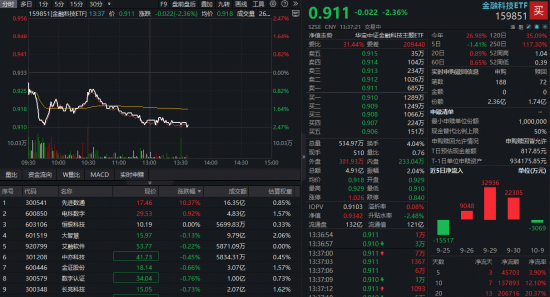
百亿金融科技ETF跌逾2%回落至60日线,逢低布局机会显现?资金加速抢筹,机构提示新一轮共振机遇
Xin Lang Ji Jin· 2025-10-10 06:10
Group 1 - The financial technology sector is experiencing a decline, with the China Securities Financial Technology Theme Index dropping by 2.48% as of October 10, 2023, and many constituent stocks showing significant losses, such as Star Ring Technology-U down by 7.32% and Zhinancun down by 6.59% [1] - Despite the overall downturn, Advanced Digital Technology saw a counter-trend increase of 10.87%, indicating some stocks are performing well amidst the broader market decline [1] - The Baijia Financial Technology ETF (159851) has seen its market price drop over 2%, returning to the vicinity of the 60-day moving average, with a trading volume of nearly 500 million yuan and a net subscription of 62 million shares in real-time [1] Group 2 - Western Securities suggests that investors should continue to focus on the opportunities in the consumer-facing financial technology sector, driven by ample liquidity and improved risk appetite, with technology and traffic remaining core competitive drivers [3] - Minsheng Securities highlights a new wave of policy and innovation opportunities in financial technology, recommending attention to leading internet financial companies, financial technology vendors, securities IT vendors, and cross-border payment companies [3] - The financial technology ETF (159851) has a latest scale exceeding 12 billion yuan, with an average daily trading volume of over 1 billion yuan in the past month, indicating strong liquidity and market interest compared to other ETFs tracking the same index [3]

线下活动邀请 | 亚马逊云科技:从合规到增长,助力支付企业全球化
Refinitiv路孚特· 2025-10-10 06:03
Event Highlights - The event focuses on compliance and growth opportunities for payment companies going global, analyzing global compliance and fintech development trends [3] - Key topics include enterprise credit, merchant authentication, and risk control innovations [3] - Attendees will gain insights into global payment and compliance trends, as well as practical solutions and collaboration opportunities with industry experts [3] Agenda Summary - The event will take place on October 17, 2025, from 14:00 to 17:00 at the Amazon Cloud Technology Life and Health Digital Empowerment Center in Shanghai [4] - The agenda includes opening remarks, presentations on IT compliance practices, risk intelligence-driven AML compliance, future financial architecture, and payment network innovations [4] LSEG World-Check Overview - LSEG World-Check has been providing accurate and reliable information for over 25 years, assisting financial institutions and regulated non-bank sectors in complying with mandatory KYC, AML, and anti-corruption regulations [9][11] - The database includes information on politically exposed persons (PEPs), state-owned entities, global sanctions lists, and negative media [13] - LSEG employs hundreds of researchers and analysts to gather and organize information from reputable sources, ensuring compliance and risk management [11][14]


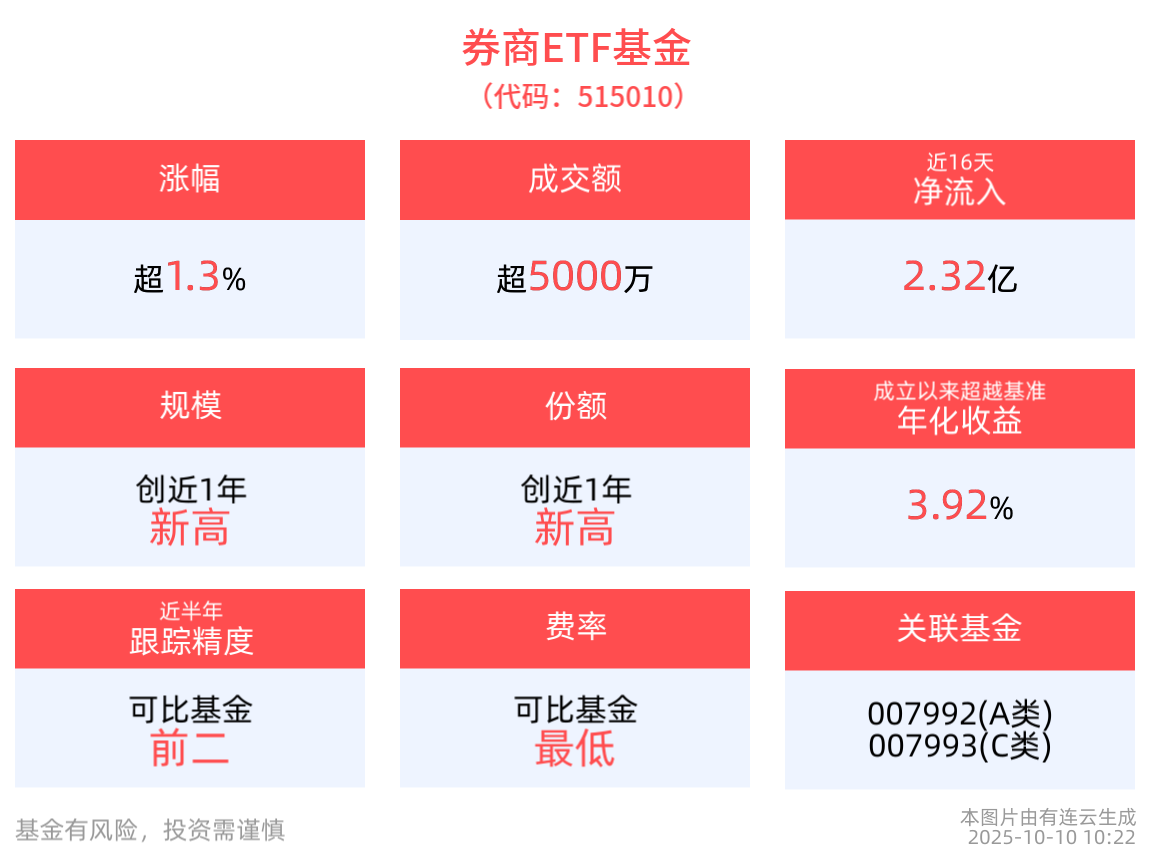
逆市上涨1.3%,券商ETF基金(515010)近16个交易日净流入2.32亿元
Xin Lang Cai Jing· 2025-10-10 02:55
Core Viewpoint - The financial sector, particularly brokerage firms, is showing resilience with significant inflows and positive performance despite overall market declines [1] Group 1: Market Performance - On October 10, major indices collectively declined, while the financial sector, including brokerages and banks, saw gains [1] - As of 10:22 AM, the brokerage ETF (515010) rose by 1.38%, with individual stocks like Jinlong Co. increasing by 6.92% and Guosen Securities by 5.57% [1] - The non-bank financial index (Shenwan) had a weekly performance of +2.66%, outperforming the CSI 300 index by 0.67 percentage points [1] Group 2: Fund Inflows and ETF Performance - The brokerage ETF (515010) experienced net inflows in 12 out of the last 16 trading days, totaling 232 million yuan [1] - As of October 9, the latest share count for the brokerage ETF reached 1.242 billion shares, with a total scale of 1.799 billion yuan, both hitting record highs since inception [1] Group 3: Industry Outlook - Western Securities analysis indicates that the brokerage industry's performance in Q3 2025 may continue to show high year-on-year growth due to a low base effect, with brokerage and proprietary trading expected to be the main profit contributors [1] - The upward trend in the brokerage industry remains intact, characterized as a relatively undervalued segment with high year-on-year growth in performance [1] - Increased industry sentiment, potential mergers and acquisitions, and advancements in financial technology provide room for valuation recovery in the sector [1]
全球系统重要性银行的机遇与挑战
Sou Hu Cai Jing· 2025-10-10 02:31
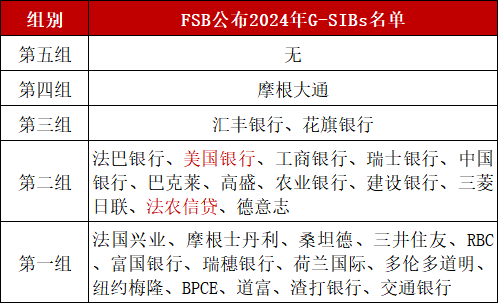
Core Insights - Global systemically important banks (G-SIBs) are undergoing a critical transformation, driven by industrialization and middle-class expansion in emerging markets, which present new opportunities in retail, corporate, and cross-border businesses. Financial technology is enhancing digital risk control and customer acquisition. However, challenges such as stagflation risks, geopolitical conflicts, and interest rate differentiation are intensifying pressure on interest margins and asset quality. The application of artificial intelligence also brings challenges related to model interpretability and compliance. Capturing the emerging market dividend and completing digital upgrades will be key to determining the future competitive advantage of G-SIBs [1]. Background - The 2008 global financial crisis highlighted the "too big to fail" issue of large international financial institutions. In 2011, the Financial Stability Board (FSB) released regulatory measures for G-SIBs, publishing the first list of G-SIBs, which included most global systemically important banks. According to the FSB's 2024 G-SIBs list, there are 29 banks globally [2][3]. Current Operations - In the current interest rate cut cycle, financial services have become the main revenue driver for banks. Since the Federal Reserve began lowering rates, traditional lending has faced pressure, leading to significant revenue growth in investment banking, financial markets, and wealth management. In Q1 2025, revenues from financial services for JPMorgan, Citigroup, and Bank of America grew by 12.0%, 10.0%, and 7.1%, respectively, with contributions exceeding 50% of total revenues, an increase of 3-6 percentage points from pre-rate cut levels [5]. - Investment banking has cooled down, with uncertainty in the market due to aggressive policy changes under the Trump administration. In Q1 2025, the growth rate of investment banking revenues for the four major U.S. banks dropped from an average of around 40% to less than 10%. Bank of America saw a year-on-year decline of -0.35% in investment banking revenue, while JPMorgan's growth slowed to 2.4% [5]. - Trading business has emerged as a new revenue driver, with significant increases in trading revenues for major U.S. banks in Q1 2025, attributed to heightened market volatility and geopolitical tensions. Trading revenues for JPMorgan, Citigroup, and Bank of America grew by 21%, 12%, and 11%, respectively, with stock trading revenues increasing by 48%, 23%, and 17% [6]. - Payment and settlement services have shown weak performance, with revenues for JPMorgan, Citigroup, Bank of America, and Wells Fargo growing by only 2.2%, 3.6%, 0.5%, and -10.9%, respectively, contrasting sharply with the growth in investment banking and trading revenues [6]. Opportunities - Expansion in emerging markets presents significant opportunities, particularly in retail banking, as the growing middle class demands diverse financial services. G-SIBs can meet these needs by offering various savings products and consumer loans. Additionally, the rising high-net-worth population increases demand for wealth management services [7]. - The demand for cross-border financial services is increasing, driven by globalization. G-SIBs can provide efficient cross-border payment solutions, financing, and risk management services to support businesses in their international activities [7]. - Regulatory changes may create potential opportunities, as the new U.S. administration's policies could support the cryptocurrency and digital asset markets, allowing G-SIBs to explore new business areas [8]. - Financial technology is enabling digital transformation, allowing G-SIBs to innovate in cross-border services and enhance customer experiences through personalized financial products [8]. Challenges - The uncertain macroeconomic environment in 2025 poses risks, with geopolitical tensions and trade protectionism affecting global economic activity. The U.S. government's tariff policies may lead to a new round of global trade disputes, increasing external risks for G-SIBs [9]. - The potential return of laissez-faire financial policies under the Trump administration could elevate systemic financial risks, as regulatory changes may reduce banks' liquidity requirements, impacting their ability to absorb potential losses [10]. - The application of AI in banking faces challenges, including the reliability and accuracy of AI outputs, which may conflict with the low tolerance for error in banking services [11]. Strategies and Recommendations - To address the challenges posed by low interest rates and regulatory costs, G-SIBs should build a multi-layered governance framework. This includes meeting total loss-absorbing capacity (TLAC) requirements and optimizing capital structures through asset securitization and diversifying capital tools [15][16]. - Business transformation and revenue diversification are crucial for balancing regulatory costs and profitability. G-SIBs should focus on expanding light-capital businesses and enhancing non-interest income through wealth management and advisory services [16]. - Governance and technology should work in tandem to improve risk management and operational resilience, including the implementation of real-time monitoring platforms for cross-border risks [16][17].


信义为基 合规护航 鹏扬基金践行基金业高质量发展
Xin Lang Ji Jin· 2025-10-10 02:25
Core Viewpoint - The article emphasizes the importance of high-quality development in public funds, focusing on fiduciary responsibility and a robust compliance risk control system as essential for sustainable industry growth [1][4]. Group 1: Full-Cycle Risk Control - The core mission of public funds is to integrate fiduciary responsibility throughout the entire operation, requiring adherence to "investor interests first" and professional diligence in all processes [2]. - A comprehensive risk control system is established by the company, which includes preemptive measures, real-time monitoring, and post-event rectification to ensure effective risk management [3][4]. Group 2: Compliance and Service - Investor suitability management is crucial, reflecting fiduciary responsibility by ensuring that the company understands its clients and products, and aligns them appropriately [5]. - The legal team actively engages in risk assessment and compliance training, enhancing the effectiveness of legal documents and ensuring that risk management is integrated with customer service [5]. Group 3: Technology Empowerment - The integration of legal compliance with financial technology is highlighted as a key driver for high-quality development, improving efficiency and safety in compliance management [6]. - The company employs various technological tools to enhance compliance processes, including automated updates of legal databases and contract management systems [6][7]. - Data security measures are implemented to protect investor information, adhering to personal information processing principles and establishing comprehensive management systems [7]. Group 4: Overall Contribution - The company aims to solidify fiduciary responsibility and enhance investor protection through a combination of compliance, service, and technological innovation, contributing to a healthier compliance ecosystem in the public fund industry [8].
智能化驱动衍生品市场重塑发展模式
Qi Huo Ri Bao· 2025-10-09 18:16
Core Insights - The Chinese government aims to fully transition to an intelligent economy and society by 2035, providing strong support for achieving socialist modernization [1] - Artificial intelligence is reshaping the derivatives market by enhancing trading models, efficiency, risk management, and clearing mechanisms, leading to a more efficient, transparent, and globalized market [1] Group 1: Impact of AI on Derivatives Market - AI, particularly based on large language models, is driving the financial industry from basic digitization to deep intelligence, significantly enhancing the scale, liquidity, efficiency, and service capabilities of the domestic derivatives market [2] - The rise of high-frequency algorithmic trading, influenced by technological advancements, has led to a substantial increase in its market share, improving liquidity and trading efficiency while narrowing bid-ask spreads [2][3] - The reduction of information asymmetry in the derivatives market is increasing overall market transparency and efficiency [2] Group 2: Future Trends and Opportunities - The open-source nature of large computing models and reduced computing costs will lead to widespread application of AI-driven strategy optimization, enhancing market effectiveness and pricing efficiency for complex derivatives [3] - The evolution of the derivatives market from a "tool market" to an "algorithmic ecosystem" will strengthen the dominance of institutional investors, with top firms contributing significantly to market liquidity [3][4] - AI is also facilitating the development of intelligent risk management and compliance systems, with firms exploring AI-based risk management frameworks to enhance efficiency and coverage of various risk scenarios [4] Group 3: Technological Advancements in Trading - The application of technology is crucial for competitive advantage in the derivatives market, with efficient pricing algorithms and low-latency trading systems becoming essential for market participants [6] - AI technologies are enabling dynamic risk control models and intelligent simulations of various stress scenarios, enhancing the risk management capabilities of trading firms [6][7] - Real-time risk monitoring systems and machine learning models for stress testing are expected to improve the ability to withstand extreme risk events [7] Group 4: Market Maturity and Global Positioning - The maturation of the domestic derivatives market will enhance China's pricing power in international commodity markets, attracting more foreign investors and diversifying market participant structures [5] - The increasing complexity and variety of derivatives will help enterprises better manage operational costs and risks [5]


国泰海通|非银:OpenAI全栈发力,AI生态不断完善
国泰海通证券研究· 2025-10-09 13:05
Core Insights - OpenAI collaborates with Nvidia and AMD to establish a 10 GW and 6 GW computing power partnership, enhancing the AI ecosystem and promoting full-stack development [1][2] - The AI sector is witnessing significant investments, with $10 billion raised by xAI and Nvidia planning to invest $100 billion in AI infrastructure [2] - The financial technology sector is focusing on payment solutions, automotive finance, and digital assets, with companies like Lakala and Yixin enhancing their AI capabilities [3] Group 1: AI Development and Infrastructure - OpenAI's introduction of GPT-5-Codex enables autonomous completion of complex engineering tasks, while Sora2 aims to create a "generate-consume-interact" closed-loop ecosystem [2] - Nvidia and Fujitsu are collaborating to integrate Fujitsu's 2nm "MONAKA" CPU with Nvidia's GPU technology, targeting AI infrastructure across various sectors [2] - The AI investment landscape is expanding, with significant funding aimed at building supercomputing capabilities to support advanced AI applications [2] Group 2: Financial Technology Innovations - Lakala announced an upgrade to its payment solutions in collaboration with WeChat Pay, enhancing support for cross-border payment needs [3] - Yixin's "Yixin Smart Service" solution has improved operational efficiency in automotive finance by 70% through full-chain AI applications [3] - Jiufang Zhitu has acquired shares in EX.IO, leveraging compliance and Web3 technology to enhance overseas digital asset operations [3] Group 3: Investment Recommendations - The company recommends focusing on the brokerage industry's intelligent investment research and advisory services, particularly companies developing specialized models and related products [1] - There is optimism regarding the rapid implementation of intelligent customer service, marketing, and risk control in the consumer finance sector [1] - The banking and insurance industries are expected to benefit from large models enhancing research and development efficiency across various business scenarios [1] - The application of large models in the payment industry for merchant ordering and marketing is also seen as a promising area for investment [1]




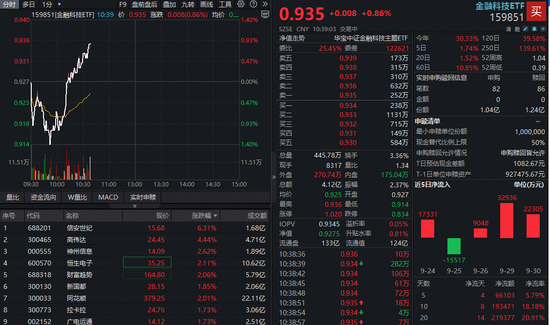
10年来首次!沪指突破3900点!大金融拉升翻红,金融科技ETF(159851)放量冲高1%,资金大举增持
Xin Lang Ji Jin· 2025-10-09 02:49
Core Insights - The Shanghai Composite Index has surpassed the 3900-point mark for the first time in 10 years, indicating strong market activity and significant trading volume on October 9 [1] - Financial technology stocks have shown notable gains, with companies like Xinan Century leading with over 6% increase, and several others rising more than 2% [1][3] - The financial technology sector is experiencing a new wave of policy and innovation opportunities, driven by supportive macroeconomic policies and the ongoing exploration of digital currency [3] Financial Technology Sector - The financial technology sector is recommended for continued attention due to new policy support and innovation opportunities, particularly in areas such as internet finance, fintech vendors, securities IT firms, and cross-border payment companies [3] - The establishment of the Digital Currency International Operation Center in Shanghai marks a significant step in financial innovation, focusing on cross-border digital payment and blockchain infrastructure [3] - The Financial Technology ETF (159851) has a scale exceeding 12 billion, with an average daily trading volume of over 1 billion in the past month, indicating strong liquidity and market interest [4] Investment Opportunities - The Financial Technology ETF and its linked funds are highlighted as key investment opportunities, covering a wide range of themes including internet brokerage, financial IT, cross-border payments, and AI applications [4] - The ETF is noted for its leading position in terms of scale and liquidity among similar funds tracking the same index [4]