
关税政策

Search documents
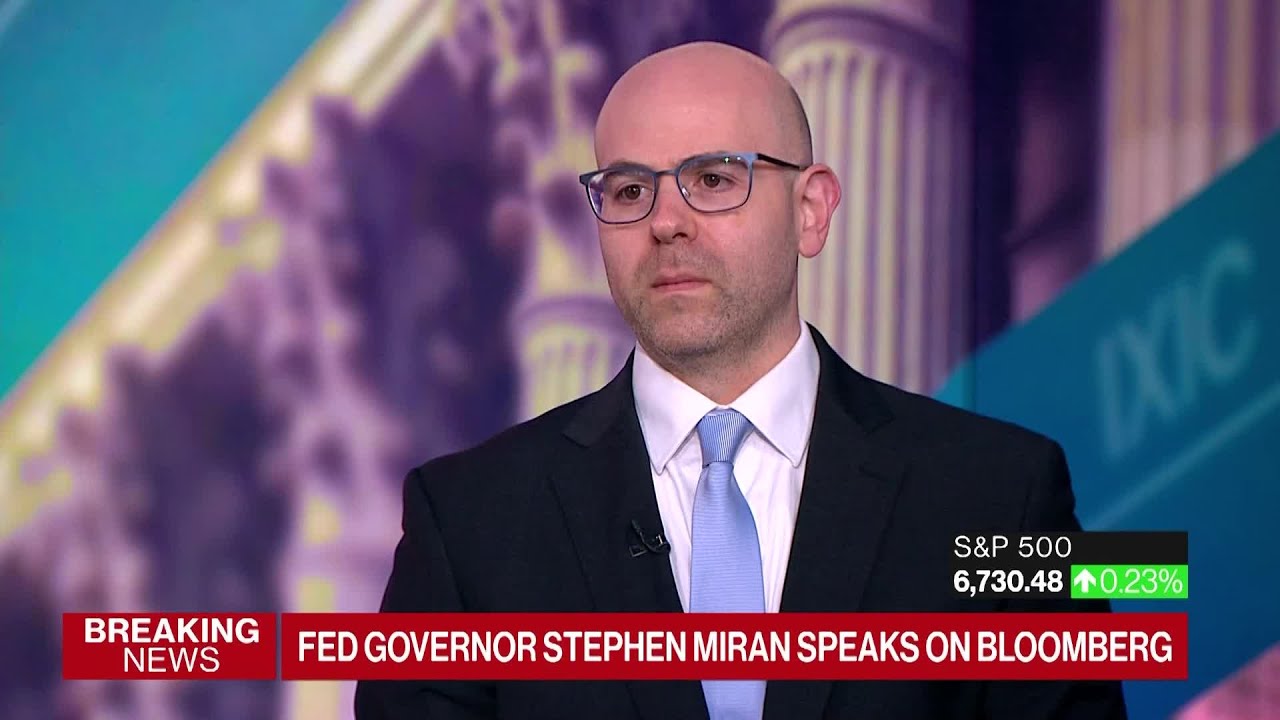
特朗普信赖的美联储理事米兰发声:房租上涨或致其调整通胀预期
Sou Hu Cai Jing· 2025-10-05 18:56
Core Viewpoint - Stephen Milan, a newly appointed Federal Reserve governor closely associated with the former Trump administration, advocates for aggressive interest rate cuts, challenging the cautious stance of the Fed [1][3][5] Group 1: Interest Rate Policy - Milan voted against the majority at the last Federal Reserve meeting, advocating for a 50 basis point cut instead of the 25 basis points supported by his colleagues [1][3] - He believes the current interest rates are significantly above the neutral rate, which he estimates to be around 2.5%, indicating a gap of nearly 200 basis points [3] - Milan calls for a rapid and substantial reduction in rates, suggesting a total cut of 125 basis points in the remaining meetings of the year, which exceeds the general expectation of 50 basis points [3][5] Group 2: Inflation Perspective - Milan emphasizes that inflation pressures are easing, particularly in housing costs, which he considers a key factor in his inflation outlook [5][6] - He assigns a significant weight to housing costs in inflation measures, noting that they account for approximately 16% of PCE inflation and a higher percentage in CPI [5] - He attributes the decline in housing inflation to stricter immigration policies during the Trump administration, which he believes have reduced housing demand [5][6] Group 3: Market Reactions and Criticism - Milan's views have sparked scrutiny, particularly regarding the potential influence of political factors on his decision-making, given his ties to the Trump administration [6][8] - He attempts to distance himself from political influences, asserting that his analysis is based on objective economic data [8] - Critics argue that his models may oversimplify complex economic factors, potentially overlooking risks such as geopolitical tensions and wage pressures that could counteract housing cost declines [9] Group 4: Comparison with Fed Leadership - In contrast to Milan's aggressive stance, Fed Chair Jerome Powell has adopted a more cautious approach, emphasizing the need for more data before making policy adjustments [9] - Powell's comments reflect a "wait and see" attitude, highlighting uncertainties surrounding tariffs and immigration policies, which differ from Milan's call for immediate action [9][10] - Milan's focus on housing costs and willingness to adjust his views based on data make him a unique variable in the Fed's policy discussions moving forward [10]


特朗普经济团队“口风转变”:等到明年吧!
Hua Er Jie Jian Wen· 2025-10-05 12:37
Core Insights - The Trump administration's economic team is adjusting its messaging strategy in response to weak employment data and ongoing inflation pressures, advising the president to convey a message of patience until next year [1][2] - Despite the current economic challenges, advisors are optimistic about future improvements, projecting that economic indicators will begin to show positive changes by early 2026 [1][3] - Public perception of Trump's economic leadership has become increasingly negative, with recent polls indicating that only 37% of adults approve of his handling of the economy [5] Group 1: Economic Messaging Strategy - Advisors suggest that Trump should focus on a long-term optimistic outlook, indicating that significant economic improvements are expected by 2026 [1][2] - The administration is emphasizing supply-side reforms and historic trade agreements aimed at revitalizing American manufacturing [3] Group 2: Economic Reality and Public Perception - Key economic indicators remain weak, with monthly job growth slowing and inflation continuing to affect consumers [4] - Public opinion has shifted negatively, with a significant portion of voters believing that Trump's policies have worsened the economy since he took office [5] Group 3: Policy Challenges - Independent economists warn that some of Trump's policies, particularly regarding immigration and tariffs, may hinder growth and increase costs in the short term [7] - There is a concern that ignoring comprehensive economic indicators in policy-making could lead to significant government errors [8]
“这是我从业30年来最严峻的局面”
Sou Hu Cai Jing· 2025-10-05 11:19
Core Insights - The California grape growing industry is facing unprecedented challenges due to poor economic conditions and U.S. government tariff policies, as stated by Jeff Bitter, president of the California Grape Growers Association, marking the most severe situation in his 30-year career [1] Industry Summary - The grape harvest in California this year is normal in terms of quantity and quality, particularly in inland growing areas, but many grapes are left unharvested due to a significant reduction in demand, leading to grapes rotting on the vine [3] - Many grape growers are opting to minimize vineyard management during the harvest season, either abandoning their investments or struggling to maintain operations, with only a few able to sustain themselves due to long-term purchase contracts with wineries [3] - The direct causes of the current situation include inventory buildup and sluggish sales, with an increasing number of wineries unwilling to purchase grapes, exacerbated by tariff policies from the Trump administration and overall poor economic conditions affecting consumer spending habits [5] - The tariff policies have led to retaliatory measures from other economies, diminishing the competitiveness of U.S. wines in international markets, with significant price increases making U.S. products less attractive compared to suppliers from Chile, Australia, and Europe [5] - The demand and shipment volume for U.S. wines have been declining over the past three years, reflecting broader economic challenges and changing consumer preferences, particularly among younger demographics who find wine relatively expensive compared to beer or spirits [6]

美国不仅仅凭着霸权提高关税,而是凭借着消费市场吸引了全世界
Sou Hu Cai Jing· 2025-10-05 09:55
Group 1 - The U.S. consumer market is massive, with total consumer spending expected to approach $19 trillion in 2024, accounting for over a quarter of global consumption [2][4] - Retail sales exceed $8 trillion, with core retail spending around $7 trillion, highlighting the significant purchasing power of the U.S. population of 330 million, averaging over $70,000 per person annually [2][4] - The U.S. economy is heavily consumption-driven, with consumer spending contributing to 70% of GDP, and despite inflation, consumer spending continues to rise [4][9] Group 2 - The U.S. market is attractive to global manufacturers, as companies can significantly increase profits by selling in the U.S. market, which is crucial for their growth [5][9] - Since 2018, the U.S. has implemented tariffs, with significant increases under the Trump administration, including a 10% import tax on all trade partners and up to 34% on China [7][11] - Tariffs have led to global supply chain adjustments, with companies relocating production to countries like Mexico and Vietnam, but still targeting the U.S. market due to its strong demand [7][9] Group 3 - Despite increased costs from tariffs, companies continue to prioritize access to the U.S. market, passing costs onto consumers, which has led to a slight rise in inflation [9][15] - The U.S. consumer market remains resilient, with a GDP growth rate of 3% in the second quarter, indicating that global companies are willing to absorb higher costs to maintain access [9][15] - Tariff revenues have increased significantly, with estimates suggesting that tariffs could reduce national debt by $2.5 trillion in the early months of 2025 [15][19] Group 4 - The attractiveness of the U.S. market is bolstered by its open economy, stable legal framework, and strong intellectual property protections, making it a favorable environment for global businesses [17][19] - The U.S. market's diverse demand spans from high-end technology to everyday goods, making it essential for global companies to participate in order to achieve substantial profits [17][19] - The ongoing trade tensions and tariff policies reflect the U.S.'s leverage in global trade, as countries must engage with the U.S. market to secure their economic interests [19][21]
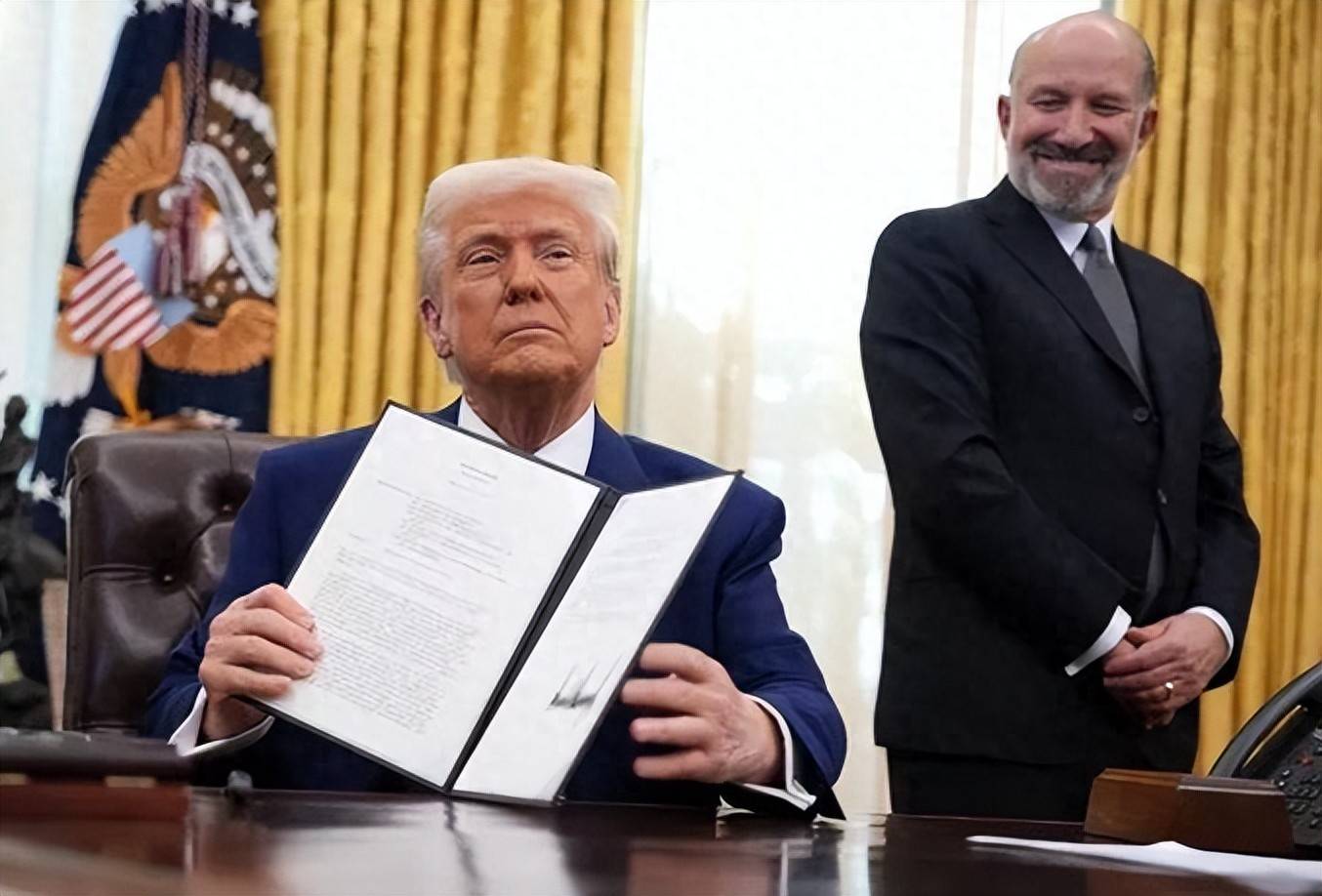
特朗普豪掷“全民红包”!考虑为所有美国人提供2000美元关税补贴
Sou Hu Cai Jing· 2025-10-04 18:12
Group 1 - President Trump is considering distributing $1,000 to $2,000 in tariff subsidies to all Americans, funded by the billions collected from tariffs imposed on trade partners [1][3] - The proposed subsidies are described as a "bonus for the American people" and are part of a broader strategy to address the national debt of $37 trillion [3] - Trump's tariffs are projected to generate over $1 trillion annually, which he claims will make the national debt appear relatively small [3] Group 2 - The U.S. has imposed additional targeted tariffs, including a 25% tariff on cabinets and a 50% import tax on India due to its purchase of Russian oil [5] - Economists warn that these tariffs may increase consumer prices, with reports indicating that toy and appliance prices have already risen due to cost pressures from tariffs [5] - Goldman Sachs estimates that by October, the burden of tariffs on American consumers could rise to 67% [5] Group 3 - The legality of the tariffs is under scrutiny, as a federal appeals court ruled that the imposition of these tariffs exceeded Trump's emergency powers [5] - The Supreme Court is set to hold a hearing in November regarding the president's authority to impose broad global tariffs, with the Trump administration urging expedited review to avoid uncertainty in trade agreements [6] - U.S. Treasury Secretary warned that if the tariffs are overturned, the country may be forced to refund $1 trillion, which could lead to significant disruption [6]
美国经济撑不住了?噩耗已至,中国早有预料,特朗普高兴不了多久
Sou Hu Cai Jing· 2025-10-04 10:05
Core Points - Trump's tariff policy has backfired, harming the U.S. economy rather than benefiting it as intended [1][3][14] - China had previously warned that a tariff war would lead to negative consequences for the U.S. economy [3][14] Tariff Implementation - Starting October 1, Trump announced significant tariffs on various essential goods: 25% on heavy trucks, 50% on kitchen and bathroom cabinets, 30% on soft furniture, and 100% on pharmaceuticals [4] - To avoid tariffs, Trump proposed that companies invest in U.S. manufacturing [4] - The U.S. Department of Commerce initiated "national security investigations" into industries like medical devices and robotics, likely to justify further tariffs [4] Economic Impact - The financial markets reacted negatively, with major U.S. stock indices losing over $1 trillion in value [4] - The U.S. dollar index and Treasury yields also declined, indicating a lack of confidence in the tariff policy [4] Employment Concerns - The U.S. labor market is showing signs of rapid cooling, with only 73,000 new jobs added in July 2025, significantly below expectations [6] - Job data for May and June was revised downwards, indicating a total loss of 258,000 jobs over those two months [6] - Manufacturing jobs have decreased by approximately 12,000 in August 2025, totaling a loss of 42,000 jobs since April [8] Consumer Price Pressure - Tariffs are leading to rising prices for imported goods, which consumers will ultimately bear [11] - The implementation of a 100% tariff on pharmaceuticals will increase healthcare costs for families [11] - Prices for furniture, cabinets, and trucks are expected to rise, increasing living costs and logistics expenses [11] Business Sentiment - Approximately 20% of businesses believe tariffs will affect their hiring plans, while 25% think it will impact investment decisions [13] - This uncertainty is likely to suppress future economic vitality and could weaken U.S. innovation and competitiveness [13] Long-term Economic Forecast - The OECD predicts U.S. economic growth will slow to 1.8% in 2025 and further to 1.5% in 2026 [13] - The effective tariff rate has reached 19.5%, which is expected to drive inflation up to 3% by 2026 [13] - Compared to the U.S., the EU and some Asian economies are projected to maintain growth rates above 2% due to stable internal demand [13]
美加征关税冲击巴西咖啡业
Xin Hua She· 2025-10-03 22:10
Core Insights - Brazil is the world's largest coffee producer and exporter, with the southeastern state of Minas Gerais accounting for over half of the country's coffee production [1] - The U.S. has imposed a 40% tariff on Brazilian coffee imports since August, leading many Brazilian exporters to halt U.S. orders and seek new markets [1][2] - Approximately one-third of unroasted coffee in the U.S. comes from Brazil, with imports expected to reach 8.14 million bags in 2024, representing 33% of total U.S. coffee consumption [1] Group 1: Impact of Tariffs - The U.S. tariffs on Brazilian coffee are expected to have a more significant negative impact on American roasters and brands, as they rely heavily on Brazilian imports [2] - Brazilian coffee producers are exploring alternative markets, particularly in China, which has a growing demand for high-quality coffee [2] Group 2: Market Dynamics - Many Brazilian coffee cooperatives have reported a lack of orders for the U.S. market, with most shipments made before the tariffs took effect [2] - Despite the tariffs, demand from Europe and Australia remains strong, alleviating inventory pressure for Brazilian exporters [2] - The coffee bean storage life is up to three years, allowing exporters to wait for better market conditions [2] Group 3: Price Implications - The primary impact of the tariffs has been an increase in coffee prices, prompting calls for dialogue and negotiation between the U.S. and Brazil [2]
美国计划实施全民发钱,特朗普暗示税收赚过多,人均发放2000美元
Sou Hu Cai Jing· 2025-10-03 16:04
美国有约3.47亿人口,很显然,即使是按照1000美元/人的最低档位,今年也无法实现全民发钱,但如果2026年美国税收真的到了10000亿美元,人均发放 2000美元似乎问题也不大。 早在特朗普的首个任期内,为了应对疫情后的通货膨胀问题,他就多次祭出了"全民发钱"这招,但是在今年重返白宫之后,特朗普目前只是有类似想法, 但并未真正付诸行动。 当地时间10月2日,特朗普在接受极右翼媒体OAN采访时透露,美国的关税政策才刚刚开始,预估在新税收政策下,未来政府每年将会增加约10000亿美 元的收入。 当被问及如何利用这笔钱时。特朗普表示,税款首先将被用来偿还政府债务,尽管这对于37万美元的国债来说相对较少,其次会考虑把部分税收,直接通 过现金的方式分配给美国人民。 根据美国财政部数据显示,美国联邦政府今年已经从关税中获得了约2149亿美元收入,预计到年底之际,美国关税收入至少在3000亿美元以上。 特朗普表示,当美国税收达到10000亿美元的时候,将会给美国人民每人发放1000~2000美元,这是一件非常棒的事情,尽管这可能需要经过国会的最终 批准。 值得一提的是,今年8月美国联邦上诉法院以7:4的票数,判定特朗普 ...
Fed's Miran Says He's Ready to Change His View on Inflation If Housing Jumps
Youtube· 2025-10-03 14:48
Group 1 - The importance of high-quality data for monetary policy decisions is emphasized, especially in the context of the current government shutdown affecting data availability [2][3] - Inflation is noted to be rising, particularly in food and gasoline prices, which are significant concerns for the public [4] - The cost of housing is highlighted as a major component of inflation, with expectations of significant disinflation in the services component driven by changes in the housing market [5][7] Group 2 - The Federal Open Market Committee (FOMC) typically meets every six weeks, and there is hope that necessary economic data will be available by the time decisions need to be made [3] - Current economic conditions include inflation at approximately 3% and unemployment at 4.3%, which are historically low [7] - The Atlanta Fed reported a growth rate of 3.8% in the third quarter, suggesting that economic models would not support a near-zero neutral rate under these conditions [8] Group 3 - The discussion includes the impact of fiscal deficits, which are currently about $400 billion lower than the previous fiscal year, contributing to a tighter monetary policy environment [28][29] - The regulatory environment is changing, with expectations of increased deregulation, which could expand potential output faster than actual output [14][30] - The relationship between financial conditions and monetary policy is explored, indicating that financial conditions can be influenced by non-monetary factors [29][30] Group 4 - The persistence of services inflation, particularly driven by housing costs, is identified as a key factor in inflation dynamics [33] - The expectation is that shelter rents will decrease, leading to a reduction in overall inflation [34][35] - The discussion on tariffs and their impact on inflation suggests that the burden of tariffs primarily falls on foreign producers rather than American consumers [40][42] Group 5 - The Federal Reserve's approach to inflation targets and the complexities of measuring inflation are discussed, with a focus on the challenges of public perception regarding inflation [21][23] - The need for forward-looking forecasts in monetary policy is emphasized, particularly in light of significant population growth shocks [18][19] - The potential for tax cuts to stimulate economic growth while tariffs may not lead to increased consumer inflation is analyzed [38][39]
“这是我从业30年来最严峻的局面”——访美国加州葡萄种植者联盟主席杰夫·比特
Xin Hua She· 2025-10-03 07:31
Core Viewpoint - The California grape growers are facing unprecedented challenges due to poor economic conditions in the U.S. and government tariff policies, marking the most severe situation in 30 years for the industry [1][2] Group 1: Industry Challenges - The grape harvest in California is normal in quantity and quality, but many grapes are left unpicked due to a significant reduction in demand, leading to grapes rotting on the vine [1] - Many growers are opting to minimize vineyard management during the harvest season, either abandoning their investments or struggling to maintain operations [1] - The direct causes of the current situation include inventory buildup and sluggish sales, with many wineries unwilling to purchase grapes [2] Group 2: Impact of Tariff Policies - The tariff policies implemented by the Trump administration have exacerbated the crisis, with the trade war leading to retaliatory measures from other economies, diminishing the competitiveness of U.S. wines in international markets [2] - The price of U.S. wines has significantly increased overseas, causing buyers to shift to suppliers from Chile, Australia, and Europe [2] - Canada, the largest export destination for U.S. wines, has removed American wines from store shelves in response to U.S. tariffs, severely impacting the industry [2] Group 3: Changing Consumer Behavior - The demand and shipment volume for U.S. wines have been declining for three consecutive years, reflecting poor overall economic conditions and changing consumer habits, particularly among younger demographics [2] - Compared to beer and spirits, wine is perceived as relatively expensive, making it difficult for consumers facing economic pressures to allocate disposable income towards wine purchases [2]