美元指数

Search documents
轩锋—黄金震荡关注破位情况,原油如期下行继续空!
Sou Hu Cai Jing· 2025-07-11 02:07
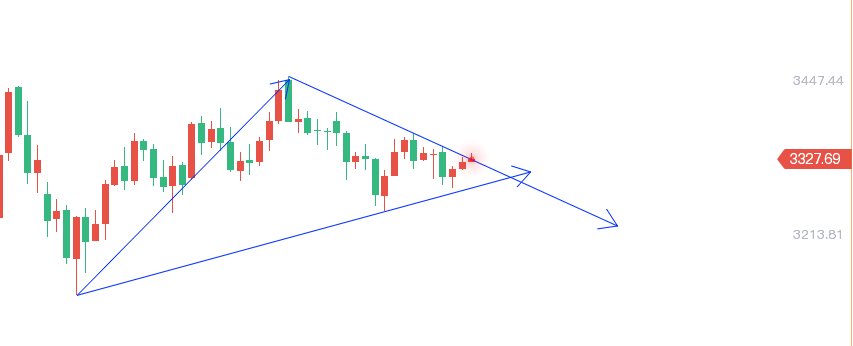
Group 1 - The market is experiencing a strengthening dollar index supported by the Federal Reserve's monetary policy, with most officials favoring interest rate cuts this year, although rates remain unchanged for now [2] - The extension of tariff implementation to August 1 has led to a generally positive market outlook, with expectations for negotiations [2] - The technical analysis indicates a consolidation pattern in gold, with successful trades noted at specific price points [2] Group 2 - U.S. crude oil inventories have significantly increased, offsetting seasonal demand, alongside expectations of increased production from OPEC+ [4] - Recent attacks in the Red Sea have not sustained market speculation, leading to a technical retreat in oil prices [4] - The prevailing supply-demand imbalance suggests a continuation of a bearish outlook for oil, with recommendations to maintain a short position on rebounds [4] Group 3 - For gold, a buying opportunity is suggested around 3322/4 with a target of 3340/50 [5] - For oil, a selling opportunity is indicated around 67.6 with a target of 66/65 [5]

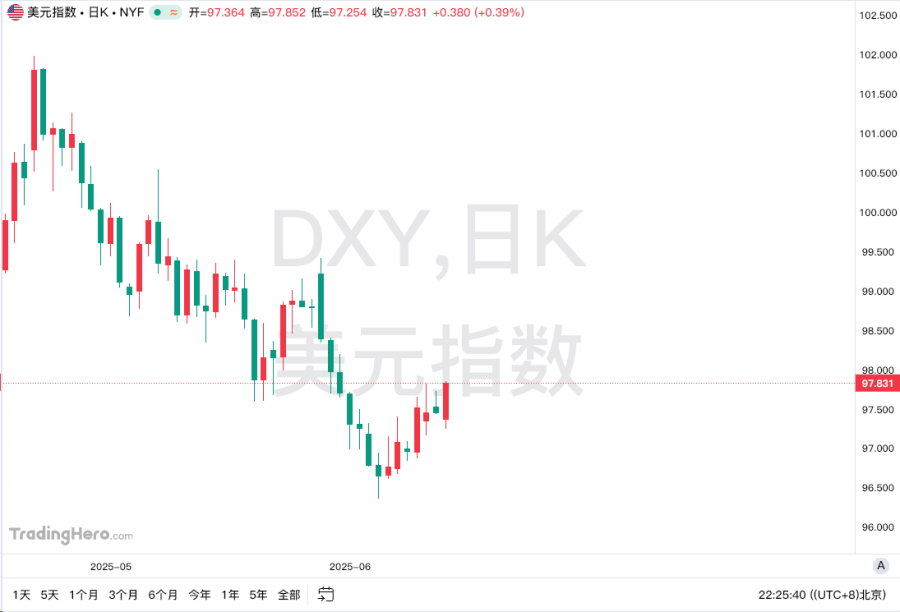
美元指数短线小幅上涨,报97.80。美股期货短线小幅下跌,纳指期货跌0.22%。稍早消息,特朗普将对加拿大商品征收35%的关税。
news flash· 2025-07-11 00:33
Group 1 - The US dollar index has seen a slight increase, currently at 97.80 [1] - US stock futures have experienced a minor decline, with Nasdaq futures down by 0.22% [1] - Earlier news indicates that Trump plans to impose a 35% tariff on Canadian goods [1]
美元指数DXY日内涨超0.50%,现报97.85,创6月25日以来新高。
news flash· 2025-07-10 14:27
Group 1 - The US Dollar Index (DXY) has increased by over 0.50% in a single day, currently reported at 97.85, marking the highest level since June 25 [1] - The rise in the Dollar Index indicates strengthening of the US dollar against other currencies [1] Group 2 - The increase in the Dollar Index may reflect market reactions to economic data or geopolitical events influencing investor sentiment [1] - A higher Dollar Index can impact international trade and investment flows, potentially affecting various sectors [1]
张尧浠:基本面动荡不定、金价震荡调整仍有看涨预期
Sou Hu Cai Jing· 2025-07-10 00:26
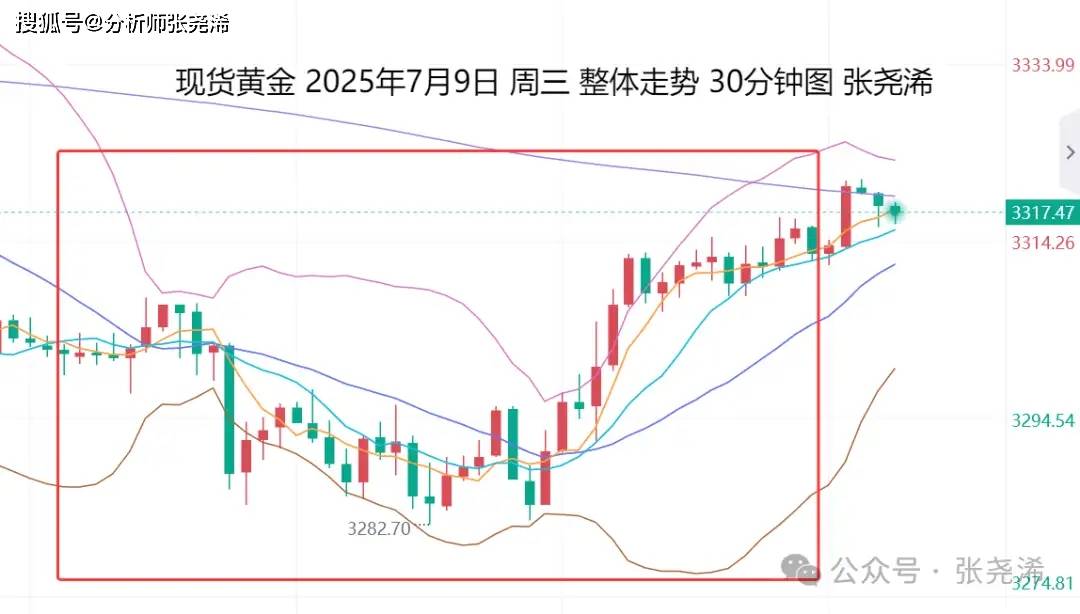
张尧浠:基本面动荡不定、金价震荡调整仍有看涨预期 日内将可关注美国至7月5日当周初请失业金人数(万人),市场预期偏向利好金价,故此今日操作思路亚盘寻高做空,欧盘筑底做多入场,等待美盘再度走 强。 基本面上,特朗普将关税协议延长至8月1日开始再度征收,虽然缓解了市场紧张情绪,但其言论的到期后将不再延长,并发出关税威胁,这增加了全球贸 易不确定性,推高避险情绪,也使得后市仍面临关税带来的经济和通胀担忧,将还会削弱美元,支撑金价。 具体走势上,金价自亚市开于3301.86美元/盎司,短暂走强6美金后,回撤走低,欧盘时段筑底震荡,并先行录得日内低点3282.56美元,之后美盘时段开 始回升反弹,持续走强,延续盘尾录得日内高点3316.65美元,并最终收于3313.44美元,日振幅34.09美元,收涨11.58美元,涨幅0.35%。 影响上,受到美元指数近期止跌回升,以及技术回落的卖盘压力,欧盟表示可能在未来几天在8月1日前与美国达成贸易协议,而先行走低,但美元指数遇 阻表现,基本面的不确定性,令市场感到担忧而限制了金价跌幅; 另外,在支撑买盘,以及特朗普再次呼吁美联储降息,并宣称关税大限推迟至8月1日,是"最终期限, ...
曾金策7月10日:黄金价格会持续下跌吗?黄金行情走势分析及操作建议
Sou Hu Cai Jing· 2025-07-09 22:03
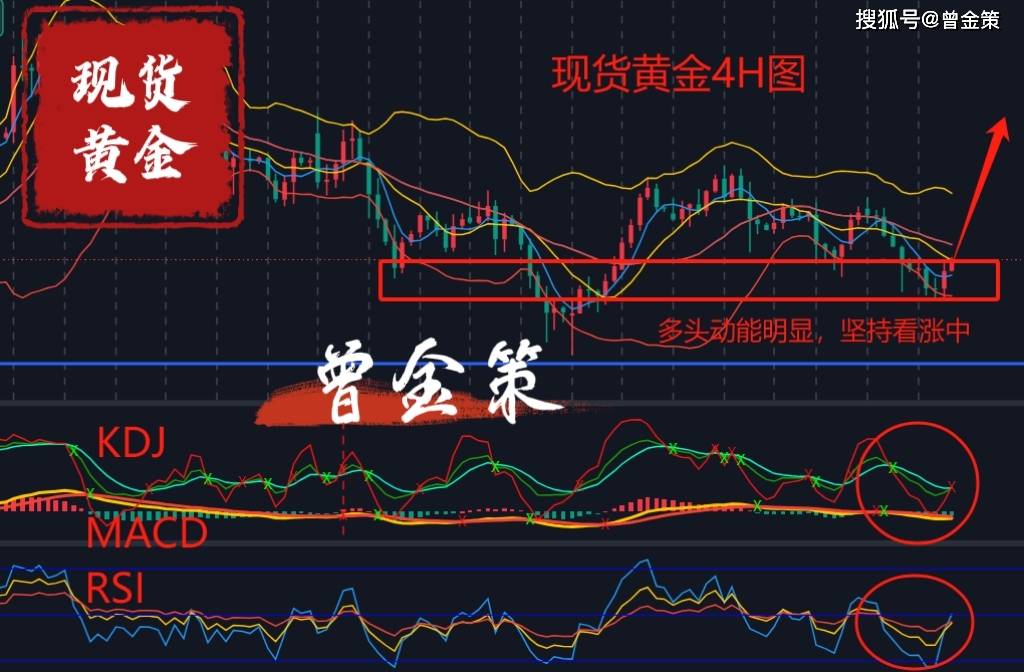
Group 1 - The current spot gold price is trading at $3309.89 per ounce, an increase of $8.60 or 0.26% from the previous value [1] - The announcement of tariffs on 14 countries by the U.S. starting August 1 has raised concerns about the economy and inflation, impacting gold prices [1] - The strengthening of the U.S. dollar index, boosted by non-farm payroll data, and rising U.S. Treasury yields have increased the holding costs of gold [1] - Despite long-term benefits from central bank gold purchases, there has been a short-term reduction in gold ETF holdings [1] Group 2 - On the daily chart, the Bollinger Bands are slightly opening, with gold prices supported by the lower band, indicating initial bullish momentum [2] - Key resistance is at $3350 per ounce, while $3280 per ounce serves as critical support [2] - The MACD indicator shows a convergence of the death cross, with green bars narrowing, while the RSI indicates oversold conditions with a rebound in the 51-40 range, suggesting strong bullish momentum [2] Group 3 - In the 4-hour chart, the Bollinger Bands are expanding slightly, indicating a demand for volatility, with gold prices rebounding from the lower band [2] - The MACD shows a continuous convergence of the death cross, with narrowing green bars, and the RSI indicates a rebound in the 51-44 range, highlighting a clear demand for a bullish reversal [2] - The 1-hour chart shows an expanding Bollinger Band, with a clear short-term bullish rebound, and the MACD indicates a golden cross with increasing red bars [2] Group 4 - For bullish positions, aggressive traders can enter near the $3280 support level, while conservative traders may wait for a bounce at $3250 [4] - For bearish positions, aggressive traders can consider shorting near $3400 resistance, while conservative traders may wait for confirmation at $3450 [4] - The futures market shows varied trends, with the main contract for Shanghai gold initially declining before rebounding, and significant fluctuations in gold T+D [4]
人民币汇率韧性持续增强 会否重返7.1区间?
Zhong Guo Jin Rong Xin Xi Wang· 2025-07-09 06:58
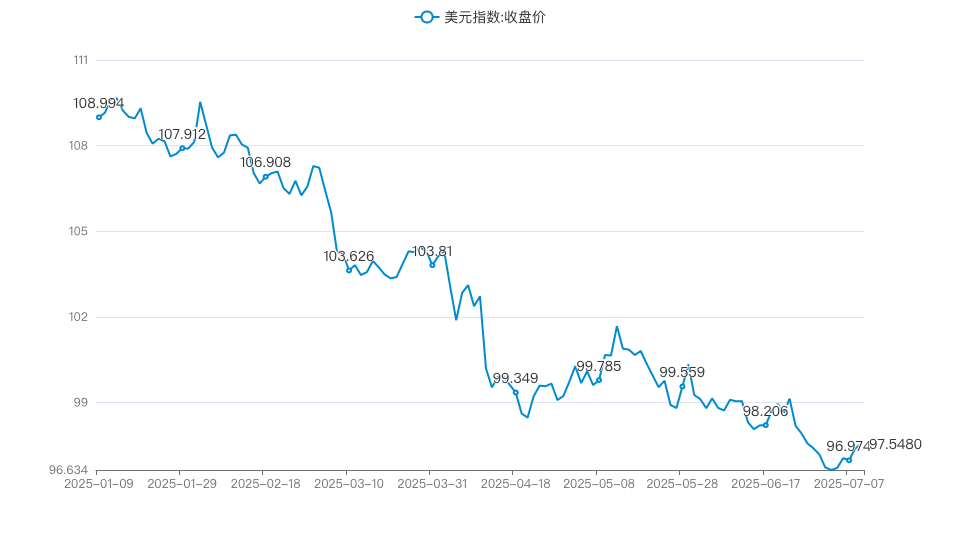
Core Viewpoint - The recent strengthening of the Renminbi (RMB) against the US dollar is attributed to both internal and external factors, with expectations for a moderate appreciation in the future [3][5][6]. Exchange Rate Trends - As of mid-2025, the US dollar index has dropped by 10.8% since the beginning of the year, reaching its lowest point since March 2022, while the RMB has shown a trend of initial decline followed by recovery, hitting a seven-month high [1][3]. - The RMB against the US dollar has seen a cumulative increase of 298 basis points, with a rise of 0.41% in the middle rate, and over 1.8% in the onshore rate [3][5]. Factors Influencing RMB Strength - The RMB's recent strength is a result of the weakening US dollar index, stable domestic fundamentals, and flexible central bank operations, alongside increased demand for currency exchange [5][6]. - The People's Bank of China (PBOC) has indicated plans to introduce more financial policies related to foreign exchange, aiming to stabilize the market and prevent excessive fluctuations in the RMB exchange rate [5][6]. Future Outlook for RMB - Morgan Stanley predicts that the US dollar index may continue to decline, which could support a moderate appreciation of the RMB [6]. - The Chinese economy's stable performance and increased cross-border capital inflows are expected to provide strong support for the RMB's exchange rate [6][8]. RMB Asset Appeal - The attractiveness of RMB assets has increased due to stable economic growth in China and the resilience of its financial markets, leading to a shift of market funds away from US dollar assets [8][9]. - The RMB has become the second-largest trade financing currency globally and the third-largest payment currency, reflecting its growing international status [8][9]. Internationalization of RMB - The internationalization of the RMB is progressing, with significant increases in cross-border RMB settlement volumes, particularly in securities investment [9][10]. - The PBOC has engaged in bilateral currency swap agreements with various countries, further promoting the use of RMB in international trade and finance [9].
FPG财盛国际:黄金突然遭遇猛烈抛售,原因在这里!金价暴跌近35美元
Sou Hu Cai Jing· 2025-07-09 04:51
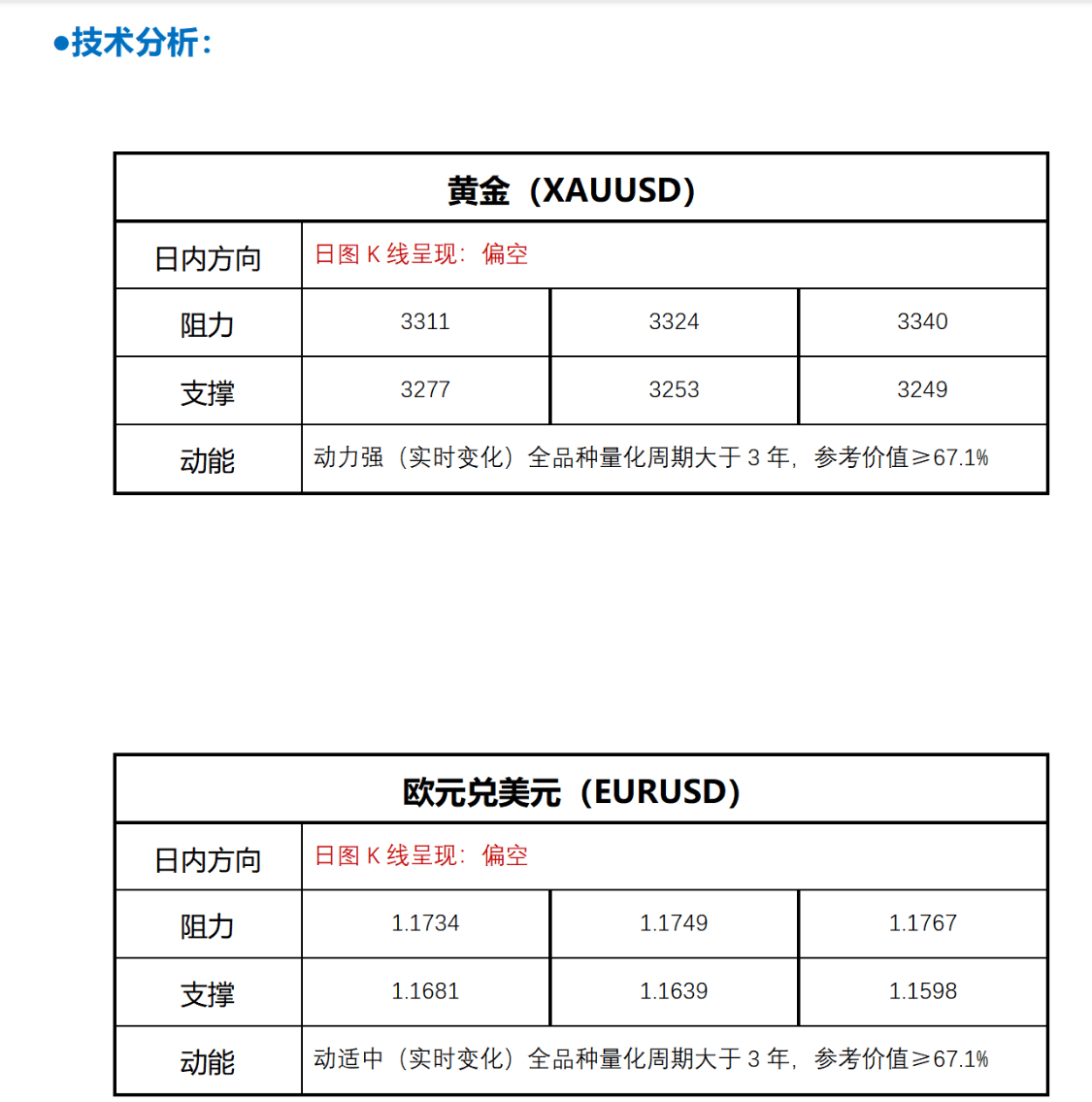
Group 1 - The U.S. 10-year Treasury yield increased by 4 basis points to 4.423%, while the real yield also rose by 4 basis points to 2.073% [1] - The U.S. Dollar Index (DXY) rose by 0.20% to 97.70, making gold priced in dollars more expensive for overseas buyers [2] - Japan and South Korea are accelerating trade negotiations with the U.S. to soften President Trump's stance on new tariffs effective August 1 [3] Group 2 - Despite the announcement of new tariffs, interest in gold as a safe-haven asset has decreased, leading to a drop in gold prices by over 1% during North American trading [5] - Optimism regarding trade agreements has increased market risk appetite, which has suppressed gold prices [5] - The Relative Strength Index (RSI) has triggered a "sell signal," indicating that sellers have outnumbered buyers, with gold needing to break below $3,246 per ounce for further declines [6] Group 3 - Key resistance levels for gold are at $3,311, $3,324, and $3,340, while support levels are at $3,277, $3,253, and $3,249 [7] - The momentum for gold remains strong, with a quantitative cycle greater than three years and a reference value of at least 67.1% [7] Group 4 - Key economic indicators to watch include U.S. wholesale sales for May and EIA crude oil inventory data for the week ending July 4 [9]
黄金回调机会备受关注,降息预期为核心变量
Sou Hu Cai Jing· 2025-07-09 03:48
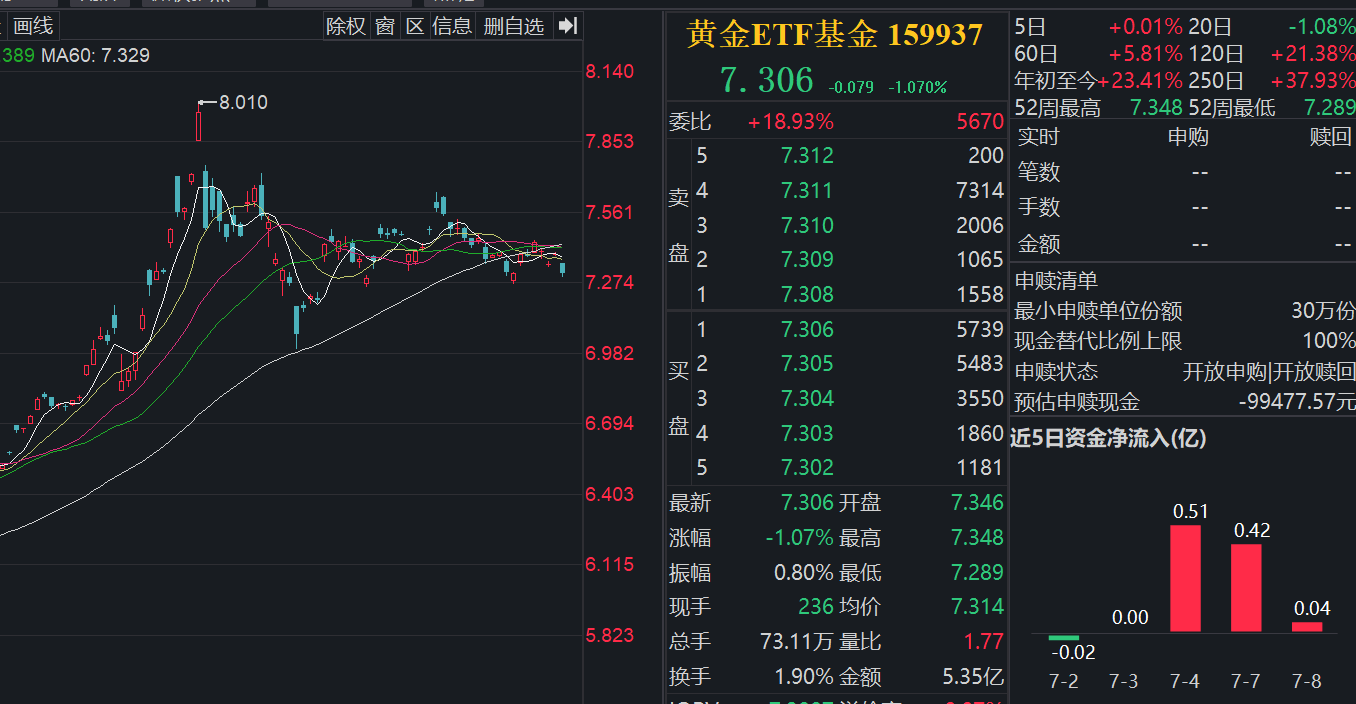
Core Viewpoint - The international gold market is experiencing fluctuations, with gold prices testing resistance levels and showing potential for further declines due to a rebound in the US dollar index and changing Federal Reserve interest rate expectations [2][6][10]. Group 1: Market Dynamics - As of July 9, international spot gold has fallen below $3,300 per ounce, currently trading at $3,287.75 per ounce, down 0.39% [1]. - The COMEX gold is trading at $3,299 per ounce, reflecting a decrease of 0.54% [1]. - The recent fluctuations in gold prices are influenced by the Federal Reserve's interest rate expectations, which have shifted due to recent employment data and economic policies [6][7]. Group 2: Economic Indicators - The US non-farm payroll data for June showed an increase of 147,000 jobs, surpassing expectations, while the unemployment rate decreased from 4.2% to 4.1% [7]. - The "Great Beautiful" fiscal plan signed by President Trump is expected to increase the federal deficit by $3.4 trillion over the next decade, which may have short-term positive effects on the economy but could exacerbate long-term debt burdens [7][9]. Group 3: Geopolitical Factors - Ongoing trade negotiations and tariff agreements between the US and countries like Vietnam and Cambodia are contributing to market uncertainty, which may support gold prices as a hedge against currency risk [8][9]. - The uncertainty surrounding trade policies and their potential impact on the economy remains a significant factor influencing gold's appeal as a safe-haven asset [2][8]. Group 4: Investment Opportunities - Gold ETFs and related funds are highlighted as accessible investment vehicles, offering low costs and diverse trading options, which may attract investors looking to hedge against economic volatility [11]. - The long-term value of gold as a hedge against inflation and economic downturns is emphasized, suggesting that investors may consider regular investments in gold ETFs [11].
今日人民币兑美元最新汇率公开:1美元兑7.1506人民币
Sou Hu Cai Jing· 2025-07-09 02:29
Core Viewpoint - The recent appreciation of the Renminbi (RMB) against the US dollar has significant implications for various groups, including students studying abroad, foreign trade practitioners, and investors monitoring global economic trends [1][4]. Exchange Rate Overview - As of the latest data, the central parity rate of 1 USD is 7.1506 RMB, reflecting a slight increase of 29 basis points from the previous trading day, indicating a sustained appreciation trend for the RMB [3]. - The onshore market (CNY) shows a latest transaction price of 7.1692, while the offshore market (CNH) is at 7.1676, suggesting a consistent expectation of the RMB's value between domestic and foreign markets [3]. Impact of RMB Appreciation - For students and travelers, the appreciation means they can exchange less RMB for the same amount of USD, potentially saving money on expenses like tuition or travel [4]. - Conversely, for cross-border e-commerce and foreign trade businesses, the same USD revenue will convert to a lower amount in RMB, impacting profit margins over time [4]. Reasons for RMB Appreciation - The recent appreciation is attributed to several factors, including a weakening US dollar index, which provides room for other currencies to strengthen, and a stable recovery of the Chinese economy, enhancing confidence in RMB assets [5][6]. Strategies for Individuals and Businesses - Individuals are advised to consider staggered currency exchanges to mitigate risks associated with exchange rate fluctuations [7]. - Businesses engaged in foreign trade can negotiate with banks to lock in exchange rates, ensuring stable profits despite market volatility [8]. Future Outlook - The RMB is expected to experience small fluctuations, alternating between appreciation and depreciation, influenced by international economic conditions, US Federal Reserve policies, domestic economic fundamentals, and international capital flows [10].