净零排放

Search documents
从能源转型先锋到收购传闻主角 英国石油怎么了?
Jin Shi Shu Ju· 2025-06-30 09:02
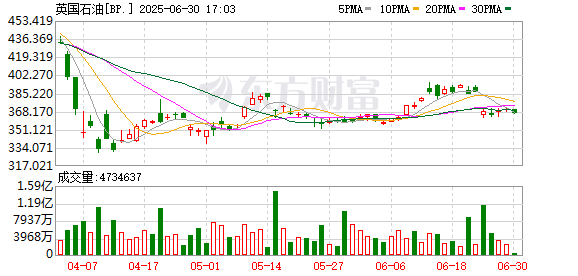
Core Viewpoint - The recent rumors of a potential merger between Shell and BP were put to rest when Shell denied any acquisition talks, highlighting the competitive landscape and strategic shifts within BP [2][5]. Group 1: BP's Strategic Transformation - BP's CEO Bernard Looney announced a strategic transformation in 2020 aimed at achieving net-zero emissions by 2050 and increasing investments in renewable energy [2][3]. - Despite facing challenges during the COVID-19 pandemic, BP recorded a profit of $7.6 billion in 2021 and saw profits soar to $27.65 billion in 2022 due to rising oil prices amid the Ukraine conflict [3]. - BP plans to invest up to $8 billion in energy transition and another $8 billion in oil and gas to support energy security and affordability [3]. Group 2: Leadership Changes and Market Reactions - Bernard Looney's unexpected resignation in September 2023 raised concerns about BP's strategic direction, leading to a reevaluation of its independent future [3][4]. - CFO Murray Auchincloss took over as interim CEO and was officially appointed in January 2024, but the company has faced declining profits for two consecutive years [4]. - Following Looney's departure, BP's stock price has underperformed compared to peers, prompting speculation about potential acquisitions from companies like Chevron, ExxonMobil, and Adnoc [4]. Group 3: Market Sentiment and Acquisition Speculations - Activist investor Elliott Management increased its stake in BP, coinciding with Auchincloss's announcement to shift focus back to oil and gas investments, which did not resonate well with investors [4]. - Auchincloss asserted BP's strength as an independent company in response to acquisition rumors, while Shell's CEO emphasized high thresholds for any potential mergers [4][5]. - Analysts have questioned the attractiveness of BP's valuation for potential acquirers, suggesting that unless the valuation is compelling, a merger may not be worthwhile for management [5].

香港运输及物流局与中集安瑞科签署战略合作备忘录
Zheng Quan Shi Bao Wang· 2025-06-26 09:47
Group 1 - The Hong Kong Transport and Logistics Bureau signed a memorandum of cooperation with CIMC Enric to develop a green marine fuel ecosystem in Hong Kong [1] - The cooperation aims to stabilize the supply of green marine fuel, establish a trading market, and promote related business development [1] - By 2030, Hong Kong aims to provide over 200,000 tons of green marine fuel annually and achieve more than 60 refueling services for vessels using LNG and green methanol [1] Group 2 - CIMC Enric is a leading provider of clean energy equipment and solutions, with a strong presence in the clean energy and maritime sectors [2] - The company has established the first green methanol plant in the Guangdong-Hong Kong-Macao Greater Bay Area, expected to start production in Q4 2023 with an initial capacity of 50,000 tons [2] - The total capacity of the green methanol plant is projected to reach 250,000 tons by 2027 [2]

全球CCS发展重心转移
Zhong Guo Hua Gong Bao· 2025-06-25 02:32
Core Insights - Carbon capture and storage (CCS) is crucial for achieving net-zero emissions, particularly in hard-to-abate sectors like steel, cement, and chemicals [2] - The U.S. has historically led global CCS development through substantial subsidies and tax incentives, particularly the 45Q tax credit under the Inflation Reduction Act (IRA), which offers up to $85 per ton for underground storage and $180 per ton for direct air capture (DAC) projects [2][3] - Recent political uncertainties in the U.S. threaten the future of CCS incentives, with over $14 billion in clean energy investments reportedly stalled due to concerns over potential legislative changes [3] U.S. CCS Landscape - Despite strong interest and technical expertise in CCS, political changes have created significant uncertainty, leading to project cancellations and delays [3] - The market's enthusiasm for CCS remains high, but the instability in the regulatory framework complicates long-term investment commitments [3] European CCS Strategy - Europe is adopting a regulatory-driven approach, exemplified by the recent Net Zero Industry Act, which mandates oil and gas companies to jointly develop and store at least 50 million tons of CO2 annually by 2030 [3][4] - This shift marks a fundamental departure from the U.S. model, as Europe is moving away from voluntary market signals to enforceable legal obligations, positioning CCS as a key pillar of its industrial decarbonization strategy [4] - The European Union is accelerating project approvals and unlocking funding mechanisms through its emissions trading system (EU ETS), providing a stable investment environment for CCS infrastructure [4] Comparative Analysis - The contrasting approaches of the U.S. and Europe highlight a dynamic shift in global CCS leadership, with the U.S. facing potential slowdowns due to policy uncertainties, while Europe establishes a more predictable regulatory framework [4] - Europe's mandatory development of storage capacity ensures infrastructure support for decarbonization efforts across multiple industries, positioning it as an emerging hub for CCS innovation [4]
中国的能源突破与净零幻象:谢钦在2025年圣彼得堡国际经济论坛上的愿景
Sou Hu Wang· 2025-06-23 01:50
Group 1 - The core argument presented by Igor Sechin is that China has achieved energy independence and is on the path to becoming a net energy exporter, transitioning from the world's largest energy importer to a major energy exporter [1] - Sechin praises China's balanced and pragmatic energy strategy, which includes record investments in renewable energy and battery storage, robust grid expansion, and continued reliance on coal for power generation [1] - He emphasizes that China remains a leader in renewable energy manufacturing while still deriving nearly 60% of its electricity from coal, showcasing a dual-track approach that decouples energy security from ideological constraints [1] Group 2 - Sechin notes that the global energy system is undergoing structural changes driven by economic and technological necessities rather than environmental goals, highlighting the urgent need for national energy security and the unsustainable debt levels of developed countries [2] - He warns that the rise of artificial intelligence and data centers, which consume energy equivalent to that of 100,000 households, will significantly increase global energy demand, necessitating reliable energy supplies to avoid stalling the digital revolution [2] - Sechin advocates for a revival of nuclear energy, citing a tripling of uranium prices and the acceleration of nuclear power expansion in China and India, positioning Russia as a key player in global nuclear technology exports [2] Group 3 - Sechin criticizes the "net zero emissions" agenda as a regression in energy policy, arguing that historical energy transitions have always moved towards higher energy density sources [3] - He points out that renewable energy sources like solar and wind are less efficient compared to fossil fuels and nuclear energy, and that the integration of renewables requires significant infrastructure investment, particularly in the grid [3] - Sechin proposes a combined approach of traditional and alternative energy sources, prioritizing technological maturity, energy density, and national interests, while cautioning against abandoning proven energy sources [3]
印度4GWh光伏储能项目招标!强制配储新政下,中国企业的机遇与布局
中关村储能产业技术联盟· 2025-06-20 07:57
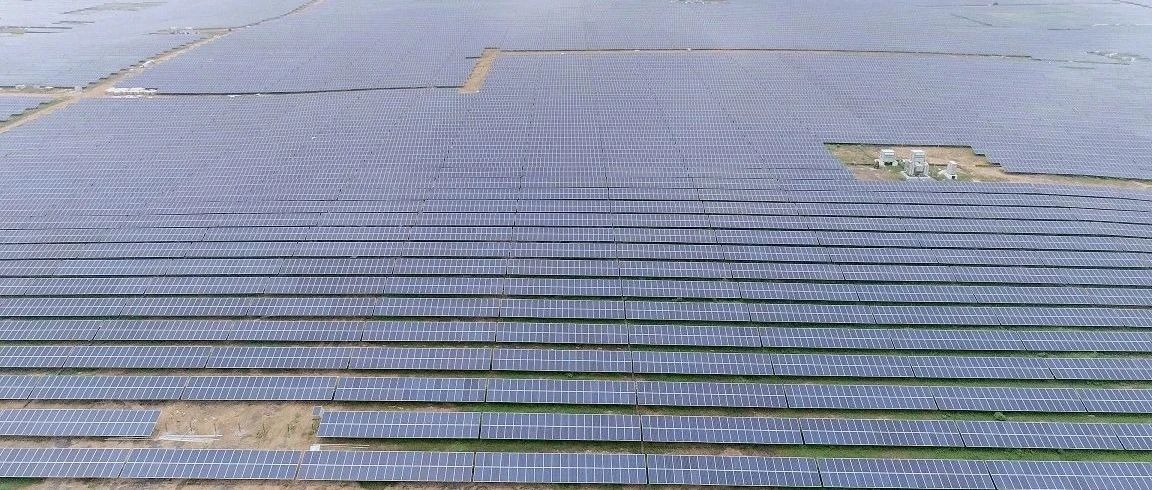
Core Viewpoint - India is rapidly advancing its solar energy and storage market through mandatory storage policies, innovative business models, and financial incentives, aiming for energy independence by 2047 and net-zero emissions by 2070 [9][15]. Group 1: Project and Policy Developments - The Solar Energy Corporation of India (SECI) has initiated a 2GW grid-connected solar project tender, including a 1GW/4GWh storage system, under a Build-Own-Operate (BOO) model [1]. - Developers must provide at least 500kW/2MWh of storage capacity for every 1MW of solar capacity contracted [2]. - SECI will sign a 25-year Power Purchase Agreement (PPA) with the winning bidders [3]. - The minimum bid capacity for solar project developers is set at 50MW, with a maximum of 1GW, in increments of 10MW [4]. - A new regulation mandates that solar projects must include a storage system with a minimum of 10% capacity for 2 hours [5][6]. Group 2: Market Potential and Growth - The Indian government anticipates an addition of approximately 14GW/28GWh of storage capacity by 2030, driven by declining battery costs and the need to mitigate solar power intermittency [7]. - As of December 31, 2024, India's existing storage capacity stands at 4.86GW, with pumped storage accounting for 4.75GW and new storage technologies for 0.11GW [8]. - The latest assessment by the Energy and Resources Institute (TERI) estimates India's solar development potential at 10,830GW, significantly higher than previous estimates [11][14]. Group 3: Business Model Innovations - Innovative business models such as Battery as a Service (BaaS) and Storage as a Service (SaaS) are emerging, allowing companies to lease storage equipment without upfront investment [9]. - The current revenue models for storage in India include ancillary services, energy arbitrage, long-term PPA agreements with renewable energy sources, demand response, and storage services [9]. Group 4: International Engagement and Collaborations - Chinese energy storage companies are actively entering the Indian market, leveraging policy and market dynamics to expand their competitive edge [15]. - Notable collaborations include Envision Energy's agreement to supply 1GW of wind turbines and a 320MWh storage system to JGE in India [15]. - Other companies like Nandu Power and Chuangneng New Energy are also establishing significant partnerships and projects in the Indian storage sector [16][19].
英国考虑中企海上风电项目之际,美国又搞小动作炒作“中国威胁”
Guan Cha Zhe Wang· 2025-06-19 10:39
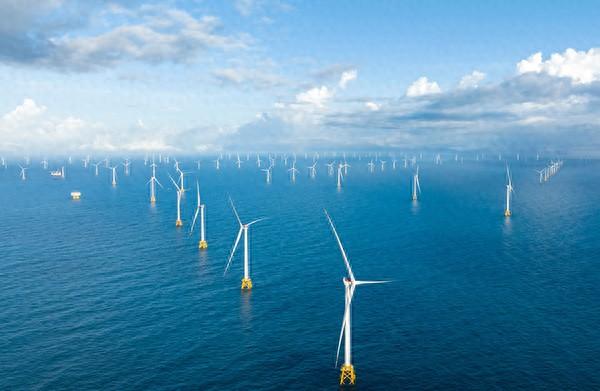
Core Viewpoint - The article discusses the concerns raised by the U.S. government regarding the potential national security risks associated with China's Mingyang Group's plan to build a wind turbine factory in Scotland, highlighting the geopolitical tensions surrounding foreign investments in critical infrastructure [1][3][4]. Group 1: Investment and National Security Concerns - The U.S. government has expressed concerns to the UK and Germany about Mingyang Group's investment, citing potential national security risks and unfair competition [1][3]. - Some UK politicians are advocating for a review of the investment, fearing that reliance on Chinese technology could pose risks to national security and defense infrastructure [3][4]. - The UK government has the authority to block the investment under the National Security and Investment Act, which could complicate its energy cooperation with China [4]. Group 2: Industry Perspectives - Supporters of the project argue that risks can be managed through regulation and that U.S. interference is inappropriate, emphasizing the need for the UK to maintain pragmatic economic relations with China [3][6]. - The "Green Volt" project is seen as crucial for the UK's goal of achieving net-zero emissions by 2050, with local officials welcoming international investment to develop the offshore wind sector [6]. - A spokesperson from the Scottish government highlighted the importance of maintaining a practical economic relationship with China, which could create jobs and growth opportunities in the clean energy sector [6].
5月英新车市场恢复增长,折扣刺激推动电动汽车注册量上升
Shang Wu Bu Wang Zhan· 2025-06-17 17:47
Group 1 - The UK new car market saw a recovery in May, with registrations increasing by 1.6% year-on-year to 150,070 vehicles, marking the best performance for May since 2021, although still 18.3% lower than pre-pandemic levels in 2019 [1] - Fleet and commercial users drove the growth, with increases of 3.7% and 14.4% respectively, accounting for 62.6% of total registrations, while private buyer interest declined for the second consecutive month, down 2.3% [1] - Demand for electric vehicles surged, with hybrid electric vehicle (HEV) sales up 6.8% to 20,351 units, plug-in hybrid electric vehicle (PHEV) sales increasing by over 50.8% to 17,898 units, and battery electric vehicle (BEV) registrations rising by 25.8%, capturing 21.8% of the market share [1] Group 2 - Year-to-date, BEV registrations only accounted for 20.9% of the market share, still 7 percentage points below the regulatory requirement of 28%, despite new models and attractive pricing [2] - The industry is calling for government fiscal incentives to match commitments to zero-emission vehicles, suggesting measures such as halving VAT on new BEVs, which could lead to an additional 267,000 new BEVs on the road over three years and a reduction of 6 million tons of CO2 emissions [2] - SMMT CEO Mike Hawes emphasized that while the growth in new car registrations is welcome, ongoing discounting by manufacturers is crucial for market support, particularly in the EV sector, but this practice cannot continue indefinitely as it undermines investment in new product development [3]
IEA国际能源署:能效政策工具包2024
Sou Hu Cai Jing· 2025-06-14 08:10
Core Viewpoint - The International Energy Agency (IEA) has released the "Energy Efficiency Policy Toolkit 2024," aimed at accelerating global energy efficiency improvements to support the goal of net-zero emissions by 2050. The toolkit emphasizes the importance of energy efficiency in enhancing quality of life, ensuring energy security, and facilitating the transition to clean energy [1][2][6]. Summary by Relevant Sections Policy Framework - The toolkit is designed to assist governments in implementing a combination of regulatory, informational, and incentive-based policies to double the rate of global energy efficiency improvements by 2030 [7][28]. - It builds on previous policy frameworks and emphasizes the need for a multi-faceted approach to energy efficiency across various sectors [7][12]. Sector-Specific Strategies - **Buildings**: New regulations mandate zero carbon emissions for new buildings, while existing buildings must set renovation targets. Energy performance certificates will enhance transparency, and subsidies will lower the cost of energy-efficient upgrades [1][28]. - **Appliances**: Minimum efficiency standards will phase out low-efficiency products, and energy labels will aid consumer decision-making. Financial incentives will reduce the cost of purchasing energy-efficient appliances [1][18]. - **Industry**: Minimum efficiency standards for motors will drive technological upgrades, and energy efficiency networks will promote knowledge sharing. The toolkit also includes measures to link energy efficiency with market mechanisms [1][20]. - **Vehicles**: Fuel economy standards will reduce emissions, and energy labels will provide consumer guidance. Subsidies for electric vehicles will accelerate their adoption [1][22]. Additional Focus Areas - The toolkit also addresses energy-efficient cities, clean cooking solutions, and energy efficiency financing, highlighting the importance of digital innovation and international cooperation [2][23]. - It aims to provide a systematic framework for energy efficiency improvements through coordinated actions across multiple sectors and policy types [2][28]. Strategic Principles - The toolkit outlines ten strategic principles to guide policymakers in enhancing and expanding existing energy efficiency measures, emphasizing the need for broad societal participation and international collaboration [10][11].

胡志明市发布《发展清洁电力和绿色能源满足城市高科技投资需求方案》
Shang Wu Bu Wang Zhan· 2025-06-10 01:28
Group 1 - The Ho Chi Minh City People's Committee has approved a plan for the development of clean electricity and green energy to meet the needs of high-tech investments from 2025 to 2030 [1] - The plan aims to transition the energy structure from fossil fuels to renewable energy, reduce environmental pollution and greenhouse gas emissions, and support Vietnam's Nationally Determined Contributions (NDCs) and net-zero emissions commitment by 2050 [1] - The plan emphasizes the necessity and efficiency of developing rooftop solar energy in Ho Chi Minh City, as it does not occupy land, effectively cools buildings, increases local power supply, and enhances electricity supply security [1] Group 2 - New energy power projects that utilize 100% green hydrogen, 100% green ammonia, or a mixture of both will benefit from reduced fees and rental mechanisms [2] - The proposal includes a direct electricity purchase mechanism between renewable energy generation companies and large electricity consumers in high-tech parks [2] - Other related support policies will be implemented according to current laws [2]
“无视”美国港口费,航运巨头继续争购中国船
Sou Hu Cai Jing· 2025-06-08 14:44
Core Viewpoint - Despite high port fees imposed by the U.S. on Chinese-made ships since April, global buyers continue to purchase vessels from China due to its unmatched technological capabilities and production capacity in shipbuilding [1][5]. Group 1: Shipping Companies' Perspectives - Laurent, Senior Vice President of Mediterranean Shipping Company, stated that port fees will not hinder their plans to order more ships from China, praising China's strong technical capabilities [3]. - Mitsui O.S.K. Lines, a major Japanese shipping company, indicated that despite pausing orders for LNG carriers from China due to U.S.-China trade tensions, they still consider Chinese shipyards as essential partners for high-quality vessels [6]. Group 2: Market Dynamics and Trends - The International Maritime Organization aims for the global shipping industry to achieve net-zero emissions within 25 years, prompting increased investments in green fuels and decarbonization technologies, leading to a significant rise in new ship orders [5]. - In the first four months of this year, new ship orders totaled 12.6 million deadweight tons, with Chinese companies securing 54% of the orders, followed by South Korea with 22%, highlighting China's dominant position in the global shipbuilding market [6]. Group 3: Challenges for U.S. Shipbuilding - The U.S. shipbuilding industry faces significant challenges, including astronomical costs that are approximately five times higher than those in Asia, resulting in a limited annual production capacity of about 1.5 ships [5]. - The U.S. industrial base is relatively weak, with most companies opting to collaborate with Chinese supply chains, as exemplified by Mediterranean Shipping Company's partnerships with major Chinese shipyards [5].