
能源绿色低碳转型

Search documents
广西能源“含绿量”持续提升
Ke Ji Ri Bao· 2025-11-08 12:39
Core Insights - Guangxi's clean energy installed capacity has officially surpassed 80 million kilowatts, marking a year-on-year increase of 32.12% [1] - Clean energy now accounts for 72.15% of all power sources in Guangxi, with clean energy generation reaching 127.71 billion kilowatt-hours, a 16.8% increase year-on-year, representing 66.3% of total electricity generation [1] - The "dual carbon" goals are accelerating the green and low-carbon transition in energy, with significant growth in new energy installations expected by 2025 [1][2] Summary by Sections Clean Energy Capacity and Generation - Guangxi's clean energy generation has reached 1277.1 billion kilowatt-hours, with a year-on-year growth of 16.8%, indicating that 3 out of every 5 kilowatt-hours generated are green power [1] - By 2025, the cumulative new energy installed capacity in Guangxi is projected to reach 17.5 million kilowatts, with annual generation expected to hit 51.29 billion kilowatt-hours, increasing its share of total generation to 26.6% [2] Innovative Projects and Development - The region is witnessing a diversified development of "green electricity+" initiatives, including distributed photovoltaic projects and floating solar power stations [2] - The Yangguang New Energy Fishery-PV Complementary Project has successfully integrated green power generation with fish farming, utilizing innovative design to enhance both energy output and aquaculture area [2] Service Optimization and Industry Growth - The Southern Power Grid Guangxi Electric Power Company has improved its new energy grid connection services, implementing a one-stop service and digital service model to enhance efficiency and reduce processing time by 70% [3] - The manufacturing of wind energy equipment has seen a significant increase, with power consumption for wind energy equipment manufacturing rising by 1,247.33 million kilowatt-hours, a 105% increase year-on-year [3] - The production of photovoltaic equipment and components has surged by over 300% year-on-year, indicating strong momentum in the industry [3]

碳达峰碳中和的中国行动白皮书:中国能源绿色低碳转型取得显著成效
Xin Hua She· 2025-11-08 05:47
Core Insights - The white paper titled "China's Actions on Carbon Peak and Carbon Neutrality" indicates significant progress in China's green and low-carbon energy transition [1][2] - China is focusing on renewable energy substitution while ensuring energy security, which supports the achievement of its "dual carbon" goals [1] Group 1: Renewable Energy Development - Non-fossil energy consumption is projected to increase from 16.0% in 2020 to 19.8% by 2024, with an average annual increase of nearly 1 percentage point [1] - Wind and solar power generation capacity is expected to exceed 1.69 billion kilowatts by August 2025, more than three times the capacity in 2020, contributing approximately 80% of new power installations since 2020 [1] - The share of wind and solar power generation is steadily increasing at an average annual rate of 2.2 percentage points [1] Group 2: Fossil Energy Utilization - The proportion of fossil energy consumption is projected to decrease from 84.0% in 2020 to 80.2% by 2024, reflecting efforts to enhance clean and efficient utilization [2] - China is actively promoting clean and efficient use of coal and transitioning oil and gas development towards greener practices [2] Group 3: Power System Enhancement - The white paper highlights improvements in the comprehensive regulation capabilities of the power system, ensuring safe operation and risk resilience amid large-scale renewable energy development [2] - The development of a new type of power system that is clean, low-carbon, safe, abundant, economically efficient, and flexible is being accelerated [2] - Integration of power sources, grids, loads, and storage is being promoted to facilitate large-scale development and utilization of renewable energy [2]
周末重磅!国新办发布
证券时报· 2025-11-08 02:47
Core Viewpoint - The white paper emphasizes that achieving carbon peak and carbon neutrality is a significant decision made by China based on its responsibility to humanity and the inherent requirements for sustainable development [2][3]. Group 1: Carbon Peak and Carbon Neutrality - The white paper outlines that China has firmly established and practiced the concept that "lucid waters and lush mountains are invaluable assets," taking strong actions to promote green and low-carbon transformation, achieving historic results over the past five years [2]. - It highlights that energy activities are the primary source of carbon emissions, and the green low-carbon transformation of energy is key to achieving carbon peak and carbon neutrality [2]. Group 2: Energy Green Low-Carbon Transformation - The white paper states that non-fossil energy has seen significant development, with the proportion of non-fossil energy consumption increasing from 16.0% in 2020 to 19.8% in 2024, an annual increase of nearly 1 percentage point [5]. - Wind and solar power generation capacity has tripled since 2020, contributing to about 80% of new power installations since then, with the share of wind and solar power generation steadily increasing at an annual rate of 2.2 percentage points [5]. Group 3: Key Areas of Low-Carbon Development - The white paper indicates that key sectors such as industry, transportation, construction, and residential life are significant sources of carbon emissions, and China is promoting the integration of traditional and emerging industries to enhance green low-carbon development [9]. - It mentions the rapid promotion of new energy vehicles, with China achieving the fastest and largest scale of new energy vehicle adoption globally [9]. Group 4: Key Carbon Reduction Pathways - The white paper reports that China has implemented energy-saving and carbon reduction actions, achieving an 11.6% decrease in energy consumption per unit of GDP during the first four years of the 14th Five-Year Plan [12]. - It highlights the establishment of approximately 150,000 waste recycling points and 1,800 sorting centers by the end of 2024, with a comprehensive utilization rate of major solid waste increasing by 3 percentage points compared to 2020 [13]. Group 5: Global Climate Governance - The white paper emphasizes China's commitment to multilateralism and international cooperation in global climate governance, actively promoting the signing and implementation of the Paris Agreement [15]. - It states that China has established energy cooperation platforms with six major regions and has signed energy cooperation partnerships with 34 countries along the Belt and Road Initiative [15].

绿色发展动能强劲!煤炭与新能源多维度融合发展 夯实能源稳定供应基础
Yang Shi Wang· 2025-11-08 02:36
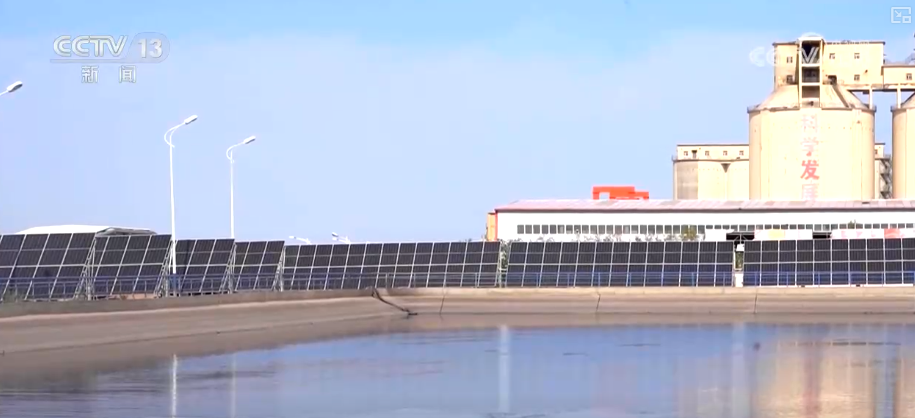
央视网消息:国家能源局11月7日出台关于推进煤炭与新能源融合发展的指导意见。我国将加快发展煤炭矿区光伏风电产业,推动矿区用能清 洁替代,建设一批清洁低碳矿区。 据介绍,此次出台的文件聚焦煤炭生产、用能等多个关键环节,从多个维度推进煤炭与新能源的融合发展。 在推动矿区用能清洁替代方面,加快煤炭生产重点环节电气化改造,推进矿区运输设备新能源替代,支持矿区建设充换电站、加氢站等。同 时,推动矿区地热能规模化开发利用,发展分布式太阳能供热,探索矿区多热源联合供热。 在加快发展煤炭矿区光伏风电产业方面,鼓励具备条件的产煤地区规划建设大型光伏基地,在风力资源充沛的矿区及周边区域,有序推进集中 式、分散式风电开发。 此外,还要鼓励矿区建设智能微电网,鼓励参与绿证绿电交易,提高矿区绿色电力使用比例,建设高效低碳零碳典型厂区园区,降低矿区碳排 放水平。 中国宏观经济研究院能源所研究员高虎表示,这个文件明确了煤炭企业与新能源深度融合发展的主要方式和利用途径,将能更好地指导煤炭企 业绿色低碳、转型发展。 加速构建新型能源体系 确保能源稳定供应 专家表示,推进煤炭与新能源融合发展,对夯实能源稳定供应基础,促进能源绿色低碳转型具有重要 ...
碳达峰碳中和的中国行动白皮书丨白皮书:中国能源绿色低碳转型取得显著成效
Xin Hua Wang· 2025-11-08 02:05
Core Insights - The white paper released by the State Council Information Office highlights significant achievements in China's green and low-carbon energy transition [1][2] - China is focusing on renewable energy substitution while ensuring energy security, supporting the "dual carbon" goals [1] Renewable Energy Development - Non-fossil energy consumption is projected to increase from 16.0% in 2020 to 19.8% by 2024, with an average annual increase of nearly 1 percentage point [1] - Wind and solar power generation capacity is expected to exceed 1.69 billion kilowatts by August 2025, more than three times the capacity in 2020, contributing approximately 80% of new power installations since 2020 [1] - The share of wind and solar power generation is steadily increasing at an annual rate of 2.2 percentage points [1] - China is promoting integrated hydropower development while ensuring ecological protection and advancing nuclear power, green hydrogen, biomass, geothermal, and marine energy [1] Fossil Energy Utilization - The clean and efficient utilization of fossil energy is being accelerated, with the share of fossil energy consumption decreasing from 84.0% in 2020 to 80.2% by 2024 [2] - Efforts are being made to promote clean and efficient coal utilization and the green transformation of oil and gas development [2] Power System Enhancement - The comprehensive regulation capability of the power system is being enhanced to ensure safe operation and risk resilience amid large-scale renewable energy development [2] - The construction of a new power system that is clean, low-carbon, secure, abundant, economically efficient, and flexible is being accelerated [2] - Integrated development of power sources, grids, loads, and storage is being achieved to facilitate large-scale renewable energy development and utilization [2]
碳市场周报-20251107
Jian Xin Qi Huo· 2025-11-07 11:29
Group 1: Report Overview - The report is a carbon market weekly report dated November 07, 2025, from the Energy and Chemical Research Team of Jianxin Futures [2][3] Group 2: Carbon Market Weekly Summary - In October, the national carbon market's comprehensive price had a high of 59.30 yuan/ton, a low of 50.34 yuan/ton, and a closing price of 51.96 yuan/ton, down 10.37% from the previous month. The trading volume and turnover of listed agreement transactions were 10,525,810 tons and 487,117,084.12 yuan respectively; for bulk agreement transactions, they were 30,936,720 tons and 1,496,842,246.87 yuan; and for single - sided bidding, 100,000 tons and 4,475,000 yuan [7] - In the first week of November, the comprehensive price had a high of 58.51 yuan/ton, a low of 51.54 yuan/ton, and a closing price of 57.79 yuan/ton, up 11.22% from the previous Friday. The trading volume and turnover of listed agreement transactions were 3,981,155 tons and 209,744,110.26 yuan respectively; for bulk agreement transactions, 5,154,502 tons and 248,501,748.01 yuan; and for single - sided bidding, 100,000 tons and 4,894,850 yuan. The total trading volume and turnover were 9,235,657 tons and 463,140,708.27 yuan [7] - Since June this year, the national carbon quota price has been declining. The current price is around 50 yuan/ton, similar to the opening price in 2021 and over 50% lower than the 2024 high. The new policy aims to solve the problem of enterprises' reluctance to sell. The current low carbon price is partly due to the concentrated selling of surplus enterprises under the carry - over rule. The price may stabilize after the selling pressure eases in November [8] - According to the Fudan Carbon Index, in November 2025, the expected buying price of national carbon emission allowances (CEA) is 47.59 yuan/ton, the selling price is 55.42 yuan/ton, and the mid - price is 51.51 yuan/ton. In December 2025, the expected buying price is 55.63 yuan/ton, the selling price is 65.35 yuan/ton, and the mid - price is 60.50 yuan/ton. In November 2025, the expected buying price of China Certified Emission Reductions (CCER) is 59.67 yuan/ton, the selling price is 68.17 yuan/ton, and the mid - price is 63.92 yuan/ton [8][9] Group 3: Market News - On October 23, the National Energy Administration reported that in September, the全社会 electricity consumption was 888.6 billion kWh, up 4.5% year - on - year. In the first three quarters, the cumulative electricity consumption was 7,767.5 billion kWh, up 4.6% year - on - year. The third - quarter electricity consumption was 2.9 trillion kWh, driven by high - temperature in July and the recovery of the macro - economy [10] - On October 24, it was announced that during the "15th Five - Year Plan" period, China will accelerate the green and low - carbon transformation of energy, build a new energy system, and implement the dual - control system of carbon emission volume and intensity. It aims to reach about 4.5 billion tons of bulk solid waste utilization by 2030 and save over 150 million tons of standard coal in key industries, reducing about 400 million tons of carbon dioxide emissions [10] - Recently, the General Offices of the CPC Central Committee and the State Council issued an opinion to expand the coverage of the national carbon emission trading market to mainly cover industrial emission industries by 2027, implement quota control and paid distribution, gradually tighten quotas, strengthen the synergy between the carbon market and industrial policies, and accelerate the construction of the voluntary emission reduction trading market [10] Group 4: Market Data - There are figures about the national carbon market price trend, pilot carbon market price, power generation year - on - year growth rate, and new power generation equipment year - on - year growth rate, with data sources from Wind and Jianxin Futures Research and Development Department [6][7][12]
国家能源局召开学习贯彻党的二十届四中全会精神座谈会
国家能源局· 2025-11-07 01:51
Core Viewpoint - The article emphasizes the importance of implementing the spirit of the 20th Central Committee's Fourth Plenary Session within the energy sector, highlighting the need for political awareness and alignment with the central government's decisions [3][4]. Group 1: Key Messages from the Meeting - The meeting focused on the significance of understanding and implementing the achievements of the "14th Five-Year Plan" period, which are attributed to the leadership of the Central Committee and the guidance of Xi Jinping's thoughts [3]. - It is crucial to grasp the core essence of the plenary session's spirit, including the strategic tasks and major principles for the "15th Five-Year Plan" period [3][4]. - The meeting underscored the necessity of strengthening the Party's leadership as a fundamental guarantee for advancing modernization in China [4]. Group 2: Energy Development Strategies - The energy sector must prioritize energy security by enhancing domestic supply capabilities and diversifying overseas resource supplies to ensure a stable energy supply chain [4]. - There is a commitment to advancing the green and low-carbon transformation of energy, focusing on building a new energy system and promoting green energy consumption [4]. - The importance of technological innovation in the energy sector was highlighted, with an emphasis on smart, green, and integrated development to drive quality and efficiency changes [4]. - The meeting called for deepening energy system reforms and enhancing the market framework to stimulate vitality and optimize the business environment [4]. - Strengthening international cooperation in the energy sector is essential, with a focus on maintaining strategic confidence and expanding high-level openness while ensuring energy security [4]. Group 3: Regional Focus on Gansu Province - Gansu Province is recognized as a significant energy province, responsible for both meeting its energy needs and undertaking key tasks like "West-to-East Power Transmission" [5]. - The province has unique advantages in developing and utilizing renewable energy, which can facilitate its transition to a green and low-carbon energy system [5][6]. - The energy sector in Gansu is encouraged to leverage its strengths, accelerate technological innovation, and deepen market system construction to contribute to high-quality energy development [6].
全球能源巨头汇聚,第八届中国石油国际合作论坛在沪举办
Sou Hu Cai Jing· 2025-11-06 12:18
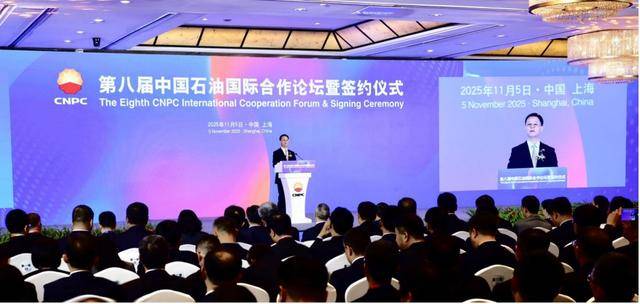
Core Insights - The eighth China Petroleum International Cooperation Forum was successfully held in Shanghai, focusing on building a fair, resilient, and sustainable global energy cooperation paradigm [1][3] - China National Petroleum Corporation (CNPC) signed 43 procurement agreements with 41 global partners during the event, totaling $17.485 billion, indicating a stable increase compared to last year's procurement agreements [3] - Since the first China International Import Expo, CNPC has signed procurement agreements worth $144.785 billion with 232 international suppliers, showcasing a cooperative image of Chinese energy enterprises [3] Group 1: Forum Highlights - The forum featured a keynote speech by CNPC General Manager Zhou Xinhai, emphasizing the need for a new energy cooperation paradigm based on fairness, resilience, and sustainability amid global energy transitions [3][4] - Zhou highlighted CNPC's commitment to green development and its goal to become a world-class integrated international energy and chemical company [4] - CNPC aims to enhance energy supply efficiency and security, achieving a new pattern of "three 100 million tons" in domestic and overseas oil and gas production [4] Group 2: Strategic Initiatives - Zhou proposed four initiatives to deepen global energy cooperation: promoting bilateral and multilateral cooperation, fostering energy technology innovation, accelerating green low-carbon transitions, and enhancing global energy governance [5] - The forum included high-level dialogues with leaders from top global energy companies, discussing topics such as energy justice transformation and supply chain resilience [6]

第八届进博会中国石油签约174.85亿美元采购单
Qi Huo Ri Bao Wang· 2025-11-06 02:11
Group 1 - The eighth China Petroleum International Cooperation Forum was successfully held in Shanghai, focusing on building a fair, resilient, and sustainable global energy cooperation paradigm [1] - China Petroleum signed 43 procurement agreements with 41 global partners during the event, with a total contract value of $17.485 billion, showing a stable increase compared to last year's procurement agreements [1] - Since the first China International Import Expo, China Petroleum has signed procurement agreements worth a total of $144.785 billion with 232 international suppliers, showcasing a cooperative and win-win image of Chinese energy enterprises [1] Group 2 - China Petroleum is accelerating the construction of a world-class comprehensive international energy and chemical company, enhancing the resilience and safety of the oil and gas supply chain [2] - The company has established a new pattern of "three 100 million tons," which includes domestic crude oil production, domestic natural gas production equivalent, and overseas oil and gas equity production equivalent [2] - Significant breakthroughs have been made in key core technologies and products, with the discovery of oil and gas at a depth of 10,000 meters in the first well of the Deep Earth Tower [2] Group 3 - Four initiatives were proposed to deepen global energy cooperation, including promoting bilateral and multilateral cooperation in the energy sector and enhancing the role of the Belt and Road Initiative [3] - Emphasis was placed on gathering energy technology innovation efforts and establishing a higher-level international cooperation system for research and development [3] - The initiatives also focus on accelerating the green and low-carbon transition in energy, including the development of carbon capture, utilization, and storage (CCUS), hydrogen, and solar energy technologies [3]
《海南清洁能源岛新型电力系统建设实施方案》正式发布
Zhong Guo Jing Ji Wang· 2025-10-31 23:56
Core Viewpoint - The Hainan provincial government, in collaboration with the Southern Power Grid Company, has released the "Implementation Plan for the Construction of a New Power System in Hainan Clean Energy Island," aiming to establish Hainan as a leading area for new power system construction and support the province's free trade port and clean energy island initiatives by 2030 [1][2]. Group 1: Clean Energy Supply - By the end of October 2023, Hainan's installed capacity of renewable energy has exceeded 12 million kilowatts, maintaining its position as the largest power source [1]. - The province will support the development of offshore wind, solar, marine, and geothermal energy, promoting the orderly development of distributed renewable energy and the construction of system-friendly renewable energy power stations [1]. Group 2: Digital Grid Safety - By the end of this year, Hainan's 500 kV provincial digital grid project will be fully completed, enhancing the intelligent perception capabilities through the application of IoT, AI, and other digital technologies [2]. - Plans include the construction of new cross-sea transmission channels to strengthen power supply security and integrate Hainan's grid into the national unified electricity market [2]. Group 3: Green Electricity Consumption - Hainan will promote electric energy substitution projects in various sectors, including ports, airports, and electric vehicles, to enhance electrification levels across industries, transportation, commerce, and residential life [2]. - The province has linked over 4,800 charging stations through the "Hainan Charging Pile" app and mini-program, aiming to develop large-scale vehicle-to-grid (V2G) interaction projects [2]. Group 4: Efficient Power Trading - In October, clean electricity from Inner Mongolia was successfully delivered to Hainan, supporting stable power supply during the National Day and Mid-Autumn Festival holidays [3]. - Hainan will improve cross-provincial and cross-regional electricity trading mechanisms, creating a market system tailored to the new power system's development [3]. Group 5: Flexible System Regulation - Hainan will enhance its intelligent scheduling system to optimize the operation of renewable energy and improve its controllability [3]. - The province plans to accelerate the construction of pumped storage power stations and promote diversified development of new energy storage solutions [3].