
智能驾驶

Search documents
小鹏汽车-W(09868):2025年10月销量点评:同环比持续增长,月销再破4万辆
Changjiang Securities· 2025-11-12 01:42
Investment Rating - The investment rating for the company is "Buy" and is maintained [6]. Core Insights - In October 2025, the company delivered 42,013 new vehicles, representing a year-on-year increase of 75.7% and a month-on-month increase of 1.0% [2][4]. - Cumulatively, from January to October 2025, the company delivered 355,000 new vehicles, marking a year-on-year increase of 190.0% [2][4]. - The company is expected to see steady sales growth driven by strong new vehicle cycles, enhanced marketing systems, and ongoing improvements in smart driving technology [2][9]. - The new models MONA M03 and P7+ are expected to initiate a new vehicle cycle for the company [9]. Summary by Sections Sales Performance - October 2025 saw a record monthly delivery of over 40,000 vehicles, with significant contributions from the new P7 model and strong sales of the SUV family [9]. - The MONA M03 model alone delivered over 15,000 units in October, with total deliveries exceeding 200,000 since its launch [9]. Future Outlook - For Q3 2025, the company anticipates deliveries between 113,000 and 118,000 units, representing a year-on-year growth of 142.8% to 153.6% [9]. - Expected revenue for Q3 2025 is projected to be between 19.6 billion and 21 billion CNY, reflecting a year-on-year increase of 94.0% to 107.9% [9]. Strategic Developments - The company is expanding its international presence, having entered seven new markets in Europe, Asia, and Africa, transitioning from rapid expansion to solid operations [9]. - The upcoming launch of the next-generation extended-range product, the X9, is anticipated to enhance the company's competitive edge with its unique features [9].
希迪智驾三战港交所,巨额亏损下“寅吃卯粮”
Jing Ji Guan Cha Wang· 2025-11-11 16:12
Core Insights - Xidi Intelligent Driving has submitted its prospectus to the Hong Kong Stock Exchange for the third time, indicating resilience in the intelligent driving sector [2] - In the first half of 2025, the company reported revenue of 402 million RMB, a 56% increase year-on-year, but its net loss expanded to 455 million RMB, nearly four times the loss of 122 million RMB in the same period of 2024 [2][4] - The company has delivered 304 autonomous mining trucks and has received over 600 equipment order intentions, ranking sixth in China's intelligent driving commercial vehicle market with a 5.2% market share [4] Financial Performance - Revenue for 2025 is projected at 408 million RMB, with a significant increase in sales costs leading to a gross loss of 69.7 million RMB [3] - Research and development expenses accounted for over 37.1% of total expenditures in the first half of 2025, while general and administrative expenses reached 200 million RMB, consuming nearly 48.9% of the company's revenue [6][7] - The company has faced a cash flow crisis, with the last financing round occurring in February 2024, raising 24 million RMB, and a significant gap since then raises concerns about liquidity [4][7] Market Position and Challenges - Xidi Intelligent Driving operates primarily in closed environments, such as mining and ports, which limits market capacity and is dominated by state-owned enterprises, leading to slow project cycles and payment processes [5] - The company's strategy of focusing on closed environments was initially seen as a way to avoid competition in the passenger vehicle sector, but this approach is now revealing limitations as market growth slows [6] - The company’s comprehensive product offerings in intelligent transportation systems may dilute focus during the commercialization phase, posing a challenge for sustainable growth [7]

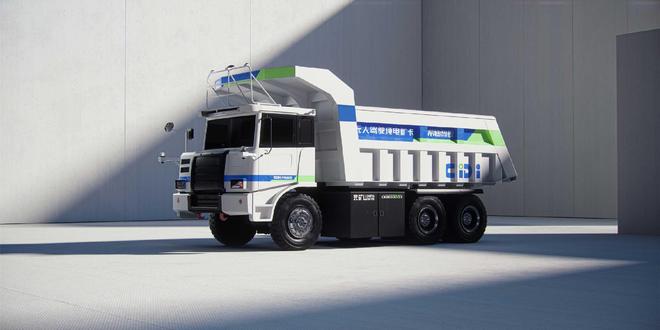
智能驾驶龙头上市进程提速 天瞳威视递表港交所
Zheng Quan Shi Bao Wang· 2025-11-11 15:10
Core Insights - Suzhou TianTong Weishi Electronic Technology Co., Ltd. (TianTong Weishi), a leading intelligent driving company, has submitted its listing application to the Hong Kong Stock Exchange [1] - The company focuses on providing software-centric intelligent driving solutions, covering L2-L2+ and L4 automation levels, and has achieved significant commercial success across various automation levels [1][2] Group 1: Company Overview - TianTong Weishi was established in 2016 and is recognized as a key player in intelligent driving in Suzhou, with its headquarters set to officially open in December 2024 [1] - The company has successfully tested its L4 autonomous driving bus (Robobus) and plans to operate it on urban roads and the Huan Taihu No. 1 highway soon [1] Group 2: Product Offerings - In the L2-L2+ solution space, TianTong Weishi provides intelligent driving and parking solutions, as well as smart cockpit solutions with driver monitoring systems (DMS) [2] - The company ranks as the second-largest provider of L2-L2+ solutions in China by installation volume and is the largest provider of L2-L2+ solutions for overseas markets [2] Group 3: Financial Performance - In 2024, revenue from L4 solutions reached 242.8 million yuan, accounting for over 50% of the company's total revenue, primarily from L4 software solutions [3] - The company has secured intention orders for over 2,500 autonomous vehicles, with a total contract value of approximately 1 billion yuan, expected to be delivered within the next three to five years [3] Group 4: Market Context - The local government in Suzhou's Wuzhong District is actively fostering capital market development, having nurtured 23 listed companies and nearly 200 potential candidates [3]
新股消息 | 希迪智驾再度递表港交所 国内自动驾驶矿卡解决方案市场排名第一
Zhi Tong Cai Jing· 2025-11-11 10:35
Core Viewpoint - Xidi Intelligent Driving Technology Co., Ltd. has submitted an application for listing on the Hong Kong Stock Exchange, with CICC, CITIC International, and Ping An Securities (Hong Kong) as joint sponsors. The company previously submitted an application on May 8, 2025 [1]. Company Overview - Xidi Intelligent Driving is an innovative supplier of intelligent driving products and solutions for commercial vehicles in China, focusing on autonomous mining and logistics vehicles, V2X technology, and intelligent perception solutions [3]. - The company ranks sixth among all intelligent driving commercial vehicle companies in China, holding a market share of approximately 5.2%. In 2024, the company's product sales revenue in the intelligent driving commercial vehicle market is estimated to be around RMB 250 million, accounting for about 16.8% of the market share [3]. Business Strategy and Client Base - The company's unique business strategy and full-stack technical capabilities position it as a market innovator for large-scale commercialization. As of June 30, 2025, Xidi Intelligent Driving has served 152 clients and delivered 304 autonomous mining trucks [4]. Financial Performance - Revenue for Xidi Intelligent Driving in the fiscal years 2022, 2023, and 2024 was approximately RMB 31.06 million, RMB 133 million, and RMB 410 million, respectively. The revenue growth is attributed to increased sales of autonomous driving solutions in closed environments [5]. - The company recorded losses of RMB 263 million, RMB 255 million, and RMB 581 million for the fiscal years 2022, 2023, and 2024, primarily due to ongoing R&D investments and increasing financial costs [6]. Profitability Metrics - The gross profit margins for the years 2022, 2023, and 2024 were -19.3%, 20.2%, and 24.7%, respectively. The increase in gross margin from 2023 to 2024 is due to improved margins from autonomous driving and the introduction of intelligent perception revenue [8]. Industry Overview - The mining industry is a crucial pillar of the national economy, with a projected output value of RMB 4.5 trillion in 2024. The introduction of intelligent driving technology is expected to address safety concerns and operational efficiency in mining operations [10]. - The market for autonomous mining truck solutions in China is rapidly expanding, with an estimated market size of RMB 1.9 billion in 2024, expected to grow to RMB 39.6 billion by 2030, reflecting a compound annual growth rate of 65.3% from 2024 to 2030 [10][12].
智造大变革·智能化丨车企角逐智能驾驶军备赛,寻找下一个增长极
Bei Ke Cai Jing· 2025-11-11 09:21
Core Insights - The Chinese automotive industry is in a competitive race for intelligent driving, with the "14th Five-Year Plan" emphasizing the need for smart and integrated development, accelerating the transition to intelligent and green manufacturing [1][2] - AI capabilities are becoming a new valuation anchor for automotive companies, shifting the focus from mechanical performance to intelligent experiences, with significant implications for investment and market perception [2][4] - The industry is witnessing a shift from hardware competition to software competition, with companies either developing their own chips or forming closer ties with chip manufacturers to define the next generation of computing architecture [4][7] Industry Trends - The integration of AI with manufacturing is expected to create new business models, such as "software-defined vehicles" and service-oriented manufacturing, as highlighted in the "14th Five-Year Plan" [2][4] - The competition in intelligent driving is characterized by a "computing power arms race," with companies investing heavily in AI capabilities both in the cloud and on vehicles [2][3] - The automotive sector is evolving into a comprehensive industry that integrates advanced technologies from AI, energy, chips, and digital services, reflecting a significant transformation in its operational landscape [7][9] Technological Developments - The computational power of in-vehicle intelligent chips is advancing from 500-600 TOPS to over 2500 TOPS, enabling more complex real-time decision-making [3] - The relationship between automotive and chip industries is becoming increasingly symbiotic, with the potential for vehicles to act as distributed computing nodes in the digital economy [8] - The emergence of personalized insurance and services based on user driving behavior data indicates new revenue streams and business opportunities within the automotive sector [8] Strategic Collaborations - The current competitive landscape features three main collaboration models: Huawei's full-stack solutions, Momenta's technology supply approach, and self-research strategies by companies like BYD and Li Auto [7] - The integration of intelligent driving technology is not only reshaping the automotive industry but also connecting it with other sectors, such as robotics, as seen with the development of humanoid robots by companies like Tesla and XPeng [6][7]
国海证券:维持百度集团-SW(09888)“买入”评级 AI云国内市占率领先
Zhi Tong Cai Jing· 2025-11-11 09:00
Core Viewpoint - Baidu Group is expected to achieve significant revenue growth from 2025 to 2027, with projected revenues of 1309.73 billion, 1356.68 billion, and 1443.07 billion respectively, alongside non-HKFRS net profits of 166.00 billion, 198.64 billion, and 235.48 billion, maintaining a "Buy" rating [1] Online Marketing Business - The online marketing sector is transitioning from a CPC model to a CPS model, with early tests of AI search commercialization underway, aiming to enhance profitability despite short-term revenue pressures [2] - Expected revenues from online marketing for 2025, 2026, and 2027 are projected at 623.91 billion, 592.72 billion, and 598.64 billion respectively [2] Intelligent Cloud Business - Baidu has achieved a leading market share in the AI public cloud sector, with a focus on creating a new generation of AI cloud infrastructure [3] - The company plans to open-source its Wenxin large model to facilitate low-cost access for developers and businesses, enhancing the model's influence and driving growth in the intelligent cloud business [3] - Projected revenues for the intelligent cloud business are expected to reach 273.25 billion, 327.90 billion, and 386.92 billion for 2025, 2026, and 2027 respectively [3] Intelligent Driving and Other Growth Plans - The Robotaxi service is positioned for rapid growth due to its advantages over traditional taxis, with ongoing regional expansion and strategic partnerships to increase order volume [4] - Expected revenues from intelligent driving and other growth plans are projected at 138.32 billion, 159.07 billion, and 174.97 billion for 2025, 2026, and 2027 respectively [4]


希迪智驾再度递表港交所
Zhi Tong Cai Jing· 2025-11-11 08:55
Core Insights - Xidi Intelligent Driving Technology Co., Ltd. has submitted an application to list on the Hong Kong Stock Exchange, with CICC, CITIC Securities International, and Ping An Securities (Hong Kong) as joint sponsors [1] - The company specializes in innovative products and solutions for intelligent driving in commercial vehicles, focusing on autonomous mining and logistics vehicles, V2X technology, and intelligent perception solutions [1] - Xidi ranks sixth among all intelligent driving commercial vehicle companies in China, holding a market share of approximately 5.2% [1] Financial Performance - In 2024, Xidi's product sales revenue in the intelligent driving commercial vehicle market is projected to be around 250 million yuan, accounting for approximately 16.8% of the market share [1] - The company is ranked first in the market for autonomous mining truck solutions in China based on product sales revenue for 2024 [1]
新股消息 | 希迪智驾再度递表港交所
智通财经网· 2025-11-11 08:52
Group 1 - The core viewpoint of the article is that Xidi Intelligent Driving Technology Co., Ltd. has submitted an application for listing on the Hong Kong Stock Exchange, with several financial institutions acting as joint sponsors [1] - Xidi Intelligent Driving is an innovative product-driven supplier of intelligent driving products and solutions for commercial vehicles in China, focusing on autonomous mining and logistics vehicles, V2X technology, and intelligent perception solutions [1] - According to the prospectus, Xidi Intelligent Driving ranks sixth among all intelligent driving commercial vehicle companies in China, with a market share of approximately 5.2% [1] Group 2 - In 2024, the company's product sales revenue in the intelligent driving commercial vehicle market is projected to be approximately 250 million yuan, accounting for about 16.8% of the market share based on product sales [1] - Xidi Intelligent Driving ranks first in the market for autonomous mining truck solutions in China based on the revenue from product sales in 2024 [1]
国海证券:维持百度集团-SW“买入”评级 AI云国内市占率领先
Zhi Tong Cai Jing· 2025-11-11 08:44
Core Viewpoint - Baidu Group is expected to achieve significant revenue growth from 2025 to 2027, with projected revenues of 1309.73 billion, 1356.68 billion, and 1443.07 billion yuan respectively, alongside non-HKFRS net profits of 166.00 billion, 198.64 billion, and 235.48 billion yuan, maintaining a "buy" rating [1] Online Marketing Business - The online marketing sector is transitioning from a CPC model to a CPS model, with early tests of AI search commercialization underway, aiming to enhance profitability despite short-term revenue pressures [2] - Revenue projections for online marketing are expected to reach 623.91 billion, 592.72 billion, and 598.64 billion yuan in 2025, 2026, and 2027 respectively [2] Intelligent Cloud Business - Baidu has achieved a leading market share in the AI public cloud sector, with a focus on creating a new generation of AI cloud infrastructure [3] - Revenue forecasts for the intelligent cloud business are anticipated to be 273.25 billion, 327.90 billion, and 386.92 billion yuan for 2025, 2026, and 2027 respectively [3] Intelligent Driving and Other Growth Plans - The Robotaxi service is positioned for rapid growth, with ongoing regional expansion and strategic partnerships to increase order volume [4] - Revenue expectations for intelligent driving and other business segments are projected at 138.32 billion, 159.07 billion, and 174.97 billion yuan for 2025, 2026, and 2027 respectively [4]
单月12000台!速腾聚创激光雷达交付创纪录 引领行业迈入数字化时代
Zhi Tong Cai Jing· 2025-11-11 08:28
Core Insights - RoboSense has achieved a record monthly delivery of over 120,000 LiDAR units in October, marking a significant milestone in the industry [1] - The success is attributed to the company's self-developed SPAD-SoC chip capabilities and digital architecture, making it the only global company to have self-researched the entire chip chain for digital LiDAR [1] - The digital LiDAR product matrix has entered large-scale production, indicating a strong market position [1] Market Trends - By 2025, the penetration rate of intelligent driving in China is expected to rise rapidly, with L2 level assisted driving penetration already exceeding 50%, the highest globally [1] - LiDAR is transitioning from pilot projects to standard configurations in mass production cycles, highlighting its importance as a core sensor [1] - The launch of high-end models like Zeekr 9X and IM LS6, equipped with RoboSense's EM4 LiDAR, is accelerating the adoption of digital LiDAR as a standard configuration in automotive intelligent solutions [1]