美元指数

Search documents
今日人民币兑美元最新汇率公开:1美元兑7.1506人民币
Sou Hu Cai Jing· 2025-07-09 02:29
Core Viewpoint - The recent appreciation of the Renminbi (RMB) against the US dollar has significant implications for various groups, including students studying abroad, foreign trade practitioners, and investors monitoring global economic trends [1][4]. Exchange Rate Overview - As of the latest data, the central parity rate of 1 USD is 7.1506 RMB, reflecting a slight increase of 29 basis points from the previous trading day, indicating a sustained appreciation trend for the RMB [3]. - The onshore market (CNY) shows a latest transaction price of 7.1692, while the offshore market (CNH) is at 7.1676, suggesting a consistent expectation of the RMB's value between domestic and foreign markets [3]. Impact of RMB Appreciation - For students and travelers, the appreciation means they can exchange less RMB for the same amount of USD, potentially saving money on expenses like tuition or travel [4]. - Conversely, for cross-border e-commerce and foreign trade businesses, the same USD revenue will convert to a lower amount in RMB, impacting profit margins over time [4]. Reasons for RMB Appreciation - The recent appreciation is attributed to several factors, including a weakening US dollar index, which provides room for other currencies to strengthen, and a stable recovery of the Chinese economy, enhancing confidence in RMB assets [5][6]. Strategies for Individuals and Businesses - Individuals are advised to consider staggered currency exchanges to mitigate risks associated with exchange rate fluctuations [7]. - Businesses engaged in foreign trade can negotiate with banks to lock in exchange rates, ensuring stable profits despite market volatility [8]. Future Outlook - The RMB is expected to experience small fluctuations, alternating between appreciation and depreciation, influenced by international economic conditions, US Federal Reserve policies, domestic economic fundamentals, and international capital flows [10].

外汇储备六连升 黄金储备八连增
Sou Hu Cai Jing· 2025-07-09 01:55
Core Insights - China's foreign exchange reserves reached $33,174 billion by the end of June 2025, marking a 0.98% increase from the previous month, and this is the first time since September 2024 that reserves surpassed the $33 trillion mark [4][6] - The People's Bank of China has increased its gold reserves to 7.39 million ounces (approximately 2298.55 tons), adding 70,000 ounces in June, which is the eighth consecutive month of gold accumulation [7][9] Foreign Exchange Reserves - The increase in foreign exchange reserves is attributed to three main factors: a decline in the US dollar index, rising global asset prices, and appreciation of non-USD currencies [6][8] - The US dollar index fell by 2.5% in June, reaching a three-year low, which increased the dollar value of non-USD assets held in reserves [6] - Global asset prices saw a rise, with the USD-denominated global bond index increasing by 1.0% and the S&P 500 index rising by 5.0% in June [6] - The appreciation of the euro and British pound against the dollar by 3.89% and 2.1% respectively also contributed to the increase in the dollar value of non-USD assets [6] Gold Reserves - The continuous increase in gold reserves is driven by the need to optimize reserve structure, respond to global uncertainties, and capitalize on the long-term upward trend in gold prices [7][9] - China's gold reserves are significantly lower than the world average, and increasing gold holdings can enhance the diversification and risk resistance of foreign exchange reserves [7] - The central bank's strategy reflects a strong recognition of gold's strategic value, aiming to maintain economic stability amid complex global conditions [7][9] Global Central Bank Trends - Despite the ongoing accumulation of gold, the monthly increase in gold holdings by the People's Bank of China has been decreasing, indicating a strategy to control purchase costs and optimize reserve structure [9] - A recent survey by the World Gold Council indicates that 72% of global central banks plan to increase their gold reserves in the next five years, while 73% expect to reduce their dollar reserves [10] - The current geopolitical uncertainties and economic factors are driving central banks to view gold as a strategic asset for risk mitigation [10]

美元指数下跌何时休?
Qi Huo Ri Bao Wang· 2025-07-09 01:37
Group 1: Dollar Index and Economic Impact - The dollar index experienced its worst start to a year since 1973, with a decline of 10.8% by July 1, 2025, dropping below the 97 mark to a low of 96.36 [2] - The decline in the dollar is attributed to uncertainties in U.S. tariff policies and concerns over the independence of the Federal Reserve, leading to a withdrawal of investments from U.S. assets [2][3] - The performance of the dollar has shown a clear divergence, with traditional safe-haven currencies like the yen and Swiss franc strengthening, while the euro gained approximately 14% against the dollar since the beginning of the year [4][5] Group 2: U.S. Tariff Policies and Market Reactions - The "exceptionalism" narrative regarding the U.S. economy has reversed since Trump's tariff policies were implemented, leading to a decline in both U.S. stocks and bonds as investors shifted their focus away from U.S. assets [3][4] - The U.S. government has faced challenges in negotiating trade agreements, with only limited agreements reached with the UK and Vietnam, while negotiations with Japan and the EU remain slow and contentious [4][5] - As the deadline for tariff negotiations approaches, market volatility is expected to increase, with potential further adjustments to the dollar if the U.S. maintains a strong stance [5] Group 3: Federal Reserve Independence and Economic Outlook - Trump's repeated criticisms of Federal Reserve Chairman Powell and calls for interest rate cuts have raised concerns about the independence of the Fed, impacting investor confidence in the U.S. economy [6][8] - Despite pressures, the U.S. economy has shown resilience, with a stable unemployment rate of 4.1% and job growth exceeding expectations, complicating the Fed's decision-making regarding interest rate cuts [15][16] - The Fed's cautious stance on interest rate cuts reflects ongoing concerns about inflation and labor market conditions, with Powell indicating that any decisions will depend on forthcoming economic data [7][9] Group 4: U.S. Debt Concerns - The U.S. federal debt has reached $36.2 trillion, with public debt accounting for nearly 80%, raising concerns about the sustainability of U.S. government debt amid rising interest rates [12][13] - The recent tax reform is projected to increase the federal deficit by an additional $2.4 trillion to $3.3 trillion over the next decade, exacerbating existing debt concerns [12][13] - The combination of high debt levels and rising interest costs could undermine the dollar's status as a safe-haven currency, leading to a potential shift in investment flows towards other currencies like the euro [13][17]
美元指数DXY涨至近两周高点97.74。
news flash· 2025-07-08 13:40
Core Insights - The US Dollar Index (DXY) has risen to a nearly two-week high of 97.74 [1] Group 1 - The increase in the Dollar Index indicates a strengthening of the US dollar against other currencies [1]
张明: 美元指数大概率步入较长下行期
Sou Hu Cai Jing· 2025-07-08 10:36
Core Viewpoint - The future trend of the US dollar index is likely to be a downward fluctuation, which may lead to a stable or rising trend in the RMB to USD exchange rate, benefiting China's cross-border capital flow and the internationalization of the RMB [2][11]. Group 1: Historical Analysis of the US Dollar Index - Since 1971, the US dollar index has experienced three long cycles of decline followed by rise, with significant percentage changes in each cycle [2][5]. - The first cycle saw a decline from 120.5 to 82.1 (31.9% drop) and a rise to 164.7 (100.6% increase) [2]. - The second cycle had a decline from 164.7 to 78.3 (52.5% drop) and a rise to 120.9 (54.4% increase) [2]. - The third cycle experienced a decline from 120.9 to 71.3 (41.0% drop) and a rise to 114.1 (60.0% increase) [2]. Group 2: Current Dollar Index Trends - From September 2022 to June 2025, the dollar index is projected to decline from 114.1 to 96.9, a decrease of 15.1% [4]. - The end of the previous Federal Reserve interest rate hike cycle and the beginning of a rate cut cycle in September 2024 suggest a new long-term downward trend for the dollar index [4]. Group 3: Characteristics of Dollar Index Cycles - The highest and lowest points of the dollar index in the three cycles show a gradual downward trend, indicating a weakening of the US economic advantage relative to other developed countries [5]. - The duration of the cycles has been increasing, with the downward phases lasting around 7-8 years and the upward phases extending significantly [5]. - The relationship between the dollar index and interest rates has changed, with recent trends showing a lower correlation between the two [6]. Group 4: Future Predictions for the Dollar Index - The dollar index is expected to continue a downward trend for an extended period, potentially lasting another 6-7 years [10]. - The lowest point of the current downward cycle may fall below the previous cycle's low of 71.3, but it is unlikely to drop below 80 due to issues in other developed economies [10]. - The correlation between the dollar index and US interest rates may remain low, impacting the RMB to USD exchange rate positively [11].
上半年人民币汇率韧性持续增强,下半年如何走?
Sou Hu Cai Jing· 2025-07-07 23:29
Core Viewpoint - The Chinese yuan has shown resilience against the US dollar, with both onshore and offshore yuan appreciating by 1.82% and 2.45% respectively in the first half of the year, supported by a weaker US dollar index and domestic economic recovery [1][3]. Group 1: Market Performance - The US dollar index fell by 10.79% in the first half of the year, contributing to the appreciation of the yuan [1]. - The central parity rate of the yuan increased by 298 basis points during the same period [1]. - Analysts believe that the weakening of the US dollar and domestic economic policies have provided strong support for the yuan's resilience [1][3]. Group 2: Future Outlook - Experts predict a moderate appreciation of the yuan against the dollar in the second half of the year, supported by multiple favorable factors [3]. - The People's Bank of China aims to enhance the resilience of the foreign exchange market and maintain stability in the yuan's exchange rate [3]. - Domestic growth policies are expected to continue supporting the yuan, with forecasts suggesting the dollar-yuan exchange rate will fluctuate between 7.1 and 7.3 [3][4]. Group 3: External Influences - The ongoing US tariffs on Chinese exports pose challenges, but the impact on the yuan will depend on domestic consumption policies and the progress of US-China trade negotiations [4].
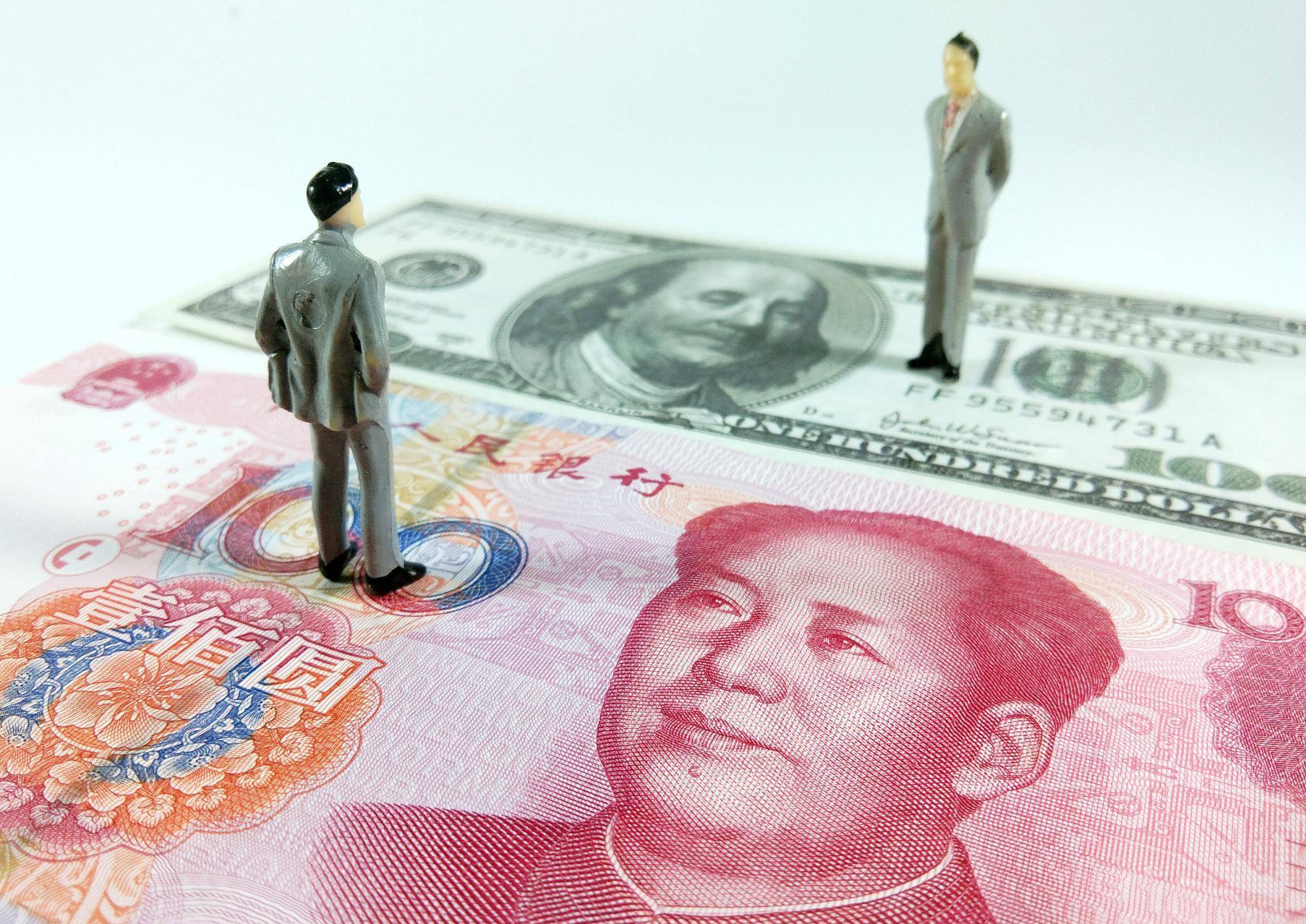
彭博美元指数涨约0.5%,特朗普关税信函让投资者转向美元
news flash· 2025-07-07 19:15
Core Viewpoint - The article discusses the fluctuations in the ICE Dollar Index and Bloomberg Dollar Index following President Trump's announcement of tariffs on Japan and South Korea, highlighting the impact of geopolitical events on currency movements [1]. Group 1: Currency Index Movements - The ICE Dollar Index increased by 0.31%, closing at 97.479 points, with a trading range of 96.891 to 97.668 points during the day [1]. - The Bloomberg Dollar Index rose by 0.49%, reaching 1196.61 points, with a trading range of 1189.62 to 1198.36 points [1]. Group 2: Geopolitical Impact - The announcement of tariffs on Japan and South Korea by President Trump led to an expansion of gains in both dollar indices, indicating a direct correlation between political decisions and currency valuation [1]. - The initial drop in the indices during the Asia-Pacific trading session was reversed after the tariff news, demonstrating the sensitivity of the markets to U.S. trade policies [1].
6月末我国外汇储备规模升至33174亿美元 央行连续八个月扩大黄金储备
Zheng Quan Ri Bao· 2025-07-07 17:26
Group 1 - As of June 30, 2025, China's foreign exchange reserves reached $33,174 billion, an increase of $322 billion from the end of May, marking a rise of 0.98% [1] - The increase in foreign exchange reserves is attributed to the depreciation of the US dollar index and the overall rise in global financial asset prices, influenced by macroeconomic policies and growth prospects of major economies [1][2] - In the first half of 2025, China's foreign exchange reserves increased by a total of $1,150 billion, achieving a monthly increase for six consecutive months [1] Group 2 - The US dollar index fell by 2.68% in June, with non-US currencies generally appreciating, including a 3.89% rise in the euro and a 2.09% rise in the British pound against the dollar [2] - The rise in global asset prices, including a 1.0% increase in the dollar-denominated global bond index and a 4.96% increase in the S&P 500 index, provided strong support for the foreign exchange reserves [2] Group 3 - China's economy continues to grow steadily, which supports the stability of foreign exchange reserves despite a more complex external environment and significant volatility in international financial markets [3] - As of June 30, 2025, China's gold reserves increased to 7,390 million ounces, up from 7,383 million ounces at the end of May, marking an ongoing trend of gold accumulation by the central bank for eight consecutive months [3] Group 4 - The proportion of gold in China's official international reserve assets is 7.0%, significantly lower than the global average of around 15%, indicating a need for continued accumulation of gold reserves to optimize the international reserve structure [4] - Increasing gold reserves can enhance the credibility of the sovereign currency and create favorable conditions for the internationalization of the renminbi [4]
管涛:2025年或是中国迈向成熟对外净债权国的起点
Di Yi Cai Jing· 2025-07-07 12:13
Core Viewpoint - The sustainability of the private sector's net foreign assets in China is crucial for the country to transition into a mature net creditor nation, especially as the depreciation of the RMB approaches its end [1][7]. Group 1: Changes in Private Sector's Net Foreign Position - China's private sector's net foreign position has shifted from negative to positive, with a net asset of $785 billion as of Q1 2025, marking the first positive net position since 2004 [1][9]. - The private sector's net foreign liabilities increased from $3,778 billion at the end of 2004 to a peak of $23,732 billion by mid-2015, influenced by the long-term appreciation of the RMB [2][3]. - Following the "8·11" exchange rate reform in 2015, the private sector's net foreign liabilities began to decline, reaching $11,130 billion by the end of 2016, a reduction of 53% from the peak [3]. Group 2: RMB Exchange Rate Trends - The RMB has experienced a general depreciation since early 2022, with the onshore midpoint and spot rates falling by 11.3% and 12.7% respectively by the end of 2024 [5]. - In 2025, the RMB began to appreciate against the backdrop of a weakening USD, with the dollar index dropping by 10.8% in the first half of the year [5][6]. - The exchange rate fluctuations have played a significant role in adjusting the private sector's foreign liabilities, with a negative valuation effect of $5,796 billion due to the RMB's depreciation from Q2 2022 to Q1 2025 [10]. Group 3: Implications for China's Net Creditor Status - The transition to a positive net foreign position is supported by a structural trade surplus, which has been a significant factor in maintaining stable foreign exchange reserves [9][13]. - The reduction in private sector net liabilities is attributed to increased foreign asset holdings and a decrease in foreign liabilities, with a net outflow of $11,235 billion in foreign investments [9]. - If the trend of positive net foreign assets continues, 2025 could mark the year China officially becomes a mature net creditor nation, although potential risks from trade surplus fluctuations and exchange rate volatility remain [13].