
绿色转型

Search documents
技术筑基+绿色转型 北交所上市公司多维谋发展
Zhong Guo Zheng Quan Bao· 2025-09-07 21:24
Core Insights - Several companies listed on the Beijing Stock Exchange have conveyed positive signals to investors through performance briefings, focusing on technology innovation, green transformation, and market expansion [1] Group 1: Technology Development Driving Industry Upgrade - Guangmai Technology has prioritized 5G-A and 6G in its technology layout, successfully applying key technologies in multiple 5G-A projects, which help reduce operational costs for telecom operators [2] - Star Map Measurement and Control is advancing its productization and intelligence strategy in the commercial aerospace sector, planning to launch a space perception satellite constellation next year [2] - Starry Technology has rapidly grown in the renewable energy sector, leveraging its expertise in servo systems to meet market demand, transitioning from a single component supplier to a comprehensive solution provider [3] Group 2: Active Layout for Green Transformation - Air China Ocean is constructing four methanol dual-fuel bulk carriers and two green low-carbon vessels, aiming to increase the proportion of green low-carbon shipping capacity by the end of 2025 [4] - Jun Chuang Technology has accumulated significant experience in the three electric fields of new energy vehicles, enhancing its capabilities in developing and manufacturing electronic and intelligent products [4] - Rongyi Precision's automotive product sales revenue surged by 98.75% year-on-year, with new products like liquid-cooled precision components entering mass production [4] Group 3: Cost Control and Market Expansion - Guangmai Technology reported a 29.20% year-on-year increase in asset operation service revenue, emphasizing future business realization and potential acquisitions for growth [5] - Starry Technology achieved revenue growth while controlling sales and management expenses, resulting in a 4.73% decrease in financial costs [5] - Air China Ocean expects a seasonal recovery in the shipping market in the second half of the year, which may improve profitability despite losses in the first half [5][6]
北交所上市公司多维谋发展
Zhong Guo Zheng Quan Bao· 2025-09-07 20:51
Group 1: Core Strategies and Innovations - Multiple companies listed on the Beijing Stock Exchange have conveyed positive signals through performance briefings, focusing on technological innovation, green transformation, and market expansion [1] - Guangmai Technology emphasizes 5G-A and 6G as key technology areas, with significant projects in smart shutdown and energy management systems to reduce operational costs [1] - Xingtong Measurement and Control is advancing in the commercial aerospace sector, planning to launch a space perception satellite constellation and utilizing AI for satellite management [1] Group 2: Green Transformation Initiatives - Guohang Ocean is actively promoting the construction of green ships and digital operations, with plans to build four methanol dual-fuel bulk carriers and two green low-carbon vessels by the end of 2025 [2] - Xinchuan Technology has rapidly grown in the renewable energy sector, focusing on servo systems and expanding from a single component supplier to a comprehensive solution provider [2] Group 3: Financial Performance and Market Adaptation - Rongyi Precision reported a significant year-on-year increase of 98.75% in sales revenue from automotive products, with a focus on new energy vehicle components [3] - Guangmai Technology's asset operation service revenue grew by 29.20% year-on-year, driven by effective income recognition methods [4] - Overall, the six companies displayed strong strategic determination and operational resilience, adapting to market changes through enhanced internal capabilities [4]
刘世锦:中国低碳绿色产业崛起 市场发挥关键作用
Zhong Guo Xin Wen Wang· 2025-09-07 14:10
Core Insights - The rapid rise of low-carbon green industries in China over the past decade, especially in the last five years since the "dual carbon" goals were proposed, is a significant change [1] - China has developed a unique path for innovation-driven green transformation, distinct from the European Union, positioning itself at the forefront of low-carbon green industries globally [1] - The "dual carbon" goals set by the Chinese government are characterized by clarity, credibility, and long-term stability, effectively guiding market participants and societal expectations [1] Group 1 - Market forces play a decisive role in the development of China's low-carbon green industries, with capital, technology, product, and labor markets being the most active segments [1] - Current challenges in renewable energy development include difficulties in distributed energy integration, instability in power supply due to high proportions of renewable energy, market competition, and price declines [1] - The development of renewable energy is an irreversible trend, and these challenges can only be addressed through further reform and accelerated development [1] Group 2 - On the supply side, there is a need to accelerate the design and construction of new power systems; on the demand side, exploring innovative carbon trading mechanisms and implementing carbon reduction responsibilities is encouraged [1] - The government can treat green certificates as carbon quotas for innovative low-carbon green enterprises, allowing these enterprises to sell quotas to high-carbon companies, thus incentivizing innovation in low-carbon sectors [2] - Expanding domestic demand and transitioning from energy consumption control to carbon emission control is crucial for accelerating the development of green low-carbon industries, creating more market space and growth momentum [2]
押注新能源船!造船巨头投资扩建产能
Sou Hu Cai Jing· 2025-09-07 12:49
Group 1 - Japan's largest shipbuilding group, Imabari Shipbuilding, is enhancing its production capacity for environmentally friendly new energy vessels [2][3] - The company plans to build new facilities at its Kagawa shipyard by the fiscal year 2028 to increase the production capacity of fuel tanks, a key component for new energy ships [2] - Imabari Shipbuilding will also expand its dock facilities for outfitting operations, aiming to avoid delays in shipbuilding processes [3] Group 2 - The company is currently the largest shipbuilder in Japan by completed ship volume, operating 10 shipyards and capable of constructing over 90 vessels annually [4] - Imabari Shipbuilding's Kagawa headquarters features Japan's largest dry dock, measuring 600 meters in length, 80 meters in width, and 11.7 meters in depth [4] - The company aims to produce fuel tanks for methanol-powered and ammonia-fueled ships in addition to LNG-powered vessels [3] Group 3 - Earlier this year, Imabari Shipbuilding announced an agreement to acquire additional shares in Japan Marine United (JMU), increasing its stake from 30% to 60% [5] - This acquisition will allow Imabari Shipbuilding and JMU to collaborate in the same market, covering various types of vessels including container ships and LNG carriers [5] - The merger is expected to lead to cost savings through shared design and procurement efforts [5]


【高端访谈】中国在绿色技术和数字经济领域的发展为东盟推动产业升级带来机遇——访马来西亚国库控股研究所副总监任绍龙
Xin Hua She· 2025-09-07 03:30
Core Insights - China's development advantages in green technology and digital economy present opportunities for ASEAN industrial upgrading and regional integration [1] Group 1: Green Technology Development - China's advancements in solar energy and electric transportation align with global green transition demands, providing opportunities for ASEAN [1] - Companies like BYD are establishing overseas factories, with Malaysia, Thailand, and Indonesia emerging as potential new production bases [1] Group 2: Regional Cooperation - Cooperation between ASEAN and China in green industries and digital economy can enhance regional economic integration and inject new momentum into sustainable development for global South countries [1] - ASEAN's electric vehicle charging network is underdeveloped, and power interconnection faces challenges, particularly in countries like Malaysia and Indonesia that rely heavily on submarine cables [1] Group 3: Shared Prosperity - The collaboration between ASEAN and China is not only economically beneficial but also crucial for regional stability and a shared vision for global sustainable development [1] - Deepening cooperation on the basis of shared prosperity can aid industrial upgrading for both parties and provide valuable lessons for other global South countries [1]

识碳减碳,香港生活新风尚(香江在线)
Ren Min Ri Bao· 2025-09-06 21:54
Group 1: Carbon Reduction Initiatives - The Hong Kong government is actively promoting carbon reduction and green transformation, with a goal to achieve carbon neutrality by 2050, contributing to the national "dual carbon" targets [1][3] - Hong Kong's carbon emissions have decreased by approximately 25% from their peak levels [1] - The "Waste Not" campaign encourages the public to reduce food waste, with around 33 tons of edible food being recovered weekly by local organizations [3] Group 2: Food Waste Recycling - A creative cooking competition showcased innovative recipes that utilize leftover food, promoting the concept of "zero waste" [2] - The "Waste Not" initiative has recovered over 16,000 tons of safe-to-eat food since its inception in 2011 [3] - Approximately 30% of urban solid waste in Hong Kong consists of food waste, highlighting the importance of reducing waste at the source [3] Group 3: Energy Efficiency in Buildings - The Hong Kong government has signed the "Energy Saving Charter 2025," aiming to maintain average indoor temperatures between 24 to 26 degrees Celsius during summer months [5] - Over 3,400 venues have participated in the energy-saving charter, which encourages energy efficiency in commercial and residential buildings [5] - Building energy consumption accounts for about 90% of Hong Kong's total electricity usage, with air conditioning being a significant contributor [5] Group 4: Technological Innovations for Sustainability - The application of cooling coatings on building rooftops can significantly reduce indoor temperatures and energy consumption, potentially saving around 300,000 kWh of electricity annually [6] - The Hong Kong government is considering the broader application of such technologies in new or renovated public facilities to enhance energy efficiency [6] - A technology company is converting waste plastic bottles into high-value acoustic materials, supported by a government grant of over HKD 3.3 million [7][8] Group 5: Green Technology Development - The Low Carbon Green Research Fund, established in 2020, has approved 33 research projects with a total funding of approximately HKD 147 million [8] - The government aims to attract and assist businesses in developing green technology projects, positioning Hong Kong as a green technology demonstration base [9]
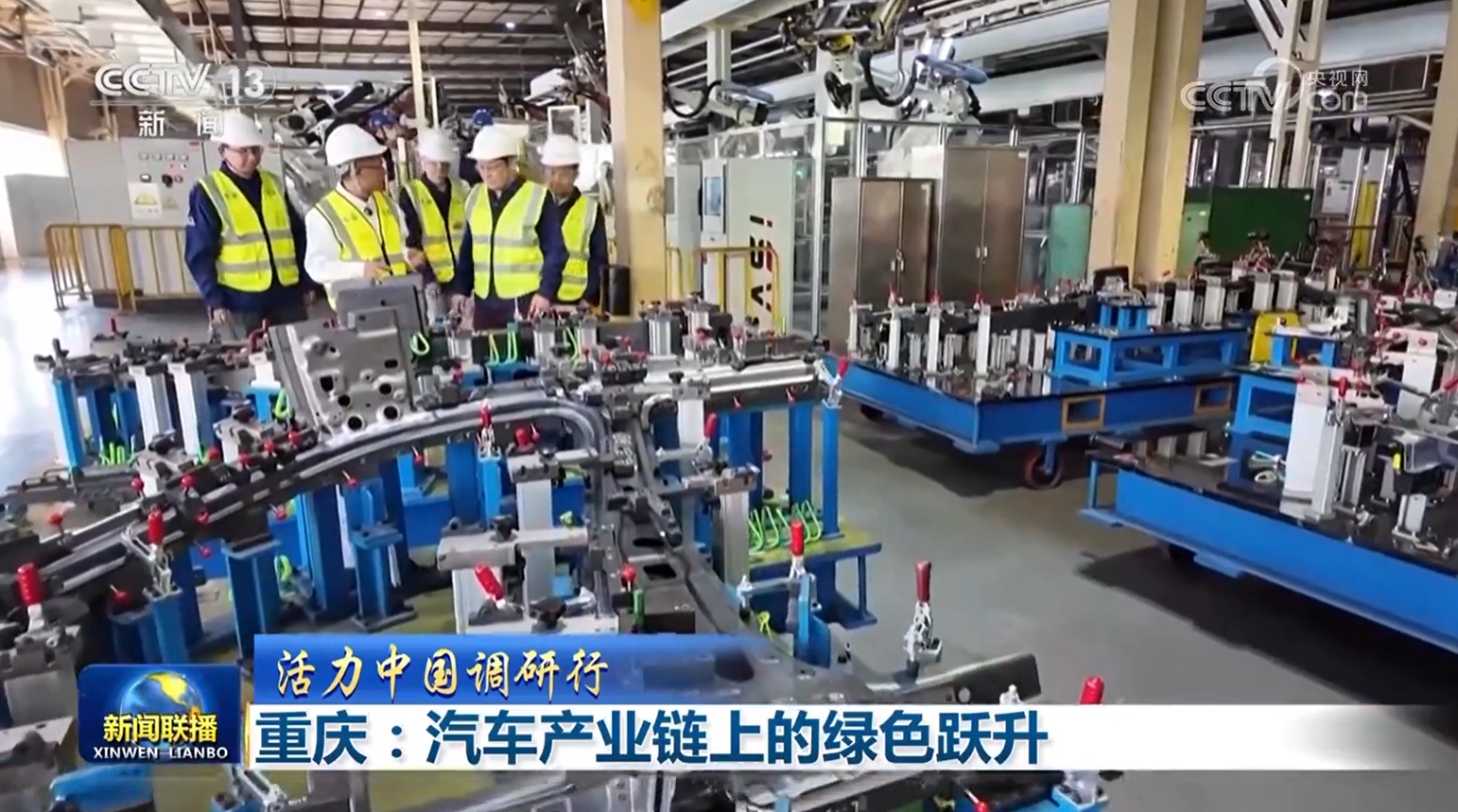
【活力中国调研行】重庆:汽车产业链上的绿色跃升
Yang Shi Wang· 2025-09-06 13:53
Group 1 - The automotive industry is a pillar industry in Chongqing, focusing on green transformation to enhance innovation and upgrade the entire industry chain [1] - Collaboration between upstream and downstream enterprises is fostering stronger development momentum in the automotive sector [1] - The industry is seeing a shift towards evaluating new designs for ease of future disassembly and material recyclability [7] Group 2 - A local research team has developed a new type of lightweight, pressure-resistant hot-formed steel, reducing the number of welded parts from over 20 to 5, resulting in a weight reduction of 4 kilograms per vehicle [5] - The integration of electric drive products has led to a 60% reduction in size by combining previously separate motors, allowing applications in emerging fields like robotics and low-altitude aircraft [9] - In the first seven months of this year, the added value of Chongqing's automotive industry grew by 9.2% year-on-year, contributing over 33% to the growth of the industrial sector [10]
撤回不是撤退!布局综合能源服务,正泰安能开启战略新篇
2 1 Shi Ji Jing Ji Bao Dao· 2025-09-05 04:56
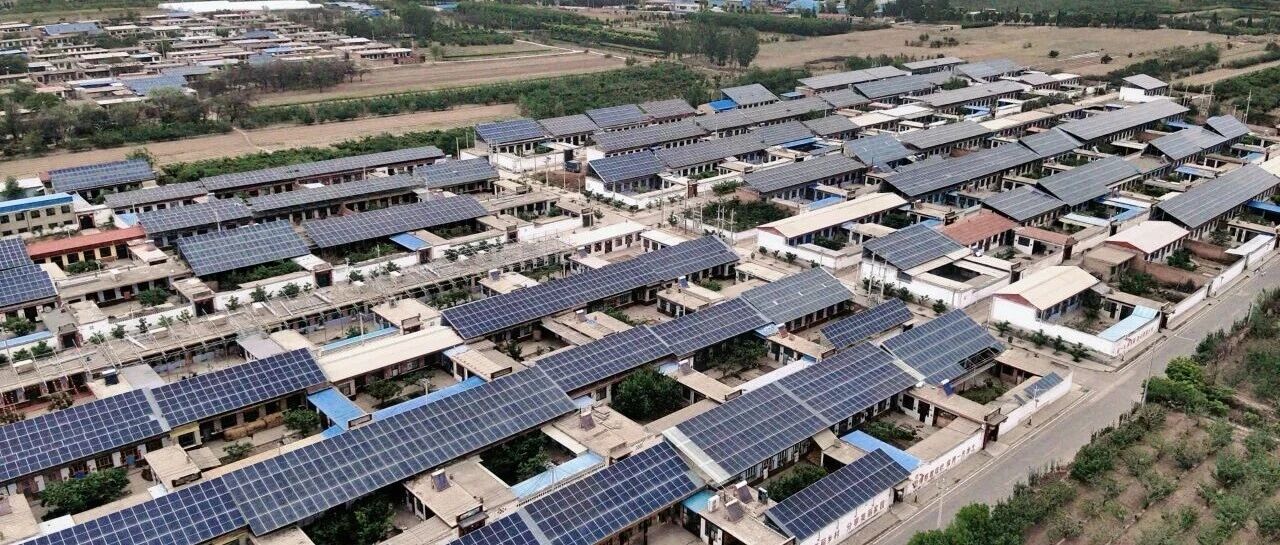
Group 1: Company Developments - Chint Aneng has decided to withdraw its application for listing on the Shanghai Stock Exchange, citing strong business performance and overall company considerations [1] - The withdrawal of the IPO application is not seen as a setback but rather as a new starting point for the company to refocus and restructure its capabilities [7] - The company aims to transition from a leader in household photovoltaic systems to a global leader in comprehensive energy services [7] Group 2: Industry Trends - China is a strong advocate for green development, with plans to implement significant renewable energy projects in collaboration with other countries [2] - The renewable energy generation capacity in China has increased significantly, with the share of renewable energy in total power generation rising from 40% to approximately 60% [2] - Distributed photovoltaic systems have become a key driver for improving livelihoods, with over 4 million kilowatts of new installations since the 14th Five-Year Plan, benefiting farmers financially [3][4] Group 3: Market Opportunities - The household photovoltaic market in China has over 1600 GW of development potential, with a current market penetration of only about 10% [4] - The rapid growth of advanced manufacturing and digital industries is expected to further increase electricity demand, expanding the market for distributed photovoltaics [4] - Chint Aneng is strategically positioning itself in the comprehensive energy service sector, integrating distributed energy, smart grids, and storage technologies [5][6]

撤回不是撤退!布局综合能源服务,正泰安能开启战略新篇
21世纪经济报道· 2025-09-05 04:44
Core Viewpoint - The company has decided to withdraw its application for the IPO of its subsidiary, Zhengtai Aneng, which is seen as a strategic move to focus on its business development and optimize its operational capabilities [1][10]. Industry Overview - China is a strong advocate for green development, leading global efforts in renewable energy, with significant projects planned in collaboration with other countries [3]. - The renewable energy system in China has become the largest and fastest-growing globally, with renewable energy generation capacity increasing from 40% to around 60% since the "14th Five-Year Plan" [3]. - The share of green electricity in total electricity consumption is substantial, with one-third of the electricity coming from renewable sources [3]. Role of Private Enterprises - Private enterprises play a crucial role in the green low-carbon transition, with most photovoltaic equipment manufacturers and over 60% of wind turbine manufacturers being private companies [4]. Distributed Photovoltaics Development - Distributed photovoltaics are closely linked to improving livelihoods, with over 400 million kilowatts of new installations since the "14th Five-Year Plan," significantly benefiting rural households [6]. - The market for household photovoltaics has immense potential, with over 1600 GW of development capacity and a current market penetration of only about 10% [7]. Comprehensive Energy Services - The relationship between energy, electricity, and users is becoming increasingly interconnected, with comprehensive energy services emerging as a key pathway for integrating various energy technologies [8]. - Zhengtai Aneng is strategically transitioning from a leader in household photovoltaics to a global leader in comprehensive energy services, focusing on diverse business models and innovative solutions [8][9]. Future Outlook - The withdrawal of the IPO application is viewed as a new starting point for the company to refocus and enhance its capabilities, aiming to become a leader in comprehensive energy services and contribute to the dual carbon goals and global energy transition [10].
大数据驱动 为绿色转型提供新思路
Jing Ji Guan Cha Bao· 2025-09-05 02:53
Core Viewpoint - The article emphasizes the importance of balancing development and security while promoting a green and low-carbon energy transition in the context of fluctuating international oil prices and energy security risks [1] Group 1: Systemic Risks in Green Transition - The green transition is a complex systemic change involving the coordination of resource, ecological, and social dimensions, highlighting the interdependence and constraints among these systems [2] - In the resource system, there are three major contradictions: the exponential growth in demand for key resources versus domestic resource constraints, increasing foreign dependence on strategic resources amid geopolitical risks, and the tension between the stability of supply chains and the volatility of resource supply [2] - The ecological system faces increasing pressure, including the approaching climate tipping point, diminishing marginal returns on pollution control, and emerging environmental issues such as the disposal of retired solar panels and batteries [3] - The social system is challenged by vulnerabilities such as labor market restructuring, the resilience of energy systems under extreme weather, and the growing imbalance in regional development [3] Group 2: Spatial and Temporal Heterogeneity of Risks - Systemic risks exhibit significant spatial and temporal heterogeneity, with coastal regions facing resource constraints and central-western regions struggling with industrial transitions [4] - The evolution of risks shows non-linear characteristics, requiring differentiated policies and dynamic adaptation in risk governance [4] Group 3: Big Data in Risk Governance - Traditional risk governance models are limited by fragmented information and delayed responses, while the application of big data can create a new paradigm for risk governance that encompasses perception, monitoring, diagnosis, and response [5][6] - The transformation of risk perception involves establishing a systematic assessment framework using diverse data sources to quantify resource supply-demand gaps and ecological thresholds [5] - Enhanced risk monitoring capabilities are achieved through real-time data processing and AI algorithms, enabling early detection of risks and proactive prevention [6] Group 4: Scientific Coordination of Key Relationships - Balancing development and security is crucial, with big data enabling precise control of dynamic balance among resource, ecological, and social systems [7] - Differentiated governance is essential for managing the relationship between the overall and the local, utilizing big data to implement tailored policies for different regions [8] - The relationship between current and long-term needs requires careful pacing of the transition, supported by data-driven analysis to set realistic goals and provide targeted assistance [9] - Effective collaboration between government and market is necessary for a successful green transition, with big data facilitating transparency and resource optimization [9]