能源转型

Search documents
中国宝安前三季度营收增超14%,核心子公司贝特瑞表现亮眼
Nan Fang Du Shi Bao· 2025-10-31 05:13
Core Viewpoint - China Baowu Steel Group reported a steady revenue growth of 14.87% year-on-year for the first three quarters of 2025, achieving a total revenue of 16.812 billion yuan, despite industry adjustments [1][5]. Financial Performance - The company recorded a net profit attributable to shareholders of 283 million yuan, reflecting a decrease of 26.51% compared to the same period last year [2][5]. - The basic earnings per share were 0.0153 yuan, down 79.18% year-on-year [2][3]. - The total assets increased by 5.22% year-on-year, reaching approximately 56.579 billion yuan [2][3]. Subsidiary Performance - The core subsidiary, Betterray, achieved a remarkable revenue of 4.547 billion yuan in Q3 2025, marking a year-on-year increase of 40.70, with a net profit of 768 million yuan for the first three quarters [4][5]. - Betterray's growth is attributed to its comprehensive product matrix and breakthroughs in solid-state battery materials, which have led to significant order deliveries [4][5]. Market Position and Strategy - Betterray's advancements in technology and global capacity expansion are expected to enhance the profit contribution from the new energy sector for China Baowu [5]. - The company is positioned to benefit from the accelerating commercialization of silicon-based anode materials, with projected market demand reaching 80,000 tons by 2030 [4][5].


甘肃能化三季度稳步推进能源转型,多项目落地助力高质量发展
Zheng Quan Shi Bao Wang· 2025-10-31 03:39
Core Viewpoint - Gansu Energy Chemical's Q3 2025 financial report indicates a resilient performance despite fluctuations in the coal market, with a focus on energy transition and project development laying a solid foundation for long-term growth [1][2][3] Financial Performance - For the first nine months of 2025, the company achieved a revenue of 6.119 billion yuan, showing a decline compared to the previous year, but Q3 revenue reached 2.402 billion yuan, reflecting a year-on-year growth of 10.36% [1] - The company's total assets increased by 4.17% from the beginning of the year, reaching 34.754 billion yuan, while the debt structure remained stable [2] Project Development - The company is advancing its coal industry by enhancing the efficiency of its main production mines and has successfully launched new mining projects, including the Jingtai Baiyanzi and Tianbao Hongshaliang open-pit mines [1] - In the power sector, the Lanzhou New Area 2×1000MW thermal power project is progressing well, with preliminary design and multiple early-stage bidding completed [1] Chemical Sector Initiatives - The first phase of the clean and efficient gasification project at Jinyuan Coal Power has entered trial production, with the second phase's construction progressing efficiently [2] Financial Strategy - As of the end of Q3, the company had a cash balance of 5.171 billion yuan and successfully issued a 500 million yuan bond with a 2.00% interest rate, indicating market confidence in its creditworthiness and long-term prospects [2] Strategic Direction - The company aims to enhance its comprehensive energy supply and risk resilience through a dual-driven strategy focusing on "clean and efficient coal utilization + new energy layout" [3] - With multiple key projects nearing completion, the company is expected to gradually unlock growth potential and contribute significantly to regional energy security and green transition [3]

增速倒数,能源大省再提“转型”
Mei Ri Jing Ji Xin Wen· 2025-10-31 00:13
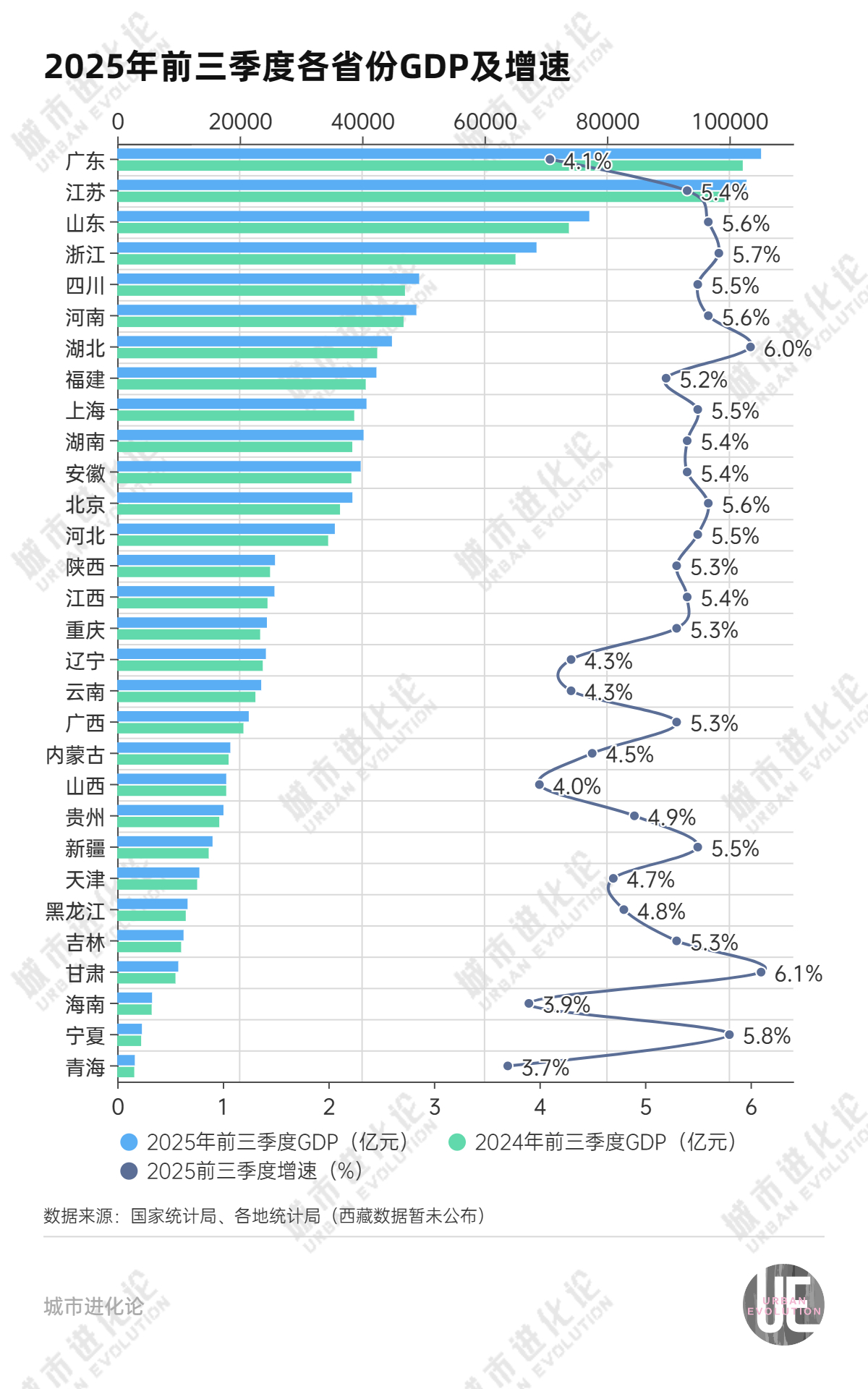
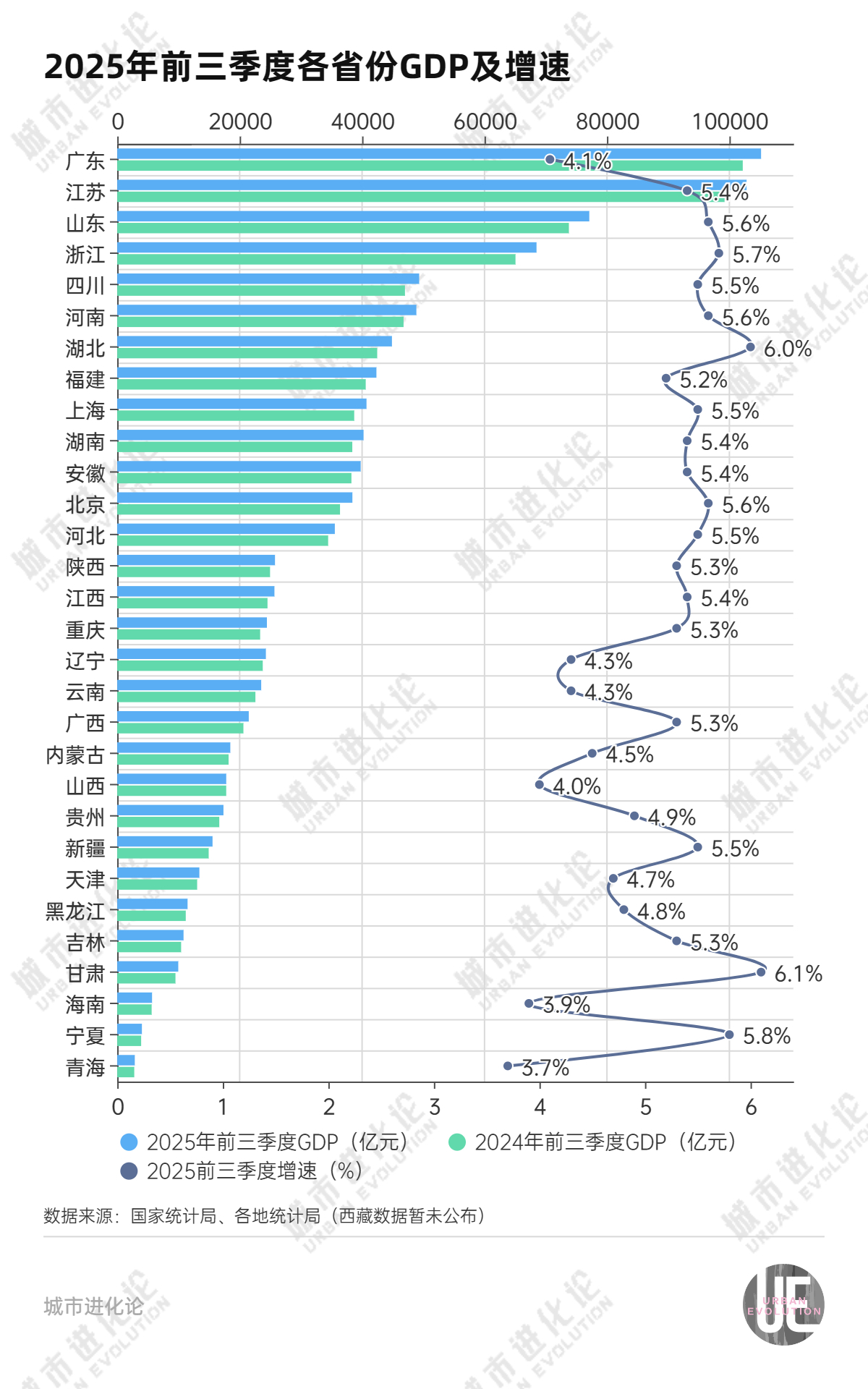
各省份最新经济数据陆续出炉。截至目前,除西藏外,全国30个省份均已公布前三季度GDP数据。 从GDP增速来看,共有19个省份跑赢全国5.2%的平均增速,甘肃以6.1%的增速暂时领跑全国,福建与全国增速持平。此外,还有10个省份跑输全国大盘, 青海、海南及山西增速排名倒数,分别为3.7%、3.9%及4.0%。 具体到山西,前三季度规上煤炭工业增加值增长5.6%,比上半年回落1.5个百分点。在煤炭工业持续回落的同时,山西非煤工业也未能形成有力支撑,前三 季度增速仅3.9%。 在这样的情况下,加快转型步伐对山西而言已是迫在眉睫。 实际上,早在2019年,山西就成为全国能源革命综合改革试点。近年来,山西不断推动煤炭产业向智能化攀升、产品向高价值跃迁,风电、光伏、氢能等新 能源加快布局。 有媒体统计,在2025年山西省政府工作报告中,"转型"一词共被提及24次。山西方面表示,其经济持续回升基础还不牢固,转型发展任务艰巨,科技创新支 撑不足,新兴产业规模不大,摆脱对煤炭"两个过多依赖"仍需艰辛努力。 从最新数据看,山西转型发展不乏亮点。今年前三季度,山西规上装备制造业增加值增长6.9%。其中,新能源装备制造业增长1.6倍 ...
财经观察:“核能时代落幕”,德国电力靠什么保障
Huan Qiu Shi Bao· 2025-10-30 22:44
Core Viewpoint - Germany has officially abandoned nuclear power, marking the end of an era that has provided electricity for approximately 60 years, raising concerns about rising electricity costs for consumers and the impact on energy-intensive industries [1][2]. Group 1: Germany's Nuclear Phase-Out - Germany is the first major industrial nation to completely phase out nuclear power, which has been a significant source of electricity since the 1960s [1]. - The decision to abandon nuclear energy was solidified after the Fukushima disaster in 2011, leading to the closure of the last three nuclear plants in April 2023 [2]. - The closure of nuclear plants has resulted in increased carbon emissions, as Germany has had to rely more on coal to meet electricity demands, creating a conflict between environmental goals and energy policy [2][3]. Group 2: Public Sentiment and Economic Impact - A significant portion of the German public opposes the nuclear phase-out, with surveys indicating that nearly two-thirds of Germans are against closing the remaining nuclear plants [4]. - Since 2011, German consumers have incurred an additional cost of €57 billion due to the transition away from nuclear energy [4]. - The high electricity prices are prompting energy-intensive companies to relocate production to Eastern Europe or Asia, contributing to a decline in Germany's industrial competitiveness [5]. Group 3: Energy Transition Challenges - Germany aims for 80% of its electricity to come from renewable sources by 2030, but currently, renewables only account for about 57% of the energy supply, leading to instability [6]. - The country has become a net importer of electricity, with significant imports recorded in the second quarter of 2023, highlighting the challenges of domestic energy production [6]. - The reliance on gas-fired power plants is increasing, with plans to invest €20 billion in new gas plants to ensure energy security, but this may not lower electricity costs significantly [7]. Group 4: Future of Nuclear Energy in Europe - The EU plans to increase nuclear capacity from 98 GW to 109 GW by 2050, requiring an investment of €205 billion for new plants and €36 billion for extending existing reactors [3]. - Countries like Poland are moving forward with nuclear projects, contrasting Germany's phase-out, as the EU seeks to reduce dependence on foreign energy and achieve climate goals [2][3].
南方电网:加快构建新型电力系统 助力实现“双碳”目标
Ren Min Ri Bao· 2025-10-30 22:30
Core Viewpoint - The article emphasizes the importance of energy transition in achieving China's dual carbon goals, highlighting the role of new power systems and clean energy initiatives in driving economic and social development towards a green transformation [1][8]. Group 1: New Power System Development - The Southern Power Grid has released a white paper detailing its achievements and innovations in building a new power system during the 14th Five-Year Plan period, focusing on digitalization and green collaboration [1][2]. - Non-fossil energy installations and generation in the Southern region have reached 66% and 56% respectively, establishing a leading position comparable to global standards [2]. - The installed capacity of renewable energy has surpassed 250 million kilowatts, which is approximately 4.5 times that of 2020, making it the primary energy source in five provinces [2]. Group 2: Infrastructure and Transmission - The Southern region has established a robust transmission network with a capacity exceeding 58 million kilowatts, facilitating the transfer of over 80% of clean electricity from the west to the east [3]. - Key projects such as the ±800 kV UHVDC project from Eastern Tibet to the Guangdong-Hong Kong-Macao Greater Bay Area are underway, enhancing the region's clean energy transmission capabilities [3]. Group 3: Consumption and Energy Efficiency - During the 14th Five-Year Plan, electricity substitution in the Southern region has exceeded 240 billion kilowatt-hours, with electricity accounting for 34% of total energy consumption [3][4]. - The Southern Power Grid has installed over 100,000 charging stations, achieving full coverage in towns and counties within the Greater Bay Area [4]. Group 4: Technological Innovations - The Southern Power Grid has implemented a new operation and maintenance model utilizing drones and intelligent systems, achieving a 99.5% unmanned operation rate for substations [6]. - The grid has developed a new power load management system, integrating controllable loads to enhance flexibility and responsiveness in energy consumption [5][6]. Group 5: Future Outlook - The Southern Power Grid aims to continue building a clean, low-carbon, safe, and efficient new power system over the next five years, focusing on renewable energy supply and digital transformation [8].
中集安瑞科(03899.HK):受益能源转型的清洁能源装备龙头 天然气与氢氨醇协同发展
Ge Long Hui· 2025-10-30 20:26
Core Viewpoint - The company is a leading player in clean energy equipment manufacturing, focusing on the natural gas, hydrogen, and green methanol sectors, with significant growth in revenue and profit projections for the coming years [1][2][3] Group 1: Financial Performance - The company's revenue has grown rapidly from 12.29 billion in 2020 to an estimated 24.76 billion in 2024, with a CAGR of 19% [1] - The net profit attributable to shareholders for 2022, 2023, and 2024 is projected to be 1.055 billion, 1.114 billion, and 1.095 billion respectively, with a net profit of 562 million in the first half of 2025, reflecting a year-on-year increase of 15.6% [1] - The overall gross margin has improved from 14.3% in 2024 to 14.5% in the first half of 2025 [1] Group 2: Industry Trends - There is a simultaneous increase in natural gas consumption and transportation demand, with a strong order flow for LNG bunkering vessels, highlighting the role of natural gas in energy transition [1] - Global natural gas consumption continues to grow, particularly in Europe and North America, with LNG fleet expansion driving fuel demand [1] - The company is well-positioned in the natural gas industry chain, maintaining a leading global market share in LNG bunkering vessels, with new orders exceeding 8 billion RMB by the end of Q3 2025 [1] Group 3: Emerging Fields - The company has established a comprehensive presence in the hydrogen energy sector since 2006, offering a full range of solutions for hydrogen storage, transportation, and application [2] - Green methanol is emerging as a key direction for global energy transition, with the company covering the entire green methanol industry chain, and its comprehensive service project expected to commence production in Q4 2025 [2] - The company is advancing high-value utilization projects for coke oven gas, with significant investments in projects at Ansteel, Lingsteel, and Shougang, aiming for a combined capacity of 200,000 tons of hydrogen and 1 million tons of LNG by 2027 [2] Group 4: Global Operations - The liquid food industry is rapidly developing, with the company focusing on "turnkey project" solutions and maintaining a strong global operational capability [3] - The company has successfully established overseas operations, with a greenfield factory in Mexico set to commence production in January 2025 [3] - Profit forecasts for 2025, 2026, and 2027 are projected at 1.253 billion, 1.498 billion, and 1.737 billion respectively, with an EPS of 0.62, 0.74, and 0.86 [3]

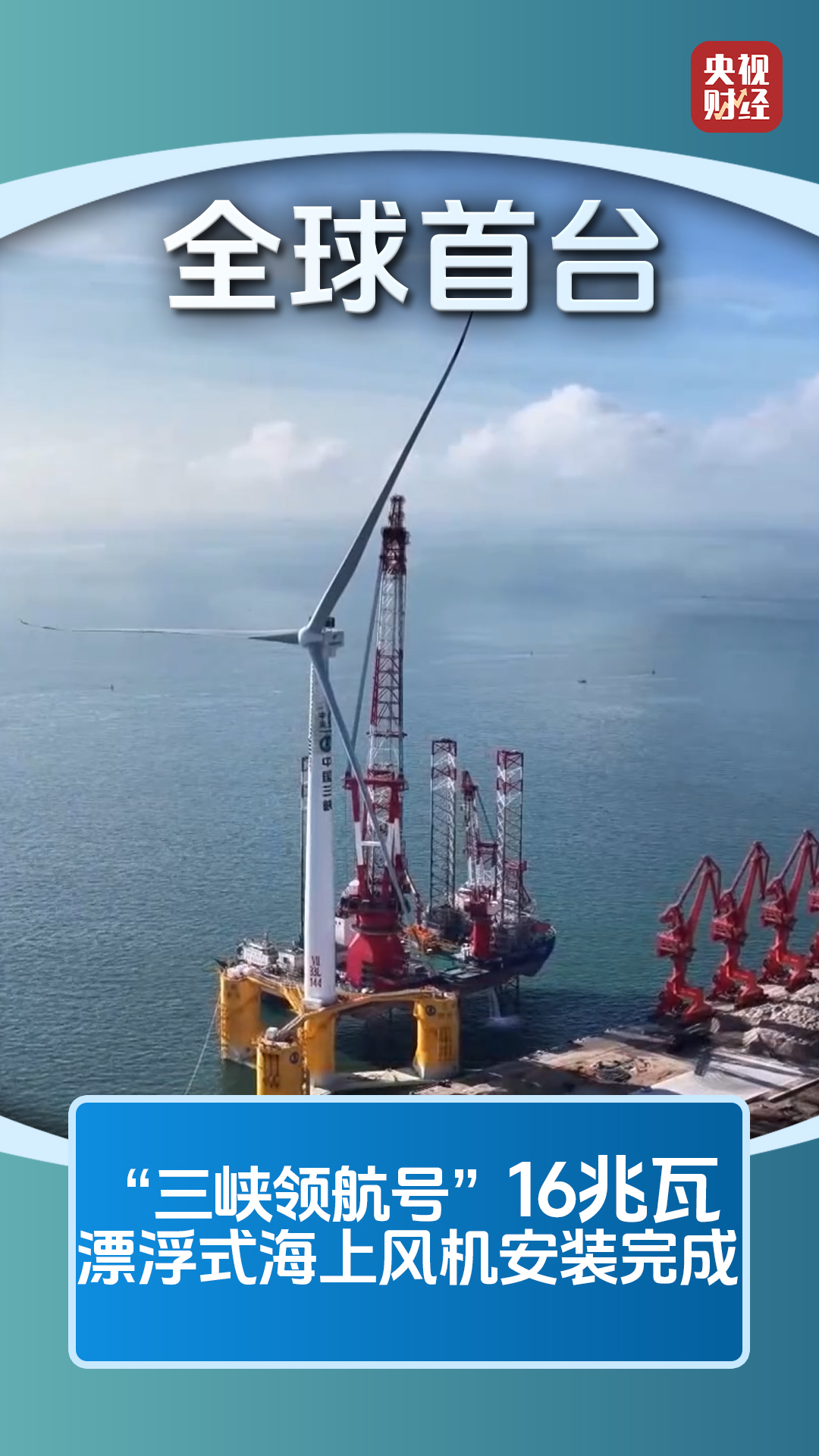
视频丨全球最大、全球首台!中国海上风电加速挺进深远海
Yang Shi Xin Wen· 2025-10-30 19:45
Core Insights - China's self-developed 26 MW offshore wind turbine has successfully connected to the grid in Dongying, Shandong, marking a significant advancement in offshore wind energy technology [1] - The world's first 16 MW floating offshore wind turbine, "Three Gorges Pioneer," has been assembled in Guangxi, showcasing China's capabilities in deep-sea wind energy [4] Offshore Wind Power Development - The 26 MW offshore wind turbine features a hub height equivalent to over 50 stories and a rotor diameter exceeding 310 meters, making it the largest single-unit capacity offshore wind turbine globally [1] - This turbine can generate 100 million kWh annually under average wind speeds of 10 m/s, sufficient to power 55,000 households and reduce CO2 emissions by over 80,000 tons [1] - The "Three Gorges Pioneer" is designed to withstand typhoons and will be installed 70 km offshore in Guangdong, expected to generate 44.65 million kWh annually, enough for 24,000 households [4] Industry Growth and Capacity - China's offshore wind power capacity accounts for over half of the global total, with significant advancements in technology and manufacturing capabilities [7] - The country has established a comprehensive supply chain for large-capacity wind turbine components, enhancing production efficiency and reducing costs [7] - By 2030, China's offshore wind power capacity is projected to reach 150 million kW, contributing approximately 10% to the electricity consumption in eastern coastal regions [7]
RRC Q3 Earnings Top Estimates on Higher Gas Equivalent Production
ZACKS· 2025-10-30 17:20
Core Insights - Range Resources Corporation (RRC) reported third-quarter 2025 adjusted earnings of 57 cents per share, exceeding the Zacks Consensus Estimate of 50 cents and improving from 48 cents in the prior year [1][9] - Total quarterly revenues reached $717.6 million, surpassing the Zacks Consensus Estimate of $691 million and increasing from $680.2 million year-over-year [1][9] Operational Performance - Production averaged 2,227.8 million cubic feet equivalent per day (Mcfe/d), slightly higher than the year-ago level of 2,204.5 Mcfe/d but below the projection of 2,256.4 Mcfe/d [3] - Natural gas contributed approximately 69% to total production, with natural gas production increasing by 2% year-over-year, while oil production decreased by 7% and NGL output fell by 1% [3] Price Realization - Total price realization averaged $2.98 per Mcfe, a 13% increase year-over-year, and higher than the estimate of $2.95 per Mcfe [4] - Natural gas prices rose by 51% year-over-year to $2.56 per Mcf, while NGL prices declined by 15% to $22.09 per barrel, and oil prices fell by 15% to $54.25 per barrel [4] Costs & Expenses - Total costs and expenses increased by 3% year-over-year to $565.2 million, slightly lower than the expectation of $566.6 million [5] - Transportation, gathering, processing, and compression costs decreased to $301 million from $306 million in the prior-year quarter, while depreciation, depletion, and amortization expenses rose to $93.8 million from $91.1 million [5] Capital Expenditure & Balance Sheet - Drilling and completion expenditure amounted to $165 million, with an additional $16 million spent on acreage and $9 million on infrastructure and upgrades [6] - At the end of the third quarter, total debt was reported at $1,216.8 million, net of deferred financing costs [6] Outlook - Range Resources reiterated its total production guidance for 2025 at approximately 2.225 billion cubic feet equivalent per day, with over 30% attributed to liquids production [7] - The company's capital budget for the year is expected to be in the range of $650-$680 million [7]

亚太同行·中国担当
Yang Shi Wang· 2025-10-30 17:12
Core Points - The upcoming APEC leaders' informal meeting in 2025 highlights the significance of the Asia-Pacific region, which accounts for over 60% of the global economy and contributes 70% to global economic growth [1] - China is positioned as a key driver of regional development and a staunch supporter of economic globalization, advocating for mutual benefit and shared achievements [1] Group 1 - The Asia-Pacific region's economic contribution is substantial, with over 60% of the global economy and a 70% contribution to global growth [1] - China plays a crucial role in promoting green development, energy transition, and sustainable cooperation in the Asia-Pacific region [1]
城市24小时 | 增速倒数,能源大省再提“转型”
Mei Ri Jing Ji Xin Wen· 2025-10-30 15:53
Economic Data Overview - As of now, 30 provinces in China have released their GDP data for the first three quarters, with only Tibet remaining [1] - 19 provinces outperformed the national average GDP growth rate of 5.2%, with Gansu leading at 6.1% and Fujian matching the national rate [1] - 10 provinces lagged behind the national average, with Qinghai, Hainan, and Shanxi having the lowest growth rates at 3.7%, 3.9%, and 4.0% respectively [1] Shanxi Province Economic Performance - Shanxi's GDP growth remains weak, with a mere increase compared to last year's 1.8%, ranking last nationally [4] - The province's GDP for the first three quarters grew by 4.0%, a slight acceleration of 0.2 percentage points from the first half of the year, despite a decline in the coal industry [4] - The added value of the secondary industry in Shanxi was 690.725 billion yuan, growing by 3.5% [4] Coal Industry Impact - Shanxi's economy is heavily influenced by the coal industry, which once accounted for over 30% of GDP and 50% of fiscal revenue [5] - From January to September, the coal mining and washing industry saw a 20% decline in revenue and a 51% drop in total profit, despite a 13% decrease in operating costs [5] - The added value of the coal industry in Shanxi grew by 5.6%, but this was a 1.5 percentage point decline from the first half of the year [5] Transition and Development Initiatives - Shanxi has been pushing for a transformation away from coal dependency since becoming a pilot for energy reform in 2019 [6] - The province aims to enhance its coal industry through smart technology and shift towards high-value products, with significant investments in wind, solar, and hydrogen energy [6] - In the first three quarters, the added value of equipment manufacturing in Shanxi grew by 6.9%, with new energy equipment manufacturing increasing by 160% [6] - Investments in high-tech services, new energy vehicle manufacturing, and renewable energy generation saw growth rates of 13.2%, 36.5%, and 26.4% respectively [6]