生成式AI

Search documents
杀疯了!9万亿元!
券商中国· 2025-09-25 09:32
Core Insights - The global AI IT investment is projected to reach $315.9 billion in 2024 and is expected to grow to $1.2619 trillion by 2029, with a compound annual growth rate (CAGR) of 31.9% [1][3] - The generative AI market is anticipated to grow at a CAGR of 56.3%, reaching $607.1 billion by 2029, accounting for 48.1% of the total AI market investment [3] - OpenAI has announced a massive $1 trillion investment plan to expand its computing infrastructure, marking a shift from model-driven to compute-driven strategies [5][6] Investment Growth - The AI platform market in the Asia-Pacific region (excluding Japan and China) is expected to see a significant year-on-year growth of 67% in 2024, surpassing $2.2 billion [3] - The AI software services market in the APeJC region is projected to experience a staggering 94% year-on-year increase [4] Cloud Adoption - In 2024, public cloud services are expected to account for 75% of the AI platform market in the APeJC region, driven by strong security features and compliance support from cloud service providers [4] OpenAI's Expansion - OpenAI's investment plan includes the construction of large-scale computing centers across multiple locations in the U.S. and overseas, aiming to create the world's largest AI supercomputing center [6][7] - A partnership with Nvidia worth $100 billion has been established to ensure efficient hardware supply for OpenAI's computing needs [7] - OpenAI is collaborating with Oracle and SoftBank to build five new AI data centers in the U.S., enhancing its existing infrastructure [7]


方直科技:公司首款儿童智能硬件产品“阳仔”AI陪伴机相关合作方包括阿里云等
Zhi Tong Cai Jing· 2025-09-25 08:29
Core Insights - The company has launched new AI products aimed at children and students, focusing on emotional support and language learning [1][2] Group 1: Product Launches - The company introduced the "Yangzai" AI companion device, targeting children aged 4-8, designed to be a growth partner with a focus on understanding children and supporting their development [1] - The "Kaitou Miao" AI speaking system is tailored for students aged 6-15, integrating generative AI and digital human technology to enhance English speaking skills through a three-dimensional approach [2] - The "Tongbu Miao" mobile learning platform is designed for elementary English learning, utilizing AI to provide a comprehensive learning system that includes vocabulary, grammar, and listening skills [2] Group 2: Collaboration and Development - The company collaborated with Alibaba Cloud to create a dedicated AI entity for children, working alongside child psychology experts and the MOCICI from the Chinese University of Hong Kong to focus on attention and emotional management [1] - The "Yangzai" device features capabilities such as emotional recognition, empathetic responses, and growth guidance, aiming to help children develop a stable psychological foundation and adaptability [1] Group 3: Educational Focus - The "Kaitou Miao" system addresses the "silent English" issue by providing real-time error correction, emotional interaction, and learning tracking to improve students' speaking abilities [2] - The "Tongbu Miao" platform is structured to gradually build a comprehensive elementary English learning system, promoting a fun and engaging environment for users to enhance their English skills [2]

中新赛克(002912) - 2025年9月23日投资者关系活动记录表
2025-09-25 07:34
编号:2025-006 投资者关系活动 类别 ☑ 特定对象调研 □分析师会议 □媒体采访 □业绩说明会 □新闻发布会 □路演活动 □现场参观 □其他 活动参与人员 调研单位及人员: 申万菱信:梁国柱 公司接待人员: 董事会秘书兼财务总监:李斌 时间 2025 年 9 月 23 日下午 16:00-16:30 地点 南京中新赛克科技有限责任公司会议室 形式 现场会议 交流内容及具体 问答记录 互动问答: 1、请问公司今年经营情况? 答:2025 年上半年,公司在数字化转型与全球市场重构中实 现创新转型与业务增长的双向突破。公司结合互联网普惠深入 推进、生成式 AI 应用不断发展的现状,在传统领域持续优化 产品外,加大 AI 赋能和国际化市场建设的投入,积极落实战 略部署。其中海外业务发展尤其突出,品牌知名度逐步提升, 亚太、非洲、拉美等地域订单量与销售收入均实现同比显著增 长,在多个国家实现空白市场突破。 2、公司在对外投资方面的计划? 答:公司始终将对外投资作为公司实现战略目标的重要手段之 证券代码:002912 证券简称:中新赛克 深圳市中新赛克科技股份有限公司投资者关系活动记录表 | | 一。公司将对同业 ...

我们摸到了下一代AI硬件的轮廓,它是一把拥有大模型能力的吉他
3 6 Ke· 2025-09-25 07:22
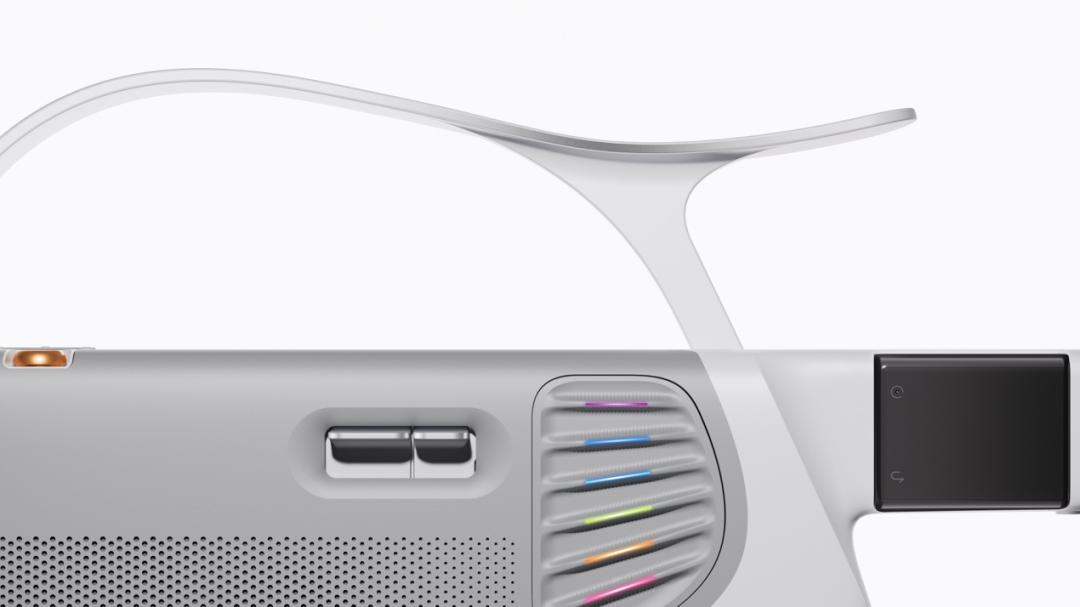
Core Insights - The article discusses the launch of the world's first smart guitar with AIGC capabilities, TemPolor Melo-D, marking a shift from software-based AI music tools to hardware that integrates AI for music generation [3][4][8] - TemPolor allows users to create music without prior knowledge of guitar playing or music theory, enabling a more accessible and engaging experience for beginners [4][11] - The development of TemPolor is rooted in the team's previous success with the "Singing Duck" app, which demonstrated a significant demand for non-professional music engagement [5][7] Product Features - TemPolor is designed as an independent music generation terminal, featuring a touch-sensitive flip screen and rainbow strings, allowing users to enjoy a complete experience without relying on mobile apps [3][4] - The guitar utilizes the self-developed large model "Tianpu Music" to generate customized guitar melodies based on user-uploaded songs or hummed melodies, significantly reducing the learning curve [4][8] - It offers various modes, including AI-led singing and free play, catering to both beginners and experienced users, thus enhancing the overall user experience [4][9] Market Context - The introduction of TemPolor signifies a new era in AI music, where hardware is defined by AI models rather than just enhanced functionalities [3][8] - The article highlights a trend among leading tech companies, such as OpenAI, Google, and Apple, to integrate AI models with hardware, indicating a shift towards a comprehensive strategy that combines software, hardware, and ecosystems [9][11] - TemPolor represents a significant case in the evolution of AI applications, moving from virtual interactions to tangible experiences, and aims to democratize music creation for all [11]
IDC:全球人工智能总投资规模有望在2029年增长至12619亿美元
智通财经网· 2025-09-25 06:17
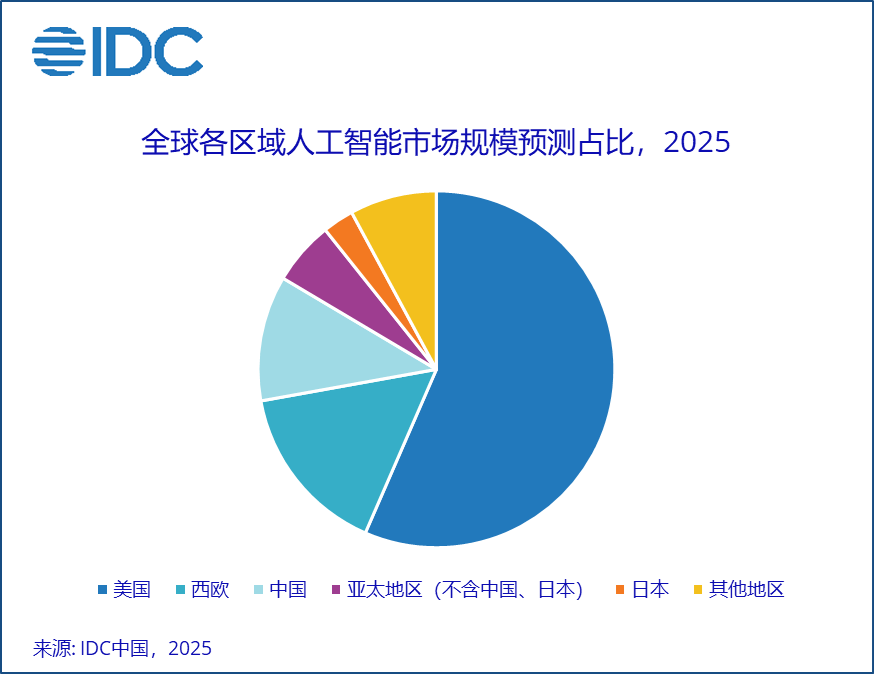
Group 1: Global AI Market Overview - The global AI IT investment is projected to reach $315.9 billion in 2024 and is expected to grow to $1,261.9 billion by 2029, with a five-year CAGR of 31.9% [1] - The generative AI market is anticipated to have a five-year CAGR of 56.3%, reaching $607.1 billion by 2029, accounting for 48.1% of the total AI market investment [1] Group 2: Regional Insights - The global AI market is divided into nine core regions, with the US and China being the primary drivers, collectively accounting for nearly 70% of the market [4] - By 2029, the European AI market is expected to reach approximately $250 billion, with Western Europe representing over 90% of this market [4] - The Middle East, Africa, and Latin America are experiencing rapid AI industry growth, with a five-year CAGR of 40%, indicating potential as new growth points in the global AI market [4] Group 3: China AI Market Insights - China's total AI investment is projected to reach $111.4 billion by 2029, with a five-year CAGR of 25.7% [7] - The "AI+" initiative is driving the integration of AI across various sectors, elevating its status to a national strategic priority [7] Group 4: Generative AI in China - In 2024, generative AI is expected to account for 18.2% of China's total AI market investment, with this share increasing to 41.1% by 2029, translating to over $45 billion in investment [8] - Generative AI is enhancing automation and intelligence across various verticals, improving efficiency in strategic decision-making and software development [8] Group 5: Industry Investment Trends - The software and information services, telecommunications, and banking sectors are the top three industries investing in AI, projected to account for 43.5%, 7.0%, and 6.0% of the market by 2029, respectively [9] Group 6: AI Application Scenarios in China - Intelligent infrastructure allocation is the largest application scenario in China's AI market, accounting for approximately 40% of the total market [10] - Customer service and self-service powered by AI is the second-largest application scenario, enhancing customer interaction and support [10] - Enhanced contact centers and field services are also significant, utilizing digital channels and intelligent systems to optimize customer service [10] Group 7: Challenges and Future Directions - The complexity and scale of generative AI models are rapidly increasing, driving the growth of the AI market in China [12] - There is a need for improved intelligent computing power and model capabilities, as well as the establishment of high-level open-source communities to foster innovation [12]
集邦咨询:受QLC产品热度的外溢效应驱动 预计NAND Flash第四季价格将上涨5-10%
智通财经网· 2025-09-25 05:57
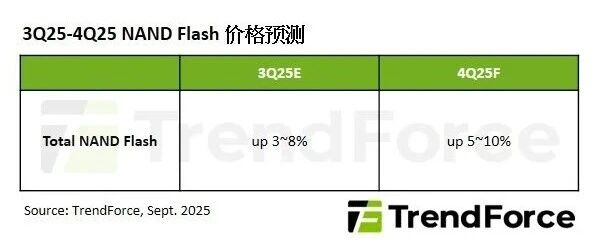
Core Insights - The demand in the consumer market was overdrawn in the first half of the year, leading to a weaker-than-expected peak season in the second half, with forecasts for Q4 2025 indicating price stabilization. However, HDD supply shortages and long lead times have shifted CSPs' storage demand towards QLC Enterprise SSDs, resulting in a surge of urgent orders and significant market volatility [1] - SanDisk announced a 10% price increase, while Micron paused pricing due to capacity considerations, shifting the supply-side sentiment from conservative to positive. Consequently, NAND Flash contract prices are expected to rise across all product categories in Q4, with an average increase of 5-10% [1][2] Supply Side Analysis - NAND Flash supply has improved due to production cuts and inventory reduction in the first half of the year, alleviating price pressures. Most manufacturers are focusing capital expenditures on advanced process upgrades to optimize cost structures and concentrate on high-margin products, reducing price competition and supporting prices [4] - QLC products are widely used in SSDs due to their cost advantages, particularly driven by the demand for massive data storage from generative AI, prompting manufacturers to focus on QLC capacity [4] Demand Side Analysis - In the second half of the year, NAND Flash demand is affected by weakened consumer purchasing power and a slowdown in OEM procurement, with significant machine inventory in the channel awaiting clearance. However, the demand for Enterprise SSDs has surged due to server OEMs and CSPs actively clearing inventory and the upcoming release of NVIDIA's new Blackwell chips in the second half of 2025, maintaining positive overall demand for NAND Flash [4] Client SSD Market - Client SSD manufacturers have significantly reduced inventory levels through production cuts and supply strategy adjustments, leading to a more balanced market. The high demand for cost-effective large-capacity QLC products further supports this demand [5] Enterprise SSD Market - SSD suppliers are reassessing order volumes for products exceeding 120TB due to a surge in customer demand and are strategically increasing the production ratio of QLC Flash to meet market changes. Current market conditions indicate that supplier inventory levels have fallen below healthy standards, with a tightening supply expected to drive up prices in Q4 [6] eMMC/UFS Market - In the context of a profit-oriented NAND Flash supply chain, eMMC/UFS products face weak demand and intense competition from local manufacturers in the Chinese market, giving domestic smartphone brands greater bargaining power. With module manufacturers holding high inventory levels, price competition may further compress price increases, although manufacturers are expected to raise prices in Q4 to recover losses [7] NAND Flash Wafer Supply - NAND Flash wafer manufacturers are experiencing a temporary decline in output due to production line adjustments during process transitions. To compensate for previous losses, manufacturers are prioritizing high-margin product lines, further tightening wafer supply to module manufacturers. With ongoing enterprise AI investment momentum, supply is expected to remain tight, contributing to price increases in Q4 [9]
研报 | 受QLC产品热度的外溢效应驱动,预计NAND Flash 4Q25价格将上涨5-10%
TrendForce集邦· 2025-09-25 04:33
Core Insights - The article highlights a significant shift in the NAND Flash market due to supply shortages and increased demand from cloud service providers, leading to a price increase in Q4 2025 [2][5][10] Supply and Demand Dynamics - NAND Flash supply has improved due to production cuts and inventory reduction in the first half of 2025, alleviating price pressures [5] - The demand for QLC (Quad-Level Cell) SSDs is rising, driven by the need for high-capacity storage in generative AI applications [5][6] - Despite weak consumer demand and excess inventory in the channel, enterprise SSD demand is expected to grow due to increased orders from server OEMs and CSPs [6][8] Price Trends - NAND Flash contract prices are projected to rise by an average of 5-10% in Q4 2025, following a 3-8% increase in Q3 2025 [3] - SanDisk and Micron have announced price increases, indicating a shift in the supply-side sentiment from conservative to positive [2][5] Product Segmentation - Client SSDs have seen a significant reduction in inventory levels, leading to a more balanced supply-demand situation [7] - Enterprise SSD suppliers are adjusting their production strategies to meet the growing demand for high-capacity products, particularly those exceeding 120TB [8] - eMMC/UFS products are facing weak demand and intense competition from local manufacturers, which may limit price increases despite manufacturers' efforts to recover losses [9] Manufacturing Adjustments - NAND Flash wafer manufacturers are prioritizing high-margin product lines, which may lead to tighter supply and further price increases in Q4 2025 [10]
国内晶圆制造及配套产业加速半导体行业发展,数字经济ETF(560800)涨近1%
Xin Lang Cai Jing· 2025-09-25 03:33
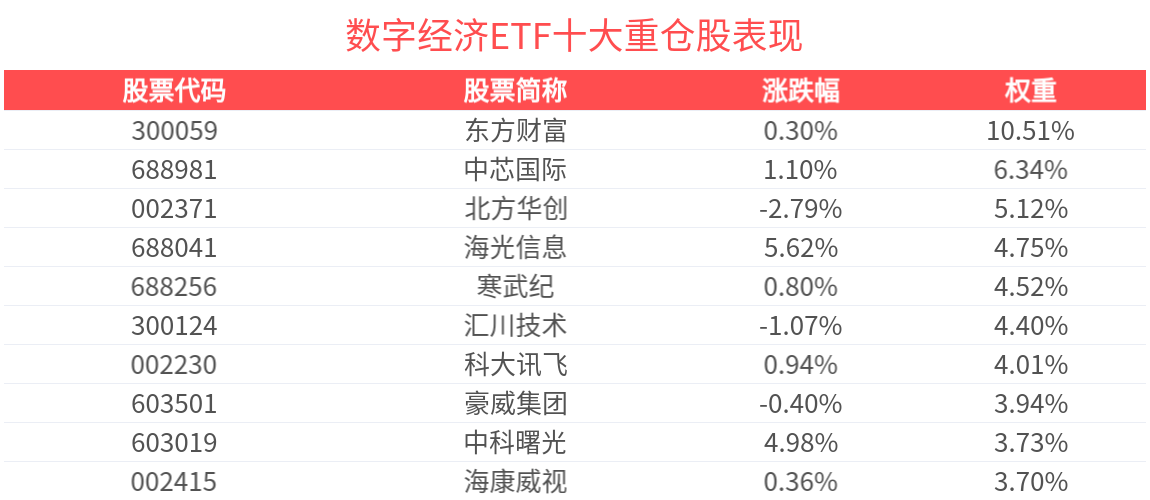
Core Viewpoint - The digital economy theme index and related ETFs are showing positive performance, driven by strong stock price movements in semiconductor companies and the growing demand for advanced manufacturing processes in the semiconductor industry [1][2][3]. Group 1: Digital Economy Index Performance - As of September 25, 2025, the CSI Digital Economy Theme Index (931582) increased by 0.98%, with notable gains from stocks such as Jinghe Integrated (688249) up 11.03%, and Yonyou Network (600588) up 8.63% [1]. - The Digital Economy ETF (560800) also saw an increase of 0.93% [1]. Group 2: Market Liquidity and Trading Activity - The Digital Economy ETF had a turnover rate of 1.67% during the trading session, with a total transaction value of 11.9467 million yuan [2]. - Over the past month, the average daily trading volume for the Digital Economy ETF was 37.0221 million yuan [2]. Group 3: Semiconductor Industry Insights - There is a rising expectation of price increases in the semiconductor wafer market, with significant stock price increases observed among major international suppliers [2]. - TSMC is reportedly adjusting its pricing for advanced processes, with a 24% increase for the 3nm process node charged to MediaTek, and a 16% cost increase for Qualcomm's upcoming Snapdragon 8 Elite Gen 5 chip [2]. - Long-term demand for advanced logic chip foundry capacity in China is projected to reach 34,000 wafers per month, with actual demand likely exceeding this estimate due to capacity ramp-up and R&D needs [2]. Group 4: Domestic Semiconductor Development - The push for domestic semiconductor manufacturing is accelerating, driven by trade tensions highlighting the importance of supply chain security and self-sufficiency [3]. - The penetration of semiconductors in sectors such as automotive electronics, new energy, IoT, big data, and artificial intelligence is becoming a significant growth driver for the semiconductor sector [3]. Group 5: Index Composition - As of August 29, 2025, the top ten weighted stocks in the CSI Digital Economy Theme Index accounted for 53.36% of the index, with companies like Dongfang Caifu (300059) and Cambricon (688256) being the most significant contributors [3].
产品| AI的尽头是带货!ChatGPT带货杀疯了!
未可知人工智能研究院· 2025-09-25 03:02
Core Viewpoint - The article emphasizes the transformative impact of AI, particularly ChatGPT, on the e-commerce landscape, highlighting the necessity for brands to adapt to this shift in consumer behavior and optimize their visibility through Generative Engine Optimization (GEO) [1][4][22]. Group 1: Impact of AI on Consumer Behavior - Consumers are increasingly using AI tools like ChatGPT to discover products, leading to a significant increase in conversion rates for retail websites, from 6% to 11% year-on-year [4][22]. - The shift from traditional search methods to conversational AI means that brands must ensure their products are recognized and recommended by AI to avoid losing potential customers to competitors [3][6]. Group 2: Importance of GEO - GEO (Generative Engine Optimization) is identified as a crucial strategy for brands to enhance their presence in AI-driven environments, allowing for better product recommendations and visibility [8][12]. - Brands that optimize their content for AI can ensure that their products are included in AI recommendations, thus increasing their chances of being seen and purchased by consumers [10][18]. Group 3: Implementation of GEO Strategies - The process of GEO involves comprehensive research on brand positioning, product features, and target user profiles to tailor content that aligns with consumer inquiries in AI platforms [13][15]. - Continuous monitoring and adjustment of strategies are essential to maintain relevance and competitiveness in the evolving AI landscape, ensuring brands adapt to changing consumer behaviors and preferences [18][20]. Group 4: Call to Action - The article concludes by urging brands to adopt GEO services to capitalize on the growing trend of AI in e-commerce, warning that failure to do so may result in being overshadowed by competitors who effectively utilize these strategies [22][24].

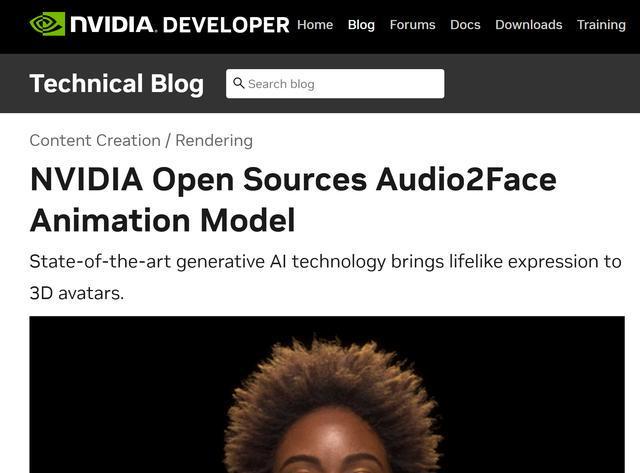
英伟达开源Audio2Face模型,可用于AI 实时生成面部动画
Huan Qiu Wang Zi Xun· 2025-09-25 02:55
来源:环球网 在运行模式方面,Audio2Face展现出高度的灵活性,支持两种核心运行方式。其一为预录制音频的离线 渲染模式,适用于对动画精度要求高、无需实时反馈的场景,如影视动画制作;其二是动态AI角色的 实时流式处理模式,能够满足游戏、实时互动虚拟客服等对响应速度要求严苛的场景,确保虚拟角色在 与用户交互过程中,面部动画始终保持实时、自然的状态。 目前,Audio2Face技术已获得行业内的广泛关注与实际应用,并取得了显著成效。知名游戏开发商 Survios在其热门游戏《异形:侠盗入侵进化版》(Alien: Rogue Incursion Evolved Edition)中,成功集 成了该技术。通过应用Audio2Face,Survios大幅简化了游戏开发过程中的口型同步与面部捕捉流程,有 效降低了开发成本,提升了游戏制作效率。 【环球网科技综合报道】9月25日消息,英伟达今日宣布开源生成式AI面部动画模型Audio2Face,此次 开源内容不仅包含模型本身,还涵盖软件开发工具包(SDK)及完整训练框架。这一举措旨在为游戏、 3D应用等领域注入新活力,加速AI智能虚拟角色的开发进程,推动相关产业技术升级。 ...